
Ohmae's 3C Model (Strategic Triangle)   33-slide PPT PowerPoint presentation slide deck (PPTX)
$29.00

Ohmae's 3C Model (Strategic Triangle) (33-slide PPT PowerPoint presentation slide deck (PPTX)) Preview Image
Log in to unlock full preview.
Ohmae's 3C Model (Strategic Triangle) (33-slide PPT PowerPoint presentation slide deck (PPTX)) Preview Image
Arrow   Click main image to view in full screen.

Ohmae's 3C Model (Strategic Triangle) (PowerPoint PPTX Slide Deck)

PowerPoint (PPTX) 33 Slides FlevyPro Document

$29.00
FlevyPro price: FREE (included in subscription)
This framework is developed by a team of former McKinsey and Big 4 consultants. The presentation follows the headline-body-bumper slide format used by global consulting firms.
Add to Cart


Immediate download
Free lifetime updates

COMPETITIVE ANALYSIS PPT DESCRIPTION

Editor Summary 33-slide PowerPoint presentation on Ohmae’s 3C Model (Strategic Triangle) that explains the interdependence of Customers, Company, and Competitors and outlines specific strategies and assessment approaches. Read more

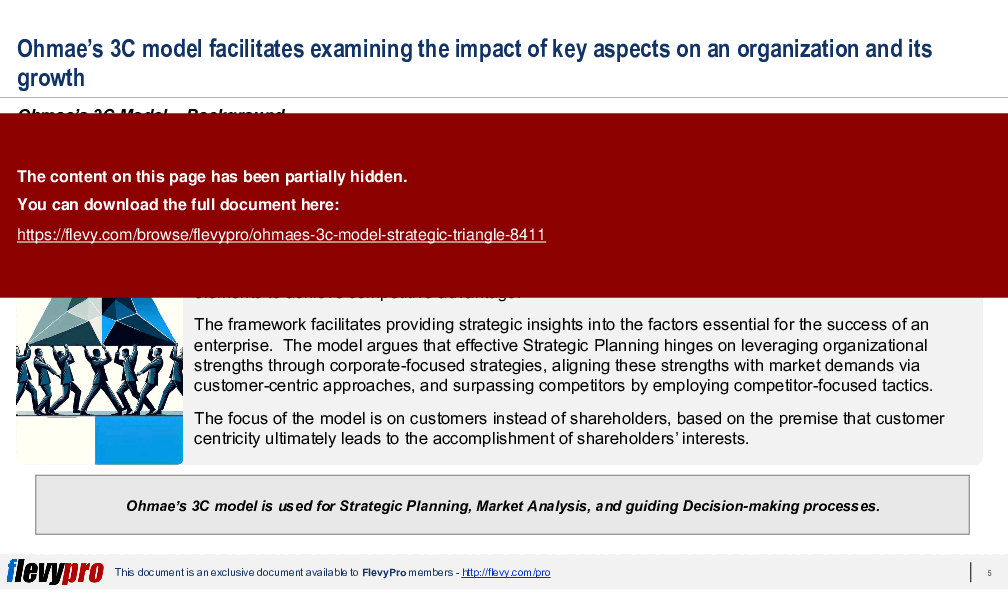
Dr. Kenichi Ohmae, a Japanese organizational theorist and strategy guru, proposed the 3C Model in 1982. The concept was published in his book, "The Mind of the Strategist: The Art of Japanese Business."

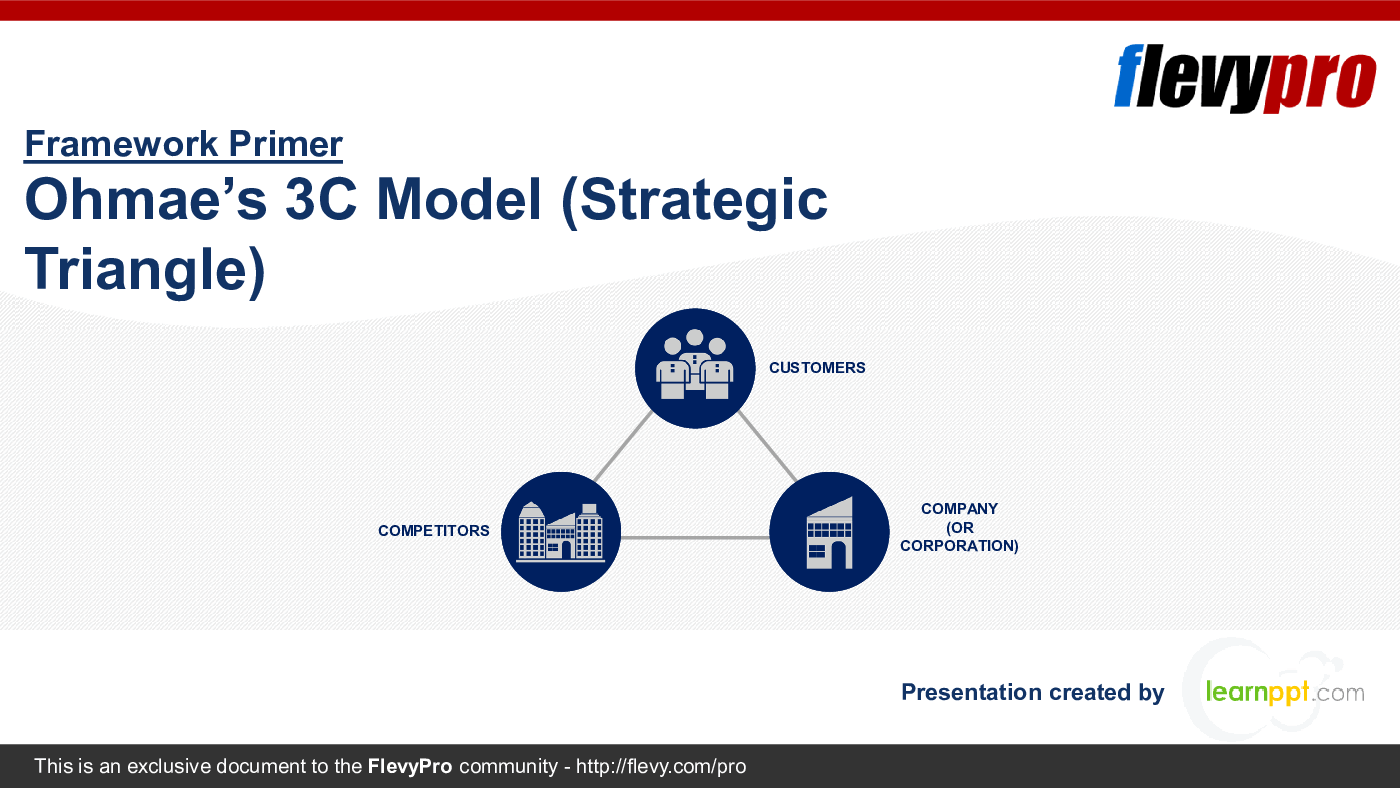
The Ohmae 3C model, also known as the Strategic Triangle or just the 3 Cs, is a strategic framework that assists in developing the fundamentals of Business Strategy for any organization.

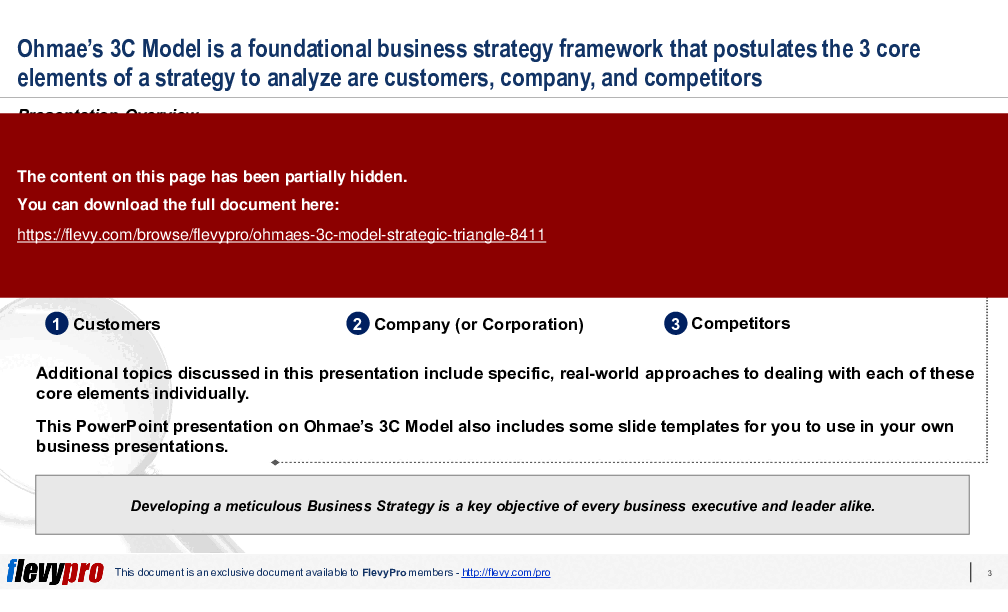
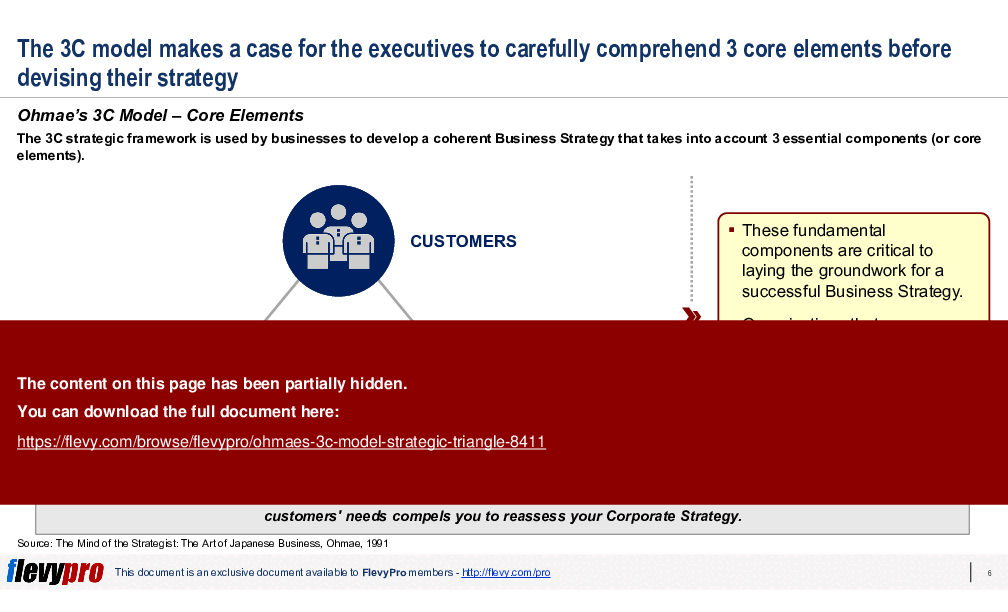
This PowerPoint presentation deliberates on the 3 core elements or components of Ohmae's 3C model that are instrumental in creating an effective Business Strategy. The core elements include:

1. Customers – The organization possesses knowledge of the consumers' desires and demands. It is imperative for the organization to comprehend, fulfill, and attend to the requirements, problems, expectations, and buying motives of its clientele as opposed to those of its shareholders.

2. Company (or Corporation) – This element focuses on the company's internal strengths and capabilities, including its resources, skills, and organizational structure.

3. Competitors – Competitors have a huge influence on an organization's objectives, methodologies, operations, effectiveness, and standing. Analyzing the competition involves understanding the market landscape, competitors' strategies, strengths, weaknesses, and potential moves.

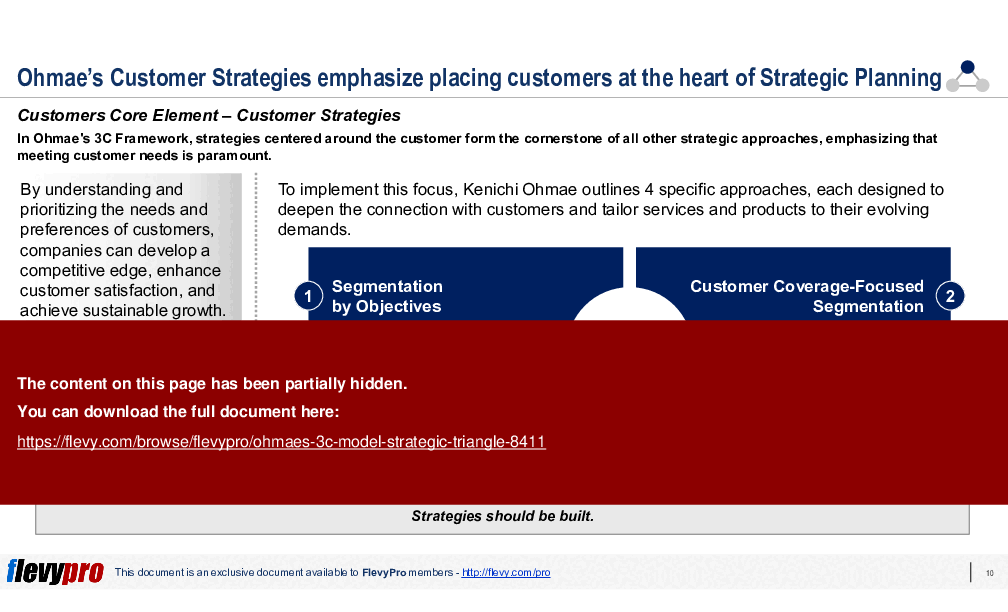
Each of these 3 Cs is discussed in depth, including specific strategies for each element. For instance, Ohmae's 3C Model posits 4 Customer Strategies:

1. Segmentation by Objectives
2. Customer Coverage-Focused Segmentation
3. Adjusting to Shifts in Customer Demographics
4. Market Re-segmentation

We also explain each strategy in detail. Furthermore, this presentation includes specific, real-world approaches to dealing with each of these core elements individually.

This PowerPoint presentation on Ohmae's 3C Model also includes some slide templates for you to use in your own business presentations.

Got a question about this document? Email us at flevypro@flevy.com.

MARCUS OVERVIEW

This synopsis was written by Marcus [?] based on the analysis of the full 33-slide presentation.


Executive Summary
Ohmae's 3C Model, also known as the Strategic Triangle, is a foundational framework for business strategy that emphasizes the interdependence of 3 core elements: Customers, Company, and Competitors. Developed by Dr. Kenichi Ohmae in 1982, this model provides a structured approach for organizations to analyze their strategic positioning and develop effective strategies. This presentation offers a comprehensive overview of the 3C Model, detailing each core element and its significance in crafting a robust business strategy. Users will gain insights into customer-centric strategies, internal company capabilities, and competitive analysis, equipping them to create actionable plans that drive growth and success.

Who This Is For and When to Use
•  Business executives focused on strategic planning and execution
•  Marketing teams aiming to align strategies with customer needs
•  Consultants advising organizations on competitive positioning
•  Product managers developing customer-centric offerings

Best-fit moments to use this deck:
•  During strategic planning sessions to align organizational goals
•  When conducting market analysis to understand competitive dynamics
•  In workshops aimed at refining customer engagement strategies
•  For training sessions on strategic frameworks and methodologies

Learning Objectives
•  Define the 3C Model and its relevance in strategic planning
•  Analyze customer needs and expectations to inform product development
•  Evaluate internal capabilities to leverage organizational strengths
•  Assess competitive landscapes to identify differentiation opportunities
•  Develop actionable strategies that integrate customer, company, and competitor insights
•  Foster a culture of continuous improvement and adaptation in strategy formulation

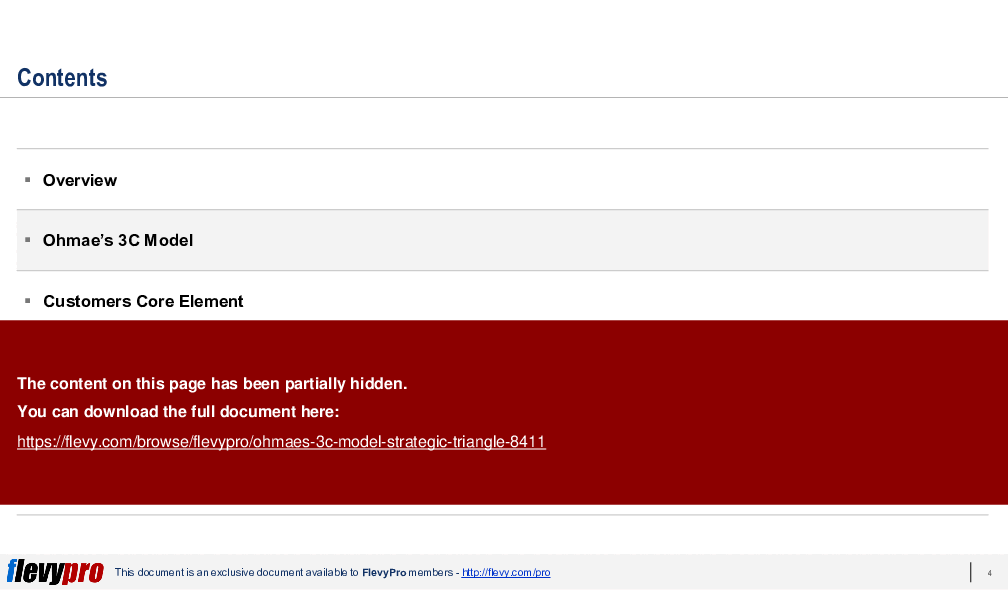
Table of Contents
•  Overview (page 3)
•  Ohmae’s 3C Model (page 3)
•  Customers Core Element (page 9)
•  Company Core Element (page 14)
•  Competitors Core Element (page 19)
•  Slide Design Structure & Template (page 24)

Primary Topics Covered
•  Overview of the 3C Model - An introduction to Ohmae's framework, emphasizing the importance of Customers, Company, and Competitors in strategic planning.
•  Customers Core Element - Focuses on understanding customer needs and preferences, highlighting the significance of a customer-centric approach.
•  Company Core Element - Discusses the internal strengths and capabilities of an organization, emphasizing the importance of optimizing resources.
•  Competitors Core Element - Analyzes the competitive landscape, detailing strategies for differentiation and resource allocation.
•  Benefits of the 3C Model - Outlines the advantages of using the 3C framework for strategic planning and market analysis.
•  Slide Design Structure - Provides guidelines for structuring presentations effectively using the Headline-Body-Bumper framework.

Deliverables, Templates, and Tools
•  Comprehensive slide templates for presenting the 3C Model
•  Customer analysis frameworks for identifying needs and preferences
•  Internal capability assessment tools for evaluating company strengths
•  Competitive analysis frameworks to assess market positioning
•  Strategy formulation templates for integrating insights from the 3C Model
•  Presentation design guidelines to enhance clarity and engagement

Slide Highlights
•  Overview slide detailing the 3C Model and its significance
•  Customer Core Element slide emphasizing customer-centric strategies
•  Company Core Element slide outlining internal capabilities and strengths
•  Competitors Core Element slide analyzing competitive dynamics
•  Slide Design Structure slide providing formatting guidelines for effective presentations

Potential Workshop Agenda
Introduction to the 3C Model (30 minutes)
•  Overview of the framework and its components
•  Discussion on the importance of each core element

Customer Analysis Workshop (60 minutes)
•  Identifying customer needs and preferences
•  Developing customer-centric strategies

Company Capability Assessment (45 minutes)
•  Evaluating internal strengths and resources
•  Aligning capabilities with strategic goals

Competitive Landscape Analysis (60 minutes)
•  Analyzing competitors and market positioning
•  Identifying differentiation opportunities

Customization Guidance
•  Tailor the customer analysis framework to specific market segments and demographics
•  Adjust internal capability assessments to reflect organizational strengths and weaknesses
•  Modify competitive analysis tools to focus on relevant industry competitors
•  Incorporate company-specific terminology and metrics into the presentation templates

Secondary Topics Covered
•  Strategic Planning and its importance in business success
•  Market Analysis techniques for understanding customer behavior
•  Decision-making processes informed by the 3C Model
•  Continuous improvement practices in strategy formulation

Topic FAQ

What are the 3 components of Ohmae’s 3C Model and why are they important?

Ohmae’s 3C Model centers on 3 interdependent components—Customers, Company, and Competitors—to guide strategic decision-making. Customers focus on needs and buying motives, Company covers internal strengths and resources, and Competitors involve market positioning and rival capabilities; the model frames strategy around these 3 core elements.

How can a company use the 3C Model to inform its strategic plan?

Firms use the 3C Model to combine customer insight, internal capability assessment, and competitor analysis so strategy choices align with market demand and the firm’s strengths. The framework supports identifying differentiation opportunities and resource allocation by integrating findings across Customers, Company, and Competitors.

What specific customer strategies does Ohmae recommend in the 3C approach?

Ohmae outlines 4 customer strategies: segmentation by objectives, customer coverage–focused segmentation, adjusting to shifts in customer demographics, and market re-segmentation. These strategies help organizations tailor offerings and market approaches based on distinct customer needs and demographic changes, totaling 4 named strategies.

What should I look for when choosing a 3C Model slide deck or toolkit?

Choose a toolkit that explains Customers, Company, and Competitors, and provides practical templates: customer analysis frameworks, internal capability assessment tools, competitive analysis frameworks, and presentation design guidelines. A useful pack will include slide templates and analytical tools to apply the three-element diagnosis.

Are ready-made 3C templates worth buying versus building slides from scratch?

Ready-made templates save time by providing pre-structured slides, analysis frameworks, and a suggested workshop agenda so teams can focus on insights rather than slide design. For example, a packaged resource may include a 33-slide deck plus a sample workshop agenda with a 60-minute customer analysis session.

How can I apply the 3C Model in a half-day strategy workshop after a merger?

Use the model to run focused sessions: introduce the framework, conduct customer analysis, assess combined internal capabilities, and map competitive landscape to find differentiation. The product’s sample agenda recommends timed sessions such as a 60-minute customer analysis and a 45-minute capabilities assessment.

How does the 3C Model differ from a SWOT analysis when evaluating strategy?

The 3C Model emphasizes the interdependence of Customers, Company, and Competitors and directs strategy by aligning market demand with firm capabilities and competitor moves, whereas SWOT lists strengths/weaknesses/opportunities/threats without the same three-way integrative framing focused on the 3 Cs.

What analytical tools support evaluating the Company element in the 3C framework?

Evaluating the Company element relies on internal capability assessment tools that examine resources, skills, and organizational structure to identify strengths and weaknesses. Practical tools include capability-assessment templates and resource-mapping frameworks designed to evaluate the firm’s internal position.

Document FAQ
These are questions addressed within this presentation.

What is the 3C Model?
The 3C Model is a strategic framework developed by Dr. Kenichi Ohmae that focuses on 3 core elements: Customers, Company, and Competitors, to guide effective business strategy formulation.

How can I apply the 3C Model in my organization?
Utilize the model to analyze customer needs, assess internal capabilities, and evaluate competitive dynamics, integrating these insights into your strategic planning process.

What are the benefits of using the 3C Model?
The model helps organizations align strategies with market needs, leverage internal strengths, and navigate competitive pressures, ultimately leading to sustainable competitive advantage.

Can the 3C Model be used in any industry?
Yes, the 3C Model is applicable across various industries and business sizes, making it a versatile tool for strategic planning and execution.

How does the 3C Model differ from other strategic frameworks?
The 3C Model emphasizes the interdependence of customers, company, and competitors, providing a holistic view of strategic planning that focuses on market demands and internal capabilities.

What tools are included in the presentation?
The presentation includes templates for customer analysis, internal capability assessments, and competitive analysis, as well as guidelines for effective presentation design.

How can I customize the templates provided?
You can tailor the templates by incorporating your organization's specific terminology, metrics, and market segments, ensuring relevance to your strategic objectives.

What is the significance of customer-centric strategies?
Customer-centric strategies prioritize understanding and meeting customer needs, which is essential for achieving business success and fulfilling shareholder interests.

How can I assess my company's internal capabilities?
Utilize the internal capability assessment tools provided in the presentation to evaluate strengths, weaknesses, and areas for improvement within your organization.

What competitive analysis techniques are recommended?
The presentation outlines various techniques for analyzing competitors, including assessing their strengths, weaknesses, and market positioning to identify opportunities for differentiation.

Glossary
•  3C Model - A strategic framework focusing on Customers, Company, and Competitors.
•  Customer-Centric Strategy - An approach prioritizing customer needs and preferences in business decisions.
•  Internal Capabilities - The strengths and resources within an organization that can be leveraged for competitive advantage.
•  Competitive Analysis - The process of evaluating competitors to identify strengths, weaknesses, and market positioning.
•  Strategic Planning - The process of defining an organization's strategy and making decisions on allocating resources to pursue that strategy.
•  Market Analysis - The assessment of market dynamics, customer behavior, and competitive landscape.
•  Differentiation - The process of distinguishing a company's offerings from competitors to gain a competitive edge.
•  Resource Allocation - The distribution of resources among various projects or business units.
•  Continuous Improvement - Ongoing efforts to enhance products, services, or processes.
•  Segmentation - The process of dividing a market into distinct groups of buyers with different needs or behaviors.
•  Strategic Framework - A structured approach for analyzing and formulating business strategies.
•  Value Proposition - The promise of value to be delivered to customers, highlighting the benefits of a product or service.
•  Operational Efficiency - The ability to deliver products or services in the most cost-effective manner without compromising quality.
•  Customer Journey - The complete experience a customer has with a brand, from initial awareness to post-purchase interactions.
•  Market Positioning - The process of establishing a brand or product in the minds of consumers relative to competitors.
•  Stakeholder Interests - The needs and expectations of individuals or groups that have an interest in the success of an organization.
•  Innovation - The introduction of new ideas, products, or processes to enhance business performance.
•  Brand Identity - The visible elements of a brand, such as color, design, and logo, that distinguish it from others.
•  Cost Structure - The various costs incurred by a business in the process of delivering its products or services.
•  Strategic Partnerships - Collaborations between organizations to leverage each other's strengths and capabilities.
•  Market Re-segmentation - The process of redefining market segments based on changing customer needs or behaviors.

COMPETITIVE ANALYSIS PPT SLIDES

Understanding Ohmae's 3C Model for Strategic Success

Understanding the Central Role of Customers in Strategy

Strategic Insights on Competitor Analysis

Optimizing Corporate Strategies for Market Leadership

Source: Best Practices in Competitive Analysis, Customer Analysis, Company Analysis PowerPoint Slides: Ohmae's 3C Model (Strategic Triangle) PowerPoint (PPTX) Presentation Slide Deck, LearnPPT Consulting


$29.00
FlevyPro price: FREE (included in subscription)
This framework is developed by a team of former McKinsey and Big 4 consultants. The presentation follows the headline-body-bumper slide format used by global consulting firms.
Add to Cart
  

Did you need more documents?

Consider a FlevyPro subscription from $39/month. View plans here.

For $10.00 more, you can download this document plus 2 more FlevyPro documents. That's just $13 each.

ABOUT FLEVYPRO

This document is part of the FlevyPro Library, a curated knowledge base of documents for our FlevyPro subscribers.

FlevyPro is a subscription service for on-demand business frameworks and analysis tools. FlevyPro subscribers receive access to an exclusive library of curated business documents—business framework primers, presentation templates, Lean Six Sigma tools, and more—among other exclusive benefits.

Click here to learn more about FlevyPro and its benefits.

Did you know?
The average daily rate of a McKinsey consultant is $6,625 (not including expenses). The average price of a Flevy document is $65.


Trusted by over 10,000+ Client Organizations
Since 2012, we have provided business templates to over 10,000 businesses and organizations of all sizes, from startups and small businesses to the Fortune 100, in over 130 countries.
AT&T GE Cisco Intel IBM Coke Dell Toyota HP Nike Samsung Microsoft Astrazeneca JP Morgan KPMG Walgreens Walmart 3M Kaiser Oracle SAP Google E&Y Volvo Bosch Merck Fedex Shell Amgen Eli Lilly Roche AIG Abbott Amazon PwC T-Mobile Broadcom Bayer Pearson Titleist ConEd Pfizer NTT Data Schwab


Read Customer Testimonials

 
"As a niche strategic consulting firm, Flevy and FlevyPro frameworks and documents are an on-going reference to help us structure our findings and recommendations to our clients as well as improve their clarity, strength, and visual power. For us, it is an invaluable resource to increase our impact and value."

– David Coloma, Consulting Area Manager at Cynertia Consulting
 
"As a consultant requiring up to date and professional material that will be of value and use to my clients, I find Flevy a very reliable resource.

The variety and quality of material available through Flevy offers a very useful and commanding source for information. Using Flevy saves me time, enhances my expertise and ends up being a good decision."

– Dennis Gershowitz, Principal at DG Associates
 
"If you are looking for great resources to save time with your business presentations, Flevy is truly a value-added resource. Flevy has done all the work for you and we will continue to utilize Flevy as a source to extract up-to-date information and data for our virtual and onsite presentations!"

– Debbi Saffo, President at The NiKhar Group
 
"As an Independent Management Consultant, I find Flevy to add great value as a source of best practices, templates and information on new trends. Flevy has matured and the quality and quantity of the library is excellent. Lastly the price charged is reasonable, creating a win-win value for "

– Jim Schoen, Principal at FRC Group
 
"I like your product. I'm frequently designing PowerPoint presentations for my company and your product has given me so many great ideas on the use of charts, layouts, tools, and frameworks. I really think the templates are a valuable asset to the job."

– Roberto Fuentes Martinez, Senior Executive Director at Technology Transformation Advisory
 
"Flevy.com has proven to be an invaluable resource library to our Independent Management Consultancy, supporting and enabling us to better serve our enterprise clients.

The value derived from our [FlevyPro] subscription in terms of the business it has helped to gain far exceeds the investment made, making a subscription a no-brainer for any growing consultancy – or in-house strategy team."

– Dean Carlton, Chief Transformation Officer, Global Village Transformations Pty Ltd.
 
"FlevyPro provides business frameworks from many of the global giants in management consulting that allow you to provide best in class solutions for your clients."

– David Harris, Managing Director at Futures Strategy
 
"I have used FlevyPro for several business applications. It is a great complement to working with expensive consultants. The quality and effectiveness of the tools are of the highest standards."

– Moritz Bernhoerster, Global Sourcing Director at Fortune 500


Customers Also Bought These Documents


Customers Also Like These Documents

Explore Templates on Related Management Topics


Your Recently Viewed Documents
Download our FREE Strategy & Transformation Framework Templates

Download our free compilation of 50+ Strategy & Transformation slides and templates. Frameworks include McKinsey 7-S, Balanced Scorecard, Disruptive Innovation, BCG Curve, and many more.