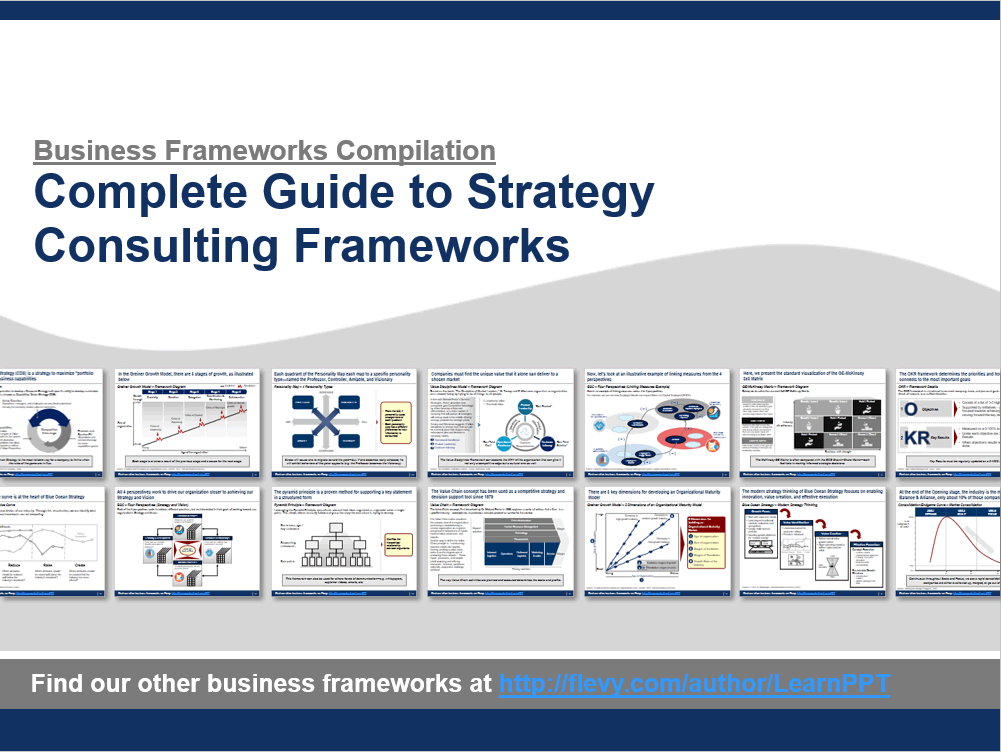

This presentation is created by ex-McKinsey, BCG, Deloitte, EY, and Capgemini consultants. It is a compilation of 20 Strategy Consulting frameworks, including ones developed by McKinsey, BCG, AT Kearney, and PwC.
Familiarize yourself with 20 Strategy Consulting frameworks, ranging from ones pioneered by renown strategists (e.g. Michael Porter, Bruce Henderson, Peter Drucker) to global strategy consulting firms (e.g. McKinsey, BCG, Booz).
Learn how Strategy Consultants structure their approaches to Strategic Analysis, Strategic Thinking, Project Design, Problem Solving, and Communication.
Understand how different frameworks are applied to different types of Strategy, from Competitive Analysis to Portfolio Management to Cost Reduction.
STRATEGY FRAMEWORKS PPT DESCRIPTION
This product (Complete Guide to Strategy Consulting Frameworks) is a 144-slide PPT PowerPoint presentation slide deck (PPTX), which you can download immediately upon purchase.
Frameworks are powerful tools Strategy Consultants leverage to address their clients' business issues in an organized, thorough, and efficient fashion.
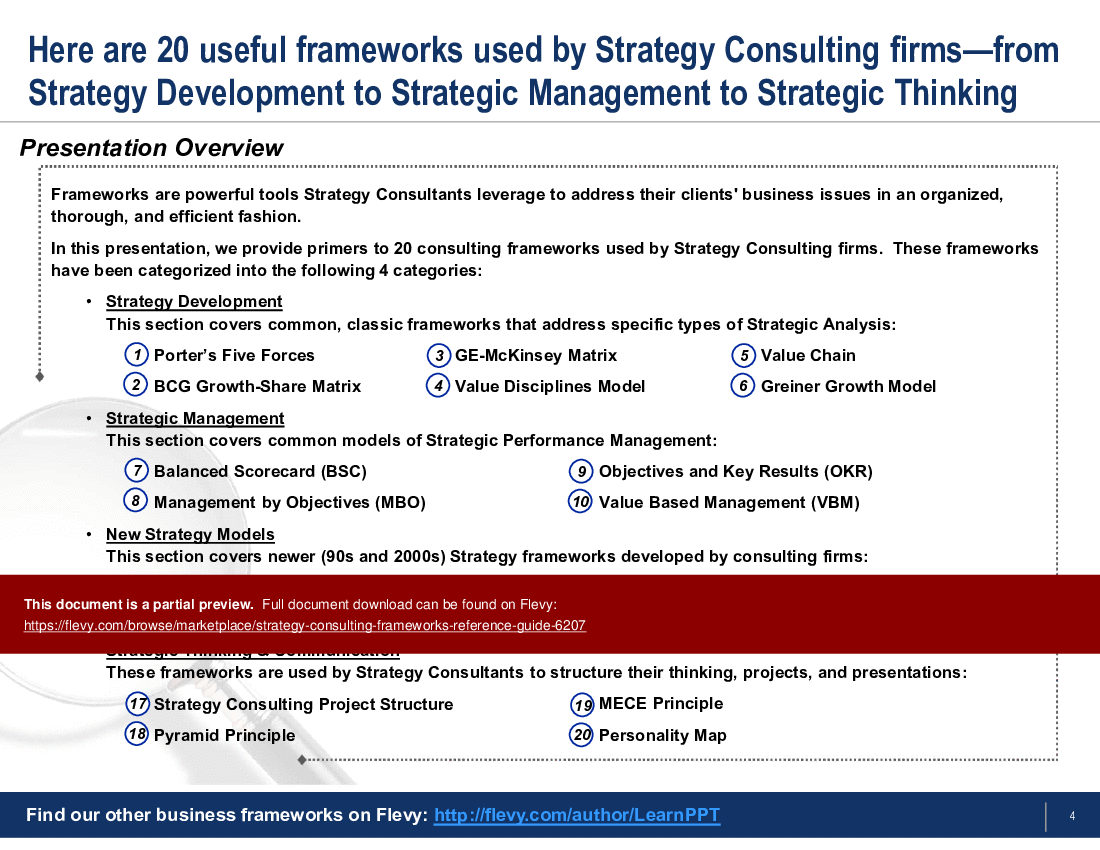
In this presentation, we provide primers to 20 consulting frameworks used by Strategy Consulting firms. These frameworks have been categorized into the following 4 categories:
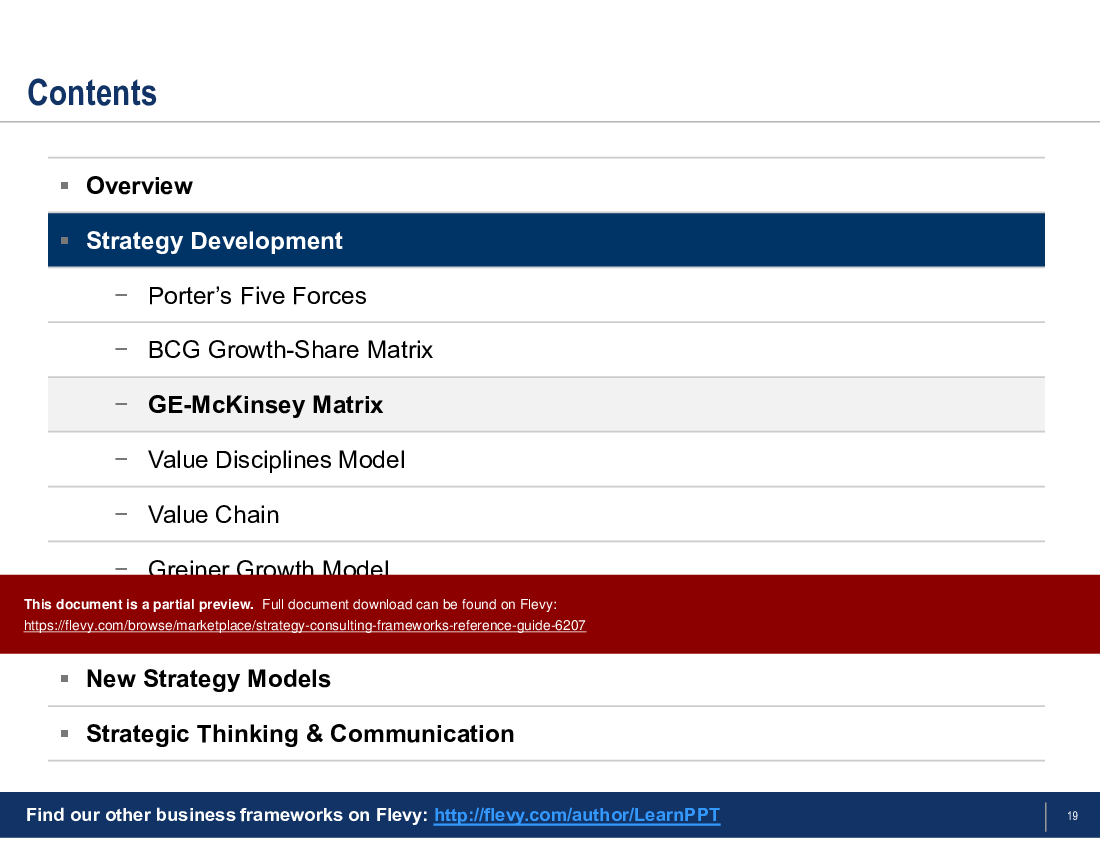
1. Strategy Development – This section covers common, classic frameworks that address specific types of Strategic Analysis.
• Porter's Five Forces
• BCG Growth-Share Matrix
• GE-McKinsey Matrix
• Value Disciplines Model
• Value Chain
• Greiner Growth Model
2. Strategic Management – This section covers common models of Strategic Performance Management.
• Balanced Scorecard (BSC)
• Management by Objectives (MBO)
• Objectives and Key Results (OKR)
• Value Based Management (VBM)
3. New Strategy Models – This section covers newer Strategy frameworks developed by consulting firms during the 90s and 2000s.
• Digital Transformation Strategy
• Blue Ocean Strategy
• Organic Growth Framework (OGF)
• Consolidation-Endgame Curve
• Capabilities-Driven Strategy (CDS)
• Business Model Canvas (BMC)
4. Strategic Thinking & Communication – These frameworks are used by Strategy Consultants to structure their thinking, projects, and presentations:
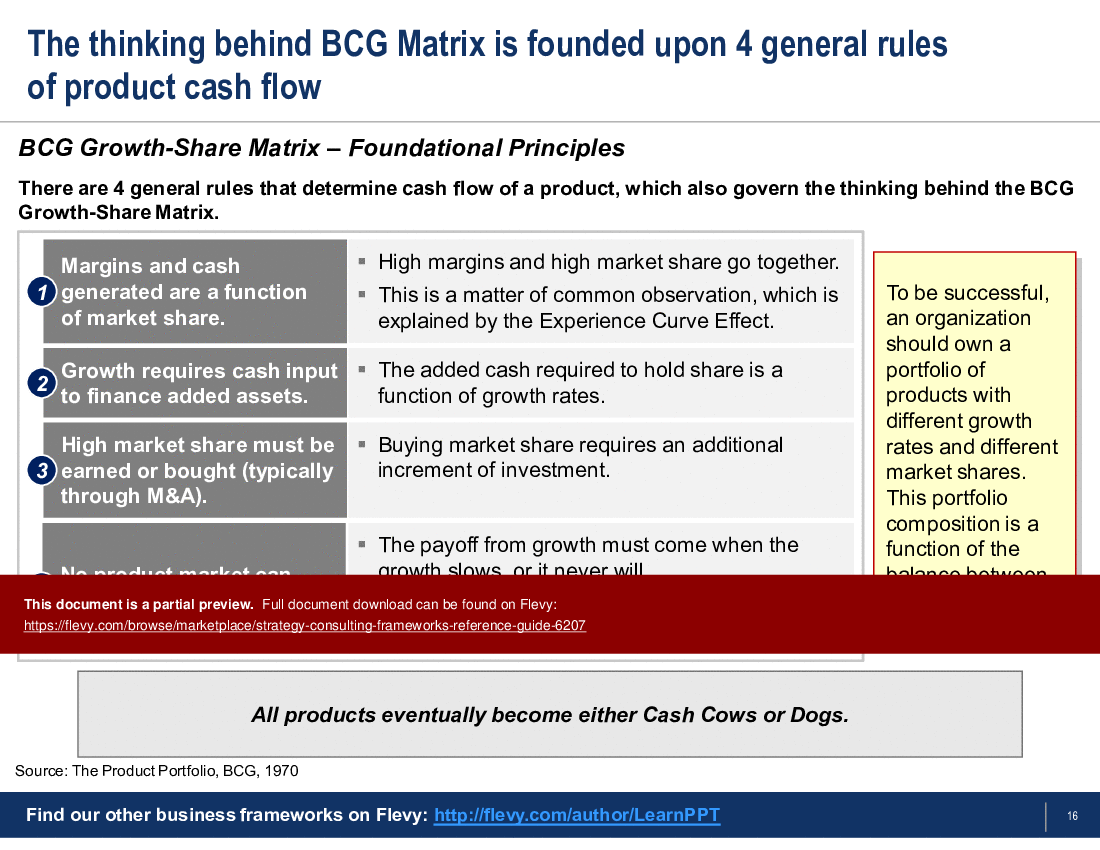
The PPT delves into the intricacies of the BCG Growth-Share Matrix, highlighting its foundational principles and the four general rules governing product cash flow. It emphasizes the importance of market share in generating margins and cash, the necessity of cash input for growth, and the critical role of high market share achieved through investment or M&A. The matrix categorizes products into Cash Cows, Stars, Question Marks, and Dogs, providing a clear framework for resource allocation and strategic decision-making.
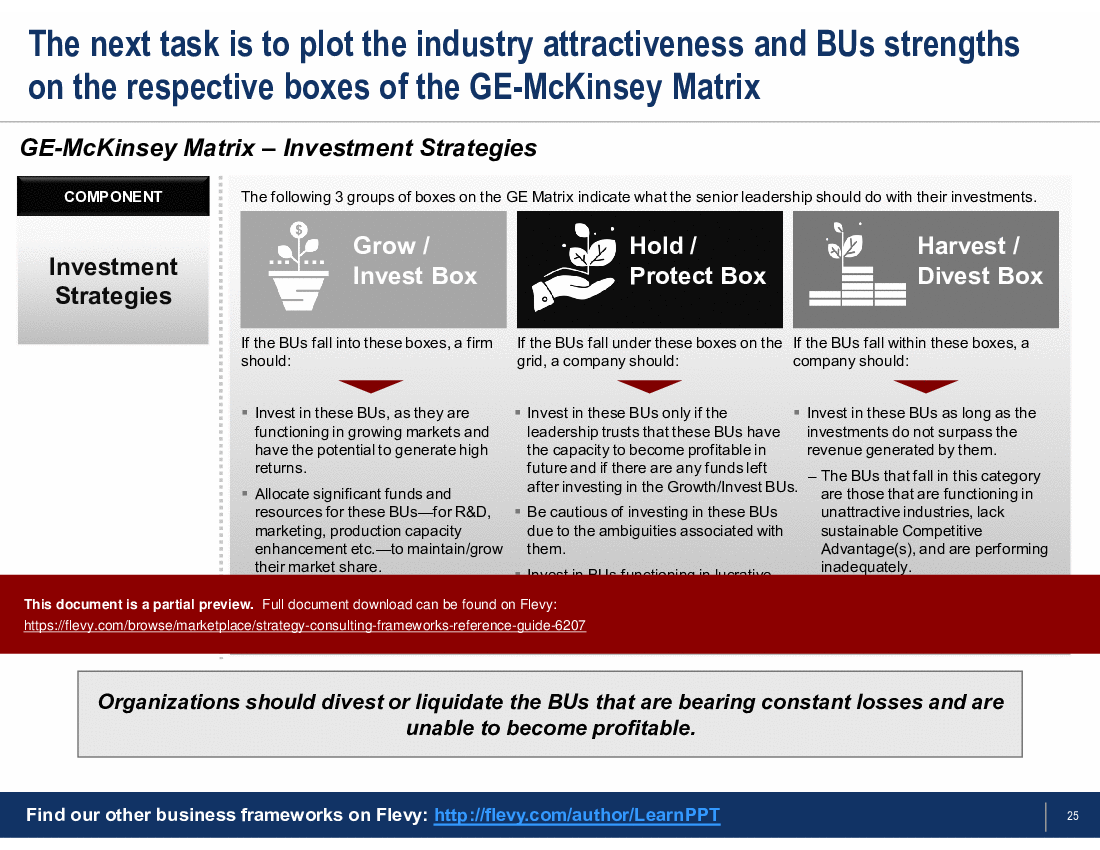
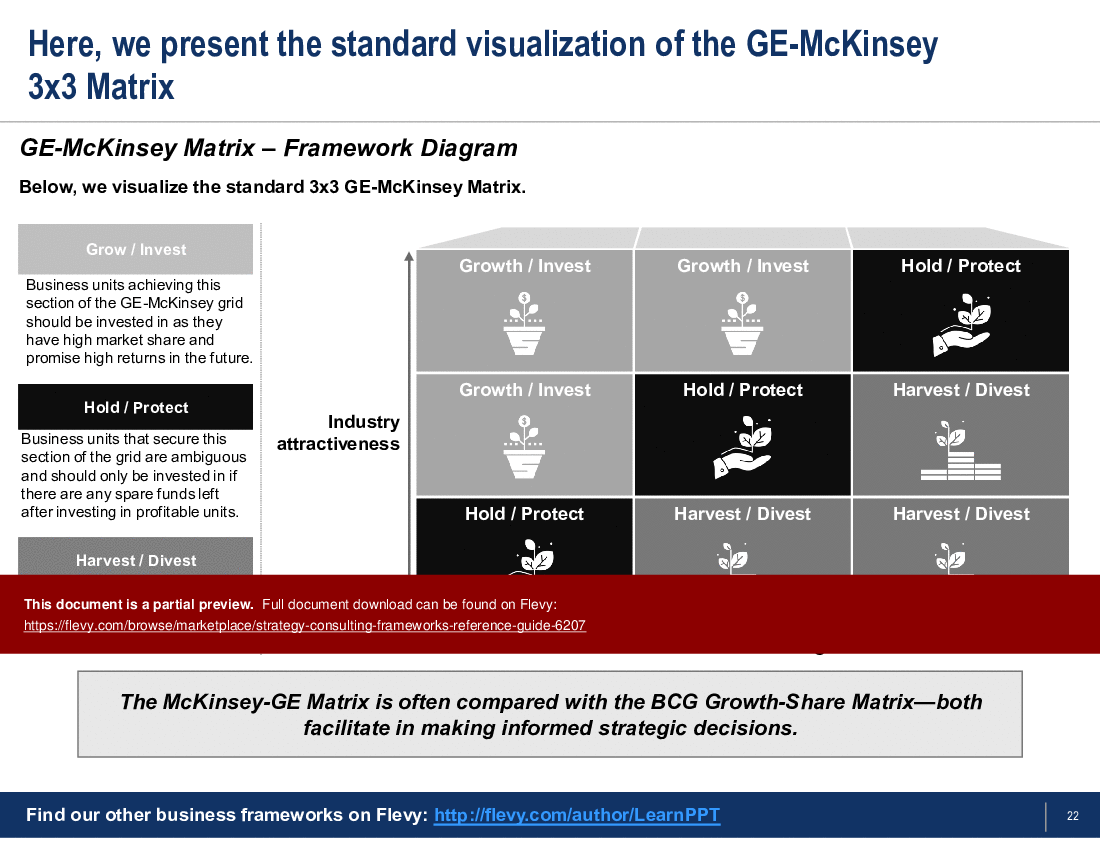
The GE-McKinsey Matrix is another key framework discussed, offering a 3x3 grid to evaluate business units based on industry attractiveness and competitive strength. This matrix guides investment strategies, suggesting actions like grow/invest, hold/protect, and harvest/divest based on the positioning of business units. The document also covers the Value Disciplines Model, which helps organizations identify their unique value proposition through Operational Excellence, Product Leadership, or Customer Intimacy. This model aids in aligning organizational strategies with market demands, ensuring a competitive edge.
Got a question about the product? Email us at support@flevy.com or ask the author directly by using the "Ask the Author a Question" form. If you cannot view the preview above this document description, go here to view the large preview instead.
MARCUS OVERVIEW
This synopsis was written by Marcus [?] based on the analysis of the full 144-slide presentation.
Executive Summary
The "Complete Guide to Strategy Consulting Frameworks" is a meticulously crafted presentation designed by former consultants from top firms such as McKinsey, BCG, Deloitte, and EY. This consulting-grade resource offers a comprehensive overview of 20 essential strategy frameworks, including renowned models like Porter’s Five Forces, the BCG Growth-Share Matrix, and the GE-McKinsey Matrix. Buyers will gain insights into strategic analysis, decision-making, and operational excellence, enabling them to enhance their strategic initiatives and drive impactful results.
Who This Is For and When to Use
• Strategy consultants seeking structured methodologies for client engagements
• Corporate executives aiming to refine strategic planning and execution
• Business analysts focused on competitive analysis and market positioning
• Project managers overseeing strategic initiatives and transformations
Best-fit moments to use this deck:
• During strategic planning sessions to align teams on frameworks
• For training sessions aimed at enhancing strategic thinking capabilities
• In client presentations to illustrate strategic options and frameworks
Learning Objectives
• Define key strategy frameworks and their applications in consulting
• Build a structured approach to strategic analysis using proven models
• Establish a clear understanding of competitive dynamics and market positioning
• Identify and evaluate growth opportunities through strategic frameworks
• Create actionable plans based on insights derived from strategic analysis
• Communicate strategic recommendations effectively using structured methodologies
Table of Contents
• Overview (page 3)
• Strategy Development (page 5)
• Strategic Management (page 45)
• New Strategy Models (page 69)
• Strategic Thinking & Communication (page 116)
Primary Topics Covered
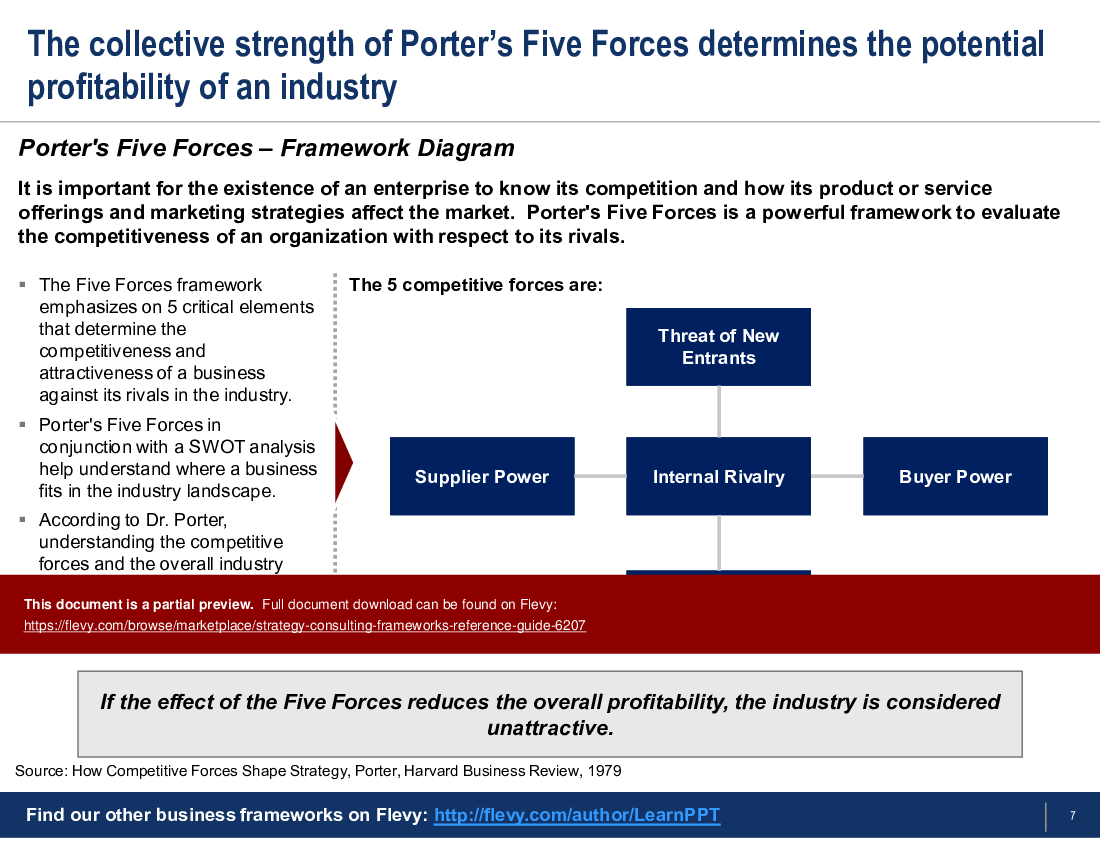
• Strategy Development - This section includes classic frameworks for strategic analysis, such as Porter’s Five Forces and the BCG Growth-Share Matrix, essential for understanding competitive dynamics.
• Strategic Management - Focuses on performance management frameworks like the Balanced Scorecard and Management by Objectives, crucial for tracking strategic execution.
• New Strategy Models - Covers contemporary frameworks such as Digital Transformation Strategy and Blue Ocean Strategy, highlighting innovative approaches to strategic growth.
• Strategic Thinking & Communication - Discusses methodologies for structuring communication and presentations, including the Pyramid Principle and the MECE Principle.
Deliverables, Templates, and Tools
• Framework templates for strategic analysis and decision-making
• Presentation slides for client engagements and internal training
• Worksheets for evaluating strategic options and growth initiatives
• Guides for implementing performance management systems
• Tools for mapping customer journeys and identifying value propositions
Slide Highlights
• Overview of Porter’s Five Forces and its application in competitive analysis
• Detailed breakdown of the BCG Growth-Share Matrix and its implications for portfolio management
• Visualization of the GE-McKinsey Matrix for assessing business unit strength
• Framework diagram illustrating the Value Disciplines Model for strategic focus
• Step-by-step guide for implementing the Balanced Scorecard in performance management
Potential Workshop Agenda
Introduction to Strategy Frameworks (60 minutes)
• Overview of key frameworks and their relevance
• Group discussion on current strategic challenges
Framework Deep Dive (90 minutes)
• In-depth exploration of Porter’s Five Forces and BCG Matrix
• Case studies illustrating framework applications
Strategic Planning Session (120 minutes)
• Collaborative exercise to apply frameworks to real-world scenarios
• Development of action plans based on insights gained
Customization Guidance
• Tailor the frameworks to specific industry contexts for relevance
• Adjust terminology and metrics to align with organizational standards
• Incorporate company-specific case studies to enhance engagement
FAQ What are the key frameworks included in this guide?
The guide includes frameworks such as Porter’s Five Forces, BCG Growth-Share Matrix, GE-McKinsey Matrix, and more, covering various aspects of strategy consulting.
How can I apply these frameworks in my organization?
These frameworks can be utilized in strategic planning sessions, competitive analysis, and performance management initiatives to drive informed decision-making.
Are there templates available for these frameworks?
Yes, the presentation includes templates and worksheets to facilitate the application of the frameworks in practical scenarios.
Can this guide be used for training purposes?
Absolutely, this guide is suitable for training sessions aimed at enhancing strategic thinking and analytical skills among teams.
What is the expected duration for implementing these frameworks?
The duration varies based on the complexity of the strategy and the specific framework being applied,, but most projects typically last between 6-8 weeks.
How do I ensure effective communication of strategic recommendations?
Utilizing the Pyramid Principle and MECE framework will help structure your communication for clarity and impact.
Is this guide suitable for both small and large organizations?
Yes, the frameworks are adaptable and can be applied to organizations of any size, from startups to large enterprises.
What resources are included for further learning?
The guide provides links to additional resources and frameworks available on Flevy for deeper exploration of strategic concepts.
Glossary
• Porter’s Five Forces - A framework for analyzing competitive forces within an industry.
• BCG Growth-Share Matrix - A tool for portfolio management based on market growth and share.
• GE-McKinsey Matrix - A framework for assessing business unit strength and industry attractiveness.
• Balanced Scorecard - A strategic performance management tool that incorporates financial and non-financial metrics.
• Value Disciplines Model - A framework that outlines 3 distinct strategies for achieving competitive advantage.
• Digital Transformation Strategy - A framework for leveraging technology to drive growth and operational improvements.
• Blue Ocean Strategy - A strategy focused on creating uncontested market space and making competition irrelevant.
• Organic Growth Framework (OGF) - An approach to driving sustainable growth by changing customer behavior.

• Consolidation-Endgame Curve - A model describing the lifecycle of industries through consolidation stages.
• Capabilities-Driven Strategy (CDS) - A strategy focused on developing distinctive capabilities for competitive advantage.
• Business Model Canvas (BMC) - A strategic management tool for developing and documenting business models.
• Pyramid Principle - A structured communication framework for presenting ideas logically.
• MECE Principle - A principle for organizing information into mutually exclusive and collectively exhaustive categories.
• Personality Map - A framework for adapting presentation styles to different audience personalities.
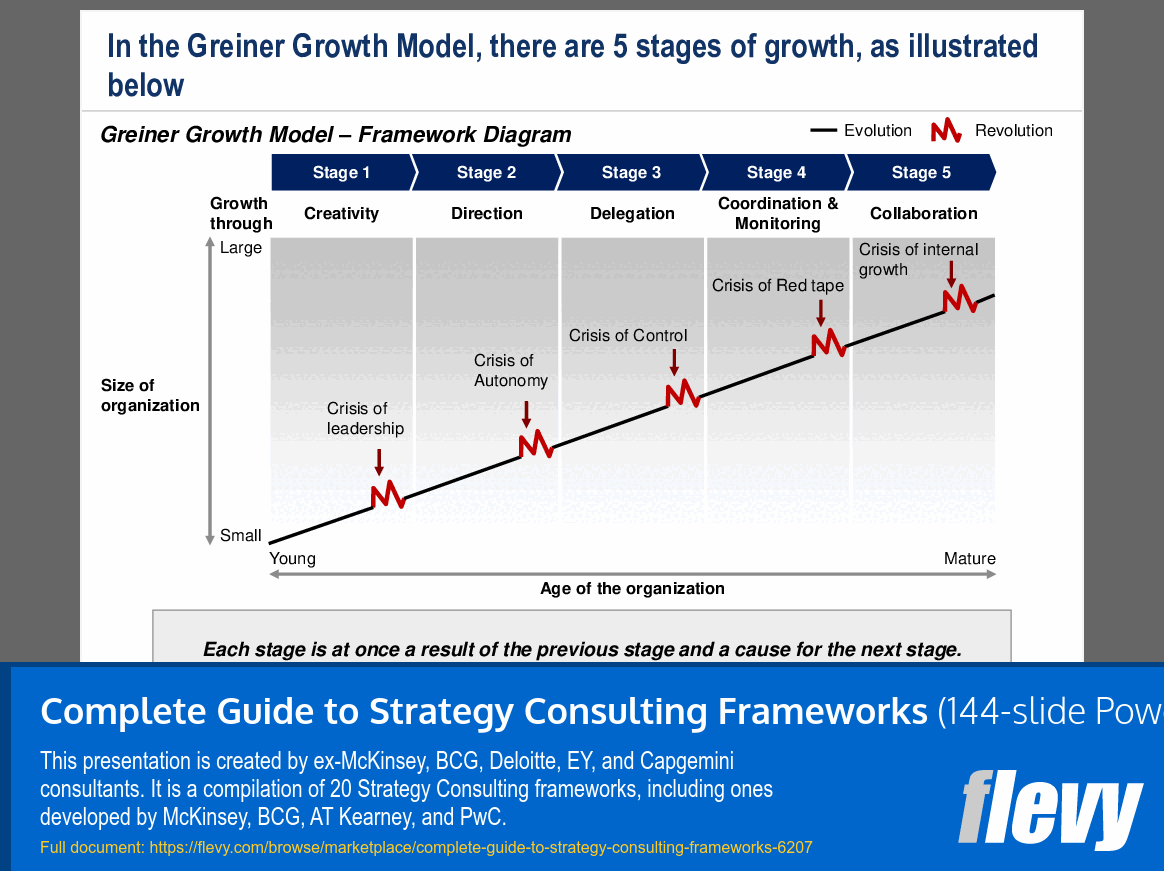
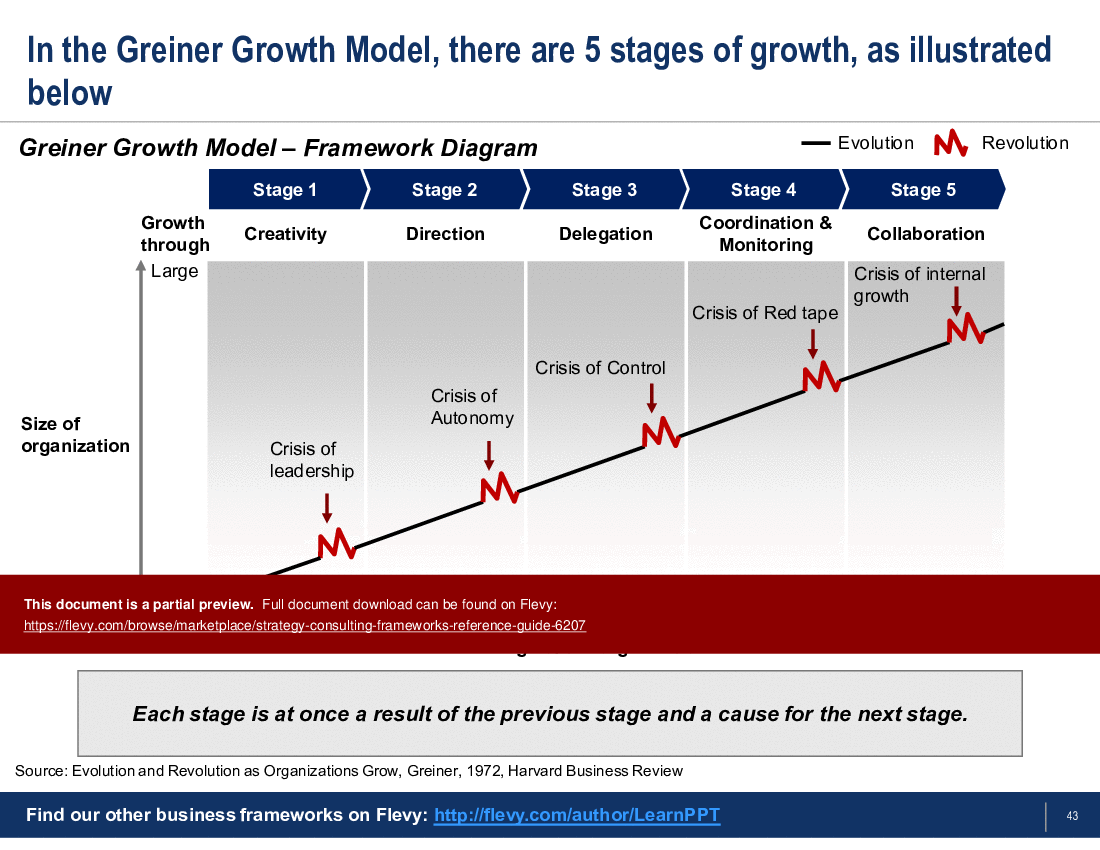
The Greiner Growth Model outlines 5 stages of organizational growth, each with distinct themes and challenges. The vertical axis represents organizational size, while the horizontal axis indicates age, from young to mature.
Stage 1 focuses on creativity, with organizations in their infancy emphasizing innovation. This leads to a 'Crisis of Leadership,' requiring a shift in management style.
Stage 2 emphasizes direction, where formal processes emerge, potentially causing a 'Crisis of Autonomy' due to increased bureaucracy.
Stage 3 introduces delegation, enhancing team autonomy, but risking a 'Crisis of Control' as oversight diminishes.
Stage 4 centers on coordination and monitoring, which can lead to a 'Crisis of Red Tape' from excessive regulations.
Stage 5 is characterized by collaboration, fostering teamwork and innovation, yet may encounter a 'Crisis of Internal Growth' as scaling challenges arise.
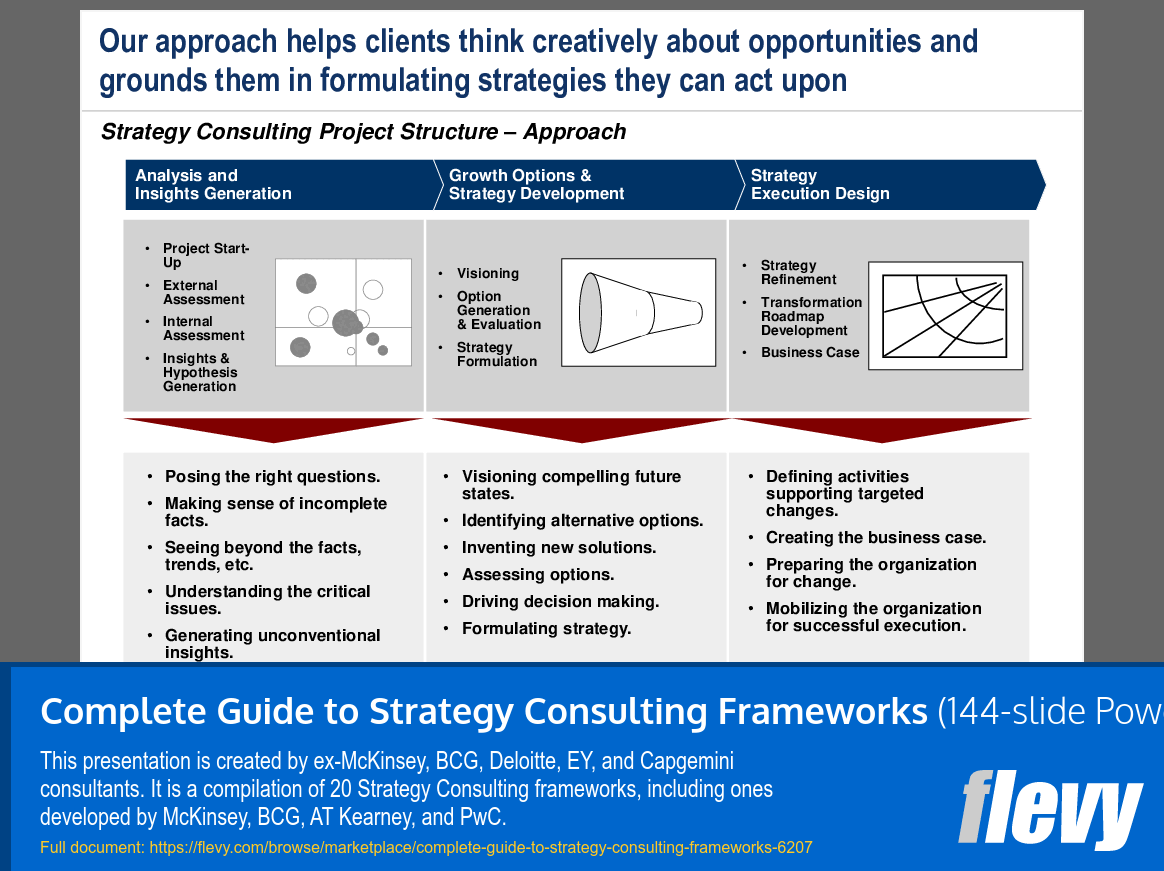
This slide outlines a structured approach to strategy consulting projects, divided into 3 sections: Analysis and Insights Generation, Growth Options & Strategy Development, and Strategy Execution Design. The project begins with Project Definition & Scoping, including Problem Formulation and Resource Mobilization, which establish the project foundation. The External Assessment involves Customer Analysis, Market Analysis, and Competitive Analysis to identify market trends. The Internal Assessment evaluates Core Competencies, Strengths, Weaknesses, Portfolio Analysis, and Value Chain Analysis for a comprehensive understanding of internal factors. Strategy Formulation emphasizes Visioning, Scenario Planning, Future State definition, and Gap Analysis, alongside Option Generation and Evaluation for strategic path identification. The Business Case focuses on Benefits Definition and Financial Development to ensure actionable and financially sound strategies. Finally, Strategy Refinement and Transformation Roadmap sections address Organizational Design and Risk Mitigation for successful implementation.
The Personality Map framework categorizes individuals into 4 personality types: Professor, Controller, Amiable, and Visionary, based on a two-by-two matrix evaluating introversion/extroversion and asking/telling tendencies. The Professor, in the introverted and asking quadrant, prefers inquiry, while the Controller, in the introverted and telling quadrant, is more directive. The extroverted side features the Amiable type, who fosters relationships through asking, and the Visionary, who shares ideas and leads through telling. Each personality type has unique information consumption preferences, impacting team communication and collaboration. Stress can cause individuals to shift toward the opposite pole of their personality type, altering their typical behaviors. This framework aids organizations in improving interpersonal dynamics and optimizing team performance by recognizing and adapting to these personality types.
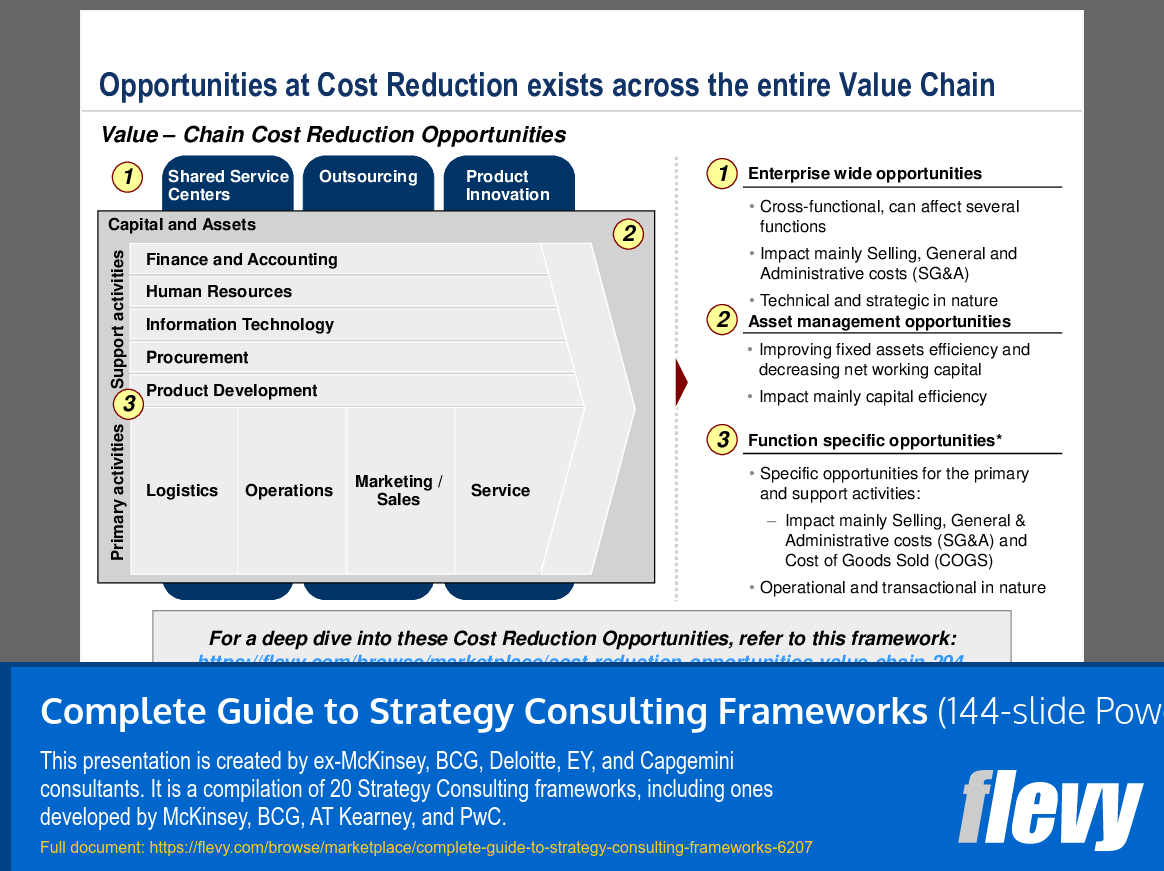
This slide outlines cost reduction opportunities across the value chain, categorized into enterprise-wide, asset management, and function-specific areas. Enterprise-wide opportunities focus on reducing Selling, General, and Administrative (SG&A) costs through cross-functional collaboration. Asset management opportunities aim to enhance capital efficiency by improving fixed asset utilization and reducing net working capital. Function-specific opportunities target cost reductions in primary and support activities, particularly in SG&A and Cost of Goods Sold (COGS). This structured framework guides decision-makers in identifying and prioritizing cost-saving initiatives to improve financial health and operational efficiency.
This slide introduces the Pyramid Logic Structure (PLS), a framework for hypothesis-driven logic flow in presentations and reports. The central hypothesis forms the top of the pyramid, supported by a clear vertical relationship, the "Key Line," indicating that each level builds upon the previous one. Horizontal relationships illustrate connections between major sections and sub-sections, allowing for a comprehensive exploration of the hypothesis with substantiated points. The PLS can extend beyond 4 levels, offering flexibility for complex topics. This structure enhances clarity and aids in organizing thoughts, facilitating effective communication of key messages for persuasive arguments and clearer decision-making processes.
This slide outlines a structured approach to strategy consulting, divided into 3 sections: Analysis and Insights Generation, Growth Options & Strategy Development, and Strategy Execution Design. The first section focuses on project startup, external and internal assessments, and generating insights to identify key issues. The second section emphasizes visioning future states, generating and evaluating growth options, and formulating a coherent strategy, encouraging creativity and innovation. The final section addresses strategy execution design, refining the strategy, developing a transformation roadmap, and creating a solid business case to operationalize the strategy and mobilize resources effectively. This comprehensive framework guides organizations in navigating complex challenges and seizing growth opportunities.
This slide outlines the OKR (Objectives and Key Results) framework for aligning company, team, and individual goals. The framework begins with "Objectives," which are 3-5 high-level goals that set the organization's direction. Each objective is supported by initiatives—specific plans designed to achieve these goals. The second part focuses on "Key Results," which are quantifiable outcomes measuring the success of each objective, assessed on a scale from 0 to 100% or 0 to 1.0. Each objective should have 3-5 measurable key results, with 70-80% indicating accomplishment. Regular updates to key results ensure consistent progress tracking, enhancing focus and accountability across the organization. Implementing the OKR framework drives performance and aligns efforts toward critical goals.
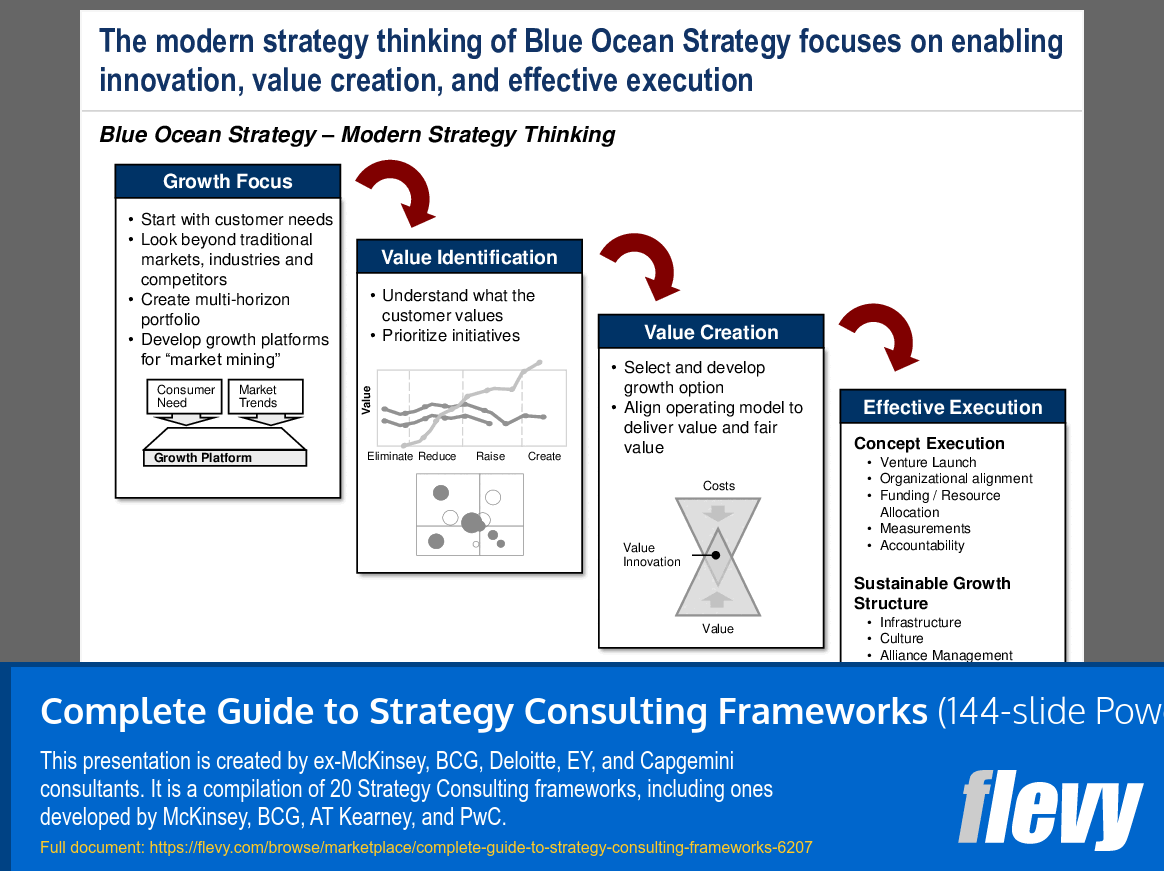
This slide outlines the principles of Blue Ocean Strategy, focusing on innovation, value creation, and execution across 4 key areas: Growth Focus, Value Identification, Value Creation, and Effective Execution. Growth Focus emphasizes starting with customer needs and exploring beyond traditional markets through "market mining" to identify new opportunities. Value Identification stresses understanding customer value and prioritizing initiatives based on insights, visualized through graphs indicating potential value enhancement areas. Value Creation involves selecting growth options and aligning the operating model for value delivery and fair pricing, with value innovation as a central concept. Effective Execution addresses practical aspects like venture launch, organizational alignment, resource allocation, and establishing a sustainable growth structure, including infrastructure and alliance management.
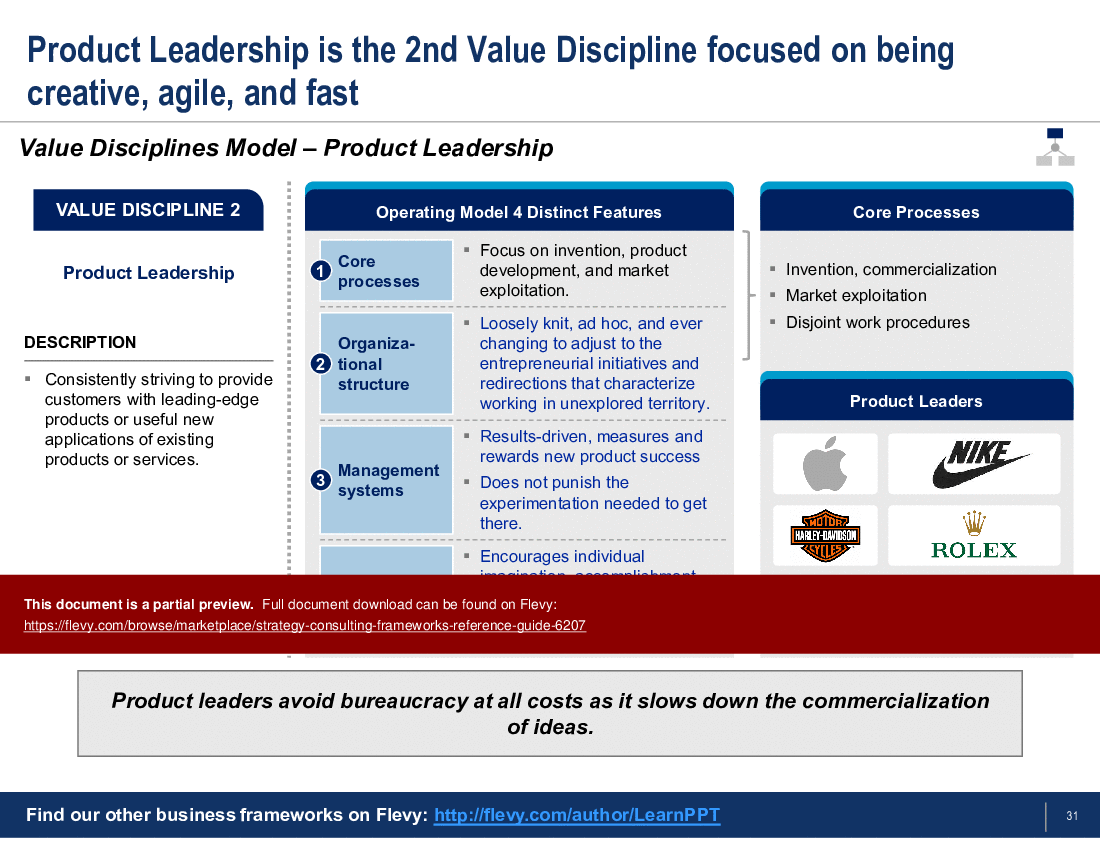
The Value Disciplines Model, developed by Treacy and Wiersema and informed by Michael Porter’s Generic Strategies, emphasizes the need for companies to deliver unique value to specific markets. It outlines 3 value disciplines: Operational Excellence, which focuses on achieving the best total cost through efficiency; Product Leadership, centered on innovation and superior quality; and Customer Intimacy, which tailors offerings to meet customer needs. The model illustrates the interconnection of these disciplines, suggesting organizations must lead with one while maintaining threshold levels in the others to avoid mediocrity. Adopting the Value Disciplines Framework can influence both strategy and organizational culture, enhancing decision-making and performance.
The GE-McKinsey 3x3 Matrix is a strategic tool for portfolio analysis, categorizing business units by industry attractiveness and business unit strength across nine cells. The top row, "Growth / Invest," targets units with high market share and growth potential, recommending resource allocation for their development. The middle row, "Hold / Protect," is for units with moderate potential, suggesting cautious investment only if excess funds are available. The bottom row, "Harvest / Divest," addresses underperforming units, recommending either to harvest remaining value or divest, as they are unlikely to yield substantial returns. This matrix complements the BCG Growth-Share Matrix, emphasizing the need to evaluate business units based on current performance and future potential for informed strategic decision-making.
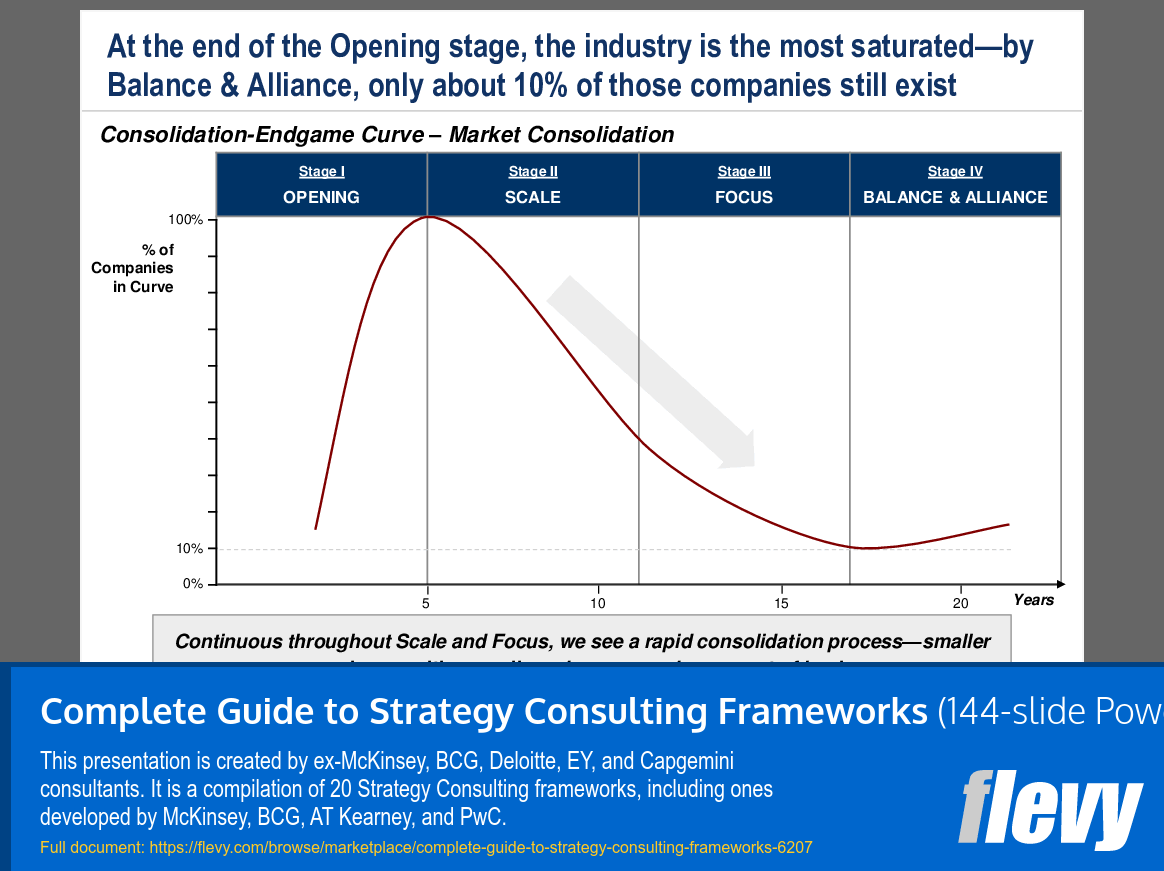
The "Consolidation-Endgame Curve" illustrates market consolidation across 4 stages: Opening, Scale, Focus, and Balance & Alliance. During the Opening stage, only about 10% of companies survive, highlighting intense competition. The Scale stage sees a peak in firms as they attempt to establish market presence. Subsequent stages show a downward trend in company percentages, indicating rapid consolidation. In the Scale and Focus stages, firms streamline operations and refine strategies, leading to a significant reduction in market players. The Balance & Alliance stage stabilizes the curve, suggesting that companies that adapt and form strategic partnerships are more likely to thrive. This visual provides insights into the lifecycle of companies in saturated markets, emphasizing strategic positioning and adaptability.
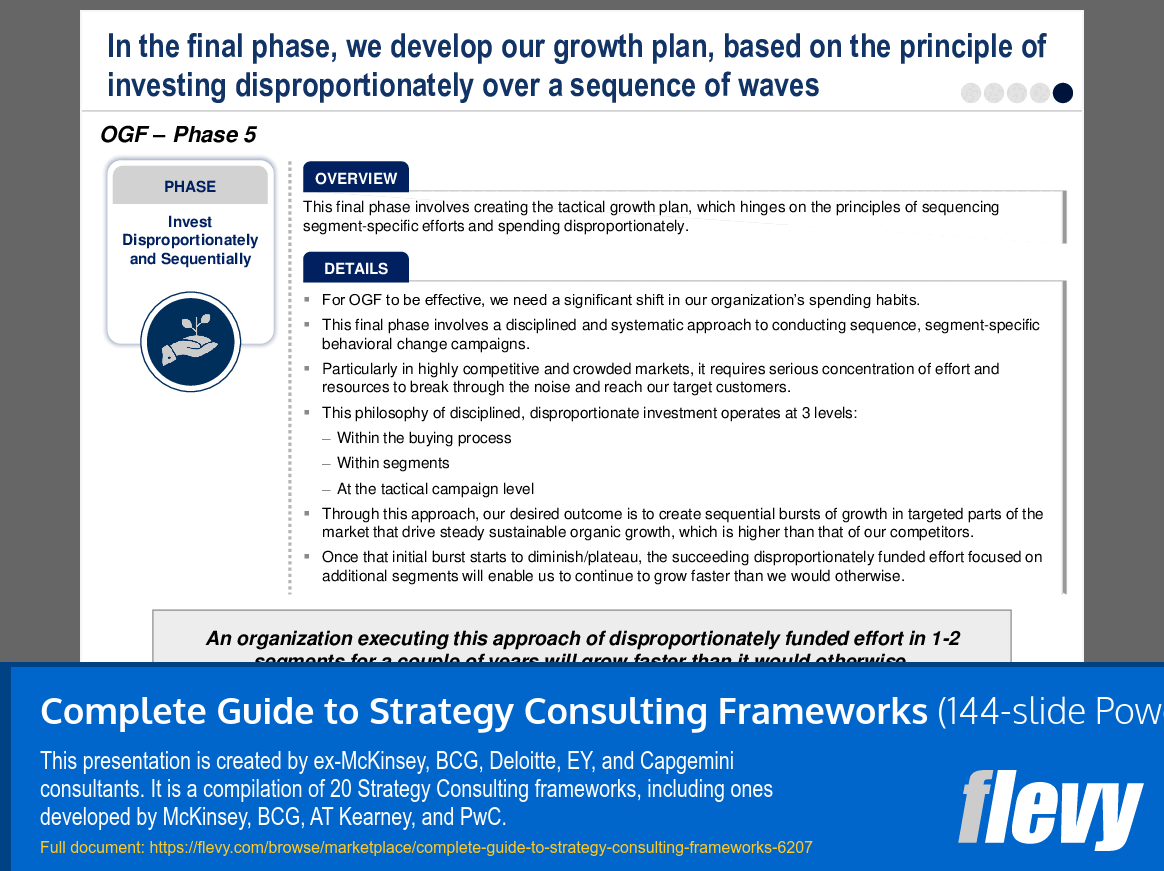
This slide outlines the final phase of a growth plan, emphasizing a strategic shift in spending habits and a disciplined investment approach in competitive markets. It focuses on segment-specific efforts and a sequential investment strategy to maximize impact and effectively reach target customers. The approach requires concentrated investment across 3 levels: within the buying process, within segments, and at the tactical campaign level. The goal is to create sequential bursts of growth that lead to sustainable organic growth, surpassing competitors. Continued investment in additional segments after initial growth plateaus is essential to maintain momentum and achieve faster growth than conventional methods.
This slide illustrates the Balanced Scorecard approach by linking performance measures across 4 perspectives: Customer Relationships, Financial Measures, Internal Business Processes, and Learning and Growth. It highlights the interconnectedness of metrics, showing that Employee Morale positively impacts Customer Satisfaction, which enhances Accounts Receivable. Conversely, Operating Expense negatively affects Return on Capital Employed (ROCE), indicating that higher costs can reduce capital efficiency. The diagram uses arrows to represent these relationships, with positive impacts marked by a plus sign and negative impacts by a minus sign. Specific metrics like Rework emphasize the importance of operational efficiency in overall performance. Understanding these linkages allows executives to align strategic initiatives with organizational health, ensuring improvements in one area do not harm another.
Source: Best Practices in Strategy Frameworks, Consulting Training, Strategy Development, Bain PowerPoint PowerPoint Slides: Complete Guide to Strategy Consulting Frameworks PowerPoint (PPTX) Presentation Slide Deck, LearnPPT Consulting
This presentation is created by ex-McKinsey, BCG, Deloitte, EY, and Capgemini consultants. It is a compilation of 20 Strategy Consulting frameworks, including ones developed by McKinsey, BCG, AT Kearney, and PwC.

We are a team of management consultants trained by top tier global consulting firms (including McKinsey, BCG, Deloitte, EY, Capgemini) with a collective experience of several decades. We specialize in business frameworks based on real-life consulting engagements.
We have served 100s of clients that range from Fortune 500 companies to tech startups to
... [read more] $1B+ private companies.
Utilize our consulting frameworks to apply structured thinking & analysis to address your business challenges, uncover strategic insights, and implement workable solutions. Our PowerPoint presentations follow traditional consulting slide design formats, starting with a clear slide headline. Easily customize and repurpose our slides for your own business presentations.
Beyond business frameworks & methodologies, we also offer PowerPoint templates and other business templates. Our templates are professionally designed and have been used in thousands of deliverables & work products across hundreds of clients.
The average daily rate of a McKinsey consultant is $6,625 (not including expenses). The average price of a Flevy document is $65.
Trusted by over 10,000+ Client Organizations
Since 2012, we have provided best practices to over 10,000 businesses and organizations of all sizes, from startups and small businesses to the Fortune 100, in over 130 countries.
Read Customer Testimonials
"As a consultant requiring up to date and professional material that will be of value and use to my clients, I find Flevy a very reliable resource.
The variety and quality of material available through Flevy offers a very useful and commanding source for information. Using Flevy saves me time, enhances my expertise and ends up being a good decision."
– Dennis Gershowitz, Principal at DG Associates
"As an Independent Management Consultant, I find Flevy to add great value as a source of best practices, templates and information on new trends. Flevy has matured and the quality and quantity of the library is excellent. Lastly the price charged is reasonable, creating a win-win value for
the customer, Flevy and the various authors. This is truly a service that benefits the consulting industry and associated clients. Thanks for providing this service.
"
– Jim Schoen, Principal at FRC Group
"I have used FlevyPro for several business applications. It is a great complement to working with expensive consultants. The quality and effectiveness of the tools are of the highest standards."
– Moritz Bernhoerster, Global Sourcing Director at Fortune 500
"As a niche strategic consulting firm, Flevy and FlevyPro frameworks and documents are an on-going reference to help us structure our findings and recommendations to our clients as well as improve their clarity, strength, and visual power. For us, it is an invaluable resource to increase our impact and value."
– David Coloma, Consulting Area Manager at Cynertia Consulting
"I have used Flevy services for a number of years and have never, ever been disappointed. As a matter of fact, David and his team continue, time after time, to impress me with their willingness to assist and in the real sense of the word. I have concluded in fact
that it is not at all just a repository of documents/resources but, in the way that David and his team manage the firm, it is like dealing with consultants always ready to assist, advise and direct you to what you really need, and they always get it right.
I am an international hospitality accomplished senior executive who has worked and lived during the past 35 years in 23 countries in 5 continents and I can humbly say that I know what customer service is, trust me.
Aside from the great and professional service that Flevy's team provide, their wide variety of material is of utmost great quality, professionally put together and most current.
Well done Flevy, keep up the great work and I look forward to continue working with you in the future and to recommend you to a variety of colleagues around the world.
"
– Roberto Pelliccia, Senior Executive in International Hospitality
"My FlevyPro subscription provides me with the most popular frameworks and decks in demand in today’s market. They not only augment my existing consulting and coaching offerings and delivery, but also keep me abreast of the latest trends, inspire new products and service offerings for my practice, and educate me
in a fraction of the time and money of other solutions. I strongly recommend FlevyPro to any consultant serious about success.
"
– Bill Branson, Founder at Strategic Business Architects
"I like your product. I'm frequently designing PowerPoint presentations for my company and your product has given me so many great ideas on the use of charts, layouts, tools, and frameworks. I really think the templates are a valuable asset to the job."
– Roberto Fuentes Martinez, Senior Executive Director at Technology Transformation Advisory
"As a consulting firm, we had been creating subject matter training materials for our people and found the excellent materials on Flevy, which saved us 100's of hours of re-creating what already exists on the Flevy materials we purchased."
Download our free compilation of 50+ Strategy & Transformation slides and templates. Frameworks include McKinsey 7-S, Balanced Scorecard, Disruptive Innovation, BCG Curve, and many more.