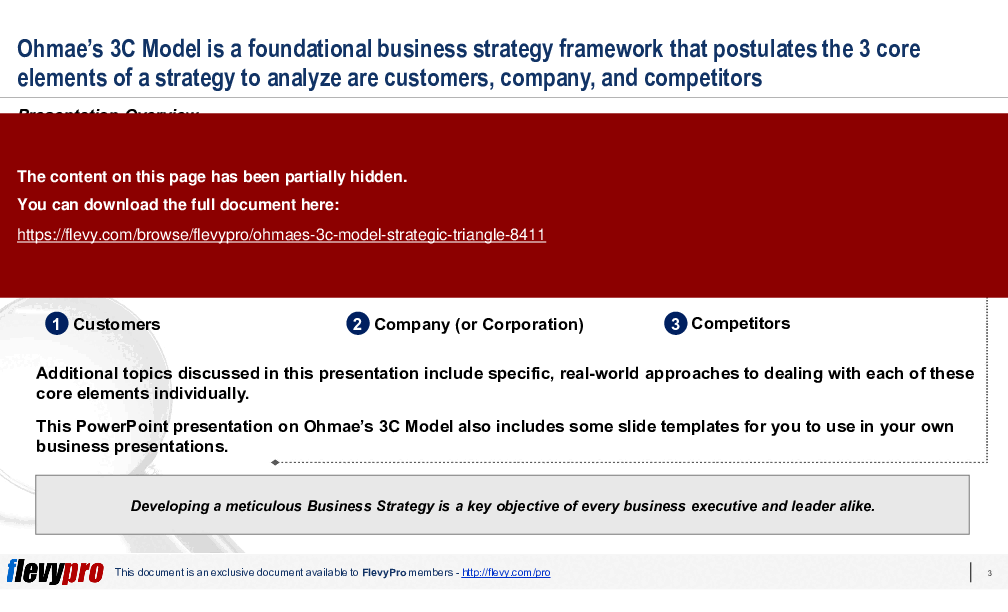
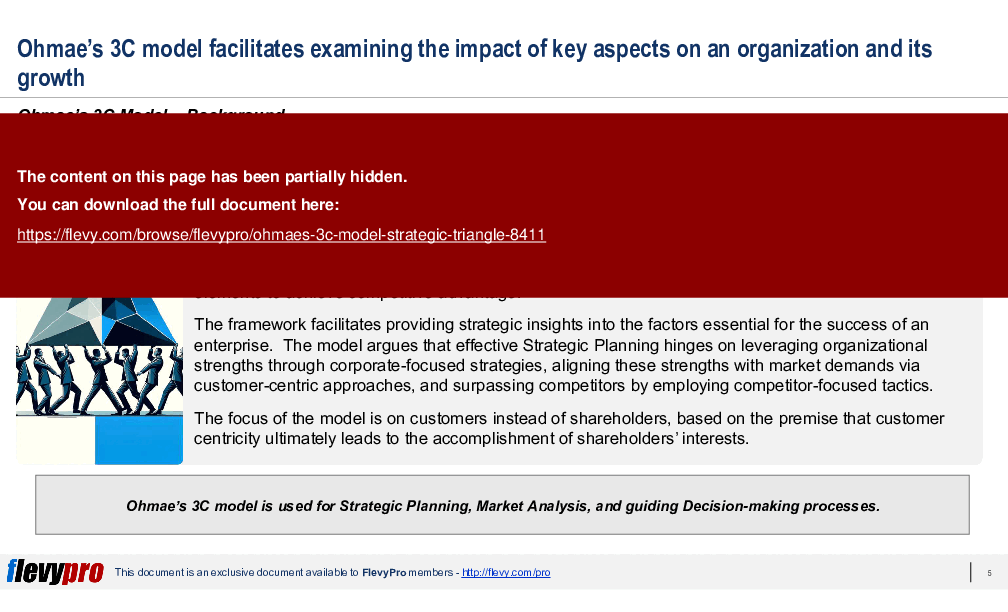

Dr. Kenichi Ohmae, a Japanese organizational theorist and strategy guru, proposed the 3C Model in 1982. The concept was published in his book, "The Mind of the Strategist: The Art of Japanese Business."
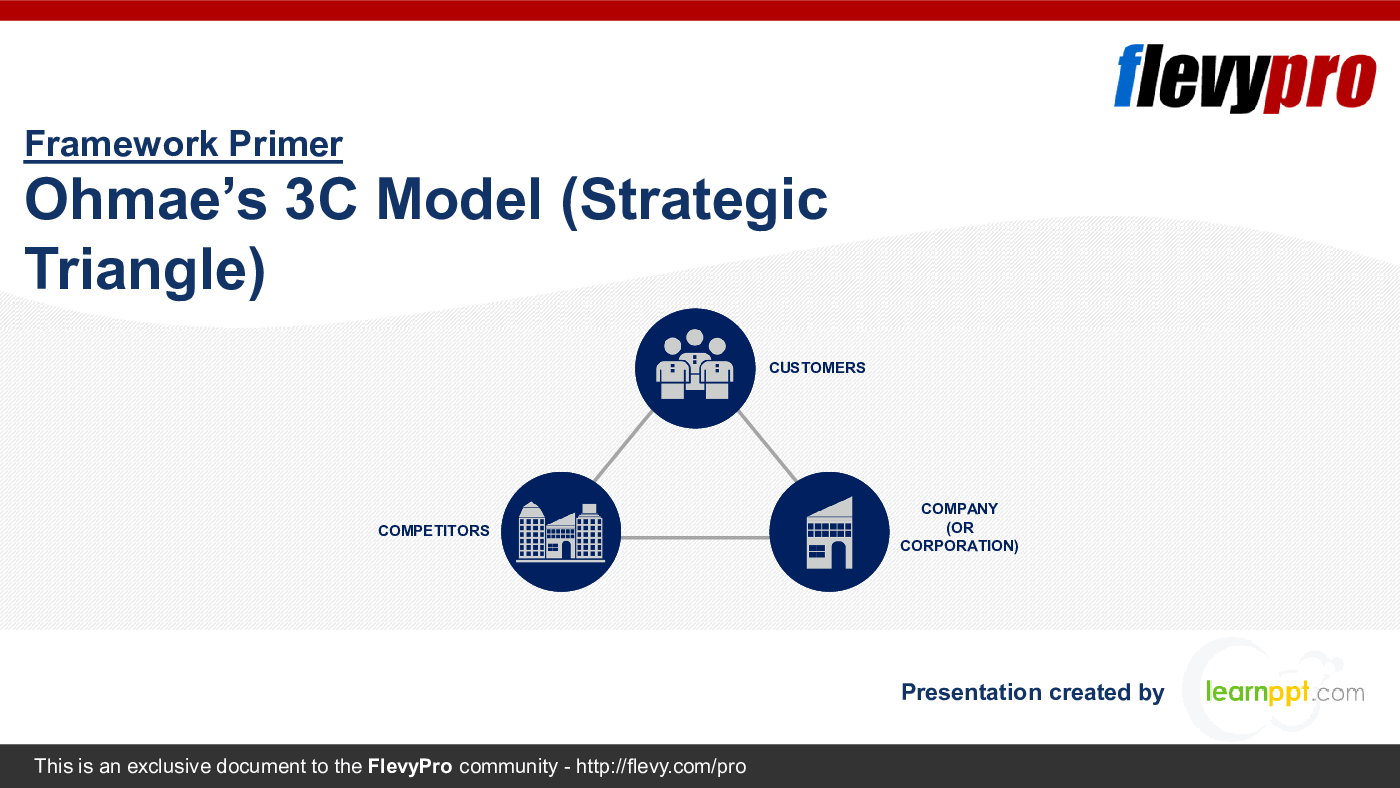
The Ohmae 3C model, also known as the Strategic Triangle or just the 3 Cs, is a strategic framework that assists in developing the fundamentals of Business Strategy for any organization.
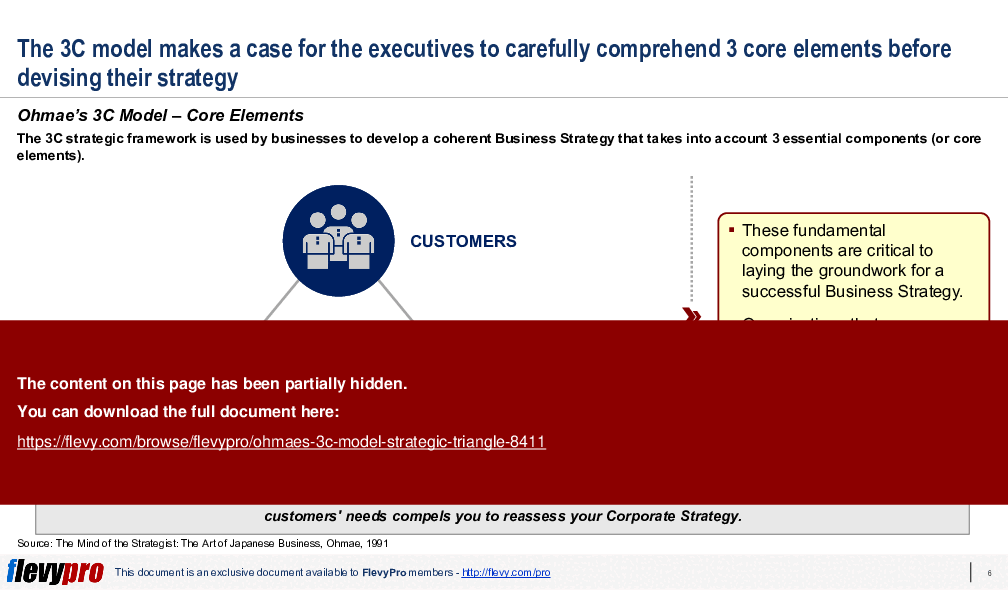
This PowerPoint presentation deliberates on the 3 core elements or components of Ohmae's 3C model that are instrumental in creating an effective Business Strategy. The core elements include:
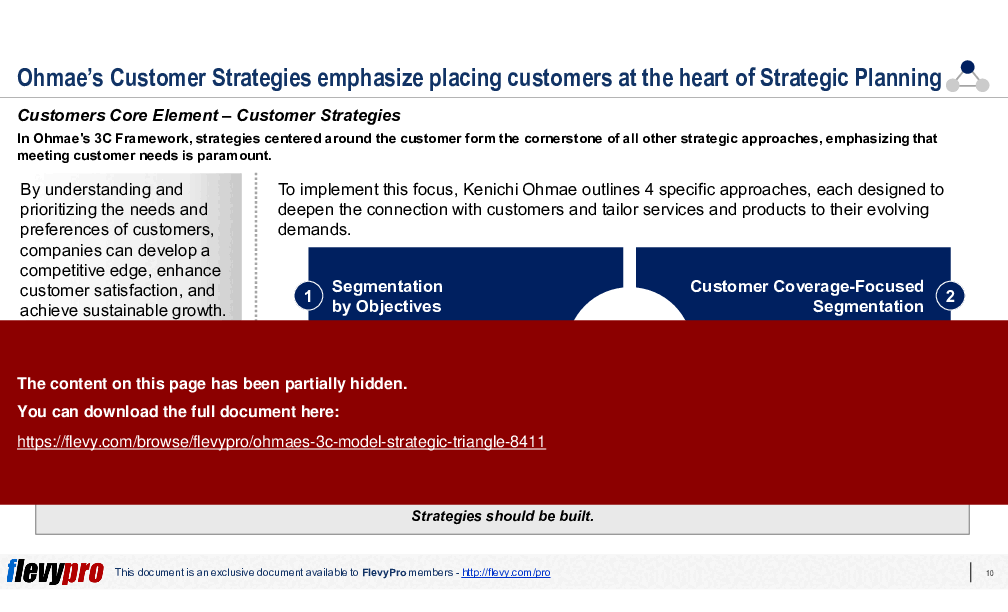
1. Customers – The organization possesses knowledge of the consumers' desires and demands. It is imperative for the organization to comprehend, fulfill, and attend to the requirements, problems, expectations, and buying motives of its clientele as opposed to those of its shareholders.
2. Company (or Corporation) – This element focuses on the company's internal strengths and capabilities, including its resources, skills, and organizational structure.
3. Competitors – Competitors have a huge influence on an organization's objectives, methodologies, operations, effectiveness, and standing. Analyzing the competition involves understanding the market landscape, competitors' strategies, strengths, weaknesses, and potential moves.
Each of these 3 Cs is discussed in depth, including specific strategies for each element. For instance, Ohmae's 3C Model posits 4 Customer Strategies:
1. Segmentation by Objectives
2. Customer Coverage-Focused Segmentation
3. Adjusting to Shifts in Customer Demographics
4. Market Re-segmentation
We also explain each strategy in detail. Furthermore, this presentation includes specific, real-world approaches to dealing with each of these core elements individually.
This PowerPoint presentation on Ohmae's 3C Model also includes some slide templates for you to use in your own business presentations.
Got a question about this document? Email us at flevypro@flevy.com.
Executive Summary
Ohmae's 3C Model, also known as the Strategic Triangle, is a foundational framework for business strategy that emphasizes the interdependence of 3 core elements: Customers, Company, and Competitors. Developed by Dr. Kenichi Ohmae in 1982, this model provides a structured approach for organizations to analyze their strategic positioning and develop effective strategies. This presentation offers a comprehensive overview of the 3C Model, detailing each core element and its significance in crafting a robust business strategy. Users will gain insights into customer-centric strategies, internal company capabilities, and competitive analysis, equipping them to create actionable plans that drive growth and success.
Who This Is For and When to Use
• Business executives focused on strategic planning and execution
• Marketing teams aiming to align strategies with customer needs
• Consultants advising organizations on competitive positioning
• Product managers developing customer-centric offerings
Best-fit moments to use this deck:
• During strategic planning sessions to align organizational goals
• When conducting market analysis to understand competitive dynamics
• In workshops aimed at refining customer engagement strategies
• For training sessions on strategic frameworks and methodologies
Learning Objectives
• Define the 3C Model and its relevance in strategic planning
• Analyze customer needs and expectations to inform product development
• Evaluate internal capabilities to leverage organizational strengths
• Assess competitive landscapes to identify differentiation opportunities
• Develop actionable strategies that integrate customer, company, and competitor insights
• Foster a culture of continuous improvement and adaptation in strategy formulation
Table of Contents
• Overview (page 3)
• Ohmae’s 3C Model (page 3)
• Customers Core Element (page 9)
• Company Core Element (page 14)
• Competitors Core Element (page 19)
• Slide Design Structure & Template (page 24)
Primary Topics Covered
• Overview of the 3C Model - An introduction to Ohmae's framework, emphasizing the importance of Customers, Company, and Competitors in strategic planning.
• Customers Core Element - Focuses on understanding customer needs and preferences, highlighting the significance of a customer-centric approach.
• Company Core Element - Discusses the internal strengths and capabilities of an organization, emphasizing the importance of optimizing resources.
• Competitors Core Element - Analyzes the competitive landscape, detailing strategies for differentiation and resource allocation.
• Benefits of the 3C Model - Outlines the advantages of using the 3C framework for strategic planning and market analysis.
• Slide Design Structure - Provides guidelines for structuring presentations effectively using the Headline-Body-Bumper framework.
Deliverables, Templates, and Tools
• Comprehensive slide templates for presenting the 3C Model
• Customer analysis frameworks for identifying needs and preferences
• Internal capability assessment tools for evaluating company strengths
• Competitive analysis frameworks to assess market positioning
• Strategy formulation templates for integrating insights from the 3C Model
• Presentation design guidelines to enhance clarity and engagement
Slide Highlights
• Overview slide detailing the 3C Model and its significance
• Customer Core Element slide emphasizing customer-centric strategies
• Company Core Element slide outlining internal capabilities and strengths
• Competitors Core Element slide analyzing competitive dynamics
• Slide Design Structure slide providing formatting guidelines for effective presentations
Potential Workshop Agenda
Introduction to the 3C Model (30 minutes)
• Overview of the framework and its components
• Discussion on the importance of each core element
Customer Analysis Workshop (60 minutes)
• Identifying customer needs and preferences
• Developing customer-centric strategies
Company Capability Assessment (45 minutes)
• Evaluating internal strengths and resources
• Aligning capabilities with strategic goals
Competitive Landscape Analysis (60 minutes)
• Analyzing competitors and market positioning
• Identifying differentiation opportunities
Customization Guidance
• Tailor the customer analysis framework to specific market segments and demographics
• Adjust internal capability assessments to reflect organizational strengths and weaknesses
• Modify competitive analysis tools to focus on relevant industry competitors
• Incorporate company-specific terminology and metrics into the presentation templates
Secondary Topics Covered
• Strategic Planning and its importance in business success
• Market Analysis techniques for understanding customer behavior
• Decision-making processes informed by the 3C Model
• Continuous improvement practices in strategy formulation
Topic FAQ
Document FAQ
These are questions addressed within this presentation.
What is the 3C Model?
The 3C Model is a strategic framework developed by Dr. Kenichi Ohmae that focuses on 3 core elements: Customers, Company, and Competitors, to guide effective business strategy formulation.
How can I apply the 3C Model in my organization?
Utilize the model to analyze customer needs, assess internal capabilities, and evaluate competitive dynamics, integrating these insights into your strategic planning process.
What are the benefits of using the 3C Model?
The model helps organizations align strategies with market needs, leverage internal strengths, and navigate competitive pressures, ultimately leading to sustainable competitive advantage.
Can the 3C Model be used in any industry?
Yes, the 3C Model is applicable across various industries and business sizes, making it a versatile tool for strategic planning and execution.
How does the 3C Model differ from other strategic frameworks?
The 3C Model emphasizes the interdependence of customers, company, and competitors, providing a holistic view of strategic planning that focuses on market demands and internal capabilities.
What tools are included in the presentation?
The presentation includes templates for customer analysis, internal capability assessments, and competitive analysis, as well as guidelines for effective presentation design.
How can I customize the templates provided?
You can tailor the templates by incorporating your organization's specific terminology, metrics, and market segments, ensuring relevance to your strategic objectives.
What is the significance of customer-centric strategies?
Customer-centric strategies prioritize understanding and meeting customer needs, which is essential for achieving business success and fulfilling shareholder interests.
How can I assess my company's internal capabilities?
Utilize the internal capability assessment tools provided in the presentation to evaluate strengths, weaknesses, and areas for improvement within your organization.
What competitive analysis techniques are recommended?
The presentation outlines various techniques for analyzing competitors, including assessing their strengths, weaknesses, and market positioning to identify opportunities for differentiation.
Glossary
• 3C Model - A strategic framework focusing on Customers, Company, and Competitors.
• Customer-Centric Strategy - An approach prioritizing customer needs and preferences in business decisions.
• Internal Capabilities - The strengths and resources within an organization that can be leveraged for competitive advantage.
• Competitive Analysis - The process of evaluating competitors to identify strengths, weaknesses, and market positioning.
• Strategic Planning - The process of defining an organization's strategy and making decisions on allocating resources to pursue that strategy.
• Market Analysis - The assessment of market dynamics, customer behavior, and competitive landscape.
• Differentiation - The process of distinguishing a company's offerings from competitors to gain a competitive edge.
• Resource Allocation - The distribution of resources among various projects or business units.
• Continuous Improvement - Ongoing efforts to enhance products, services, or processes.
• Segmentation - The process of dividing a market into distinct groups of buyers with different needs or behaviors.
• Strategic Framework - A structured approach for analyzing and formulating business strategies.
• Value Proposition - The promise of value to be delivered to customers, highlighting the benefits of a product or service.
• Operational Efficiency - The ability to deliver products or services in the most cost-effective manner without compromising quality.
• Customer Journey - The complete experience a customer has with a brand, from initial awareness to post-purchase interactions.
• Market Positioning - The process of establishing a brand or product in the minds of consumers relative to competitors.
• Stakeholder Interests - The needs and expectations of individuals or groups that have an interest in the success of an organization.
• Innovation - The introduction of new ideas, products, or processes to enhance business performance.
• Brand Identity - The visible elements of a brand, such as color, design, and logo, that distinguish it from others.
• Cost Structure - The various costs incurred by a business in the process of delivering its products or services.
• Strategic Partnerships - Collaborations between organizations to leverage each other's strengths and capabilities.
• Market Re-segmentation - The process of redefining market segments based on changing customer needs or behaviors.
Source: Best Practices in Competitive Analysis, Customer Analysis, Company Analysis PowerPoint Slides: Ohmae's 3C Model (Strategic Triangle) PowerPoint (PPTX) Presentation Slide Deck, LearnPPT Consulting
Did you need more documents?
Consider a FlevyPro subscription from $39/month. View plans here.
For $10.00 more, you can download this document plus 2 more FlevyPro documents. That's just $13 each.
|
Download our FREE Strategy & Transformation Framework Templates
Download our free compilation of 50+ Strategy & Transformation slides and templates. Frameworks include McKinsey 7-S, Balanced Scorecard, Disruptive Innovation, BCG Curve, and many more. |