Your AI assistant becomes a Flevy-powered consultant, with direct access to our full library of frameworks, templates, and case studies. Free to connect. No account, sign-in, or API key required.
STEP 1 · CHOOSE YOUR ASSISTANT
STEP 2 · CONNECT
1
No copying needed. Flevy is in the official Claude Connectors Directory.
2
Click the button below, then click Connect on the Flevy listing.
This framework is developed by a team of former McKinsey and Big 4 consultants. The presentation follows the headline-body-bumper slide format used by global consulting firms.
Editor Summary
Lean Change Management is a 21-slide PowerPoint framework developed by LearnPPT Consulting that captures a Lean Change Management Playbook and a 5-step implementation process: Program Initiation, Strategy Definition, Detailed Planning, Deployment Preparation, and Execution.
Read moreIncludes slide templates, business readiness scorecards, team structure guidance, and governance structure considerations to monitor progress and milestones. Target users include executives, transformation leads, change managers, and program managers. Sold as a digital download on Flevy with immediate digital download.
Use this framework when organizations face economic pressure or performance issues and need to design and execute resource-efficient transformational programs that reduce waste and maintain momentum.
Transformation executives developing a governance-backed Playbook to monitor milestones and accountabilities during enterprise-wide change.
Program managers building detailed plans and deployment preparation activities, including readiness assessments and timelines.
Change managers creating business readiness scorecards and team structures to measure preparedness and resource utilization.
Operations or Lean practitioners aligning process-streamlining efforts with execution milestones and governance checkpoints.
The 5-step, phased approach reflects typical consulting program-management practice by moving from initiation through execution with explicit governance and readiness assessment stages.
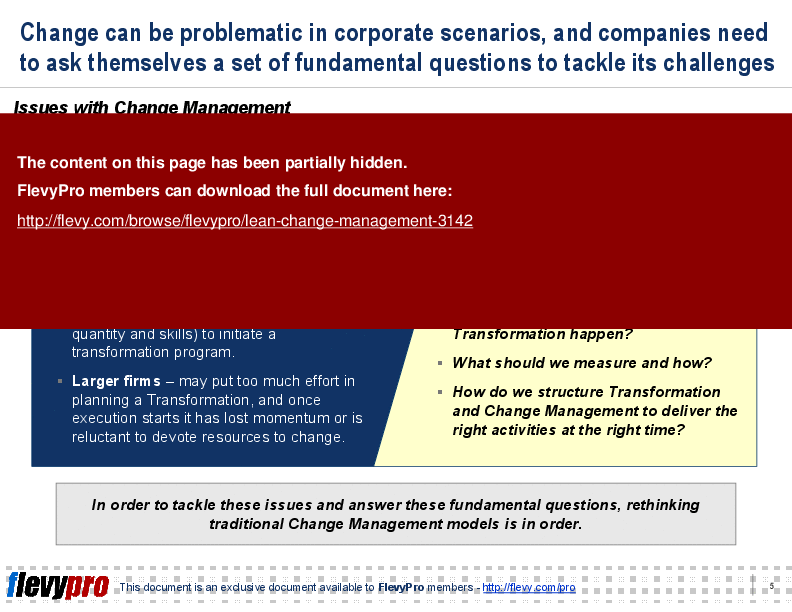
Due to recession and poor performance of the economy, companies have been pressured to change their way of conducting business. We observe small companies are facing market pressures, may be forced to downsize, whereas large companies may have resources, but lack the expertise to streamline their processes.
In this context, companies require planning and a carefully designed transformative plan which makes use of their resources in an effective and efficient manner. For this purpose, Lean Change Management proves most beneficial. Applying Lean Management techniques to managing change can reduce waste, increase efficiency, and ensure that momentum is maintained towards successful Transformation.
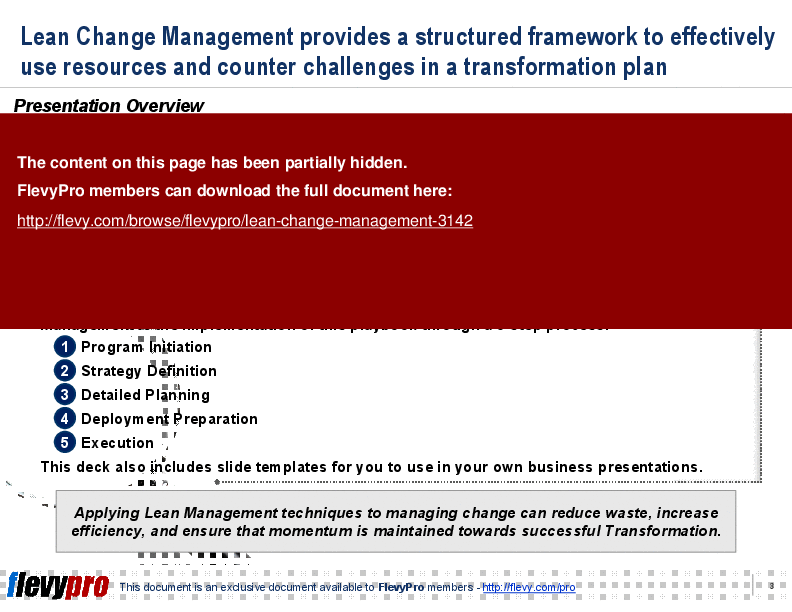
This framework captures how Lean principles can be leveraged for Change Management. We also introduce the concept of the Lean Change Management Playbook. Lean Change Management is the implementation of this playbook through a 5-step process:
This deck also includes slide templates for you to use in your own business presentations.
Lean Change Management provides a structured approach to navigate complex transformations. It emphasizes the importance of governance structures to support the implementation of Lean initiatives, ensuring that change activities are executed with precision and accountability. The Playbook acts as a strategic guide, helping leaders monitor progress and maintain focus on critical milestones.
The framework also highlights the need for detailed planning and readiness assessments, offering templates for business readiness scorecards and team structures. By leveraging these tools, organizations can achieve better resource utilization, timely execution, and enhanced transparency in measuring progress. This PPT is an essential resource for executives aiming to drive successful change initiatives with minimal waste and maximum impact.
What is Lean Change Management and how does it differ from traditional change management?
Lean Change Management applies Lean management principles to change initiatives to reduce waste, increase efficiency, and keep momentum during transformation. It emphasizes a Playbook-driven, structured approach with governance and measurable readiness assessments rather than solely prescriptive rollout plans, implemented through a 5-step process.
What are the typical phases in a Lean Change Management program?
A Lean Change Management program typically follows 5 phases as defined by the Playbook: Program Initiation, Strategy Definition, Detailed Planning, Deployment Preparation, and Execution, each focused on governance, readiness, and measured progress through the Execution phase.
How do governance structures support Lean change initiatives?
Governance structures provide accountability, decision rights, and oversight to ensure Lean activities are executed with precision and transparency, enable monitoring of progress against milestones, and support escalation and corrective actions through documented governance structures.
What should I look for when buying a Lean Change Management toolkit or template set?
Prioritize toolkits that include a Playbook-aligned phased process, governance templates, business readiness scorecards, team-structure guidance, and presentation-ready slides to accelerate planning and monitoring, especially the availability of business readiness scorecards.
Are template decks worth buying for Lean change programs given tight budgets?
Template decks can reduce setup time and provide a structured approach to planning, governance, and readiness assessments, which supports efficient resource use and faster alignment; a typical offering may come as a 21-slide PowerPoint deck.
We need to prepare deployment readiness — what assessment components should we include?
Readiness assessments should cover stakeholder alignment, team structures and roles, capacity and resource availability, risk and mitigation plans, and measurable indicators captured in business readiness scorecards to determine deployment readiness.
How can a transformation leader use a Lean Change Management Playbook to monitor progress?
A Playbook acts as a strategic guide setting milestones, governance checkpoints, and measurable readiness criteria so leaders can track progress, trigger governance reviews, and maintain focus on critical outcomes using the Playbook as the primary reference.
What templates are commonly included in Lean change PPT decks?
Common templates include Playbook overview slides, phased process maps, governance and decision‑rights diagrams, business readiness scorecards, team-structure templates, and deployment-preparation checklists focused on team structures.
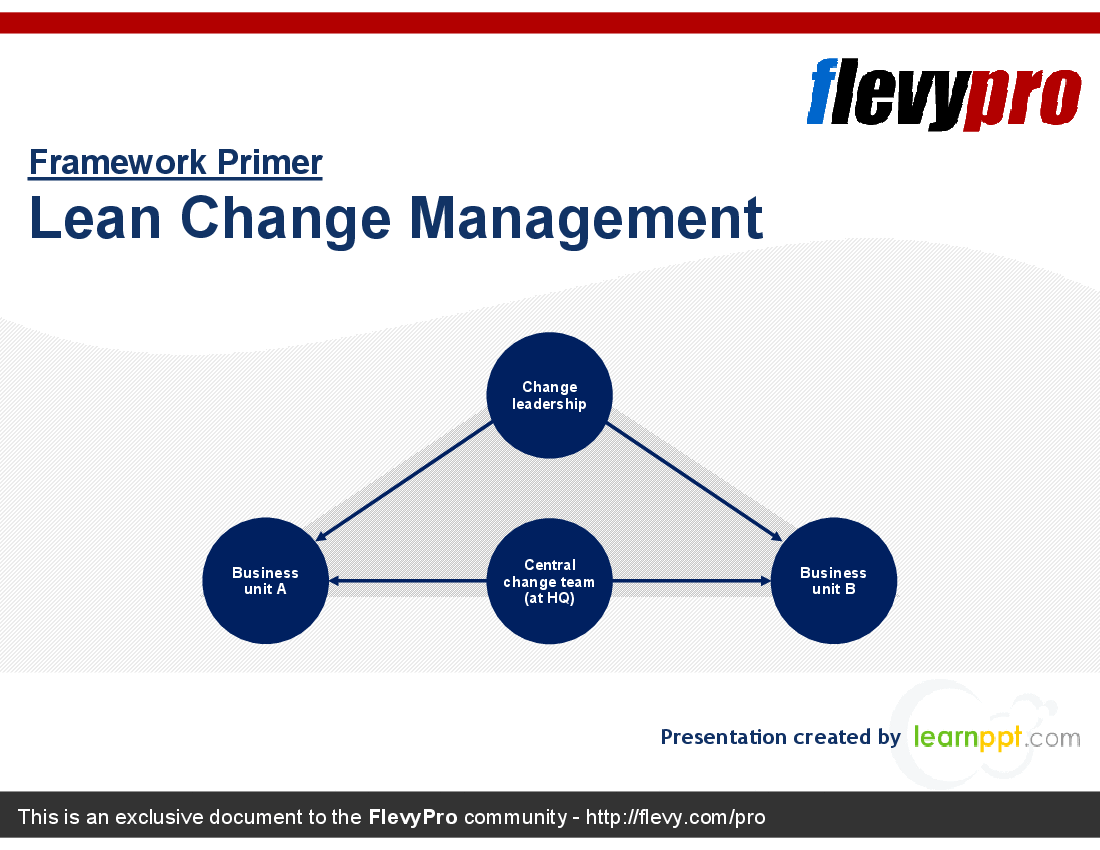
This PPT slide template outlines the governance structures essential for implementing Lean initiatives, featuring a triangular relationship among Change leadership, a Central change team, and 2 Business units (A and B). Change leadership evaluates progress, reviews decisions, and aligns the central and business unit teams. The Central change team develops and distributes "plays," which are key change management milestones, acting as a hub for local change teams. Business units execute tailored strategies while adhering to overarching goals. Playbook checklists outline key milestones, serving as monitoring tools to ensure timely execution and accountability, enhancing the likelihood of successful transformation initiatives.
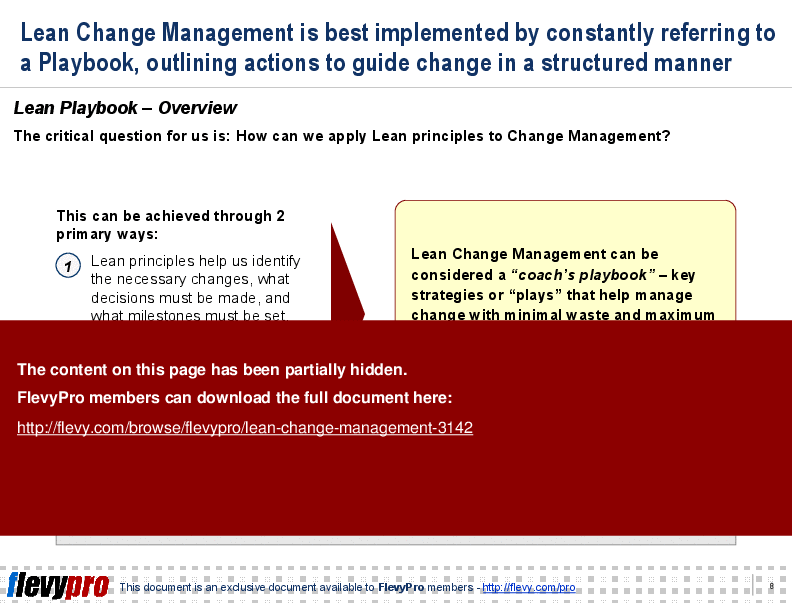
This PPT slide template provides an overview of Lean Change Management, focusing on its structured approach through a "Playbook." It emphasizes the application of Lean principles for identifying necessary changes, decision-making, and setting milestones, highlighting the importance of clarity and precision in the change process. The segmentation of milestones into stages minimizes non-value-adding activities, allowing organizations to manage resources effectively and focus on impactful actions. The Playbook serves as a management framework that translates the vision for change into defined work streams, resource allocation, and timelines. This structured methodology is essential for maintaining momentum and ensuring efficient transformation efforts.
The Lean Change Management approach begins with Program Initiation, establishing a governance model and identifying Change Management leaders. Central team leaders are assigned to work streams, with local representatives acting as program managers to address local concerns. An international leader oversees global deployment, ensuring effective communication between central and local teams.
Step 2, Strategy Definition, focuses on formulating guiding principles and core components, including a transformation roadmap, functional plans, and stakeholder transition plans. Comprehensive Change Management resources, such as program communication, training, and implementation support, are essential. Key milestones and performance indicators (KPIs) track progress, while revisiting the original business case ensures alignment with strategic objectives. This structured approach highlights the importance of leadership, clear communication, and thorough planning in successful transformations.
Steps 4 and 5 of the Lean Change Management approach focus on structured deployment and execution. Step 4, "Deployment Preparation," emphasizes collaboration between central and unit-level teams, completion of specific tasks, implementation of performance monitors, and establishment of key performance indicators (KPIs) with stakeholder confirmation. Dashboards and reports, along with pre-implementation baselines, are essential for tracking progress. Regular weekly meetings with managers ensure focus on milestones, while a central checklist repository facilitates real-time progress tracking.
Step 5, "Execution," initiates Lean Management deployment, transitioning report maintenance responsibilities from project teams to operational teams, promoting sustainable management practices. Stakeholders receive summarized results through automated dashboards and reports, ensuring transparency and accountability throughout the process. This systematic approach highlights the importance of preparation and execution in successful change management.
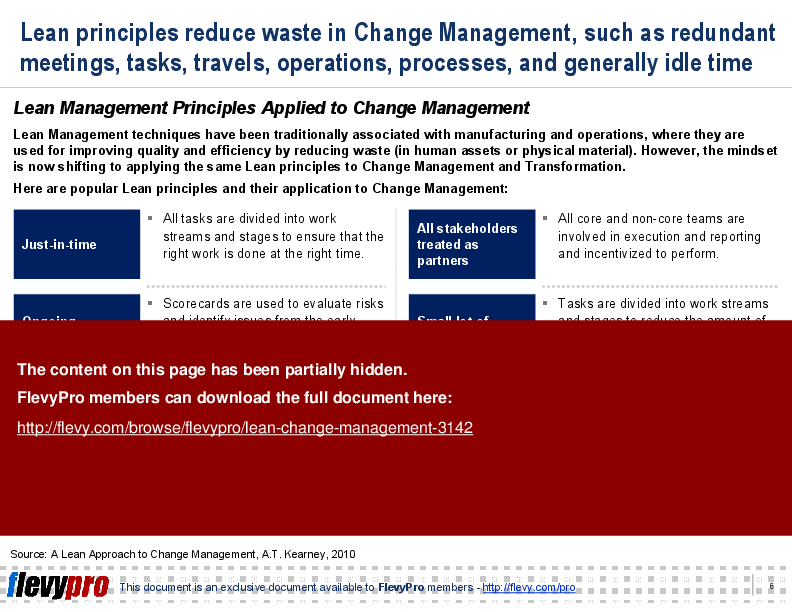
This PPT slide template outlines the application of Lean Management principles in Change Management. Key principles include "Just-in-time," which divides tasks into work streams to enhance efficiency and minimize delays. "Ongoing maintenance" utilizes scorecards for proactive risk management. "Continuous improvement" adapts tasks based on insights to eliminate unnecessary efforts, promoting agility. "Quality at the source" emphasizes completing one stage before moving to the next, ensuring focus and quality. The principle of treating stakeholders as partners engages both core and non-core teams. "Small lot production" breaks tasks into manageable parts to reduce lead times. Finally, "employee empowerment and growth" encourages shared responsibilities among team members, fostering adaptability. These principles aim for greater efficiency and effectiveness in Change Management processes.
Source: Best Practices in Change Management, Lean Management PowerPoint Slides: Lean Change Management PowerPoint (PPT) Presentation Slide Deck, LearnPPT Consulting
This framework is developed by a team of former McKinsey and Big 4 consultants. The presentation follows the headline-body-bumper slide format used by global consulting firms.
For $10.00 more, you can download this document plus 2 more FlevyPro documents. That's just $13 each.
ABOUT FLEVYPRO
This document is part of the FlevyPro Library, a curated knowledge base of documents for our FlevyPro subscribers.
FlevyPro is a subscription service for on-demand business frameworks and analysis tools. FlevyPro subscribers receive access to an exclusive library of curated business documents—business framework primers, presentation templates, Lean Six Sigma tools, and more—among other exclusive benefits.
The average daily rate of a McKinsey consultant is $6,625 (not including expenses). The average price of a Flevy document is $65.
Trusted by over 10,000+ Client Organizations
Since 2012, we have provided business templates to over 10,000 businesses and organizations of all sizes, from startups and small businesses to the Fortune 100, in over 130 countries.
"FlevyPro provides business frameworks from many of the global giants in management consulting that allow you to provide best in class solutions for your clients."
– David Harris, Managing Director at Futures Strategy
"I have used Flevy services for a number of years and have never, ever been disappointed. As a matter of fact, David and his team continue, time after time, to impress me with their willingness to assist and in the real sense of the word. I have concluded in fact
that it is not at all just a repository of documents/resources but, in the way that David and his team manage the firm, it is like dealing with consultants always ready to assist, advise and direct you to what you really need, and they always get it right.
I am an international hospitality accomplished senior executive who has worked and lived during the past 35 years in 23 countries in 5 continents and I can humbly say that I know what customer service is, trust me.
Aside from the great and professional service that Flevy's team provide, their wide variety of material is of utmost great quality, professionally put together and most current.
Well done Flevy, keep up the great work and I look forward to continue working with you in the future and to recommend you to a variety of colleagues around the world.
"
– Roberto Pelliccia, Senior Executive in International Hospitality
"As a young consulting firm, requests for input from clients vary and it's sometimes impossible to provide expert solutions across a broad spectrum of requirements. That was before I discovered Flevy.com.
Through subscription to this invaluable site of a plethora of topics that are key and crucial to consulting, I
have been able to exceed expectations and deliver quality advice and solutions to my clients. The quality and expertise of the authors are exemplary and gives me great confidence to use as part of my service offerings.
I highly recommend this company for any consultant wanting to apply international best practice standards in their service offerings.
"
– Nishi Singh, Strategist and MD at NSP Consultants
"My FlevyPro subscription provides me with the most popular frameworks and decks in demand in today’s market. They not only augment my existing consulting and coaching offerings and delivery, but also keep me abreast of the latest trends, inspire new products and service offerings for my practice, and educate me
in a fraction of the time and money of other solutions. I strongly recommend FlevyPro to any consultant serious about success.
"
– Bill Branson, Founder at Strategic Business Architects
"One of the great discoveries that I have made for my business is the Flevy library of training materials.
As a Lean Transformation Expert, I am always making presentations to clients on a variety of topics: Training, Transformation, Total Productive Maintenance, Culture, Coaching, Tools, Leadership Behavior, etc. Flevy
It is well worth the money to purchase these presentations. Sure, I have the knowledge and information to make my point. It is another thing to create a presentation that captures what I want to say. Flevy has saved me countless hours of preparation time that is much better spent with implementation that will actually save money for my clients.
"
– Ed Kemmerling, Senior Lean Transformation Expert at PMG
"I have found Flevy to be an amazing resource and library of useful presentations for lean sigma, change management and so many other topics. This has reduced the time I need to spend on preparing for my performance consultation. The library is easily accessible and updates are regularly provided. A wealth of great information."
– Cynthia Howard RN, PhD, Executive Coach at Ei Leadership
"I am extremely grateful for the proactiveness and eagerness to help and I would gladly recommend the Flevy team if you are looking for data and toolkits to help you work through business solutions."
– Trevor Booth, Partner, Fast Forward Consulting
"As a consultant requiring up to date and professional material that will be of value and use to my clients, I find Flevy a very reliable resource.
The variety and quality of material available through Flevy offers a very useful and commanding source for information. Using Flevy saves me time, enhances my expertise and ends up being a good decision."

 Click main image to view in full screen. Unlock all 9 preview images: