
This framework is developed by a team of former McKinsey and Big 4 consultants. The presentation follows the headline-body-bumper slide format used by global consulting firms.
Editor Summary
The Customer Journey Map is a 34-slide PowerPoint (PPTX) deck that provides a framework and templates for visualizing customer experience across stages from awareness to post-purchase.
Read moreIncludes a customer journey map template, persona development framework, action and emotion tracking tool, insights and opportunities checklist, slide design templates, and a 3-phase implementation roadmap. Target users include marketing teams, customer experience managers, product development teams, and executives. Sold as a digital download on Flevy with immediate download.
Use the Customer Journey Map deck when an organization needs to map and improve customer experience across multiple channels—during product launches, CX strategy sessions, or workshops to resolve identified pain points.
Marketing teams using persona templates to map content needs and touchpoints across awareness, consideration, and post-purchase stages.
Customer experience managers running workshops to track customer actions and emotions and identify onstage versus offstage pain points.
Product development teams aligning feature priorities to persona needs discovered in journey stages.
Executive leaders prioritizing CX investments based on quantified insights from mapped touchpoints.
The deck’s emphasis on personas, touchpoints, action/emotion tracking, and a structured 3-phase implementation reflects standard journey-mapping practice used in consulting engagements.
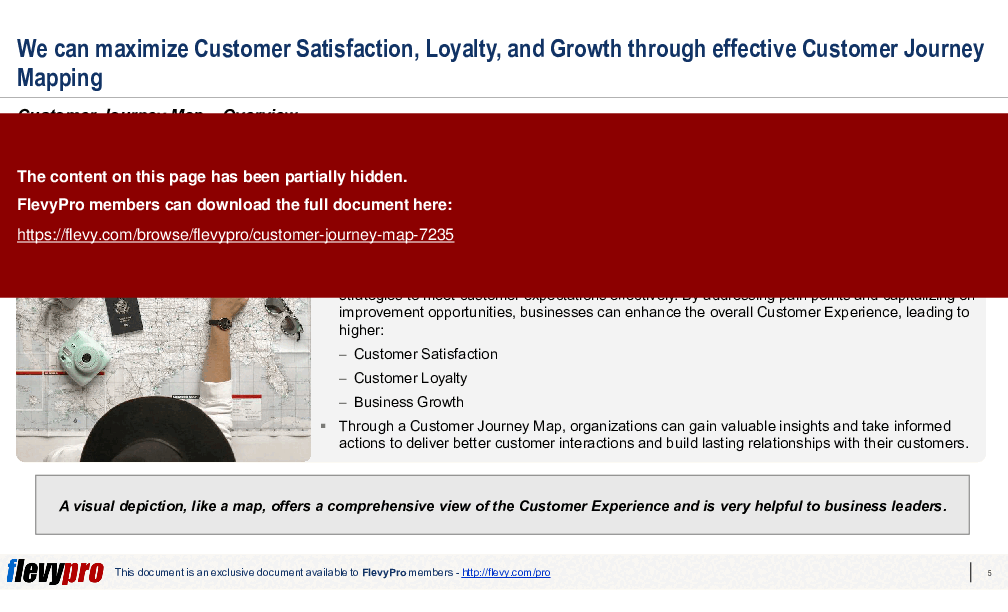
In a rapidly evolving marketplace where customer expectations are constantly changing, organizations must find ways to connect with their customers on a deeper level and deliver experiences that exceed their expectations.
The problem lies in the complexity of the Customer Journey. With multiple touchpoints, channels, and interactions, it becomes increasingly difficult for businesses to grasp the complete picture of how customers engage with their brand. This is where Customer Journey Mapping comes into play. It offers a solution by providing a comprehensive visualization of the entire Customer Journey, from the initial awareness stage to post-purchase interactions.
By aligning processes, resources, and strategies based on the Customer Journey Map, organizations can enhance the overall Customer Experience, drive satisfaction and loyalty, and foster business growth.
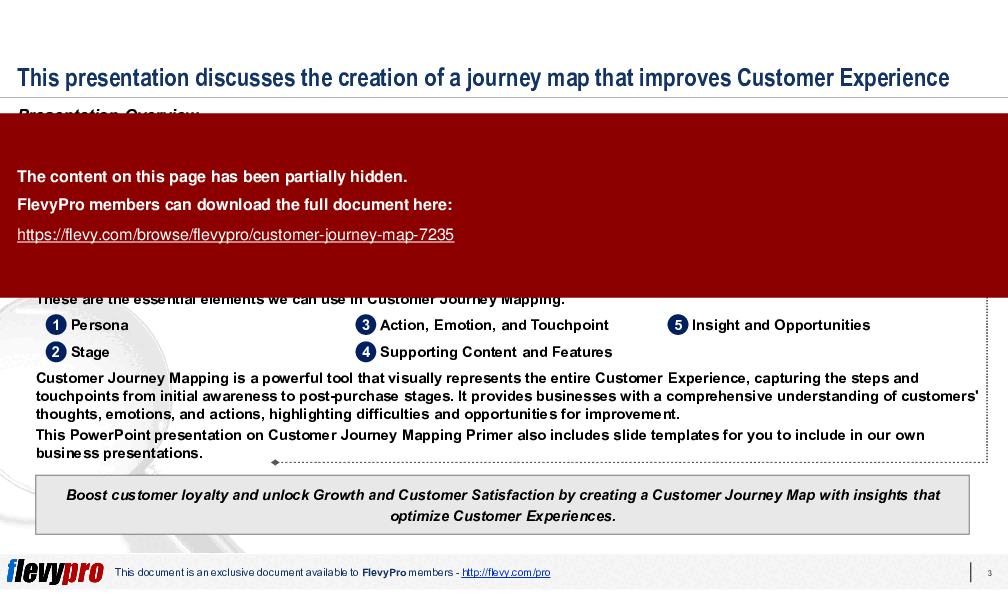
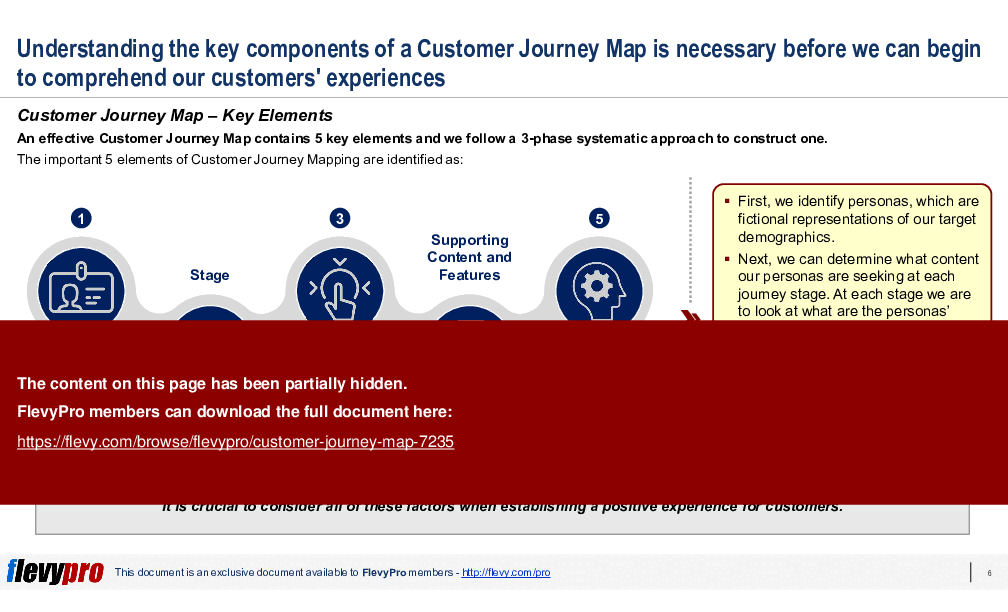
These are the essential elements we can use in Customer Journey Mapping.
• Persona
• Stage
• Action, Emotion, and Touchpoint
• Supporting Content and Features
• Insights and Opportunities
First, we identify personas, which are fictional representations of our target demographics. Next, we can determine what content our personas are seeking at each journey stage. At each stage we are to look at what are the personas' actions and feelings. Accordingly for each action, we are to provide corresponding content that will match their actions and emotions. Lastly, we have to convert the previous steps to insights and opportunities to keep our customers.
It is crucial to consider all of these factors when establishing a positive experience for customers. This presentation discusses into each of these elements in detail and introduces the 4-phase Customer Decision Journey.
Customer Journey Mapping is a powerful tool that visually represents the entire Customer Experience, capturing the steps and touchpoints from initial awareness to post-purchase stages. It provides businesses with a comprehensive understanding of customers' thoughts, emotions, and actions, highlighting difficulties and opportunities for improvement.
This presentation further discusses a 3-phase approach Customer Journey Map implementation, 10 key implementation considerations, and Customer Journey Map examples.
This PowerPoint presentation on Customer Journey Mapping also includes slide templates for you to include in our own business presentations.
This presentation equips leaders with the tools to effectively visualize and analyze the Customer Journey, ensuring a customer-centric approach in every interaction. By utilizing the provided templates and insights, organizations can streamline their strategies and enhance engagement at every touchpoint, ultimately driving better outcomes.
This synopsis was written by Marcus [?] based on the analysis of the full 34-slide presentation.
Executive Summary
The Customer Journey Map presentation is designed to enhance customer experience by providing a comprehensive visualization of the customer journey. Created by experienced consultants, this PowerPoint deck outlines the essential elements of customer journey mapping, including personas, stages, actions, emotions, touchpoints, and insights. By utilizing this framework, organizations can identify pain points and opportunities for improvement, ultimately driving customer satisfaction and loyalty. The presentation also includes templates to facilitate the integration of these concepts into business strategies.
Who This Is For and When to Use
• Marketing teams focused on improving customer engagement and experience
• Customer experience managers seeking to understand customer interactions
• Product development teams aiming to align offerings with customer needs
• Executive leaders looking to enhance overall business growth through customer insights
Best-fit moments to use this deck:
• During strategy sessions to align customer experience initiatives
• When launching new products or services to ensure customer alignment
• In workshops aimed at improving customer satisfaction and loyalty metrics
Learning Objectives
• Define the key components of a Customer Journey Map
• Build a comprehensive understanding of customer personas and their needs
• Establish actionable insights from customer interactions and touchpoints
• Identify pain points and opportunities for enhancing customer experience
• Create a structured approach to implementing Customer Journey Maps
• Utilize templates to streamline the mapping process and facilitate collaboration
Primary Topics Covered
• Customer Journey Map Overview - A visual representation that captures the entire customer experience, highlighting key touchpoints and stages.
• Key Elements - Identification of essential components such as personas, actions, emotions, and insights that inform the mapping process.
• Implementation Approach - A structured three-phase approach for effectively implementing the Customer Journey Map within an organization.
• Insights and Opportunities - Techniques for identifying both onstage and offstage interactions that can enhance customer loyalty.
• Supporting Content and Features - Recommendations for optimizing content at various touchpoints to improve customer engagement.
• Customer Journey Map Examples - Real-world applications of journey mapping, including case studies from Starbucks and Lego.
Deliverables, Templates, and Tools
• Customer Journey Map template for visualizing customer interactions
• Persona development framework to capture key demographic information
• Action and emotion tracking tool to align customer experiences with business objectives
• Insights and opportunities checklist for identifying areas of improvement
• Slide design templates for integrating journey mapping into presentations
• Implementation roadmap to guide teams through the mapping process
Slide Highlights
• Overview slide that introduces the concept of Customer Journey Mapping and its importance
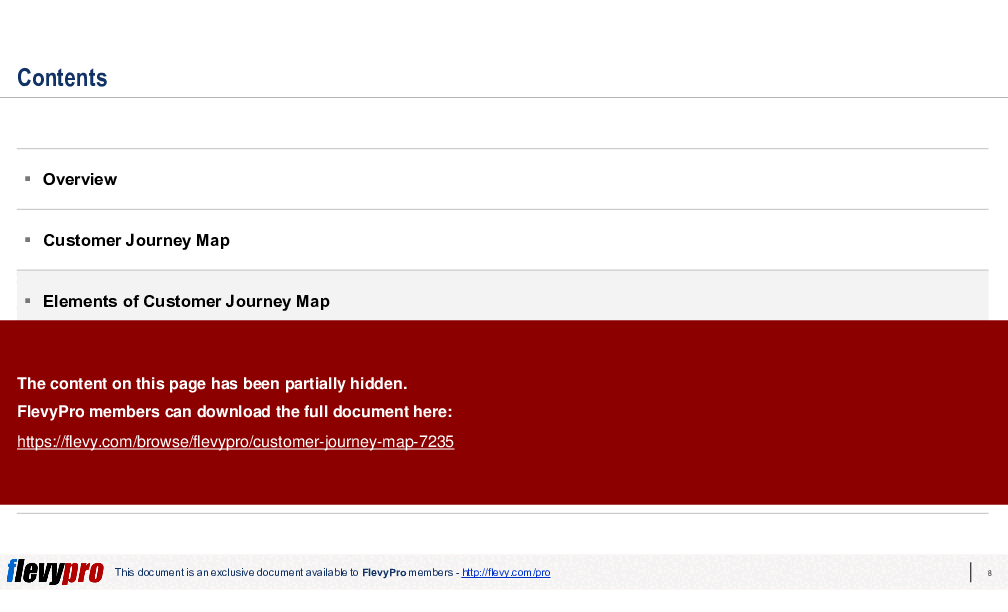
• Key elements slide that outlines the 5 essential components of a Customer Journey Map
• Implementation approach slide detailing the 3 phases of mapping
• Examples slide showcasing real-world applications of customer journey mapping
• Template slides designed for easy integration into business presentations
Potential Workshop Agenda
Introduction to Customer Journey Mapping (30 minutes)
• Overview of the importance of customer journey mapping
• Discussion on key elements and their relevance
Hands-On Persona Development (60 minutes)
• Breakout sessions to create detailed customer personas
• Sharing insights and aligning on common characteristics
Mapping the Customer Journey (90 minutes)
• Collaborative mapping of customer interactions
• Identifying pain points and opportunities for improvement
Customization Guidance
• Tailor personas to reflect specific customer demographics relevant to your organization
• Adjust touchpoints and stages based on your unique customer interactions
• Incorporate organizational branding and terminology into the templates provided
Secondary Topics Covered
• Emotional considerations in customer journey mapping
• The role of cross-functional teams in the mapping process
• Continuous improvement of customer journey maps based on feedback and data
Topic FAQ
What are the core components of a customer journey map?
A customer journey map captures the main components of customer experience: defined personas, journey stages, customer actions, emotions, touchpoints, and derived insights. These elements are used to visualize interactions and identify pain points and opportunities, specifically listing personas, stages, actions, emotions, touchpoints, and insights.
How do you capture customer emotions during journey mapping?
Emotions are captured by documenting customer feelings alongside their actions at each touchpoint. Tools include an action and emotion tracking approach to align experiences with content and features. The presentation provides an action and emotion tracking tool to record emotions per touchpoint.
What phases are typical in implementing a customer journey mapping program?
Implementation typically starts with defining personas and scope, mapping actions/emotions across touchpoints, then converting findings into insights and improvement plans. The provided deck describes a structured 3-phase implementation approach and also discusses a 4-phase Customer Decision Journey.
What should I look for when choosing a customer journey mapping toolkit?
Choose a toolkit that includes ready mapping templates, a persona development framework, action/emotion tracking tools, an implementation roadmap, examples, and customization guidance. Look specifically for a persona development framework and an implementation roadmap to support workshops and follow-up actions.
How can slide templates and real-world examples speed up workshop preparation?
Slide templates provide a consistent design structure and ready-to-use mapping formats, while examples illustrate practical applications and expected outputs. Using templates and case examples reduces setup time for breakout sessions and alignment activities; the deck includes a workshop agenda and examples from Starbucks and Lego.
How often should a customer journey map be updated to stay useful?
Journey maps should be reviewed and refined regularly based on new customer data, feedback, and evolving expectations. The guidance recommends ongoing iteration and a feedback loop, with updates tied to fresh customer data and stakeholder input.
How can journey mapping support a new product launch?
Use journey mapping to define target personas, map the content and touchpoints they need during awareness and consideration, and align product features to those needs. Templates for personas and touchpoint mapping help structure launch planning, including a persona development framework and mapping templates.
Are paid customer journey templates appropriate for small teams with limited budgets?
Paid templates can reduce preparation time by providing ready personas, mapping slides, workshop agendas, and an implementation roadmap, which can be helpful for small teams. Consider whether a 34-slide deck with persona and mapping templates plus a 3-phase implementation roadmap meets your time and resource constraints.
Document FAQ
These are questions addressed within this presentation.
What is a Customer Journey Map?
A Customer Journey Map is a visual representation of the customer experience, detailing interactions across various touchpoints and stages of engagement.
How can I implement a Customer Journey Map in my organization?
Follow a structured approach that includes defining personas, identifying touchpoints, and mapping customer actions and emotions.
What are the key components of a Customer Journey Map?
The key components include personas, stages, actions, emotions, touchpoints, and insights.
How can I use this presentation in my team?
Utilize the templates and frameworks provided to facilitate discussions and workshops focused on enhancing customer experience.
What types of insights can I gain from a Customer Journey Map?
You can identify pain points, opportunities for improvement, and areas where customer satisfaction can be enhanced.
Can I customize the templates provided in this presentation?
Yes, the templates are designed for customization to fit your organization's specific needs and branding.
How often should I update my Customer Journey Map?
Regularly review and refine your Customer Journey Map based on new data, customer feedback, and changing expectations.
What tools can assist in creating a Customer Journey Map?
Consider using diagramming software or presentation tools that allow for visual representation of customer interactions.
Glossary
• Customer Journey Map - A visual representation of the customer experience across various touchpoints.
• Persona - A fictional representation of a customer segment, capturing demographics and behaviors.
• Touchpoint - Any interaction between a customer and a brand, whether physical or digital.
• Action - The behavior or experience of a customer during their journey.
• Emotion - The feelings experienced by customers during their interactions.
• Insight - Valuable information derived from analyzing customer interactions.
• Opportunity - Potential areas for improvement identified through customer journey analysis.
• Onstage Interaction - Customer interactions that occur in front of the audience.
• Offstage Interaction - Interactions that happen behind the scenes, often automated.
• Implementation Approach - A structured method for applying customer journey mapping in an organization.
• Supporting Content - Materials that enhance customer engagement at various touchpoints.
• Feedback Loop - A process for continually refining customer journey maps based on customer insights.
• Customer Experience - The overall perception a customer has of a brand based on their interactions.
This PPT slide outlines a three-phase approach for implementing Customer Journey Maps. The first phase, "Consider the Importance of Customer Journey Mapping," emphasizes recognizing key flows and touchpoints, and understanding customer emotions at various stages. The second phase, "Include Our Team," highlights the importance of collaboration, suggesting that involving sales and customer service teams in creating personas and journey maps helps prevent biases and aligns touchpoints effectively. The final phase, "Use Our Customer Journey Map," encourages customization to meet organizational needs, emphasizing that even basic maps can enhance marketing and customer experience by identifying optimal experiences at each touchpoint, ultimately improving customer satisfaction.
This PPT slide presents a customer journey map for Lego, detailing the phases of a customer's experience: Before, During, and After a trip. In the 'Before' phase, key activities include checking in at the train station, receiving tickets, and booking hotel accommodations, establishing the foundation for the overall experience. The 'During' phase outlines experiences such as boarding the plane and in-flight activities, with touchpoints marked by icons indicating emotional states and experience quality, crucial for customer satisfaction. The 'After' phase covers post-travel activities like luggage collection, reinforcing the cyclical nature of the journey. Businesses are urged to identify critical moments to enhance customer loyalty and satisfaction, emphasizing the importance of data collection at various touchpoints to continuously improve the customer experience.
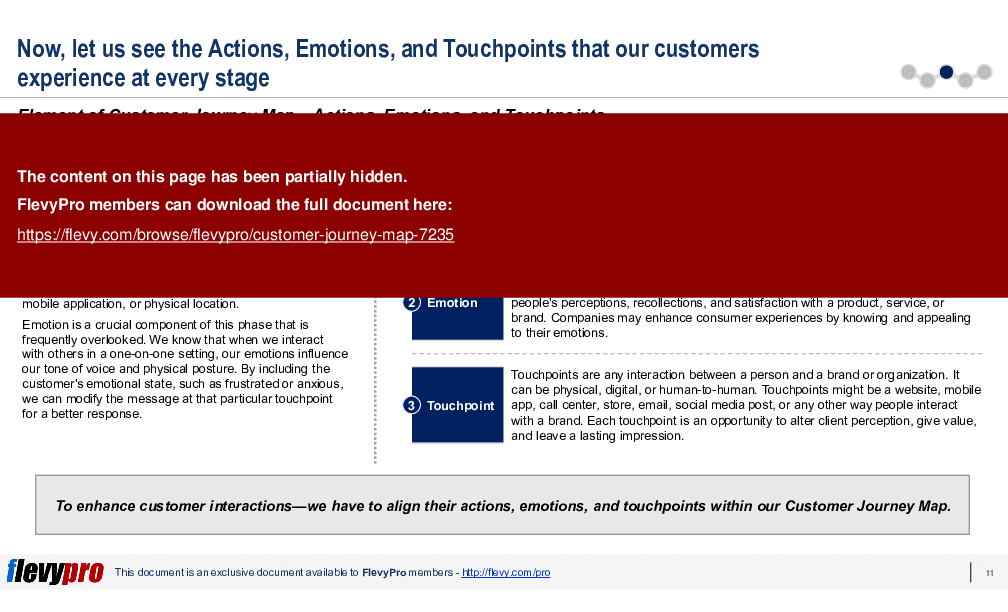
This PPT slide outlines critical elements of a Customer Journey Map, focusing on Actions, Emotions, and Touchpoints. Actions encompass customer behaviors such as purchasing decisions and service usage. Emotions reflect the feelings experienced during interactions, ranging from joy to disappointment, significantly influencing customer satisfaction and perceptions. Touchpoints are defined as any interaction between a customer and the brand, whether through digital channels or face-to-face. Each touchpoint shapes customer perception and fosters loyalty. This dual focus on actions and emotions is essential for organizations aiming to enhance customer experiences and drive engagement.
This PPT slide illustrates the customer journey using a gumball machine, starting with the simple actions of inserting a coin and turning the handle. It highlights potential complexities, such as machine malfunctions, which can lead to 3 distinct scenarios: a customer walking away, a cashier issuing a refund, or a manager intervening to retrieve the gumball. This breakdown emphasizes the need for businesses to anticipate issues in customer interactions and develop effective customer service protocols. By mapping these scenarios, organizations can enhance customer satisfaction and prepare for real-world interactions, underscoring the importance of thorough journey mapping in managing customer experiences.
Personas are fictional representations of target audiences, capturing their characteristics, preferences, and aversions. It is recommended to create 5 to 7 distinct personas that reflect target demographics, documented concisely over 1 to 2 pages. The 5 essential components of a persona include:
1. Demographics: Key demographic data for understanding the audience's profile.
2. Background: Insights into interests and behaviors that contextualize experiences.
3. Motivations/Influences: Factors driving decision-making and influencing choices.
4. Frustrations/Barriers: Identifying pain points and challenges encountered by personas.
5. Ideal Experience: Desired outcomes and expectations from the personas' perspective.
This structured approach enhances customer experience strategies, allowing organizations to tailor marketing and services to better meet audience needs, improving engagement and satisfaction.
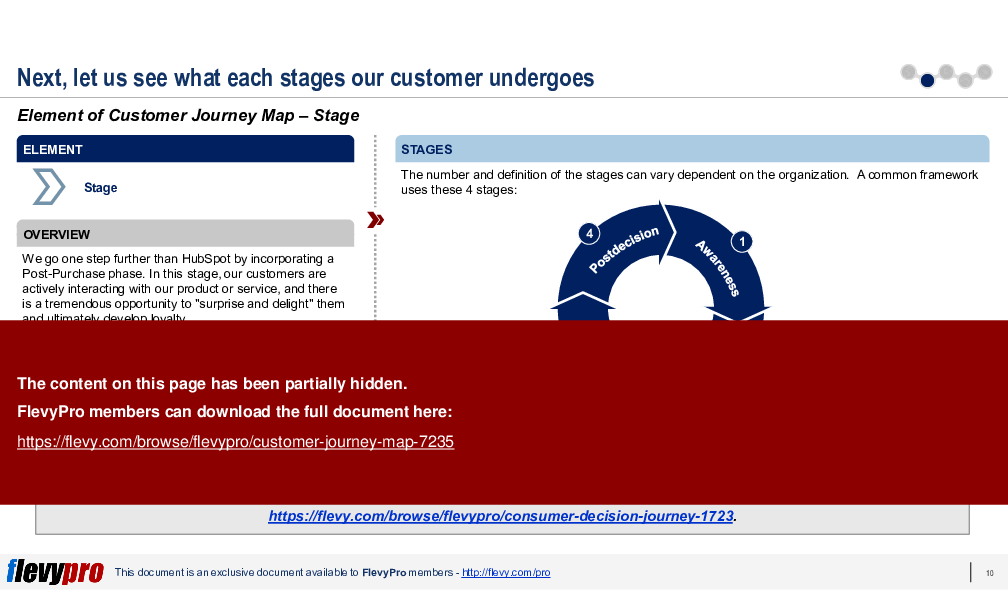
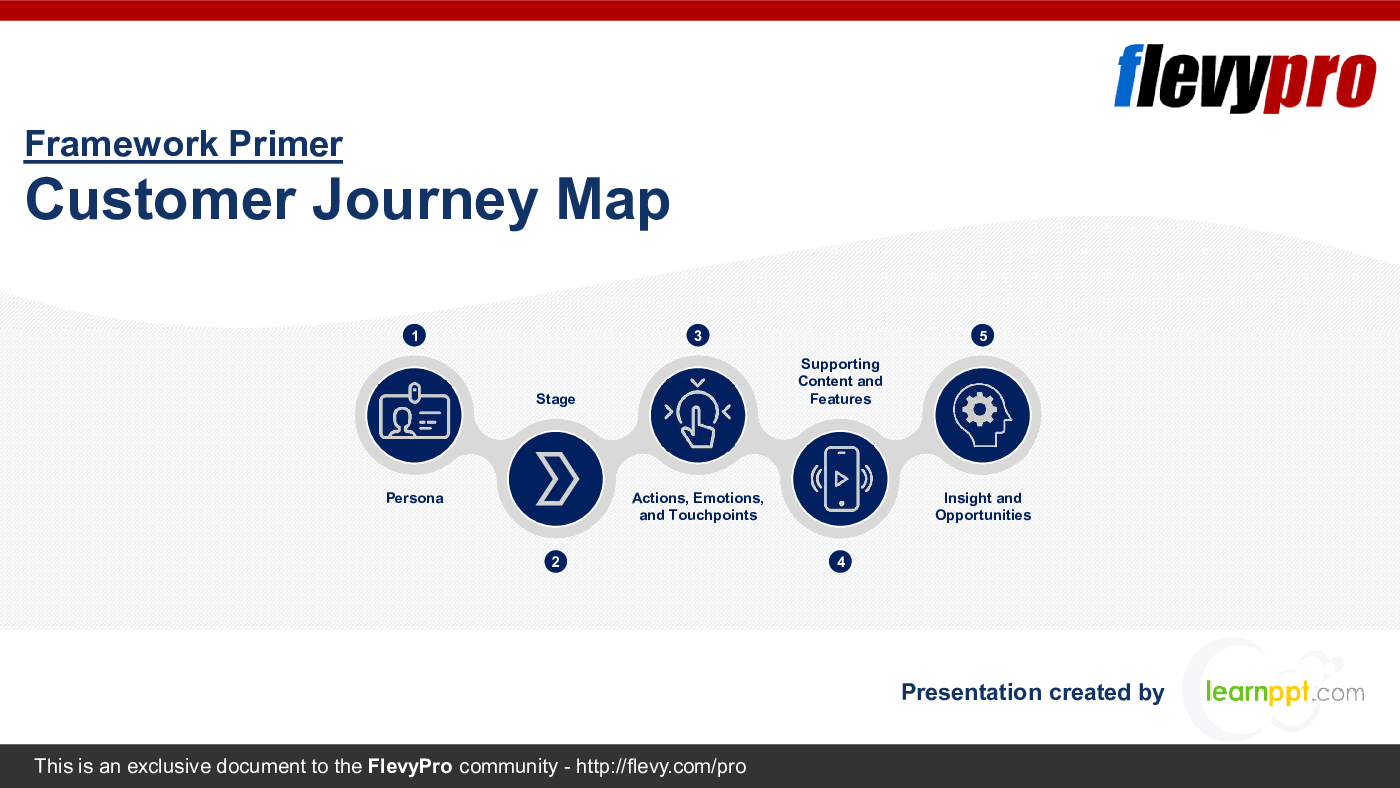
This PPT slide outlines the essential components of a Customer Journey Map, identifying 5 key elements for effective mapping. The first element, "Persona," involves creating fictional representations of target demographics to inform the journey stages. The second element, "Stage," refers to the various phases customers experience, which must be clearly defined. The third element, "Actions, Emotions, and Touchpoints," focuses on understanding customer behaviors and interactions at each stage, aligning content with expectations. The fourth element, "Supporting Content and Features," emphasizes providing relevant content to enhance experiences at each touchpoint. Finally, "Insight and Opportunities" synthesizes these elements into actionable insights for improving customer retention and satisfaction.
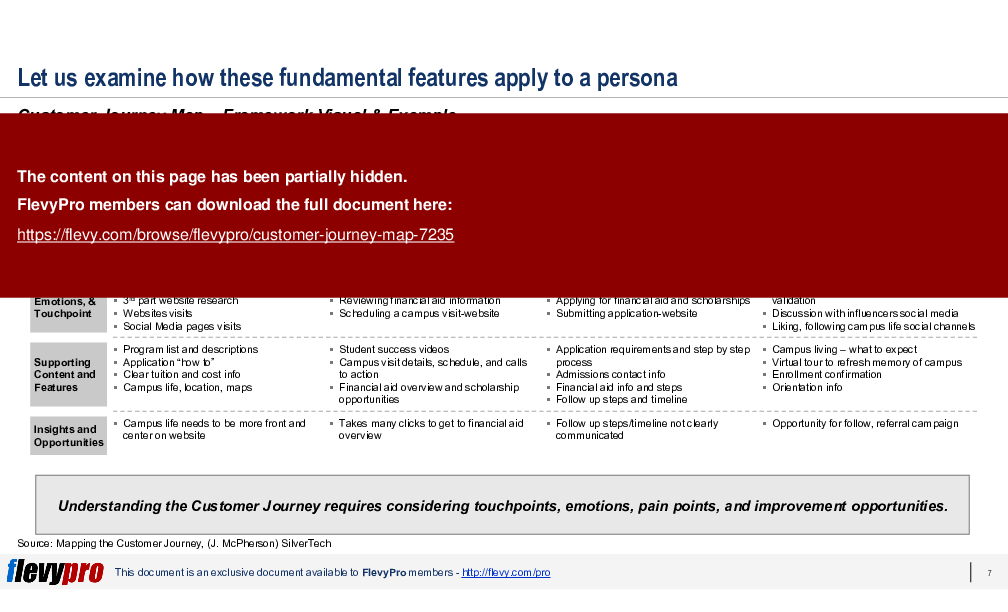
This PPT slide presents a detailed Customer Journey Map for "Focused Fran," a prospective undergraduate student. The journey is segmented into 4 stages: Awareness, Consideration, Decision, and Post-decision, each highlighting specific actions, emotions, touchpoints, and insights.
In the Awareness phase, Fran conducts broad Google searches, feeling confusion and curiosity while exploring school information online. Enhancing campus life visibility on websites can better address her needs.
During Consideration, Fran experiences excitement and uncertainty, revisiting websites, reviewing financial aid, and scheduling campus visits. Student success videos and detailed visit schedules are beneficial.
In the Decision phase, Fran feels confident yet overwhelmed, interacting with admissions and navigating the application process. Clearer communication on application steps and timelines is needed.
Finally, in the Post-decision stage, Fran weighs options with excitement and nervousness. Follow-up communications, such as virtual tours and orientation information, are essential for reinforcing her choice and ensuring a smooth transition.
Source: Best Practices in Customer Experience, Customer Journey PowerPoint Slides: Customer Journey Map PowerPoint (PPTX) Presentation Slide Deck, LearnPPT Consulting
This framework is developed by a team of former McKinsey and Big 4 consultants. The presentation follows the headline-body-bumper slide format used by global consulting firms.
For $10.00 more, you can download this document plus 2 more FlevyPro documents. That's just $13 each.
ABOUT FLEVYPRO
This document is part of the FlevyPro Library, a curated knowledge base of documents for our FlevyPro subscribers.
FlevyPro is a subscription service for on-demand business frameworks and analysis tools. FlevyPro subscribers receive access to an exclusive library of curated business documents—business framework primers, presentation templates, Lean Six Sigma tools, and more—among other exclusive benefits.
The average daily rate of a McKinsey consultant is $6,625 (not including expenses). The average price of a Flevy document is $65.
Trusted by over 10,000+ Client Organizations
Since 2012, we have provided business templates to over 10,000 businesses and organizations of all sizes, from startups and small businesses to the Fortune 100, in over 130 countries.
"Flevy is now a part of my business routine. I visit Flevy at least 3 times each month.
Flevy has become my preferred learning source, because what it provides is practical, current, and useful in this era where the business world is being rewritten.

many challenges and there is the need to make the right decisions in a short time, with so much scattered information, we are fortunate to have Flevy. Flevy investigates, selects, and puts at our disposal the best of the best to help us be successful in our work.
"
– Omar Hernán Montes Parra, CEO at Quantum SFE
"FlevyPro provides business frameworks from many of the global giants in management consulting that allow you to provide best in class solutions for your clients."
– David Harris, Managing Director at Futures Strategy
"I have used FlevyPro for several business applications. It is a great complement to working with expensive consultants. The quality and effectiveness of the tools are of the highest standards."
– Moritz Bernhoerster, Global Sourcing Director at Fortune 500
"I have found Flevy to be an amazing resource and library of useful presentations for lean sigma, change management and so many other topics. This has reduced the time I need to spend on preparing for my performance consultation. The library is easily accessible and updates are regularly provided. A wealth of great information."
– Cynthia Howard RN, PhD, Executive Coach at Ei Leadership
"I am extremely grateful for the proactiveness and eagerness to help and I would gladly recommend the Flevy team if you are looking for data and toolkits to help you work through business solutions."
– Trevor Booth, Partner, Fast Forward Consulting
"I like your product. I'm frequently designing PowerPoint presentations for my company and your product has given me so many great ideas on the use of charts, layouts, tools, and frameworks. I really think the templates are a valuable asset to the job."
– Roberto Fuentes Martinez, Senior Executive Director at Technology Transformation Advisory
"As a small business owner, the resource material available from FlevyPro has proven to be invaluable. The ability to search for material on demand based our project events and client requirements was great for me and proved very beneficial to my clients. Importantly, being able to easily edit and tailor
the material for specific purposes helped us to make presentations, knowledge sharing, and toolkit development, which formed part of the overall program collateral. While FlevyPro contains resource material that any consultancy, project or delivery firm must have, it is an essential part of a small firm or independent consultant's toolbox.
"
– Michael Duff, Managing Director at Change Strategy (UK)
"If you are looking for great resources to save time with your business presentations, Flevy is truly a value-added resource. Flevy has done all the work for you and we will continue to utilize Flevy as a source to extract up-to-date information and data for our virtual and onsite presentations!"
Download our FREE Digital Transformation Templates
Download our free compilation of 50+ Digital Transformation slides and templates. DX concepts covered include Digital Leadership, Digital Maturity, Digital Value Chain, Customer Experience, Customer Journey, RPA, etc.
Download our FREE Digital Transformation Templates
Get Our FREE Product.
Download our free compilation of 50+ Digital Transformation slides and templates. DX concepts covered include Digital Leadership, Digital Maturity, Digital Value Chain, Customer Experience, Customer Journey, RPA, etc.