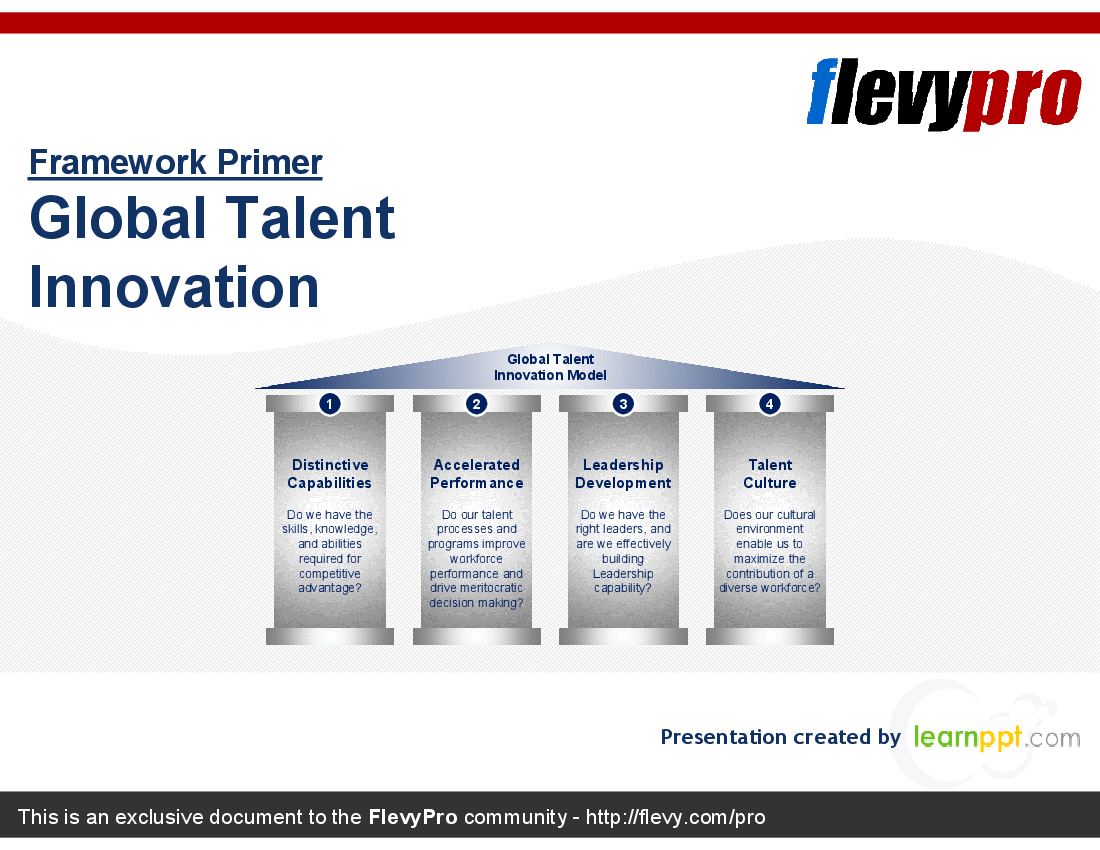

The Global Talent Innovation Model moves companies beyond cookie-cutter best practices and standard tool kits. It is a road map for business leaders striving to understand and tackle global talent challenges. Many companies are in crisis mode and looking to address and alleviate immediate pain points.
The Global Talent Innovation approach can be tailored to meet a wide variety of short- and long-term talent challenges and scenarios. Companies can implement short-term tactical interventions locally while building a platform for sustained talent advantage on a global basis.
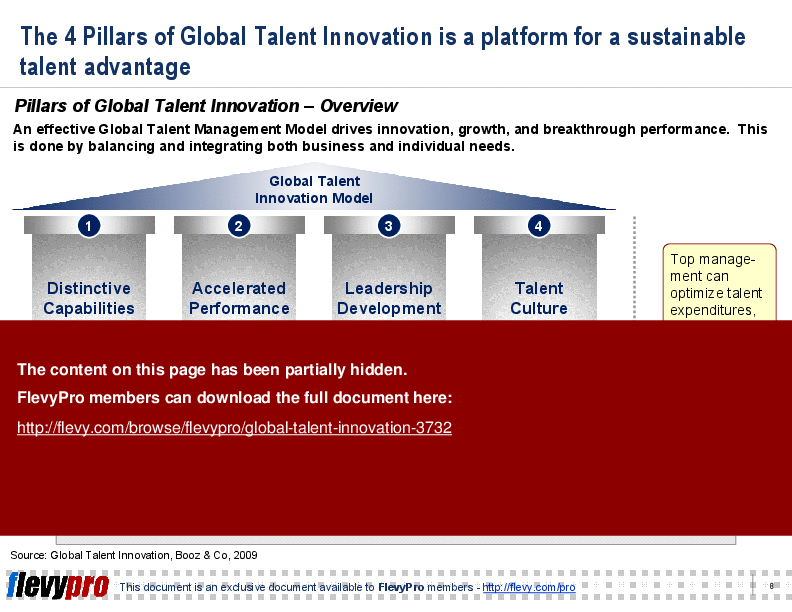
This presentation discusses the 4 pillars of Global Talent Innovation. These are 4 building blocks that are essential and work in concert within the context of our organization’s Corporate Strategy.
1. Distinctive Capabilities
2. Accelerated Performance
3. Leadership Development
4. Talent Culture
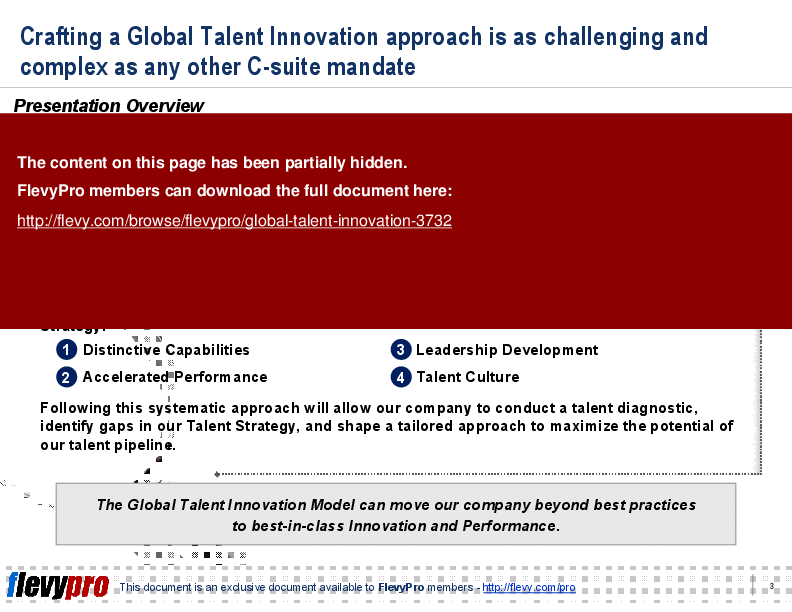
Following this systematic approach will allow our company to conduct a talent diagnostic, identify gaps in our Talent Strategy, and shape a tailored approach to maximize the potential of our talent pipeline. The Global Talent Innovation Model can move our company beyond best practices to best-in-class Innovation and Performance.
This deck also includes slide templates for you to use in your own business presentations.
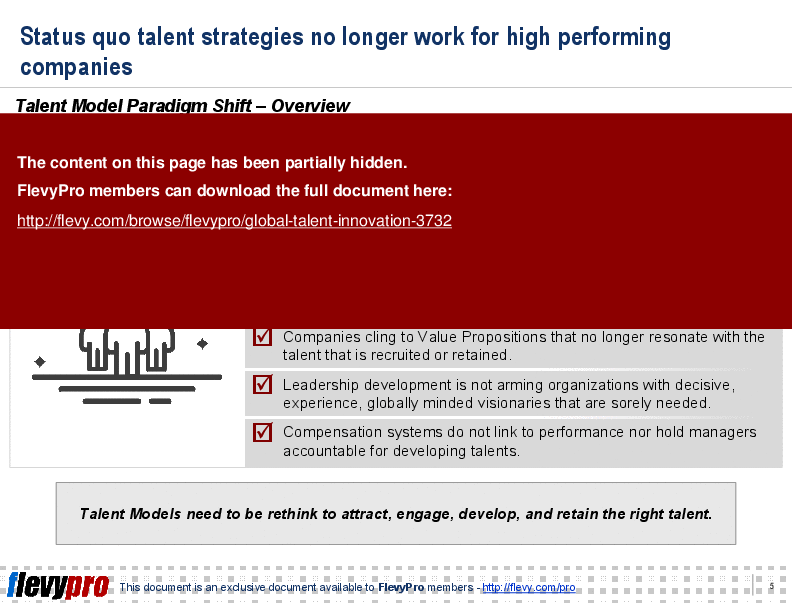
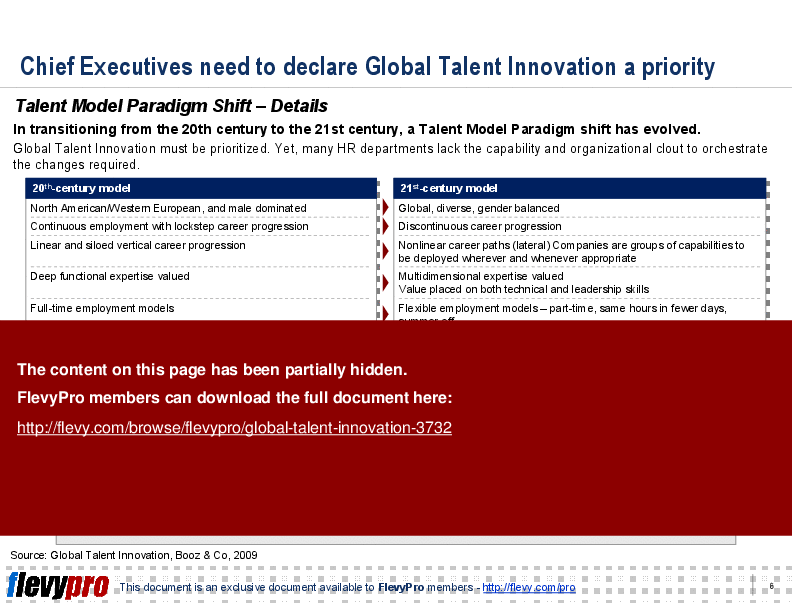
The Global Talent Innovation Model emphasizes the need for a paradigm shift in talent management. Traditional models no longer suffice in a rapidly evolving global market. This PPT outlines how companies can transition from outdated practices to innovative strategies that prioritize diverse, flexible, and globally minded talent pools. The shift from a 20th-century model to a 21st-century approach is critical for maintaining competitive advantage and driving organizational growth.
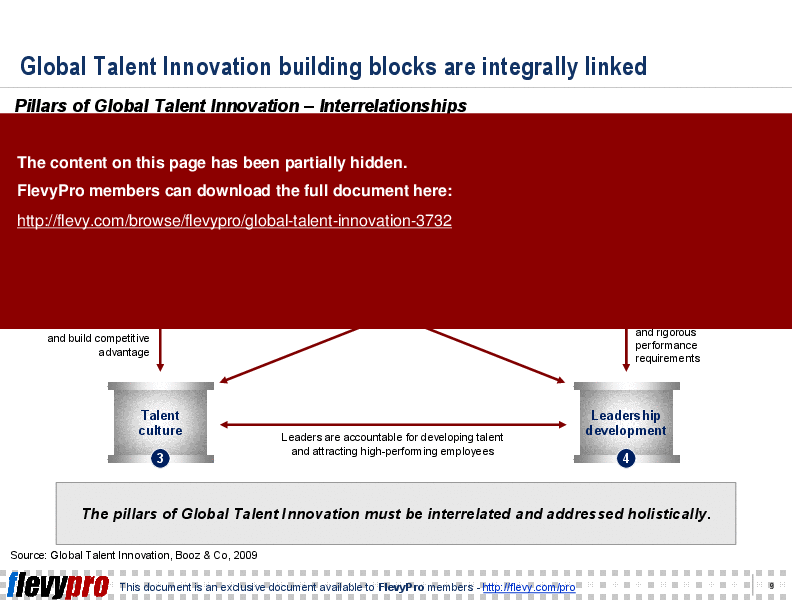
This presentation also delves into the intricate relationships between the four pillars of Global Talent Innovation. Each pillar—Distinctive Capabilities, Accelerated Performance, Leadership Development, and Talent Culture—plays a vital role in creating a cohesive and effective talent strategy. By understanding and leveraging these interdependencies, companies can foster a culture of continuous improvement and high performance, ensuring long-term success in the global marketplace.
Got a question about this document? Email us at flevypro@flevy.com.
Executive Summary
The Global Talent Innovation presentation provides a comprehensive framework for organizations seeking to enhance their talent strategies. Developed by experts with backgrounds in top consulting firms, this model emphasizes the need to move beyond traditional best practices to achieve best-in-class performance. The framework is structured around 4 key pillars: Distinctive Capabilities, Accelerated Performance, Leadership Development, and Talent Culture. By implementing this model, organizations can identify gaps in their talent strategies, tailor interventions to meet specific challenges, and ultimately maximize the potential of their workforce.
Who This Is For and When to Use
• HR leaders aiming to transform talent management practices
• C-suite executives focused on aligning talent strategies with corporate goals
• Talent development professionals seeking to enhance leadership capabilities
• Organizational development teams looking to foster a strong talent culture
Best-fit moments to use this deck:
• During strategic planning sessions to align talent initiatives with business objectives
• When assessing current talent management practices and identifying areas for improvement
• In workshops aimed at developing leadership capabilities and enhancing organizational culture
Learning Objectives
• Define the 4 pillars of Global Talent Innovation and their significance
• Identify gaps in current talent strategies and develop tailored solutions
• Implement processes that enhance workforce performance and drive meritocratic decision-making
• Foster a culture that maximizes the contribution of a diverse workforce
• Develop leadership capabilities aligned with organizational goals
• Create value propositions that attract and retain top talent
Table of Contents
• Overview (page 1)
• Talent Model Paradigm Shift (page 5)
• 4 Pillars of Global Talent Innovation (page 8)
• 1. Distinctive Capabilities (page 11)
• 2. Accelerated Performance (page 15)
• 3. Leadership Development (page 18)
• 4. Talent Culture (page 21)
• Templates (page 24)
Primary Topics Covered
• Talent Model Paradigm Shift - A critical examination of outdated talent strategies and the need for a new approach to attract and retain talent.
• Distinctive Capabilities - Focuses on identifying and prioritizing the skills and knowledge necessary for competitive advantage.
• Accelerated Performance - Emphasizes the importance of performance management processes that drive accountability and meritocracy.
• Leadership Development - Highlights the need for evolving leadership models to cultivate effective leaders capable of navigating complexity.
• Talent Culture - Discusses the creation of a culture that engages and retains top talent, emphasizing values and behaviors that align with organizational goals.
Deliverables, Templates, and Tools
• Talent diagnostic tools for assessing current capabilities
• Frameworks for developing tailored value propositions
• Performance management templates to enhance accountability
• Leadership development program outlines
• Cultural assessment tools to evaluate organizational engagement
Slide Highlights
• Overview of the Global Talent Innovation Model, illustrating its 4 pillars
• Comparative analysis of 20th-century vs. 21st-century talent models
• Key activities for each pillar, emphasizing actionable steps for implementation
• Visual representation of the interrelationship between the pillars of talent innovation
Potential Workshop Agenda
Talent Diagnostic Workshop (90 minutes)
• Conduct a comprehensive assessment of current talent strategies
• Identify gaps and prioritize areas for improvement
Leadership Development Session (60 minutes)
• Discuss the evolving leadership model and its implications for the organization
• Develop actionable plans for enhancing leadership capabilities
Culture Building Workshop (90 minutes)
• Explore strategies to foster a talent-centric culture
• Create a roadmap for implementing cultural initiatives
Customization Guidance
• Tailor the framework to align with specific organizational goals and challenges
• Adjust the templates to reflect unique talent segments and value propositions
• Incorporate organizational terminology and metrics into the presentation
Secondary Topics Covered
• Talent segmentation strategies for effective resource allocation
• The role of HR in driving strategic talent initiatives
• Best practices for measuring talent outcomes and performance
Topic FAQ
Document FAQ
These are questions addressed within this presentation.
What are the 4 pillars of Global Talent Innovation?
The 4 pillars are Distinctive Capabilities, Accelerated Performance, Leadership Development, and Talent Culture, each essential for building a robust talent strategy.
How can organizations assess their current talent strategies?
Organizations can use diagnostic tools included in the presentation to evaluate their existing capabilities and identify gaps in their talent strategies.
What is the significance of a talent culture?
A strong talent culture enhances employee engagement, retention, and overall organizational performance by aligning values and behaviors with strategic goals.
How does the model address leadership development?
The model emphasizes evolving leadership capabilities to navigate complexity and drive organizational success, ensuring leaders are equipped to inspire and develop talent.
What are tailored value propositions?
Tailored value propositions are customized offerings that align with the unique needs of key talent segments, ensuring organizations attract and retain top performers.
How can organizations implement the Global Talent Innovation Model?
Organizations can begin by conducting a talent diagnostic, followed by developing tailored interventions based on the identified gaps and strategic objectives.
What metrics should be used to measure talent outcomes?
Metrics should align with strategic business goals and include performance indicators, engagement scores, and retention rates to assess the effectiveness of talent initiatives.
How can organizations foster a culture of meritocracy?
By implementing performance management systems that reinforce accountability and recognize high-performing individuals, organizations can create a culture focused on merit and continuous improvement.
Glossary
• Distinctive Capabilities - Skills and expertise that provide competitive advantage.
• Accelerated Performance - Processes that enhance workforce effectiveness and drive accountability.
• Leadership Development - Programs aimed at cultivating effective leaders.
• Talent Culture - The environment and values that support talent engagement and retention.
• Talent Segmentation - Identifying key talent groups based on their ability to drive organizational value.
• Value Proposition - The unique offerings that attract and retain talent.
• Meritocracy - A system where individuals are rewarded based on their performance and contributions.
• Talent Diagnostic - An assessment tool for evaluating current talent capabilities.
• Engagement Metrics - Measures used to assess employee commitment and satisfaction.
• Performance Management - Systems and processes for tracking and enhancing employee performance.
• Cultural Assessment - Tools for evaluating the effectiveness of an organization's talent culture.
• Leadership Competencies - Skills and attributes required for effective leadership.
Source: Best Practices in Innovation, HR Strategy, Talent Strategy, Globalization PowerPoint Slides: Global Talent Innovation PowerPoint (PPTX) Presentation Slide Deck, LearnPPT Consulting
Did you need more documents?
Consider a FlevyPro subscription from $39/month. View plans here.
For $10.00 more, you can download this document plus 2 more FlevyPro documents. That's just $13 each.
|
Download our FREE Organization, Change, & Culture, Templates
Download our free compilation of 50+ slides and templates on Organizational Design, Change Management, and Corporate Culture. Methodologies include ADKAR, Burke-Litwin Change Model, McKinsey 7-S, Competing Values Framework, etc. |