
GenAI Operating Model Design   29-slide PPT PowerPoint presentation slide deck (PPTX)
$29.00

GenAI Operating Model Design (29-slide PPT PowerPoint presentation slide deck (PPTX)) Preview Image
Log in to unlock full preview.
GenAI Operating Model Design (29-slide PPT PowerPoint presentation slide deck (PPTX)) Preview Image
Arrow   Click main image to view in full screen.

GenAI Operating Model Design (PowerPoint PPTX Slide Deck)

PowerPoint (PPTX) 29 Slides FlevyPro Document

$29.00
FlevyPro price: FREE (included in subscription)
This framework is developed by a team of former McKinsey and Big 4 consultants. The presentation follows the headline-body-bumper slide format used by global consulting firms.
Add to Cart


Immediate download
Free lifetime updates

TARGET OPERATING MODEL PPT DESCRIPTION

Editor Summary GenAI Operating Model Design is a 29-slide PowerPoint framework developed by former consultants from McKinsey and the Big 4 that outlines a component-centric approach for implementing and scaling Generative AI across organizations. Read more

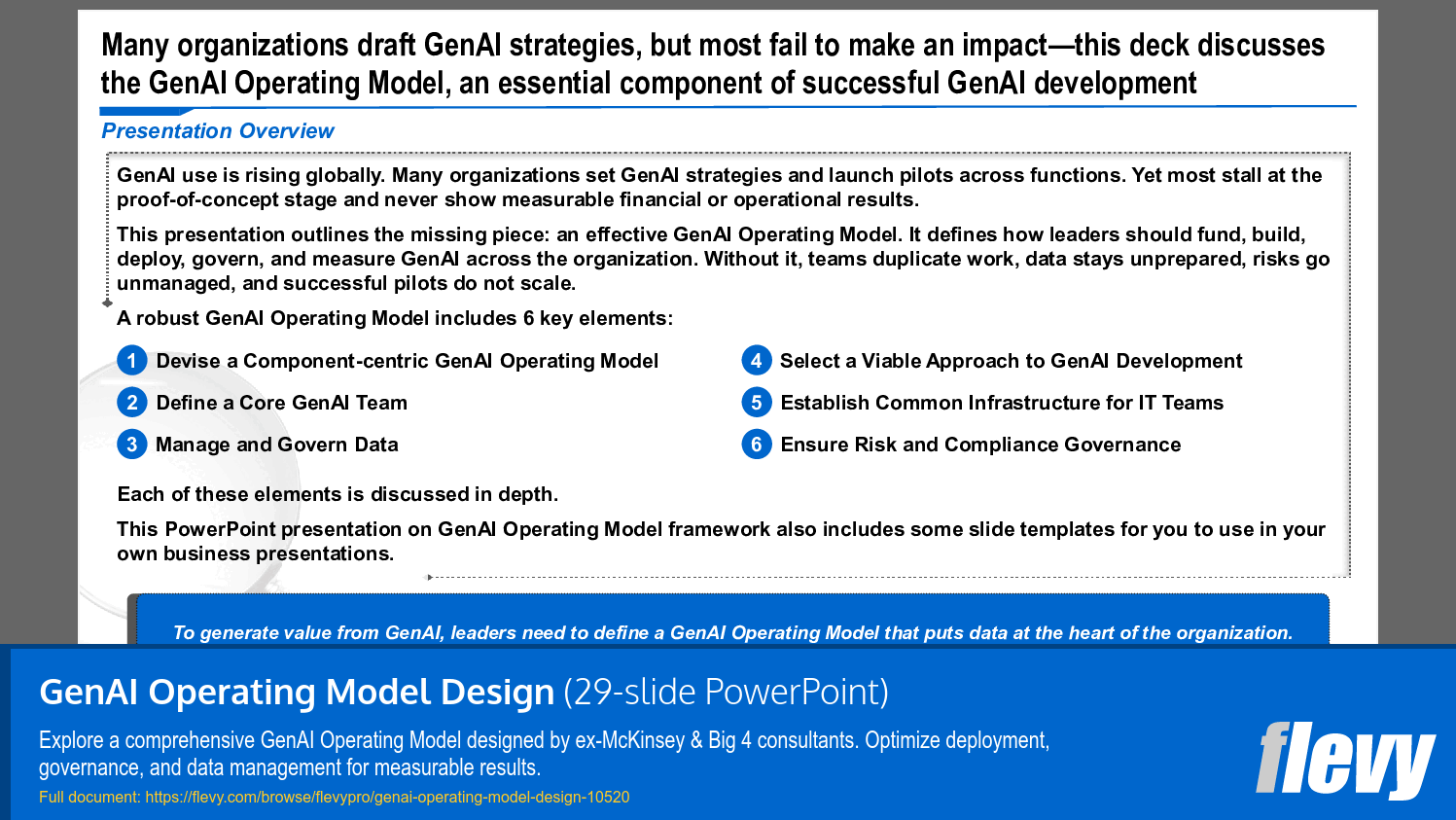
GenAI use is rising globally. Many organizations set GenAI strategies and launch pilots across functions. Yet most stall at the proof-of-concept stage and never show measurable financial or operational results.

This PPT presentation outlines the missing piece: an effective GenAI Operating Model. It defines how leaders should fund, build, deploy, govern, and measure GenAI across the organization. Without it, teams duplicate work, data stays unprepared, risks go unmanaged, and successful pilots do not scale.

To generate value from GenAI, leaders need to define a GenAI Operating Model that puts data at the heart of the organization.

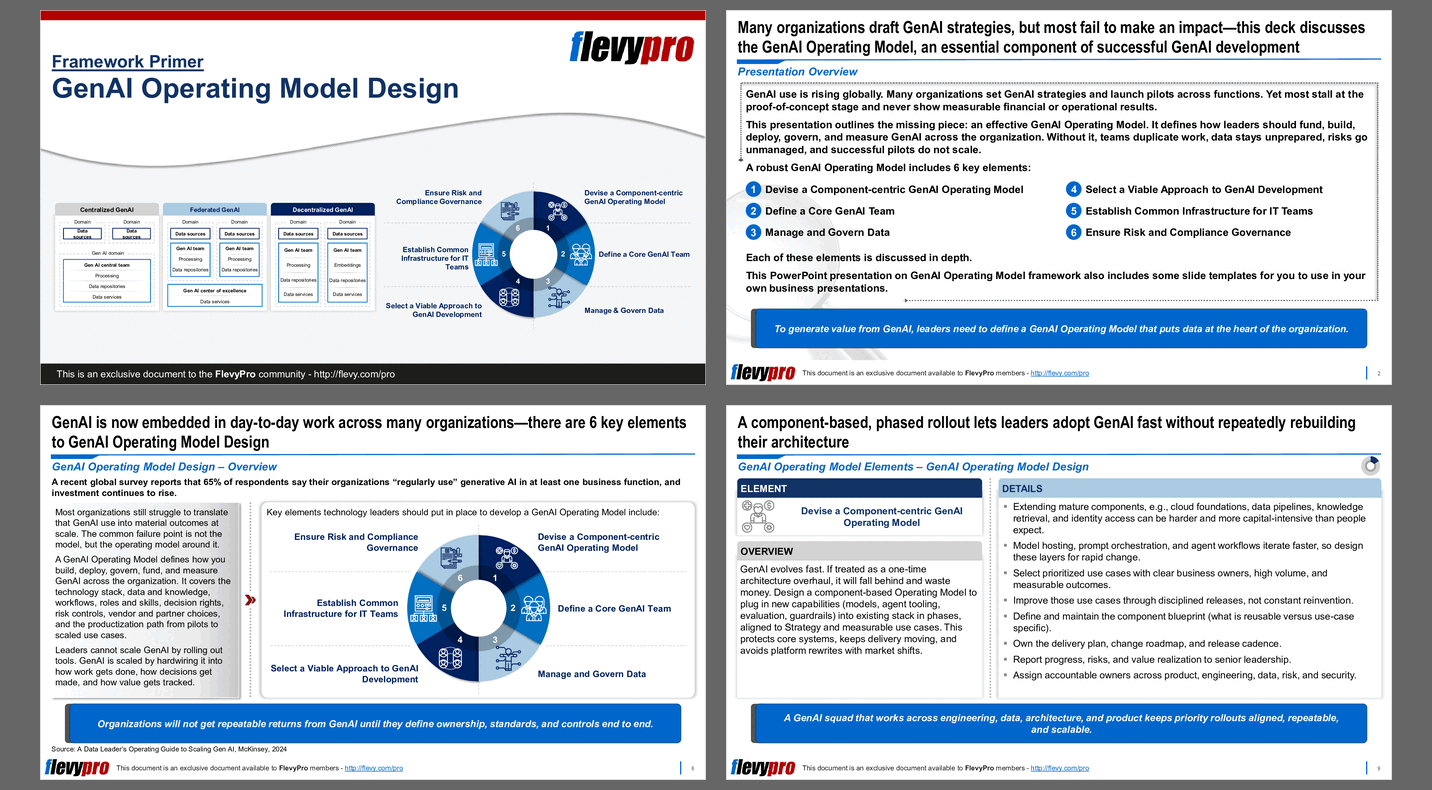
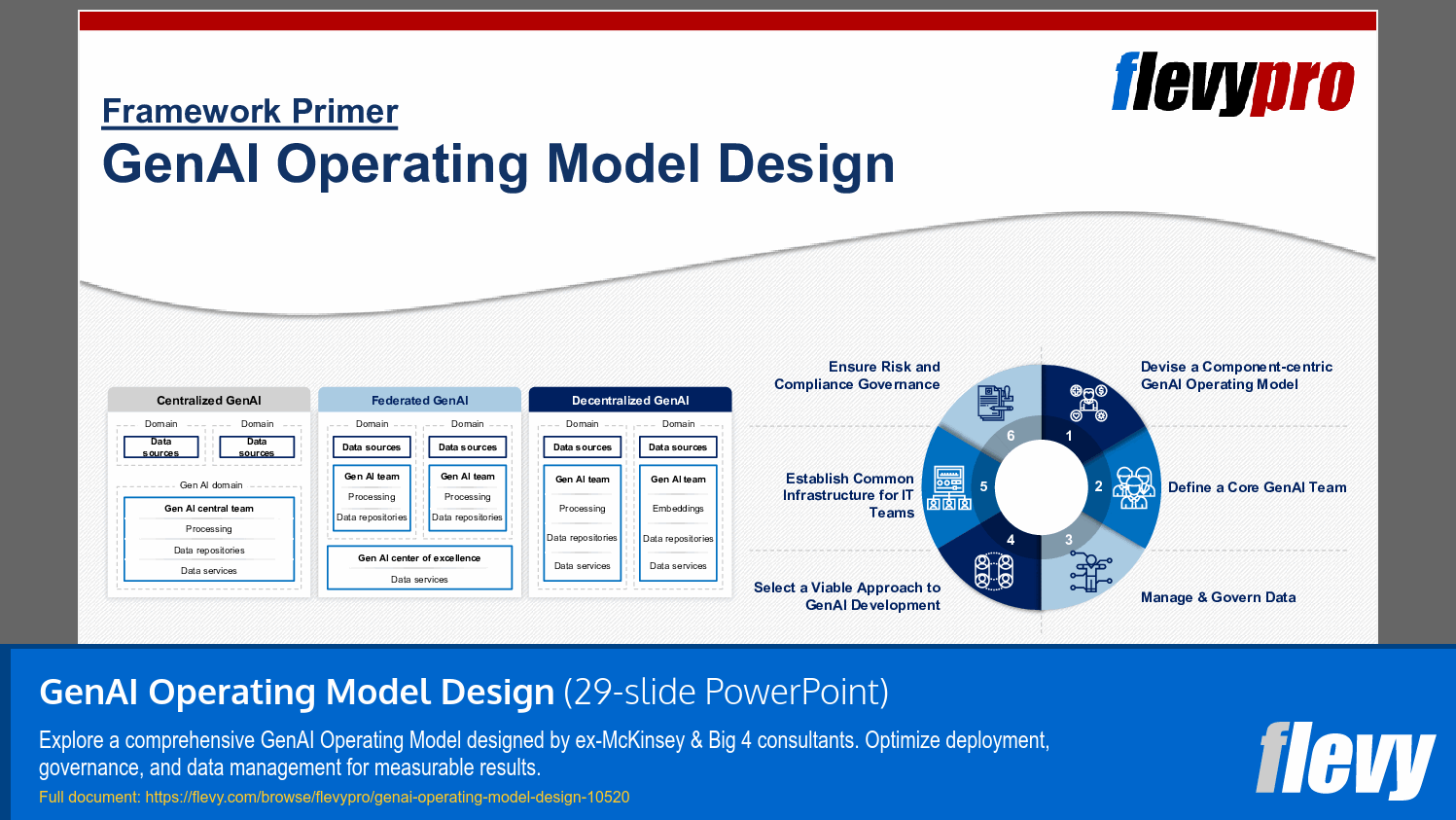
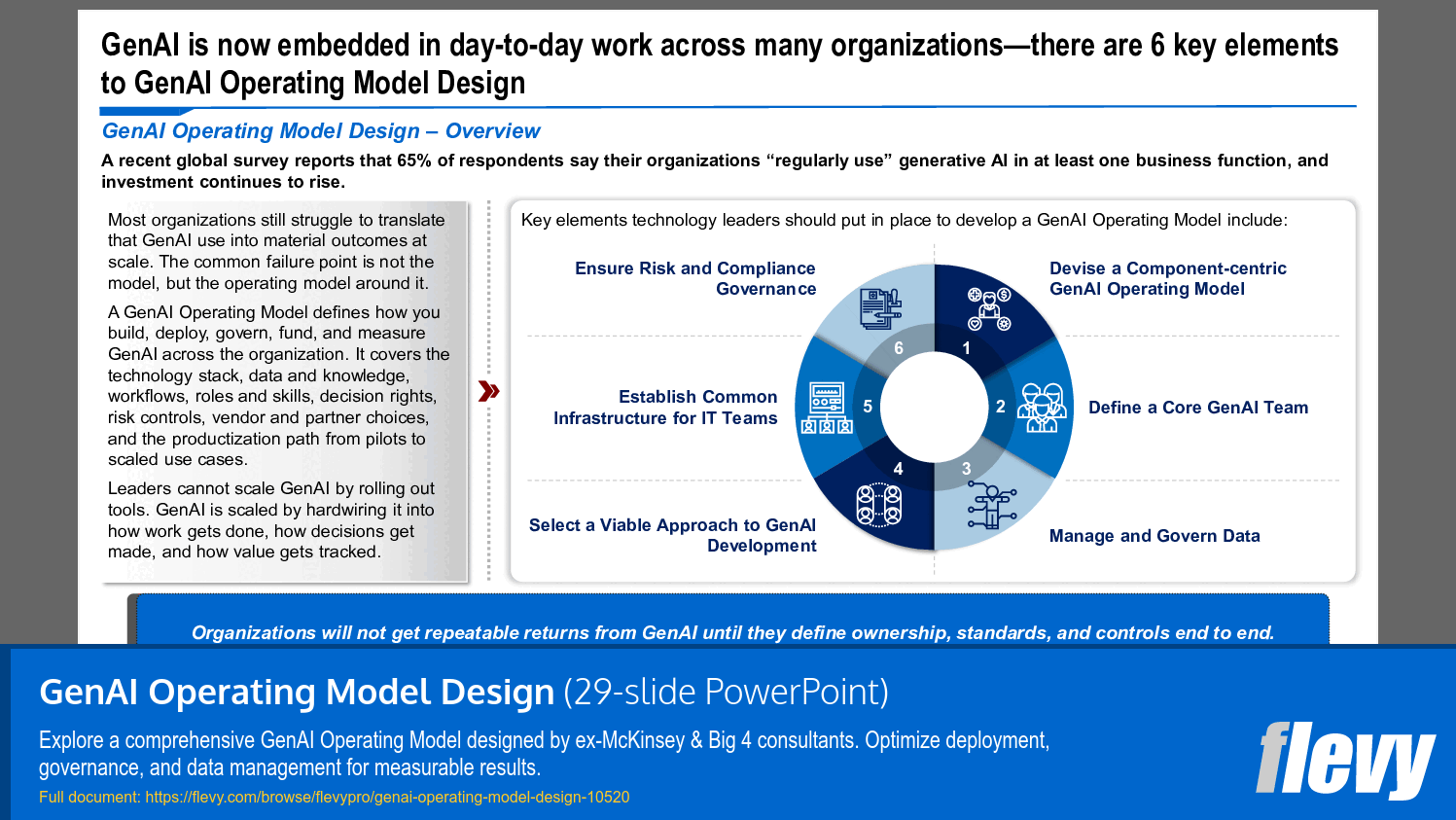
A robust GenAI Operating Model includes 6 key elements:

1. Devise a Component-centric GenAI Operating Model
2. Define a Core GenAI Team
3. Manage and Govern Data
4. Select a Viable Approach to GenAI Development
5. Establish Common Infrastructure for IT Teams
6. Ensure Risk and Compliance Governance

Each of these elements is discussed in depth.

This PowerPoint presentation on GenAI Operating Model framework also includes some slide templates for you to use in your own business presentations.

Got a question about this document? Email us at flevypro@flevy.com.

MARCUS OVERVIEW

This synopsis was written by Marcus [?] based on the analysis of the full 29-slide presentation.


Executive Summary
The GenAI Operating Model Design presentation provides a structured framework for organizations to effectively implement Generative AI (GenAI) strategies. Designed by former consultants from McKinsey and the Big 4, this comprehensive deck outlines essential components for successful GenAI deployment, governance, and data management. It emphasizes the importance of a robust operating model to avoid common pitfalls, ensuring that organizations can scale their GenAI initiatives from pilot projects to impactful, measurable outcomes. Leaders will gain insights into establishing a component-centric approach, defining core teams, managing data, and ensuring compliance.

Who This Is For and When to Use
•  Corporate executives overseeing digital transformation initiatives
•  Integration leaders responsible for implementing GenAI strategies
•  IT teams tasked with developing and maintaining GenAI infrastructure
•  Data governance professionals ensuring compliance and risk management

Best-fit moments to use this deck:
•  During the initial planning phase for GenAI implementation
•  When assessing existing GenAI initiatives for scalability and effectiveness
•  In workshops aimed at aligning cross-functional teams on GenAI strategies

Learning Objectives
•  Define the key components of a GenAI Operating Model for effective implementation
•  Build a core GenAI team with clear roles and responsibilities
•  Establish governance frameworks for data management and compliance
•  Select the appropriate GenAI development approach (centralized, federated, decentralized)
•  Manage and govern data to ensure quality and accessibility
•  Identify common pitfalls in GenAI initiatives and strategies to avoid them

Table of Contents
•  Overview (page 2)
•  GenAI Operating Model Design (page 3)
•  GenAI Operating Model Elements (page 7)
•  Slide Design Structure & Templates (page 18)

Primary Topics Covered
•  GenAI Operating Model Design - A framework outlining how organizations can structure their GenAI initiatives to ensure alignment with business goals and operational efficiency.
•  Key Elements of GenAI - Six critical components that organizations must address to successfully implement GenAI strategies, including team structure and data governance.
•  Common Pitfalls in GenAI Initiatives - Identification of frequent challenges organizations face when deploying GenAI and strategies to mitigate these risks.
•  Data Management Strategies - Approaches for managing unstructured data to ensure it is governed and reusable, enhancing the effectiveness of GenAI applications.
•  Development Approaches - Discussion of centralized, federated, and decentralized models for GenAI development, with guidance on when to use each.
•  Governance and Compliance - Frameworks for ensuring that GenAI initiatives adhere to risk management and compliance standards.

Deliverables, Templates, and Tools
•  GenAI Operating Model framework template for organizational use
•  Governance and compliance checklist for GenAI initiatives
•  Data management strategy template for structured and unstructured data
•  Development model selection guide for choosing between centralized, federated, or decentralized approaches
•  Risk assessment framework for evaluating GenAI initiatives
•  Slide templates for presenting GenAI strategies to stakeholders

Slide Highlights
•  Overview of the GenAI Operating Model with key components illustrated
•  Comparison of centralized, federated, and decentralized GenAI development models
•  Visual representation of common pitfalls and strategies to avoid them
•  Data management framework detailing processes for governance and quality assurance
•  Governance and compliance structure for managing GenAI risks

Potential Workshop Agenda
GenAI Strategy Alignment Session (90 minutes)
•  Discuss the current state of GenAI initiatives within the organization
•  Identify key stakeholders and their roles in the GenAI Operating Model
•  Outline initial steps for implementing the GenAI framework

Data Management and Governance Workshop (60 minutes)
•  Review data management strategies and compliance requirements
•  Develop a draft governance framework for GenAI initiatives
•  Assign responsibilities for data stewardship across teams

GenAI Development Approach Session (90 minutes)
•  Evaluate the pros and cons of centralized vs. decentralized development models
•  Define criteria for selecting the appropriate GenAI development approach
•  Create a roadmap for transitioning to the chosen model

Customization Guidance
•  Tailor the GenAI Operating Model framework to align with specific organizational goals and structures
•  Adjust the data management strategy to reflect the unique data landscape of the organization
•  Modify governance frameworks to meet industry-specific compliance requirements
•  Update development model selection criteria based on organizational maturity and capabilities

Secondary Topics Covered
•  The role of IT in supporting GenAI initiatives
•  Strategies for fostering cross-functional collaboration in GenAI projects
•  Best practices for monitoring and evaluating GenAI outcomes
•  Case studies of successful GenAI implementations across industries

Topic FAQ

What are the core elements an organization should define when building a GenAI operating model?

A GenAI operating model should address 6 elements: a component-centric model, a Core GenAI Team with defined roles, data management and governance for unstructured data, selection of a development approach (centralized/federated/decentralized), common IT infrastructure, and risk/compliance governance, comprising the model's 6 key elements.

How should I choose between centralized, federated, or decentralized GenAI development approaches?

Choose based on organizational maturity, data stewardship capabilities, and existing governance structures. Centralized suits strong central control; federated balances local autonomy with oversight; decentralized fits autonomous teams with mature data practices. The presentation provides a development model selection guide to compare these approaches.

What responsibilities typically belong to a Core GenAI Team?

A Core GenAI Team should establish oversight, align business objectives with technical delivery, coordinate data stewardship, and set governance standards. The operating-model materials emphasize defining clear roles and responsibilities as one of the 6 key elements to ensure alignment and accountability.

How important is data management for GenAI projects and what should it cover?

Data management is critical for transforming unstructured information into governed, reusable assets; it should cover data quality, stewardship, storage, and accessibility to support model training and reuse. The deck includes a data management strategy template addressing these areas.

What practical tools should I look for when buying a GenAI operating model toolkit on a budget?

Prioritize resources that provide practical templates you can tailor: an operating-model framework, governance and compliance checklist, data management template, and a development-model selection guide to reduce build time and align stakeholders across teams.

Are purchasable templates useful for accelerating GenAI governance and scaling?

Templates can accelerate alignment by providing ready-made governance checklists, data management strategies, and risk assessment frameworks that teams can customize, such as a governance and compliance checklist, data management strategy template, and risk assessment framework.

How can I avoid common pitfalls that cause GenAI pilots to stall before delivering value?

Prevent stalls by defining clear objectives, establishing a Core GenAI Team, implementing data governance to prepare unstructured data, selecting an appropriate development approach, and setting risk/compliance processes—the presentation highlights these common pitfalls and mitigation strategies.

What should a short workshop agenda include when aligning stakeholders on a GenAI strategy?

A concise workshop should review current GenAI initiatives, identify stakeholders and roles in the operating model, outline initial implementation steps, and assign data stewardship responsibilities; the product suggests a 90-minute GenAI Strategy Alignment Session for this purpose and includes related slide templates.

Document FAQ
These are questions addressed within this presentation.

What is the GenAI Operating Model?
The GenAI Operating Model is a structured framework that outlines how organizations can effectively implement and manage Generative AI initiatives, ensuring alignment with business objectives and operational efficiency.

How can organizations avoid common pitfalls in GenAI initiatives?
By following the guidelines outlined in the presentation, organizations can establish clear objectives, set standards for data management, and ensure proper governance, thus mitigating risks associated with disconnected experiments.

What are the key components of a successful GenAI Operating Model?
The model includes defining a core GenAI team, managing and governing data, selecting a viable development approach, and ensuring risk and compliance governance.

How do I determine the best development approach for my organization?
Evaluate your organization's maturity, data stewardship capabilities, and governance structures to choose between centralized, federated, or decentralized development models.

What role does data management play in GenAI initiatives?
Effective data management is crucial for transforming unstructured information into governed, reusable assets, which enhances the scalability and reliability of GenAI applications.

How can I ensure compliance with regulations when implementing GenAI?
Establish a governance framework that includes risk tolerance thresholds, regular assessments, and training for teams involved in GenAI initiatives.

What resources are available for further learning about GenAI?
The presentation includes templates, frameworks, and case studies that can be used as references for implementing GenAI strategies effectively.

What are the benefits of a component-centric approach to GenAI?
A component-centric approach allows organizations to plug in new capabilities without overhauling existing systems, ensuring faster adoption and scalability of GenAI initiatives.

How can I measure the success of my GenAI initiatives?
Track key performance indicators such as adoption rates, cycle times, error rates, and overall impact on business outcomes to evaluate the effectiveness of GenAI implementations.

Glossary
•  GenAI - Generative AI, a subset of AI that creates original content based on user prompts.
•  Operating Model - A framework that defines how an organization structures its resources and processes to achieve strategic goals.
•  Data Management - The process of collecting, storing, and using data effectively and securely.
•  Governance - The framework of rules and practices that ensure accountability and compliance in an organization.
•  Centralized Development - A model where a single team manages all aspects of GenAI development and governance.
•  Federated Development - A model where multiple teams share responsibilities for GenAI initiatives while maintaining some central oversight.
•  Decentralized Development - A model where individual teams have full control over their GenAI capabilities and projects.
•  Risk Management - The process of identifying, assessing, and mitigating risks associated with business operations.
•  Compliance - Adhering to laws, regulations, and standards relevant to an organization's operations.
•  Core GenAI Team - A dedicated group responsible for overseeing GenAI initiatives and ensuring alignment with organizational goals.
•  Component-centric Model - An approach that focuses on building reusable components for GenAI applications to facilitate scalability and efficiency.
•  Use Case - A specific application of GenAI technology to solve a business problem or enhance a process.
•  Data Stewardship - The management of data assets to ensure their quality, security, and compliance.

TARGET OPERATING MODEL PPT SLIDES

Six Critical Elements for Building a GenAI Operating Model

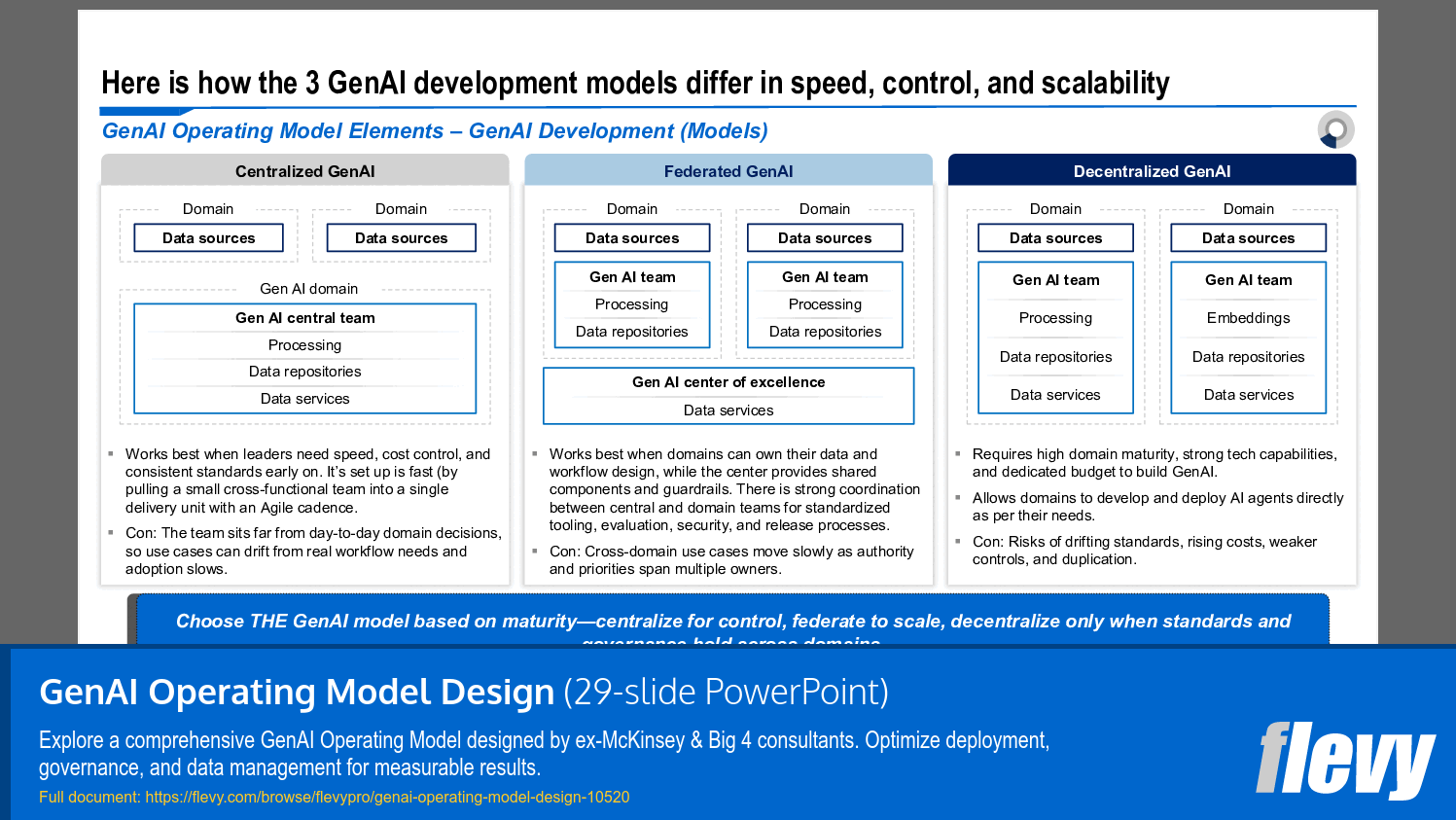
Comparison of GenAI Development Models by Speed, Control, and Scalability

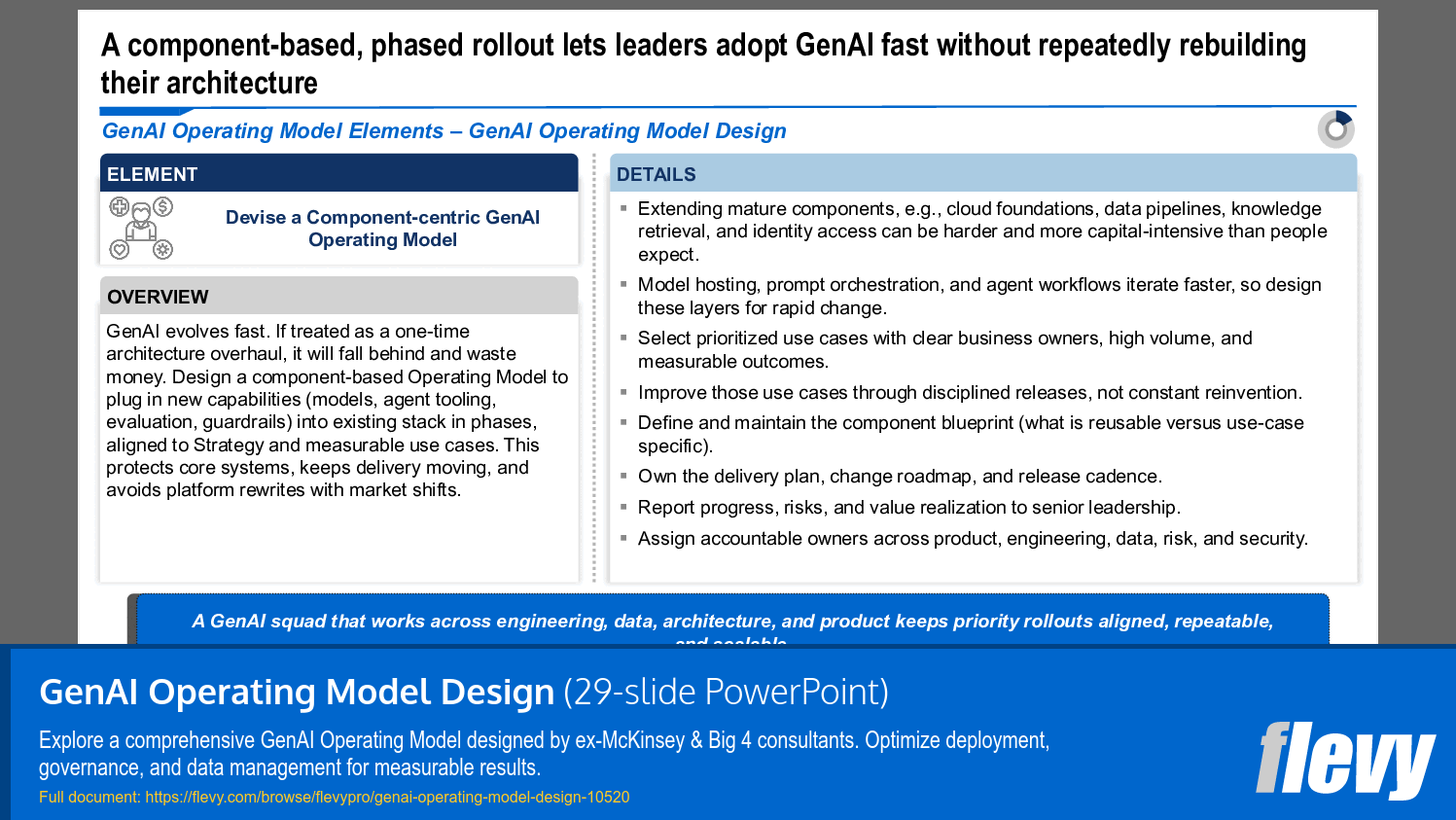
Component-Based Phased Deployment of GenAI Architectures

Source: Best Practices in Operating Model, GenAI PowerPoint Slides: GenAI Operating Model Design PowerPoint (PPTX) Presentation Slide Deck, LearnPPT Consulting


$29.00
FlevyPro price: FREE (included in subscription)
This framework is developed by a team of former McKinsey and Big 4 consultants. The presentation follows the headline-body-bumper slide format used by global consulting firms.
Add to Cart
  

Did you need more documents?

Consider a FlevyPro subscription from $39/month. View plans here.

For $10.00 more, you can download this document plus 2 more FlevyPro documents. That's just $13 each.

ABOUT FLEVYPRO

This document is part of the FlevyPro Library, a curated knowledge base of documents for our FlevyPro subscribers.

FlevyPro is a subscription service for on-demand business frameworks and analysis tools. FlevyPro subscribers receive access to an exclusive library of curated business documents—business framework primers, presentation templates, Lean Six Sigma tools, and more—among other exclusive benefits.

Click here to learn more about FlevyPro and its benefits.

Did you know?
The average daily rate of a McKinsey consultant is $6,625 (not including expenses). The average price of a Flevy document is $65.


Trusted by over 10,000+ Client Organizations
Since 2012, we have provided business templates to over 10,000 businesses and organizations of all sizes, from startups and small businesses to the Fortune 100, in over 130 countries.
AT&T GE Cisco Intel IBM Coke Dell Toyota HP Nike Samsung Microsoft Astrazeneca JP Morgan KPMG Walgreens Walmart 3M Kaiser Oracle SAP Google E&Y Volvo Bosch Merck Fedex Shell Amgen Eli Lilly Roche AIG Abbott Amazon PwC T-Mobile Broadcom Bayer Pearson Titleist ConEd Pfizer NTT Data Schwab


Read Customer Testimonials

 
"As a small business owner, the resource material available from FlevyPro has proven to be invaluable. The ability to search for material on demand based our project events and client requirements was great for me and proved very beneficial to my clients. Importantly, being able to easily edit and tailor "

– Michael Duff, Managing Director at Change Strategy (UK)
 
"I like your product. I'm frequently designing PowerPoint presentations for my company and your product has given me so many great ideas on the use of charts, layouts, tools, and frameworks. I really think the templates are a valuable asset to the job."

– Roberto Fuentes Martinez, Senior Executive Director at Technology Transformation Advisory
 
"I have used FlevyPro for several business applications. It is a great complement to working with expensive consultants. The quality and effectiveness of the tools are of the highest standards."

– Moritz Bernhoerster, Global Sourcing Director at Fortune 500
 
"As a consulting firm, we had been creating subject matter training materials for our people and found the excellent materials on Flevy, which saved us 100's of hours of re-creating what already exists on the Flevy materials we purchased."

– Michael Evans, Managing Director at Newport LLC
 
"Flevy.com has proven to be an invaluable resource library to our Independent Management Consultancy, supporting and enabling us to better serve our enterprise clients.

The value derived from our [FlevyPro] subscription in terms of the business it has helped to gain far exceeds the investment made, making a subscription a no-brainer for any growing consultancy – or in-house strategy team."

– Dean Carlton, Chief Transformation Officer, Global Village Transformations Pty Ltd.
 
"As an Independent Management Consultant, I find Flevy to add great value as a source of best practices, templates and information on new trends. Flevy has matured and the quality and quantity of the library is excellent. Lastly the price charged is reasonable, creating a win-win value for "

– Jim Schoen, Principal at FRC Group
 
"I am extremely grateful for the proactiveness and eagerness to help and I would gladly recommend the Flevy team if you are looking for data and toolkits to help you work through business solutions."

– Trevor Booth, Partner, Fast Forward Consulting
 
"The wide selection of frameworks is very useful to me as an independent consultant. In fact, it rivals what I had at my disposal at Big 4 Consulting firms in terms of efficacy and organization."

– Julia T., Consulting Firm Owner (Former Manager at Deloitte and Capgemini)


Customers Also Bought These Documents


Customers Also Like These Documents

Explore Related Management Topics

CEO
PMI


Your Recently Viewed Documents
Download our FREE Organization, Change, & Culture, Templates

Download our free compilation of 50+ slides and templates on Organizational Design, Change Management, and Corporate Culture. Methodologies include ADKAR, Burke-Litwin Change Model, McKinsey 7-S, Competing Values Framework, etc.









