
This framework is developed by a team of former McKinsey and Big 4 consultants. The presentation follows the headline-body-bumper slide format used by global consulting firms.
Editor Summary
25-slide PowerPoint presentation (PPTX) by LearnPPT Consulting detailing talent management approaches for the Digital Age, presenting 2 distinct models: Talent Markets for Contractors and Digital Tools for Employees, plus slide templates for reuse.
Read moreTargets senior leaders, HR leaders, talent acquisition leads, and line managers seeking ways to attract and retain younger and middle-management digital talent. Used for designing talent attraction, retention, and upskilling strategies amid digital disruption. Sold as a digital download on Flevy with immediate digital download.
Use this deck when traditional talent management is failing to retain or develop digital skills among younger and middle managers, and leadership must evaluate new approaches to acquire and upskill talent.
Senior leaders evaluating strategic options to attract and retain high-potential digital talent by comparing external contractor markets with internal enablement initiatives.
HR leaders designing programs to upgrade middle-management digital capabilities and manager-level development paths using employee-facing digital tools.
Talent acquisition leaders building on-demand contractor pools and assessing contractor market models to fill short-term digital skills gaps.
The dual-model approach—combining on-demand external talent markets with internal digital tool enablement—aligns with consulting practice of balancing contingent workforce strategies and capability-building programs.
Traditional Talent Management (TM) processes fail to meet the high-potential talent requirements imperative to compete in this era of disruption. Research reveals that it’s both the younger as well as middle management people who tend to leave if they don't find opportunities to develop digital skills in their existing organizations.
Traditional Talent Management practices aren’t helpful for companies to compete in the Digital Era. In fact, they disappoint the key talent available in the market.
These findings call for the senior leadership to identify and evaluate more immediate and appropriate methods to attract and retain key talent.
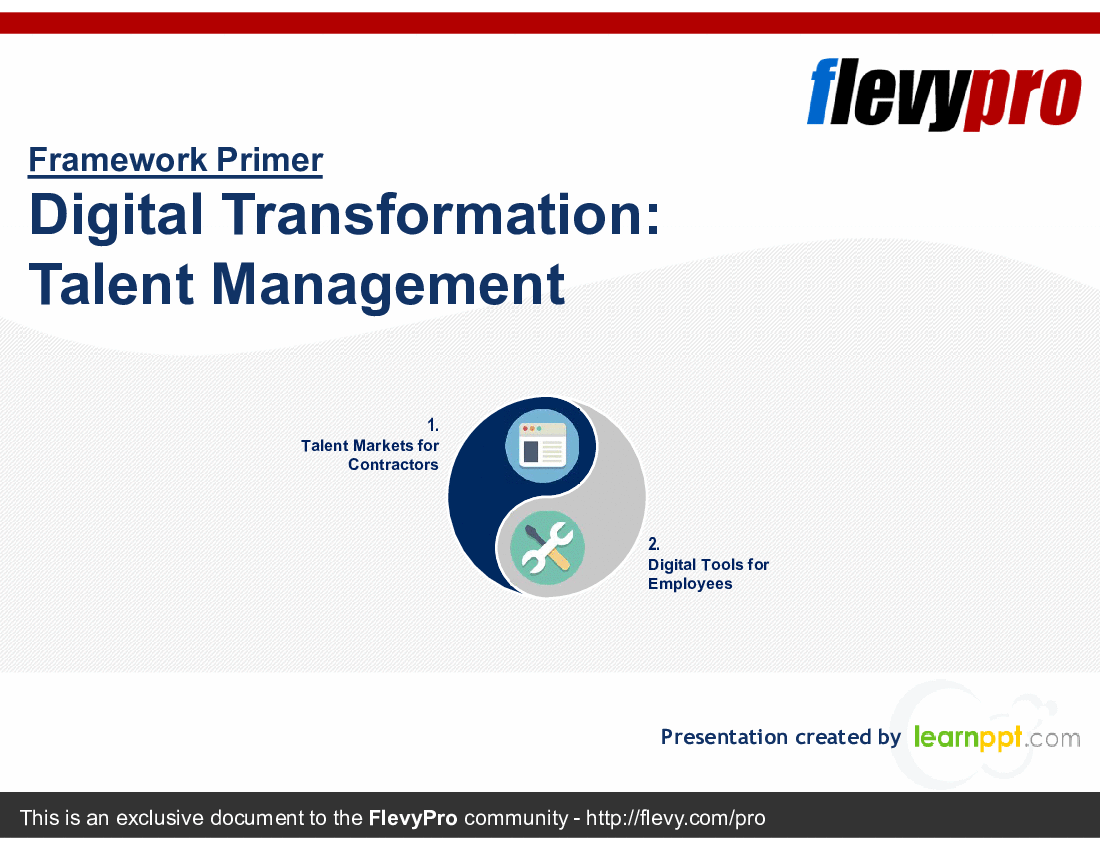
This presentation provides a detailed overview of 2 distinct models that are instrumental in managing talent in the Digital Age:
1. Talent Markets for Contractors
2. Digital Tools for Employees
The slide deck also includes some slide templates for you to use in your own business presentations.
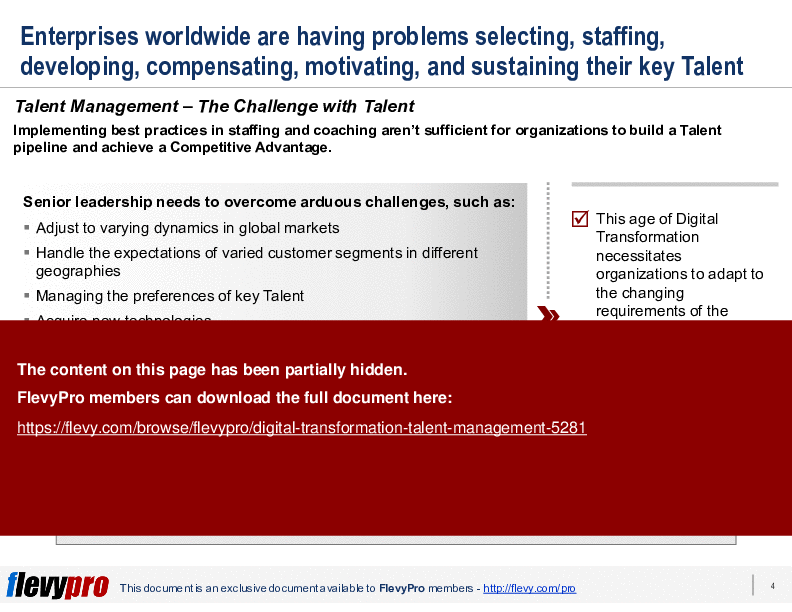
The presentation delves into the pressing challenges faced by enterprises in the Digital Age, emphasizing the need for innovative Talent Management strategies. It highlights the importance of leveraging on-demand talent markets and digital tools to stay competitive. Senior leaders must navigate complex dynamics such as global market variations, customer expectations, and technological advancements to effectively manage talent.
The PPT also provides actionable insights and best practices for fostering a collaborative culture and developing managerial skills within core teams. It underscores the necessity of creating an environment conducive to retaining top talent and continuously upgrading their digital capabilities. This resource is essential for organizations aiming to excel in talent acquisition and retention amidst digital disruption.
What are the main ways traditional talent management fails in the Digital Age?
Traditional talent management often does not provide rapid digital upskilling or visible development opportunities, which causes younger and middle-management employees to seek roles elsewhere. The overview highlights that failure to develop digital skills drives attrition among younger and middle management.
What is meant by "talent markets for contractors" and why use them?
Talent markets for contractors refer to on-demand external talent pools used to source digital skills that organizations lack internally. The presentation identifies this model as one of 2 key approaches for managing talent during digital disruption, labeled Talent Markets for Contractors.
How can digital tools for employees support retention and capability building?
Digital tools for employees focus on enabling continuous skill development, collaboration, and managerial capability within core teams to retain talent who demand digital opportunities. The deck describes this model as Digital Tools for Employees to support upskilling and culture change.
What should buyers look for when selecting a talent management framework for digital transformation?
Buyers should prioritize frameworks that address both external on-demand talent and internal employee enablement, plus materials for managerial-skill development and culture. The presentation organizes these needs into 2 models: Talent Markets for Contractors and Digital Tools for Employees.
How much budget should I expect to allocate for template decks or slide tools to support TM work?
Budget needs vary by scope,, but a ready-to-use slide deck can accelerate stakeholder alignment; the referenced resource is a 25-slide PPTX that includes slide templates and 2 model overviews for contractor markets and employee tools.
I need to stop mid-level managers leaving for digital roles—what practical steps are suggested?
The overview advises senior leadership to identify immediate methods to attract and retain talent, combining access to external contractor options with investments in employee-facing digital tools, and focusing on managerial-skill development and collaborative culture. Consider both Talent Markets for Contractors and Digital Tools for Employees.
How can an organization balance hiring contractors with building internal digital capabilities?
The document proposes a dual approach: use contractor markets to fill immediate digital gaps while deploying digital tools and development for employees to build longer-term capability and retention. The presentation outlines both models side by side: Talent Markets for Contractors and Digital Tools for Employees.
What metrics or outcomes should senior leaders monitor when evaluating new talent management methods?
Leaders should monitor retention and turnover among younger and middle management, adoption rates of employee digital tools, and observable improvements in managerial skills and collaborative culture. The overview emphasizes evaluating methods that affect younger and middle-management retention.
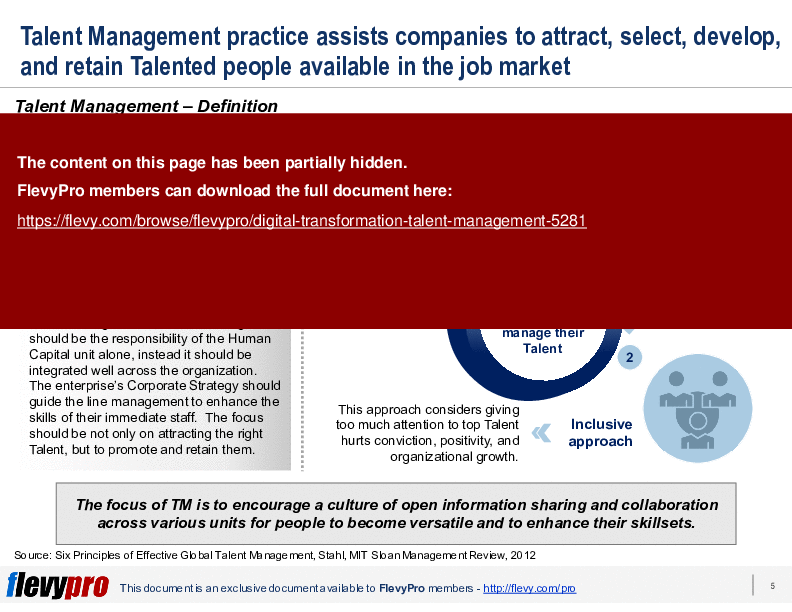
This PPT slide presents a framework for enhancing talent management strategies in the digital age. Key recommendations include reorganizing roles and responsibilities for flexibility, investing in continuous learning and development for full-time employees, and empowering core employees to influence long-term strategic direction. The example of 3M Co. illustrates their commitment to comprehensive talent management by investing in employee development programs for the entire workforce by 2025. Best practices for maximizing digital tools include coaching core employees to manage on-demand talent, empowering strategic decision-making, fostering a supportive retention environment, and providing learning opportunities to enhance digital capabilities. These practices highlight the need for a more engaged and capable workforce to thrive in a digital landscape.
Organizations are leveraging digital platforms to manage freelance talent effectively, emphasizing a flexible recruitment model to attract skilled contractors and consultants. This approach is vital in the digital business environment, where demand for specialized skills fluctuates. Companies can expand or contract their talent markets based on workload and specific skill requirements.
Work Market Inc., a New York-based platform, exemplifies how digital talent markets streamline contractor hiring and integrate full-time employee management. Best practices include treating on-demand talent markets as communities to foster collaboration, balancing full-time and part-time talent for diverse skill sets, and creating environments that attract top talent to retain skilled contractors. Adaptive talent management strategies are essential in an increasingly digital landscape.
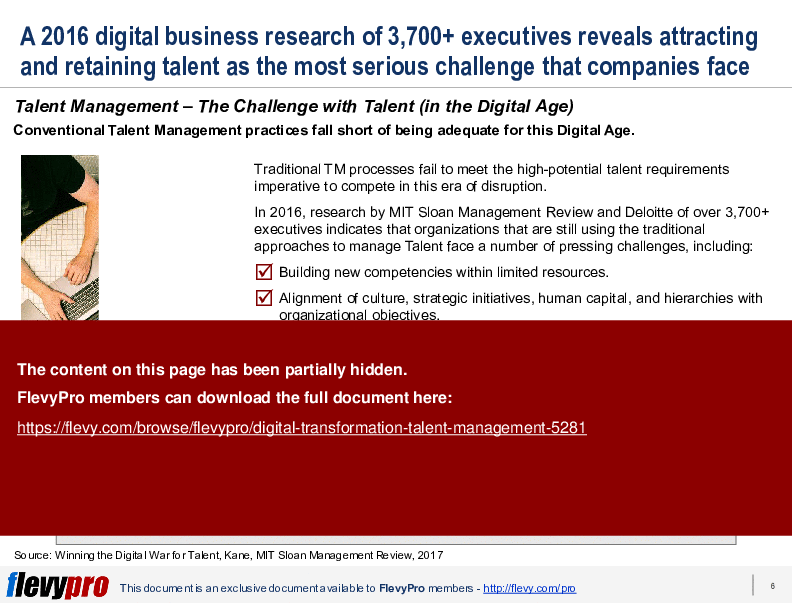
This PPT slide presents insights from a 2016 digital business study highlighting the importance of talent management in developing digital capabilities. A significant trend shows that younger and mid-career professionals seek opportunities to enhance their digital skills, prompting potential job changes if current employers do not provide such opportunities. The survey of over 3,700 digital executives identifies 2 emerging models for talent management: "Talent Markets for Contractors," which leverages external talent pools for specialized skills, and "Digital Tools for Employees," focusing on equipping existing employees with necessary digital tools. This dual approach reflects a comprehensive strategy for addressing the evolving demands of the digital landscape. Organizations must adapt their talent management strategies to retain skilled employees by investing in both external talent markets and internal skill development.
Source: Best Practices in Digital Transformation, Talent Strategy, Employee Engagement, Talent Management PowerPoint Slides: Digital Transformation: Talent Management PowerPoint (PPTX) Presentation Slide Deck, LearnPPT Consulting
This framework is developed by a team of former McKinsey and Big 4 consultants. The presentation follows the headline-body-bumper slide format used by global consulting firms.
For $10.00 more, you can download this document plus 2 more FlevyPro documents. That's just $13 each.
ABOUT FLEVYPRO
This document is part of the FlevyPro Library, a curated knowledge base of documents for our FlevyPro subscribers.

FlevyPro is a subscription service for on-demand business frameworks and analysis tools. FlevyPro subscribers receive access to an exclusive library of curated business documents—business framework primers, presentation templates, Lean Six Sigma tools, and more—among other exclusive benefits.
The average daily rate of a McKinsey consultant is $6,625 (not including expenses). The average price of a Flevy document is $65.
Trusted by over 10,000+ Client Organizations
Since 2012, we have provided business templates to over 10,000 businesses and organizations of all sizes, from startups and small businesses to the Fortune 100, in over 130 countries.
"Flevy is our 'go to' resource for management material, at an affordable cost. The Flevy library is comprehensive and the content deep, and typically provides a great foundation for us to further develop and tailor our own service offer."
– Chris McCann, Founder at Resilient.World
"I have used Flevy services for a number of years and have never, ever been disappointed. As a matter of fact, David and his team continue, time after time, to impress me with their willingness to assist and in the real sense of the word. I have concluded in fact
that it is not at all just a repository of documents/resources but, in the way that David and his team manage the firm, it is like dealing with consultants always ready to assist, advise and direct you to what you really need, and they always get it right.
I am an international hospitality accomplished senior executive who has worked and lived during the past 35 years in 23 countries in 5 continents and I can humbly say that I know what customer service is, trust me.
Aside from the great and professional service that Flevy's team provide, their wide variety of material is of utmost great quality, professionally put together and most current.
Well done Flevy, keep up the great work and I look forward to continue working with you in the future and to recommend you to a variety of colleagues around the world.
"
– Roberto Pelliccia, Senior Executive in International Hospitality
"I am extremely grateful for the proactiveness and eagerness to help and I would gladly recommend the Flevy team if you are looking for data and toolkits to help you work through business solutions."
– Trevor Booth, Partner, Fast Forward Consulting
"The wide selection of frameworks is very useful to me as an independent consultant. In fact, it rivals what I had at my disposal at Big 4 Consulting firms in terms of efficacy and organization."
– Julia T., Consulting Firm Owner (Former Manager at Deloitte and Capgemini)
"FlevyPro has been a brilliant resource for me, as an independent growth consultant, to access a vast knowledge bank of presentations to support my work with clients. In terms of RoI, the value I received from the very first presentation I downloaded paid for my subscription many times over! The
quality of the decks available allows me to punch way above my weight – it's like having the resources of a Big 4 consultancy at your fingertips at a microscopic fraction of the overhead.
"
– Roderick Cameron, Founding Partner at SGFE Ltd
"I like your product. I'm frequently designing PowerPoint presentations for my company and your product has given me so many great ideas on the use of charts, layouts, tools, and frameworks. I really think the templates are a valuable asset to the job."
– Roberto Fuentes Martinez, Senior Executive Director at Technology Transformation Advisory
"I have used FlevyPro for several business applications. It is a great complement to working with expensive consultants. The quality and effectiveness of the tools are of the highest standards."
– Moritz Bernhoerster, Global Sourcing Director at Fortune 500
"As a small business owner, the resource material available from FlevyPro has proven to be invaluable. The ability to search for material on demand based our project events and client requirements was great for me and proved very beneficial to my clients. Importantly, being able to easily edit and tailor
the material for specific purposes helped us to make presentations, knowledge sharing, and toolkit development, which formed part of the overall program collateral. While FlevyPro contains resource material that any consultancy, project or delivery firm must have, it is an essential part of a small firm or independent consultant's toolbox.
"
– Michael Duff, Managing Director at Change Strategy (UK)
Download our free compilation of 50+ slides and templates on Organizational Design, Change Management, and Corporate Culture. Methodologies include ADKAR, Burke-Litwin Change Model, McKinsey 7-S, Competing Values Framework, etc.