Your AI assistant becomes a Flevy-powered consultant, with direct access to our full library of frameworks, templates, and case studies. Free to connect. No account, sign-in, or API key required.
STEP 1 · CHOOSE YOUR ASSISTANT
STEP 2 · CONNECT
1
No copying needed. Flevy is in the official Claude Connectors Directory.
2
Click the button below, then click Connect on the Flevy listing.
This framework is developed by a team of former McKinsey and Big 4 consultants. The presentation follows the headline-body-bumper slide format used by global consulting firms.
Editor Summary
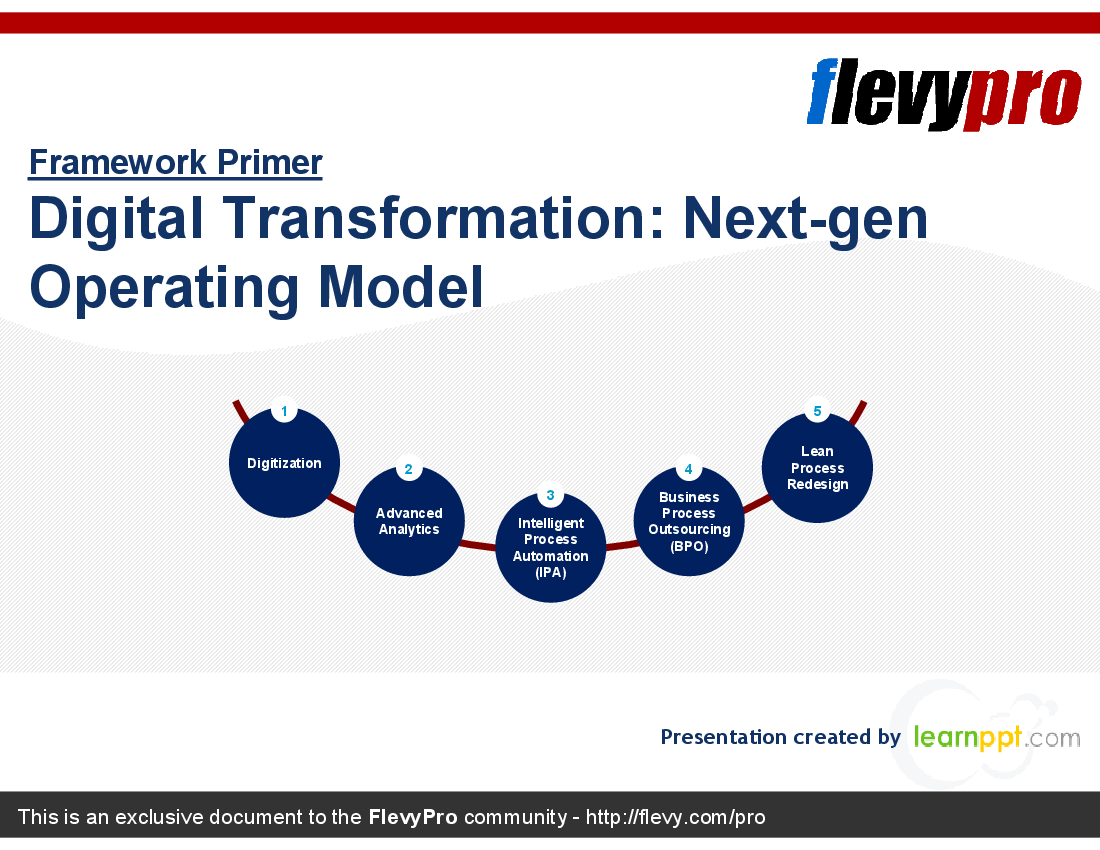
Digital Transformation: Next-gen Operating Model is a 24-slide PowerPoint (PPT) by LearnPPT Consulting that presents a two-prong framework: an Integrated, Organization-wide Operational Improvement Program and a Holistic Customer Journey.
Read moreThe deck stresses sequencing digital and automation levers applied in combination for compound impact, iterative testing and continuous adaptation, and includes Heat Maps for estimating cost reduction and customer experience improvements plus reusable slide templates. Target users include senior leaders, transformation leads, CX directors, and consultants. Sold as a digital download on Flevy.
Use this framework when an organization needs step-change, enterprise-wide transformation rather than isolated, siloed improvement initiatives—particularly to improve customer experience while reducing cost through digital and automation levers.
Senior leaders allocating funding and mandating cross-functional sequencing of digital and automation investments to overcome organizational inertia.
Transformation program managers designing an integrated operational improvement roadmap and planning iterative testing of capability building blocks.
Customer experience directors mapping customer-facing journeys and linking them to internal operations for measurable CX improvements.
Management consultants building strategic discussions and impact estimation using visual Heat Maps and presentation templates.
The approach emphasizes iterative sequencing and impact estimation, reflecting standard management consulting transformation methods focused on hypothesis-driven change and prioritization.
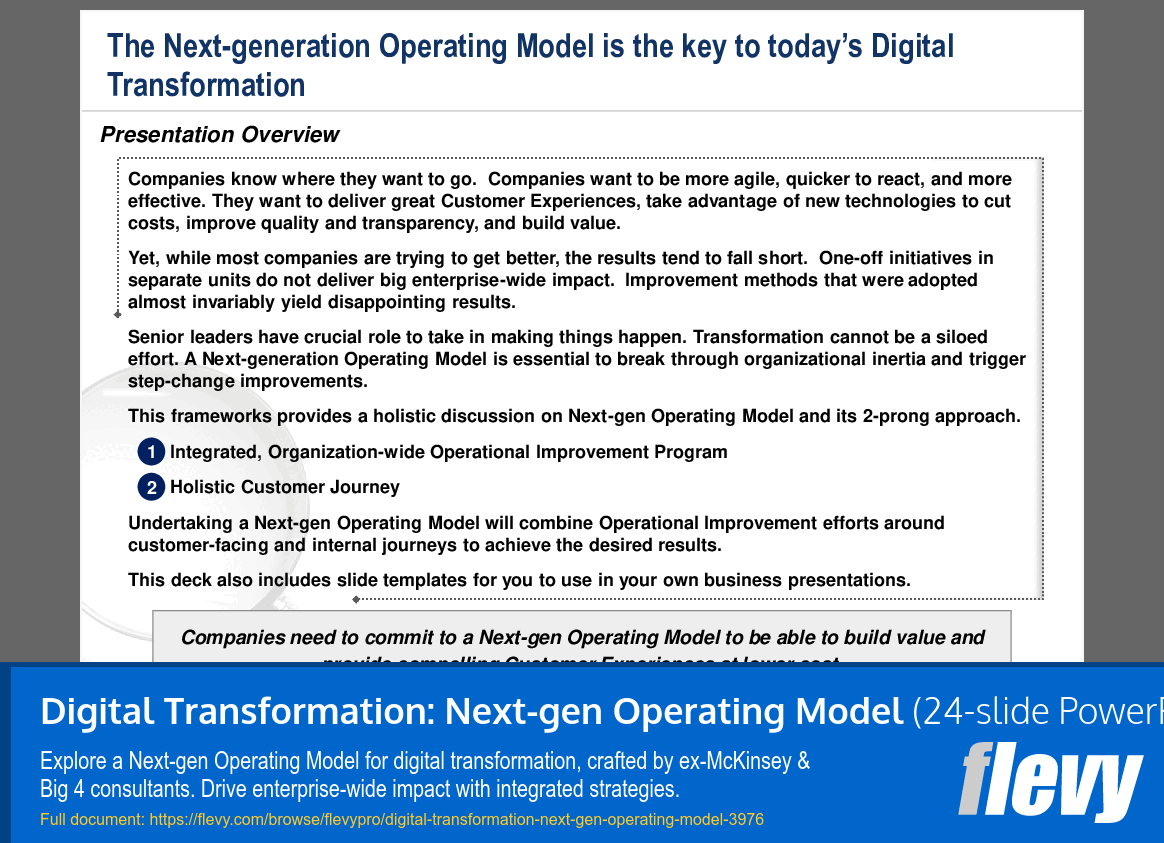
Companies know where they want to go. Companies want to be more agile, quicker to react, and more effective. They want to deliver great Customer Experiences, take advantage of new technologies to cut costs, improve quality and transparency, and build value.
Yet, while most companies are trying to get better, the results tend to fall short. One-off initiatives in separate units do not deliver big enterprise-wide impact. Improvement methods that were adopted almost invariably yield disappointing results.
Senior leaders have crucial role to take in making things happen. Transformation cannot be a siloed effort. A Next-generation Operating Model is essential to break through organizational inertia and trigger step-change improvements.
This frameworks provides a holistic discussion on Next-gen Operating Model and its 2-prong approach.
1. Integrated, Organization-wide Operational Improvement Program
2. Holistic Customer Journey
Undertaking a Next-gen Operating Model will combine Operational Improvement efforts around customer-facing and internal journeys to achieve the desired results. Companies need to commit to a Next-gen Operating Model to be able to build value and provide compelling Customer Experiences at lower cost.
This deck also includes slide templates for you to use in your own business presentations.
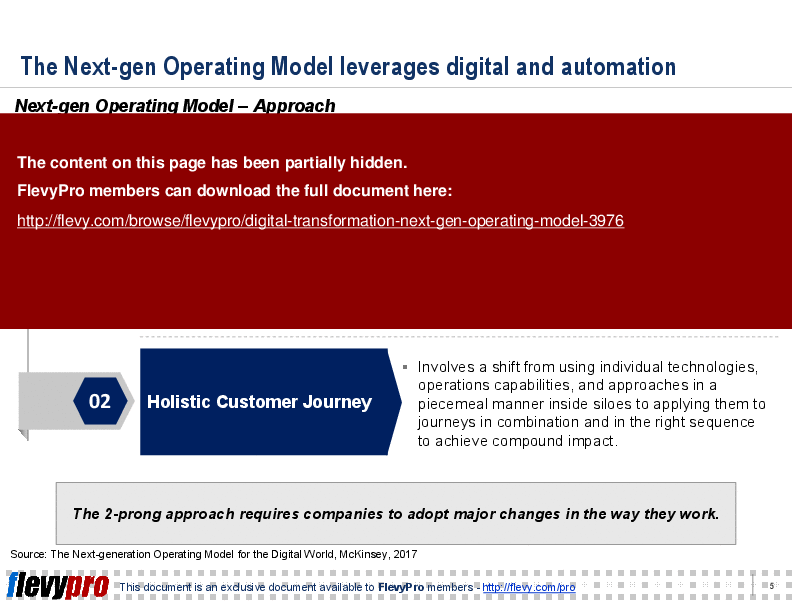
The Next-gen Operating Model leverages digital and automation to drive significant improvements. It involves a shift from using individual technologies and operations capabilities in silos to applying them in combination and in the right sequence to achieve compound impact. This approach is highly iterative and requires continuous adaptation and testing of each building block to align with the evolving needs of the organization.
The framework emphasizes the importance of using each lever to its maximum effect, implementing them in the right sequence, and ensuring they interact to provide a multiplier effect. Heat Maps are included to estimate cost reduction and customer experience improvements, making it a valuable tool for strategic discussions. This comprehensive guide is designed to help senior leaders drive enterprise-wide transformation and achieve substantial, sustainable results.
What is a "next-gen operating model" in the context of digital transformation?
A next-gen operating model combines organization-wide operational improvement with a holistic customer journey focus, shifting from siloed initiatives to coordinated application of digital and automation levers. It emphasizes sequencing levers to create compound impact, iterative testing, and continuous adaptation as part of a two-prong approach.
How should organizations sequence digital and automation levers for better results?
Organizations should apply levers in combination and in the right sequence to generate multiplier effects, then iteratively test and adapt each building block to organizational needs. Sequencing helps avoid isolated investments and supports compound impact estimation using tools like Heat Maps to compare cost and CX improvement potential.
What does a holistic customer journey approach entail for operational improvement?
A holistic customer journey approach aligns customer-facing processes with internal operational journeys so improvements deliver measurable CX and cost benefits. It requires mapping end-to-end touchpoints, linking them to internal process changes, and coordinating operational improvement efforts across functions as part of the Holistic Customer Journey component.
What role should senior leaders play to ensure enterprise-wide transformation succeeds?
Senior leaders must commit resources, mandate cross-functional integration, and break organizational inertia by sponsoring an integrated operational improvement program. They should use structured presentation materials to align stakeholders and drive sequencing decisions, for example leveraging slide templates provided in a 24-slide PPT.
What should I look for when buying a next-gen operating model toolkit?
Look for a toolkit that combines organization-wide operational improvement with customer-journey alignment, provides guidance on sequencing digital and automation levers, includes impact-estimation tools like Heat Maps, and supplies reusable presentation templates; for example, a 24-slide PPT by LearnPPT Consulting.
Are pre-built slide templates and Heat Maps worth purchasing versus building them in-house?
Pre-built templates and Heat Maps can accelerate stakeholder alignment and strategic discussions by providing ready visualizations of cost and CX estimates and sequencing logic. If you need to present a coordinated, enterprise-level case quickly, externally supplied slide templates and Heat Maps save development time and support structured dialogue.
How do I move from fragmented one-off initiatives to an integrated, company-wide program?
Transition by combining operational improvement efforts around customer-facing and internal journeys, establishing sequencing rules for digital and automation levers, and instituting iterative testing and adaptation of building blocks. Governance and executive commitment are required to shift to an Integrated, Organization-wide Operational Improvement Program.
How are Heat Maps used to inform strategic choices in transformation programs?
Heat Maps estimate relative cost reduction and customer experience improvement potential across initiatives, helping prioritize investments and sequencing of levers. They enable comparative impact discussions during strategic planning and are provided as an explicit tool for impact estimation in the framework.
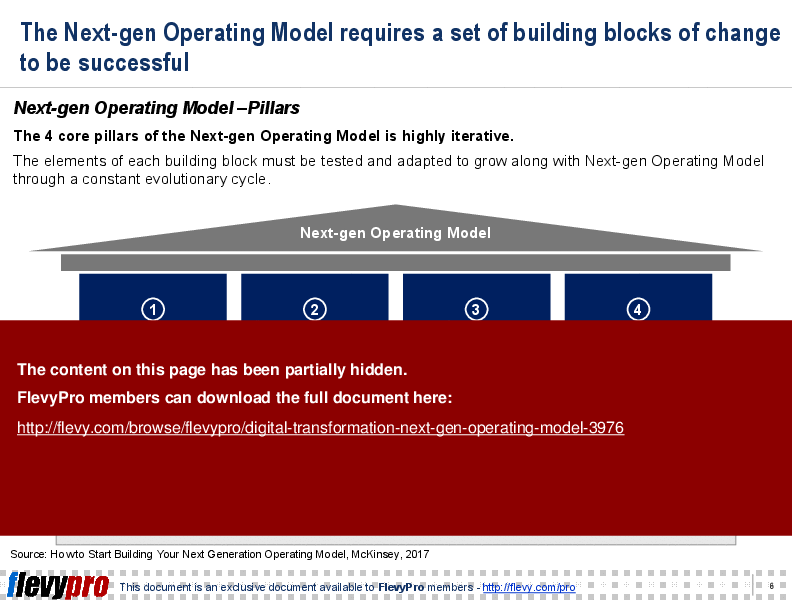
The Next-gen Operating Model consists of 4 key pillars essential for successful implementation:
1. Autonomous, Cross-functional Teams enhance agility and responsiveness by empowering teams to operate independently, fostering collaboration and quicker decision-making.
2. Flexible, Modular Platform emphasizes adaptability in technology and processes, allowing organizations to integrate new capabilities without complete overhauls.
3. Connected Management System links operational areas, improving data flow and insights critical for informed decision-making.
4. Agile, Customer-centric Culture prioritizes customer needs and embraces change, encouraging experimentation and responsiveness to market demands.
These pillars interact and support one another, driving effective transformation in an evolving business environment.
This PPT slide template outlines a framework for implementing an operational improvement program based on 3 guiding principles. The first principle emphasizes maximizing the potential of each lever, ensuring organizations identify and fully utilize available levers. The second principle stresses the importance of a strategic sequence in applying these levers, as the order of actions can significantly influence outcomes. The third principle highlights the interaction among levers, suggesting that their combined effect can enhance overall results. Additionally, the development of "end-to-end journey Heat Maps" visualizes the impact and scale of each lever across various organizational journeys, guiding decision-making and resource allocation for optimal effect. This structured approach fosters effective navigation of complex improvement initiatives, leading to enhanced performance and outcomes.
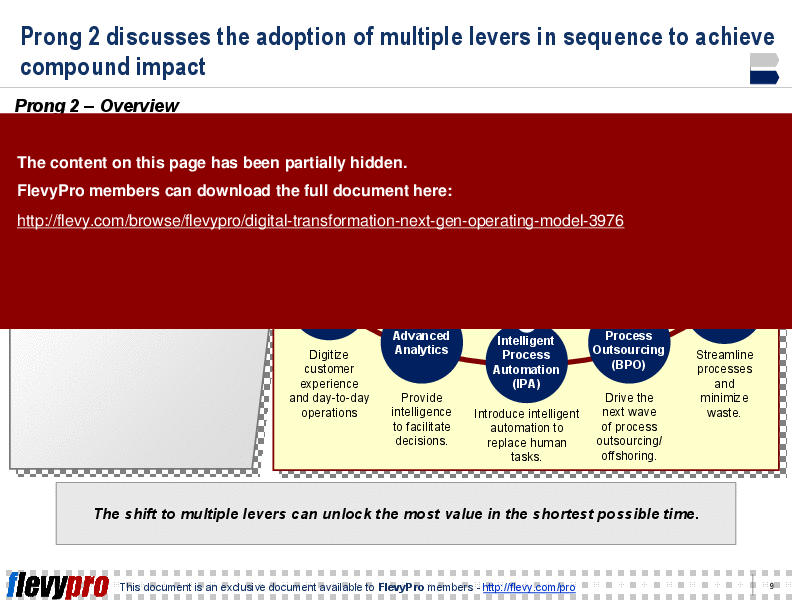
This PPT slide template outlines "Prong 2," focusing on the adoption of multiple levers to enhance operational efficiency. Organizations should integrate strategies rather than rely on isolated capabilities to unlock greater value. Key capabilities include: "Digitization" for improving customer experience and streamlining operations; "Advanced Analytics" for informed decision-making; "Intelligent Process Automation (IPA)" to replace manual tasks with automation; "Business Process Outsourcing (BPO)" for innovative outsourcing solutions; and "Lean Process Redesign" to minimize waste and enhance productivity. Implementing these capabilities in a specific order maximizes effectiveness, driving significant operational performance improvements.
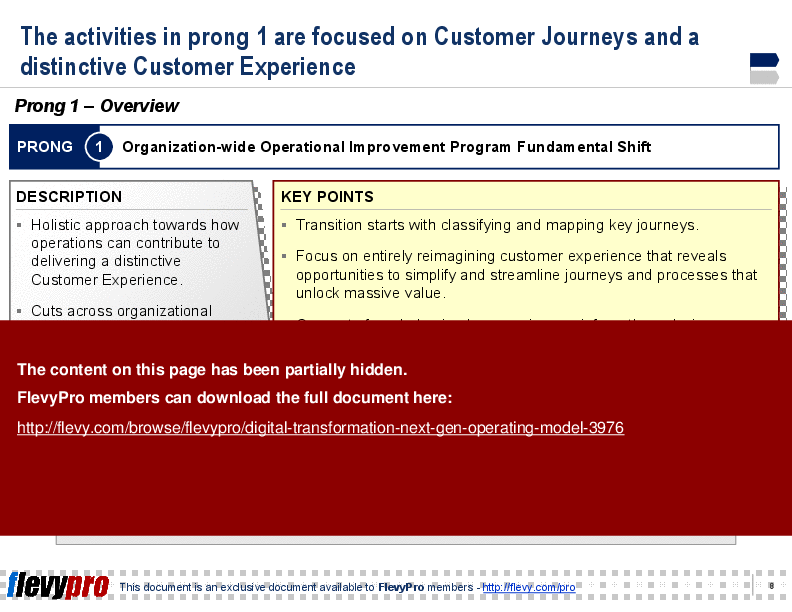
This PPT slide template outlines a strategic framework for enhancing customer experience through an organization-wide operational improvement program. It emphasizes a holistic approach that integrates operations across organizational silos, focusing on customer-facing and end-to-end processes. Initial steps include classifying and mapping key customer journeys, essential for identifying areas to reimagine the customer experience. Simplifying and streamlining these journeys unlocks significant organizational value. The relevance of behavioral economics informs the redesign process, suggesting that understanding customer behavior leads to effective strategies for enhancing customer experience. Leveraging insights from behavioral economics enables organizations to tailor their approaches to meet customer needs and expectations, prioritizing customer-centricity in operational frameworks.
This PPT slide template outlines the second principle of an Operational Improvement Program, emphasizing the correct sequencing of operational levers. Due to numerous variables, a one-size-fits-all approach to sequencing is ineffective. The interdependence of levers must be acknowledged, as they build upon one another for optimal results. Systematic analysis is essential in decision-making, particularly in evaluating in-house operations versus outsourcing, anchored in the core value proposition. A structured set of questions is recommended to assess opportunities associated with each lever, focusing on estimating their potential impact on costs and customer experience. Assigning an overall score to each lever aids in prioritization and developing a preliminary implementation sequence, which should align with broader strategic objectives.
The Implementation Heat Map evaluates operational improvement initiatives across key business journeys: Sales, Policy Issuance, Servicing, Claims, and Supporting Functions. It categorizes specific activities for granular impact assessment and employs a color-coded system to indicate effectiveness and priority of approaches like Business Process Outsourcing (BPO), Digitization, Automation (AA), Intelligent Process Automation (IPA), and Lean methodologies. Colors range from red (low impact) to green (high impact), highlighting areas needing attention. For example, in Sales, activities such as "Sales specialists" and "UW new business" show mixed results, while the Claims section identifies critical processes like "Finance - Billing & collection" with significant cost impact. Additional metrics, including non-manager FTE base and dollar cost impact, support strategic decision-making for resource allocation and operational improvements.
Source: Best Practices in Digital Transformation, Customer Journey, Target Operating Model PowerPoint Slides: Digital Transformation: Next-gen Operating Model PowerPoint (PPT) Presentation Slide Deck, LearnPPT Consulting
This framework is developed by a team of former McKinsey and Big 4 consultants. The presentation follows the headline-body-bumper slide format used by global consulting firms.
For $10.00 more, you can download this document plus 2 more FlevyPro documents. That's just $13 each.
ABOUT FLEVYPRO
This document is part of the FlevyPro Library, a curated knowledge base of documents for our FlevyPro subscribers.
FlevyPro is a subscription service for on-demand business frameworks and analysis tools. FlevyPro subscribers receive access to an exclusive library of curated business documents—business framework primers, presentation templates, Lean Six Sigma tools, and more—among other exclusive benefits.
The average daily rate of a McKinsey consultant is $6,625 (not including expenses). The average price of a Flevy document is $65.
Trusted by over 10,000+ Client Organizations
Since 2012, we have provided business templates to over 10,000 businesses and organizations of all sizes, from startups and small businesses to the Fortune 100, in over 130 countries.
"I like your product. I'm frequently designing PowerPoint presentations for my company and your product has given me so many great ideas on the use of charts, layouts, tools, and frameworks. I really think the templates are a valuable asset to the job."
– Roberto Fuentes Martinez, Senior Executive Director at Technology Transformation Advisory
"I have found Flevy to be an amazing resource and library of useful presentations for lean sigma, change management and so many other topics. This has reduced the time I need to spend on preparing for my performance consultation. The library is easily accessible and updates are regularly provided. A wealth of great information."
– Cynthia Howard RN, PhD, Executive Coach at Ei Leadership
"I am extremely grateful for the proactiveness and eagerness to help and I would gladly recommend the Flevy team if you are looking for data and toolkits to help you work through business solutions."
– Trevor Booth, Partner, Fast Forward Consulting
"Flevy is our 'go to' resource for management material, at an affordable cost. The Flevy library is comprehensive and the content deep, and typically provides a great foundation for us to further develop and tailor our own service offer."
– Chris McCann, Founder at Resilient.World
"[Flevy] produces some great work that has been/continues to be of immense help not only to myself, but as I seek to provide professional services to my clients, it gives me a large "tool box" of resources that are critical to provide them with the quality of service and outcomes they are expecting."
– Royston Knowles, Executive with 50+ Years of Board Level Experience
"As a consulting firm, we had been creating subject matter training materials for our people and found the excellent materials on Flevy, which saved us 100's of hours of re-creating what already exists on the Flevy materials we purchased."
– Michael Evans, Managing Director at Newport LLC
"As a young consulting firm, requests for input from clients vary and it's sometimes impossible to provide expert solutions across a broad spectrum of requirements. That was before I discovered Flevy.com.
Through subscription to this invaluable site of a plethora of topics that are key and crucial to consulting, I
have been able to exceed expectations and deliver quality advice and solutions to my clients. The quality and expertise of the authors are exemplary and gives me great confidence to use as part of my service offerings.
I highly recommend this company for any consultant wanting to apply international best practice standards in their service offerings.
"
– Nishi Singh, Strategist and MD at NSP Consultants
"FlevyPro has been a brilliant resource for me, as an independent growth consultant, to access a vast knowledge bank of presentations to support my work with clients. In terms of RoI, the value I received from the very first presentation I downloaded paid for my subscription many times over! The
quality of the decks available allows me to punch way above my weight – it's like having the resources of a Big 4 consultancy at your fingertips at a microscopic fraction of the overhead.

 Click main image to view in full screen. Unlock all 10 preview images: