
This framework is developed by a team of former McKinsey and Big 4 consultants. The presentation follows the headline-body-bumper slide format used by global consulting firms.
Editor Summary
31-slide PowerPoint framework (PPTX) titled "Digital Transformation: Challenges in Change & Organization" by LearnPPT Consulting, presenting 9 key challenges to large-scale digital transformation organized into 3 areas: Challenges in Execution, Challenges in Resources, and Challenges in Organization and Change.
Read moreFocuses on the third area with 3 composite challenges—Agility Challenge, Ambidexterity Challenge, Connectivity Challenge—and includes industry examples and reusable slide templates. Sold as a digital download on Flevy with immediate digital download.
Use this deck when leaders must explain or diagnose organizational and change barriers during large-scale digital transformation initiatives accelerated by events like COVID-19.
Chief Digital Officers translating technology’s shifted role from enabler to strategic driver into an org-capability roadmap that emphasizes agility and connectivity.
Transformation leads structuring executive briefings on balancing legacy operations and new digital initiatives using ambidexterity-focused slides.
Management consultants building client presentations with industry examples and reusable slide templates for org-change workshops.
The approach decomposes transformation risk into defined challenge categories, reflecting a structured problem-decomposition practice common in consulting.
Digital Transformation is now at the forefront of most strategic agendas, as COVID-19 has accelerated the digitization of many industries by a decade or longer. The importance of "going digital" is undisputed.
However, successful and truly disruptive Digital Transformation requires massive efforts to create strategic and organizational capabilities that enable the organization to compete successfully in the Digital Era. These efforts become increasingly complex for larger organizations.
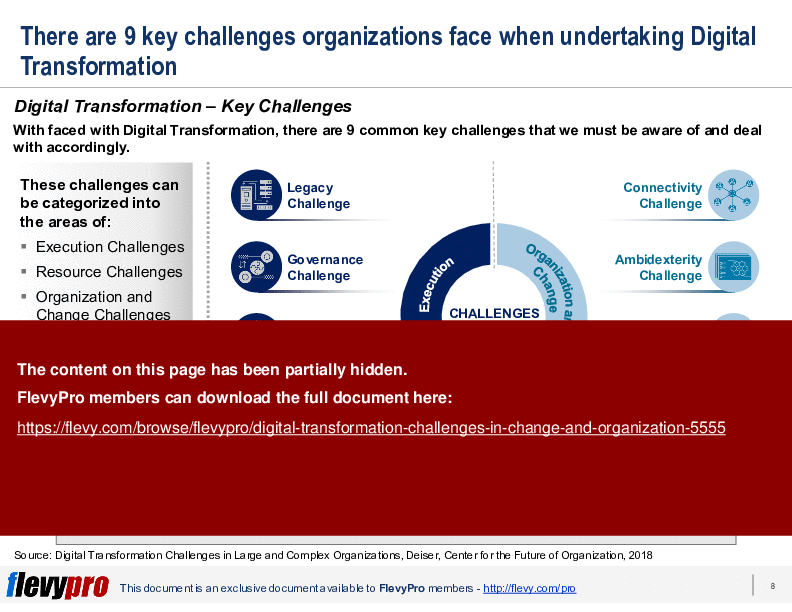
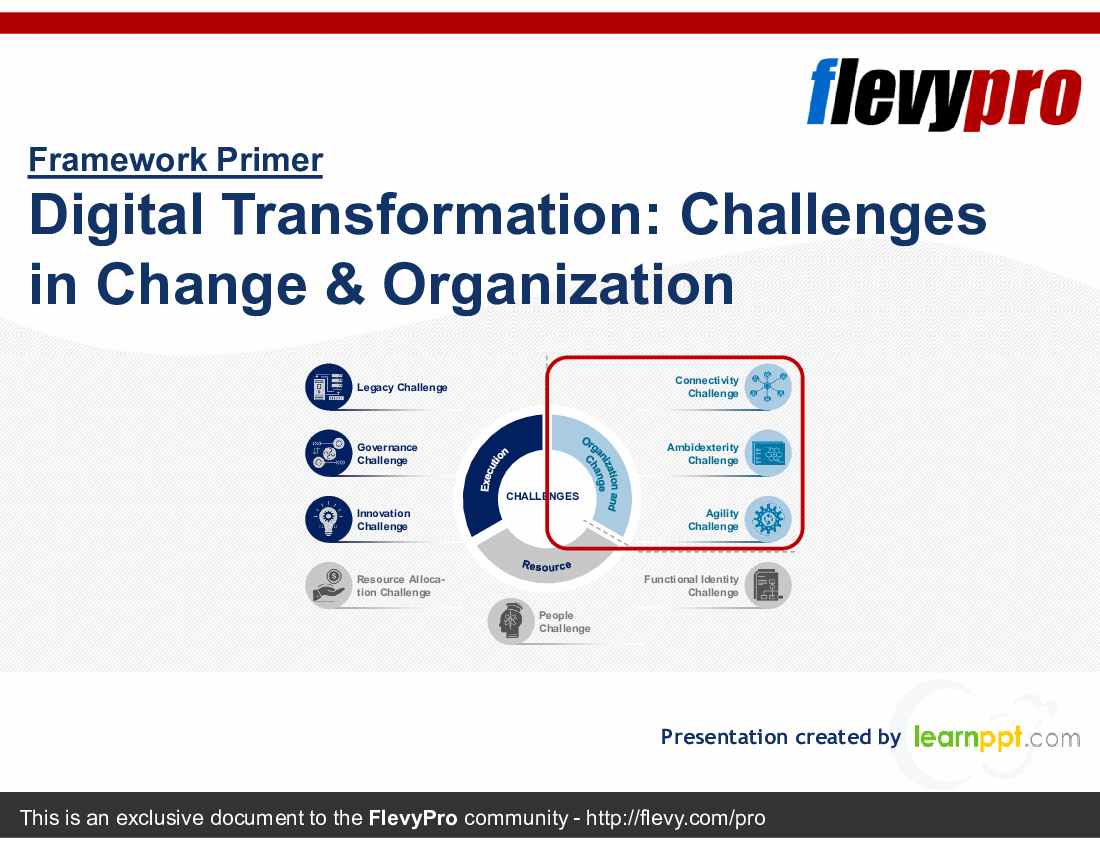
This framework introduces 9 key challenges to large scale Digital Transformation, which can be categorized into 3 areas:
1. Challenges in Execution
2. Challenges in Resources
3. Challenges in Organization and Change
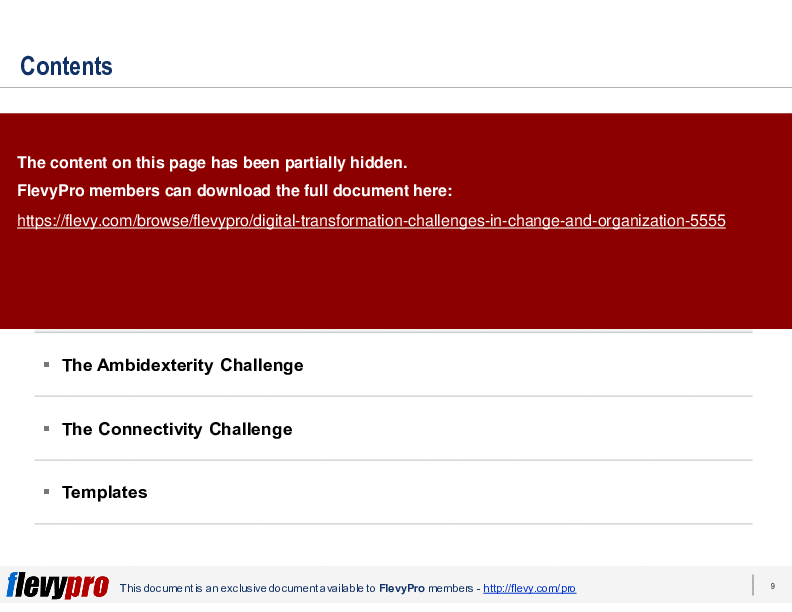
This presentation is part of a series of 3 frameworks, each focused on 1 of the 3 categories of Digital Transformation challenges. We will cover the third category of challenges; and its 3 composite challenges:
This deck also includes slide templates for you to use in your own business presentations.
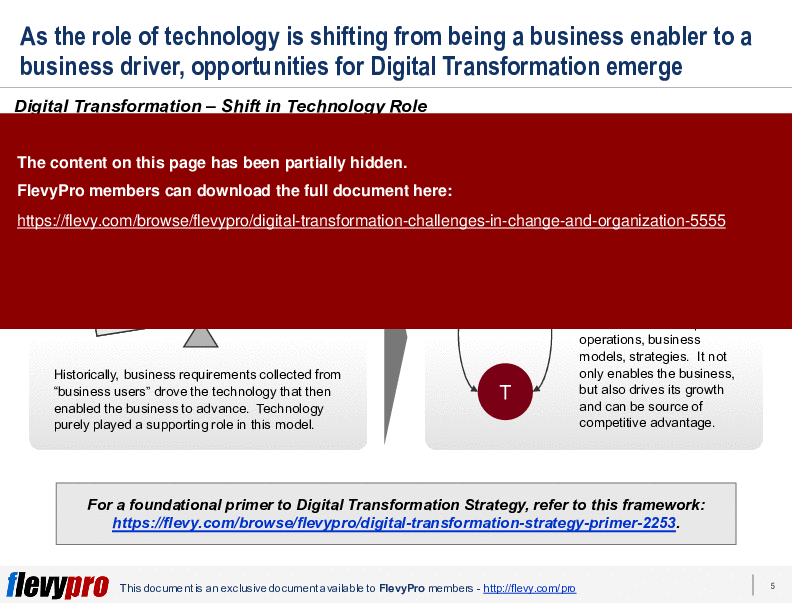
The presentation delves into the paradigm shift in technology's role from being a mere business enabler to a critical driver of business operations and strategy. It highlights how technology now drives growth and competitive advantage, necessitating a reevaluation of traditional business models. This shift underscores the importance of integrating technology deeply into the core strategic framework of the organization.
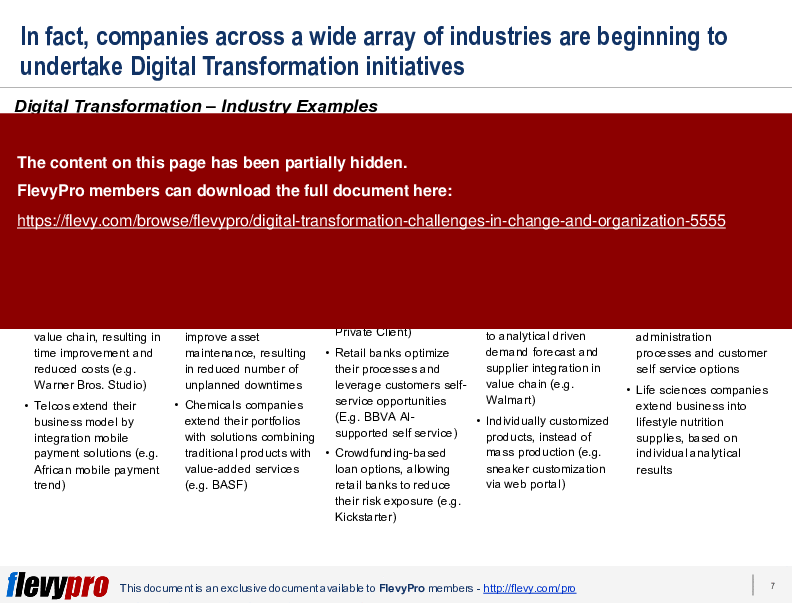
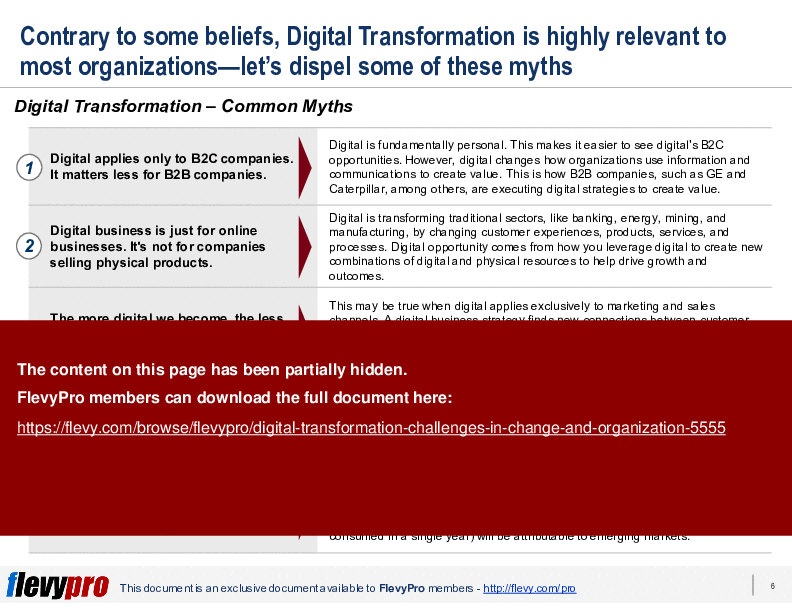
The PPT also dispels common myths about Digital Transformation, emphasizing its relevance across various sectors, including B2B companies and traditional industries. It provides industry examples demonstrating how diverse companies are leveraging Digital Transformation to optimize processes, enhance customer experiences, and innovate their business models. This comprehensive approach ensures that organizations are well-equipped to navigate the complexities of Digital Transformation.
What are the common organizational challenges in large-scale digital transformation?
The referenced framework identifies 9 key challenges that large organizations face, grouped into 3 primary areas: Challenges in Execution, Challenges in Resources, and Challenges in Organization and Change, totaling 9 key challenges across 3 areas.
How has the role of technology changed in digital transformation strategies?
The presentation describes a paradigm shift where technology moves from a business enabler to a driver of business operations and strategy, reshaping competitive advantage and growth, highlighted as a central theme in the deck's analysis of organizational change.
What does the "Connectivity Challenge" refer to in organizational change discussions?
Within this framework, the Connectivity Challenge is identified as one of 3 composite challenges under Organization and Change, emphasizing the need to link people, processes, and technology; it is listed explicitly as the Connectivity Challenge.
What should I look for in a slide deck about digital transformation organizational challenges?
Buyers should look for clear problem categorization (execution, resources, organization/change), evidence or industry examples showing applicability to traditional sectors, and ready-to-use slide templates to support presentations, including slide templates.
How much slide content is typical for a focused digital-transformation organizational challenges deck?
As an example of a focused consulting-style deck, Flevy's Digital Transformation: Challenges in Change & Organization is provided as a 31-slide PPTX, illustrating a concise slide volume for a single-category framework.
Which framework elements help structure an executive briefing on organizational change risks?
Structure briefings by grouping risks into execution, resource, and organization/change categories, and highlight the 3 composite organization challenges—Agility Challenge, Ambidexterity Challenge, and Connectivity Challenge—using industry examples and slide templates from Flevy's deck.
How can I persuade stakeholders in a traditional B2B company that digital transformation is relevant?
Use industry examples that show digital initiatives optimizing processes, improving customer experience, or innovating business models, and address common myths about transformation applicability to traditional sectors; the presentation includes industry examples.
What are the benefits of purchasing a series of frameworks that split digital-transformation challenges into categories?
A series that isolates Execution, Resources, and Organization/Change enables focused analysis on each dimension and deeper exploration of composite challenges; this product is offered as part of a 3-framework series where each framework targets one category.
The "Ambidexterity Challenge – Innovation Map" outlines a strategic framework for organizations addressing innovation through 3 categories: Incremental, Architectural, and Disruptive innovations. Incremental innovations enhance efficiency and customer satisfaction via small improvements to existing products and operations. Architectural innovations involve significant technological changes that improve functionality or service delivery. Disruptive innovations are radical advancements that alter competitive dynamics, often requiring separate organizational structures for effective management. The framework targets both new and existing customers, ensuring a comprehensive innovation strategy. Disruptive innovations should be organized as independent units to foster unique processes and cultures while remaining integrated into the overall management hierarchy, enabling a balance between exploration and exploitation in innovation efforts.
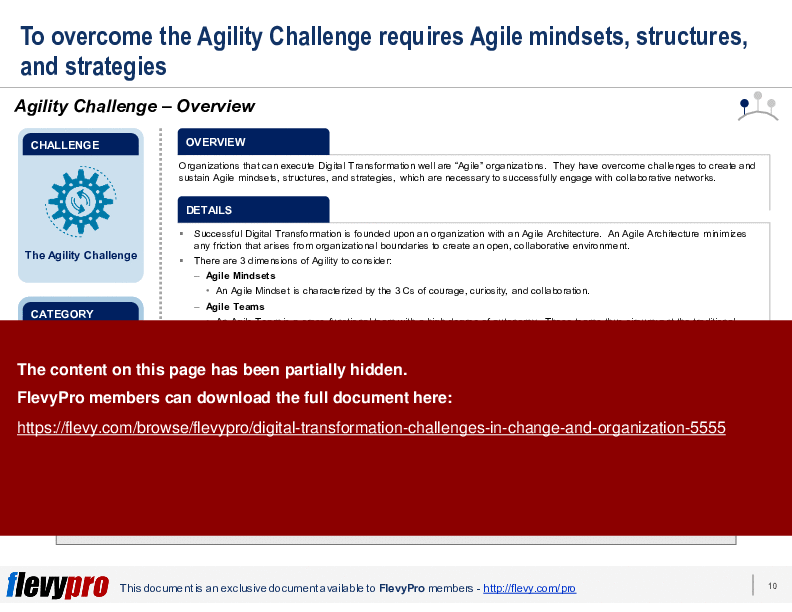
This PPT slide outlines 5 essential characteristics of agile organizations. The first pillar, Strategy, emphasizes a shared purpose and vision for seizing opportunities and providing guidance. The second pillar, Structure, highlights the benefits of a flat hierarchy with clear roles that empower teams and foster collaboration. The third pillar, Process, focuses on rapid decision-making and learning cycles, prioritizing experimentation and operational efficiency. The fourth pillar, People, underscores the importance of a dynamic workforce that cultivates an entrepreneurial spirit, with leadership inspiring rather than dictating. Lastly, the Technology pillar stresses the need for evolving technological frameworks to maintain competitiveness. Each pillar is interconnected, collectively enhancing organizational agility in a fast-paced environment.
This PPT slide presents a framework for the 3 dimensions of Agile Architecture essential for digital transformation: Agile Organization, Agile Teams, and Agile Mindsets. The Agile Organization shapes the extended enterprise, fostering collaboration and reducing bureaucratic hurdles to enhance agility through co-creation and open innovation. Agile Teams are cross-functional and empowered, allowing for flexibility and responsiveness to changing demands by leveraging diverse internal and external talent. The Agile Mindsets dimension emphasizes institutionalized courage, curiosity, and collaboration, suggesting workshops on Agile methodologies like Design Thinking and Scrum to instill this mindset. There is a direct correlation between digital maturity and agility; as organizations evolve digitally, they become inherently more agile, highlighting the interconnectedness of structure, team dynamics, and cultural mindset in achieving agility.
Ambidextrous organizations manage organizational separation while maintaining a cohesive senior team, enabling them to integrate conflicting operating models effectively. Studies show these organizations excel in driving breakthrough innovations essential for digital transformation. They reconcile 2 opposing models: the traditional core organization, reliant on established systems, and emerging businesses that leverage digital advancements, achieving structural agility. Ambidextrous organizations pursue 3 forms of innovation: incremental innovations enhance existing products for efficiency and customer value; architectural innovations apply new technologies to alter business elements; disruptive innovations radically shift industry standards, often rendering previous products obsolete. However, large organizations face challenges in implementing ambidexterity, making the balance between traditional operations and agile methodologies complex.
Source: Best Practices in Digital Transformation PowerPoint Slides: Digital Transformation: Challenges in Change & Organization PowerPoint (PPTX) Presentation Slide Deck, LearnPPT Consulting
This framework is developed by a team of former McKinsey and Big 4 consultants. The presentation follows the headline-body-bumper slide format used by global consulting firms.
For $10.00 more, you can download this document plus 2 more FlevyPro documents. That's just $13 each.
ABOUT FLEVYPRO
This document is part of the FlevyPro Library, a curated knowledge base of documents for our FlevyPro subscribers.

FlevyPro is a subscription service for on-demand business frameworks and analysis tools. FlevyPro subscribers receive access to an exclusive library of curated business documents—business framework primers, presentation templates, Lean Six Sigma tools, and more—among other exclusive benefits.
The average daily rate of a McKinsey consultant is $6,625 (not including expenses). The average price of a Flevy document is $65.
Trusted by over 10,000+ Client Organizations
Since 2012, we have provided business templates to over 10,000 businesses and organizations of all sizes, from startups and small businesses to the Fortune 100, in over 130 countries.
"Flevy is our 'go to' resource for management material, at an affordable cost. The Flevy library is comprehensive and the content deep, and typically provides a great foundation for us to further develop and tailor our own service offer."
– Chris McCann, Founder at Resilient.World
"As a small business owner, the resource material available from FlevyPro has proven to be invaluable. The ability to search for material on demand based our project events and client requirements was great for me and proved very beneficial to my clients. Importantly, being able to easily edit and tailor
the material for specific purposes helped us to make presentations, knowledge sharing, and toolkit development, which formed part of the overall program collateral. While FlevyPro contains resource material that any consultancy, project or delivery firm must have, it is an essential part of a small firm or independent consultant's toolbox.
"
– Michael Duff, Managing Director at Change Strategy (UK)
"FlevyPro has been a brilliant resource for me, as an independent growth consultant, to access a vast knowledge bank of presentations to support my work with clients. In terms of RoI, the value I received from the very first presentation I downloaded paid for my subscription many times over! The
quality of the decks available allows me to punch way above my weight – it's like having the resources of a Big 4 consultancy at your fingertips at a microscopic fraction of the overhead.
"
– Roderick Cameron, Founding Partner at SGFE Ltd
"As a consulting firm, we had been creating subject matter training materials for our people and found the excellent materials on Flevy, which saved us 100's of hours of re-creating what already exists on the Flevy materials we purchased."
– Michael Evans, Managing Director at Newport LLC
"The wide selection of frameworks is very useful to me as an independent consultant. In fact, it rivals what I had at my disposal at Big 4 Consulting firms in terms of efficacy and organization."
– Julia T., Consulting Firm Owner (Former Manager at Deloitte and Capgemini)
"I like your product. I'm frequently designing PowerPoint presentations for my company and your product has given me so many great ideas on the use of charts, layouts, tools, and frameworks. I really think the templates are a valuable asset to the job."
– Roberto Fuentes Martinez, Senior Executive Director at Technology Transformation Advisory
"One of the great discoveries that I have made for my business is the Flevy library of training materials.
As a Lean Transformation Expert, I am always making presentations to clients on a variety of topics: Training, Transformation, Total Productive Maintenance, Culture, Coaching, Tools, Leadership Behavior, etc. Flevy
It is well worth the money to purchase these presentations. Sure, I have the knowledge and information to make my point. It is another thing to create a presentation that captures what I want to say. Flevy has saved me countless hours of preparation time that is much better spent with implementation that will actually save money for my clients.
"
– Ed Kemmerling, Senior Lean Transformation Expert at PMG
"As an Independent Management Consultant, I find Flevy to add great value as a source of best practices, templates and information on new trends. Flevy has matured and the quality and quantity of the library is excellent. Lastly the price charged is reasonable, creating a win-win value for
the customer, Flevy and the various authors. This is truly a service that benefits the consulting industry and associated clients. Thanks for providing this service.
Download our FREE Digital Transformation Templates
Download our free compilation of 50+ Digital Transformation slides and templates. DX concepts covered include Digital Leadership, Digital Maturity, Digital Value Chain, Customer Experience, Customer Journey, RPA, etc.