
Digital Fabrication Transformation   25-slide PPT PowerPoint presentation slide deck (PPTX)
$29.00

Digital Fabrication Transformation (25-slide PPT PowerPoint presentation slide deck (PPTX)) Preview Image
Log in to unlock full preview.
Digital Fabrication Transformation (25-slide PPT PowerPoint presentation slide deck (PPTX)) Preview Image
Arrow   Click main image to view in full screen.

Digital Fabrication Transformation (PowerPoint PPTX Slide Deck)

PowerPoint (PPTX) 25 Slides FlevyPro Document

$29.00
FlevyPro price: FREE (included in subscription)
This framework is developed by a team of former McKinsey and Big 4 consultants. The presentation follows the headline-body-bumper slide format used by global consulting firms.
Add to Cart


Immediate download
Free lifetime updates

MANUFACTURING PPT DESCRIPTION

Editor Summary Digital Fabrication Transformation is a 25-slide PowerPoint (PPTX) presentation outlining a strategic framework for manufacturers adapting to the Fourth Industrial Revolution, centered on 5 principles: cultivating digital capabilities, establishing a hybrid product line, embracing open innovation, developing new fabrication materials, and preparing for misuse and infringement. Read more

Disruptive technology is changing the face of almost all industries. Digital Fabrication's effect on manufacturing has been similar to that of the internet on information-centric goods and services or video content platform's effect on television networks.

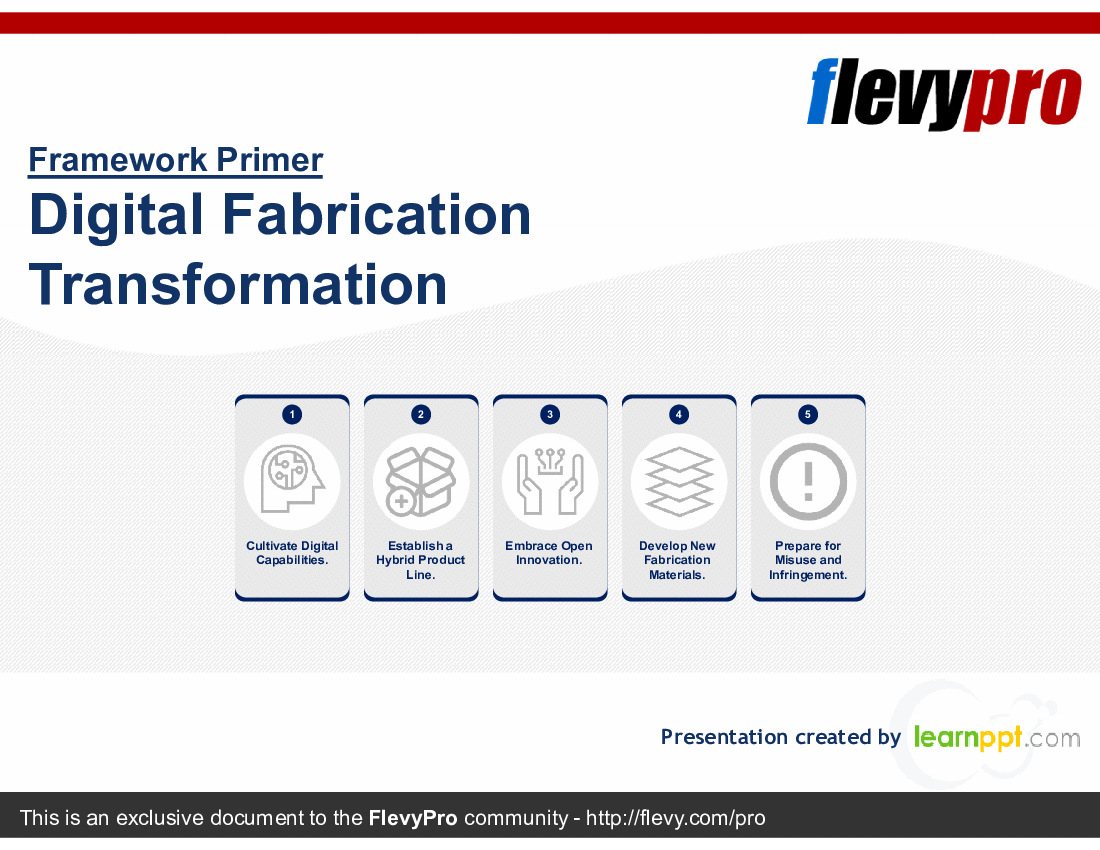
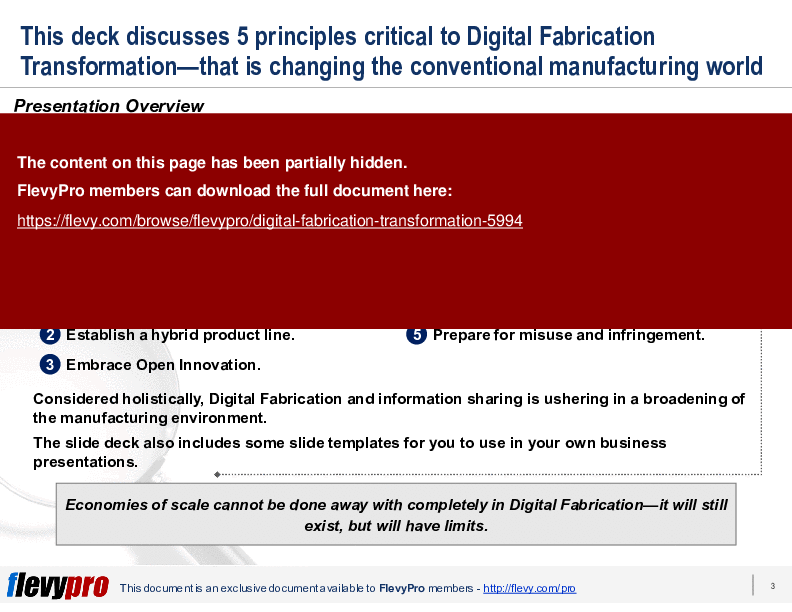
The conventional Business Model for Manufacturing is in the process of Transformation. Centralized production has given way to dispersed manufacturing that is customized. This presentation provides a detailed overview of the 5 principles advantageous for large-scale manufacturers to take advantage of Digital Fabrication revolution and transforming the manufacturing operations:

1. Cultivate digital capabilities.
2. Establish a hybrid product line.
3. Embrace Open Innovation.
4. Develop new fabrication materials.
5. Prepare for misuse and infringement.

Considered holistically, Digital Fabrication and information sharing is ushering in a broadening of the manufacturing environment.

Economies of scale cannot be done away with completely in Digital Fabrication. It will still exist, but will have limits.

The slide deck also includes some slide templates for you to use in your own business presentations.

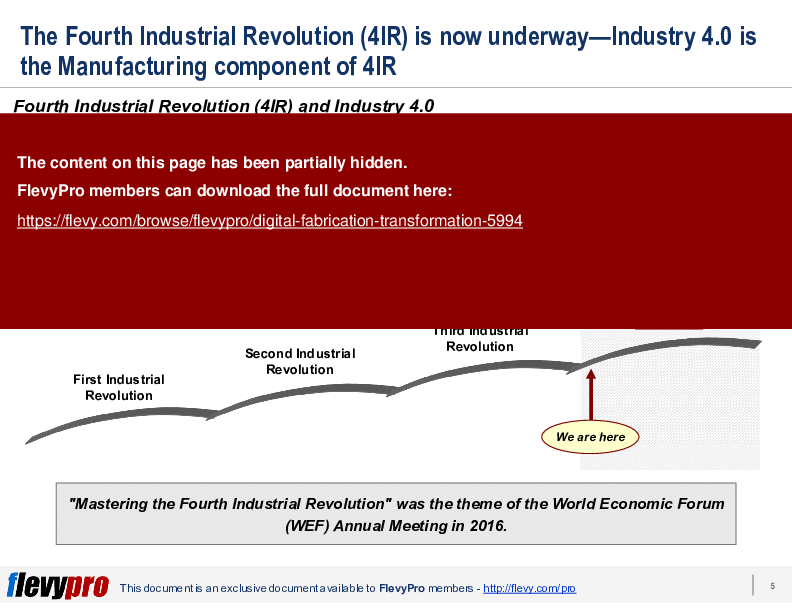
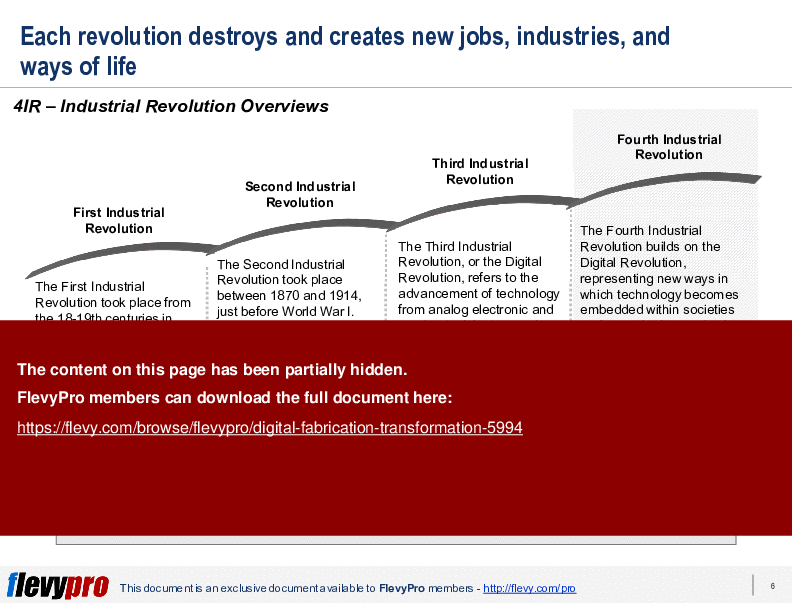
This presentation delves into the Fourth Industrial Revolution (4IR) and its impact on manufacturing, emphasizing the critical role of Industry 4.0. It provides a comprehensive overview of how each industrial revolution has shaped the current landscape, highlighting the transformative potential of 4IR. The PPT underscores the necessity for manufacturers to adapt to these changes, focusing on reducing costs, improving product quality, and enhancing operational agility.

The slide deck also explores the use of additive and subtractive tools in digital fabrication, detailing their capabilities and applications. It emphasizes the importance of open-source manufacturing and collaboration among fabricators, which is disrupting traditional manufacturing models. The presentation includes practical templates and frameworks to help businesses integrate digital fabrication into their operations, ensuring they stay competitive in a rapidly evolving industry.

Got a question about this document? Email us at flevypro@flevy.com.

MARCUS OVERVIEW

This synopsis was written by Marcus [?] based on the analysis of the full 25-slide presentation.


Executive Summary
The "Digital Fabrication Transformation" presentation provides a strategic framework for manufacturers navigating the Fourth Industrial Revolution (4IR). It highlights 5 critical principles essential for adapting to the evolving landscape of digital fabrication, which is reshaping traditional manufacturing practices. By embracing these principles, organizations can enhance their operational efficiency, innovate product offerings, and maintain competitiveness in a rapidly changing market. This presentation is designed for corporate executives and integration leaders seeking to leverage digital capabilities and optimize manufacturing processes.

Who This Is For and When to Use

•  Corporate executives overseeing manufacturing strategy and innovation
•  Integration leaders managing digital transformation initiatives
•  Product development teams focused on incorporating digital fabrication technologies
•  Supply chain managers looking to optimize workflows and reduce costs

Best-fit moments to use this deck:
•  During strategic planning sessions focused on digital transformation
•  When assessing the impact of digital fabrication on current manufacturing practices
•  In workshops aimed at developing new product lines or enhancing existing ones

Learning Objectives

•  Define the principles of digital fabrication and their relevance to modern manufacturing
•  Identify opportunities for integrating digital capabilities into existing workflows
•  Establish a hybrid product line that balances mass production with customization
•  Embrace open innovation to enhance product development and customer engagement
•  Develop new fabrication materials that align with sustainability goals
•  Prepare for potential misuse and infringement issues related to digital fabrication

Table of Contents

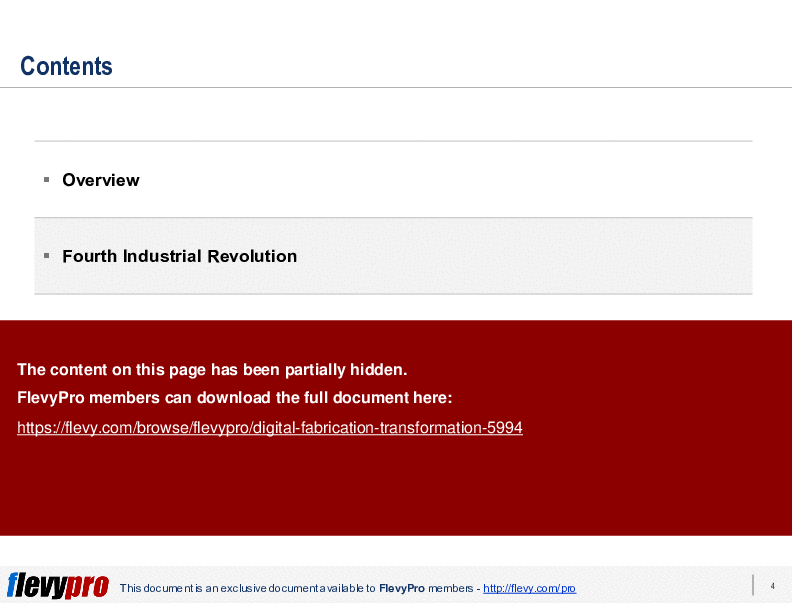
•  Overview (page 3)
•  Fourth Industrial Revolution (page 5)
•  Digital Fabrication (page 9)
•  Digital Fabrication Transformation (page 13)
•  Templates (page 19)

Primary Topics Covered

•  Fourth Industrial Revolution - The 4IR represents a convergence of digital, physical, and biological technologies, fundamentally altering manufacturing landscapes.
•  Digital Fabrication Overview - A workflow where digital data drives manufacturing processes, enabling rapid prototyping and customized production.
•  Cultivating Digital Capabilities - Organizations must invest in digital skills and technologies to remain competitive in the evolving manufacturing environment.
•  Hybrid Product Line - Manufacturers should establish a mix of mass-produced and customized products to meet diverse market demands.
•  Open Innovation - Engaging customers in the product development process fosters innovation and aligns offerings with consumer needs.
•  New Fabrication Materials - Continuous exploration of innovative materials is essential for enhancing product sustainability and reducing waste.
•  Misuse and Infringement Preparedness - Companies must proactively address potential risks associated with digital fabrication technologies.

Deliverables, Templates, and Tools

•  Digital capabilities assessment template to evaluate current manufacturing practices
•  Hybrid product line strategy framework for balancing production types
•  Open innovation engagement plan to involve customers in product development
•  Material exploration guide for identifying and testing new fabrication materials
•  Risk assessment tool for evaluating potential misuse and infringement scenarios

Slide Highlights

•  Overview of the Fourth Industrial Revolution and its implications for manufacturing
•  Detailed explanation of digital fabrication processes and tools
•  Framework for cultivating digital capabilities within organizations
•  Strategies for establishing a hybrid product line to enhance market responsiveness
•  Insights on open innovation and its impact on product development

Potential Workshop Agenda

Digital Fabrication Principles Overview (60 minutes)
•  Introduce the 5 principles of digital fabrication transformation
•  Discuss the relevance of each principle to current manufacturing practices

Hands-On Digital Capabilities Workshop (90 minutes)
•  Identify current capabilities and gaps in digital skills
•  Develop a plan for enhancing digital capabilities within the organization

Hybrid Product Line Strategy Session (60 minutes)
•  Explore opportunities for creating a hybrid product line
•  Assign teams to develop specific product concepts

Customization Guidance

•  Tailor the digital capabilities assessment to reflect specific organizational needs and existing technologies
•  Adjust the hybrid product line strategy to align with market demands and customer preferences
•  Incorporate industry-specific examples and case studies to enhance relevance

Secondary Topics Covered

•  Impact of automation and AI on manufacturing processes
•  Trends in sustainable materials and their implications for digital fabrication
•  The role of collaboration in open-source manufacturing networks
•  Legal considerations surrounding intellectual property in digital fabrication

Topic FAQ

What is digital fabrication and how does it differ from traditional manufacturing?

Digital fabrication is a manufacturing workflow where digital data drives production, enabling rapid prototyping and customized manufacturing. It contrasts with traditional centralized, mass-production models by supporting dispersed manufacturing and faster iteration, enabling rapid prototyping and customized production.

What are the core principles organizations should address when planning a digital fabrication transformation?

Core principles include cultivating digital capabilities, establishing a hybrid product line, embracing open innovation, developing new fabrication materials, and preparing for misuse and infringement. These 5 principles form the strategic pillars for adapting manufacturing to digital fabrication.

How does a hybrid product line work in practice for manufacturers adopting digital fabrication?

A hybrid product line balances mass-produced items with customized or locally fabricated products to meet diverse market demands while retaining some economies of scale. Planning a hybrid approach involves strategy work such as a hybrid product line strategy framework to define which SKUs are customized versus mass-produced.

What are common legal and security risks related to digital fabrication that companies should plan for?

Risks include misuse of fabrication tools and infringement of intellectual property due to easier sharing of digital designs. Companies should proactively evaluate these risks and implement controls using a risk assessment tool to identify scenarios and mitigation options.

What should I look for when buying a digital fabrication strategy slide deck or toolkit?

Look for clear coverage of Industry 4.0 implications, templates for assessing current digital capabilities, a framework for hybrid product lines, guidance on open innovation and materials, and risk assessment tools. A useful kit will include a digital capabilities assessment template among its deliverables.

How can templates and slide decks accelerate a manufacturer’s planning compared with building materials from scratch?

Ready templates reduce time to structure strategic workshops, capture capability gaps, and align stakeholders by providing prebuilt assessment and strategy artifacts. Practical items to look for include a digital capabilities assessment and a hybrid product line strategy framework to shorten planning cycles.

We’re launching a 3D-printed product pilot—what planning steps should we take to align manufacturing and design teams?

Begin with a digital capabilities assessment to map skills, equipment, and software gaps; run material exploration to select sustainable fabrication materials; and define hybrid product line rules for which parts are printed. Flevy's Digital Fabrication Transformation includes a material exploration guide to support these steps.

After a merger, how should we assess readiness across multiple plants for adopting digital fabrication technologies?

Conduct a standardized digital capabilities assessment at each site to evaluate skills, technologies, and processes, then prioritize capability gaps for investment and training. The presentation’s suggested Hands-On Digital Capabilities Workshop is structured as a 90-minute session to start this assessment.

Document FAQ
These are questions addressed within this presentation.


What is digital fabrication?
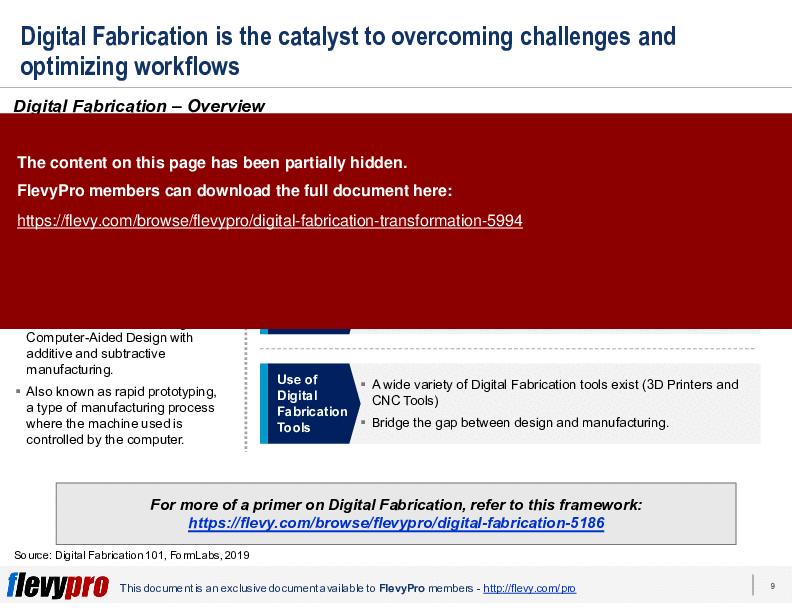
Digital fabrication refers to a manufacturing workflow where digital data drives the production process, enabling rapid prototyping and customized manufacturing.

How can organizations prepare for the Fourth Industrial Revolution?
Organizations should invest in digital capabilities, embrace open innovation, and adapt their product lines to leverage the benefits of digital fabrication.

What are the key principles of digital fabrication transformation?
The key principles include cultivating digital capabilities, establishing a hybrid product line, embracing open innovation, developing new fabrication materials, and preparing for misuse and infringement.

How does open innovation benefit manufacturers?
Open innovation allows manufacturers to engage customers in the product development process, leading to innovative solutions that better meet consumer needs.

What materials are being explored in digital fabrication?
Manufacturers are exploring a variety of materials, including biodegradable and recyclable options, to enhance sustainability and reduce waste.

What risks are associated with digital fabrication?
Potential risks include misuse of fabrication tools and infringement of intellectual property, necessitating proactive measures to safeguard against these issues.

How can manufacturers assess their digital capabilities?
Manufacturers can use a digital capabilities assessment template to evaluate their current skills, technologies, and processes related to digital fabrication.

What is the significance of a hybrid product line?
A hybrid product line allows manufacturers to balance mass production with customization, meeting diverse customer demands while optimizing production efficiency.

Glossary

•  Digital Fabrication - A manufacturing process driven by digital data that enables rapid prototyping and customization.
•  Fourth Industrial Revolution (4IR) - A transformative era characterized by the fusion of digital, physical, and biological technologies.
•  Open Innovation - A collaborative approach to product development that involves engaging customers and external partners.
•  Hybrid Product Line - A product strategy that combines mass production with customized offerings.
•  Sustainability - The practice of reducing environmental impact through responsible sourcing and production methods.
•  Intellectual Property - Legal rights protecting creations of the mind, including inventions and designs.
•  Prototyping - The process of creating a preliminary model of a product to test concepts and functionalities.
•  Supply Chain - The network of organizations involved in producing and delivering a product to the consumer.
•  Additive Manufacturing - A process that builds objects layer by layer, often associated with 3D printing.
•  Subtractive Manufacturing - A process that removes material from a solid block to create a desired shape.
•  Customization - The ability to modify a product to meet specific customer preferences or requirements.
•  Rapid Prototyping - The quick fabrication of a scale model or functional part using 3D printing or other techniques.
•  Material Science - The study of materials and their properties, particularly in relation to fabrication processes.
•  Supply Chain Optimization - The process of improving the efficiency and effectiveness of a supply chain.
•  Disruptive Technology - Innovations that significantly alter or replace existing technologies or markets.
•  Market Responsiveness - The ability of a company to adapt quickly to changes in consumer preferences or market conditions.
•  Digital Transformation - The integration of digital technology into all areas of a business, fundamentally changing how it operates and delivers value.
•  Risk Management - The identification, assessment, and prioritization of risks followed by coordinated efforts to minimize, monitor, and control the probability of unfortunate events.
•  Collaboration - Working together with others to achieve a common goal, particularly in product development and innovation.
•  Prototyping Tools - Equipment and software used to create prototypes, including 3D printers and CAD software.
•  Consumer Engagement - The interaction between a company and its customers, aimed at fostering loyalty and satisfaction.
•  Digital Skills - The abilities required to effectively use digital technologies and tools in a business context.

MANUFACTURING PPT SLIDES

Digital Fabrication: Streamlining Design to Production

Hybrid Product Line Strategy for Digital Fabrication

Key Impacts of Industry 4.0 on Manufacturing

Five Principles for Digital Fabrication Success

Source: Best Practices in Digital Transformation, Fourth Industrial Revolution, Manufacturing PowerPoint Slides: Digital Fabrication Transformation PowerPoint (PPTX) Presentation Slide Deck, LearnPPT Consulting


$29.00
FlevyPro price: FREE (included in subscription)
This framework is developed by a team of former McKinsey and Big 4 consultants. The presentation follows the headline-body-bumper slide format used by global consulting firms.
Add to Cart
  

Did you need more documents?

Consider a FlevyPro subscription from $39/month. View plans here.

For $10.00 more, you can download this document plus 2 more FlevyPro documents. That's just $13 each.

ABOUT FLEVYPRO

This document is part of the FlevyPro Library, a curated knowledge base of documents for our FlevyPro subscribers.

FlevyPro is a subscription service for on-demand business frameworks and analysis tools. FlevyPro subscribers receive access to an exclusive library of curated business documents—business framework primers, presentation templates, Lean Six Sigma tools, and more—among other exclusive benefits.

Click here to learn more about FlevyPro and its benefits.

Did you know?
The average daily rate of a McKinsey consultant is $6,625 (not including expenses). The average price of a Flevy document is $65.


Trusted by over 10,000+ Client Organizations
Since 2012, we have provided business templates to over 10,000 businesses and organizations of all sizes, from startups and small businesses to the Fortune 100, in over 130 countries.
AT&T GE Cisco Intel IBM Coke Dell Toyota HP Nike Samsung Microsoft Astrazeneca JP Morgan KPMG Walgreens Walmart 3M Kaiser Oracle SAP Google E&Y Volvo Bosch Merck Fedex Shell Amgen Eli Lilly Roche AIG Abbott Amazon PwC T-Mobile Broadcom Bayer Pearson Titleist ConEd Pfizer NTT Data Schwab


Read Customer Testimonials

 
"One of the great discoveries that I have made for my business is the Flevy library of training materials.

As a Lean Transformation Expert, I am always making presentations to clients on a variety of topics: Training, Transformation, Total Productive Maintenance, Culture, Coaching, Tools, Leadership Behavior, etc. Flevy "

– Ed Kemmerling, Senior Lean Transformation Expert at PMG
 
"As a consulting firm, we had been creating subject matter training materials for our people and found the excellent materials on Flevy, which saved us 100's of hours of re-creating what already exists on the Flevy materials we purchased."

– Michael Evans, Managing Director at Newport LLC
 
"FlevyPro has been a brilliant resource for me, as an independent growth consultant, to access a vast knowledge bank of presentations to support my work with clients. In terms of RoI, the value I received from the very first presentation I downloaded paid for my subscription many times over! The "

– Roderick Cameron, Founding Partner at SGFE Ltd
 
"I have used FlevyPro for several business applications. It is a great complement to working with expensive consultants. The quality and effectiveness of the tools are of the highest standards."

– Moritz Bernhoerster, Global Sourcing Director at Fortune 500
 
"I have used Flevy services for a number of years and have never, ever been disappointed. As a matter of fact, David and his team continue, time after time, to impress me with their willingness to assist and in the real sense of the word. I have concluded in fact "

– Roberto Pelliccia, Senior Executive in International Hospitality
 
"If you are looking for great resources to save time with your business presentations, Flevy is truly a value-added resource. Flevy has done all the work for you and we will continue to utilize Flevy as a source to extract up-to-date information and data for our virtual and onsite presentations!"

– Debbi Saffo, President at The NiKhar Group
 
"Flevy is now a part of my business routine. I visit Flevy at least 3 times each month.

Flevy has become my preferred learning source, because what it provides is practical, current, and useful in this era where the business world is being rewritten.

In today's environment where there are so "

– Omar Hernán Montes Parra, CEO at Quantum SFE
 
"As a small business owner, the resource material available from FlevyPro has proven to be invaluable. The ability to search for material on demand based our project events and client requirements was great for me and proved very beneficial to my clients. Importantly, being able to easily edit and tailor "

– Michael Duff, Managing Director at Change Strategy (UK)


Customers Also Bought These Documents


Customers Also Like These Documents

Explore Templates on Related Management Topics


Your Recently Viewed Documents
Receive our FREE presentation on Operational Excellence

This 50-slide presentation provides a high-level introduction to the 4 Building Blocks of Operational Excellence. Achieving OpEx requires the implementation of a Business Execution System that integrates these 4 building blocks.