
Corporate Social Responsibility (CSR): Circular Economy   24-slide PPT PowerPoint presentation template (PPT)
$29.00

Corporate Social Responsibility (CSR): Circular Economy (24-slide PPT PowerPoint presentation slide deck (PPT)) Preview Image
Log in to unlock full preview.
Corporate Social Responsibility (CSR): Circular Economy (24-slide PPT PowerPoint presentation slide deck (PPT)) Preview Image
Arrow   Click main image to view in full screen.

Corporate Social Responsibility (CSR): Circular Economy – PowerPoint PPT Template

PowerPoint (PPT) 24 Slides FlevyPro Document

$29.00
FlevyPro price: FREE (included in subscription)
This framework is developed by a team of former McKinsey and Big 4 consultants. The presentation follows the headline-body-bumper slide format used by global consulting firms.
Add to Cart


Immediate download
Free lifetime updates

CSR PPT TEMPLATE DESCRIPTION

Editor Summary 24-slide PowerPoint presentation providing a Corporate Social Responsibility (CSR) and Circular Economy framework, developed by experienced consultants, covering principles, case studies, implementation strategies, and reporting templates. Read more

The global economy is currently producing nearly 300MM tons of plastic every year. Half of these are for single use. With population growing at a fast rate, we are requiring more resources than ever before. Yet, our finite resources are diminishing

Our economy has been built on the concept of a Linear Economy. This is Extract, Manufacture, Distribute, Use, and Dispose. However, over the past few decades we have transitioned to a disposable society as we generate waste at an unmanageable rate.

There is a call to shift to a Reuse Economy or the Circular Economy. Moving towards a more Circular Economic activity could deliver benefits such as reducing pressure on the environment, improving the security of the supply of raw materials, increasing competitiveness, stimulating innovation, and others. Moving into a Circular Economy also means that companies are considering sustainable approaches to balance out opportunities for business and the preservation of the environment.

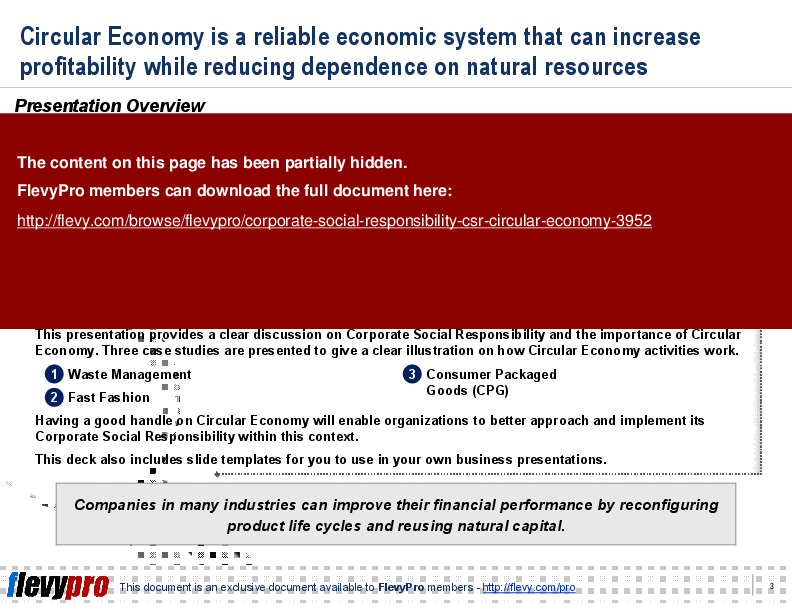
This presentation provides a clear discussion on Corporate Social Responsibility and the importance of Circular Economy. Three case studies are presented to give a clear illustration on how Circular Economy activities work.

Having a good handle on Circular Economy will enable organizations to better approach and implement its Corporate Social Responsibility within this context.

This deck also includes slide templates for you to use in your own business presentations.

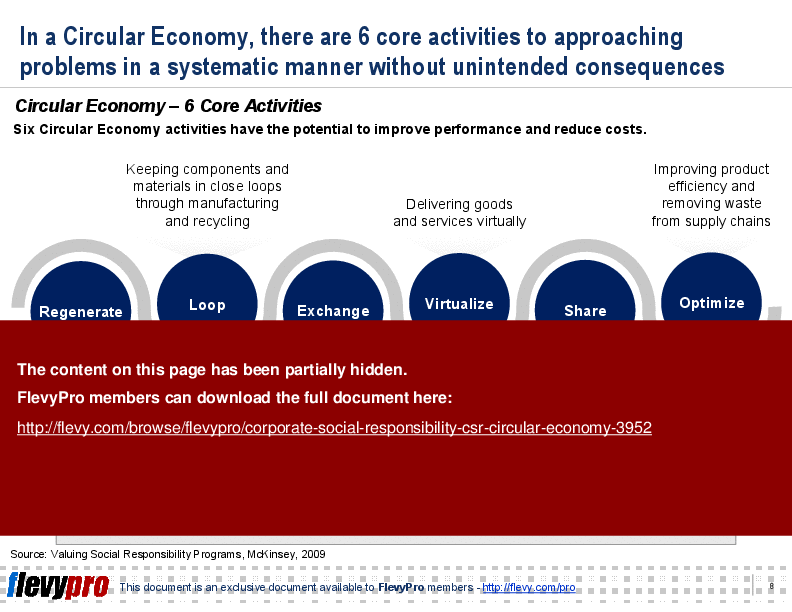
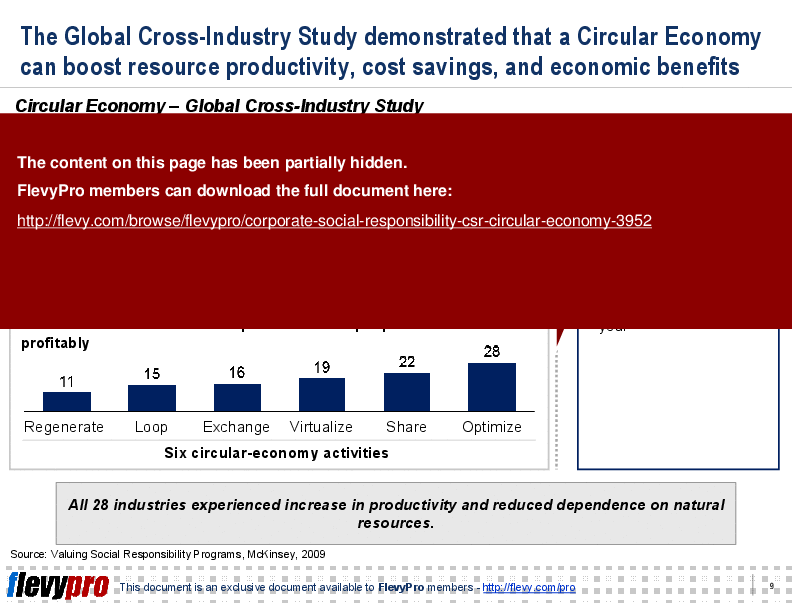
This comprehensive deck delves into six core activities essential for a Circular Economy, offering a systematic approach to problem-solving without unintended consequences. It features a global cross-industry study demonstrating significant boosts in resource productivity and cost savings. The case studies on waste management, fast fashion, and consumer packaged goods provide vivid examples of converting challenges into profitable opportunities. This resource is indispensable for executives aiming to integrate sustainable practices into their business strategies, ensuring long-term viability and competitive advantage.

Got a question about this document? Email us at flevypro@flevy.com.

PRESENTATION DEEP DIVE ANALYSIS

This deep-dive analysis was generated from the full 24-slide PowerPoint presentation.


Executive Summary
The Corporate Social Responsibility (CSR): Circular Economy presentation provides a comprehensive framework for organizations aiming to integrate sustainable practices into their operations. Developed by experienced consultants, this presentation emphasizes the transition from a linear economy to a circular economy, highlighting the importance of reusing resources and minimizing waste. It includes case studies that illustrate successful implementations of circular economy principles across various industries, enabling organizations to enhance their CSR initiatives while improving profitability and environmental impact.

Who This Is For and When to Use
•  Corporate executives focused on sustainability and CSR initiatives
•  Integration leaders responsible for implementing circular economy practices
•  Consultants advising organizations on sustainable business strategies
•  Environmental compliance officers seeking frameworks for waste reduction

Best-fit moments to use this deck:
•  During strategic planning sessions to align CSR goals with business objectives
•  In workshops aimed at educating teams on circular economy principles
•  When developing sustainability reports or presentations for stakeholders
•  For training sessions on best practices in waste management and resource optimization

Learning Objectives
•  Define the principles of Corporate Social Responsibility and the Circular Economy
•  Identify key activities that promote a circular economic model
•  Analyze case studies to understand successful applications of circular economy principles
•  Develop actionable strategies for integrating circular economy practices into business operations
•  Assess the impact of CSR initiatives on organizational performance and sustainability
•  Create templates for ongoing CSR and circular economy reporting

Table of Contents
•  Overview (page 3)
•  Corporate Social Responsibility (CSR) (page 5)
•  Circular Economy (page 6)
•  Case Studies (page 11)
•  Templates (page 19)

Primary Topics Covered
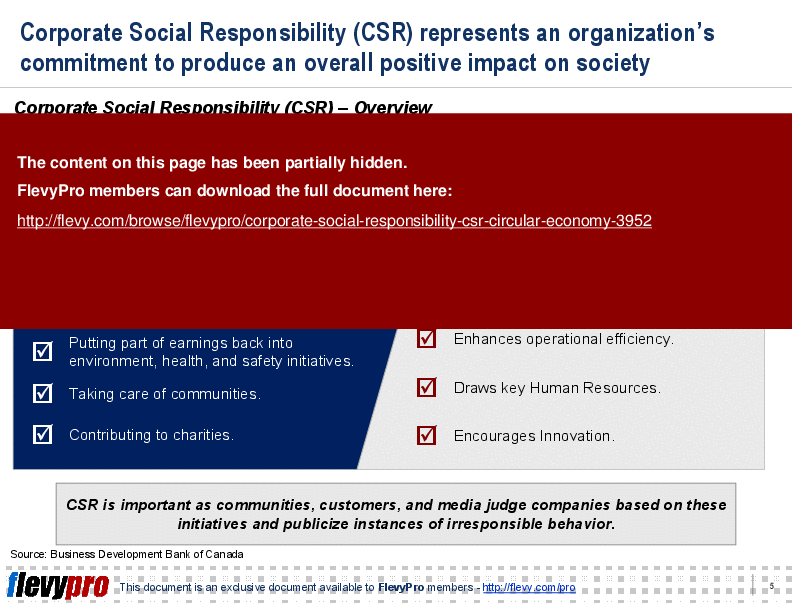
•  Corporate Social Responsibility (CSR) - CSR encompasses sustainability, social impact, and ethical business practices, holding organizations accountable for their operations and contributions to society.
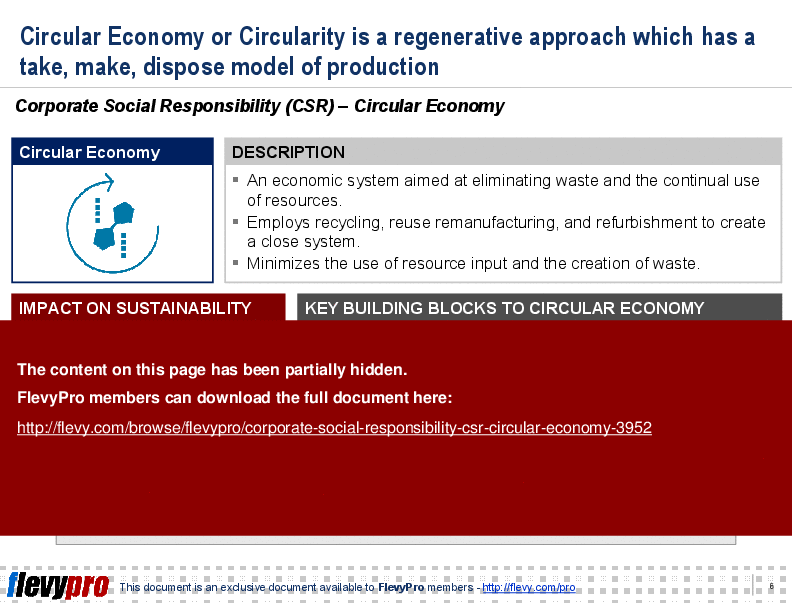
•  Circular Economy - A regenerative economic model focused on eliminating waste and promoting the continual use of resources through recycling and remanufacturing.
•  Case Studies - Real-world examples demonstrating the successful application of circular economy principles in waste management, fast fashion, and consumer packaged goods.
•  Economic Impact - Analysis of how adopting circular economy practices can lead to increased profitability and reduced resource dependence across various industries.
•  Sustainability Metrics - Key performance indicators for measuring the effectiveness of CSR initiatives and circular economy practices.
•  Implementation Strategies - Guidelines for integrating circular economy principles into existing business models and operations.

Deliverables, Templates, and Tools
•  CSR framework template for assessing organizational impact
•  Circular economy assessment tool for evaluating resource use and waste management
•  Case study summaries for reference in strategic planning
•  Presentation slides for internal training on CSR and sustainability
•  Reporting templates for tracking CSR initiatives and outcomes
•  Guidelines for stakeholder engagement in CSR activities

Slide Highlights
•  Overview of the Circular Economy and its benefits for businesses
•  Case study insights showcasing successful CSR implementations
•  Visual representations of the transition from linear to circular economic models
•  Key statistics on resource productivity and economic benefits of circular practices
•  Frameworks for assessing and improving sustainability initiatives

Potential Workshop Agenda
Introduction to CSR and Circular Economy (30 minutes)
•  Overview of key concepts and definitions
•  Discussion on the importance of sustainability in business

Case Study Analysis (60 minutes)
•  Review of case studies in waste management, fast fashion, and consumer packaged goods
•  Group discussion on lessons learned and best practices

Developing Action Plans (90 minutes)
•  Breakout sessions to create tailored action plans for implementing circular economy practices
•  Presentation of group findings and feedback

Customization Guidance
•  Adapt the presentation templates to reflect your organization’s specific CSR goals and metrics
•  Incorporate industry-specific case studies relevant to your business context
•  Modify terminology and frameworks to align with internal language and practices
•  Set specific dates and milestones for implementing circular economy initiatives

Secondary Topics Covered
•  The role of innovation in promoting circular economy practices
•  Challenges and barriers to implementing CSR initiatives
•  Stakeholder engagement strategies for effective CSR communication
•  Regulatory considerations in sustainability and waste management

Topic FAQ

What are the main principles of a circular economy?

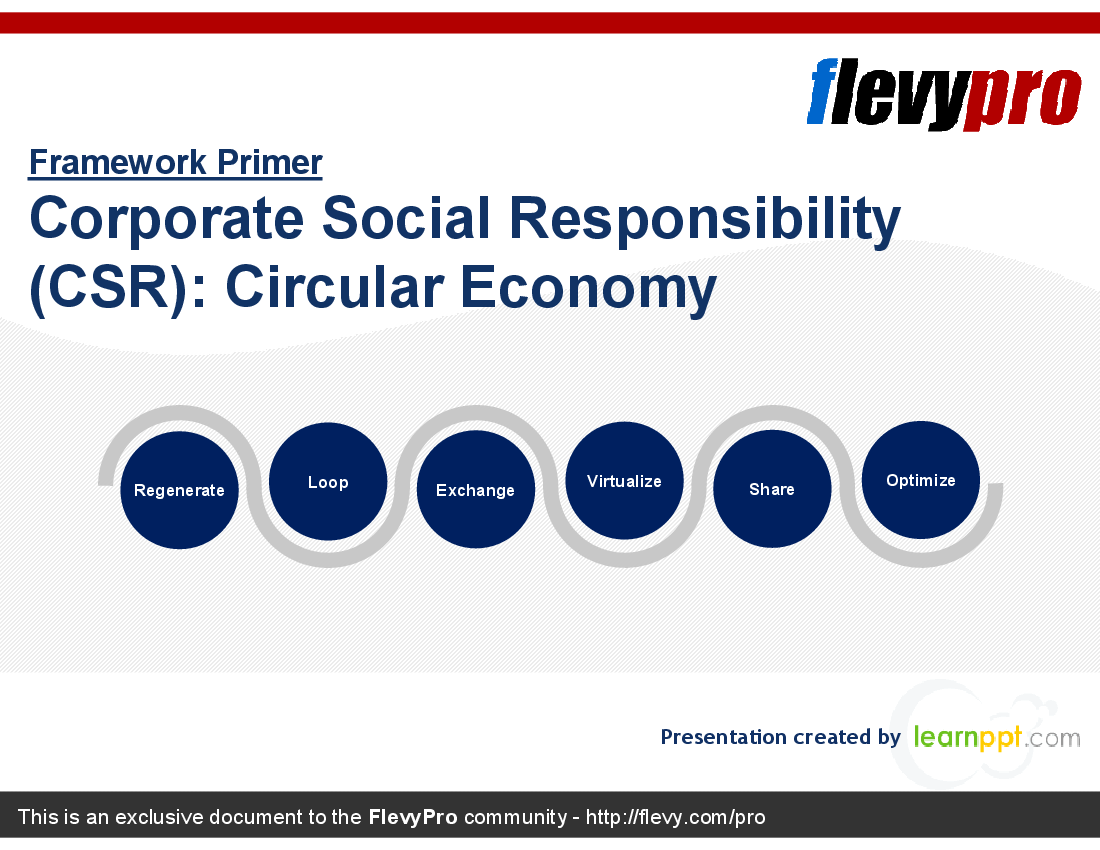
A circular economy aims to eliminate waste and keep materials in use through reuse, recycling, remanufacturing, and regenerative practices, contrasting with the linear extract‑manufacture‑dispose model. It emphasizes resource productivity, supply security, and innovation, organized in the deck around 6 core activities.

How does CSR relate to the circular economy?

CSR is an organizational commitment to social and environmental responsibility; the circular economy provides concrete operational approaches (resource efficiency, waste reduction, product lifecycle design) to meet those commitments. The presentation links CSR objectives to implementable strategies and includes a CSR framework template.

What metrics should I use to measure circular economy initiatives?

Measure initiatives using sustainability metrics such as resource productivity, waste diversion rates, recycled content, cost savings, performance indicators, and stakeholder feedback. Regular reporting and KPIs track both environmental and economic outcomes, with guidance provided on sustainability metrics.

What should I look for when choosing a circular economy toolkit or presentation?

Prioritize clear definitions, implementation guidance, assessment tools, reporting templates, industry case studies, customization instructions, and workshop‑ready slides to accelerate adoption. Check slide count and download format to match your timeline; Flevy's Corporate Social Responsibility (CSR): Circular Economy includes case study summaries.

How long should a workshop on circular economy concepts take?

Workshop length depends on depth; options range from a two‑hour introduction to a half‑day or full‑day session. A suggested agenda uses 30 minutes for introduction, 60 minutes for case‑study analysis, and 90 minutes for breakout action planning, concluding with Developing Action Plans (90 minutes).

I need to prepare a stakeholder presentation on sustainability—what should be included?

Include an executive summary linking sustainability to business objectives, clear CSR and circular economy definitions, quantified benefits (resource productivity, cost impacts), illustrative case studies, implementation steps, stakeholder engagement plans, and measurable KPIs. Use standardized slides and reporting templates for consistent updates, such as the reporting templates.

How can I assess my company's current state for circular economy readiness?

Map material flows, measure resource productivity, review waste management practices, evaluate stakeholder engagement and regulatory compliance, and conduct a gap analysis to prioritize interventions. Cross‑departmental data collection is essential; the deck provides a circular economy assessment tool to guide the evaluation.

What economic benefits can organizations expect from adopting circular economy practices?

Organizations can expect reduced resource dependence, improved profitability, increased competitiveness, and stimulated innovation. The materials reference industry examples where waste became value and highlight measurable improvements in resource productivity and cost savings reported in a global cross‑industry study.

Document FAQ
These are questions addressed within this presentation.

What is the Circular Economy?
The Circular Economy is an economic model aimed at eliminating waste and promoting the continual use of resources through practices like recycling and remanufacturing.

How does CSR relate to the Circular Economy?
CSR involves an organization’s commitment to positive social impact, while the Circular Economy provides a framework for achieving sustainability goals through resource efficiency.

What are the benefits of adopting Circular Economy practices?
Benefits include improved profitability, reduced resource dependence, enhanced brand reputation, and compliance with environmental regulations.

Can you provide examples of Circular Economy initiatives?
Examples include waste-to-energy programs, product take-back schemes, and the use of recycled materials in manufacturing.

How can organizations measure the success of their CSR initiatives?
Organizations can use sustainability metrics, stakeholder feedback, and performance indicators to assess the impact of their CSR efforts.

What challenges might organizations face when implementing Circular Economy practices?
Challenges include resistance to change, lack of resources, and the need for cross-departmental collaboration.

How can companies engage stakeholders in their CSR efforts?
Companies can engage stakeholders through transparent communication, collaboration on sustainability initiatives, and regular reporting on CSR outcomes.

What resources are available for organizations looking to improve their CSR practices?
Resources include industry reports, case studies, sustainability frameworks, and consulting services specializing in CSR and circular economy strategies.

Glossary
•  Corporate Social Responsibility (CSR) - A business model that helps a company be socially accountable to itself, its stakeholders, and the public.
•  Circular Economy - An economic system aimed at eliminating waste and the continual use of resources.
•  Sustainability Metrics - Measurements used to assess the effectiveness of sustainability initiatives.
•  Case Study - A detailed analysis of a specific instance of a practice or strategy in action.
•  Stakeholder Engagement - The process of involving individuals or groups who may be affected by or can affect a company's operations.
•  Waste Management - The collection, transport, processing, recycling, or disposal of waste materials.
•  Resource Productivity - The efficiency with which a company uses resources to produce goods or services.
•  Innovation - The process of translating an idea or invention into a good or service that creates value.
•  Regenerative Practices - Methods that restore and renew resources, contributing to sustainability.
•  Environmental Impact - The effect of a company's actions on the natural environment.
•  Ethical Business Practices - Business practices that adhere to accepted moral standards.
•  Recycling - The process of converting waste materials into reusable materials.
•  Remanufacturing - The process of restoring used products to like-new condition.
•  Sustainable Development - Development that meets the needs of the present without compromising the ability of future generations to meet their own needs.
•  Greenhouse Gas Emissions - Gases that trap heat in the atmosphere, contributing to climate change.
•  Supply Chain - The entire system of production, processing, and distribution of goods.
•  Environmental Compliance - Adhering to environmental laws, regulations, and standards.
•  Business Ethics - Principles that guide the behavior of individuals and organizations in the business world.
•  Waste-to-Energy - The process of generating energy in the form of electricity or heat from the primary treatment of waste.
•  Product Take-Back Schemes - Programs that allow consumers to return used products for recycling or proper disposal.
•  Recycled Materials - Materials that have been processed to be reused in manufacturing or production.
•  Cross-Departmental Collaboration - Cooperation among different departments within an organization to achieve common goals.

CSR PPT TEMPLATES

Core Activities for Effective Circular Economy Engagement

Maximizing Economic Value through Circular Economy Strategies

Environmental Impact Analysis of Supply Chains

Case Studies on Circular Economy Implementation

Framework for Implementing a Circular Economy

Unlocking Economic Potential through Circular Economy Practices

Source: Best Practices in Sustainability, Corporate Social Responsibility, Circular Economy PowerPoint Slides: Corporate Social Responsibility (CSR): Circular Economy PowerPoint (PPT) Presentation Slide Deck, LearnPPT Consulting


$29.00
FlevyPro price: FREE (included in subscription)
This framework is developed by a team of former McKinsey and Big 4 consultants. The presentation follows the headline-body-bumper slide format used by global consulting firms.
Add to Cart
  

Did you need more documents?

Consider a FlevyPro subscription from $39/month. View plans here.

For $10.00 more, you can download this document plus 2 more FlevyPro documents. That's just $13 each.

ABOUT FLEVYPRO

This document is part of the FlevyPro Library, a curated knowledge base of documents for our FlevyPro subscribers.

FlevyPro is a subscription service for on-demand business frameworks and analysis tools. FlevyPro subscribers receive access to an exclusive library of curated business documents—business framework primers, presentation templates, Lean Six Sigma tools, and more—among other exclusive benefits.

Click here to learn more about FlevyPro and its benefits.

Did you know?
The average daily rate of a McKinsey consultant is $6,625 (not including expenses). The average price of a Flevy document is $65.


Trusted by over 10,000+ Client Organizations
Since 2012, we have provided business templates to over 10,000 businesses and organizations of all sizes, from startups and small businesses to the Fortune 100, in over 130 countries.
AT&T GE Cisco Intel IBM Coke Dell Toyota HP Nike Samsung Microsoft Astrazeneca JP Morgan KPMG Walgreens Walmart 3M Kaiser Oracle SAP Google E&Y Volvo Bosch Merck Fedex Shell Amgen Eli Lilly Roche AIG Abbott Amazon PwC T-Mobile Broadcom Bayer Pearson Titleist ConEd Pfizer NTT Data Schwab


Read Customer Testimonials

 
"Flevy is now a part of my business routine. I visit Flevy at least 3 times each month.

Flevy has become my preferred learning source, because what it provides is practical, current, and useful in this era where the business world is being rewritten.

In today's environment where there are so "

– Omar Hernán Montes Parra, CEO at Quantum SFE
 
"As an Independent Management Consultant, I find Flevy to add great value as a source of best practices, templates and information on new trends. Flevy has matured and the quality and quantity of the library is excellent. Lastly the price charged is reasonable, creating a win-win value for "

– Jim Schoen, Principal at FRC Group
 
"FlevyPro provides business frameworks from many of the global giants in management consulting that allow you to provide best in class solutions for your clients."

– David Harris, Managing Director at Futures Strategy
 
"As a niche strategic consulting firm, Flevy and FlevyPro frameworks and documents are an on-going reference to help us structure our findings and recommendations to our clients as well as improve their clarity, strength, and visual power. For us, it is an invaluable resource to increase our impact and value."

– David Coloma, Consulting Area Manager at Cynertia Consulting
 
"I have used FlevyPro for several business applications. It is a great complement to working with expensive consultants. The quality and effectiveness of the tools are of the highest standards."

– Moritz Bernhoerster, Global Sourcing Director at Fortune 500
 
"I have found Flevy to be an amazing resource and library of useful presentations for lean sigma, change management and so many other topics. This has reduced the time I need to spend on preparing for my performance consultation. The library is easily accessible and updates are regularly provided. A wealth of great information."

– Cynthia Howard RN, PhD, Executive Coach at Ei Leadership
 
"I am extremely grateful for the proactiveness and eagerness to help and I would gladly recommend the Flevy team if you are looking for data and toolkits to help you work through business solutions."

– Trevor Booth, Partner, Fast Forward Consulting
 
"If you are looking for great resources to save time with your business presentations, Flevy is truly a value-added resource. Flevy has done all the work for you and we will continue to utilize Flevy as a source to extract up-to-date information and data for our virtual and onsite presentations!"

– Debbi Saffo, President at The NiKhar Group


Customers Also Bought These Documents


Customers Also Like These Documents

Explore Templates on Related Management Topics


Your Recently Viewed Documents
Download our FREE Organization, Change, & Culture, Templates

Download our free compilation of 50+ slides and templates on Organizational Design, Change Management, and Corporate Culture. Methodologies include ADKAR, Burke-Litwin Change Model, McKinsey 7-S, Competing Values Framework, etc.