
This framework is developed by a team of former McKinsey and Big 4 consultants. The presentation follows the headline-body-bumper slide format used by global consulting firms.
This product (Collaborative Planning, Forecasting, and Replenishment [CPFR]) is a 28-slide PPT PowerPoint presentation slide deck (PPTX), which you can download immediately upon purchase.
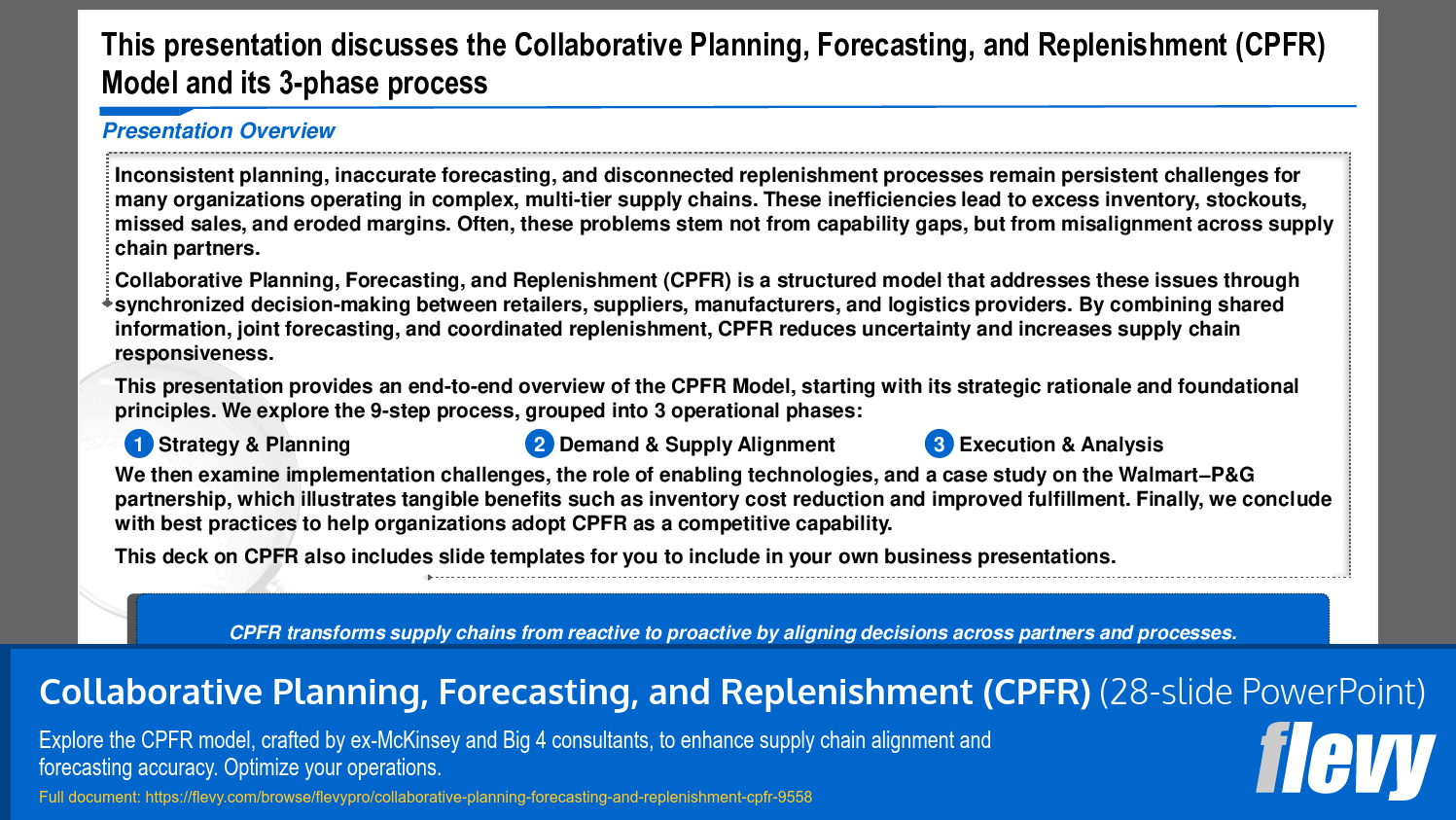
Inconsistent planning, inaccurate forecasting, and disconnected replenishment processes remain persistent challenges for many organizations operating in complex, multi-tier supply chains. These inefficiencies lead to excess inventory, stockouts, missed sales, and eroded margins. Often, these problems stem not from capability gaps, but from misalignment across supply chain partners.
Collaborative Planning, Forecasting, and Replenishment (CPFR) is a structured model that addresses these issues through synchronized decision-making between retailers, suppliers, manufacturers, and logistics providers. By combining shared information, joint forecasting, and coordinated replenishment, CPFR reduces uncertainty and increases supply chain responsiveness.
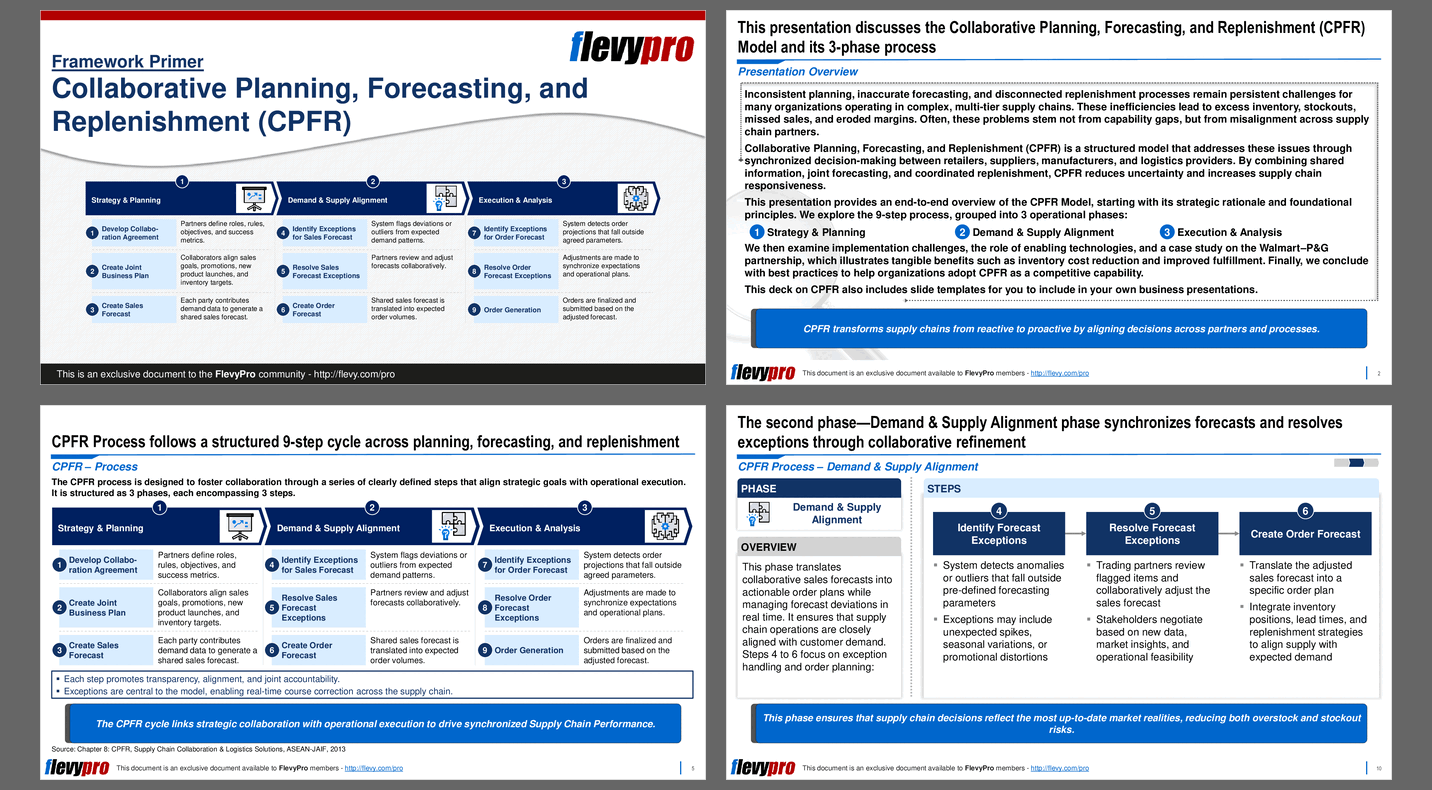
This PPT presentation provides an end-to-end overview of the CPFR Model, starting with its strategic rationale and foundational principles. We explore the 9-step process, grouped into 3 operational phases (each with 3 steps):
1. Strategy & Planning – Establishing collaboration agreements and business plans
Develop Collaboration Agreement
Create Joint Business Plan
Create Sales Forecast
2. Demand & Supply Alignment – Creating forecasts, identifying and resolving exceptions
Identify Exceptions and Sales Forecast
Resolve Sales Forecast Exceptions
Create Order Forecast
3. Execution & Analysis – Managing order fulfillment and analyzing performance
Identify Exceptions for Order Forecast
Resolve Order Forecast Exceptions
Order Generation
Each phase and step is discussed in further detail. Each step promotes transparency, alignment, and joint accountability.
We then examine implementation challenges, the role of enabling technologies, and a case study on the Walmart–P&G partnership, which illustrates tangible benefits such as inventory cost reduction and improved fulfillment. Finally, we conclude with best practices to help organizations adopt CPFR as a competitive capability.
This deck on CPFR also includes slide templates for you to include in your own business presentations.
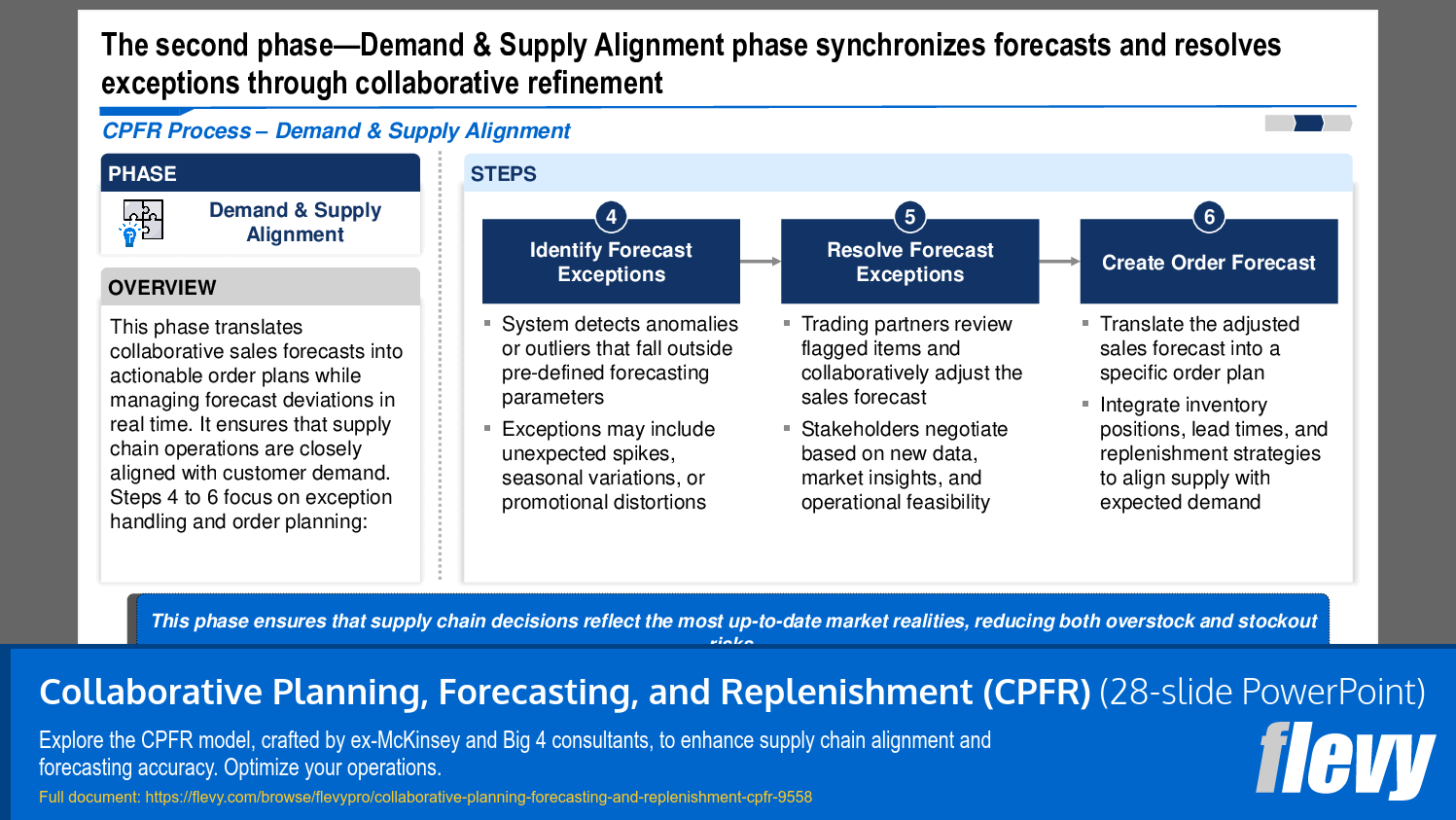
This PPT slide outlines the Demand & Supply Alignment phase within the Collaborative Planning, Forecasting, and Replenishment (CPFR) process. It emphasizes the importance of translating collaborative sales forecasts into actionable order plans while addressing forecast deviations in real time. The slide is structured into 3 main steps, numbered 4 to six, each detailing critical actions taken during this phase.
Step 4 focuses on identifying forecast exceptions. Here, the system plays a crucial role by detecting anomalies or outliers that deviate from established forecasting parameters. These exceptions can manifest as unexpected spikes in demand, seasonal variations, or distortions caused by promotions. Recognizing these deviations is essential for maintaining accuracy in forecasting.
Step 5 transitions into resolving these forecast exceptions. Trading partners collaborate to review the flagged items and adjust the sales forecast accordingly. This step is vital as it involves negotiation among stakeholders, who must consider new data, market insights, and operational feasibility to refine the forecast. The collaborative nature of this step ensures that all parties are aligned and informed.
Finally, Step 6 is about creating the order forecast. This involves translating the adjusted sales forecast into a specific order plan. Key elements such as inventory positions, lead times, and replenishment strategies are integrated to ensure that supply aligns with expected demand. This systematic approach helps mitigate risks of overstock and stockouts, ultimately enhancing supply chain efficiency.
The slide effectively communicates how this phase is integral to synchronizing forecasts and ensuring that supply chain operations are responsive to customer demand.
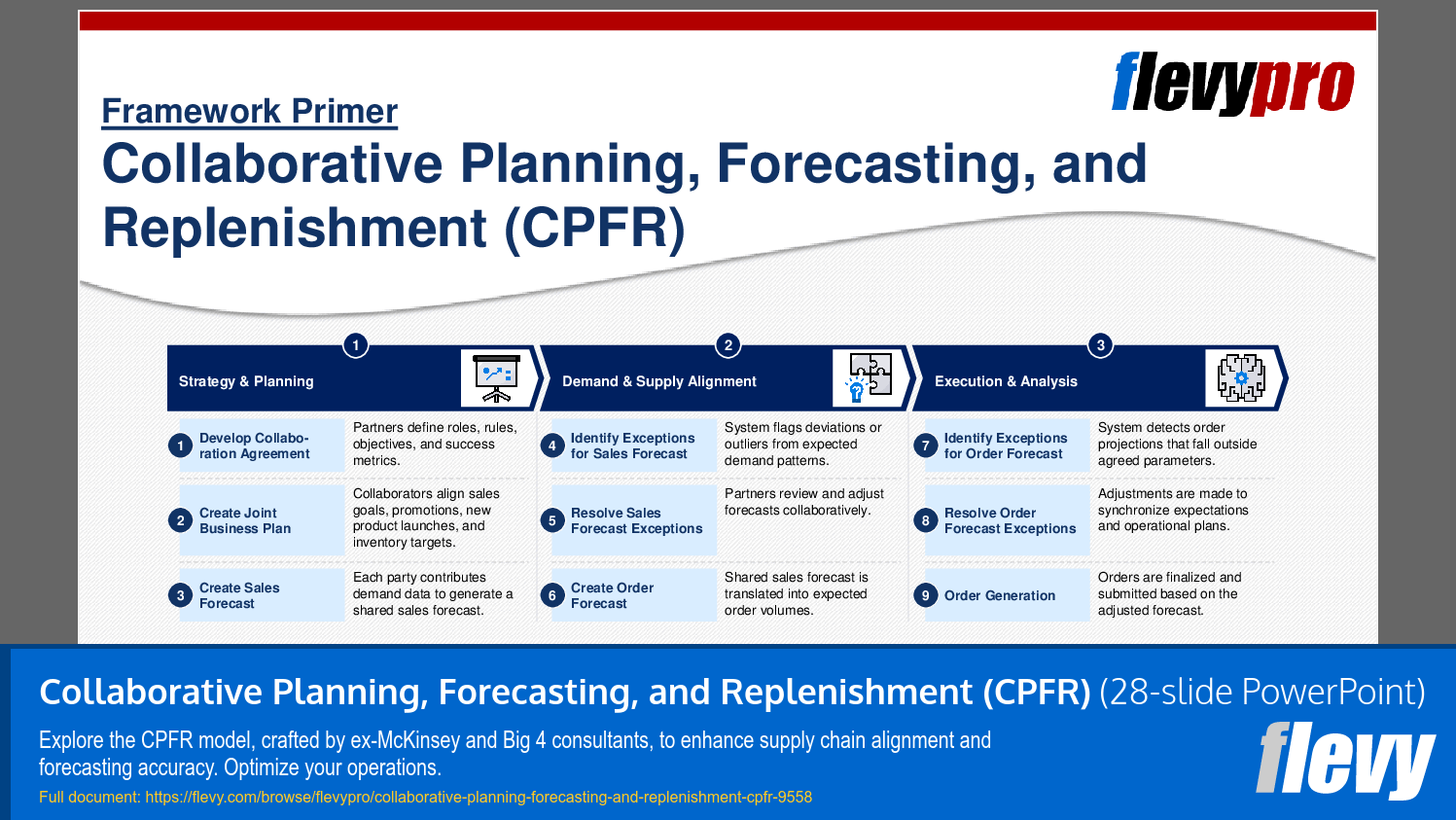
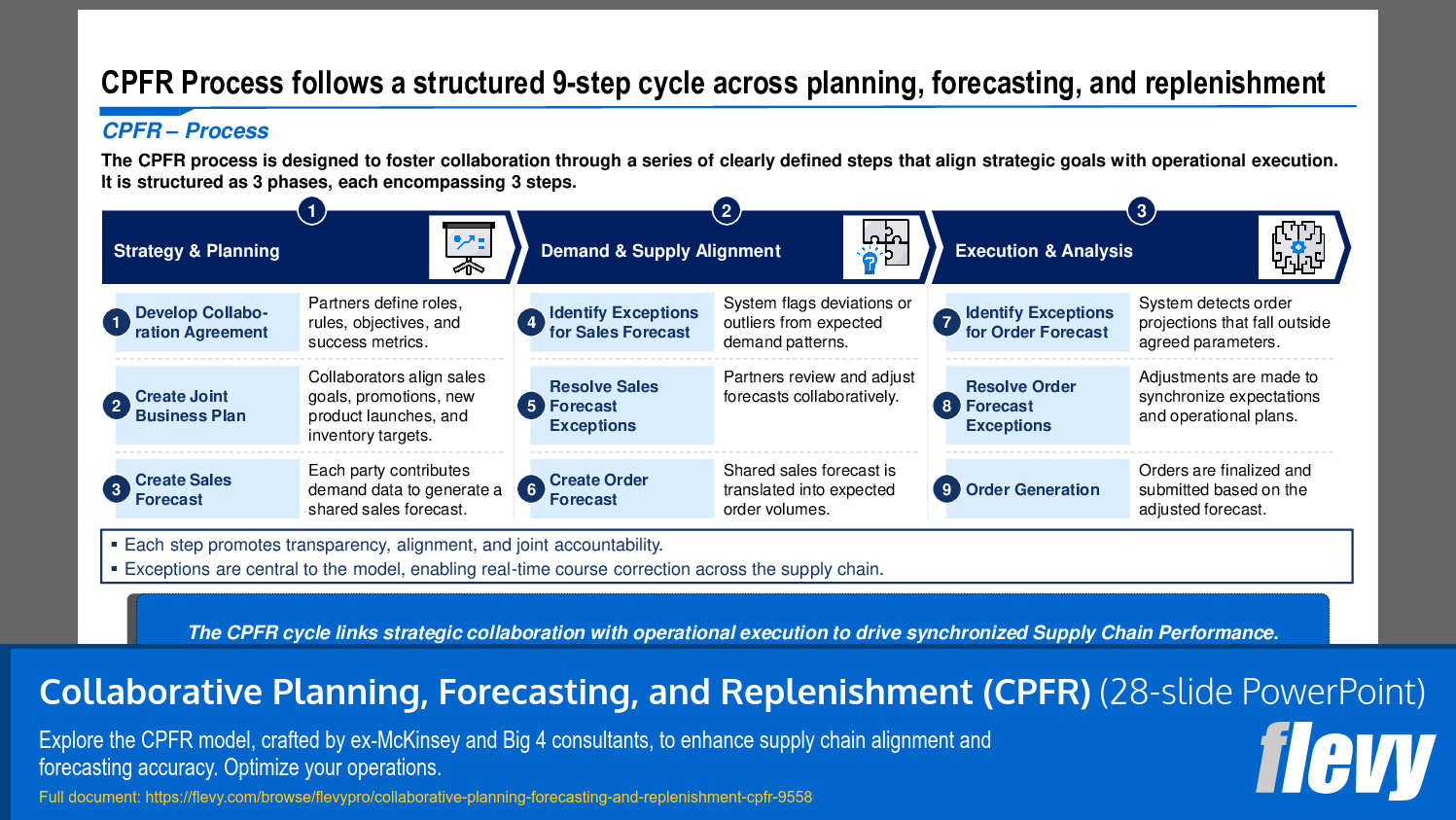
This PPT slide outlines the CPFR (Collaborative Planning, Forecasting, and Replenishment) process, which is structured into 3 distinct phases, each containing 3 steps, totaling nine steps. This framework is designed to enhance collaboration among partners, aligning strategic goals with operational execution.
In the first phase, Strategy & Planning, the process begins with developing a collaboration agreement where partners define roles, objectives, and success metrics. The second step involves creating a joint business plan, aligning sales goals, promotions, and inventory targets. The phase concludes with the creation of a sales forecast, where each party contributes demand data to generate a shared forecast.
The second phase, Demand & Supply Alignment, focuses on identifying exceptions in the sales forecast. This includes flagging deviations from expected demand patterns and collaboratively resolving any sales forecast exceptions. The final step in this phase involves creating an order forecast, which translates the shared sales forecast into expected order volumes.
The third phase, Execution & Analysis, begins with identifying exceptions for the order forecast, where the system detects projections that fall outside agreed parameters. Partners then resolve these order forecast exceptions, making necessary adjustments to synchronize expectations and operational plans. The process culminates in order generation, where finalized orders are submitted based on the adjusted forecast.
Key takeaways include the emphasis on transparency and joint accountability throughout the process. The model's focus on exceptions allows for real-time course corrections, enhancing supply chain performance. This structured approach not only fosters collaboration, but also drives operational efficiency.
This framework is developed by a team of former McKinsey and Big 4 consultants. The presentation follows the headline-body-bumper slide format used by global consulting firms.
For $10.00 more, you can download this document plus 2 more FlevyPro documents. That's just $13 each.
ABOUT FLEVYPRO
This document is part of the FlevyPro Library, a curated knowledge base of documents for our FlevyPro subscribers.
FlevyPro is a subscription service for on-demand business frameworks and analysis tools. FlevyPro subscribers receive access to an exclusive library of curated business documents—business framework primers, presentation templates, Lean Six Sigma tools, and more—among other exclusive benefits.
The average daily rate of a McKinsey consultant is $6,625 (not including expenses). The average price of a Flevy document is $65.
Trusted by over 10,000+ Client Organizations
Since 2012, we have provided best practices to over 10,000 businesses and organizations of all sizes, from startups and small businesses to the Fortune 100, in over 130 countries.
"As a consulting firm, we had been creating subject matter training materials for our people and found the excellent materials on Flevy, which saved us 100's of hours of re-creating what already exists on the Flevy materials we purchased."
– Michael Evans, Managing Director at Newport LLC
"One of the great discoveries that I have made for my business is the Flevy library of training materials.
As a Lean Transformation Expert, I am always making presentations to clients on a variety of topics: Training, Transformation, Total Productive Maintenance, Culture, Coaching, Tools, Leadership Behavior, etc. Flevy
It is well worth the money to purchase these presentations. Sure, I have the knowledge and information to make my point. It is another thing to create a presentation that captures what I want to say. Flevy has saved me countless hours of preparation time that is much better spent with implementation that will actually save money for my clients.
"
– Ed Kemmerling, Senior Lean Transformation Expert at PMG
"Flevy.com has proven to be an invaluable resource library to our Independent Management Consultancy, supporting and enabling us to better serve our enterprise clients.
The value derived from our [FlevyPro] subscription in terms of the business it has helped to gain far exceeds the investment made, making a subscription a no-brainer for any growing consultancy – or in-house strategy team."
– Dean Carlton, Chief Transformation Officer, Global Village Transformations Pty Ltd.
"Last Sunday morning, I was diligently working on an important presentation for a client and found myself in need of additional content and suitable templates for various types of graphics. Flevy.com proved to be a treasure trove for both content and design at a reasonable price, considering the time I
saved. I encountered a download issue during the ordering process. However, a quick email to Flevy's support team, even on a Sunday (!!!), resulted in assistance within less than an hour, allowing me to download the content I needed. Fantastic job, Flevy! I give 5 stars for both content/price and customer service. Thank you!
"
– M. E., Chief Commercial Officer, International Logistics Service Provider
"Flevy is now a part of my business routine. I visit Flevy at least 3 times each month.
Flevy has become my preferred learning source, because what it provides is practical, current, and useful in this era where the business world is being rewritten.

many challenges and there is the need to make the right decisions in a short time, with so much scattered information, we are fortunate to have Flevy. Flevy investigates, selects, and puts at our disposal the best of the best to help us be successful in our work.
"
– Omar Hernán Montes Parra, CEO at Quantum SFE
"The wide selection of frameworks is very useful to me as an independent consultant. In fact, it rivals what I had at my disposal at Big 4 Consulting firms in terms of efficacy and organization."
– Julia T., Consulting Firm Owner (Former Manager at Deloitte and Capgemini)
"I have used FlevyPro for several business applications. It is a great complement to working with expensive consultants. The quality and effectiveness of the tools are of the highest standards."
– Moritz Bernhoerster, Global Sourcing Director at Fortune 500
"I am extremely grateful for the proactiveness and eagerness to help and I would gladly recommend the Flevy team if you are looking for data and toolkits to help you work through business solutions."
Receive our FREE presentation on Operational Excellence
This 50-slide presentation provides a high-level introduction to the 4 Building Blocks of Operational Excellence. Achieving OpEx requires the implementation of a Business Execution System that integrates these 4 building blocks.