
Problem solving is integral to the daily routines of executives, managers, and business owners. Effective problem solving is critical for organizational success and involves a systematic approach to identifying, analyzing, and resolving issues.
Soft Systems Methodology (SSM) represents a systematic approach to problem solving that is particularly effective in addressing complex, ill-structured problems commonly encountered in organizational settings. SSM facilitates the handling of problems involving multiple stakeholders with differing viewpoints and interests.
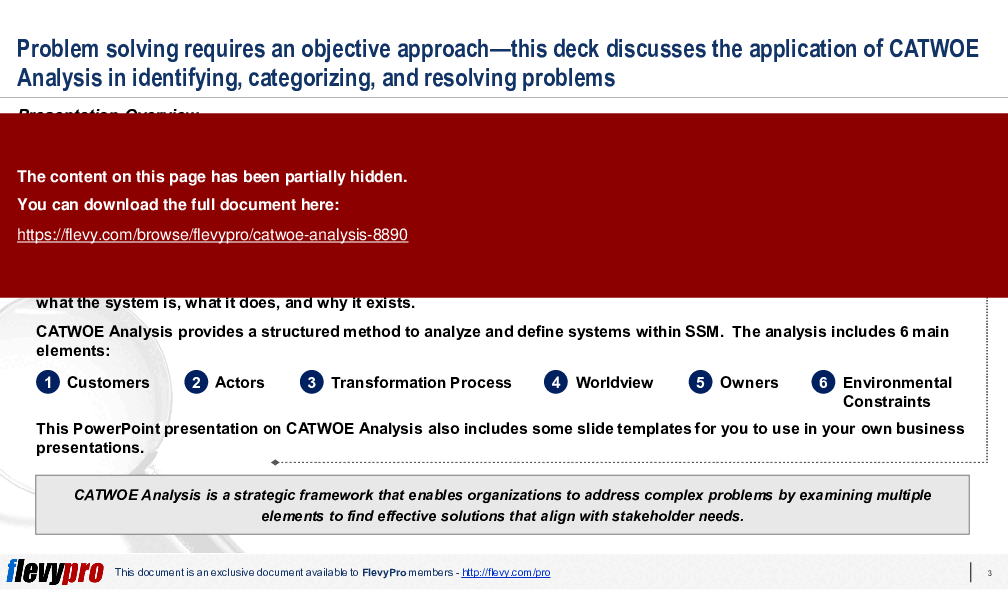
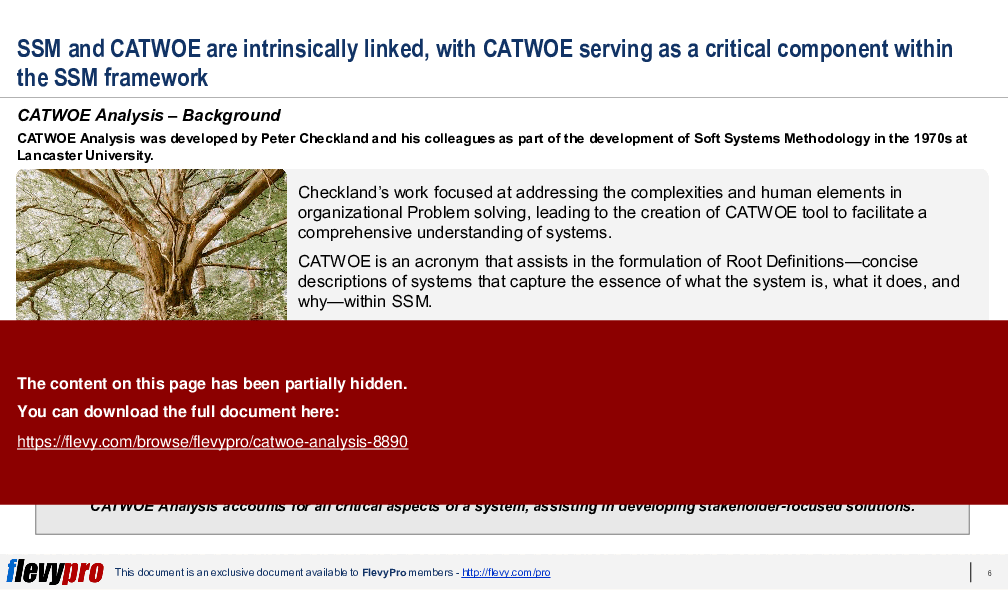
This PPT presentation offers a detailed exploration of the CATWOE Analysis, a model integral to formulating root Definitions within the Soft Systems Methodology. Root definitions provide concise descriptions of systems, capturing the essence of what the system is, what it does, and why it exists.
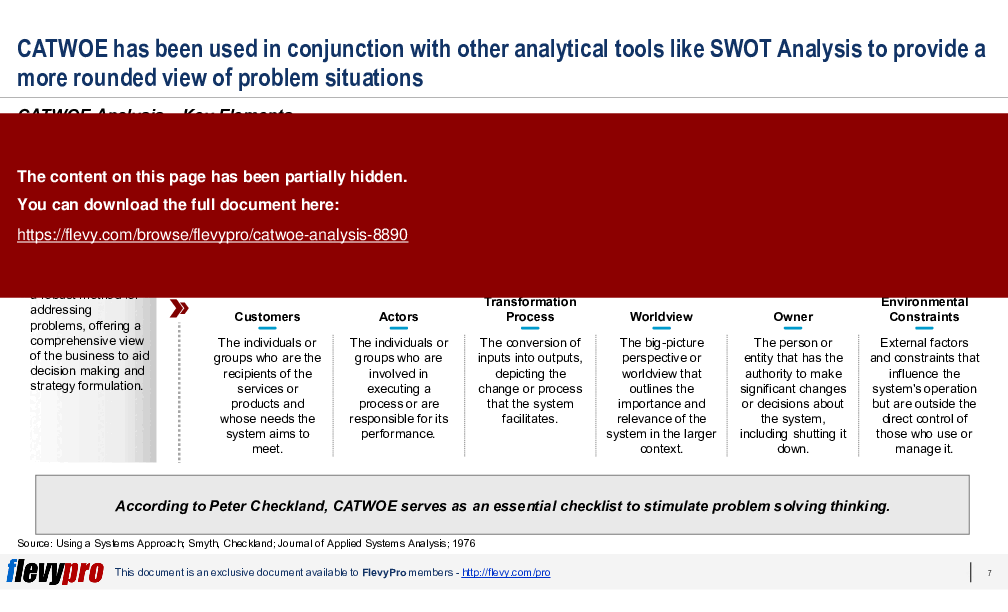
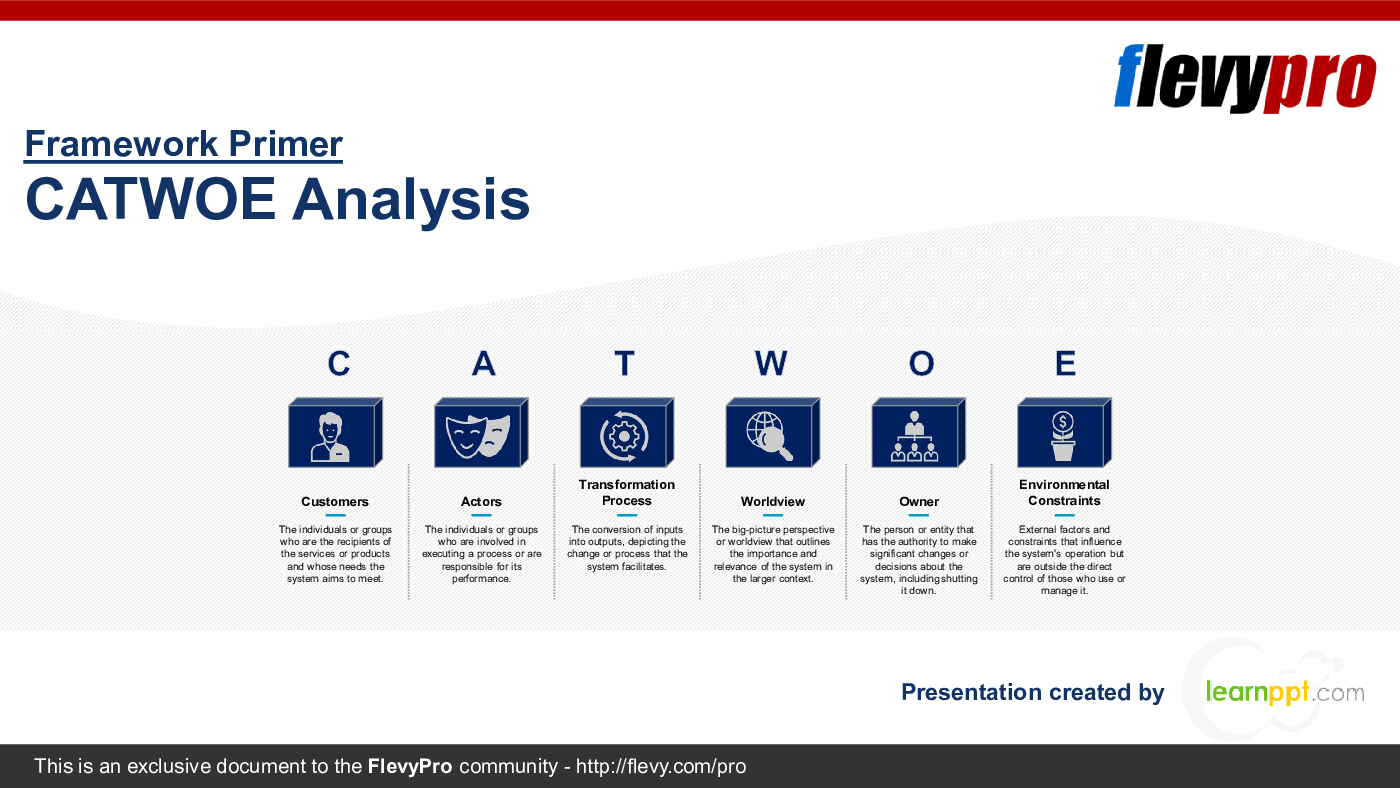
CATWOE Analysis provides a structured method to analyze and define systems within SSM. The analysis includes 6 main elements:
1. Customers – The individuals or groups who are the recipients of the services or products and whose needs the system aims to meet.
2. Actors – The individuals or groups who are involved in executing a process or are responsible for its performance.
3. Transformation Process – The conversion of inputs into outputs, depicting the change or process that the system facilitates.
4. Worldview – The big-picture perspective or worldview that outlines the importance and relevance of the system in the larger context.
5. Owners – The person or entity that has the authority to make significant changes or decisions about the system, including shutting it down.
6. Environmental Constraints – External factors and constraints that influence the system's operation but are outside the direct control of those who use or manage it.
CATWOE has been used in conjunction with other analytical tools like SWOT Analysis to provide a more rounded view of problem situations. According to Peter Checkland, CATWOE serves as an essential checklist to stimulate problem solving thinking.
This PowerPoint presentation on CATWOE Analysis also includes some slide templates for you to use in your own business presentations.
Got a question about this document? Email us at flevypro@flevy.com.
Executive Summary
The CATWOE Analysis presentation provides a comprehensive framework for problem-solving within organizations, particularly through the lens of Soft Systems Methodology (SSM). This structured approach enables executives, managers, and consultants to identify, categorize, and resolve complex issues by analyzing 6 critical elements: Customers, Actors, Transformation Process, Worldview, Owner, and Environmental Constraints. By utilizing this presentation, users can effectively develop stakeholder-focused solutions that align with organizational goals and enhance decision-making processes.
Who This Is For and When to Use
• Executives seeking to improve organizational problem-solving capabilities
• Project managers aiming to streamline project initiation and execution
• Business analysts focused on stakeholder needs and system functionality
• Consultants providing strategic insights and recommendations
Best-fit moments to use this deck:
• During the initial phases of project planning to establish a foundation for problem analysis
• When addressing complex, ill-structured problems involving multiple stakeholders
• In workshops aimed at enhancing team collaboration and communication
Learning Objectives
• Define the CATWOE framework and its significance in problem-solving
• Analyze complex problems using the 6 elements of CATWOE
• Develop effective solutions that align with stakeholder needs
• Implement a structured approach to problem analysis within SSM
• Enhance stakeholder communication and build consensus
• Identify and mitigate potential risks and issues in project management
Table of Contents
• Overview (page 3)
• CATWOE Analysis (page 4)
• Elements of CATWOE (page 6)
• CATWOE Implementation (page 17)
• Slide Design Structure & Templates (page 23)
Primary Topics Covered
• Overview of CATWOE Analysis - An introduction to the CATWOE framework and its role in problem-solving within SSM.
• Elements of CATWOE - Detailed exploration of the 6 components: Customers, Actors, Transformation Process, Worldview, Owner, and Environmental Constraints.
• Implementation Steps - A structured four-step approach to effectively apply CATWOE Analysis in real-world scenarios.
• Stakeholder Engagement - Strategies for enhancing communication and collaboration among stakeholders during the problem-solving process.
• Risk Assessment - Techniques for identifying and mitigating potential risks associated with proposed solutions.
• Slide Design Templates - Ready-to-use templates for presenting CATWOE Analysis in business contexts.
Deliverables, Templates, and Tools
• CATWOE Analysis framework template for structured problem-solving
• Slide templates for presenting each element of CATWOE
• Guidelines for effective stakeholder communication and engagement
• Risk assessment tools to evaluate potential challenges in implementation
• Process mapping templates for visualizing transformation processes
• Feedback mechanisms for continuous improvement and customer satisfaction
Slide Highlights
• Overview slide introducing the CATWOE framework and its significance
• Detailed slides for each CATWOE element with key steps and examples
• Implementation steps slide outlining the four-step approach to CATWOE
• Visual aids for stakeholder engagement and communication strategies
• Templates for presenting CATWOE Analysis in a professional format
Potential Workshop Agenda
Introduction to CATWOE Analysis (30 minutes)
• Overview of the CATWOE framework and its applications
• Discussion on the significance of problem-solving in organizations
Hands-On CATWOE Analysis (60 minutes)
• Breakout sessions to analyze a specific problem using the CATWOE framework
• Group presentations to share insights and proposed solutions
Stakeholder Engagement Strategies (30 minutes)
• Techniques for enhancing communication among stakeholders
• Strategies for building consensus and reducing conflicts
Customization Guidance
• Adapt the CATWOE framework to align with specific organizational contexts and needs
• Modify templates to reflect unique project requirements and stakeholder perspectives
• Incorporate organizational terminology and metrics for clarity and relevance
Secondary Topics Covered
• Integration of CATWOE with other analytical tools like SWOT Analysis
• The importance of stakeholder perspectives in problem-solving
• Techniques for visualizing transformation processes and outcomes
• Strategies for continuous improvement and feedback mechanisms
Topic FAQ
Document FAQ
These are questions addressed within this presentation.
What is CATWOE Analysis?
CATWOE Analysis is a framework used within Soft Systems Methodology to systematically analyze and define complex problems by considering 6 critical elements.
How can CATWOE Analysis improve problem-solving?
By providing a structured approach, CATWOE Analysis helps organizations identify stakeholder needs, clarify roles, and develop effective solutions that align with organizational goals.
Who developed the CATWOE framework?
The CATWOE framework was developed by Peter Checkland and his colleagues as part of the Soft Systems Methodology in the 1970s.
What are the 6 elements of CATWOE?
The 6 elements are Customers, Actors, Transformation Process, Worldview, Owner, and Environmental Constraints.
How can I implement CATWOE Analysis in my organization?
Start by expressing the problem, analyzing options using the CATWOE elements, pinpointing major issues, and then tackling the problem with a structured action plan.
What types of problems is CATWOE Analysis best suited for?
CATWOE Analysis is particularly effective for complex, ill-structured problems involving multiple stakeholders with differing viewpoints.
Can CATWOE Analysis be used in conjunction with other frameworks?
Yes, CATWOE Analysis can be integrated with other analytical tools like SWOT Analysis for a more rounded view of problem situations.
How does CATWOE enhance stakeholder communication?
By clarifying roles and expectations, CATWOE fosters better alignment and understanding among stakeholders, reducing conflicts and improving collaboration.
Glossary
• CATWOE - A framework for analyzing complex problems through 6 elements: Customers, Actors, Transformation Process, Worldview, Owner, Environmental Constraints.
• Soft Systems Methodology (SSM) - A systematic approach to problem-solving that emphasizes understanding human and organizational factors.
• Stakeholder - An individual or group affected by or involved in a project or system.
• Transformation Process - The core activities that convert inputs into outputs within a system.
• Environmental Constraints - External factors that influence a system's operation, but are beyond its control.
• Root Definition - A concise description of a system that captures its essence and purpose.
• Feedback Mechanism - Processes for gathering insights from stakeholders to improve systems and solutions.
• Risk Assessment - The process of identifying and evaluating potential risks associated with a project or solution.
• Consensus Building - Techniques used to foster agreement and alignment among stakeholders.
• Process Mapping - A visual representation of the steps involved in a transformation process.
• Implementation Plan - A detailed action plan outlining tasks, timelines, and responsibilities for executing a solution.
• Problem Statement - A clear and concise description of the issue to be addressed.
• Stakeholder Engagement - Strategies for involving stakeholders in the problem-solving process.
• Project Management - The discipline of planning, executing, and closing projects effectively.
• Holistic Understanding - A comprehensive view that considers all aspects of a problem or system.
• System Functionality - The capabilities and operations of a system in meeting its objectives.
• Adaptive Strategies - Approaches that allow a system to respond flexibly to changes in the environment.
• Organizational Goals - The objectives and targets set by an organization to guide its operations.
• Decision Maker - An individual or group responsible for making significant changes or decisions about a system.
• Analysis - The process of examining data or information to understand a situation or problem.
• Implementation - The execution of a plan or solution to address a defined problem.
Source: Best Practices in Problem Solving, Systems Thinking PowerPoint Slides: CATWOE Analysis PowerPoint (PPTX) Presentation Slide Deck, LearnPPT Consulting
Did you need more documents?
Consider a FlevyPro subscription from $39/month. View plans here.
For $10.00 more, you can download this document plus 2 more FlevyPro documents. That's just $13 each.
|
Receive our FREE whitepaper on the Top 101 Consulting Frameworks
Download our 200+ page guide summarizing the Top 101 Management Consulting Frameworks. Each framework provides a structured approach to analyzing and solving a common business problem. |