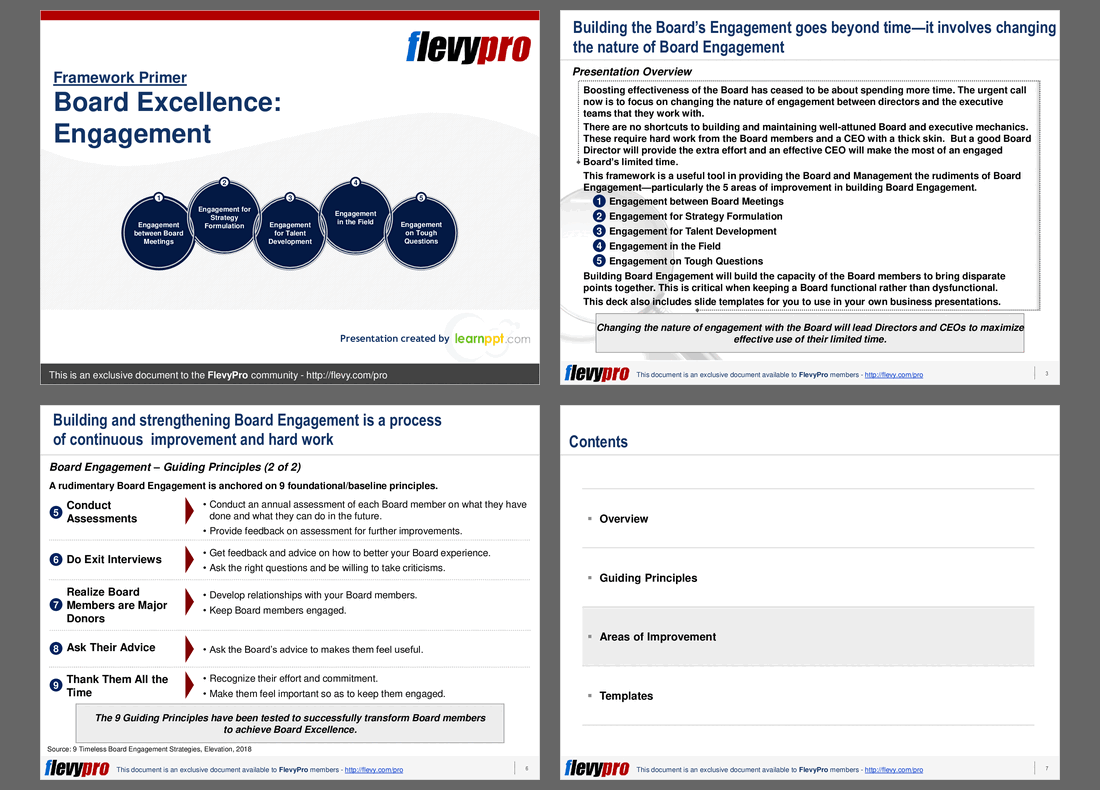
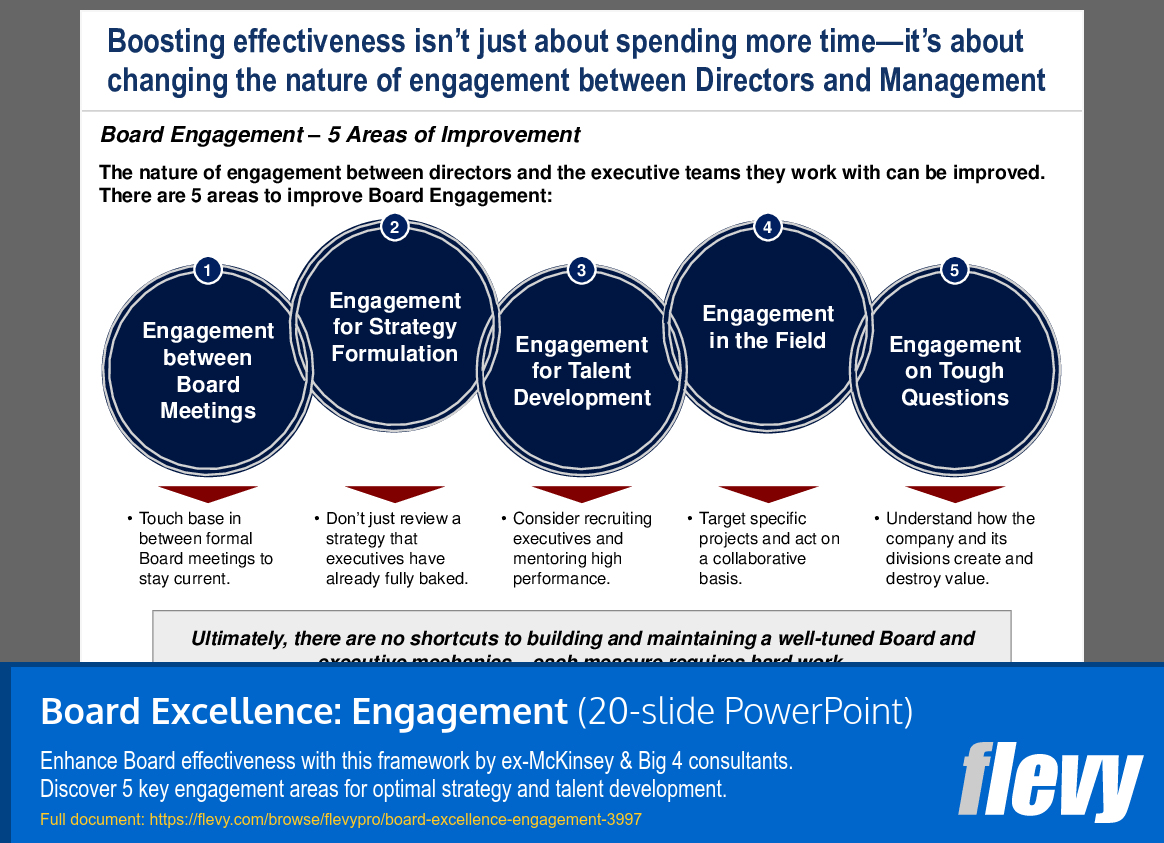

Boosting effectiveness of the Board has ceased to be about spending more time. The urgent call now is to focus on changing the nature of engagement between directors and the executive teams that they work with.
There are no shortcuts to building and maintaining well-attuned Board and executive mechanics. These require hard work from the Board members and a CEO with a thick skin. But a good Board Director will provide the extra effort and an effective CEO will make the most of an engaged Board's limited time.
This framework is a useful tool in providing the Board and Management the rudiments of Board Engagement—particularly the 5 areas of improvement in building Board Engagement.
1. Engagement between Board Meetings
2. Engagement for Strategy Formulation
3. Engagement for Talent Development
4. Engagement in the Field
5. Engagement on Tough Questions
Building Board Engagement will build the capacity of the Board members to bring disparate points together. This is critical when keeping a Board functional rather than dysfunctional. Further, Changing the nature of engagement with the Board will lead Directors and CEOs to maximize effective use of their limited time.
This deck also includes slide templates for you to use in your own business presentations.
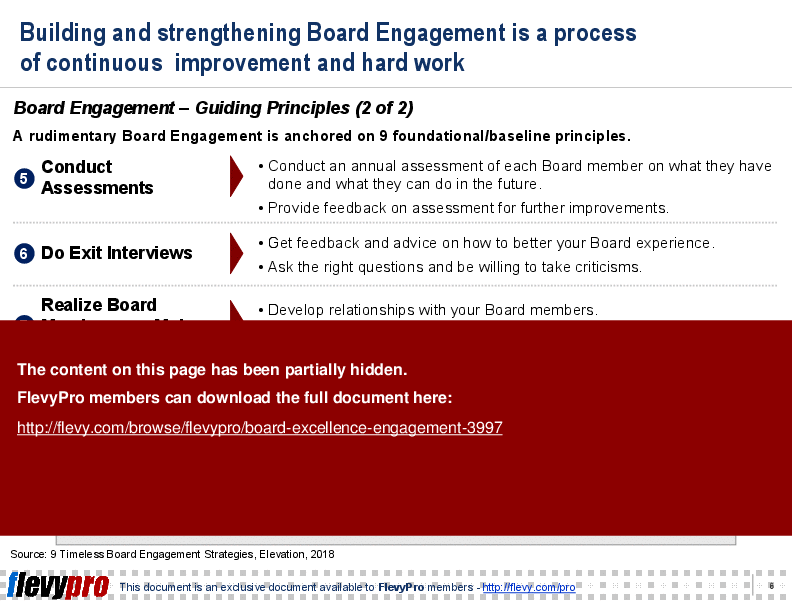
The PPT delves into the 9 foundational principles essential for nurturing a high-performing Board. It emphasizes the importance of conducting assessments, exit interviews, and realizing Board members' potential. These principles are designed to foster continuous improvement and hard work among Board members, ensuring they are fully invested in the organization's goals. This framework provides actionable insights and templates to help you implement these principles effectively in your own Board engagements.
Got a question about this document? Email us at flevypro@flevy.com.
Executive Summary
The "Board Excellence: Engagement" presentation is designed to enhance the effectiveness of board members and their interactions with executive teams. Created by former McKinsey and Big 4 consultants, this framework emphasizes the importance of transforming the nature of board engagement beyond mere time spent in meetings. It outlines 5 critical areas for improvement, enabling boards to maximize their strategic contributions and talent development efforts. This resource provides actionable insights and templates to foster a more engaged and effective board.
Who This Is For and When to Use
• Corporate executives seeking to improve board dynamics and effectiveness
• Board members aiming to enhance their engagement with management
• Consultants advising organizations on governance and board performance
• Leadership teams focused on strategic planning and talent development
Best-fit moments to use this deck:
• During board retreats or strategy sessions to redefine engagement practices
• When onboarding new board members to instill best practices in engagement
• In preparation for annual assessments or evaluations of board performance
Learning Objectives
• Define the 5 areas of board engagement and their significance
• Build a framework for effective board meetings and ongoing interactions
• Establish methods for strategic formulation and talent development
• Create a culture of continuous improvement in board dynamics
• Implement feedback mechanisms to enhance board member contributions
• Develop templates for assessing and improving board engagement
Table of Contents
• Overview (page 3)
• Guiding Principles (page 5)
• Areas of Improvement (page 8)
• Templates (page 15)
Primary Topics Covered
• Engagement Between Board Meetings - Focus on maintaining communication and connection between formal meetings to keep board members informed and engaged.
• Engagement for Strategy Formulation - Involve board members in the early stages of strategy development to leverage diverse experiences and insights.
• Engagement for Talent Development - Shift from passive observation to active mentorship of high-performing executives to cultivate future leaders.
• Engagement in the Field - Assign directors specific operational areas to oversee, fostering collaboration without interfering with management.
• Engagement on Tough Questions - Encourage board members to ask challenging questions that drive meaningful discussions and enhance decision-making.
Deliverables, Templates, and Tools
• Board engagement assessment template for evaluating current practices
• Strategy formulation framework to guide board involvement in strategic discussions
• Talent development plan template for mentoring and evaluating executives
• Engagement tracking tool to monitor board member contributions and feedback
• Meeting agenda template to structure discussions around engagement practices
Slide Highlights
• Overview of the 5 areas of board engagement with visual representation
• Guiding principles slide outlining foundational strategies for effective board dynamics
• Engagement advantages slide detailing the benefits of proactive board involvement
• Template slides for practical application in real-world scenarios
• Case studies illustrating successful board engagement transformations
Potential Workshop Agenda
Engagement Strategy Session (90 minutes)
• Discuss current board engagement practices and identify gaps
• Brainstorm strategies for enhancing communication between meetings
• Develop action items for implementing new engagement practices
Talent Development Workshop (60 minutes)
• Review current talent development initiatives and board involvement
• Identify high-potential executives for mentorship opportunities
• Create a plan for ongoing evaluation and feedback
Customization Guidance
• Tailor the engagement framework to align with your organization's specific goals and culture
• Adjust templates to reflect the unique roles and expectations of your board members
• Incorporate organizational terminology and metrics to ensure relevance
Secondary Topics Covered
• Importance of continuous improvement in board dynamics
• Strategies for effective onboarding of new board members
• Conducting assessments and exit interviews for feedback
• Building relationships with board members to enhance engagement
• Recognizing board member contributions to maintain motivation
Topic FAQ
Document FAQ
These are questions addressed within this presentation.
What are the 5 areas of board engagement?
The 5 areas are engagement between board meetings, engagement for strategy formulation, engagement for talent development, engagement in the field, and engagement on tough questions.
How can this framework improve board effectiveness?
By focusing on changing the nature of engagement, boards can maximize their strategic contributions and ensure that members are actively involved in key discussions.
What templates are included in this presentation?
The presentation includes templates for assessing board engagement, formulating strategies, and tracking talent development initiatives.
How should I implement the guiding principles?
Begin by reviewing the principles with your board, discussing how they can be integrated into current practices, and setting measurable goals for improvement.
What is the significance of engagement between board meetings?
Maintaining communication between meetings helps keep board members informed and engaged, allowing for timely discussions on emerging issues.
How can board members contribute to talent development?
Board members can mentor high-performing executives, providing guidance and insights that help cultivate future leaders within the organization.
What role does feedback play in improving board engagement?
Regular feedback helps identify areas for improvement, ensuring that board members feel valued and are contributing effectively to discussions.
Why is it important to ask tough questions?
Challenging questions stimulate critical thinking and help ensure that all perspectives are considered in decision-making processes.
Glossary
• Engagement - Active participation and communication between board members and management.
• Strategy Formulation - The process of developing and defining organizational strategies.
• Talent Development - Initiatives aimed at nurturing and advancing high-potential executives.
• Continuous Improvement - Ongoing efforts to enhance processes and practices within the board.
• Board Dynamics - The interactions and relationships among board members and between the board and management.
• Mentorship - Guidance provided by experienced individuals to help develop less experienced colleagues.
• Assessment - Evaluation of board member performance and contributions.
• Feedback Mechanism - A system for gathering input on board effectiveness and engagement.
• Operational Oversight - The responsibility of board members to monitor specific areas of the organization.
• Collaboration - Working together to achieve common goals and enhance board effectiveness.
Source: Best Practices in Board PowerPoint Slides: Board Excellence: Engagement PowerPoint (PPT) Presentation Slide Deck, LearnPPT Consulting
Did you need more documents?
Consider a FlevyPro subscription from $39/month. View plans here.
For $10.00 more, you can download this document plus 2 more FlevyPro documents. That's just $13 each.
|
Download our FREE Strategy & Transformation Framework Templates
Download our free compilation of 50+ Strategy & Transformation slides and templates. Frameworks include McKinsey 7-S, Balanced Scorecard, Disruptive Innovation, BCG Curve, and many more. |