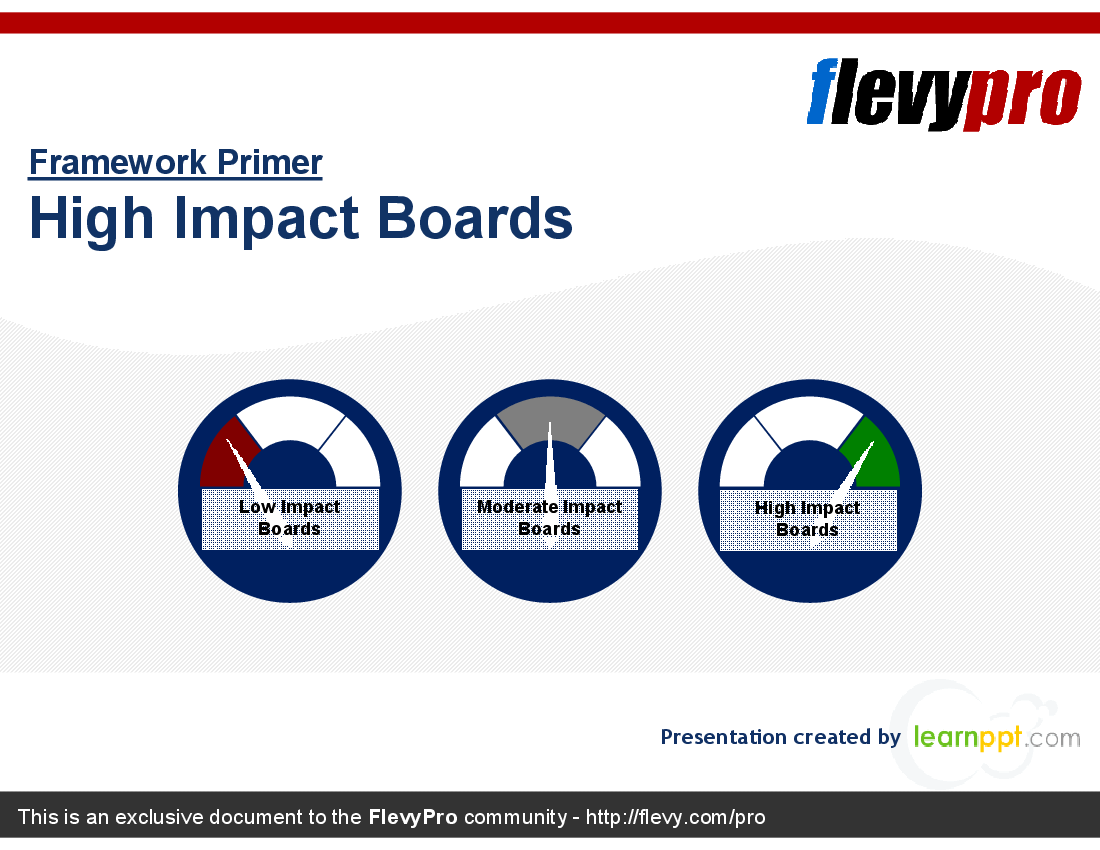
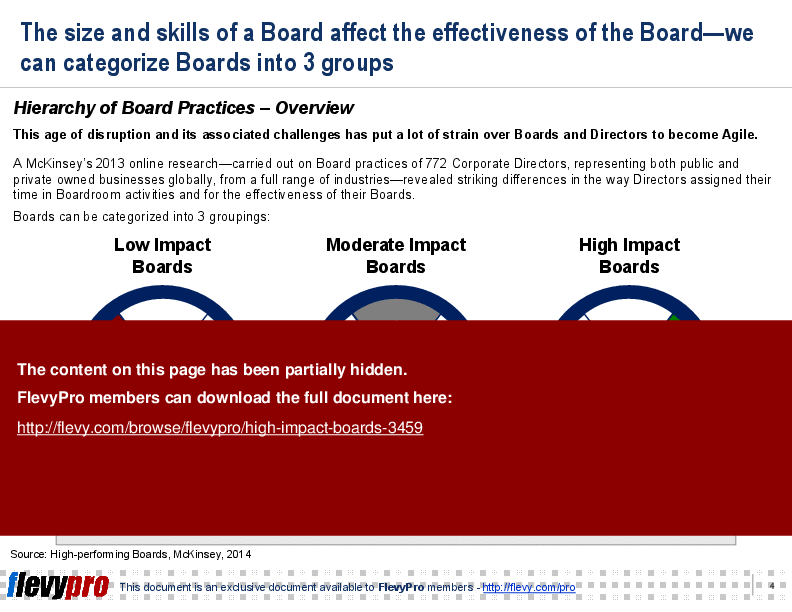

This age of disruption and its associated challenges has put a lot of strain over Boards and Directors to become agile. In a study on Board practices of 750+ Corporate Directors, representing both public and private owned businesses globally, from a full range of industries—revealed striking differences in the way Directors assigned their time in Boardroom activities and for the effectiveness of their Boards.
This presentation provides a detailed overview of the practices, time commitments, devotion, and strategic priorities that differentiate 3 types of boards:
1. Low Impact Boards
2. Moderate Impact Boards
3. High Impact Boards
We also discuss the factors that help improve Directors' impact and the efficiency of their Boards. A skilled chair can render a Board more useful by setting high standards and taking action to help members improve their contribution.
The slide deck also includes some slide templates for you to use in your own business presentations.
High Impact Boards are characterized by their strategic focus and ability to adapt to changing conditions. They engage in deeper performance discussions with the CEO, examine leading indicators, and prioritize innovation and growth. These boards allocate more time to critical activities such as M&A, organizational health, and risk management, ensuring they stay ahead of trends and drive long-term success.
This presentation includes detailed templates to help you categorize and assess your board's impact level. Whether you are looking to elevate a low-impact board or refine the practices of a high-impact board, these tools provide a structured approach to improving governance and strategic oversight. The insights and frameworks offered are grounded in extensive research and real-world application, making them invaluable for any organization aiming to enhance board performance.
Got a question about this document? Email us at flevypro@flevy.com.
Executive Summary
The High Impact Boards framework is designed to enhance board effectiveness by providing insights into the practices and strategic priorities that distinguish high-performing boards from their lower-impact counterparts. Developed by former McKinsey and Big 4 consultants, this presentation outlines the traits of Low, Moderate, and High Impact Boards, emphasizing the importance of agility and strategic engagement in today's disruptive business environment. By utilizing this framework, corporate executives and board members can assess their governance practices, improve decision-making, and ultimately drive organizational success.
Who This Is For and When to Use
• Corporate executives looking to enhance board effectiveness and governance.
• Board members seeking to understand their roles in strategic decision-making.
• Consultants advising organizations on governance best practices.
• Governance and compliance teams focused on board performance metrics.
Best-fit moments to use this deck:
• During board retreats focused on improving governance practices.
• When assessing current board effectiveness and identifying areas for improvement.
• In strategic planning sessions to align board activities with organizational goals.
• For training sessions aimed at enhancing board member contributions.
Learning Objectives
• Define the characteristics of Low, Moderate, and High Impact Boards.
• Identify key practices that enhance board effectiveness.
• Analyze the time commitments required for high-performing boards.
• Establish metrics for assessing board performance and impact.
• Develop strategies for improving board engagement and decision-making.
• Create a framework for ongoing board development and training.
Table of Contents
• Overview (page 3)
• Low Impact Boards (page 7)
• Moderate Impact Boards (page 9)
• High Impact Boards (page 11)
• Templates (page 15)
Primary Topics Covered
• Overview of Board Effectiveness - Discusses the varying effectiveness of boards and the importance of agility in governance.
• Low Impact Boards - Describes the characteristics and limitations of boards that struggle with strategic engagement.
• Moderate Impact Boards - Explores how these boards adapt to changing conditions, but still have room for improvement.
• High Impact Boards - Highlights the practices of high-performing boards that focus on innovation and strategic decision-making.
• Time Commitments - Analyzes the time investments of board members across different impact levels.
• Templates for Board Practices - Provides practical templates to implement the discussed frameworks in organizational settings.
Deliverables, Templates, and Tools
• Template for assessing board effectiveness across different impact levels.
• Framework for categorizing board practices into Low, Moderate, and High Impact.
• Checklist for evaluating board member contributions and engagement.
• Guidelines for establishing time commitments for board activities.
• Performance metrics template for tracking board effectiveness over time.
• Strategic planning template for aligning board activities with organizational goals.
Slide Highlights
• Overview slide detailing the importance of board effectiveness in the current business landscape.
• Comparative analysis of Low, Moderate, and High Impact Boards emphasizing their strategic priorities.
• Time commitment breakdown illustrating the differences in engagement levels among board types.
• Visual templates for assessing board practices and effectiveness.
• Key takeaways slide summarizing the essential practices for high-performing boards.
Potential Workshop Agenda
Understanding Board Effectiveness (90 minutes)
• Discuss the characteristics of Low, Moderate, and High Impact Boards.
• Analyze case studies of successful board practices.
• Identify areas for improvement in current board operations.
Strategic Planning for Board Engagement (60 minutes)
• Develop a framework for aligning board activities with organizational goals.
• Create a checklist for evaluating board member contributions.
Implementing Best Practices (90 minutes)
• Review templates for assessing board effectiveness.
• Establish metrics for ongoing board performance tracking.
Customization Guidance
• Tailor the time commitment metrics to reflect your organization's specific board structure and meeting frequency.
• Adjust the performance metrics template to align with your organization's strategic objectives.
• Incorporate industry-specific examples into the framework to enhance relevance for your board members.
Secondary Topics Covered
• The role of board chairs in enhancing board effectiveness.
• Strategies for improving decision-making processes within boards.
• The impact of board diversity on governance outcomes.
• Best practices for board member onboarding and training.
• Governance frameworks for aligning board activities with stakeholder expectations.
Topic FAQ
Document FAQ
These are questions addressed within this presentation.
What defines a High Impact Board?
A High Impact Board actively engages in strategic decision-making, prioritizes innovation, and dedicates significant time to performance management and organizational health.
How can we assess our board's effectiveness?
Utilize the provided templates and metrics to evaluate board practices, member contributions, and alignment with organizational goals.
What are the time commitments expected from board members?
High Impact Board members typically spend around 40 days a year on board activities, while Low Impact Board members average about 19 days.
How can we improve our board's strategic engagement?
Focus on enhancing decision-making processes, encouraging open discussions, and aligning board activities with the organization's strategic priorities.
What templates are included in this framework?
The framework includes templates for assessing board effectiveness, time commitments, and performance metrics tailored to your organization's needs.
How do Low Impact Boards differ from High Impact Boards?
Low Impact Boards primarily focus on compliance and basic oversight, while High Impact Boards engage in strategic discussions, innovation, and performance management.
What role does the board chair play in board effectiveness?
A skilled chair can enhance board effectiveness by setting high standards, facilitating discussions, and ensuring that all members contribute meaningfully.
Can this framework be adapted for different industries?
Yes, the framework can be customized to reflect industry-specific practices and challenges, making it relevant for various organizational contexts.
Glossary
• Board Effectiveness - The ability of a board to fulfill its governance responsibilities and contribute to organizational success.
• High Impact Board - A board that actively engages in strategic decision-making and prioritizes innovation.
• Moderate Impact Board - A board that adapts to changing conditions, but has room for improvement in strategic engagement.
• Low Impact Board - A board that primarily focuses on compliance and basic oversight without significant strategic involvement.
• Time Commitment - The amount of time board members dedicate to board activities and governance responsibilities.
• Performance Metrics - Quantifiable measures used to assess board effectiveness and member contributions.
• Strategic Priorities - Key focus areas that guide a board's decision-making and governance activities.
• Board Chair - The leader of the board who facilitates meetings and ensures effective governance practices.
• Governance Framework - A structured approach to defining roles, responsibilities, and processes within a board.
• Onboarding - The process of integrating new board members into the organization and familiarizing them with their roles.
• Diversity - The inclusion of varied perspectives and backgrounds within the board to enhance decision-making.
• Stakeholder Expectations - The needs and interests of individuals or groups that have a stake in the organization's performance.
Source: Best Practices in Leadership, Board PowerPoint Slides: High Impact Boards PowerPoint (PPT) Presentation Slide Deck, LearnPPT Consulting
Did you need more documents?
Consider a FlevyPro subscription from $39/month. View plans here.
For $10.00 more, you can download this document plus 2 more FlevyPro documents. That's just $13 each.
|
Download our FREE Strategy & Transformation Framework Templates
Download our free compilation of 50+ Strategy & Transformation slides and templates. Frameworks include McKinsey 7-S, Balanced Scorecard, Disruptive Innovation, BCG Curve, and many more. |










