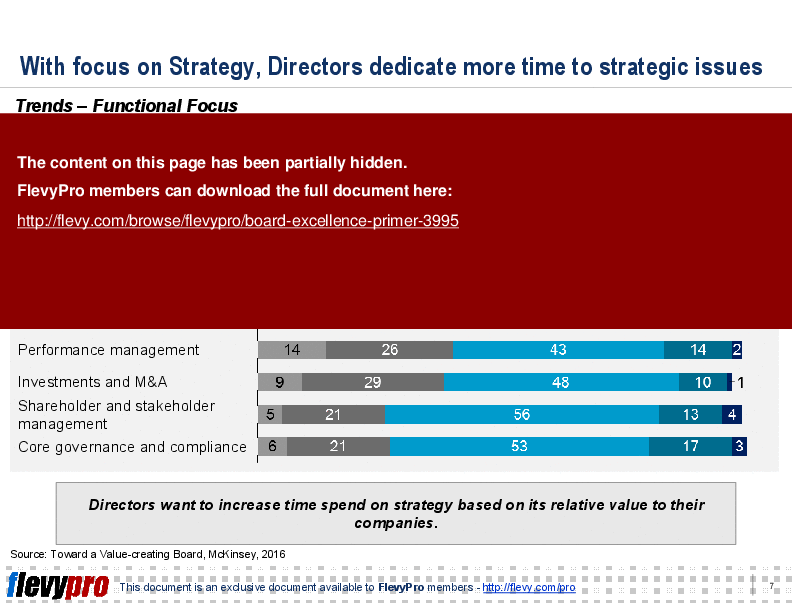
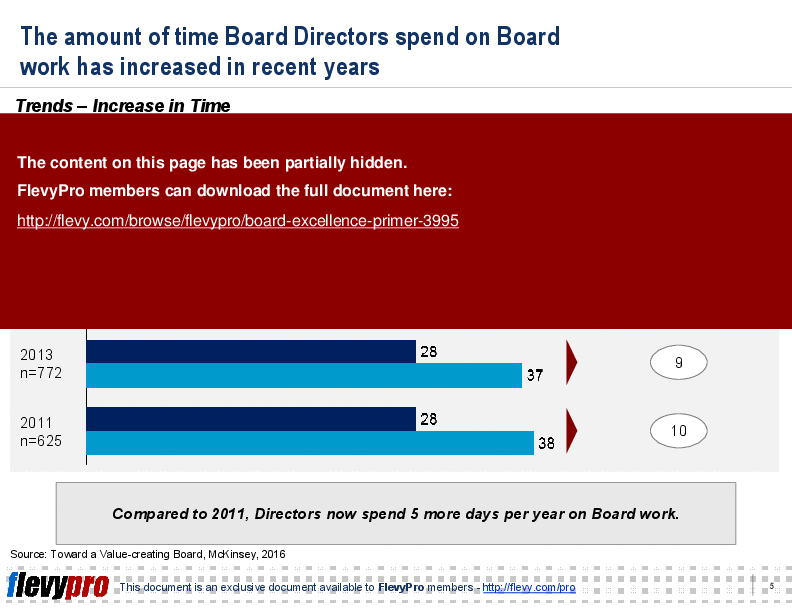

The amount of time Board Directors spends on their work and commit to strategy is rising. Directors say they dedicate more time now to their Board duties than ever before. In fact, since 2011, the Directors have cut in half the gap between the actual and ideal amount of time they spend on Board work.
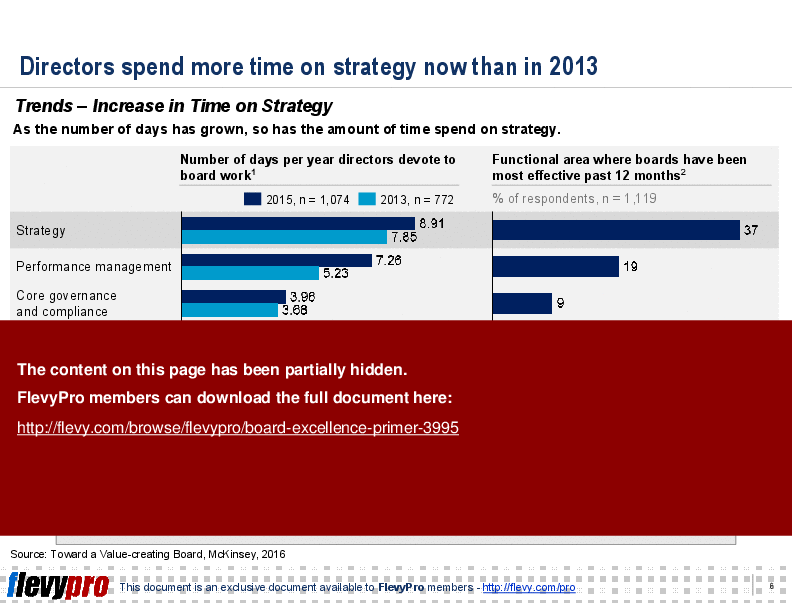
In a recent global study of Corporate Boards, the results showed that strategy, on average, is the main focus of many Boards. Yet, Directors still want more time for strategy when they consider its relative value to their companies. This is more than any other area of the Board work.
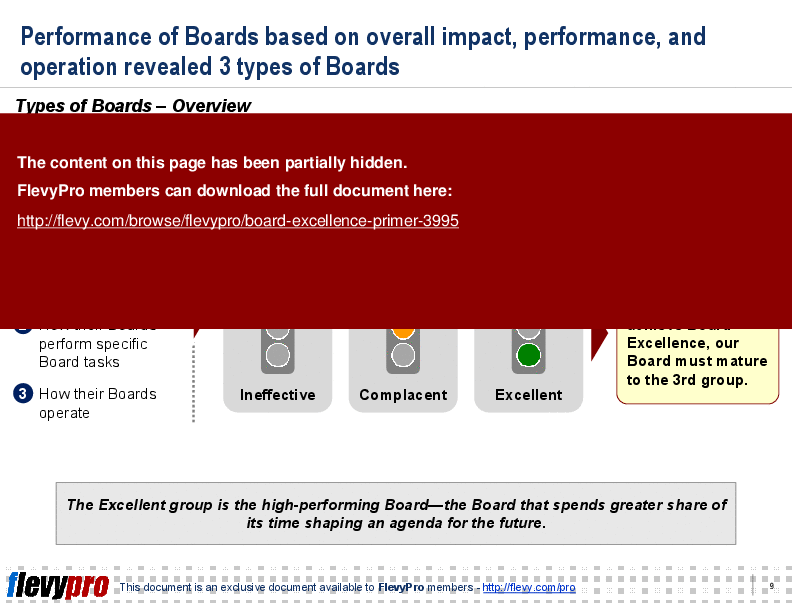
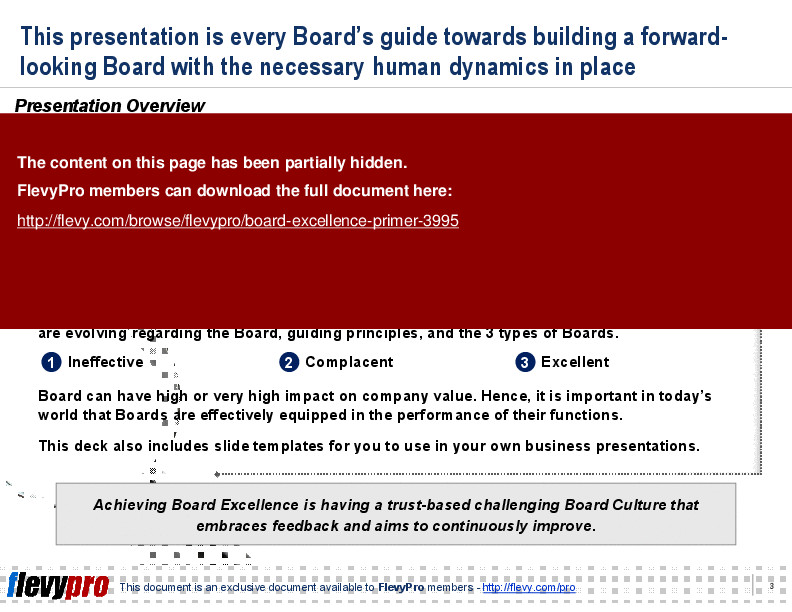
This primer provides the Board and Management the essential guide and foundation towards as value-creating Board on its way to achieving Board Excellence. It discusses current trends that are evolving regarding the Board, guiding principles, and the 3 types of Boards.
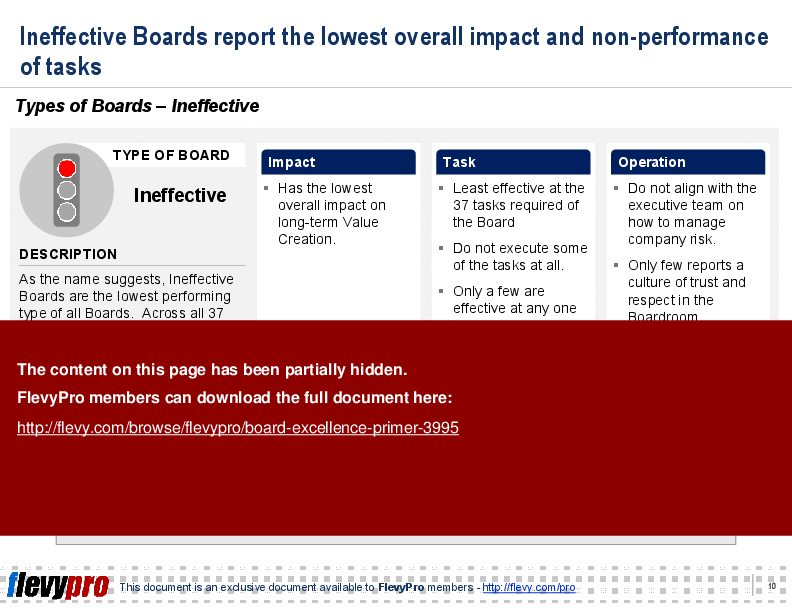
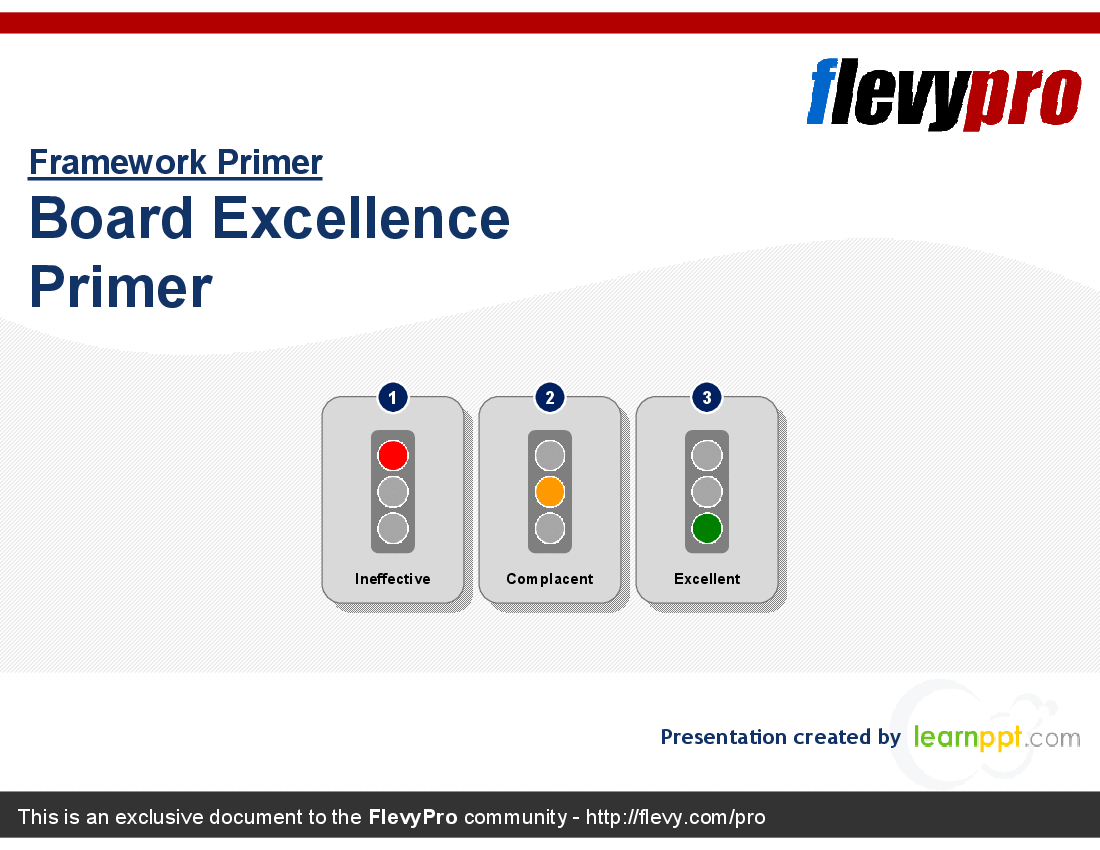
1. Ineffective
2. Complacent
3. Excellent
Board can have high or very high impact on company value. Hence, it is important in today's world that Boards are effectively equipped in the performance of their functions.
This deck also includes slide templates for you to use in your own business presentations.
The Board Excellence Primer also delves into the critical aspect of time allocation, showing a marked increase in the number of days directors now spend on board work compared to previous years. This shift underscores the growing importance of strategic involvement and performance management. The PPT highlights how effective boards are those that continuously adjust strategies based on changing conditions and set comprehensive frameworks for performance reviews.
The primer categorizes boards into three types: Ineffective, Complacent, and Excellent. Each type is analyzed based on their impact, task performance, and operational alignment. Excellent boards are noted for their high impact on value creation and their superior effectiveness across various tasks. The document also emphasizes the importance of a strong culture and feedback mechanisms, which are pivotal for achieving board excellence.
Got a question about this document? Email us at flevypro@flevy.com.
Executive Summary
The Board Excellence Primer is a comprehensive presentation designed to guide corporate boards towards achieving excellence in governance and strategic oversight. Developed by former consultants from McKinsey and the Big 4, this resource emphasizes the importance of a trust-based, feedback-oriented board culture. It highlights the increasing time commitment of board directors to strategic initiatives and provides insights into the evolving landscape of board responsibilities. This primer serves as a foundational tool for boards aiming to enhance their effectiveness and impact on company value.
Who This Is For and When to Use
• Corporate board members seeking to enhance governance practices
• Executive teams looking to align with board strategies
• Consultants advising organizations on board effectiveness
• Governance professionals focused on best practices in board operations
Best-fit moments to use this deck:
• During board retreats focused on strategic planning
• When onboarding new board members to establish expectations
• In workshops aimed at improving board dynamics and culture
• For evaluations of current board performance and effectiveness
Learning Objectives
• Define the characteristics of effective boards and the journey towards excellence
• Identify current trends impacting board operations and strategies
• Assess the performance of boards based on established metrics
• Develop a framework for continuous improvement in board governance
• Create actionable plans for enhancing board engagement and effectiveness
• Foster a culture of trust and constructive feedback within the boardroom
Table of Contents
• Overview (page 3)
• Trends (page 5)
• Types of Boards (page 9)
• Board Excellence (page 15)
• Templates (page 21)
Primary Topics Covered
• Overview of Board Excellence - The presentation outlines the significance of a forward-looking board culture that prioritizes trust and continuous improvement.
• Trends in Board Engagement - Insights into the increasing time commitment of board directors and their focus on strategic issues.
• Types of Boards - Classification of boards into 3 categories: Ineffective, Complacent, and Excellent, based on their performance and impact.
• Guiding Principles for Excellence - Key principles that boards should adopt to enhance their effectiveness, including time investment and fostering a culture of feedback.
• Long-term Mindset Development - Strategies for boards to adopt a forward-looking approach that emphasizes long-term value creation.
• High Impact and Strategic Focus - Areas of discussion that boards should prioritize to enhance strategic alignment and decision-making.
Deliverables, Templates, and Tools
• Board performance assessment templates to evaluate effectiveness
• Frameworks for establishing a culture of trust and feedback
• Guidelines for conducting board evaluations and training
• Action plans for strategic engagement and improvement
• Templates for documenting board meeting outcomes and follow-ups
• Resources for onboarding new board members effectively
Slide Highlights
• Overview of the 3 types of boards and their characteristics
• Trends showcasing the increasing time commitment of board directors
• Visual representations of board performance metrics and assessments
• Frameworks for enhancing board dynamics and culture
• Key principles for achieving board excellence
Potential Workshop Agenda
Board Effectiveness Workshop (90 minutes)
• Discuss the characteristics of effective boards
• Review current trends impacting board operations
• Identify areas for improvement in board dynamics
Strategic Planning Session (120 minutes)
• Align on strategic priorities for the upcoming year
• Develop action plans for enhancing board engagement
• Establish metrics for evaluating board performance
Customization Guidance
• Tailor the templates to reflect specific organizational contexts and governance structures
• Adjust the performance metrics based on industry benchmarks and best practices
• Incorporate organizational terminology and frameworks for clarity
• Update case studies and examples to align with current challenges faced by the board
Secondary Topics Covered
• The role of the board chair in fostering effective governance
• Best practices for board member induction and training
• Strategies for managing board-staff relationships
• The importance of succession planning within the board context
• Mechanisms for ongoing board development and evaluation
Topic FAQ
Document FAQ
These are questions addressed within this presentation.
What is the purpose of the Board Excellence Primer?
The primer serves as a guide for boards to enhance their governance practices, focusing on strategic oversight and effective board dynamics.
Who can benefit from this presentation?
Corporate board members, executive teams, governance professionals, and consultants will find valuable insights and frameworks within this presentation.
How does the primer address current trends in board governance?
It highlights the increasing time commitment of directors and their focus on strategic issues, providing actionable insights for improvement.
What are the 3 types of boards discussed in the presentation?
The presentation categorizes boards as Ineffective, Complacent, and Excellent, based on their performance and impact on value creation.
What are the guiding principles for achieving board excellence?
Key principles include spending more time on board work, balancing trust with challenging discourse, and appointing an ambitious chair.
How can boards develop a long-term mindset?
By focusing on essential tactics such as studying the external landscape and participating in strategy development.
What templates are included in the presentation?
Templates for performance assessments, action plans, and meeting documentation are provided to facilitate implementation.
How can this presentation be customized for specific organizations?
Users can tailor templates, adjust performance metrics, and incorporate organizational terminology to fit their context.
What is the significance of fostering a culture of trust within the board?
A culture of trust enhances collaboration, encourages open feedback, and improves overall board effectiveness.
Glossary
• Board Excellence - The state of achieving high performance and impact in board governance.
• Ineffective Board - A board that fails to perform essential tasks and lacks overall impact.
• Complacent Board - A board that performs adequately, but lacks proactive engagement and improvement.
• Excellent Board - A high-performing board that demonstrates effectiveness across all tasks.
• Governance - The framework of rules and practices by which a board ensures accountability and transparency.
• Strategic Oversight - The board's role in guiding and monitoring the organization's strategic direction.
• Trust-Based Culture - An environment where board members feel safe to express opinions and provide feedback.
• Feedback Mechanism - Processes established to gather input on board performance and meeting effectiveness.
• Long-Term Mindset - A focus on sustainable value creation and strategic foresight in decision-making.
• Succession Planning - The process of identifying and developing new leaders to fill key positions within the board.
• Performance Metrics - Standards used to evaluate the effectiveness and impact of board activities.
• Induction Training - Programs designed to onboard new board members and familiarize them with their roles.
Source: Best Practices in Strategy Development, Board PowerPoint Slides: Board Excellence Primer PowerPoint (PPT) Presentation Slide Deck, LearnPPT Consulting
Did you need more documents?
Consider a FlevyPro subscription from $39/month. View plans here.
For $10.00 more, you can download this document plus 2 more FlevyPro documents. That's just $13 each.
|
Download our FREE Strategy & Transformation Framework Templates
Download our free compilation of 50+ Strategy & Transformation slides and templates. Frameworks include McKinsey 7-S, Balanced Scorecard, Disruptive Innovation, BCG Curve, and many more. |