
This framework is developed by a team of former McKinsey and Big 4 consultants. The presentation follows the headline-body-bumper slide format used by global consulting firms.
Explore the Model Context Protocol (MCP) framework, crafted by ex-McKinsey & Big 4 consultants, to streamline AI agent integration across enterprise systems. Agentic AI: Model Context Protocol (MCP) is a 28-slide PPT PowerPoint presentation slide deck (PPTX) available for immediate download upon purchase.
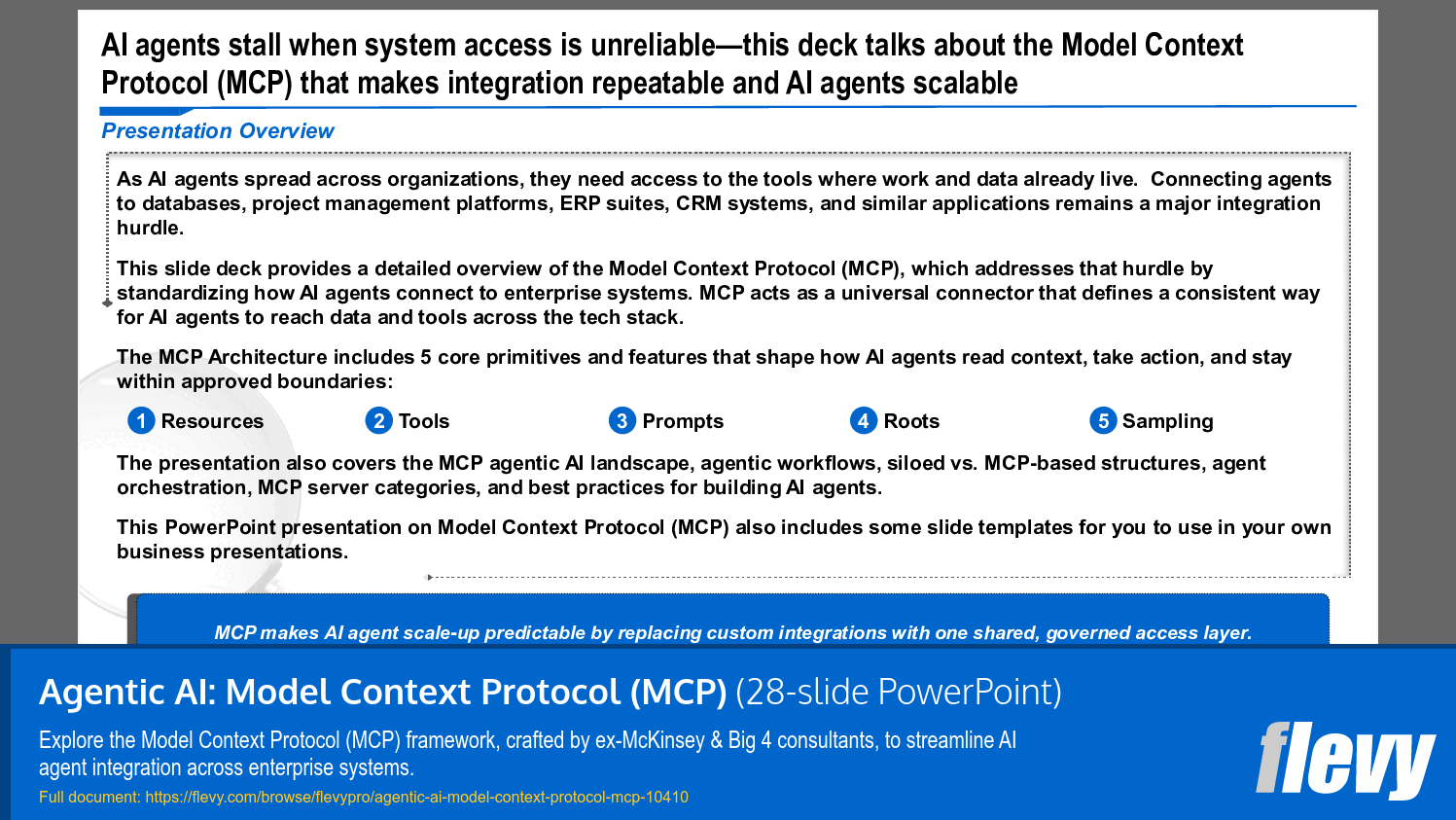
As AI agents spread across organizations, they need access to the tools where work and data already live. Connecting agents to databases, project management platforms, ERP suites, CRM systems, and similar applications remains a major integration hurdle.
This slide deck provides a detailed overview of the Model Context Protocol (MCP), which addresses that hurdle by standardizing how AI agents connect to enterprise systems. MCP acts as a universal connector that defines a consistent way for AI agents to reach data and tools across the tech stack. MCP makes AI agent scale-up predictable by replacing custom integrations with one shared, governed access layer.
The MCP Architecture includes 5 core primitives and features that shape how AI agents read context, take action, and stay within approved boundaries:
The PPT presentation also covers the MCP agentic AI landscape, agentic workflows, siloed vs. MCP-based structures, agent orchestration, MCP server categories, and best practices for building AI agents.
This PowerPoint presentation on Model Context Protocol (MCP) also includes some slide templates for you to use in your own business presentations.
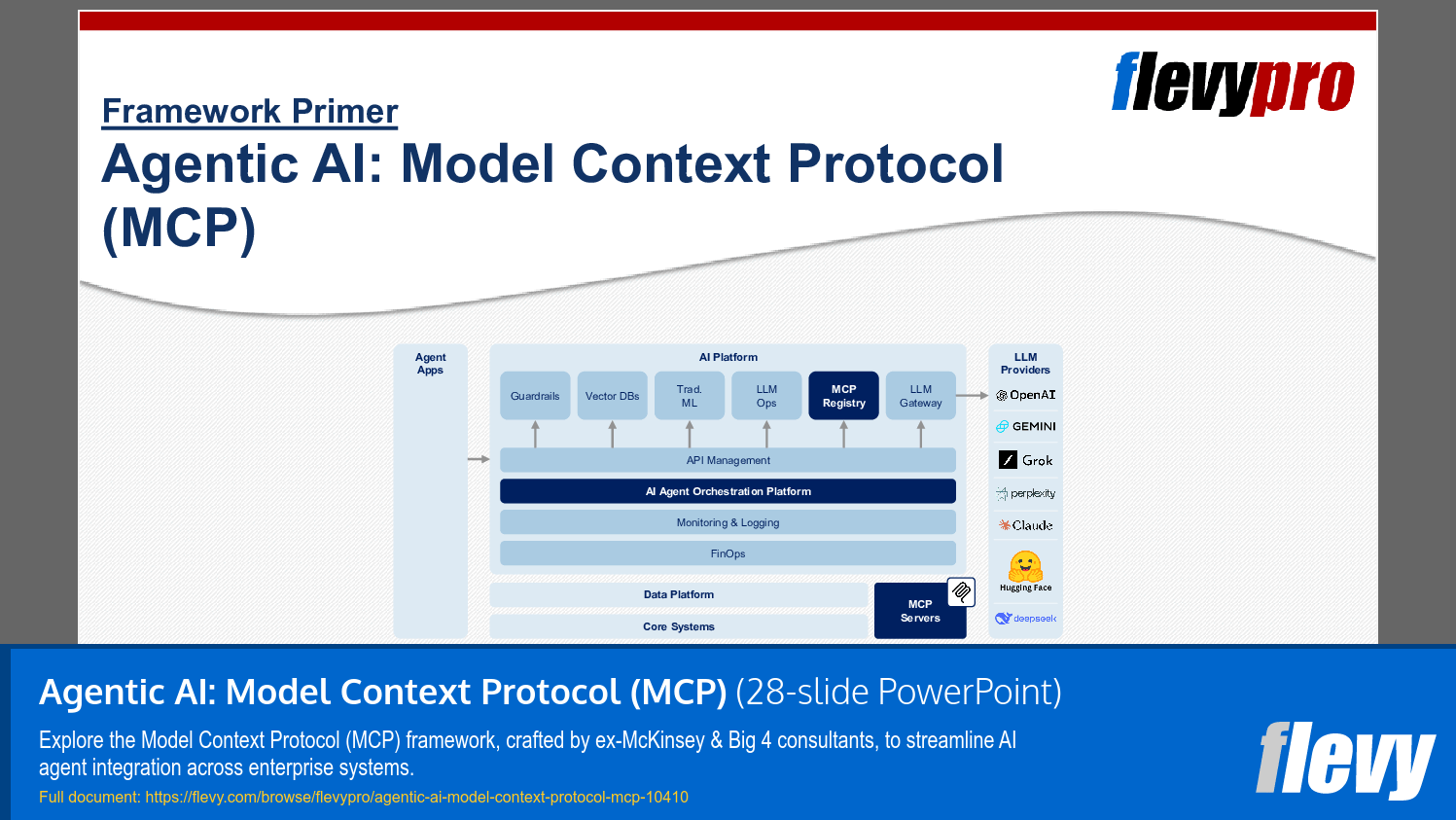
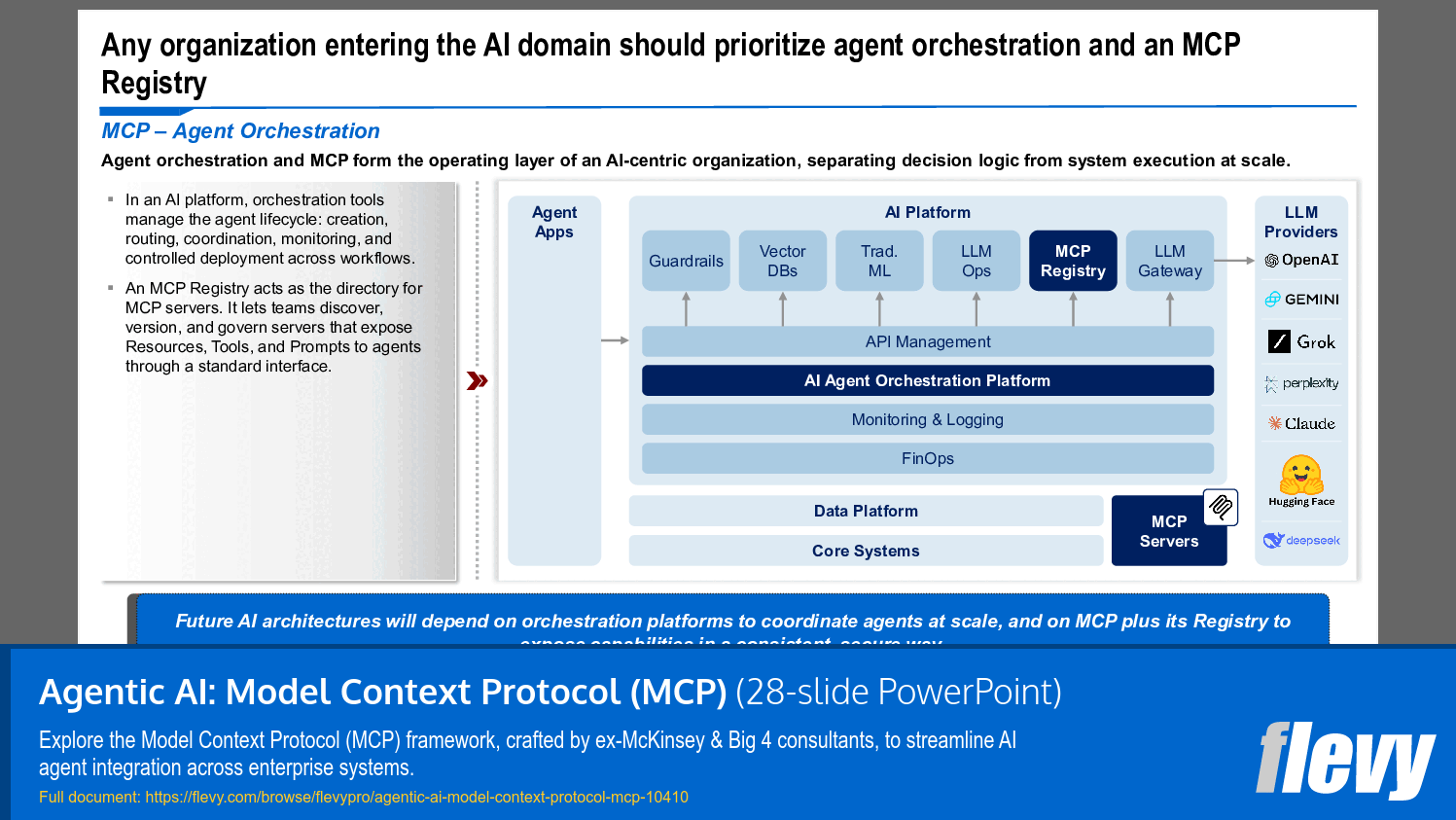
This PPT slide emphasizes the need for a dedicated agent orchestration layer and an MCP registry in AI implementation. Agent orchestration manages the lifecycle of AI agents—creation, routing, and deployment—while the MCP registry acts as a central directory for MCP servers. A clear separation between decision logic and system execution is crucial for scaling AI operations. The MCP registry facilitates efficient discovery, versioning, and governance of servers. The architecture coordinates AI agents with core systems, data platforms, and third-party LLM providers. Prioritizing agent orchestration and registry setup early simplifies complex workflows, enhances governance, and ensures scalable deployment, supporting long-term AI scaling and operational consistency.
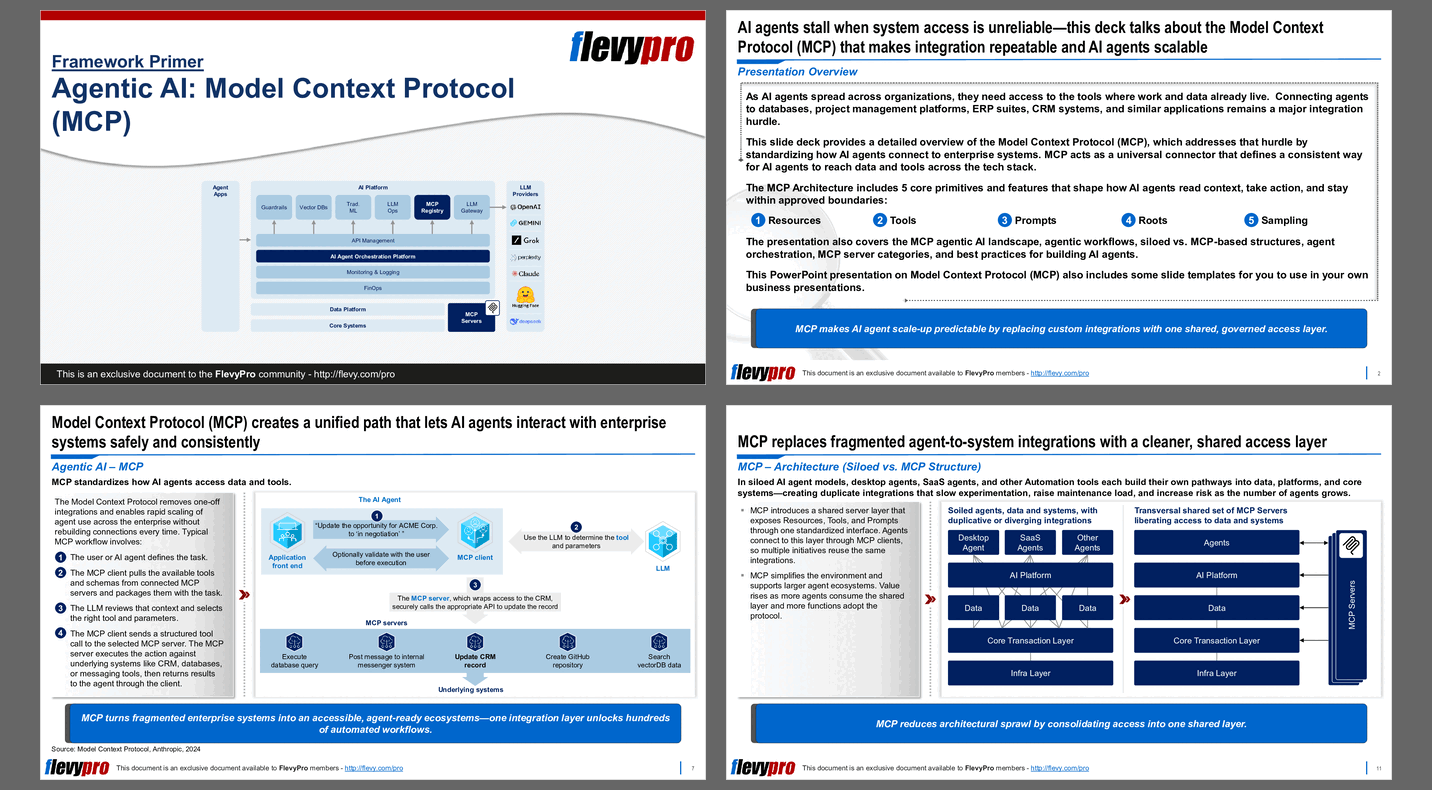
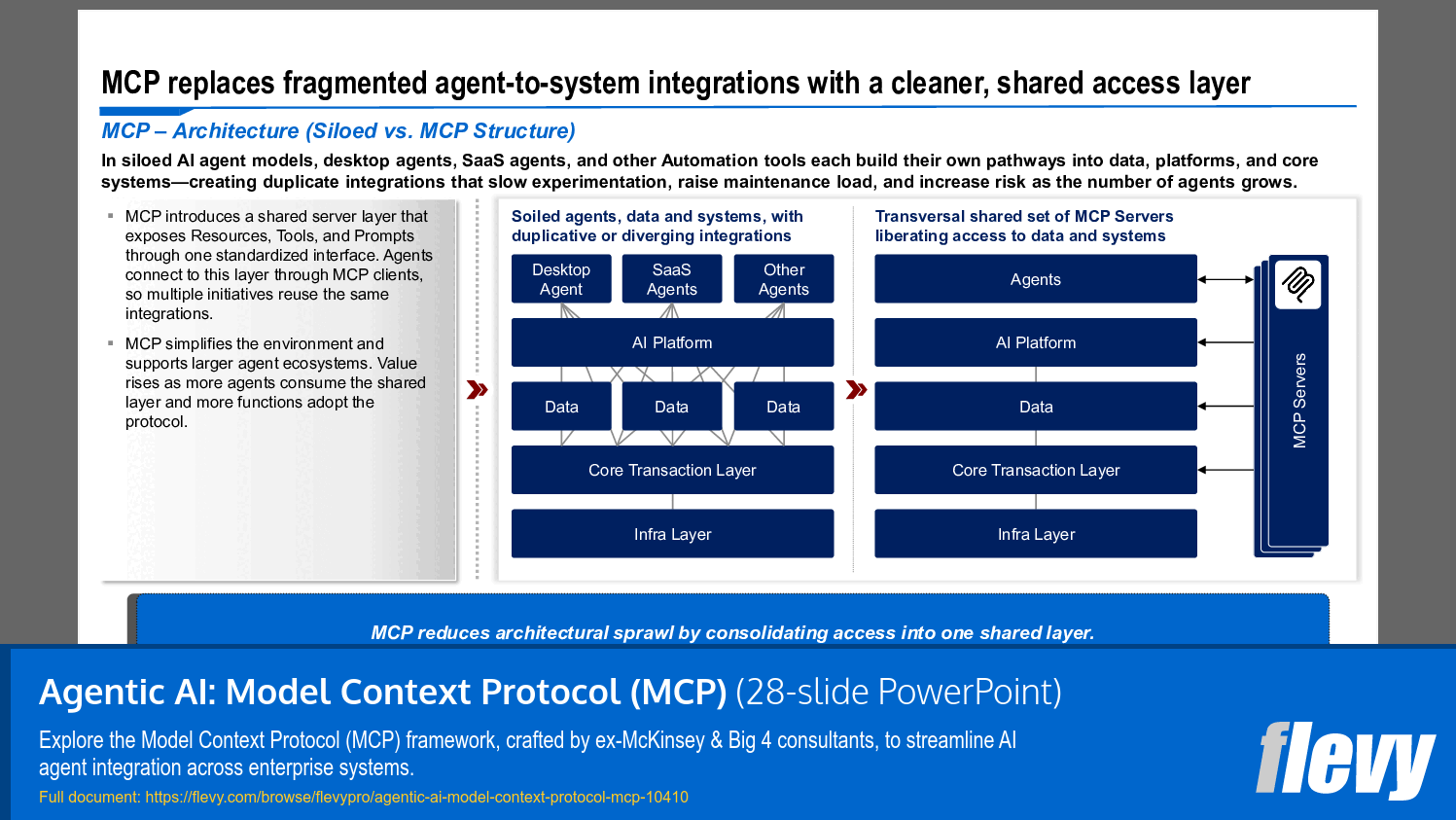
This PPT slide provides an overview of the Model Context Protocol (MCP), which replaces fragmented agent-to-system integrations with a unified access layer. MCP consolidates various AI agent models—desktop agents, SaaS agents, and automation tools—into a common architecture. It creates a shared server layer that reduces redundant integrations, streamlining multiple initiatives that reuse the same integrations. This architecture supports scalability as more agents adopt the shared protocol. The diagram illustrates how data, AI platforms, and agents interconnect through the MCP server infrastructure, facilitating seamless data flow. MCP reduces sprawl by consolidating access into a single layer, simplifying management and scaling of automation efforts.
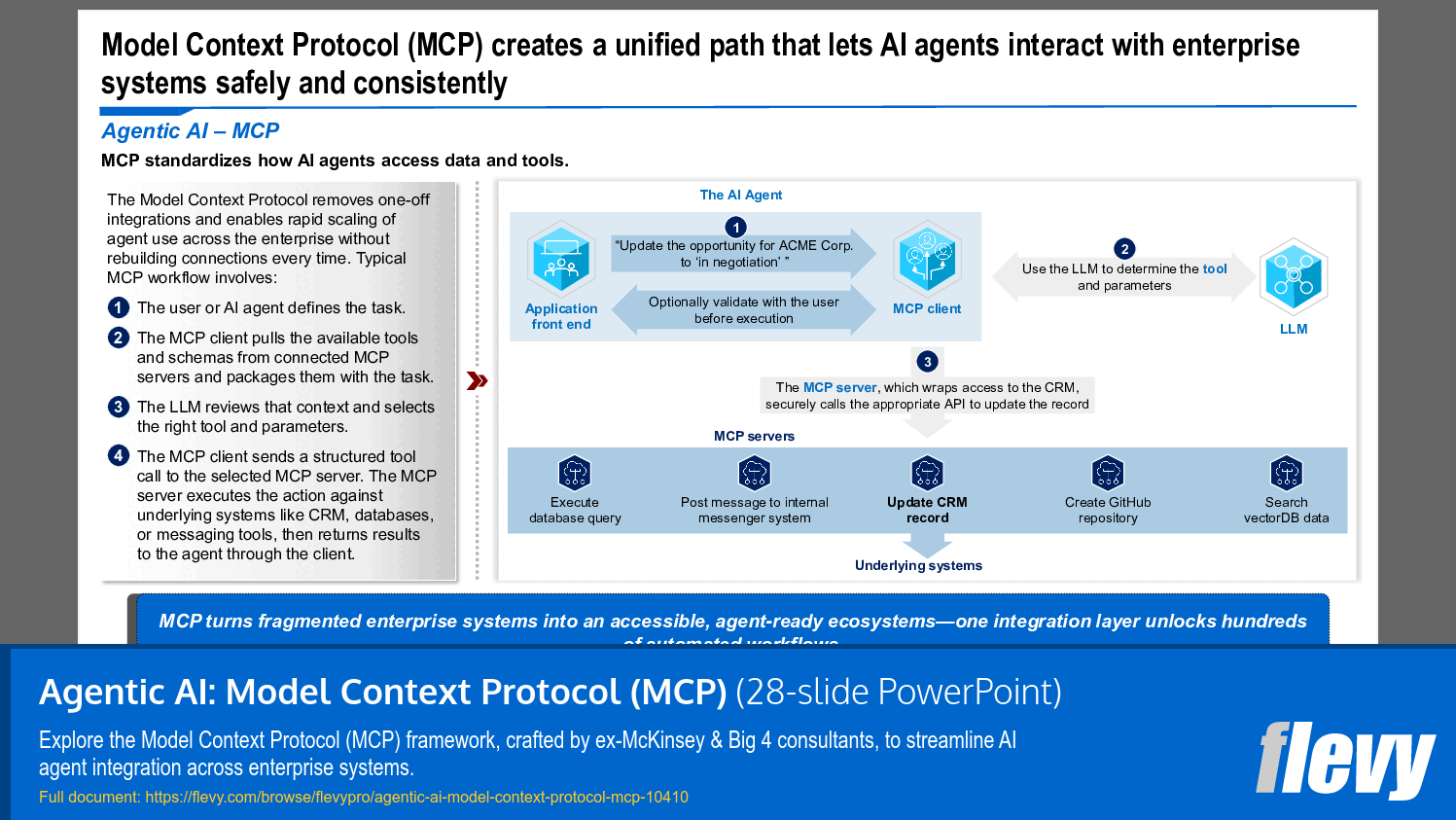
This PPT slide introduces the Model Context Protocol (MCP), which creates a unified pathway for AI agents to interact securely with enterprise systems. MCP eliminates repetitive integrations, enabling rapid scaling of AI use cases without rebuilding connections. The process begins with the user or AI agent defining a task, followed by the MCP client pulling tools and schemas from connected servers. The LLM reviews context to select appropriate tools and parameters. The AI agent communicates with the MCP server, managing API calls to databases, CRM, and repositories, executing queries, updating records, and creating repositories. MCP acts as a bridge, ensuring secure and consistent interactions across enterprise tools and data sources. Its architecture simplifies AI integration, reduces complexity, and supports automation at scale, enhancing system interoperability and enabling dynamic enterprise operations.
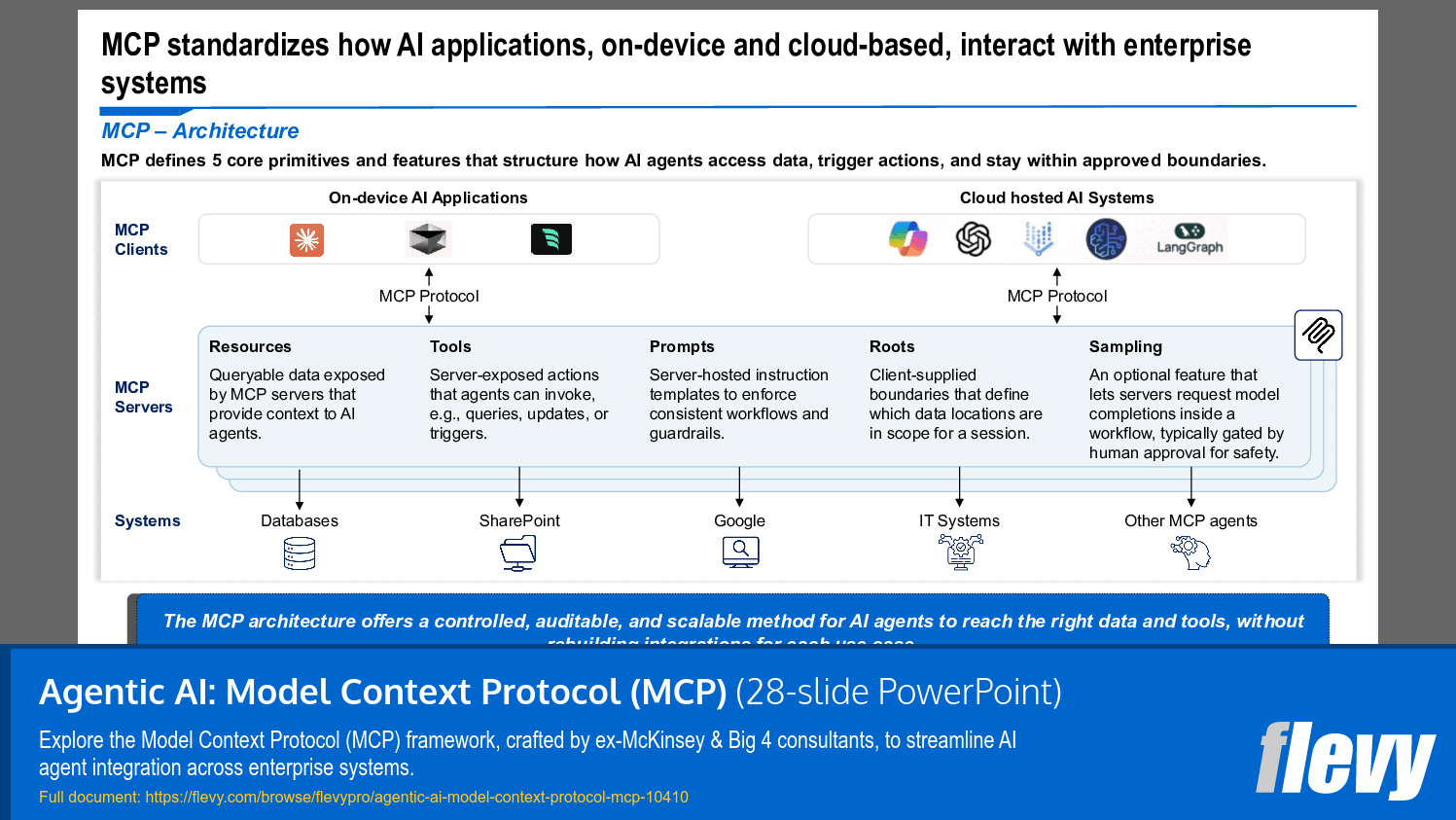
The Model Context Protocol (MCP) standardizes AI applications across enterprise systems, both on-device and cloud-based. MCP is a framework that structures how AI agents access data, trigger actions, and operate within approved boundaries. On-device AI applications communicate via the MCP protocol with clients connecting to MCP servers, which provide resources like data, tools, prompts, and sampling features. These servers interface with systems such as databases and IT platforms, enabling AI integration. Cloud-hosted AI systems also utilize the MCP protocol, ensuring consistent interaction with enterprise resources. MCP enforces controlled, scalable, and auditable AI integration, creating a unified architecture that simplifies AI deployment across diverse applications.
Source: Best Practices in Enterprise Architecture, Automation, Agentic AI PowerPoint Slides: Agentic AI: Model Context Protocol (MCP) PowerPoint (PPTX) Presentation Slide Deck, LearnPPT Consulting
This framework is developed by a team of former McKinsey and Big 4 consultants. The presentation follows the headline-body-bumper slide format used by global consulting firms.
For $10.00 more, you can download this document plus 2 more FlevyPro documents. That's just $13 each.
ABOUT FLEVYPRO
This document is part of the FlevyPro Library, a curated knowledge base of documents for our FlevyPro subscribers.

FlevyPro is a subscription service for on-demand business frameworks and analysis tools. FlevyPro subscribers receive access to an exclusive library of curated business documents—business framework primers, presentation templates, Lean Six Sigma tools, and more—among other exclusive benefits.
The average daily rate of a McKinsey consultant is $6,625 (not including expenses). The average price of a Flevy document is $65.
Trusted by over 10,000+ Client Organizations
Since 2012, we have provided business templates to over 10,000 businesses and organizations of all sizes, from startups and small businesses to the Fortune 100, in over 130 countries.
"The wide selection of frameworks is very useful to me as an independent consultant. In fact, it rivals what I had at my disposal at Big 4 Consulting firms in terms of efficacy and organization."
– Julia T., Consulting Firm Owner (Former Manager at Deloitte and Capgemini)
"Flevy is our 'go to' resource for management material, at an affordable cost. The Flevy library is comprehensive and the content deep, and typically provides a great foundation for us to further develop and tailor our own service offer."
– Chris McCann, Founder at Resilient.World
"My FlevyPro subscription provides me with the most popular frameworks and decks in demand in today’s market. They not only augment my existing consulting and coaching offerings and delivery, but also keep me abreast of the latest trends, inspire new products and service offerings for my practice, and educate me
in a fraction of the time and money of other solutions. I strongly recommend FlevyPro to any consultant serious about success.
"
– Bill Branson, Founder at Strategic Business Architects
"As a small business owner, the resource material available from FlevyPro has proven to be invaluable. The ability to search for material on demand based our project events and client requirements was great for me and proved very beneficial to my clients. Importantly, being able to easily edit and tailor
the material for specific purposes helped us to make presentations, knowledge sharing, and toolkit development, which formed part of the overall program collateral. While FlevyPro contains resource material that any consultancy, project or delivery firm must have, it is an essential part of a small firm or independent consultant's toolbox.
"
– Michael Duff, Managing Director at Change Strategy (UK)
"I like your product. I'm frequently designing PowerPoint presentations for my company and your product has given me so many great ideas on the use of charts, layouts, tools, and frameworks. I really think the templates are a valuable asset to the job."
– Roberto Fuentes Martinez, Senior Executive Director at Technology Transformation Advisory
"I am extremely grateful for the proactiveness and eagerness to help and I would gladly recommend the Flevy team if you are looking for data and toolkits to help you work through business solutions."
– Trevor Booth, Partner, Fast Forward Consulting
"As an Independent Management Consultant, I find Flevy to add great value as a source of best practices, templates and information on new trends. Flevy has matured and the quality and quantity of the library is excellent. Lastly the price charged is reasonable, creating a win-win value for
the customer, Flevy and the various authors. This is truly a service that benefits the consulting industry and associated clients. Thanks for providing this service.
"
– Jim Schoen, Principal at FRC Group
"If you are looking for great resources to save time with your business presentations, Flevy is truly a value-added resource. Flevy has done all the work for you and we will continue to utilize Flevy as a source to extract up-to-date information and data for our virtual and onsite presentations!"
Download our FREE Digital Transformation Templates
Download our free compilation of 50+ Digital Transformation slides and templates. DX concepts covered include Digital Leadership, Digital Maturity, Digital Value Chain, Customer Experience, Customer Journey, RPA, etc.
Download our FREE Digital Transformation Templates
Get Our FREE Product.
Download our free compilation of 50+ Digital Transformation slides and templates. DX concepts covered include Digital Leadership, Digital Maturity, Digital Value Chain, Customer Experience, Customer Journey, RPA, etc.