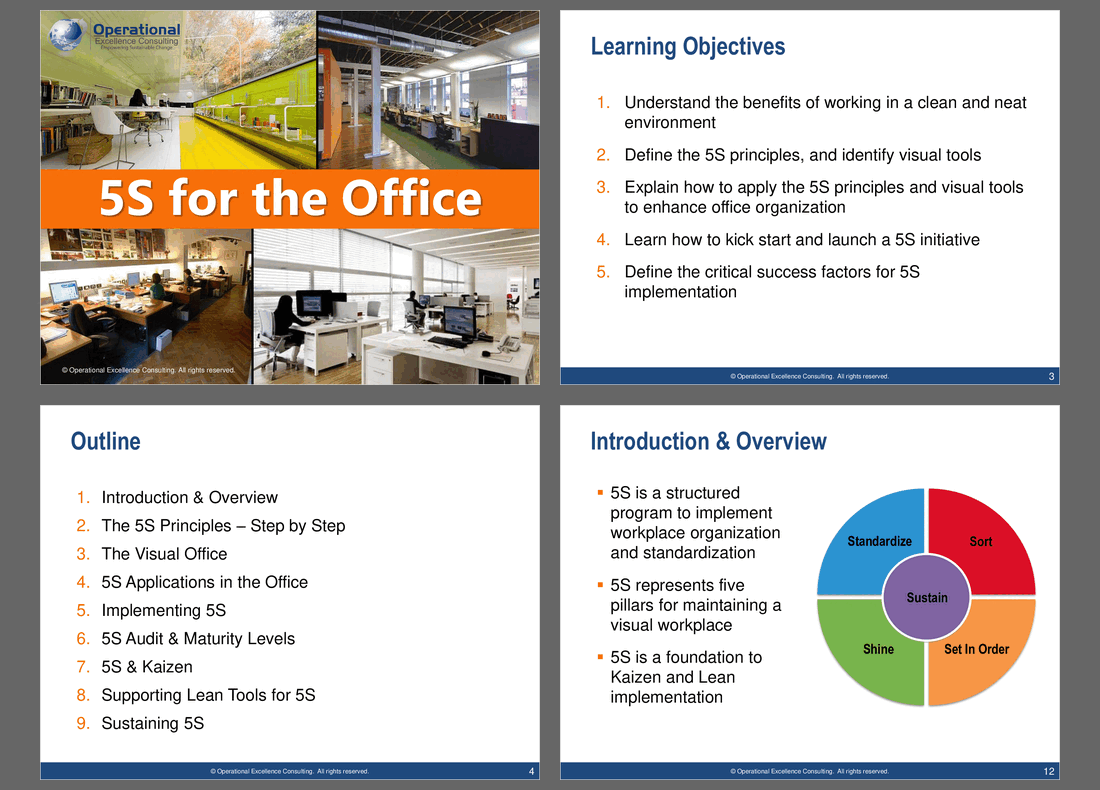
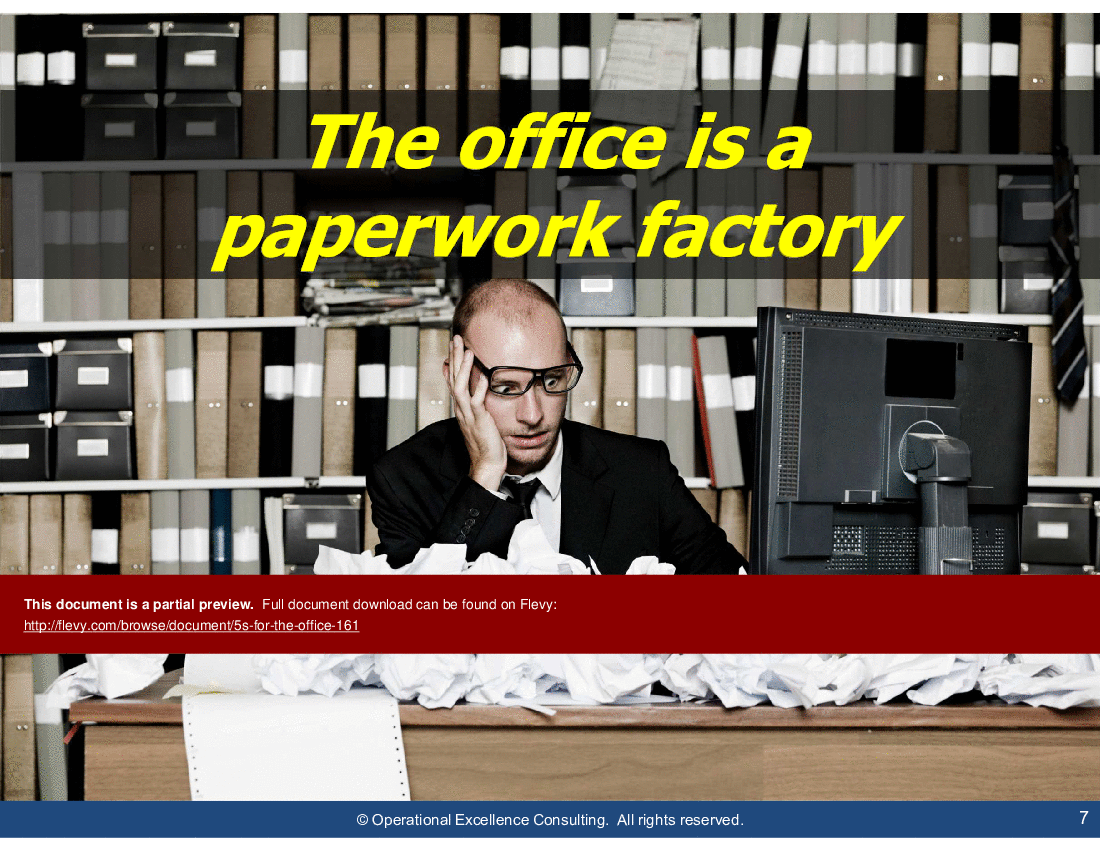
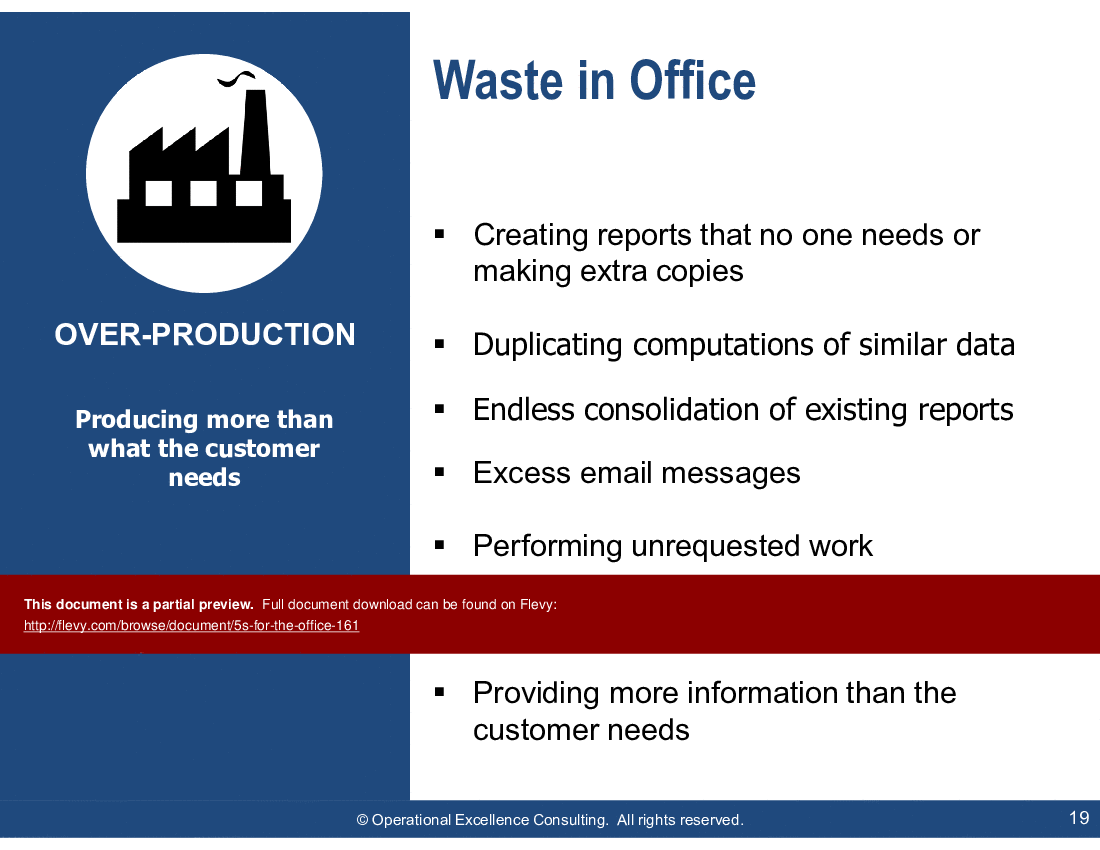
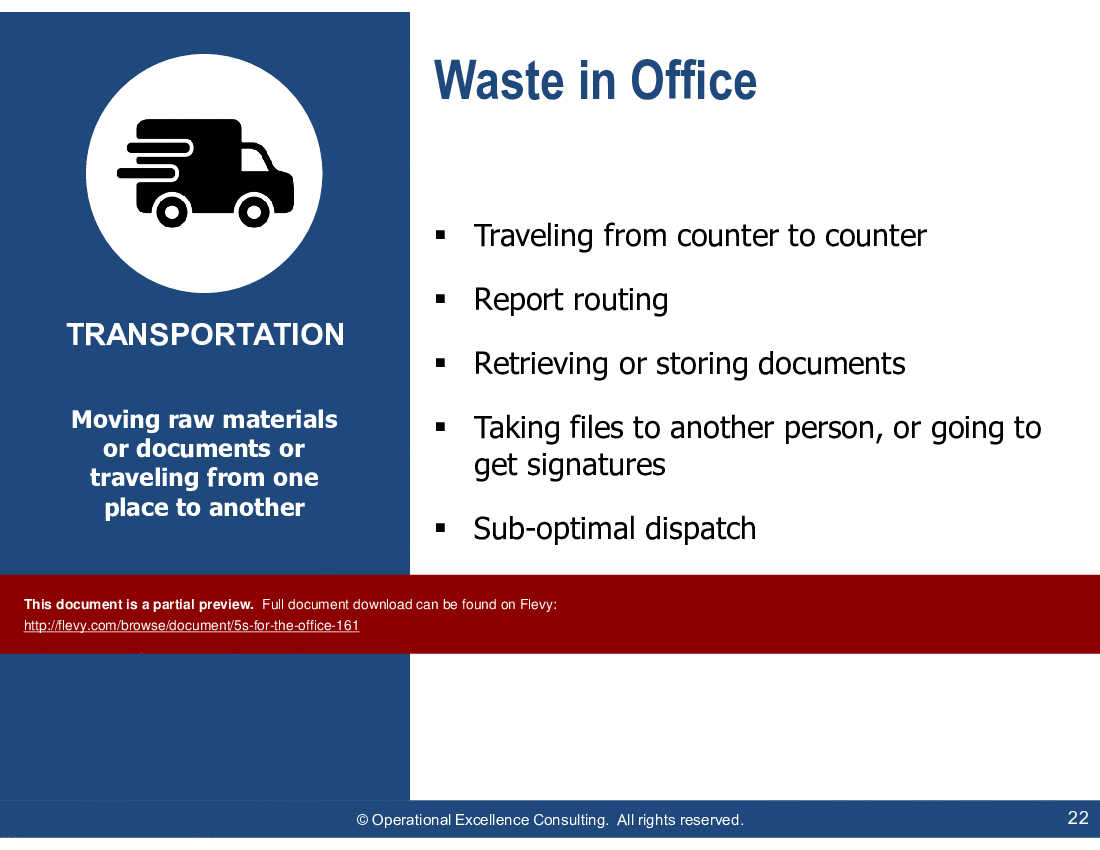

The office, by any name, is a paperwork factory. To become a Lean enterprise, office activities must fully support shop-floor manufacturing operations to eliminate waste. The adoption of 5S throughout all office functions is the first step to increase efficiency. 5S principles are dedicated to organizing the workplace, keeping it neat and clean, and maintaining the standardized conditions and discipline needed to do a good job.
This presentation provides a blueprint for building a Lean foundation for your office. You will learn how to mobilize and align your management team to launch or improve 5S in your office. The presentation covers 5S and Visual Management key concepts, best practices, step-by-step implementation guidance, and how to kick-start 5S in your organization to achieve sustainable world-class excellence.
||||||||||||||||||||||||||||||||||||||||||||||||||||||||||||||||||||||||||||||||||||||||||||||||||||||||||||||||||||||||||||||||||||||||||||||||||||||
This training package includes:
1. 5S for the Office training presentation (PowerPoint format)
2. Office 5S poster (PDF format, in color and monochrome, printable in A3/A4 size)
||||||||||||||||||||||||||||||||||||||||||||||||||||||||||||||||||||||||||||||||||||||||||||||||||||||||||||||||||||||||||||||||||||||||||||||||||||||
LEARNING OBJECTIVES
1. Understand the benefits of working in a clean and neat environment.
2. Identify waste in the office.
3. Define the 5S principles, and identify visual tools.
4. Explain how to apply the 5S principles and visual tools to enhance office organization.
5. Learn how to kick start a 5S initiative.
6. Define the critical success factors for 5S implementation.
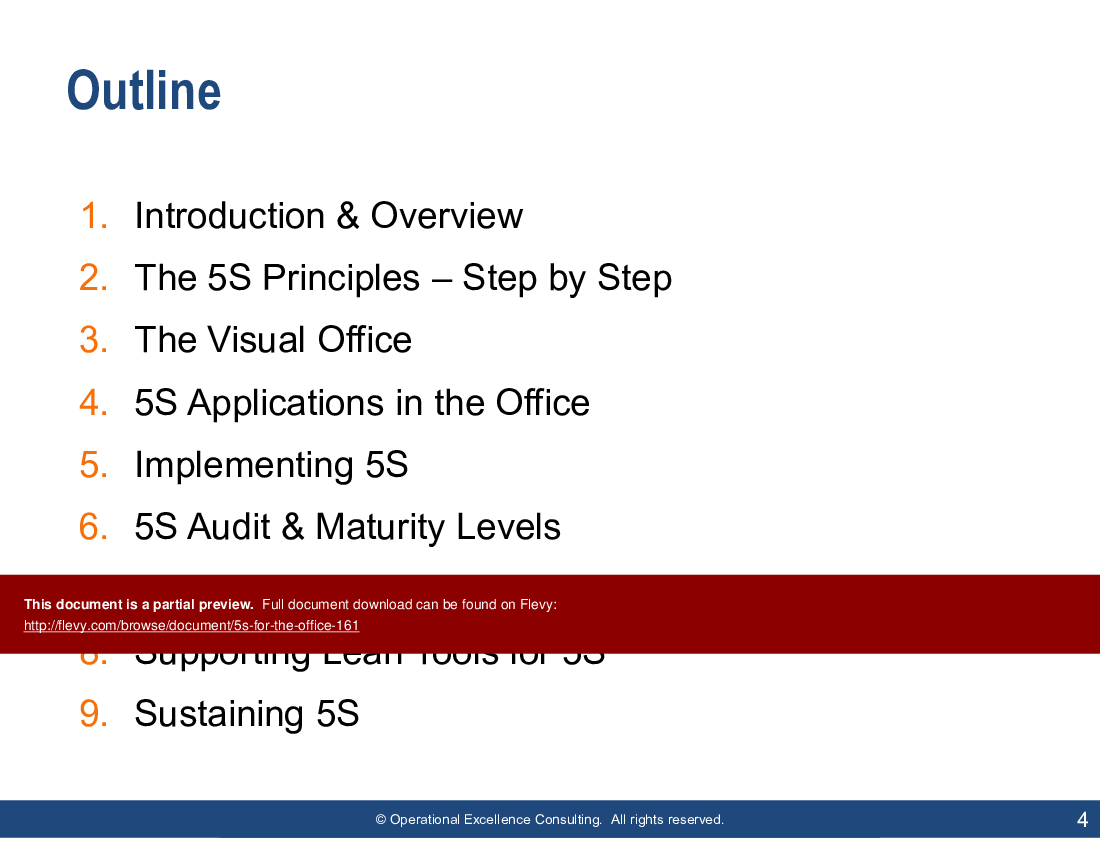
CONTENTS
1. Introduction & Overview
2. The 5S Principles – Step by Step
3. The Visual Office
4. 5S Applications in the Office
5. Implementing 5S
6. 5S Audit & Maturity Levels
7. 5S & Kaizen
8. Supporting Lean Tools for 5S
9. Sustaining 5S
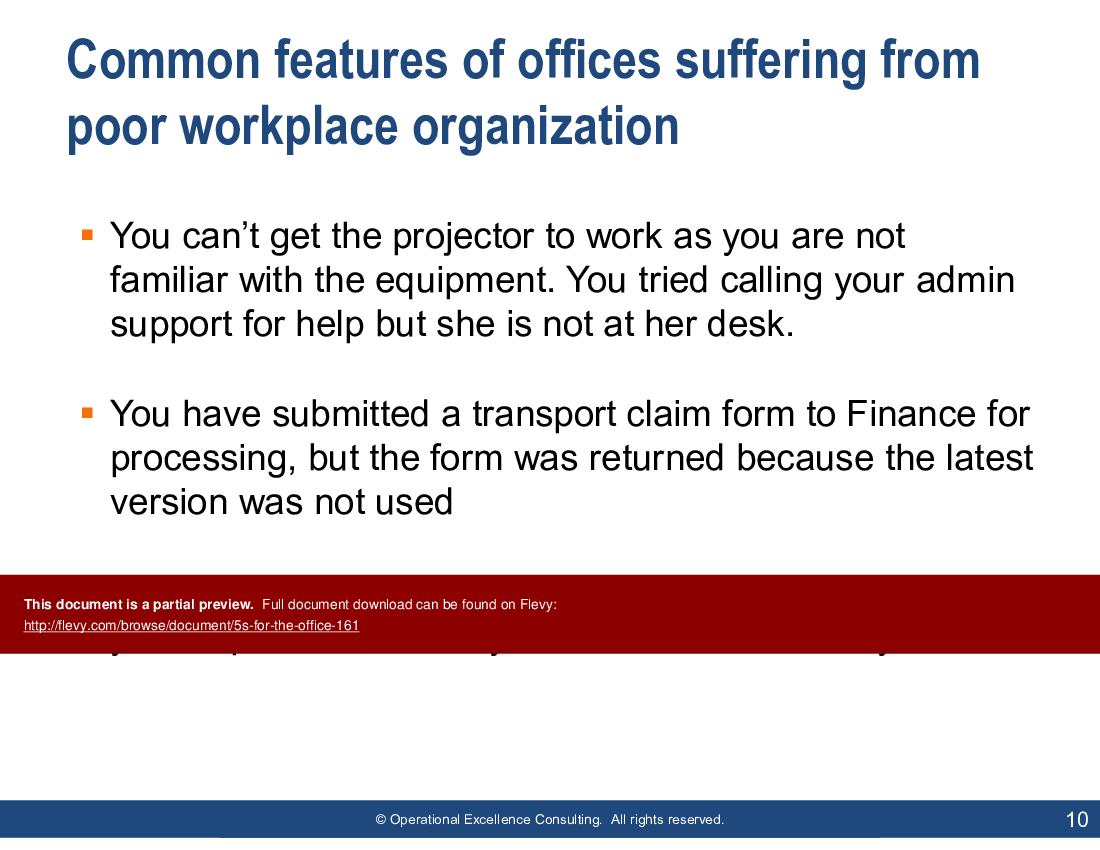
This comprehensive guide dives deep into the practical aspects of 5S implementation, offering actionable insights and real-world examples. It highlights common pitfalls in office organization and provides step-by-step instructions on conducting effective red tag events. The training material emphasizes the importance of visual management and continuous improvement, ensuring that 5S principles are not just implemented, but sustained over time. With detailed practice tips and activity guidelines, this presentation equips your team with the tools needed to maintain a clutter-free, efficient workspace.
Got a question about the product? Email us at support@flevy.com or ask the author directly by using the "Ask the Author a Question" form. If you cannot view the preview above this document description, go here to view the large preview instead.
Executive Summary
The "5S for the Office" presentation is a structured guide designed to implement workplace organization and standardization through the 5S methodology. Developed by a Certified Lean Six Sigma Black Belt with extensive experience at Microsoft, IBM, and Panasonic, this presentation provides actionable insights into creating a clean and efficient office environment. Users will learn to apply the 5S principles—Sort, Set in Order, Shine, Standardize, and Sustain—to enhance productivity, reduce waste, and foster a culture of continuous improvement.
Who This Is For and When to Use
• Office managers seeking to improve workplace organization
• Team leaders responsible for implementing Lean methodologies
• HR professionals aiming to enhance employee engagement through workplace improvements
• Continuous improvement teams focused on operational excellence
Best-fit moments to use this deck:
• During Lean transformation initiatives to establish foundational practices
• In training sessions aimed at introducing 5S principles to staff
• When launching new office layouts or after significant organizational changes
Learning Objectives
• Understand the benefits of maintaining a clean and organized workspace
• Define the 5S principles and identify effective visual tools
• Explain the application of 5S principles to enhance office organization
• Learn how to initiate and launch a 5S initiative successfully
• Identify critical success factors for effective 5S implementation
Table of Contents
• Introduction & Overview (page 1)
• The 5S Principles – Step by Step (page 2)
• The Visual Office (page 3)
• 5S Applications in the Office (page 4)
• Implementing 5S (page 5)
• 5S Audit & Maturity Levels (page 6)
• 5S & Kaizen (page 7)
• Supporting Lean Tools for 5S (page 8)
• Sustaining 5S (page 9)
Primary Topics Covered
• 5S Principles - The 5 pillars of 5S—Sort, Set in Order, Shine, Standardize, Sustain—provide a framework for workplace organization and efficiency.
• Visual Management - Techniques to communicate information effectively using visual signals, enhancing clarity and immediate recognition of issues.
• 5S Applications - Practical examples of implementing 5S in various office settings, including desks, meeting rooms, and shared spaces.
• Implementation Roadmap - A step-by-step guide for launching and sustaining a 5S initiative within an organization.
• 5S Audit & Maturity Levels - Tools for assessing the effectiveness of 5S implementation and identifying areas for improvement.
• Kaizen Integration - The role of continuous improvement in sustaining the gains achieved through 5S practices.
Deliverables, Templates, and Tools
• 5S audit checklist for assessing current office conditions
• Visual management templates for tracking progress and performance
• Guidelines for conducting effective 5S training sessions
• Standard operating procedures (SOPs) for maintaining 5S practices
• Communication materials for promoting 5S initiatives within the organization
• Monthly review templates for ongoing assessment and improvement
Slide Highlights
• Overview of the 5S principles with visual representations
• Case studies showcasing before-and-after scenarios of 5S implementation
• Audit results and maturity levels displayed in radar charts
• Practical tips for sustaining 5S practices in daily routines
• Engaging visuals illustrating the importance of a clean and organized workspace
Potential Workshop Agenda
Introduction to 5S (30 minutes)
• Overview of 5S principles and benefits
• Discussion on common office waste and inefficiencies
5S Practical Application (60 minutes)
• Group activity to identify opportunities for Sort and Set in Order
• Hands-on demonstration of Shine techniques
Sustaining 5S (30 minutes)
• Strategies for embedding 5S into daily routines
• Developing a plan for ongoing audits and reviews
Customization Guidance
• Tailor the presentation to reflect specific office layouts and workflows
• Incorporate company-specific terminology and branding into materials
• Adjust the implementation roadmap to align with organizational goals and timelines
• Include local examples and case studies to enhance relatability
Secondary Topics Covered
• The role of management in supporting 5S initiatives
• Employee engagement strategies for sustaining 5S practices
• Integration of 5S with other Lean tools and methodologies
• Visual control techniques for monitoring office organization
• Continuous improvement practices linked to 5S outcomes
FAQ
What is the purpose of 5S?
5S aims to create a clean, organized, and efficient workplace by making problems visible and establishing standards for maintaining order.
How can I implement 5S in my office?
Start by forming a team, conducting an office scan, and applying the 5S principles step-by-step to enhance organization and efficiency.

What are the benefits of a clean workspace?
A clean workspace leads to improved morale, higher productivity, reduced waste, and enhanced customer satisfaction.
How often should 5S audits be conducted?
Regular audits should be performed monthly to assess compliance and identify areas for continuous improvement.
Can 5S be applied to remote work environments?
Yes, the principles of 5S can be adapted to remote work by organizing digital files and maintaining clear communication protocols.
What tools can support 5S implementation?
Visual management tools, audit checklists, and training materials are essential for effective 5S implementation and sustainability.
How do I engage employees in the 5S process?
Encourage participation through training, recognition programs, and involving employees in decision-making related to their workspaces.
What is the relationship between 5S and Kaizen?
5S lays the groundwork for Kaizen by establishing a disciplined approach to workplace organization, which is essential for continuous improvement.
Glossary
• 5S - A methodology for workplace organization consisting of Sort, Set in Order, Shine, Standardize, and Sustain.
• Visual Management - Techniques that use visual signals to communicate information effectively.
• Kaizen - A philosophy of continuous improvement involving all employees.
• Audit Checklist - A tool for assessing the effectiveness of 5S implementation.
• Standard Operating Procedures (SOPs) - Documented guidelines for maintaining 5S practices.
• Continuous Improvement - Ongoing efforts to enhance products, services, or processes.
• Waste - Any activity that does not add value to the customer.
• Employee Engagement - The level of commitment and involvement an employee has towards their organization.
• Lean Methodology - A systematic approach to identifying and eliminating waste.
• Visual Controls - Tools that help maintain standards and identify abnormalities.
• Organizational Culture - The values, beliefs, and behaviors that shape how work gets done within an organization.
• Workplace Organization - The arrangement of tools, materials, and information to enhance efficiency.
• Management Commitment - The support and involvement of leadership in implementing and sustaining initiatives.
• Training Materials - Resources used to educate employees about 5S principles and practices.
• Feedback Mechanisms - Processes for gathering input from employees to improve practices.
• Recognition Programs - Initiatives to acknowledge and reward employees for their contributions to 5S efforts.
• Implementation Team - A group responsible for executing the 5S initiative within an organization.
• Gemba Walk - A practice where leaders observe work processes to identify opportunities for improvement.
• Sustainability - The ability to maintain improvements over time through consistent practices.
Source: Best Practices in Process Improvement, Lean, Visual Workplace, Lean Office PowerPoint Slides: 5S for the Office PowerPoint (PPTX) Presentation Slide Deck, Operational Excellence Consulting
This document is available as part of the following discounted bundle(s):
Save %!
Office 5S Training & Audit Checklist
This bundle contains 2 total documents. See all the documents to the right.
Save %!
5S Consultant Toolkit
This bundle contains 5 total documents. See all the documents to the right.
Save %!
Complete 5S Toolkit
This bundle contains 7 total documents. See all the documents to the right.
|
Receive our FREE presentation on Operational Excellence
This 50-slide presentation provides a high-level introduction to the 4 Building Blocks of Operational Excellence. Achieving OpEx requires the implementation of a Business Execution System that integrates these 4 building blocks. |