
This framework is developed by a team of former McKinsey and Big 4 consultants. The presentation follows the headline-body-bumper slide format used by global consulting firms.
Cost Management Strategies PPT: Learn Target Costing, Kaizen Costing, and Product Costing frameworks to reduce expenses across the product lifecycle. Download now. 5 Cost Management Strategies is a 24-slide PPT PowerPoint presentation slide deck (PPTX) available for immediate download upon purchase.
A commonly quoted statistics is that 80-95% of the cost of a product is determined by its design and is therefore set before the item enters Manufacturing. This assumption suggests that the dominant focus of Cost Management should be during Product Development and not during Manufacturing.
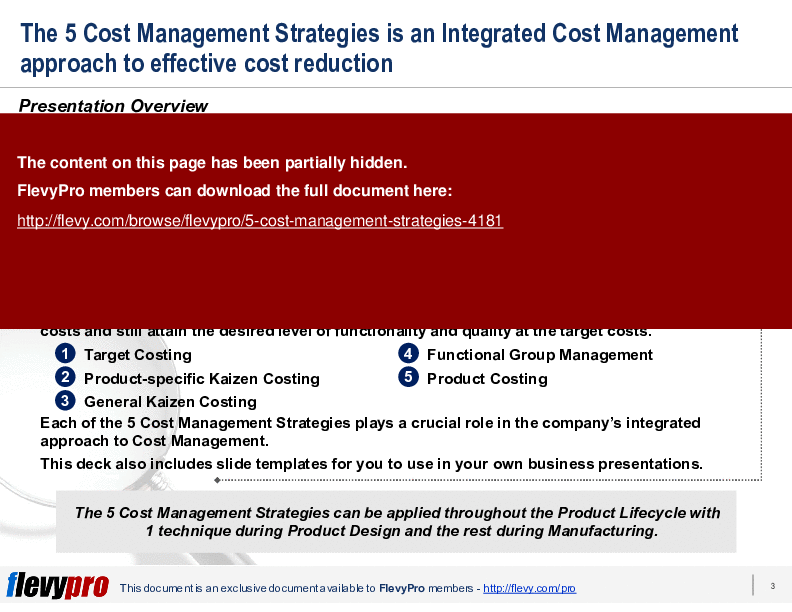
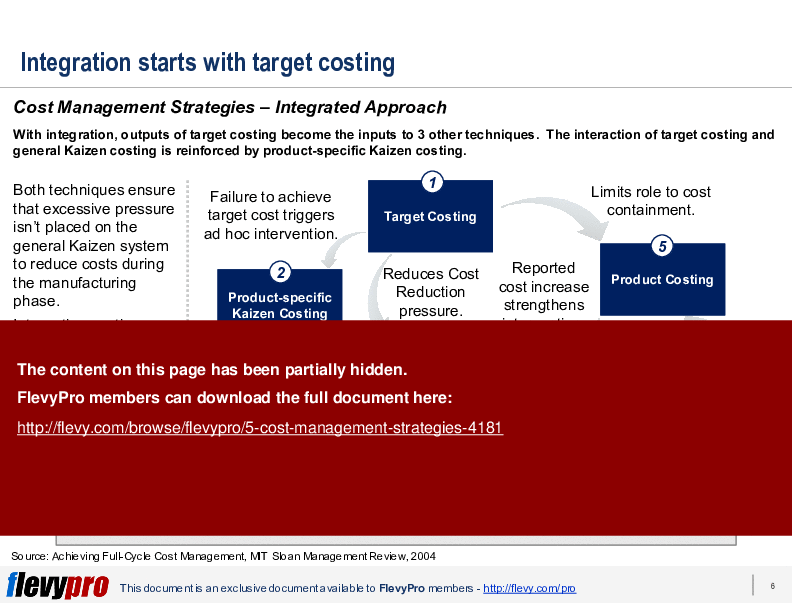
However, contrary to a widely held assumption, companies can integrate a variety of Cost Management techniques not only in the Design phase, but throughout the Product Lifecycle. This is to ensure that there is substantial reduction in costs. In fact, companies competing aggressively on cost might consider the adoption of some form of an Integrated Cost Management program that spans the entire Product Lifecycle.
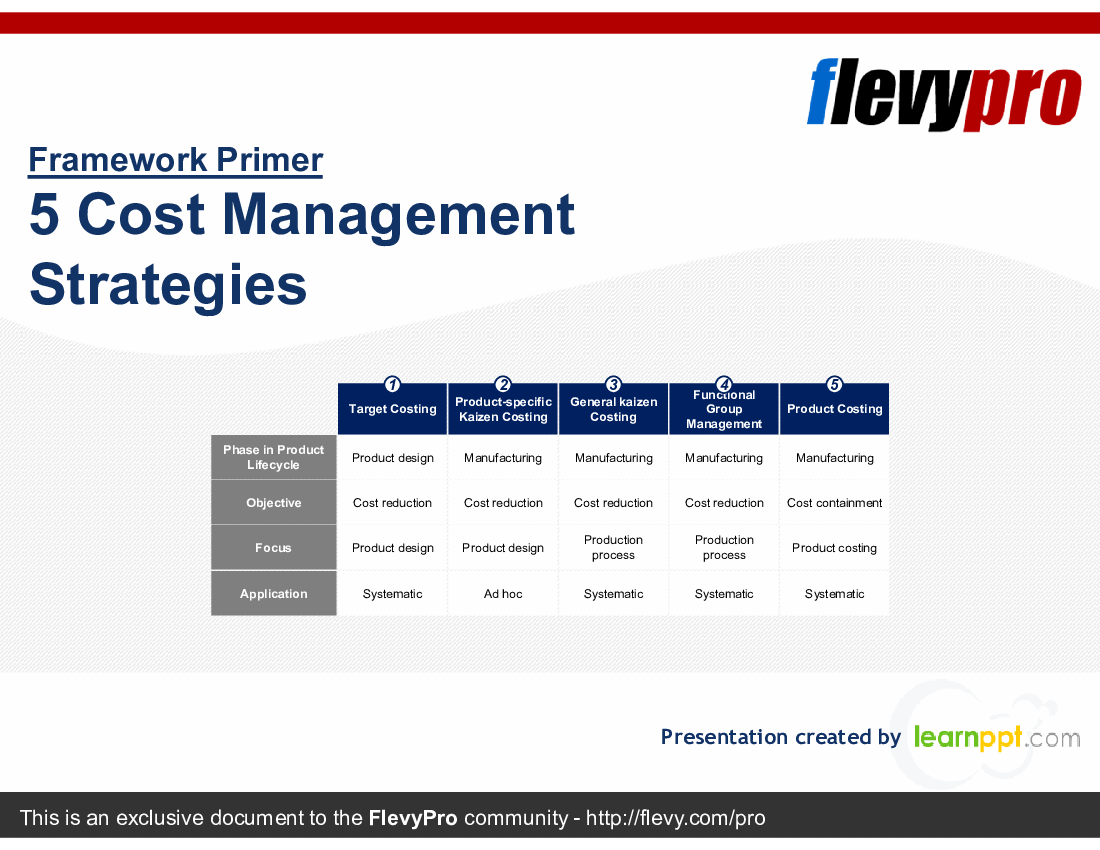
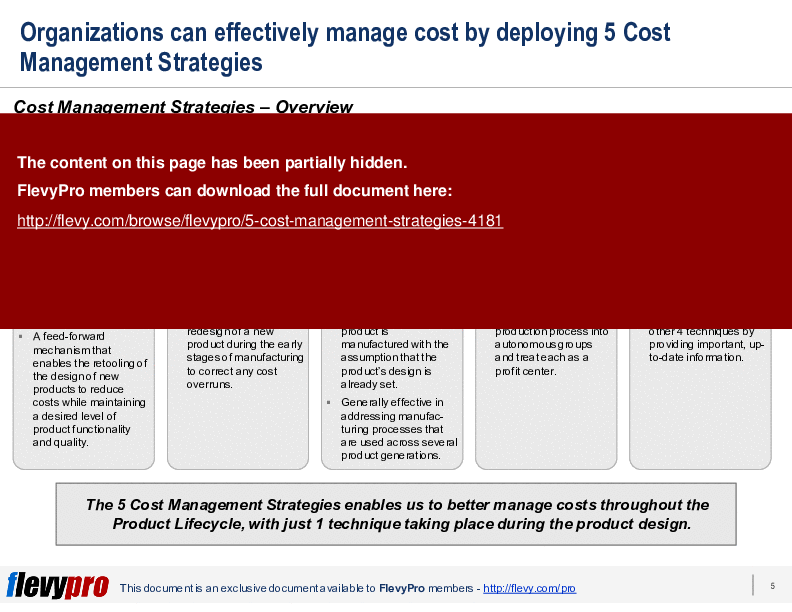
This framework captures the 5 Cost Management Strategies that companies can use to reduce costs and still attain the desired level of functionality and quality at the target costs.
1. Target Costing
2. Product-specific Kaizen Costing
3. General Kaizen Costing
4. Functional Group Management
5. Product Costing
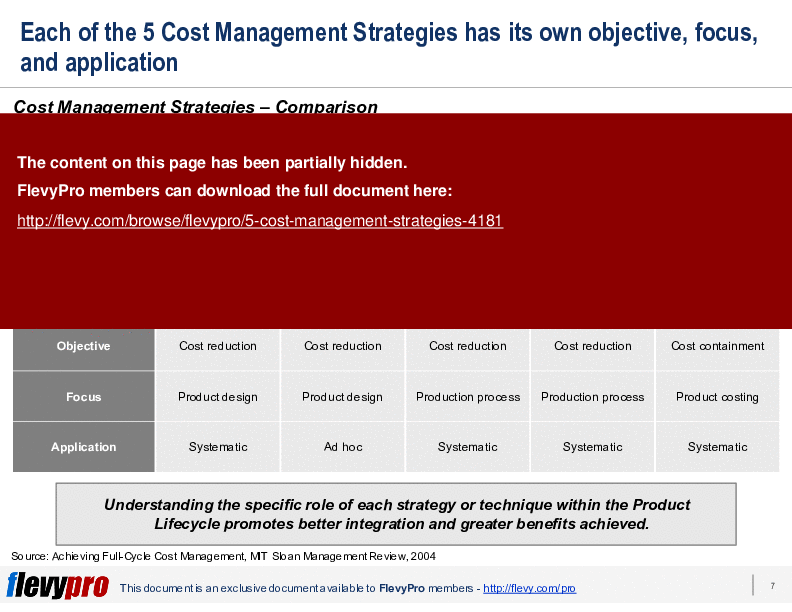
Each of the 5 Cost Management Strategies plays a crucial role in the company's integrated approach to Cost Management. These 5 Cost Management Strategies can be applied throughout the Product Lifecycle with 1 technique during Product Design and the rest during Manufacturing.
This deck also includes slide templates for you to use in your own business presentations.
Gain a competitive edge by leveraging the detailed insights provided in this presentation. Dive deep into the nuances of each cost management strategy, understanding their specific objectives, focus areas, and applications. The deck elucidates how integration of these strategies can streamline processes, enhance efficiency, and drive significant cost reductions across the product lifecycle. Equip your team with actionable templates and frameworks to implement these strategies effectively, ensuring your organization remains agile and cost-competitive in today's dynamic market. This resource is essential for executives committed to optimizing cost structures without compromising on quality or functionality.
Target Costing is a strategic approach in cost management, particularly during the product design phase. It employs a feed-forward mechanism to align product design with market expectations while maintaining desired functionality and quality. The process involves 4 key steps: identifying the expected selling price, determining the free-on-board price, establishing the target cost by subtracting the desired profit margin from the free-on-board price, and seeking innovative solutions to achieve functionality and quality within target costs. Target Costing is most effective during the manufacturing phase of a product's lifecycle, especially when this phase is short, suggesting early adoption in the design process to maximize benefits.
This PPT slide outlines the advantages and disadvantages of Kaizen Costing. Advantages include employee engagement and empowerment, which enhance overall results, and an employee suggestion system for identifying cost reduction opportunities. Lean thinking is highlighted as a method that minimizes resource absorption, focusing on efficiency and waste reduction. Disadvantages include the need for ongoing commitment and adaptation, potential increased burden on lower management levels, and the risk of diminishing returns if not implemented wisely. This dual perspective aids decision-making regarding the adoption of Kaizen Costing, emphasizing careful execution to maximize benefits while mitigating risks.
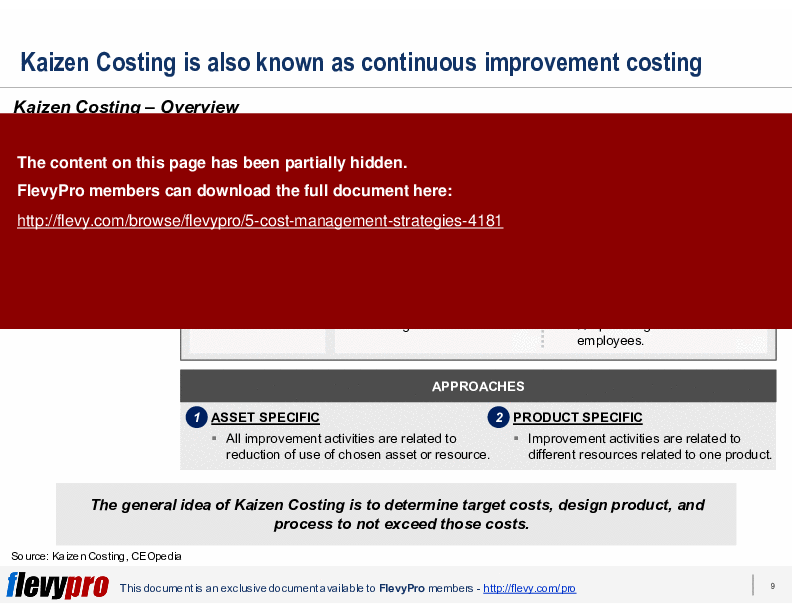
Kaizen Costing, or continuous improvement costing, is a cost management strategy focused on reducing costs while maintaining quality and safety. It emphasizes efficiency in resource utilization and involves significant employee engagement during the manufacturing stage. In contrast, Target Costing is applied during the design phase and primarily involves designers. Kaizen Costing includes 2 approaches: Asset Specific, which improves activities related to specific assets, and Product Specific, which targets enhancements associated with particular products. This dual approach allows organizations to customize their cost management strategies. The core principle of Kaizen Costing is to establish target costs, ensuring that design and manufacturing processes do not exceed these costs, positioning it as a proactive strategy for enhancing efficiency and reducing costs.
General Kaizen Costing is a methodology for cost management during the manufacturing phase of a product's lifecycle, focusing on established product designs. Key actions include setting clear cost reduction goals, empowering employees to identify savings, and reducing material, labor, and overhead costs. This holistic approach ensures comprehensive cost management, including sales, general, and administrative costs. Setting individual cost-reduction goals for each assembly line and component allows for targeted efficiency improvements. Actions to streamline manufacturing processes may include speeding up production. Overall, General Kaizen Costing provides a systematic framework for achieving lasting cost reductions and enhancing operational efficiency.
This framework is developed by a team of former McKinsey and Big 4 consultants. The presentation follows the headline-body-bumper slide format used by global consulting firms.
For $10.00 more, you can download this document plus 2 more FlevyPro documents. That's just $13 each.
ABOUT FLEVYPRO
This document is part of the FlevyPro Library, a curated knowledge base of documents for our FlevyPro subscribers.

FlevyPro is a subscription service for on-demand business frameworks and analysis tools. FlevyPro subscribers receive access to an exclusive library of curated business documents—business framework primers, presentation templates, Lean Six Sigma tools, and more—among other exclusive benefits.
The average daily rate of a McKinsey consultant is $6,625 (not including expenses). The average price of a Flevy document is $65.
Trusted by over 10,000+ Client Organizations
Since 2012, we have provided business templates to over 10,000 businesses and organizations of all sizes, from startups and small businesses to the Fortune 100, in over 130 countries.
"I am extremely grateful for the proactiveness and eagerness to help and I would gladly recommend the Flevy team if you are looking for data and toolkits to help you work through business solutions."
– Trevor Booth, Partner, Fast Forward Consulting
"One of the great discoveries that I have made for my business is the Flevy library of training materials.
As a Lean Transformation Expert, I am always making presentations to clients on a variety of topics: Training, Transformation, Total Productive Maintenance, Culture, Coaching, Tools, Leadership Behavior, etc. Flevy
It is well worth the money to purchase these presentations. Sure, I have the knowledge and information to make my point. It is another thing to create a presentation that captures what I want to say. Flevy has saved me countless hours of preparation time that is much better spent with implementation that will actually save money for my clients.
"
– Ed Kemmerling, Senior Lean Transformation Expert at PMG
"As a consulting firm, we had been creating subject matter training materials for our people and found the excellent materials on Flevy, which saved us 100's of hours of re-creating what already exists on the Flevy materials we purchased."
– Michael Evans, Managing Director at Newport LLC
"As a consultant requiring up to date and professional material that will be of value and use to my clients, I find Flevy a very reliable resource.
The variety and quality of material available through Flevy offers a very useful and commanding source for information. Using Flevy saves me time, enhances my expertise and ends up being a good decision."
– Dennis Gershowitz, Principal at DG Associates
"Flevy.com has proven to be an invaluable resource library to our Independent Management Consultancy, supporting and enabling us to better serve our enterprise clients.
The value derived from our [FlevyPro] subscription in terms of the business it has helped to gain far exceeds the investment made, making a subscription a no-brainer for any growing consultancy – or in-house strategy team."
– Dean Carlton, Chief Transformation Officer, Global Village Transformations Pty Ltd.
"[Flevy] produces some great work that has been/continues to be of immense help not only to myself, but as I seek to provide professional services to my clients, it gives me a large "tool box" of resources that are critical to provide them with the quality of service and outcomes they are expecting."
– Royston Knowles, Executive with 50+ Years of Board Level Experience
"The wide selection of frameworks is very useful to me as an independent consultant. In fact, it rivals what I had at my disposal at Big 4 Consulting firms in terms of efficacy and organization."
– Julia T., Consulting Firm Owner (Former Manager at Deloitte and Capgemini)
"My FlevyPro subscription provides me with the most popular frameworks and decks in demand in today’s market. They not only augment my existing consulting and coaching offerings and delivery, but also keep me abreast of the latest trends, inspire new products and service offerings for my practice, and educate me
Receive our FREE presentation on Operational Excellence
This 50-slide presentation provides a high-level introduction to the 4 Building Blocks of Operational Excellence. Achieving OpEx requires the implementation of a Business Execution System that integrates these 4 building blocks.
Receive our FREE presentation on Operational Excellence
Get Our FREE Product.
This 50-slide presentation provides a high-level introduction to the 4 Building Blocks of Operational Excellence. Achieving OpEx requires the implementation of a Business Execution System that integrates these 4 building blocks.