
The pursuit to tap the benefits derived from analytics-driven insights is gaining momentum everywhere. Companies are striving to become insight-powered enterprises—where there is a culture of utilizing data-driven insights to make decisions at all levels within the enterprise.
Most firms that had invested profoundly in analytics, experience substandard outcomes and below-par returns on their investment. Often, they procure latest technologies without working on enhancing their organizational capacity, which is a limiting factor to their success with analytics. It warrants new ways of working based on critical insights and agile decision-making to become an insight-powered enterprise. An enterprise needs to address its core. This could entail transitioning from a traditional approach to fact-based decision-making.
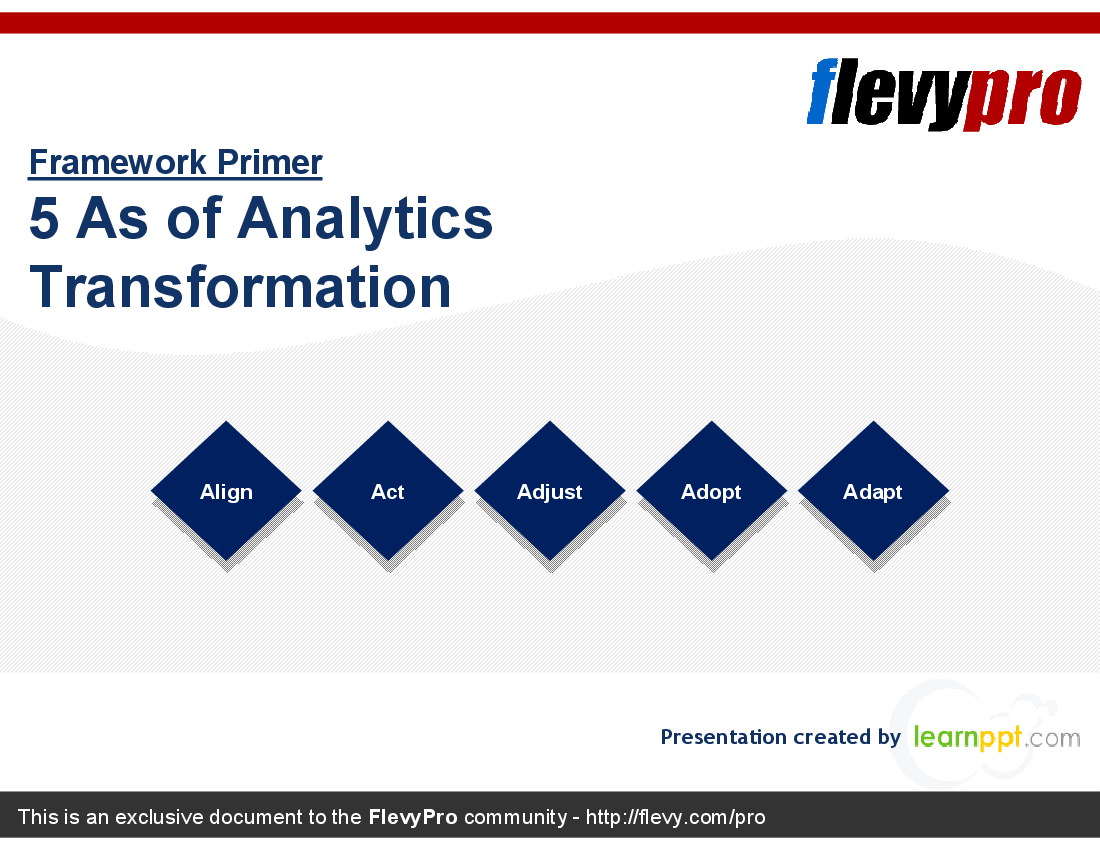
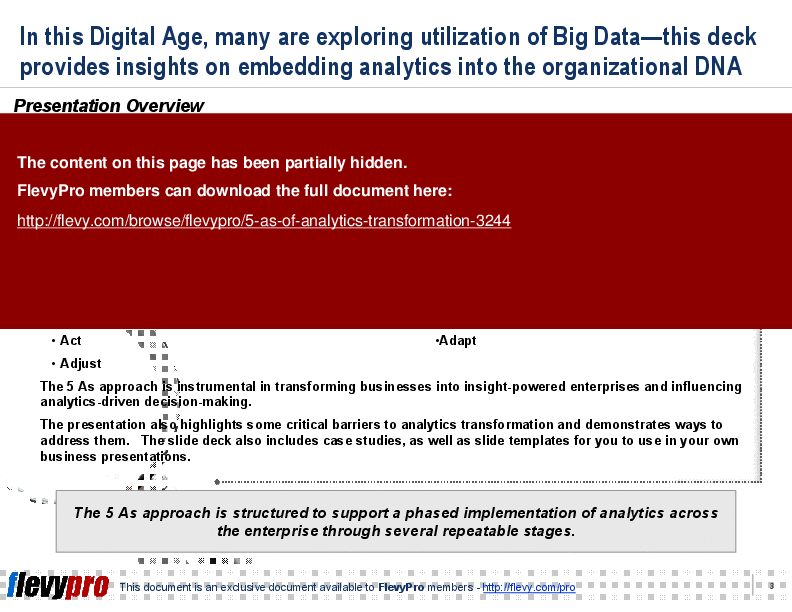
This deck renders a detailed overview of the "5 As" (5-step) approach to manage Analytics Transformation:
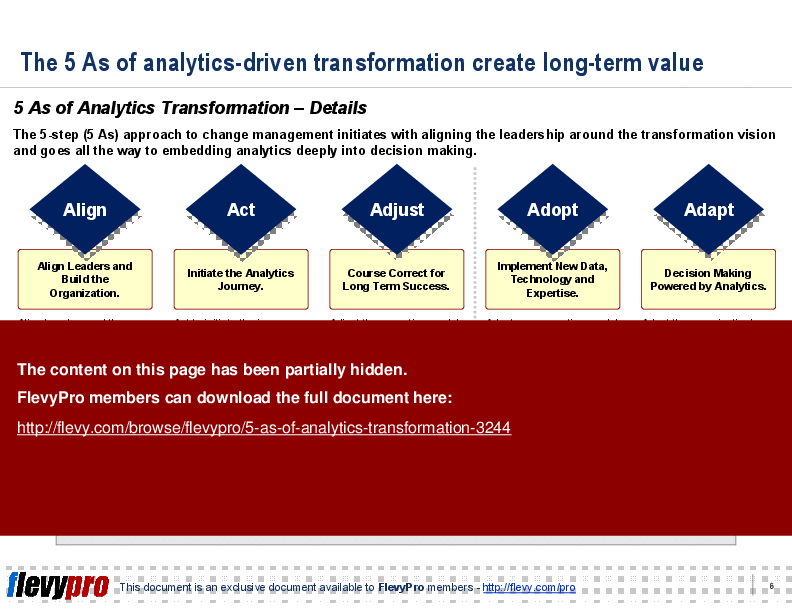
1. Align
2. Act
3. Adjust
4. Adopt
5. Adapt
The 5 As approach is instrumental in transforming businesses into insight-powered enterprises and influencing analytics-driven decision-making. This approach is structured to support a phased implementation of analytics across the enterprise through several repeatable stages.
The presentation also highlights some critical barriers to analytics transformation and demonstrates ways to address them. The slide deck also includes case studies, as well as slide templates for you to use in your own business presentations.
This comprehensive presentation also delves into the practical aspects of implementing analytics transformation, offering a granular look at each step of the 5 As framework. It includes detailed case studies from leading organizations, showcasing real-world applications and the tangible benefits achieved. The deck provides actionable insights and templates, enabling you to seamlessly integrate these strategies into your own business processes. This resource is designed to equip your leadership team with the tools needed to drive a successful analytics transformation, ensuring long-term value creation and competitive advantage.
Got a question about this document? Email us at flevypro@flevy.com.
Executive Summary
The "5 As of Analytics Transformation" presentation provides a structured framework for organizations aiming to embed analytics into their decision-making processes. Developed by seasoned consultants, this presentation outlines a phased approach to analytics transformation, emphasizing the importance of aligning leadership, initiating the analytics journey, adjusting strategies based on insights, adopting new technologies, and adapting organizational processes. By following this framework, businesses can enhance their data-driven decision-making capabilities, ultimately leading to improved ROI and a culture of insight-driven operations.
Who This Is For and When to Use
• Corporate executives overseeing digital transformation initiatives
• Analytics leaders responsible for implementing data-driven strategies
• Change management professionals facilitating organizational shifts
• Consultants advising clients on analytics integration
Best-fit moments to use this deck:
• During strategic planning sessions focused on analytics integration
• In workshops aimed at fostering a culture of data-driven decision-making
• When assessing current analytics capabilities and identifying gaps
Learning Objectives
• Define the "5 As" framework and its role in analytics transformation
• Build a roadmap for initiating the analytics journey within an organization
• Establish mechanisms for adjusting strategies based on analytics insights
• Implement new technologies and expertise to support analytics initiatives
• Adapt organizational processes to maximize the value of analytics
• Foster a culture of experimentation and data-driven decision-making
Table of Contents
• Overview (page 3)
• 5 As of Analytics Transformation (page 5)
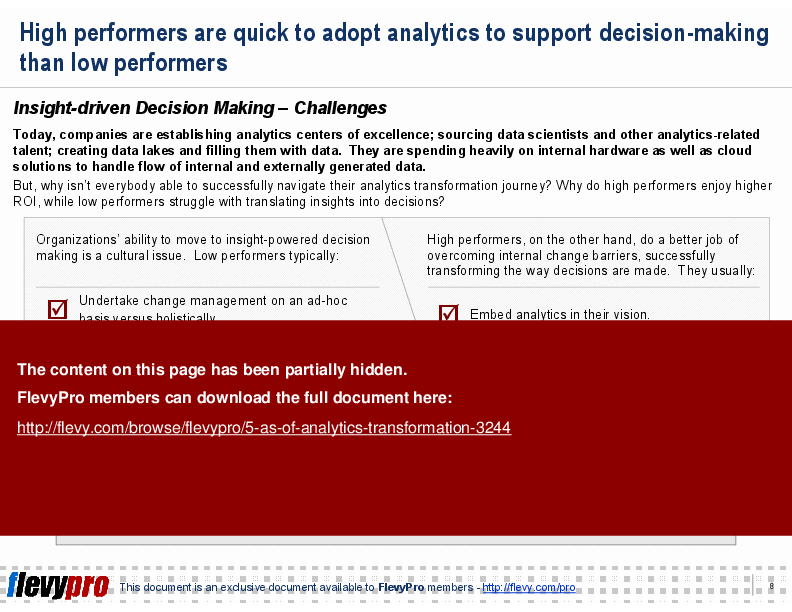
• Insight-driven Decision Making (page 8)
• Case Studies (page 11)
• Templates (page 17)
Primary Topics Covered
• Overview of Analytics Transformation - This section introduces the need for analytics in modern organizations and outlines the framework for embedding analytics into decision-making processes.
• The 5 As Framework - A detailed explanation of the 5 steps: Align, Act, Adjust, Adopt, and Adapt, which guide organizations through their analytics transformation journey.
• Insight-driven Decision Making - Discusses the importance of leveraging analytics for informed decision-making and the cultural shifts required for successful implementation.
• Case Studies - Real-world examples demonstrating the application of the 5 As framework in various organizations, highlighting successes and lessons learned.
• Templates - Practical templates to assist organizations in implementing the 5 As framework effectively.
Deliverables, Templates, and Tools
• Framework overview template for the 5 As of Analytics Transformation
• Roadmap template for initiating the analytics journey
• Checklist for aligning leadership and building organizational capacity
• Action plan template for adjusting strategies based on analytics insights
• Implementation guide for adopting new technologies and expertise
• Evaluation framework for adapting decision-making processes
Slide Highlights
• Visual representation of the 5 As framework, illustrating the transformation journey
• Case study slides showcasing successful analytics implementations in various industries
• Insights on common challenges faced during analytics transformation and strategies to overcome them
• Templates for practical application of the 5 As in organizational settings
Potential Workshop Agenda
Introduction to Analytics Transformation (30 minutes)
• Overview of the 5 As framework
• Discussion on the importance of analytics in decision-making
Aligning Leadership (60 minutes)
• Identifying key stakeholders and sponsors
• Building a shared vision for analytics integration
Initiating the Analytics Journey (90 minutes)
• Developing a roadmap for implementation
• Setting immediate goals and quick wins
Adjusting Strategies (60 minutes)
• Analyzing insights and course-correcting as needed
• Engaging stakeholders in the adjustment process
Customization Guidance
• Tailor the framework to fit specific organizational contexts and cultures
• Adjust templates to reflect unique business goals and metrics
• Incorporate industry-specific examples into case studies for relevance
Secondary Topics Covered
• Barriers to successful analytics transformation
• The role of leadership in fostering a data-driven culture
• Best practices for engaging employees in analytics initiatives
• Techniques for measuring the impact of analytics on business outcomes
Topic FAQ
Document FAQ
These are questions addressed within this presentation.
What are the 5 As of Analytics Transformation?
The 5 As are Align, Act, Adjust, Adopt, and Adapt, which guide organizations in embedding analytics into their decision-making processes.
How can this framework improve decision-making?
By following the 5 As, organizations can create a culture of data-driven decision-making, leading to more informed and effective business strategies.
What types of organizations can benefit from this presentation?
Any organization looking to enhance its analytics capabilities and foster a culture of insight-driven decision-making can benefit from this framework.
How does the framework address common barriers to analytics transformation?
The framework emphasizes leadership alignment and employee engagement, which are critical for overcoming cultural and operational barriers to successful analytics implementation.
What practical tools are included in the presentation?
The presentation includes templates and action plans to assist organizations in applying the 5 As framework effectively.
Can this framework be tailored to specific industries?
Yes, the framework is adaptable and can be customized to fit the unique needs and challenges of different industries.
How long does the transformation process typically take?
The duration of the transformation process varies by organization, but is structured to allow for phased implementation and continuous improvement.
What role does leadership play in this transformation?
Leadership is crucial for aligning vision, securing buy-in, and fostering a culture that embraces data-driven decision-making.
Glossary
• Analytics Transformation - The process of integrating analytics into organizational decision-making.
• 5 As Framework - A structured approach consisting of Align, Act, Adjust, Adopt, and Adapt to guide analytics transformation.
• Insight-driven Decision Making - Making business decisions based on data-driven insights derived from analytics.
• Change Management - The discipline of managing the transition of individuals, teams, and organizations to a desired future state.
• Cultural DNA - The underlying values, beliefs, and behaviors that shape an organization's culture.
• Analytics Center of Excellence (CoE) - A dedicated team or unit within an organization that focuses on developing and promoting analytics capabilities.
• Data-driven Culture - An organizational culture that prioritizes the use of data and analytics in decision-making processes.
• Stakeholder Engagement - The process of involving individuals or groups who have an interest in the outcomes of a project or initiative.
• Quick Wins - Immediate, easily achievable goals that can demonstrate progress and build momentum for larger initiatives.
• Agile Decision Making - A flexible approach to decision-making that allows organizations to respond quickly to changing circumstances.
• ROI (Return on Investment) - A measure used to evaluate the efficiency or profitability of an investment.
• Case Studies - Real-world examples used to illustrate the application and impact of a particular framework or strategy.
• Templates - Pre-designed documents or tools that facilitate the implementation of strategies and processes.
• Performance Management - The process of ensuring that organizational goals are consistently being met in an effective and efficient manner.
• Behavioral Change - The process of changing habits or actions within an organization to achieve desired outcomes.
• Data Lakes - Centralized repositories that allow organizations to store and analyze large volumes of structured and unstructured data.
• Experimentation Culture - An organizational environment that encourages testing new ideas and approaches to foster innovation.
• Leadership Alignment - The process of ensuring that leaders within an organization share a common vision and goals.
• Organizational Capacity - The ability of an organization to effectively implement strategies and achieve its objectives.
• Metrics - Standards of measurement used to assess performance or progress toward goals.
Source: Best Practices in Digital Transformation, Analytics PowerPoint Slides: 5 As of Analytics Transformation PowerPoint (PPTX) Presentation Slide Deck, LearnPPT Consulting
Did you need more documents?
Consider a FlevyPro subscription from $39/month. View plans here.
For $10.00 more, you can download this document plus 2 more FlevyPro documents. That's just $13 each.
|
Download our FREE Digital Transformation Templates
Download our free compilation of 50+ Digital Transformation slides and templates. DX concepts covered include Digital Leadership, Digital Maturity, Digital Value Chain, Customer Experience, Customer Journey, RPA, etc. |