BENEFITS OF THIS POWERPOINT DOCUMENT
- Learn about agile BA practices
AGILE PPT DESCRIPTION
Editor Summary
Agile Module 2: Understanding Agile Process is a 105-slide PowerPoint by Adaptive US Inc.
Read more
that explains Agile principles and the Scrum framework, covering roles, user stories, sprint cycles, ceremonies, and continuous improvement. Includes user story and sprint backlog templates, burn down/up charts, task board templates, a Definition of Done checklist, and retrospective templates. Targeted at Project Managers, Development Teams, Business Analysts, and Executives for team training, kickoff meetings, and workshops. Sold as a digital download on Flevy with immediate digital download.
Use this module when an organization is shifting from traditional Waterfall methods to Agile, starting a Scrum program, or running team training to improve delivery and stakeholder engagement.
Project Managers running sprint planning and backlog grooming to transition projects into time-boxed sprints.
Development Teams managing daily stand-ups and visualizing work with task boards to track sprint progress.
Business Analysts writing user stories and defining acceptance criteria to capture stakeholder needs.
Executives using sprint reviews to gather stakeholder feedback and monitor outcomes.
The module’s focus on iterative development, defined Scrum roles, time-boxed sprints, backlog artifacts, and retrospectives mirrors standard Scrum practice.
This module deals with process of Agile BA program.
Got a question about the product? Email us at support@flevy.com or ask the author directly by using the "Ask the Author a Question" form. If you cannot view the preview above this document description, go here to view the large preview instead.
MARCUS OVERVIEW
This synopsis was written by Marcus
[?] based on the analysis of the full 105-slide presentation.
Executive Summary
The "Agile Module 2: Understanding Agile Process" presentation provides a detailed exploration of Agile methodologies, focusing on the Agile process and its advantages over traditional project management approaches. This module is designed for business professionals seeking to enhance their understanding of Agile frameworks, particularly Scrum, and how to effectively implement them in their organizations. By utilizing this presentation, users will gain insights into Agile principles, roles, and practices, enabling them to improve project delivery and stakeholder engagement.
Who This Is For and When to Use
• Project Managers looking to transition from traditional methodologies to Agile frameworks.
• Development Teams seeking to enhance collaboration and productivity through Agile practices.
• Business Analysts aiming to better understand user stories and requirements in an Agile context.
• Executives interested in improving project outcomes and stakeholder satisfaction through Agile methodologies.
Best-fit moments to use this deck:
• During team training sessions on Agile methodologies and Scrum practices.
• At project kickoff meetings to align teams on Agile principles and processes.
• When conducting workshops focused on improving project delivery and stakeholder engagement.
Learning Objectives
• Define Agile and its core principles, distinguishing it from traditional project management approaches.
• Identify the roles within a Scrum team and their responsibilities.
• Construct user stories that effectively capture stakeholder needs.
• Develop a sprint backlog and manage tasks within a sprint cycle.
• Analyze the importance of daily stand-ups and sprint reviews in maintaining project momentum.
• Implement techniques for continuous improvement through retrospectives.
Table of Contents
• Introduction to Agile (page 1)
• Why Agile? (page 2)
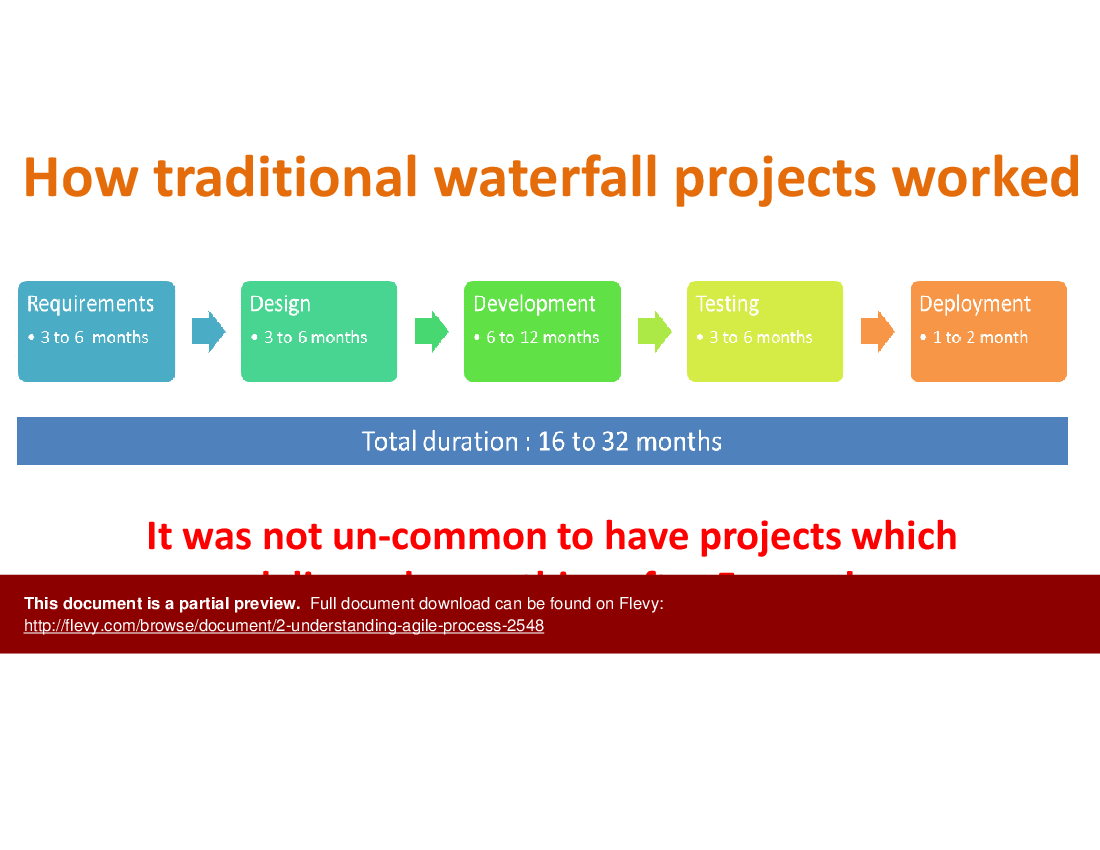
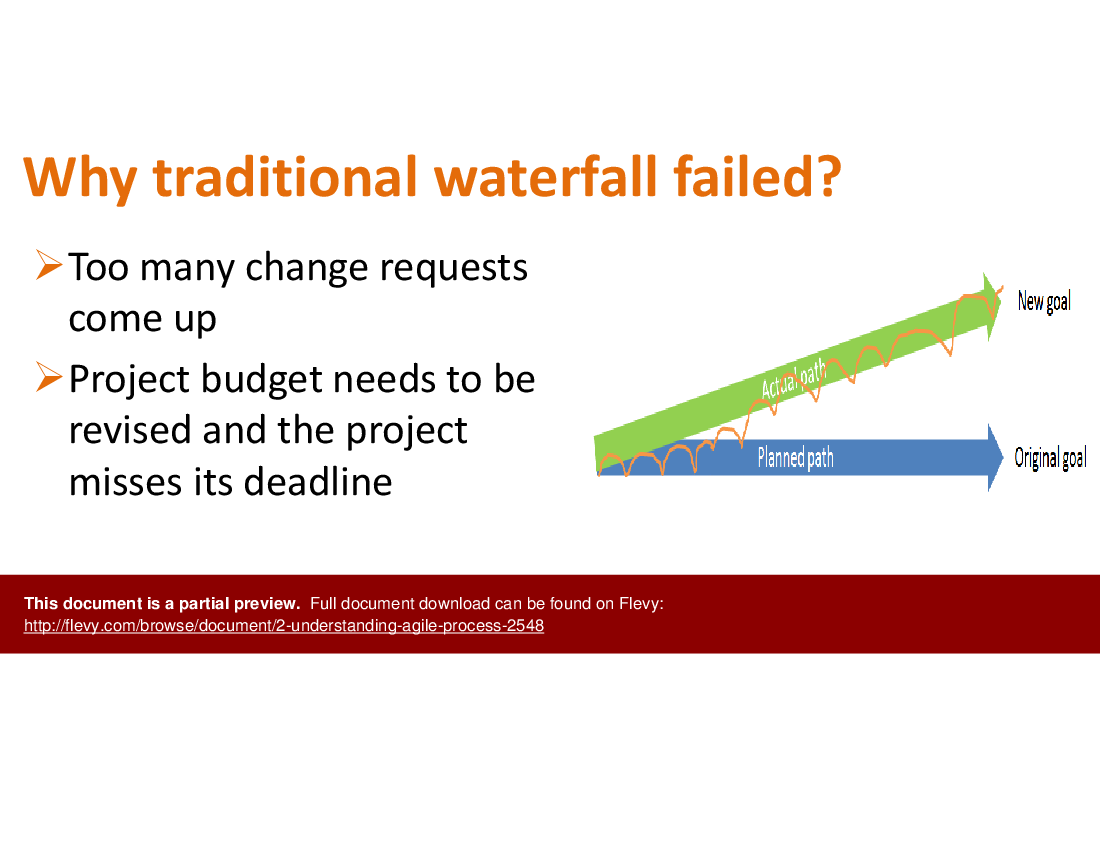
• Limitations of Traditional Waterfall (page 3)
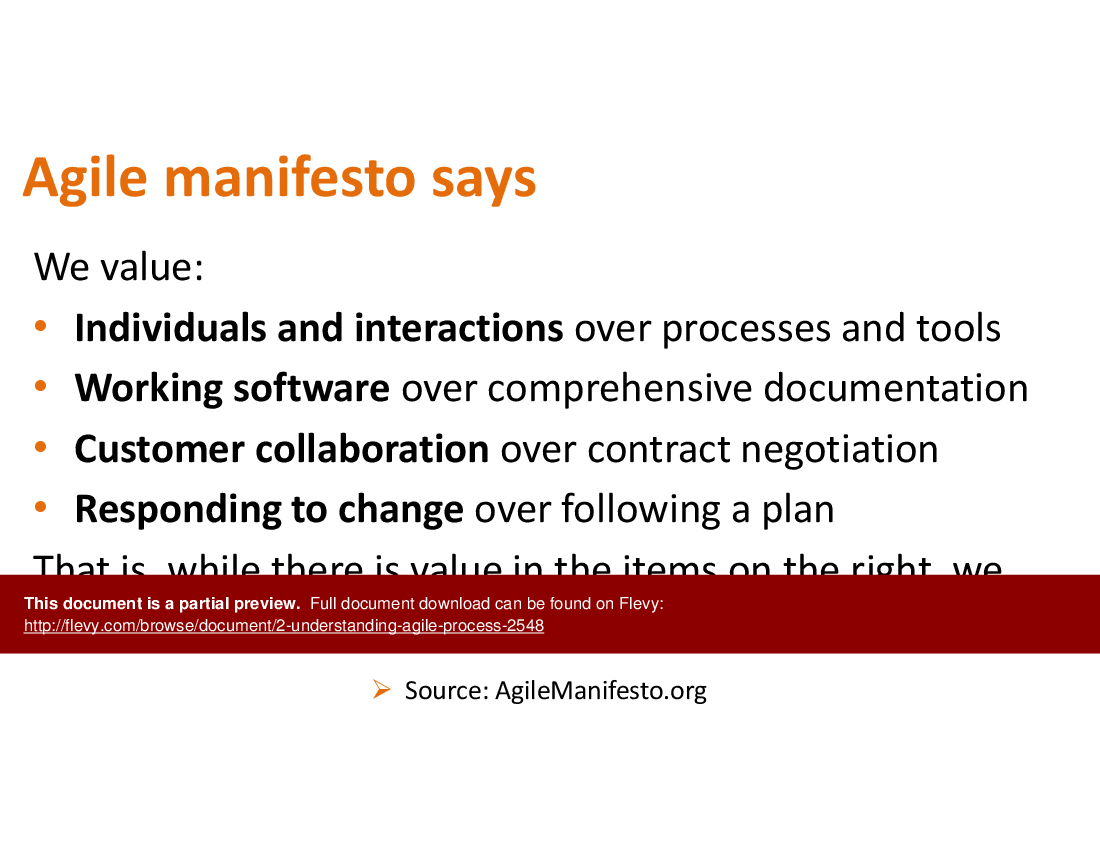
• Agile Manifesto (page 17)
• Scrum Overview (page 29)
• Roles in Scrum (page 34)
• Product Backlog and User Stories (page 52)
• Sprint Planning and Execution (page 66)
• Sprint Review and Retrospective (page 93)
Primary Topics Covered
• Agile Principles - Agile focuses on iterative development, allowing teams to adapt to changing requirements and deliver value incrementally.
• Scrum Framework - Scrum is a widely adopted Agile methodology that emphasizes teamwork, accountability, and iterative progress through defined roles and events.
• Roles in Scrum - Key roles include the Product Owner, Scrum Master, and Team Members, each with distinct responsibilities that contribute to project success.
• User Stories - User stories are concise descriptions of features from the end-user perspective, essential for capturing requirements effectively.
• Sprint Cycle - The sprint cycle is a time-boxed period during which specific work is completed and reviewed, fostering regular feedback and adaptation.
• Daily Stand-ups - These brief meetings enhance team communication and ensure alignment on tasks and obstacles.
Deliverables, Templates, and Tools
• User story templates for capturing stakeholder requirements.
• Sprint backlog templates to manage tasks and deliverables for each sprint.
• Burn down and burn up charts for tracking progress and scope management.
• Task board templates to visualize team tasks and workflow.
• Definition of Done checklist to ensure quality and completeness of deliverables.
• Retrospective templates to facilitate team reflection and improvement discussions.
Slide Highlights
• Overview of Agile principles and how they differ from traditional methodologies.
• Visual representation of the Scrum framework, including roles and responsibilities.
• Examples of user stories and their components, illustrating effective requirement gathering.
• Explanation of the sprint cycle, highlighting the importance of regular feedback loops.
• Insights into the sprint review process and how it fosters stakeholder engagement.
Potential Workshop Agenda
Agile Introduction Session (60 minutes)
• Overview of Agile principles and methodologies.
• Discussion on the limitations of traditional project management approaches.
• Introduction to Scrum and its framework.
Scrum Roles and Responsibilities Workshop (90 minutes)
• Detailed exploration of roles within a Scrum team.
• Interactive exercises to define user stories.
• Group discussions on the importance of collaboration and communication.
Sprint Planning and Execution Session (120 minutes)
• Hands-on activities to create a sprint backlog.
• Role-playing exercises for conducting daily stand-ups and sprint reviews.
• Retrospective discussions to identify areas for improvement.
Customization Guidance
• Tailor user story templates to reflect specific business contexts or industry terminology.
• Adjust sprint backlog formats to align with team workflows and project requirements.
• Incorporate organizational metrics and KPIs into tracking tools for better alignment with business objectives.
• Modify the definition of done to include specific quality standards relevant to the organization.
Secondary Topics Covered
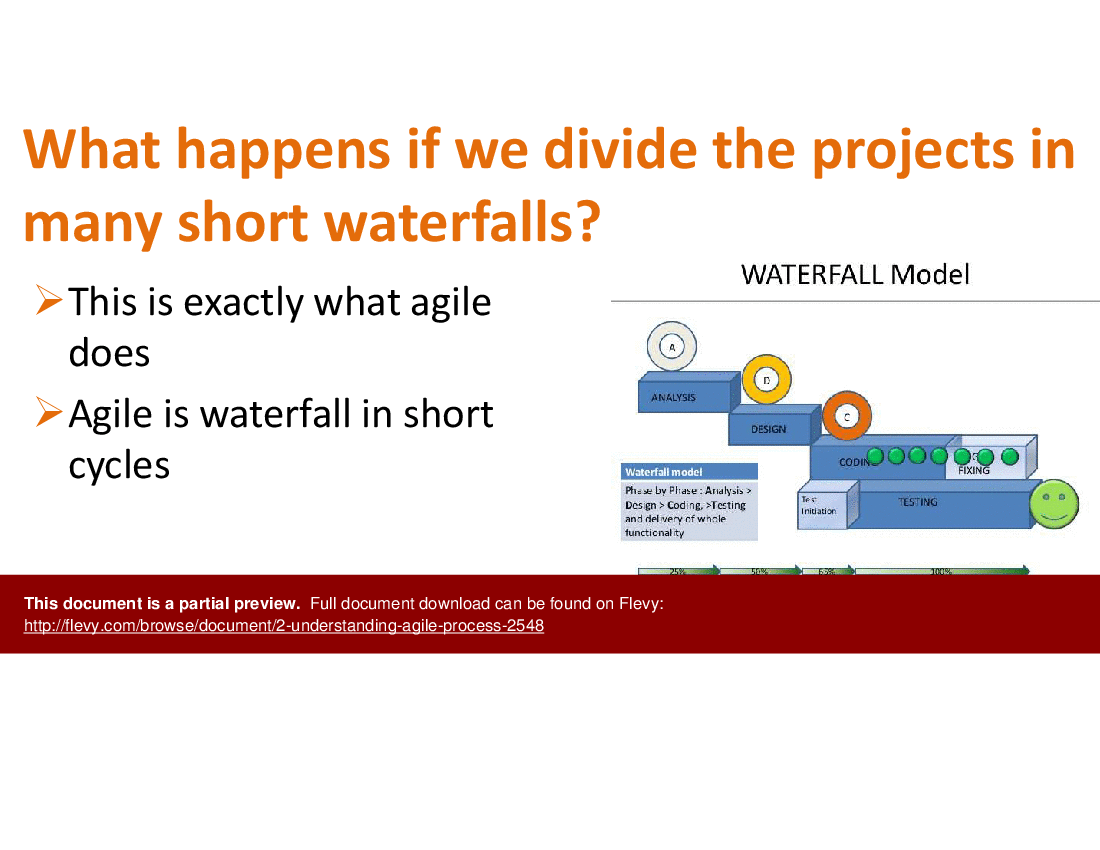
• Agile vs. Waterfall methodologies and their respective advantages.
• The significance of stakeholder involvement in Agile projects.
• Techniques for effective backlog grooming and prioritization.
• Strategies for fostering a culture of continuous improvement within Agile teams.
• Tools and software that support Agile project management.
Topic FAQ
What are the core Agile principles I should teach teams first?
Agile emphasizes iterative development, delivering value incrementally, adapting to changing requirements, and close collaboration between stakeholders and teams. It also prioritizes frequent feedback and continuous improvement through regular ceremonies like sprint reviews and retrospectives, highlighting iterative development as a central attribute.
How are roles defined in Scrum and who does what?
Scrum defines 3 primary roles: the Product Owner (prioritizes and owns the product backlog), the Scrum Master (facilitates the process and removes impediments), and Team Members (deliver the work). Agile Module 2: Understanding Agile Process outlines responsibilities for each of these roles and their interactions, naming Product Owner, Scrum Master, and Team Members.
How long should sprints be and what activities occur in a sprint?
A sprint is a time-boxed period in which the team completes a set of user stories; typical durations are one to 4 weeks. Key sprint activities include sprint planning, execution of sprint backlog tasks, daily stand-ups, sprint review with stakeholders, and a retrospective for improvement, lasting 1–4 weeks.
How do I write effective user stories and acceptance criteria?
Effective user stories are short descriptions from the end-user perspective that state what the user needs and why. They should include clear acceptance criteria to define when a story is complete. Practical practice uses a structured user story template to capture the who, what, and why and acceptance conditions, ending with a user story template.
What should I look for when buying an Agile training deck or module?
Look for content that covers Agile principles and the Agile Manifesto, a clear Scrum overview, roles and responsibilities, user story guidance, sprint planning and execution, and included artifacts or templates such as sprint backlogs and burn down charts. Agile Module 2: Understanding Agile Process includes these sections and tools, including a burn down chart.
How long should I plan for workshops to introduce Scrum to a team?
Workshop length depends on scope: an introductory Agile session can be about 60 minutes, a roles-and-user-story workshop around 90 minutes, and a hands-on sprint planning and execution session about 120 minutes. The product provides a suggested agenda that maps to 60, 90, and 120 minute sessions, with the longest at 120 minutes.
How can retrospectives be structured to improve team performance?
Retrospectives are held at the end of each sprint to reflect on what went well, what didn’t, and actionable improvements. Use a structured retrospective template to capture observations, assign owners for improvement actions, and follow up in subsequent sprints to maintain continuous improvement, using a retrospective template.
Are templates like sprint backlogs and task boards worth using instead of building from scratch?
Prebuilt templates standardize artifacts, reduce setup time, and help teams adopt consistent practices such as tracking scope and progress. Common templates include sprint backlog templates, task board templates, burn down/up charts, and a Definition of Done checklist; Agile Module 2: Understanding Agile Process provides a sprint backlog template.
Document FAQ
These are questions addressed within this presentation.
What is Agile?
Agile is a project management methodology that emphasizes iterative development, collaboration, and flexibility to adapt to changing requirements.
How does Scrum fit into Agile?
Scrum is a specific framework within Agile that focuses on managing tasks in a team-based environment through defined roles, events, and artifacts.
What are user stories?
User stories are short, simple descriptions of a feature told from the perspective of the end user, capturing what they need and why.
What is a sprint?
A sprint is a time-boxed period, typically lasting from one to 4 weeks, during which a Scrum team works to complete a set of user stories.
How often should daily stand-ups occur?
Daily stand-ups should occur every day, typically at the same time, to ensure consistent communication and alignment among team members.
What is the purpose of a sprint review?
The sprint review is a meeting held at the end of a sprint where the team demonstrates completed work to stakeholders and gathers feedback.
What is a retrospective?
A retrospective is a meeting held at the end of each sprint where the team reflects on their process and identifies areas for improvement.
How can I ensure my team is effectively using Agile?
Regular training, clear communication of Agile principles, and fostering a culture of collaboration and feedback are essential for effective Agile implementation.
Glossary
•
Agile - A methodology focused on iterative development and flexibility.
•
Scrum - An Agile framework for managing tasks within a team.
•
User Story - A description of a feature from the end-user perspective.
•
Sprint - A time-boxed period for completing specific work.
•
Sprint Backlog - A list of tasks and user stories for a sprint.
•
Burn Down Chart - A visual representation of work completed versus remaining.
•
Burn Up Chart - A visual representation of work completed over time.
•
Task Board - A visual tool for tracking tasks in progress.
•
Definition of Done - Criteria that must be met to consider a user story complete.
•
Retrospective - A meeting for reflecting on the team's performance and identifying improvements.
•
Daily Stand-up - A brief daily meeting for team members to share progress and obstacles.
•
Product Owner - The individual responsible for defining and prioritizing the product backlog.
•
Scrum Master - The facilitator who helps the team follow Scrum practices.
•
Team Member - Individuals who execute the work within the Scrum team.
•
Product Backlog - An ordered list of all desired work on the project.
•
Acceptance Criteria - Conditions that must be met for a user story to be considered complete.
•
Story Time - A meeting for discussing and refining user stories.
•
Sprint Review - A meeting to demonstrate completed work to stakeholders.
•
Sprint Planning - A meeting to define what will be accomplished in the upcoming sprint.
Source: Best Practices in Agile PowerPoint Slides: Agile Module 2: Understanding Agile Process PowerPoint (PPTX) Presentation Slide Deck, Adaptive US Inc.