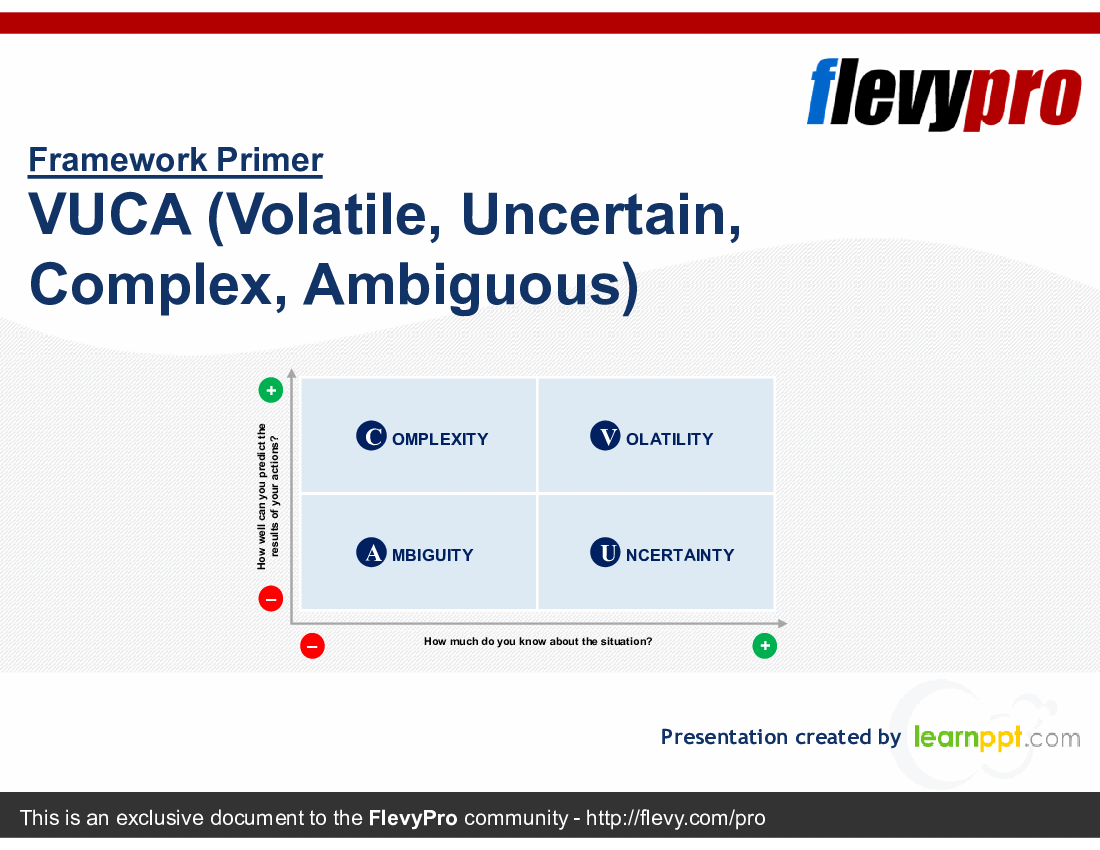
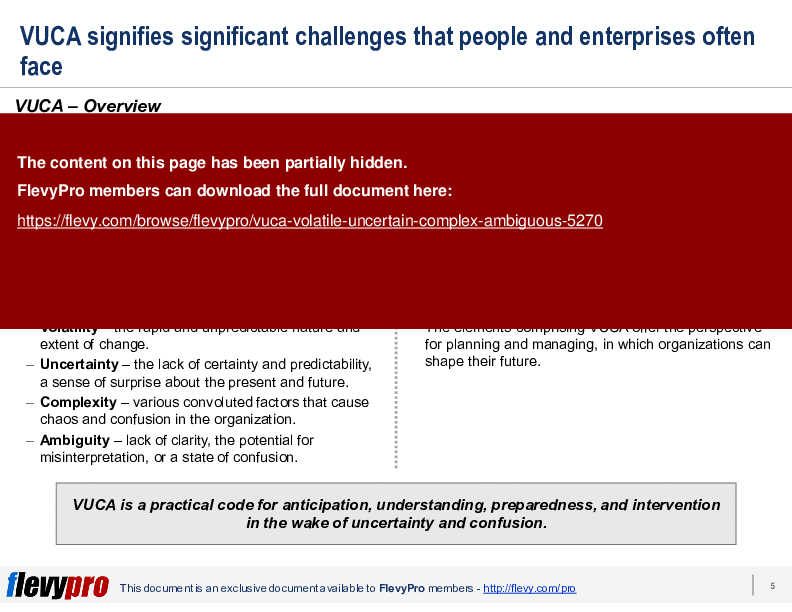

Volatile, uncertain, complex, and ambiguous (VUCA) situations represent challenges that emerge almost daily in our lives.
The VUCA concept originated in 1987, based on the theories of Warren Bennis and Burt Nanus. The acronym reflects the constant, dramatically-transforming, and unpredictable world. The term was first used by U.S. Army War College to describe the volatile, uncertain, complex, and ambiguous general conditions globally.
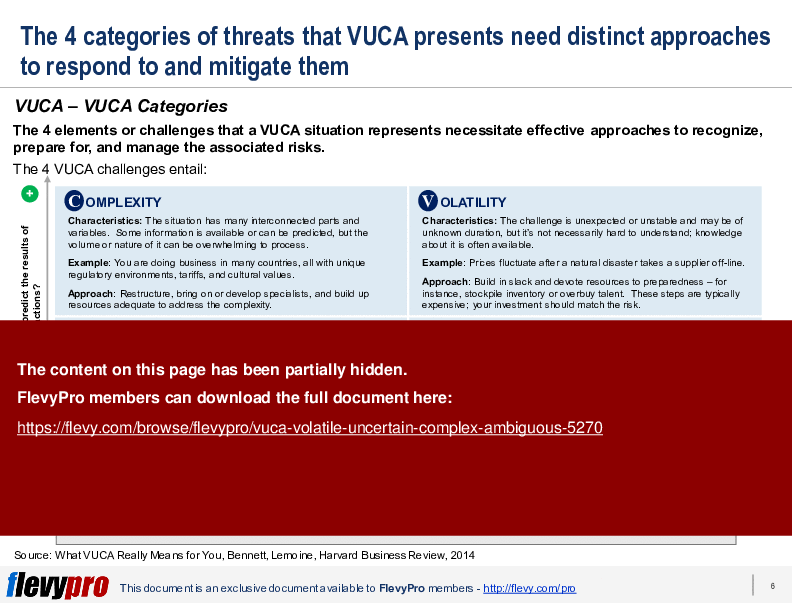
This presentation provides a detailed overview of the 4 VUCA threats (elements):
1. Volatility
2. Uncertainty
3. Complexity
4. Ambiguity
VUCA relates to threats that people and enterprises often encounter. These threats need deliberate course of action and proactive management.
The presentation also talks about the approach to managing a VUCA environment utilizing Robert Johansen's Leadership framework called "VUCA Counterweight" or "VUCA PRIME."
The slide deck also includes some slide templates for you to use in your own business presentations.
This presentation dives deep into the VUCA model, offering a comprehensive breakdown of each element and its implications for businesses. The slides provide actionable insights into how volatility, uncertainty, complexity, and ambiguity can be managed effectively. It emphasizes the importance of understanding these elements to develop robust strategies that can withstand unpredictable changes.
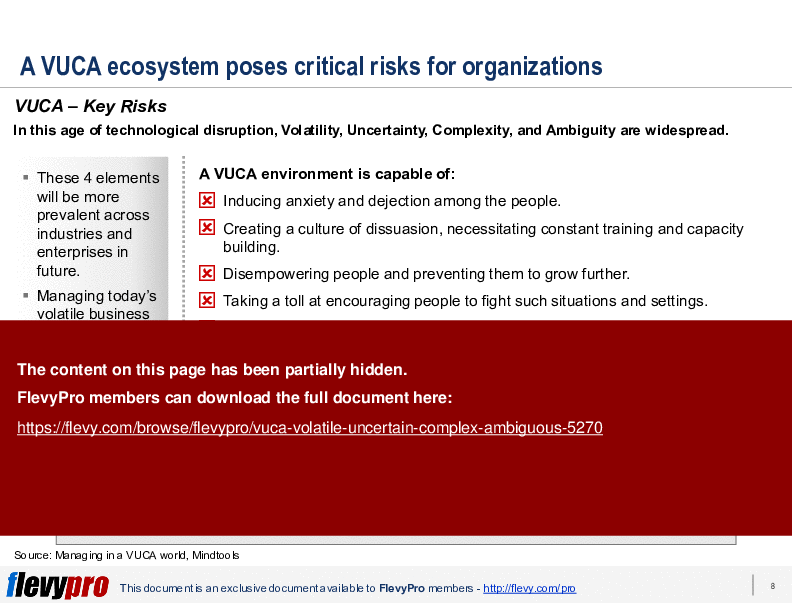
The PPT also highlights the critical risks posed by a VUCA environment, such as inducing anxiety and creating a culture of dissuasion. It outlines practical approaches to mitigate these risks, including building resilience, promoting flexibility, and empowering teams. The content is designed to equip executives with the tools needed to navigate and thrive in a VUCA world.
Included are detailed templates and frameworks that can be customized for your specific business needs. These resources are invaluable for leaders looking to implement VUCA strategies and foster a culture of adaptability and proactive management. This presentation is a must-have for any executive aiming to stay ahead in today's volatile and complex business landscape.
Got a question about this document? Email us at flevypro@flevy.com.
Executive Summary
The VUCA (Volatile, Uncertain, Complex, Ambiguous) PowerPoint presentation equips corporate executives and leaders with a comprehensive understanding of the VUCA framework, essential for navigating today's unpredictable business landscape. This presentation outlines the characteristics of each VUCA element, provides actionable strategies for management, and introduces the VUCA PRIME framework developed by Robert Johansen. By leveraging this presentation, leaders will enhance their decision-making capabilities and foster resilience in their organizations.
Who This Is For and When to Use
• Corporate executives seeking to enhance strategic planning and risk management.
• Change management leaders responsible for guiding teams through transitions.
• Project managers aiming to navigate uncertainty in project execution.
• Business consultants advising clients on adaptive strategies in volatile environments.
Best-fit moments to use this deck:
• During strategic planning sessions to address potential VUCA challenges.
• In leadership workshops focused on developing resilience and adaptability.
• When preparing teams for organizational change or crisis management.
Learning Objectives
• Define the VUCA framework and its relevance to modern business environments.
• Identify the characteristics of volatility, uncertainty, complexity, and ambiguity.
• Develop strategies to manage each VUCA element effectively.
• Implement the VUCA PRIME framework to enhance organizational agility.
• Foster a culture of adaptability and resilience within teams.
• Utilize scenario planning and role-playing to prepare for VUCA situations.
Table of Contents
• Overview (page 3)
• VUCA (page 4)
• VUCA Categories (page 5)
• VUCA Management and Mitigation (page 15)
• Templates (page 19)
Primary Topics Covered
• VUCA Overview - An introduction to the VUCA framework, explaining its origin and significance in understanding modern business challenges.
• Volatility - Characteristics of volatility, including its unpredictable nature and strategies to manage it effectively.
• Uncertainty - Insights into uncertainty, emphasizing the importance of information and decision-making under ambiguous conditions.
• Complexity - Exploration of complexity in organizational contexts and approaches to simplify decision-making processes.
• Ambiguity - Discussion of ambiguity and its impact on communication and decision-making, along with strategies to clarify objectives.
• VUCA PRIME - Introduction to the VUCA PRIME framework, which includes countering volatility with vision, uncertainty with understanding, complexity with clarity, and ambiguity with agility.
Deliverables, Templates, and Tools
• VUCA analysis template for assessing organizational challenges.
• Scenario planning framework to prepare for potential VUCA situations.
• VUCA PRIME action plan template for implementing strategies.
• Leadership development guide focused on enhancing adaptability and resilience.
• Communication plan template for addressing ambiguity in organizational messaging.
Slide Highlights
• Overview of the VUCA framework and its historical context.
• Detailed breakdown of each VUCA element with real-world examples.
• Visual representation of the VUCA PRIME framework and its applications.
• Case studies demonstrating successful management of VUCA challenges.
• Interactive templates designed for team workshops and strategy sessions.
Potential Workshop Agenda
Understanding VUCA Workshop (90 minutes)
• Introduction to the VUCA framework and its relevance.
• Group discussions on personal experiences with VUCA challenges.
• Interactive exercises to identify VUCA elements in current projects.
VUCA Management Strategies (60 minutes)
• Presentation on managing volatility, uncertainty, complexity, and ambiguity.
• Breakout sessions to develop action plans using the VUCA PRIME framework.
• Sharing insights and strategies among participants.
Customization Guidance
• Tailor the VUCA analysis template to reflect specific industry challenges and organizational contexts.
• Adjust the scenario planning framework to align with current business objectives and risks.
• Incorporate company-specific case studies into the presentation for relevance.
Secondary Topics Covered
• The impact of technological disruption on VUCA environments.
• Strategies for fostering a culture of resilience in organizations.
• The role of leadership in navigating VUCA challenges.
• Best practices for effective communication in ambiguous situations.
Topic FAQ
Document FAQ
These are questions addressed within this presentation.
What is the VUCA framework?
The VUCA framework stands for Volatile, Uncertain, Complex, and Ambiguous, representing the challenges organizations face in today's unpredictable business environment.
How can the VUCA PRIME framework help my organization?
The VUCA PRIME framework provides actionable strategies to counteract the challenges posed by VUCA elements, enhancing organizational agility and resilience.
What types of organizations benefit from this presentation?
Any organization facing rapid changes, uncertainty, or complexity in their operations can benefit, including corporations, non-profits, and government agencies.
How can I implement the strategies outlined in this presentation?
Utilize the provided templates and action plans to integrate VUCA strategies into your organizational processes and leadership development programs.
Are there specific industries where VUCA is more prevalent?
VUCA challenges are increasingly common across all industries, particularly in technology, finance, healthcare, and global supply chains.
What tools can assist in managing VUCA challenges?
Scenario planning, risk assessment frameworks, and communication strategies are essential tools for effectively managing VUCA environments.
How can I foster a culture of adaptability in my team?
Encourage open communication, provide training on VUCA management strategies, and promote collaborative problem-solving to enhance adaptability.
What are the key risks associated with a VUCA environment?
Key risks include decision-making paralysis, miscommunication, and the inability to respond effectively to rapid changes in the market.
Glossary
• VUCA - An acronym for Volatile, Uncertain, Complex, and Ambiguous, describing the nature of challenges in modern business environments.
• VUCA PRIME - A framework developed by Robert Johansen to counter VUCA challenges with Vision, Understanding, Clarity, and Agility.
• Scenario Planning - A strategic planning method used to make flexible long-term plans based on potential future scenarios.
• Risk Assessment - The process of identifying and analyzing potential issues that could negatively impact key business initiatives.
• Adaptability - The ability of an organization to adjust to changes in its environment effectively.
• Resilience - The capacity of an organization to recover quickly from difficulties and adapt to challenges.
• Leadership Framework - A structured approach to guide leaders in managing teams and organizational challenges effectively.
• Communication Strategy - A plan for delivering messages to stakeholders to ensure clarity and understanding in organizational contexts.
• Complexity Management - Techniques and practices used to navigate and simplify complex organizational structures and processes.
• Change Management - A systematic approach to dealing with change, both from the perspective of an organization and the individual.
• Stakeholder Engagement - The process of involving individuals or groups who may be affected by or have an effect on a decision or project.
• Organizational Culture - The values, beliefs, and behaviors that shape how work gets done within an organization.
• Decision-Making - The process of making choices by identifying a decision, gathering information, and assessing alternative resolutions.
• Strategic Planning - An organization's process of defining its strategy and making decisions on allocating resources to pursue this strategy.
• Crisis Management - The process by which an organization deals with a disruptive and unexpected event that threatens to harm the organization or its stakeholders.
• Agility - The ability to move quickly and easily in response to change or challenges in the business environment.
• Volatility - The degree of variation in trading prices over time, often leading to unpredictable changes in the market.
• Uncertainty - The lack of certainty about future events and outcomes, making it difficult to predict results.
• Ambiguity - The quality of being open to more than one interpretation; in business, it refers to unclear situations that can lead to confusion.
• Complexity - The state of having many interconnected parts, making it challenging to understand or manage effectively.
Source: Best Practices in Problem Solving, Market Analysis, Organizational Complexity PowerPoint Slides: VUCA (Volatile, Uncertain, Complex, Ambiguous) PowerPoint (PPTX) Presentation Slide Deck, LearnPPT Consulting
Did you need more documents?
Consider a FlevyPro subscription from $39/month. View plans here.
For $10.00 more, you can download this document plus 2 more FlevyPro documents. That's just $13 each.
|
Download our FREE Strategy & Transformation Framework Templates
Download our free compilation of 50+ Strategy & Transformation slides and templates. Frameworks include McKinsey 7-S, Balanced Scorecard, Disruptive Innovation, BCG Curve, and many more. |