
Team Management Models   128-slide PPT PowerPoint presentation slide deck (PPTX)
$59.00

Team Management Models (128-slide PPT PowerPoint presentation slide deck (PPTX)) Preview Image
Log in to unlock full preview.
Team Management Models (128-slide PPT PowerPoint presentation slide deck (PPTX)) Preview Image
Arrow   Click main image to view in full screen.

Team Management Models (PowerPoint PPTX Slide Deck)

PowerPoint (PPTX) 128 Slides

#2 in Team Management $59.00
Developed by a Change Management Expert with a wealth of experience at industry giants like Microsoft, IBM and Panasonic, this collection serves as your guide to achieving transformative change and enhancing stakeholder satisfaction.
Add to Cart


Immediate download
Fully editable PowerPoint
Free lifetime updates

BENEFITS OF THIS POWERPOINT DOCUMENT

  1. Provides 26 different frameworks and models for effective team management.
  2. Includes frameworks and models for improving team effectiveness, team dynamics, learning and development, coaching, motivation, communication, change management and creativity.
  3. Applicable to all types of organizations.

BUSINESS FRAMEWORK POWERPOINT DIAGRAMS PPT DESCRIPTION

Editor Summary Team Management Models is a 128-slide PowerPoint (PPTX) presentation by Operational Excellence Consulting that presents 26 team management models and templates, including Lencioni’s Five Dysfunctions, GRPI, Tuckman’s stages, Belbin roles, GROW, Johari Window, JD-R, and Mintzberg’s Management Roles. Read more

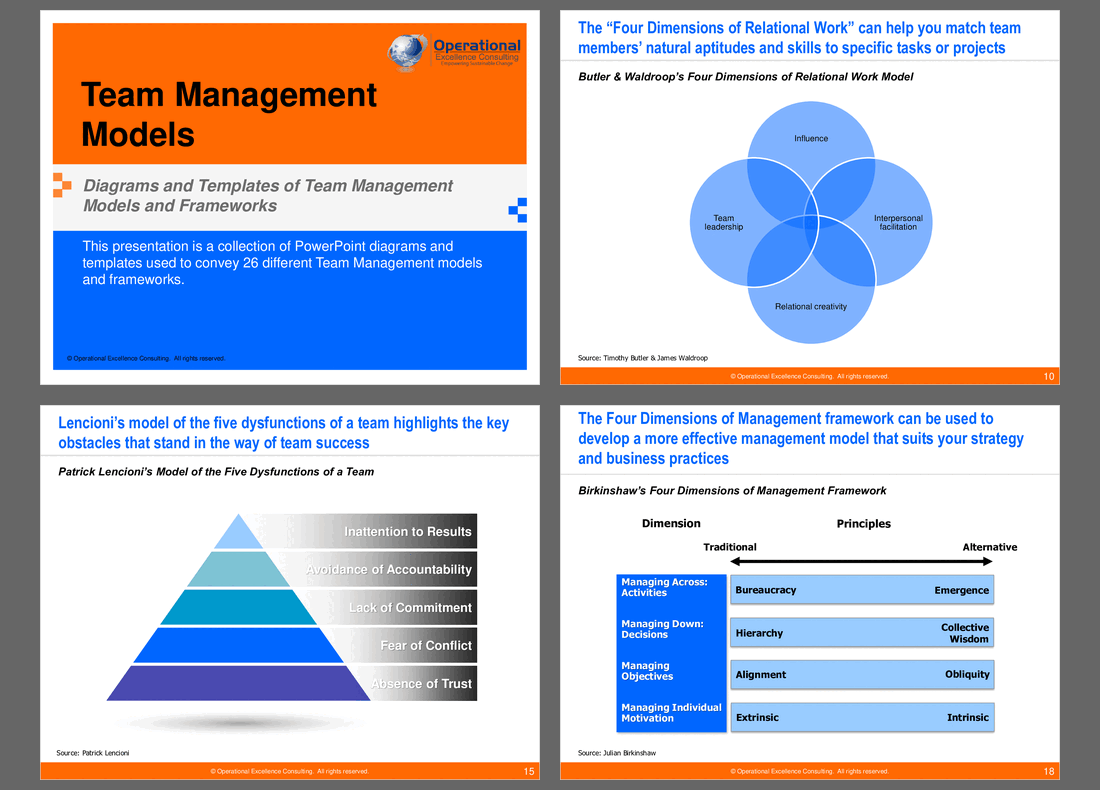
This presentation is a collection of PowerPoint diagrams and templates used to convey 26 different Team Management models and frameworks.

INCLUDED MODELS/FRAMEWORKS:

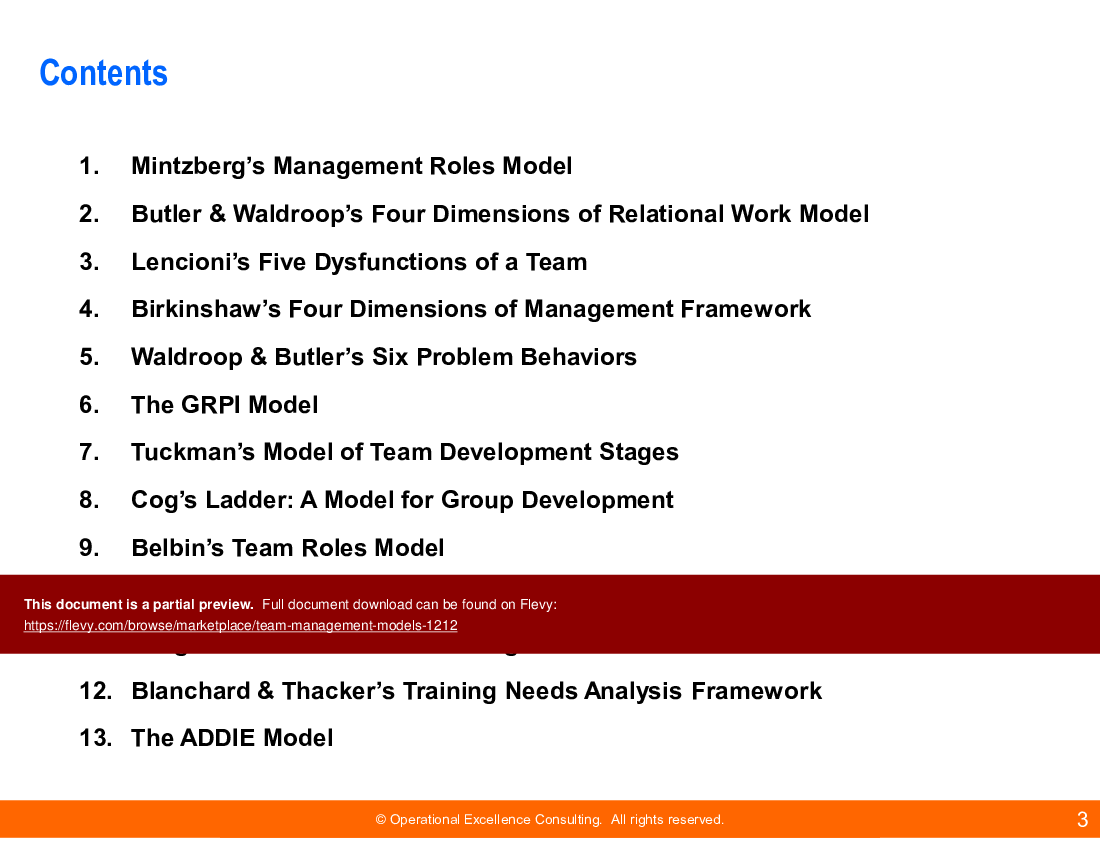
1. Mintzberg's Management Roles Model
2. Butler & Waldroop's Four Dimensions of Relational Work Model
3. Lencioni's Five Dysfunctions of a Team
4. Birkinshaw's Four Dimensions of Management Framework
5. Waldroop & Butler's Six Problem Behaviors
6. The GRPI Model
7. Tuckman's Model of Team Development Stages
8. Cog's Ladder: A Model for Group Development
9. Belbin's Team Roles Model
10. The JD-R Model
11. Margerison-McCann Team Management Profile
12. Blanchard & Thacker's Training Needs Analysis Framework
13. The ADDIE Model
14. The Conscious Competence Learning Model
15. Kirkpatrick's Four-Level Training Evaluation Model
16. Heron's Six Categories of Intervention
17. The Emotional Competence Framework
18. The Nine-Box Grid for Talent Management
19. The GROW Model
20. Gibb's Reflective Cycle
21. Maslow's Hierarchy of Needs
22. Hertzberg's Motivators & Hygiene Factors
23. The Johari Window
24. Lewin's Three Stage Change Model
25. Kotter's Eight Phases of Change
26. De Bono's Six Thinking Hats

This PPT is an essential toolkit for leaders seeking to enhance team performance and address common challenges. Each model is meticulously designed to provide actionable insights and practical frameworks that can be immediately implemented. From understanding the intricacies of interpersonal dynamics with Mintzberg's Management Roles Model to navigating the complexities of team development stages with Tuckman's Model, this presentation covers a comprehensive range of scenarios.

The preview images illustrate the depth and breadth of the content, showcasing detailed breakdowns of each model. For instance, Lencioni's Five Dysfunctions of a Team is visually represented to highlight key obstacles, while the GRPI Model offers a structured approach to clarifying team goals, roles, processes, and relationships. This document is a valuable resource for any executive aiming to foster a high-performing, cohesive team environment.

Got a question about the product? Email us at support@flevy.com or ask the author directly by using the "Ask the Author a Question" form. If you cannot view the preview above this document description, go here to view the large preview instead.

MARCUS OVERVIEW

This synopsis was written by Marcus [?] based on the analysis of the full 128-slide presentation.


Executive Summary
The Team Management Models presentation offers a comprehensive collection of PowerPoint diagrams and templates designed to convey 26 distinct team management models and frameworks. Created by Operational Excellence Consulting, this resource is tailored for professionals seeking to enhance team dynamics, improve leadership effectiveness, and foster collaboration within organizations. By utilizing these models, users can better understand team roles, address dysfunctions, and implement effective management strategies, ultimately driving improved performance and engagement.

Who This Is For and When to Use
•  Team leaders and managers aiming to enhance team performance and collaboration
•  Human resources professionals focused on team development and training
•  Organizational development consultants seeking frameworks for client engagements
•  Change management practitioners looking for structured approaches to team dynamics

Best-fit moments to use this deck:
•  During team-building workshops to establish roles and responsibilities
•  In leadership training sessions to address common team dysfunctions
•  When implementing change initiatives that require strong team alignment
•  For strategic planning sessions to align team objectives with organizational goals

Learning Objectives
•  Define key team management models and their applications in real-world scenarios
•  Identify and address the 5 dysfunctions of a team to enhance collaboration
•  Apply the GRPI model to clarify team goals, roles, processes, and interpersonal relationships
•  Utilize the JD-R model to assess job demands and resources for team well-being
•  Implement the GROW model to structure effective coaching conversations
•  Analyze team dynamics using the Johari Window to improve self-awareness and communication

Table of Contents
•  Mintzberg’s Management Roles Model (page 5)
•  Butler & Waldroop’s Four Dimensions of Relational Work Model (page 10)
•  Lencioni’s Five Dysfunctions of a Team (page 15)
•  Birkinshaw’s Four Dimensions of Management Framework (page 18)
•  Waldroop & Butler’s Six Problem Behaviors (page 21)
•  The GRPI Model (page 29)
•  Tuckman’s Model of Team Development Stages (page 33)
•  Cog’s Ladder: A Model for Group Development (page 36)
•  Belbin’s Team Roles Model (page 39)
•  The JD-R Model (page 42)
•  Margerison-McCann Team Management Profile (page 48)
•  Blanchard & Thacker’s Training Needs Analysis Framework (page 51)
•  The ADDIE Model (page 54)
•  The Conscious Competence Learning Model (page 58)
•  Kirkpatrick’s Four-Level Training Evaluation Model (page 62)
•  Heron’s Six Categories of Intervention (page 66)
•  The Emotional Competence Framework (page 70)
•  The Nine-Box Grid for Talent Management (page 74)
•  The GROW Model (page 78)
•  Gibb’s Reflective Cycle (page 85)
•  Maslow’s Hierarchy of Needs (page 89)
•  Herzberg’s Motivators & Hygiene Factors (page 94)
•  The Johari Window (page 99)
•  Lewin’s Three-Stage Change Model (page 109)
•  Kotter’s Eight Phases of Change (page 113)
•  De Bono’s Six Thinking Hats (page 121)

Primary Topics Covered
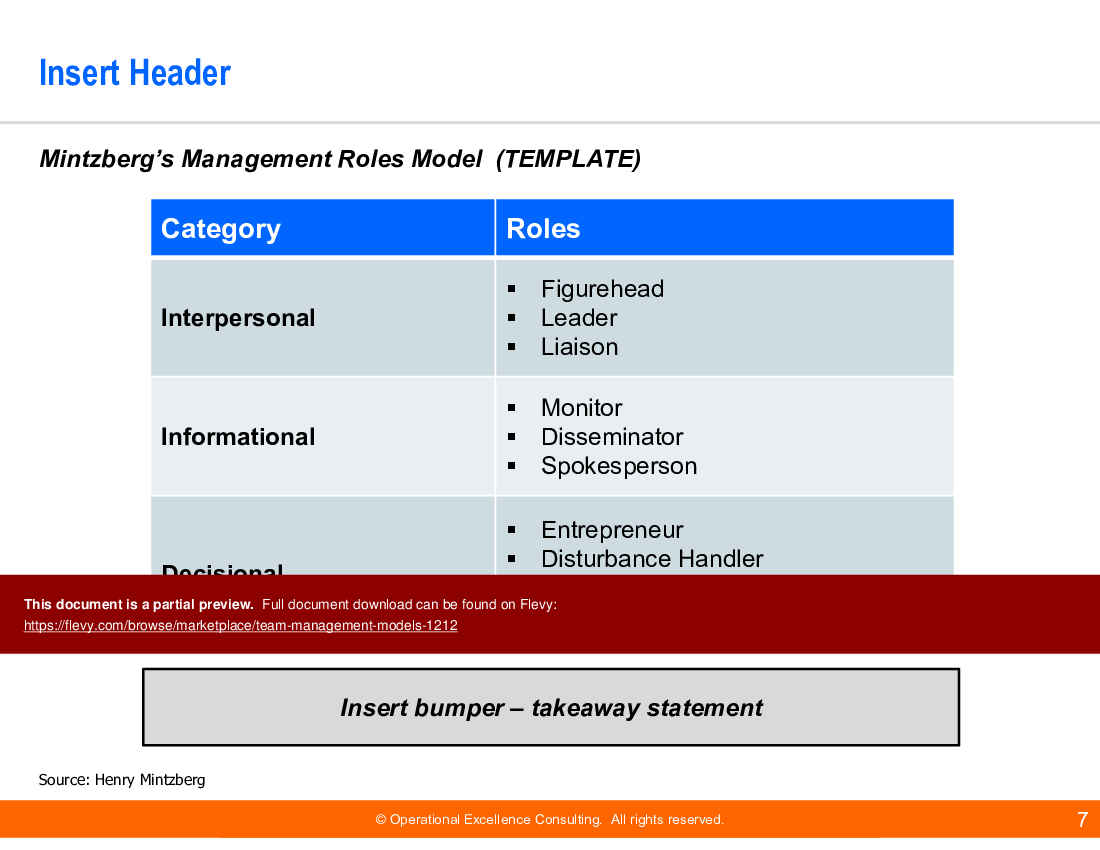
•  Mintzberg’s Management Roles Model - This model defines ten essential roles that managers play, categorized into interpersonal, informational, and decisional roles, enhancing understanding of managerial responsibilities.
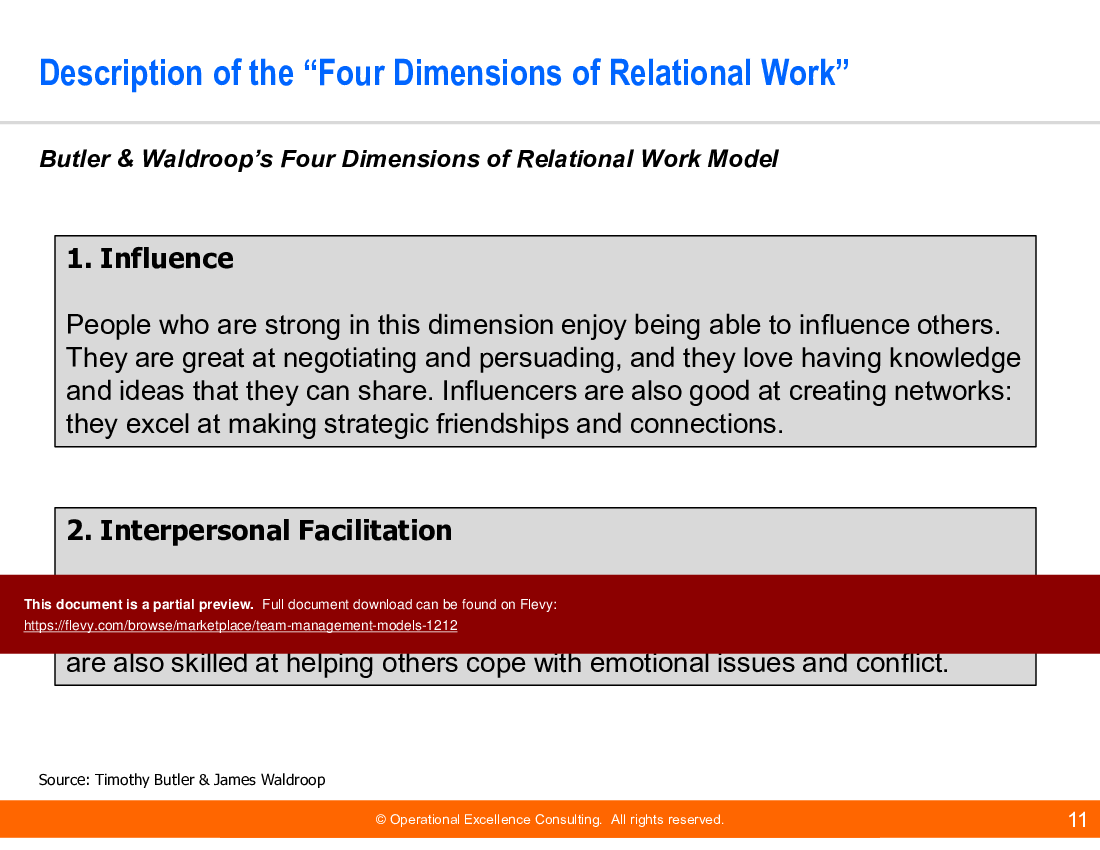
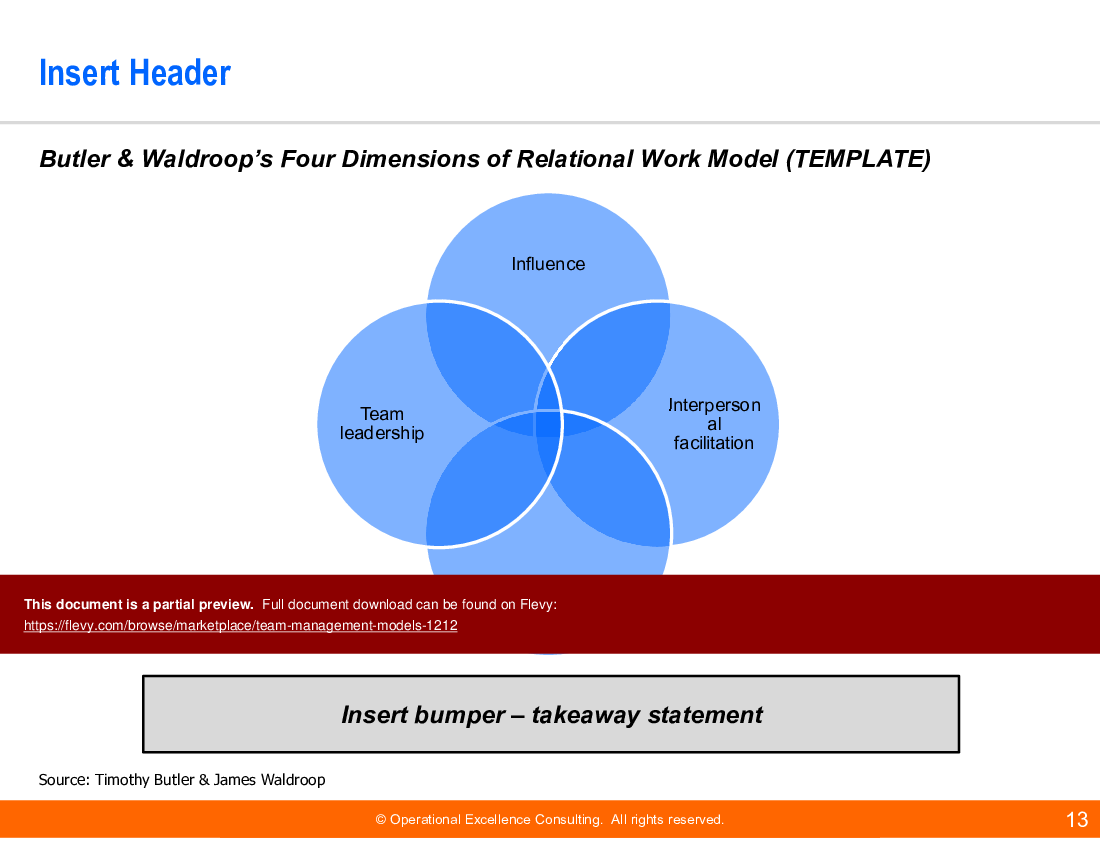
•  Butler & Waldroop’s Four Dimensions of Relational Work Model - This framework helps match team members' natural aptitudes to specific tasks, focusing on influence, interpersonal facilitation, relational creativity, and team leadership.
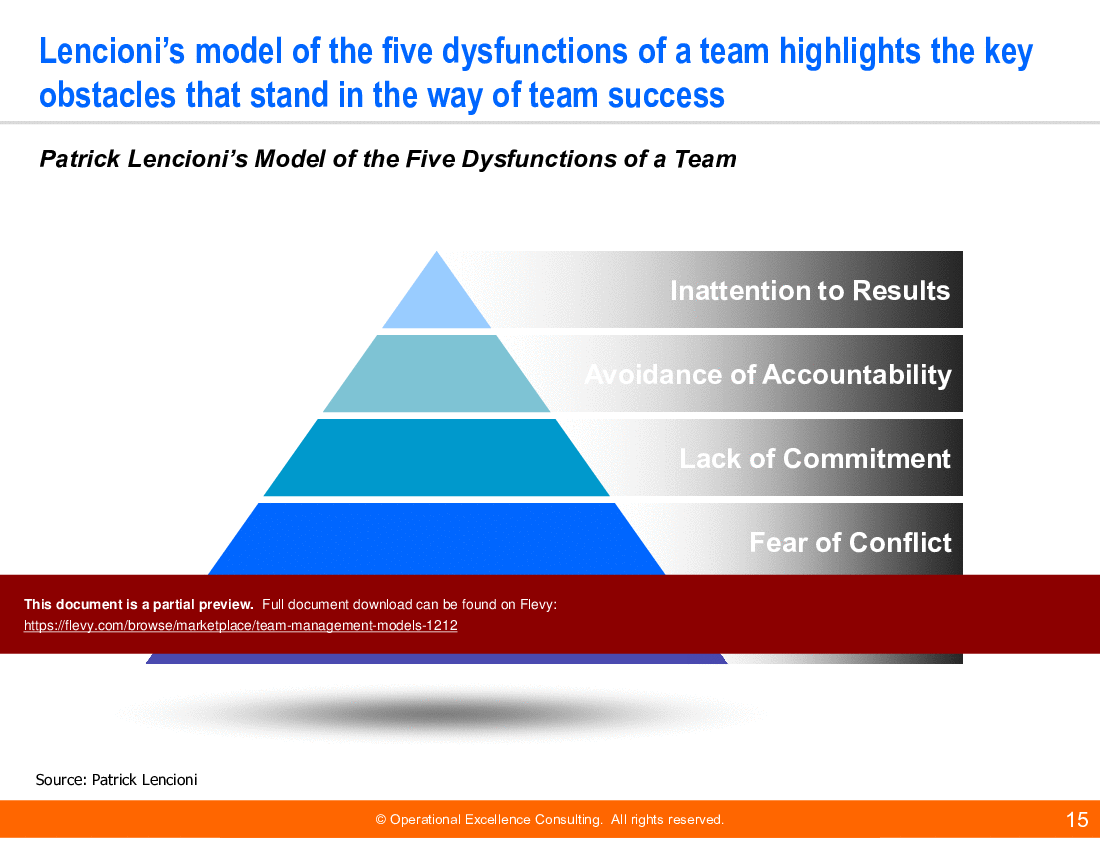
•  Lencioni’s Five Dysfunctions of a Team - Identifies key obstacles to team success, including absence of trust, fear of conflict, lack of commitment, avoidance of accountability, and inattention to results.
•  The GRPI Model - A framework for clarifying team purpose, setting priorities, and enhancing efficiency through defined goals, roles, processes, and interpersonal relationships.
•  Tuckman’s Model of Team Development Stages - Outlines the stages of team development: forming, storming, norming, and performing, providing insights into team dynamics over time.
•  Belbin’s Team Roles Model - Identifies nine roles that contribute to team success, helping teams leverage strengths and manage weaknesses effectively.

Deliverables, Templates, and Tools
•  PowerPoint templates for each of the 26 team management models
•  Diagrams illustrating key concepts and frameworks for easy understanding
•  Customizable templates for team assessments and evaluations
•  Frameworks for conducting team workshops and training sessions
•  Tools for analyzing team dynamics and roles

Slide Highlights
•  Overview of Mintzberg’s Management Roles Model with clear role definitions
•  Visual representation of Lencioni’s Five Dysfunctions of a Team
•  Detailed breakdown of the GRPI Model for team effectiveness
•  Stages of Tuckman’s Model illustrated for clarity in team development
•  Summary of Belbin’s Team Roles with actionable insights

Potential Workshop Agenda
Team Dynamics Workshop (90 minutes)
•  Introduction to team management models and their relevance
•  Interactive session on identifying team roles using Belbin’s model
•  Group discussion on addressing Lencioni’s dysfunctions

Coaching and Development Session (60 minutes)
•  Overview of the GROW model for effective coaching
•  Role-playing scenarios to practice coaching conversations
•  Reflection on personal coaching styles and areas for improvement

Customization Guidance
•  Tailor the templates to reflect your organization’s specific team structures and dynamics
•  Modify the frameworks to align with your strategic objectives and team goals
•  Adapt the language and examples in the slides to resonate with your audience

Secondary Topics Covered
•  Emotional intelligence in team dynamics
•  The impact of motivation on team performance
•  Strategies for effective communication within teams
•  Change management principles and their application in team settings
•  Techniques for fostering creativity and innovation in teams

Topic FAQ

What are the typical stages of team development and how are they used in practice?

A commonly used lifecycle is Tuckman’s Model of Team Development, which describes forming, storming, norming, and performing to help leaders diagnose where a team is and choose interventions appropriate to each stage; Tuckman’s stages are forming, storming, norming, performing.

How does the GRPI model help clarify team roles and reduce conflict?

The GRPI model structures conversations around Goals, Roles, Processes, and Interpersonal relationships to reduce ambiguity and align expectations; it is used to audit and clarify team purpose and responsibilities using the GRPI dimensions.

Which diagnostic models identify common team dysfunctions and problem behaviors?

Lencioni’s Five Dysfunctions identifies absence of trust, fear of conflict, lack of commitment, avoidance of accountability, and inattention to results; Waldroop & Butler’s Six Problem Behaviors is another diagnostic set included in many toolkits, including Lencioni’s 5 dysfunctions.

What should I look for when choosing a team management template deck for workshops?

Look for clear diagrams, customizable assessment templates, facilitation agendas, and coverage of diagnostic and developmental models so you can run exercises and follow-up actions; Team Management Models includes slide templates, diagrams, assessment tools, and a sample workshop agenda covering 26 models.

How do I assess whether buying a paid template deck is worth the cost versus free resources?

Compare scope (number of models), inclusion of editable templates and workshop agendas, and customization guidance; a bundled paid deck can consolidate multiple frameworks and ready-to-use materials — for example, Team Management Models bundles 26 distinct models and templates.

I need to run a 90-minute team workshop to diagnose roles and dysfunctions — what frameworks and agenda elements work best?

Combine a short introduction to diagnostic models, an interactive role-identification exercise (e.g., Belbin), and a group discussion on dysfunctions (e.g., Lencioni) with action planning; the Team Management Models preview includes a 90-minute Team Dynamics Workshop agenda using Belbin and Lencioni.

Which coaching frameworks help structure one-on-one performance conversations?

The GROW model structures coaching into Goal, Reality, Options, and Will to guide practical coaching conversations; complementary learning models like Conscious Competence and Johari Window support self-awareness and reflection and include GROW as a coaching tool.

What evaluation frameworks help measure the impact of team training programs?

Kirkpatrick’s Four-Level Training Evaluation Model is used to assess reaction, learning, behavior, and results, providing a structured way to evaluate training outcomes; Kirkpatrick’s model is included as a measurement framework.

How can these team management models be adapted for remote or virtual teams?

The underlying principles can be applied to virtual communication and collaboration by clarifying goals, roles, and processes (GRPI) and assessing remote job demands and resources (JD-R); the resource notes applicability to remote teams and suggests focusing on virtual communication and collaboration strategies using GRPI and JD-R.

Document FAQ
These are questions addressed within this presentation.

What are the key benefits of using team management models?
Utilizing team management models helps clarify roles, improve communication, and enhance overall team effectiveness, leading to better performance and engagement.

How can I customize the templates for my organization?
Templates can be tailored by incorporating your organization's branding, specific team dynamics, and relevant case studies or examples.

What is the purpose of the GRPI model?
The GRPI model clarifies team goals, roles, processes, and interpersonal relationships, providing a structured approach to enhance team effectiveness.

How does Lencioni’s model help in team development?
Lencioni’s model identifies common dysfunctions that hinder team success, allowing teams to address these issues proactively and improve collaboration.

Can these models be applied to remote teams?
Yes, the principles and frameworks can be adapted for remote teams, focusing on virtual communication and collaboration strategies.

What is the significance of Tuckman’s stages in team development?
Understanding Tuckman’s stages helps teams navigate their development process, facilitating smoother transitions and improved collaboration.

How can I measure the effectiveness of team interventions?
Utilize evaluation frameworks like Kirkpatrick’s Four-Level Training Evaluation Model to assess the impact of interventions on team performance.

What resources are available for further learning?
Operational Excellence Consulting offers additional presentations and resources on team management and development, available on their website.

Glossary
•  Team Dynamics - The interactions and relationships among team members that influence performance.
•  Interpersonal Roles - Roles that involve interaction with others, such as leader and liaison.
•  GRPI Model - A framework for defining Goals, Roles, Processes, and Interpersonal Relationships in teams.
•  Five Dysfunctions - Key obstacles identified by Lencioni that hinder team success.
•  Tuckman’s Stages - The phases of team development: forming, storming, norming, and performing.
•  Belbin’s Roles - Nine distinct roles that contribute to team success, each with unique strengths and weaknesses.
•  GROW Model - A structured approach for coaching conversations, focusing on Goal, Reality, Options, and Will.
•  Emotional Intelligence - The ability to recognize and manage one’s own emotions and the emotions of others.
•  Change Management - The process of guiding individuals and teams through organizational change.
•  Creativity Techniques - Methods used to foster innovative thinking and problem-solving within teams.
•  Motivators and Hygiene Factors - Concepts from Herzberg’s theory that differentiate factors leading to job satisfaction and dissatisfaction.
•  Johari Window - A communication model used to improve self-awareness and understanding between individuals.

Source: Best Practices in Business Framework PowerPoint Diagrams, Team Management, Henry Mintzberg PowerPoint Slides: Team Management Models PowerPoint (PPTX) Presentation Slide Deck, Operational Excellence Consulting


$59.00
Developed by a Change Management Expert with a wealth of experience at industry giants like Microsoft, IBM and Panasonic, this collection serves as your guide to achieving transformative change and enhancing stakeholder satisfaction.
Add to Cart
  

ABOUT THE AUTHOR

Author image
Additional documents from author: 257
Terms of usage (for all documents from this author)

Operational Excellence Consulting, founded in 2009 by Allan Ung, draws from extensive experience at Microsoft, IBM, and Underwriters Laboratories (UL). We specialize in strategy deployment, customer experience design, and operational excellence, applying Design Thinking, Lean, and Systems Thinking to maximize customer value and minimize waste.

Our ... [read more]

Ask the Author a Question

You must be logged in to contact the author.

Click here to log in Click here register

Did you know?
The average daily rate of a McKinsey consultant is $6,625 (not including expenses). The average price of a Flevy document is $65.

Bundle and save! You can save up to % with bundles!

View bundle(s)


Trusted by over 10,000+ Client Organizations
Since 2012, we have provided business templates to over 10,000 businesses and organizations of all sizes, from startups and small businesses to the Fortune 100, in over 130 countries.
AT&T GE Cisco Intel IBM Coke Dell Toyota HP Nike Samsung Microsoft Astrazeneca JP Morgan KPMG Walgreens Walmart 3M Kaiser Oracle SAP Google E&Y Volvo Bosch Merck Fedex Shell Amgen Eli Lilly Roche AIG Abbott Amazon PwC T-Mobile Broadcom Bayer Pearson Titleist ConEd Pfizer NTT Data Schwab


Read Customer Testimonials

 
"As an Independent Management Consultant, I find Flevy to add great value as a source of best practices, templates and information on new trends. Flevy has matured and the quality and quantity of the library is excellent. Lastly the price charged is reasonable, creating a win-win value for "

– Jim Schoen, Principal at FRC Group
 
"If you are looking for great resources to save time with your business presentations, Flevy is truly a value-added resource. Flevy has done all the work for you and we will continue to utilize Flevy as a source to extract up-to-date information and data for our virtual and onsite presentations!"

– Debbi Saffo, President at The NiKhar Group
 
"Flevy.com has proven to be an invaluable resource library to our Independent Management Consultancy, supporting and enabling us to better serve our enterprise clients.

The value derived from our [FlevyPro] subscription in terms of the business it has helped to gain far exceeds the investment made, making a subscription a no-brainer for any growing consultancy – or in-house strategy team."

– Dean Carlton, Chief Transformation Officer, Global Village Transformations Pty Ltd.
 
"As a small business owner, the resource material available from FlevyPro has proven to be invaluable. The ability to search for material on demand based our project events and client requirements was great for me and proved very beneficial to my clients. Importantly, being able to easily edit and tailor "

– Michael Duff, Managing Director at Change Strategy (UK)
 
"I am extremely grateful for the proactiveness and eagerness to help and I would gladly recommend the Flevy team if you are looking for data and toolkits to help you work through business solutions."

– Trevor Booth, Partner, Fast Forward Consulting
 
"One of the great discoveries that I have made for my business is the Flevy library of training materials.

As a Lean Transformation Expert, I am always making presentations to clients on a variety of topics: Training, Transformation, Total Productive Maintenance, Culture, Coaching, Tools, Leadership Behavior, etc. Flevy "

– Ed Kemmerling, Senior Lean Transformation Expert at PMG
 
"Flevy is now a part of my business routine. I visit Flevy at least 3 times each month.

Flevy has become my preferred learning source, because what it provides is practical, current, and useful in this era where the business world is being rewritten.

In today's environment where there are so "

– Omar Hernán Montes Parra, CEO at Quantum SFE
 
"[Flevy] produces some great work that has been/continues to be of immense help not only to myself, but as I seek to provide professional services to my clients, it gives me a large "tool box" of resources that are critical to provide them with the quality of service and outcomes they are expecting."

– Royston Knowles, Executive with 50+ Years of Board Level Experience


Save with Bundles

This document is available as part of the following discounted bundle(s):

Save %!
Team Excellence Toolkit

This bundle contains 2 total documents. See all the documents to the right.

$89.00


Add Bundle & Save


Customers Also Bought These Documents


Customers Also Like These Documents

Explore Related Management Topics


Your Recently Viewed Documents
Receive our FREE Primer on Lean Management

This 32-page presentation from Operational Excellence Consulting explains the Lean Management philosophy, based on the Toyota Production System (TPS). Learn to eliminate waste.