
Product Lifecycle   34-slide PPT PowerPoint presentation slide deck (PPT)
$39.00

Product Lifecycle (34-slide PPT PowerPoint presentation slide deck (PPT)) Preview Image
Log in to unlock full preview.
Product Lifecycle (34-slide PPT PowerPoint presentation slide deck (PPT)) Preview Image
Arrow   Click main image to view in full screen.

Product Lifecycle (PowerPoint PPT Slide Deck)

PowerPoint (PPT) 34 Slides

#3 in Product Launch Strategy $39.00
This presentation is created by former McKinsey, BCG, Deloitte, EY, and Capgemini consultants. It explains the approach to Product Lifecycle Analysis utilized by global strategy consulting firms.
Add to Cart


Immediate download
Free lifetime updates

MATURITY MODEL PPT DESCRIPTION

34-slide PowerPoint presentation for Product Lifecycle Analysis developed by former McKinsey, BCG, Deloitte, EY, and Capgemini consultants, outlining a 5-phase approach to analyzing product lifecycles. Includes tools and templates such as the Bass Diffusion Model framework, Consumer Adoption Curve visualization, Lifecycle-Performance Factor Matrix template, and Strategic Positioning Matrix. Targeted at marketing executives, product managers, business analysts, and consultants. Used for launch planning, growth analysis, and competitive positioning. Sold as a digital download on Flevy.
Use this deck when organizations need to define stage-specific product marketing actions—during launches, when diagnosing stagnant products, or when assessing substitution risk and competitive position.
  Marketing executives designing stage-specific launch and pricing plans using the Consumer Adoption Curve and stage-based strategies.
  Product managers forecasting adoption and revenue for new releases using the Bass Diffusion Model and historical sales inputs.
  Business analysts assessing market potential, competitors, and barriers via the Lifecycle-Performance Factor Matrix.
  Consultants building strategic positioning recommendations and substitution risk analysis for clients.
The 5-phase, hypothesis-driven approach that combines segmentation, quantitative forecasting, and matrix-based competitive assessment mirrors methods used in strategy consulting at McKinsey, BCG, and Deloitte.

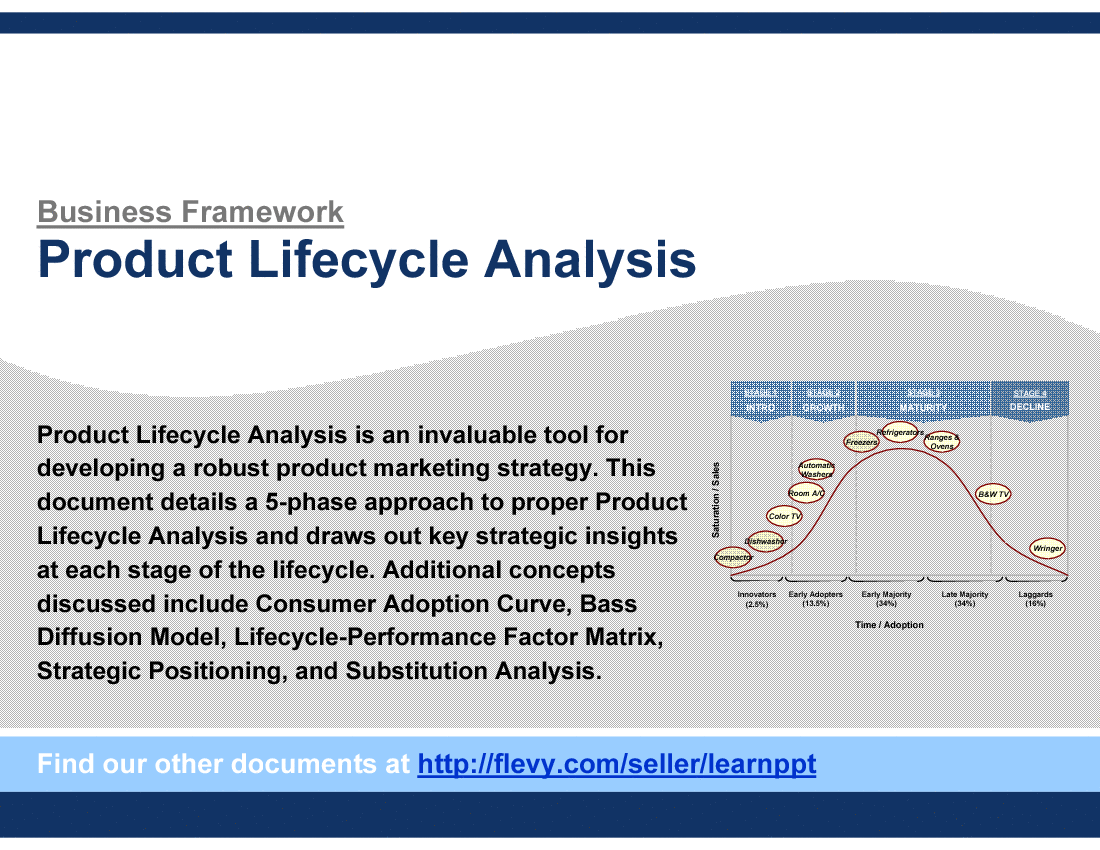
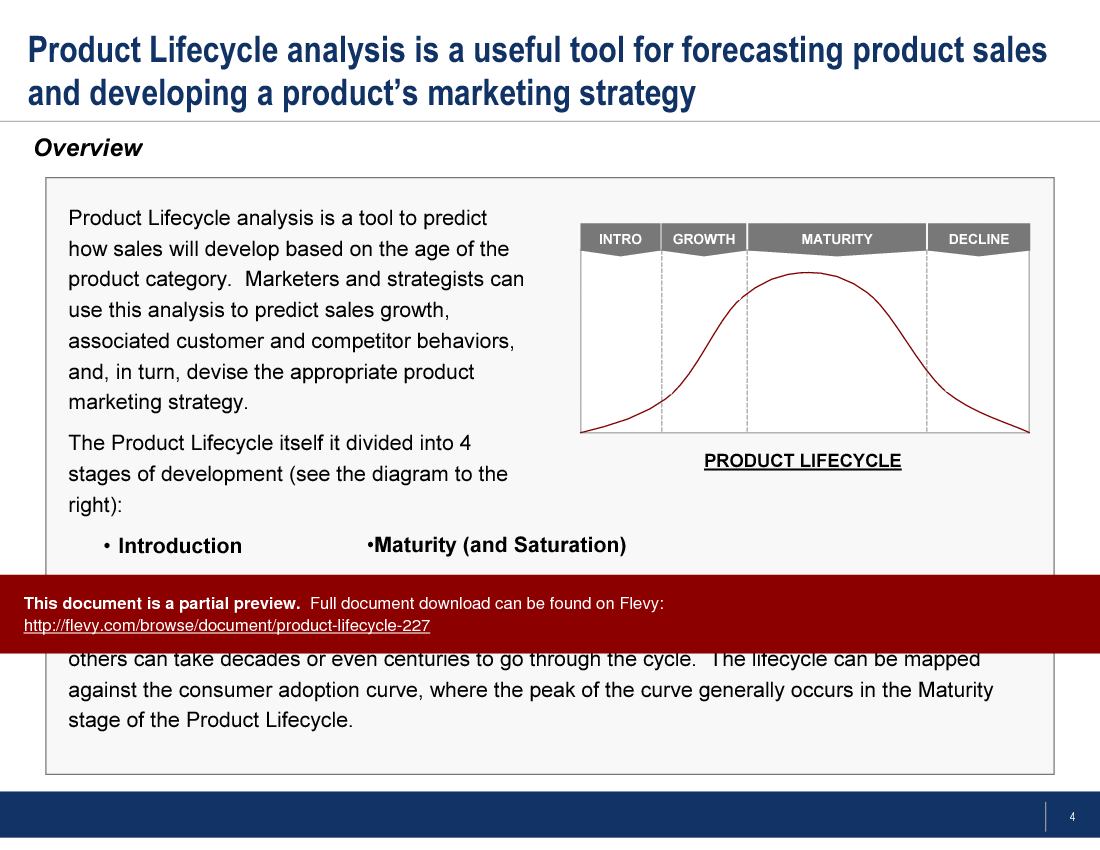
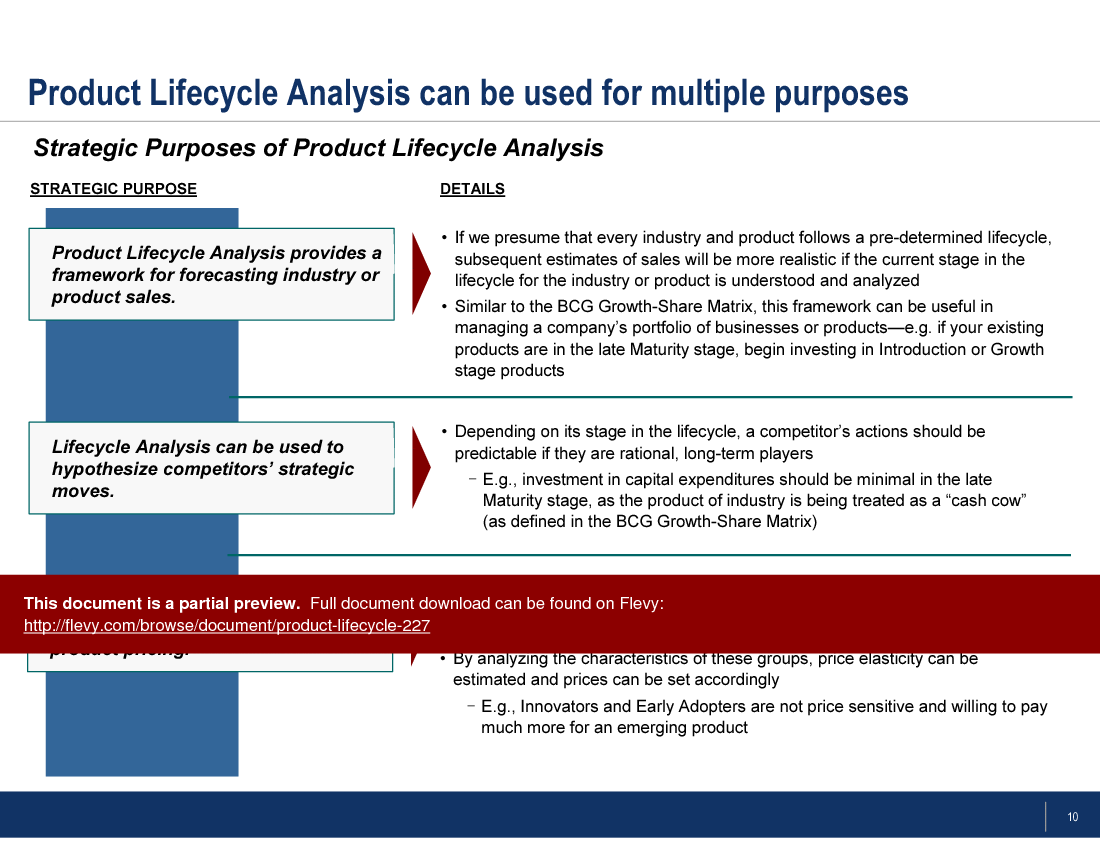
Product Lifecycle Analysis is an invaluable tool for developing a robust product marketing strategy. Marketers and strategists can use this analysis to predict sales growth, associated customer and competitor behaviors, and, in turn, devise the appropriate product marketing strategy.

The Product Lifecycle itself it divided into 4 stages of development:
•  Introduction
•  Growth
•  Maturity (and Saturation)
•  Decline (and Termination)

The length of each period varies tremendously. Some products have very short cycles, whereas others can take decades or even centuries to go through the cycle. The lifecycle can be mapped against the consumer adoption curve, where the peak of the curve generally occurs in the Maturity stage of the Product Lifecycle.

This document details a 5-phase approach to proper Product Lifecycle Analysis and draws out key strategic insights at each stage of the lifecycle. Additional concepts discussed include:
•  Consumer Adoption Curve
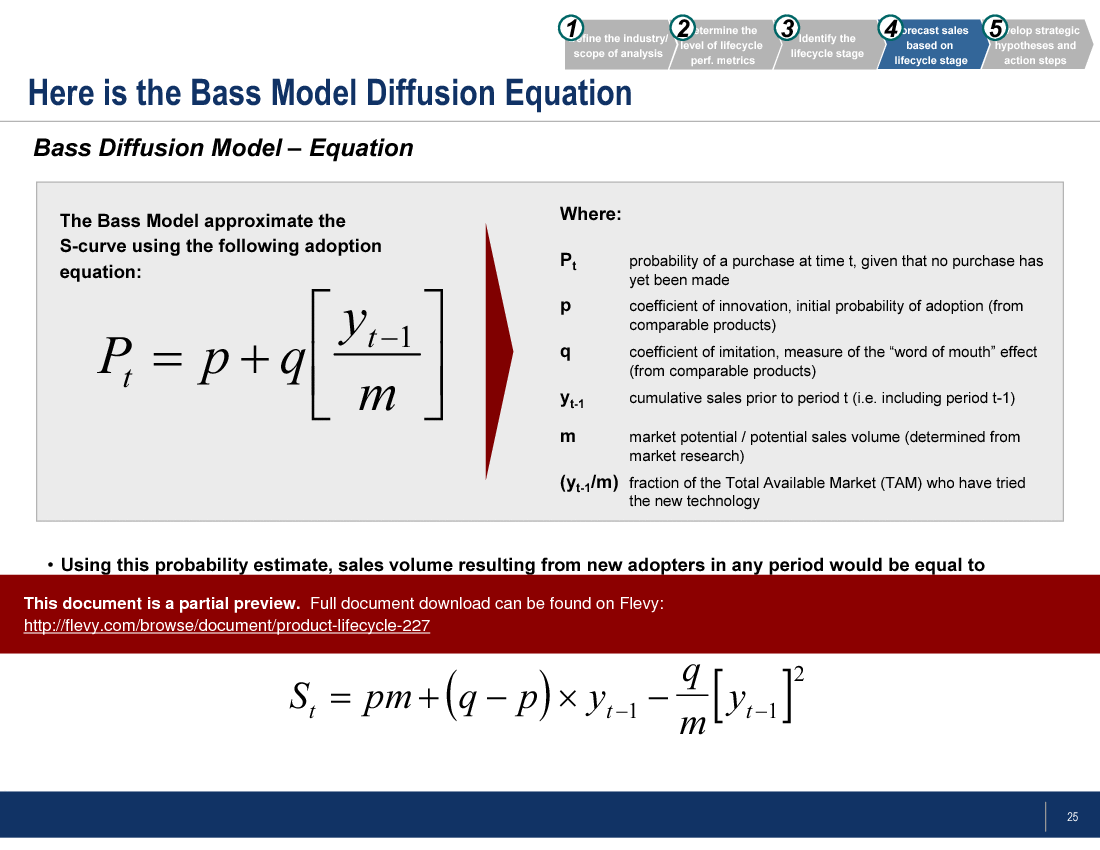
•  Bass Diffusion Model
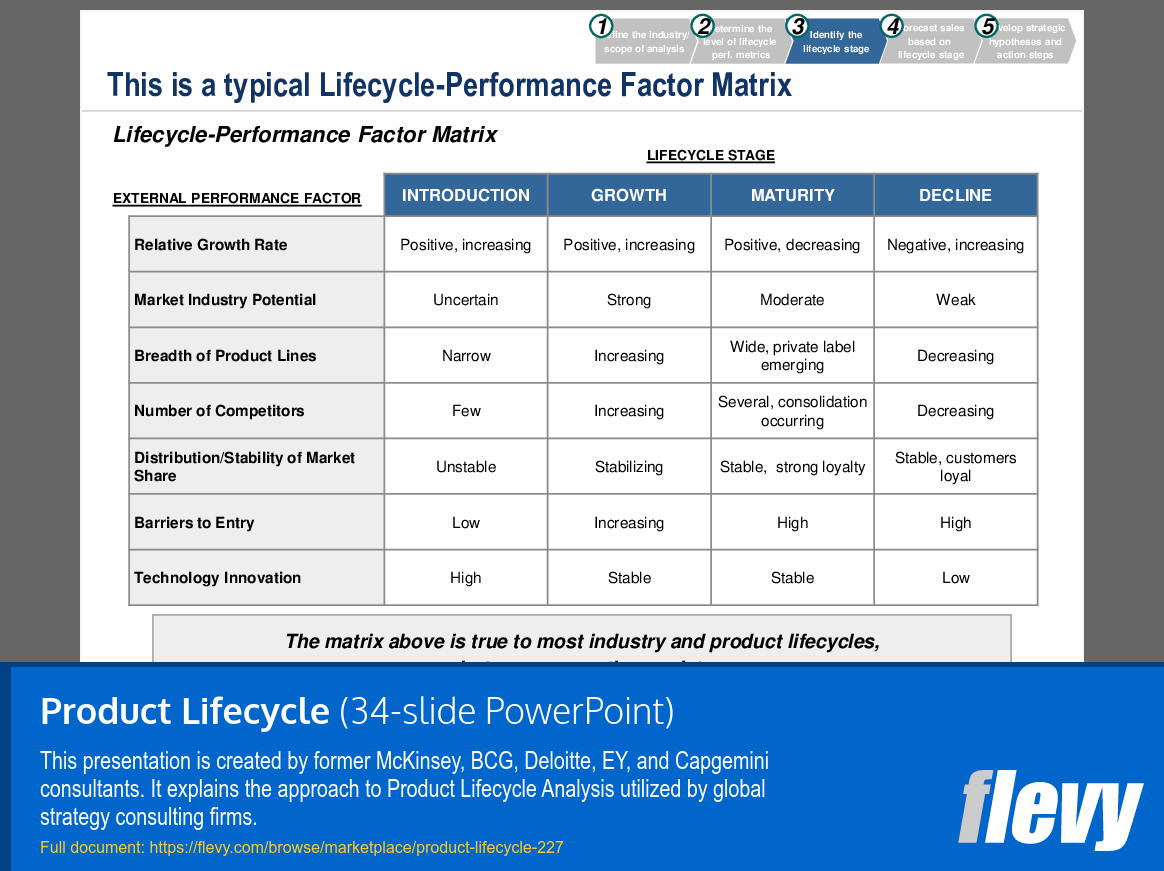
•  Lifecycle-Performance Factor Matrix
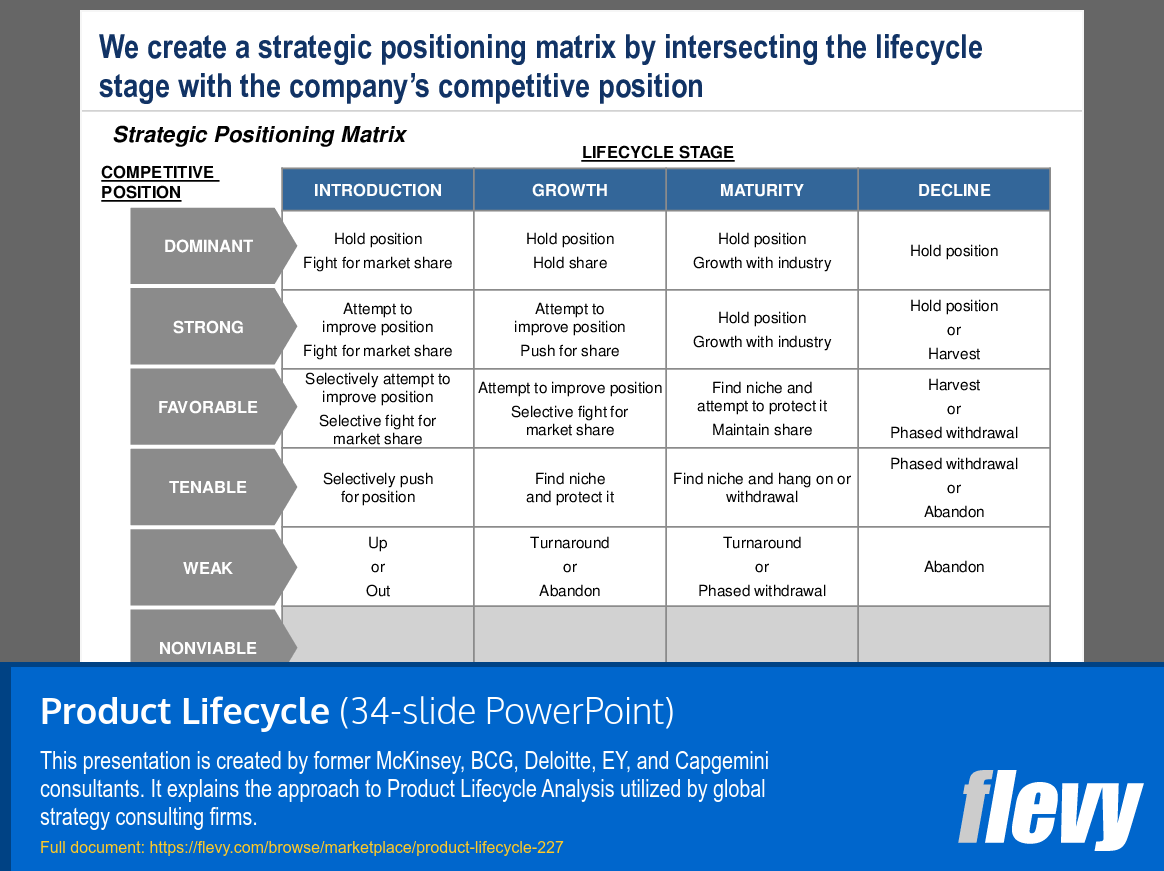
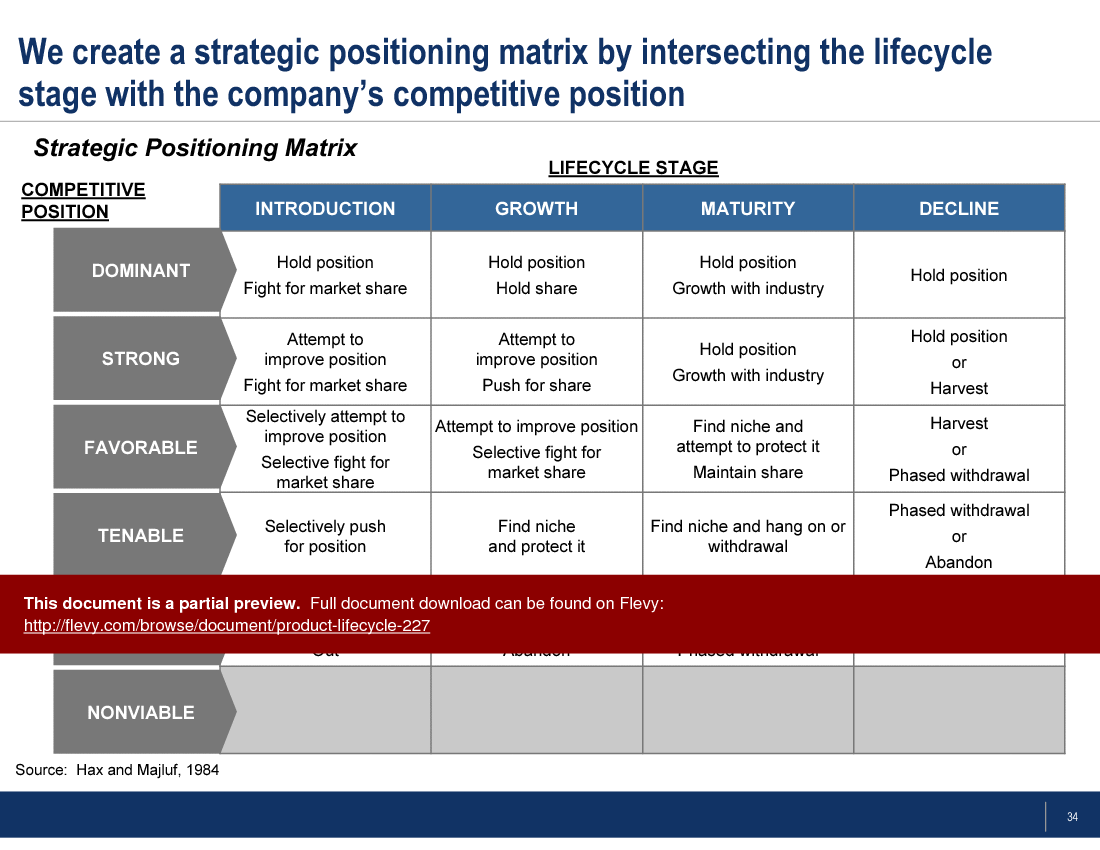
•  Strategic Positioning
•  Substitution Analysis

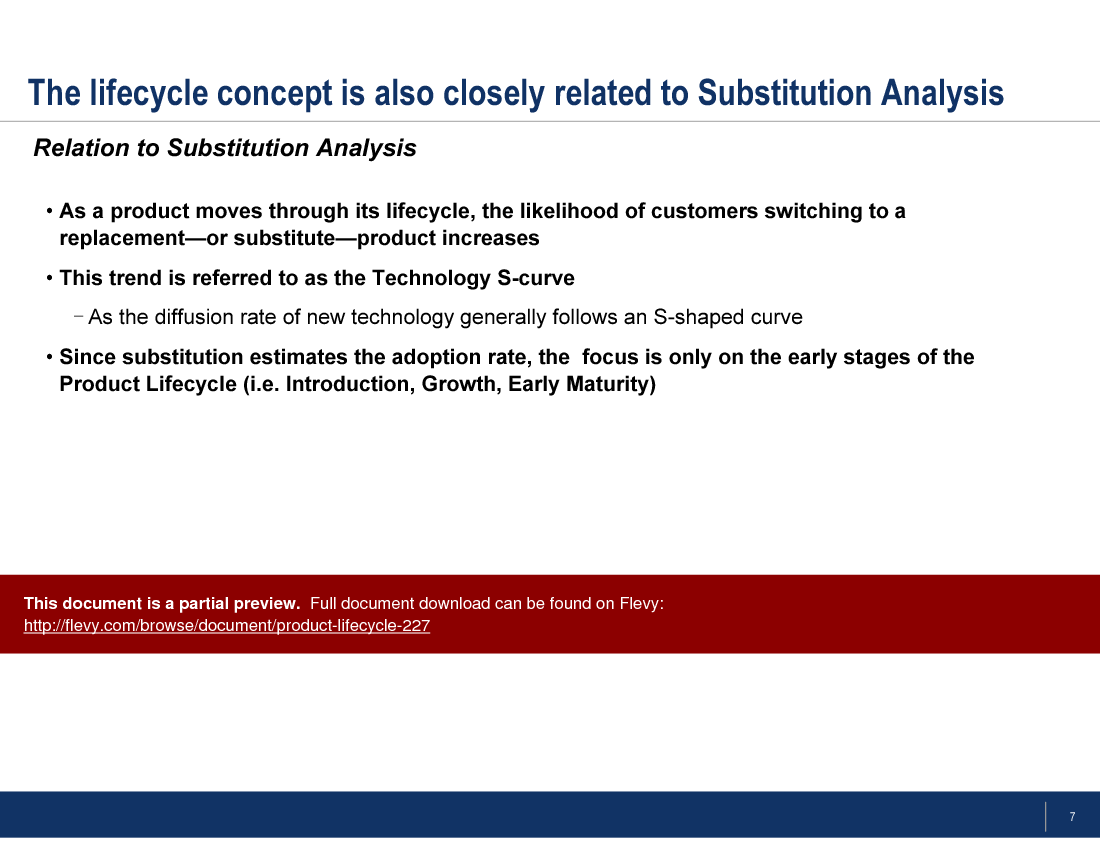
The document offers a detailed exploration of the Substitution Analysis, highlighting how the likelihood of customers switching to alternative products increases as a product progresses through its lifecycle. This is encapsulated in the Technology S-curve, which provides a framework for understanding the diffusion rate of new technologies. The focus is on the early stages of the Product Lifecycle, where strategic decisions can significantly impact market positioning and competitive advantage.

The Product Lifecycle Analysis also integrates the Lifecycle-Performance Factor Matrix, which helps in identifying key performance metrics across different stages. This matrix is crucial for understanding market potential, competitive dynamics, and strategic positioning. By leveraging this analysis, executives can make informed decisions on product development, marketing strategies, and resource allocation to maximize profitability and market share.

Got a question about the product? Email us at support@flevy.com or ask the author directly by using the "Ask the Author a Question" form. If you cannot view the preview above this document description, go here to view the large preview instead.

MARCUS OVERVIEW

This synopsis was written by Marcus [?] based on the analysis of the full 34-slide presentation.


Executive Summary
This Product Lifecycle Analysis presentation is designed to equip corporate executives and consultants with a structured framework for developing effective product marketing strategies. Created by former consultants from McKinsey, BCG, and Deloitte, this consulting-grade PowerPoint deck outlines a 5-phase approach to Product Lifecycle Analysis, detailing key strategic insights at each stage. Users will learn to forecast product sales, understand consumer behavior, and devise targeted marketing strategies, ultimately enhancing their decision-making processes.

Who This Is For and When to Use
•  Marketing executives looking to refine product strategies
•  Product managers tasked with lifecycle management
•  Business analysts focused on market forecasting
•  Consultants advising clients on product positioning

Best-fit moments to use this deck:
•  During product launch planning to establish marketing strategies
•  When analyzing existing products to identify growth opportunities
•  In strategic meetings to assess competitive positioning and market dynamics

Learning Objectives
•  Define the Product Lifecycle and its stages for effective analysis
•  Identify key consumer segments using the Consumer Adoption Curve
•  Develop strategic hypotheses based on lifecycle stages
•  Forecast sales using historical data and the Bass Diffusion Model
•  Analyze competitive dynamics through the Lifecycle-Performance Factor Matrix
•  Establish pricing strategies tailored to each lifecycle stage

Table of Contents
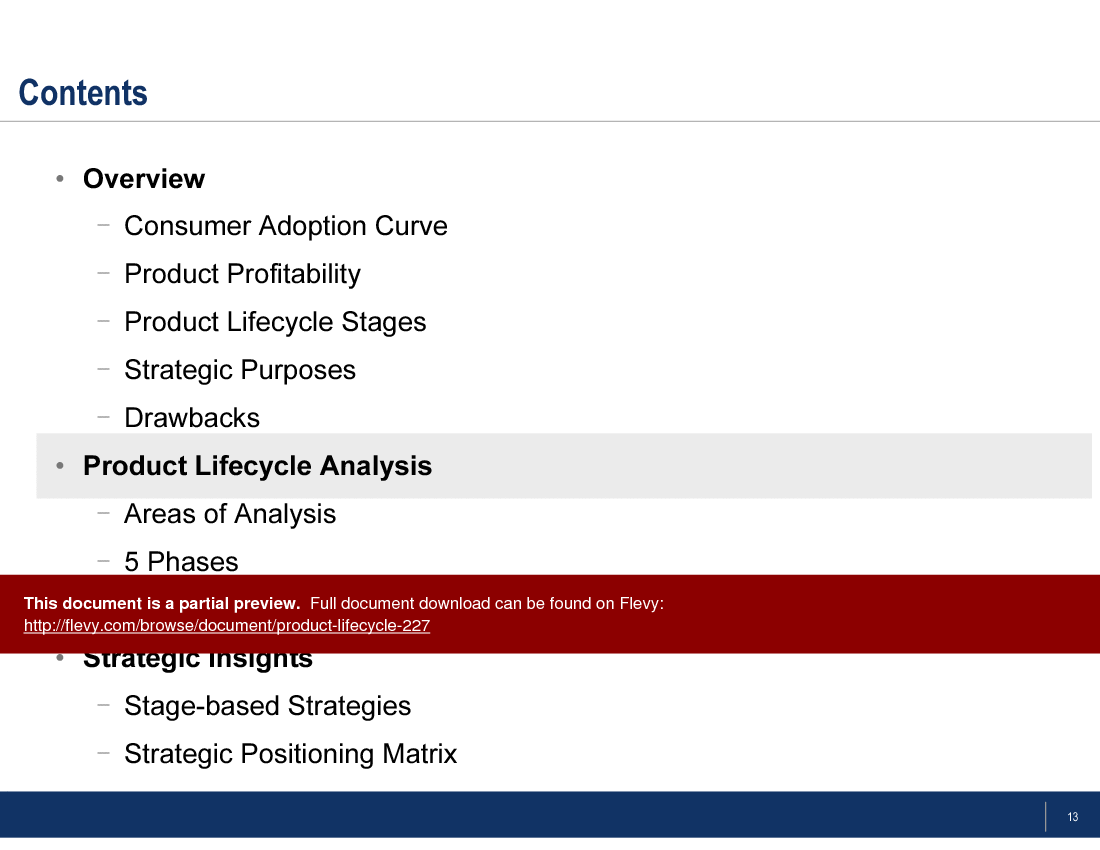
•  Overview (page 3)
•  Consumer Adoption Curve (page 5)
•  Product Profitability (page 8)
•  Product Lifecycle Stages (page 9)
•  Strategic Purposes (page 10)
•  Drawbacks (page 11)
•  Product Lifecycle Analysis (page 13)
•  Areas of Analysis (page 14)
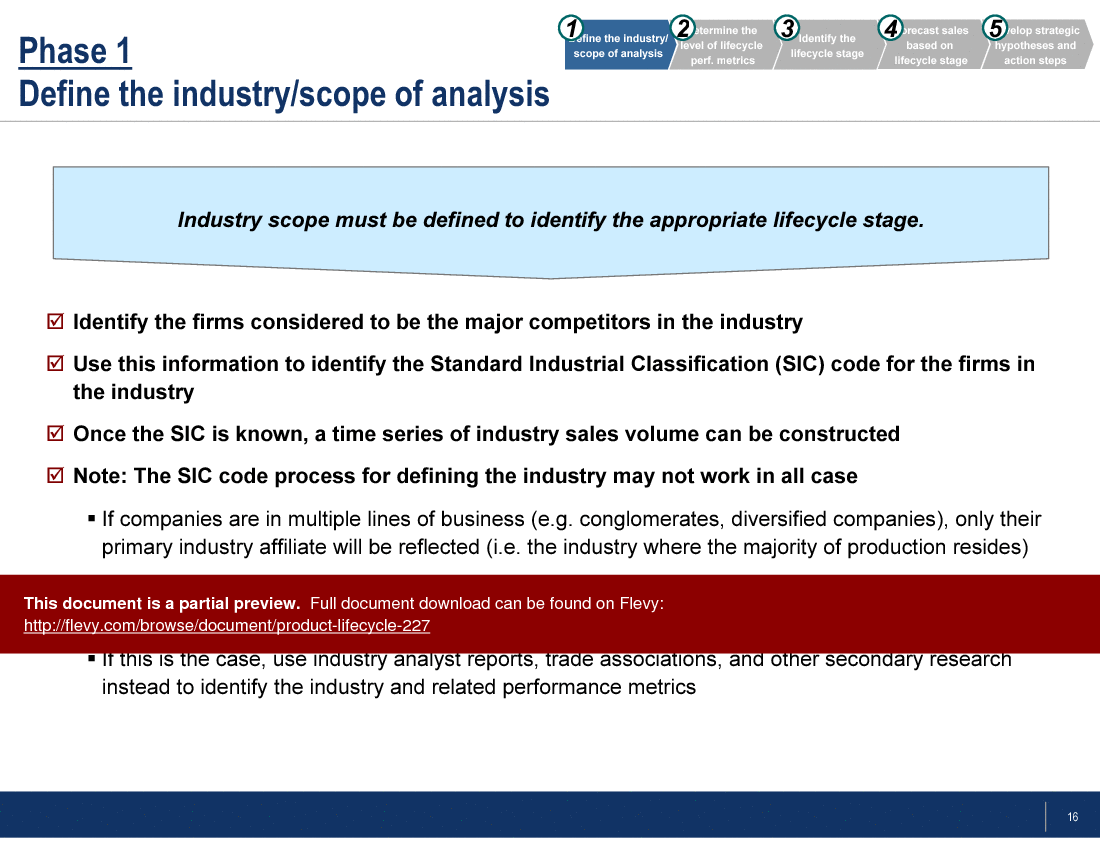
•  5 Phases (page 15)
•  Bass Diffusion Model (page 24)
•  Strategic Insights (page 28)
•  Stage-based Strategies (page 29)
•  Strategic Positioning Matrix (page 34)

Primary Topics Covered
•  Product Lifecycle Stages - The lifecycle is divided into 4 stages: Introduction, Growth, Maturity, and Decline, each requiring distinct marketing strategies.
•  Consumer Adoption Curve - Illustrates how different consumer segments (Innovators, Early Adopters, etc.) adopt products over time, impacting marketing approaches.
•  Bass Diffusion Model - A forecasting tool for estimating market penetration and sales based on consumer adoption patterns.
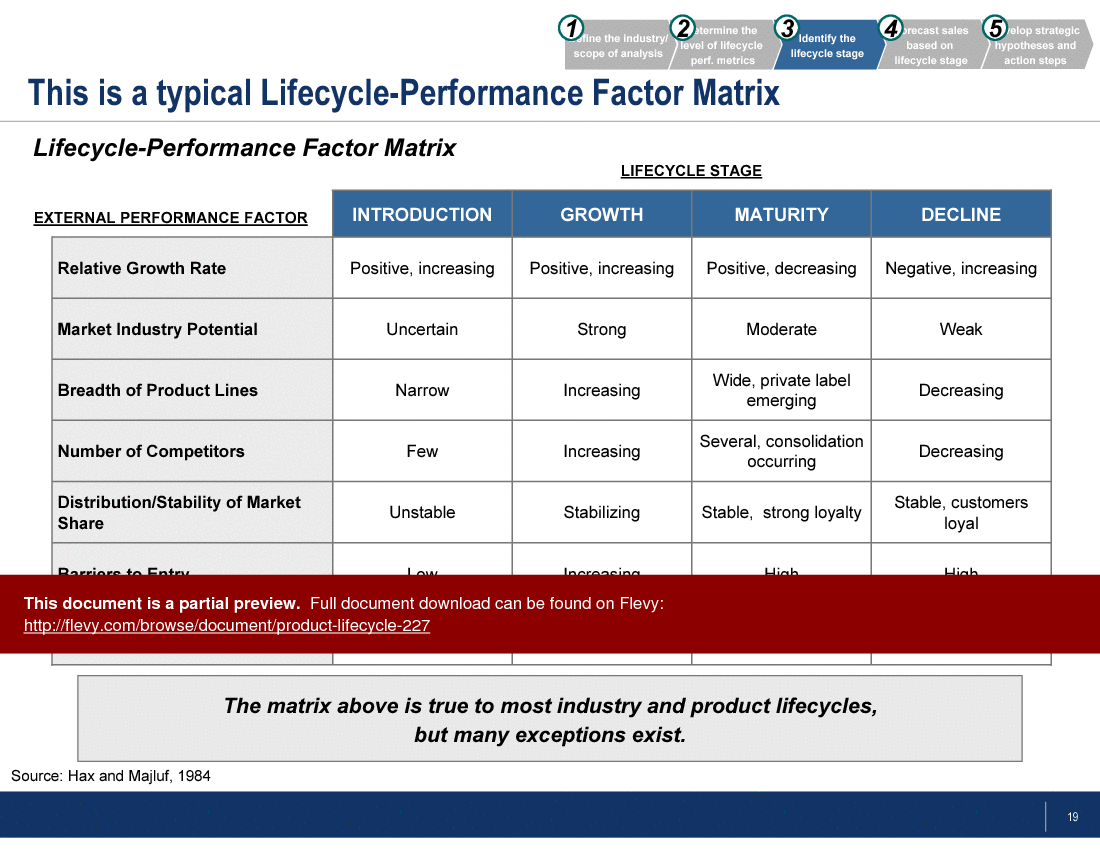
•  Lifecycle-Performance Factor Matrix - A framework for assessing product performance against external factors at each lifecycle stage.
•  Strategic Positioning - Insights into how to position products competitively based on their lifecycle stage and market dynamics.
•  Substitution Analysis - Examines how the likelihood of consumers switching to substitute products increases as a product matures.

Deliverables, Templates, and Tools
•  Lifecycle-Performance Factor Matrix template for assessing product performance
•  Bass Diffusion Model framework for forecasting sales
•  Consumer Adoption Curve visualization for identifying target segments
•  Strategic Positioning Matrix for competitive analysis
•  Guidelines for developing stage-specific marketing strategies
•  Performance metrics checklist for validating lifecycle stages

Slide Highlights
•  Overview of the Product Lifecycle and its stages
•  Visual representation of the Consumer Adoption Curve
•  Detailed Lifecycle-Performance Factor Matrix
•  Examples of strategic options for each lifecycle stage
•  Insights into the Bass Diffusion Model and its applications
•  Strategic Positioning Matrix linking lifecycle stages with competitive positioning

Potential Workshop Agenda
Introduction to Product Lifecycle Analysis (60 minutes)
•  Overview of the Product Lifecycle and its significance
•  Discussion on the Consumer Adoption Curve and its implications

Sales Forecasting Techniques (90 minutes)
•  Deep dive into the Bass Diffusion Model
•  Hands-on exercise for forecasting sales using historical data

Strategic Planning Session (120 minutes)
•  Group analysis of current products using the Lifecycle-Performance Factor Matrix
•  Development of stage-specific marketing strategies

Customization Guidance
•  Tailor the Consumer Adoption Curve to reflect your target market demographics
•  Adjust the Lifecycle-Performance Factor Matrix based on industry-specific metrics
•  Incorporate company-specific data into the Bass Diffusion Model for accurate forecasting
•  Modify strategic recommendations based on competitive landscape analysis
•  Update examples and case studies to align with current market trends

Secondary Topics Covered
•  Impact of technological innovation on product lifecycles
•  Market dynamics affecting product profitability
•  Competitive strategies for each lifecycle stage
•  Consumer behavior trends influencing product adoption
•  Challenges in applying the Product Lifecycle framework

Topic FAQ

What are the typical stages of the product lifecycle and what do they imply for marketing strategies?
The Product Lifecycle is commonly divided into 4 stages: Introduction, Growth, Maturity, and Decline. Each stage calls for different marketing emphases—awareness and pricing tactics in Introduction, scaling and market share in Growth, defense or extension strategies in Maturity, and harvesting or termination in Decline. These are the 4 stages.

How does the Consumer Adoption Curve affect product targeting and messaging?
The Consumer Adoption Curve segments buyers (Innovators, Early Adopters, Early Majority, Late Majority, Laggards) to inform timing and messaging. Early-stage tactics target Innovators/Early Adopters, while later stages shift to mass-market channels; mapping these segments guides who to prioritize at each stage using the Consumer Adoption Curve visualization.

When should I use the Bass Diffusion Model for forecasting and what inputs are needed?
Use the Bass Diffusion Model to estimate adoption and sales trajectories for new products by combining historical sales data with parameters for innovation and imitation effects. It is suited for launch and early-growth forecasting and relies on historical time-series data and adoption assumptions tied to the Bass Diffusion Model.

What is a Lifecycle-Performance Factor Matrix and how does it help product assessment?
The Lifecycle-Performance Factor Matrix assesses a product’s performance against external factors—market potential, competitor count, barriers to entry, and growth rate—to identify its current lifecycle stage and strategic needs. It supports diagnostic analysis by mapping these comparisons in the Lifecycle-Performance Factor Matrix.

What should I look for when selecting a product lifecycle toolkit for my team?
Prioritize inclusion of segmentation visuals, quantitative forecasting tools, competitive-positioning templates, and stage-based strategy guidance so the toolkit supports both analysis and decisions. Check for resources such as a Bass Diffusion Model framework, Consumer Adoption Curve visualization, and a Strategic Positioning Matrix when evaluating options.

How do I assess the cost versus value of buying lifecycle templates versus building them internally?
Evaluate expected time savings, analytic rigor, and ease of customization against your internal capability to implement forecasting and matrices. A purchased pack that includes ready-to-use models—like a Bass Diffusion Model framework and Lifecycle-Performance Factor Matrix—can reduce build time and provide templates for immediate analysis.

I need to forecast sales for a new product launch—what practical steps and tools should I use?
Combine historical analogs or early sales data with an adoption segmentation analysis, then apply a diffusion model to generate scenarios. Practically, map target segments with the Consumer Adoption Curve and run forecasts using the Bass Diffusion Model to produce sales scenarios and sensitivity ranges.

My product is in maturity and facing rising substitution—what analyses help decide whether to defend, innovate, or exit?
Conduct Substitution Analysis to quantify switching risk, reassess positioning with a Strategic Positioning Matrix, and evaluate lifecycle performance metrics (market potential, competitors, barriers) to compare defensive, innovation, or exit options. These analyses are captured in Substitution Analysis and the Strategic Positioning Matrix.

Document FAQ
What is the Product Lifecycle?
The Product Lifecycle is a model that describes the stages a product goes through from introduction to decline, helping marketers strategize accordingly.

How does the Consumer Adoption Curve influence marketing strategies?
Understanding the Consumer Adoption Curve allows marketers to tailor their strategies to different consumer segments, optimizing outreach and engagement.

What is the Bass Diffusion Model?
The Bass Diffusion Model is a forecasting tool that estimates how new products are adopted over time, based on social interactions and prior customer behavior.

How can I apply the Lifecycle-Performance Factor Matrix?
Use the matrix to assess your product's performance against key external factors, helping to identify its current lifecycle stage and inform strategic decisions.

What are the strategic options during the Maturity stage?
During the Maturity stage, companies can maintain their position, defend against competitors, or innovate to extend the product's lifecycle.

What are the drawbacks of Product Lifecycle Analysis?
The framework assumes a predictable growth pattern for all products, which may not hold true in rapidly changing industries or for disruptive innovations.

How can I forecast sales using the Product Lifecycle?
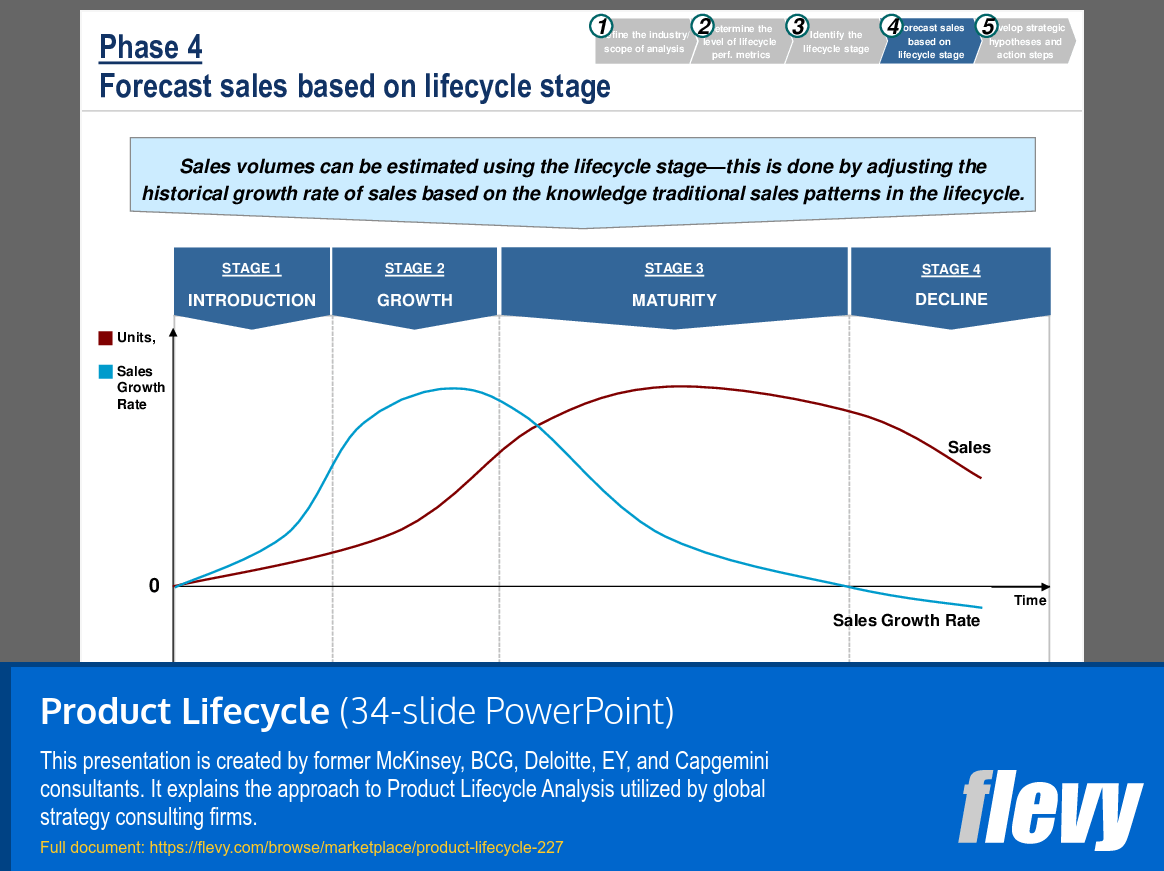
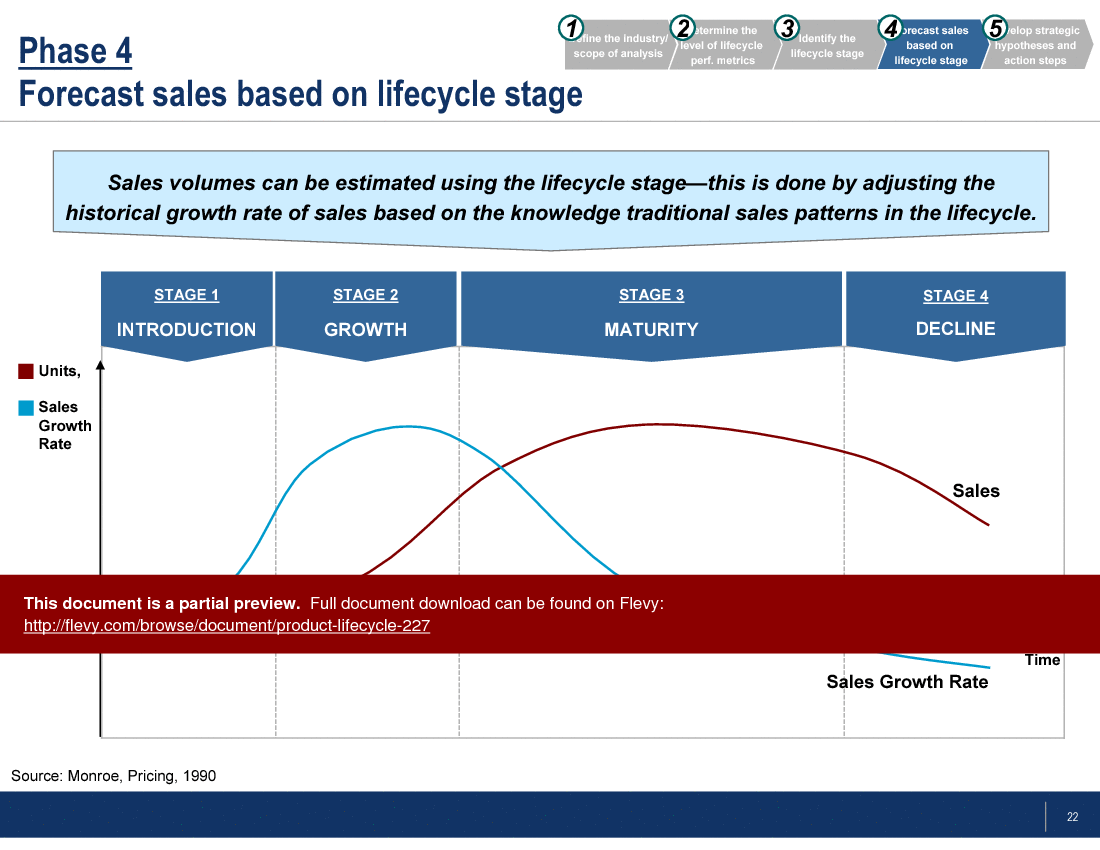
Sales can be forecasted by analyzing historical sales data and adjusting growth rates based on the product's current lifecycle stage.

What is Substitution Analysis?
Substitution Analysis examines the likelihood of consumers switching to alternative products as a product moves through its lifecycle.

How do I determine the appropriate pricing strategy in the Introduction stage?
Pricing strategies can vary; you may choose to skim the market with high prices or penetrate the market with lower prices, depending on competition and demand.

What metrics should I consider when assessing lifecycle performance?
Key metrics include relative growth rate, market potential, number of competitors, and barriers to entry, among others.

Glossary
•  Product Lifecycle - The stages a product goes through from introduction to decline.
•  Consumer Adoption Curve - A model illustrating the rate at which consumers adopt new products.
•  Bass Diffusion Model - A forecasting model for estimating product adoption based on social interactions.
•  Lifecycle-Performance Factor Matrix - A tool for assessing product performance against external factors.
•  Substitution Analysis - The study of consumer behavior regarding switching to alternative products.
•  Strategic Positioning - The process of positioning a product competitively in the market.
•  Market Penetration - The percentage of potential customers who have purchased a product.
•  Sales Forecasting - The process of estimating future sales based on historical data.
•  Lifecycle Stage - The current phase of a product within the Product Lifecycle.
•  Innovation - The introduction of new ideas or products to the market.
•  Market Dynamics - The factors that influence the behavior of buyers and sellers in a market.
•  Competitive Positioning - The strategy of positioning a product against competitors in the market.
•  Performance Metrics - Quantitative measures used to assess product performance.
•  Strategic Hypotheses - Proposed strategies based on analysis of market conditions and product lifecycle.
•  Market Share - The portion of a market controlled by a particular company or product.
•  Product Profitability - The financial gain obtained from selling a product after costs are deducted.
•  Growth Rate - The rate at which a product's sales increase over time.
•  Market Segmentation - The process of dividing a market into distinct groups of buyers.
•  Competitive Analysis - The assessment of competitors within a market to inform strategic decisions.
•  Consumer Behavior - The study of how individuals make decisions to spend their resources on consumption-related items.
•  Pricing Strategy - The method used to price a product based on market conditions and competition.

MATURITY MODEL PPT SLIDES

Strategic Positioning across Product Lifecycle Stages

Framework for Effective Product Lifecycle Analysis

Product Lifecycle Stages and Profitability Trends

Strategic Approaches for Maturity Stage Management

Mapping Household Durables on the Product Lifecycle

Mapping Product Lifecycle to Consumer Adoption Stages

Sales Forecasting through Product Lifecycle Analysis

Structured Phases for Product Lifecycle Analysis

Lifecycle-Performance Analysis for Strategic Decision-Making

Source: Best Practices in Maturity Model, Product Strategy, Product Launch Strategy, Positioning PowerPoint Slides: Product Lifecycle PowerPoint (PPT) Presentation Slide Deck, LearnPPT Consulting


$39.00
This presentation is created by former McKinsey, BCG, Deloitte, EY, and Capgemini consultants. It explains the approach to Product Lifecycle Analysis utilized by global strategy consulting firms.
Add to Cart
  

ABOUT THE AUTHOR

Author image
Additional documents from author: 141

We are a team of management consultants trained by top tier global consulting firms (including McKinsey, BCG, Deloitte, EY, Capgemini) with a collective experience of several decades. We specialize in business frameworks based on real-life consulting engagements.

We have served 100s of clients that range from Fortune 500 companies to tech startups to ... [read more]

Ask the Author a Question

You must be logged in to contact the author.

Click here to log in Click here register

Did you know?
The average daily rate of a McKinsey consultant is $6,625 (not including expenses). The average price of a Flevy document is $65.



Trusted by over 10,000+ Client Organizations
Since 2012, we have provided business templates to over 10,000 businesses and organizations of all sizes, from startups and small businesses to the Fortune 100, in over 130 countries.
AT&T GE Cisco Intel IBM Coke Dell Toyota HP Nike Samsung Microsoft Astrazeneca JP Morgan KPMG Walgreens Walmart 3M Kaiser Oracle SAP Google E&Y Volvo Bosch Merck Fedex Shell Amgen Eli Lilly Roche AIG Abbott Amazon PwC T-Mobile Broadcom Bayer Pearson Titleist ConEd Pfizer NTT Data Schwab


Read Customer Testimonials

 
"As a young consulting firm, requests for input from clients vary and it's sometimes impossible to provide expert solutions across a broad spectrum of requirements. That was before I discovered Flevy.com.

Through subscription to this invaluable site of a plethora of topics that are key and crucial to consulting, I "

– Nishi Singh, Strategist and MD at NSP Consultants
 
"FlevyPro provides business frameworks from many of the global giants in management consulting that allow you to provide best in class solutions for your clients."

– David Harris, Managing Director at Futures Strategy
 
"[Flevy] produces some great work that has been/continues to be of immense help not only to myself, but as I seek to provide professional services to my clients, it gives me a large "tool box" of resources that are critical to provide them with the quality of service and outcomes they are expecting."

– Royston Knowles, Executive with 50+ Years of Board Level Experience
 
"I have used FlevyPro for several business applications. It is a great complement to working with expensive consultants. The quality and effectiveness of the tools are of the highest standards."

– Moritz Bernhoerster, Global Sourcing Director at Fortune 500
 
"FlevyPro has been a brilliant resource for me, as an independent growth consultant, to access a vast knowledge bank of presentations to support my work with clients. In terms of RoI, the value I received from the very first presentation I downloaded paid for my subscription many times over! The "

– Roderick Cameron, Founding Partner at SGFE Ltd
 
"I am extremely grateful for the proactiveness and eagerness to help and I would gladly recommend the Flevy team if you are looking for data and toolkits to help you work through business solutions."

– Trevor Booth, Partner, Fast Forward Consulting
 
"Flevy.com has proven to be an invaluable resource library to our Independent Management Consultancy, supporting and enabling us to better serve our enterprise clients.

The value derived from our [FlevyPro] subscription in terms of the business it has helped to gain far exceeds the investment made, making a subscription a no-brainer for any growing consultancy – or in-house strategy team."

– Dean Carlton, Chief Transformation Officer, Global Village Transformations Pty Ltd.
 
"My FlevyPro subscription provides me with the most popular frameworks and decks in demand in today’s market. They not only augment my existing consulting and coaching offerings and delivery, but also keep me abreast of the latest trends, inspire new products and service offerings for my practice, and educate me "

– Bill Branson, Founder at Strategic Business Architects


Customers Also Bought These Documents


Customers Also Like These Documents

Explore Related Management Topics


Your Recently Viewed Documents
Document Bundle
$179.99 Bundle of 3 Documents
     
Download our FREE Organization, Change, & Culture, Templates

Download our free compilation of 50+ slides and templates on Organizational Design, Change Management, and Corporate Culture. Methodologies include ADKAR, Burke-Litwin Change Model, McKinsey 7-S, Competing Values Framework, etc.