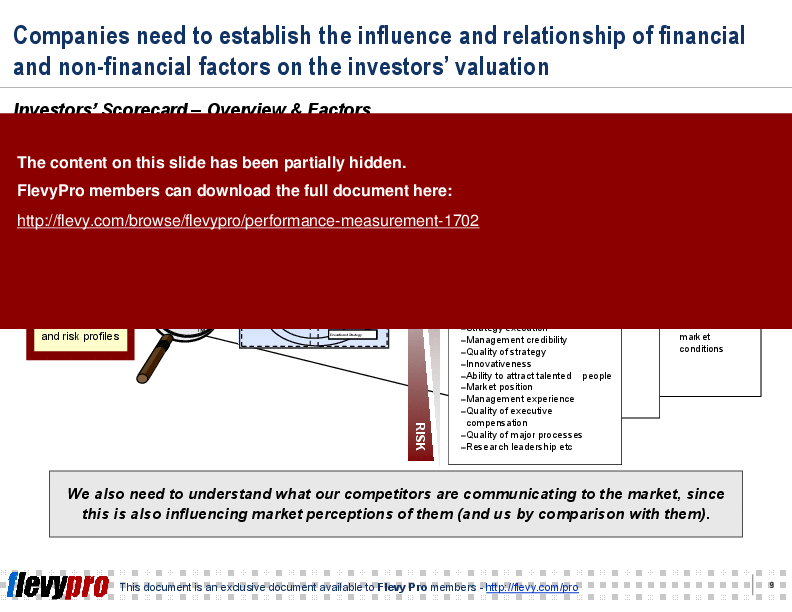
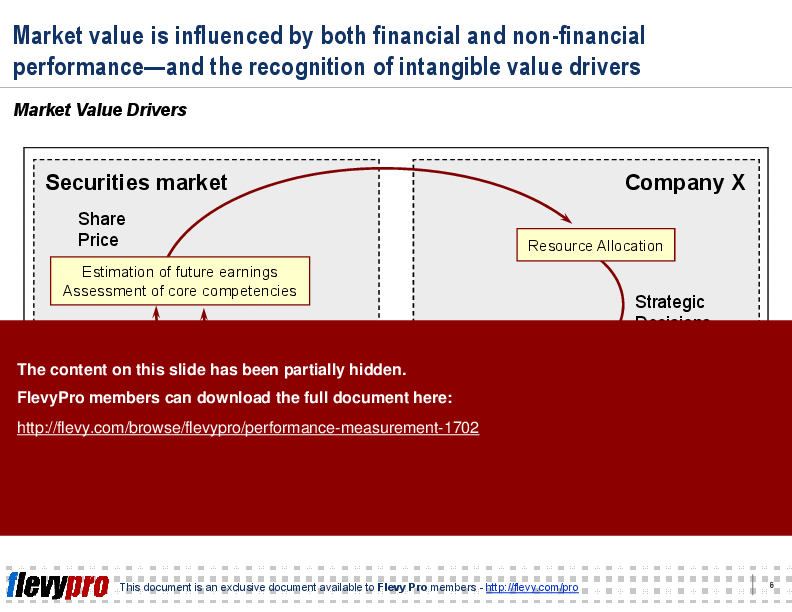

The "right" share price in the mind of the capital markets is determined by the market view of future earnings. Apart from the obvious issues of a low share price not pleasing shareholders, it clearly also reduces the company's ability to finance acquisitions or invest in other major strategic initiatives.
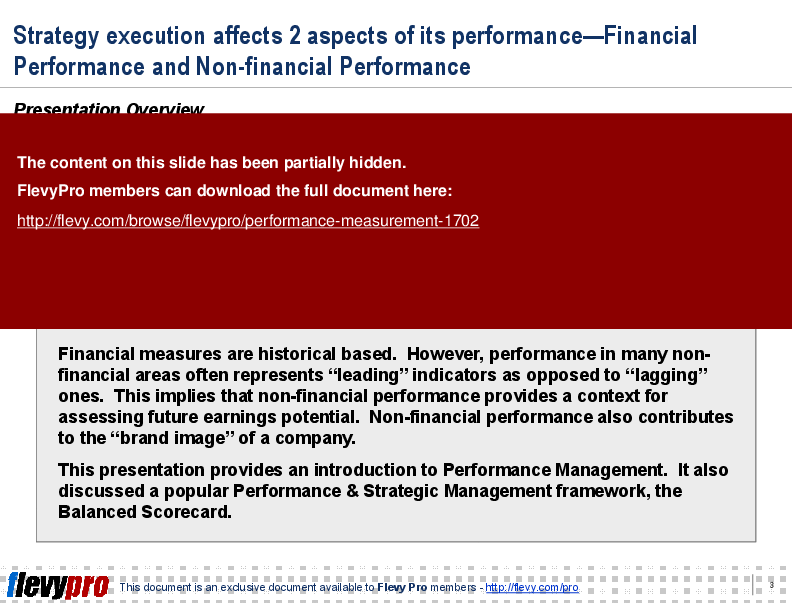
The execution of a company's strategy affects 2 aspects of its performance:
1. Financial Performance; and
2. Non-financial Performance.
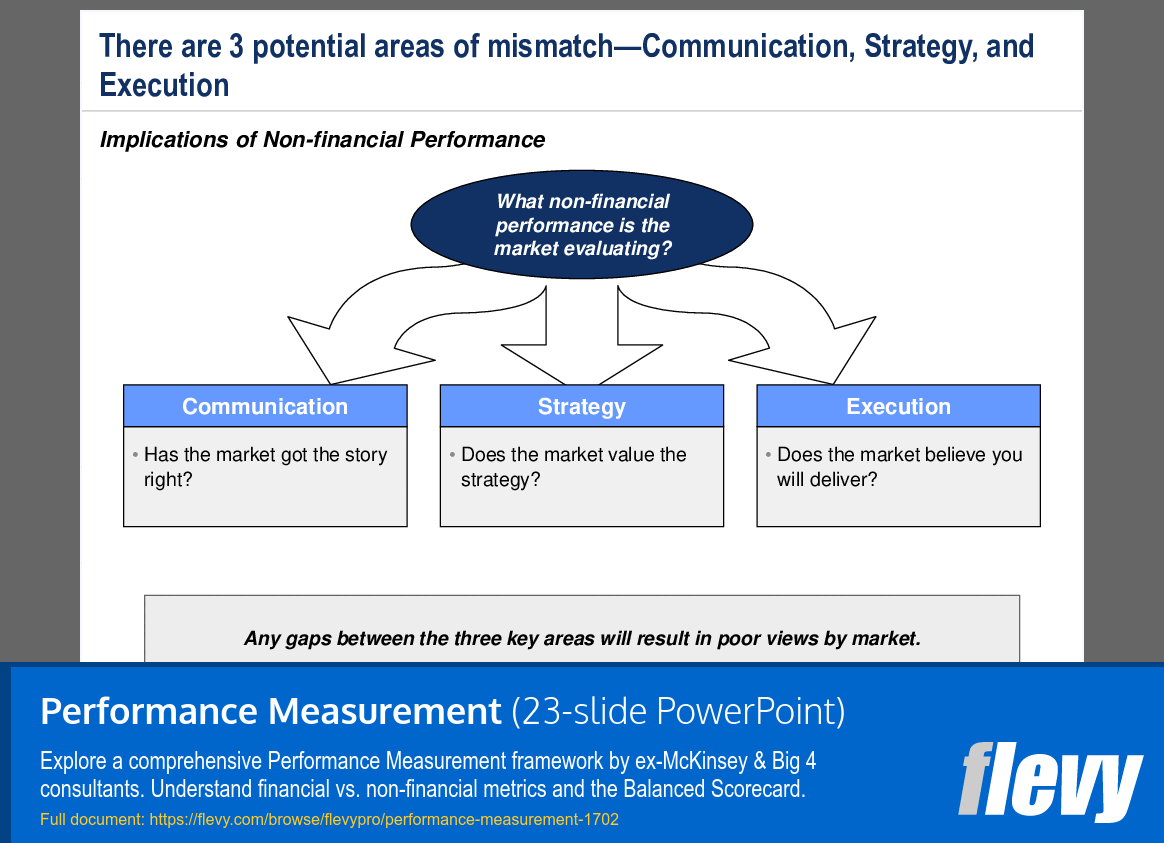
Financial measures are historical based. However, performance in many non-financial areas often represents "leading" indicators as opposed to "lagging" ones. This implies that non-financial performance provides a context for assessing future earnings potential. Non-financial performance also contributes to the "brand image" of a company.
This presentation provides an introduction to Performance Management. It also discussed a popular Performance & Strategic Management framework, the Balanced Scorecard.
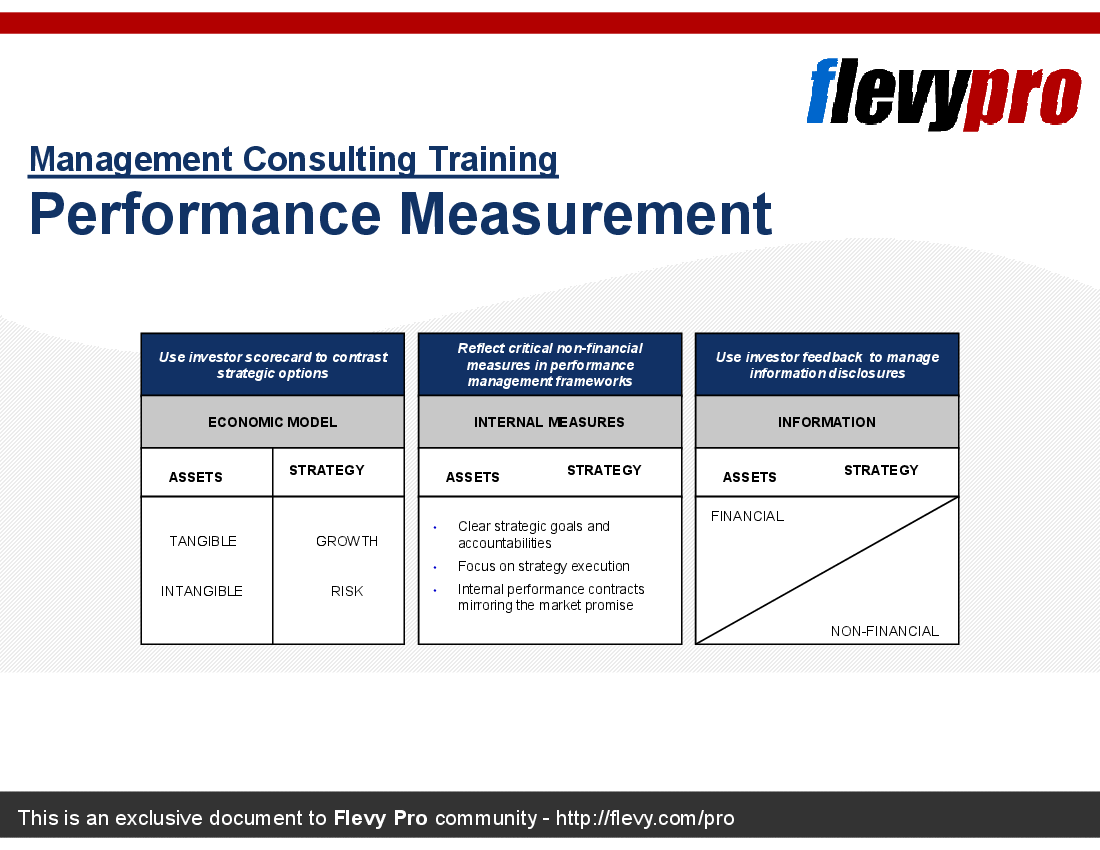
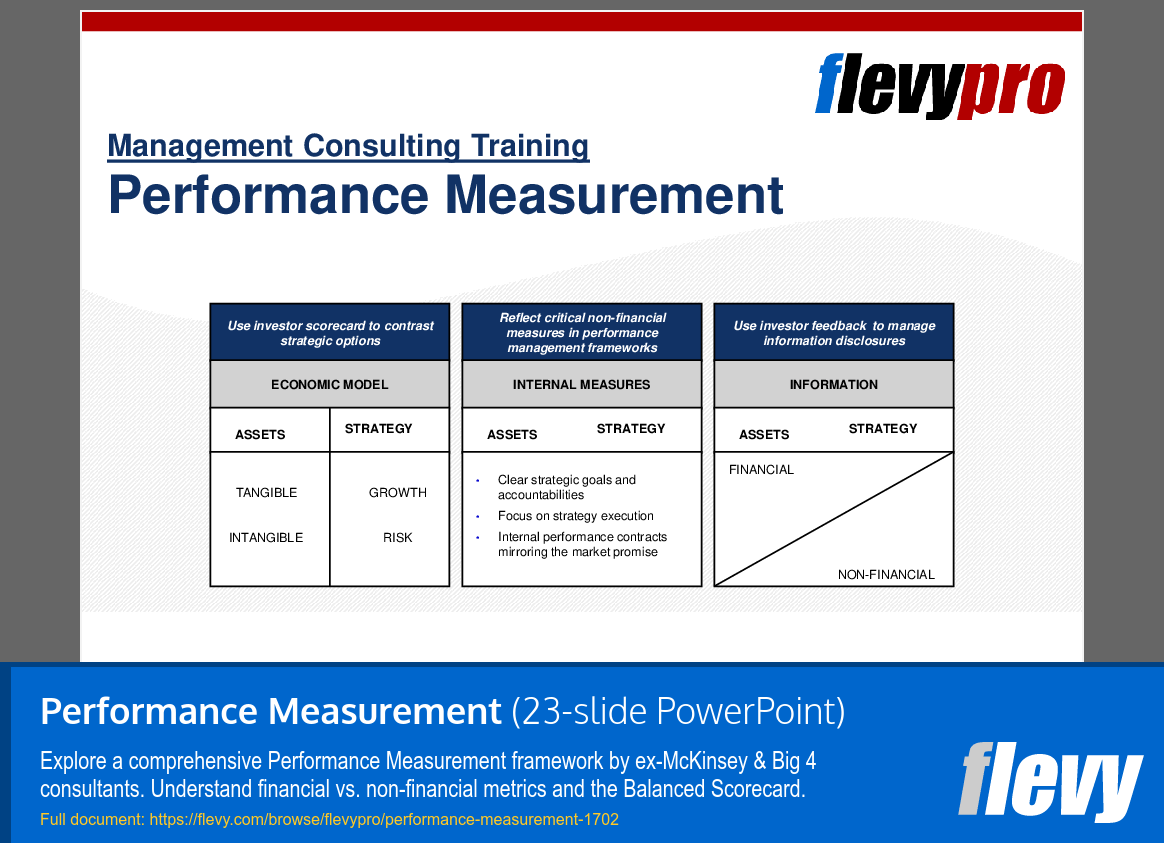
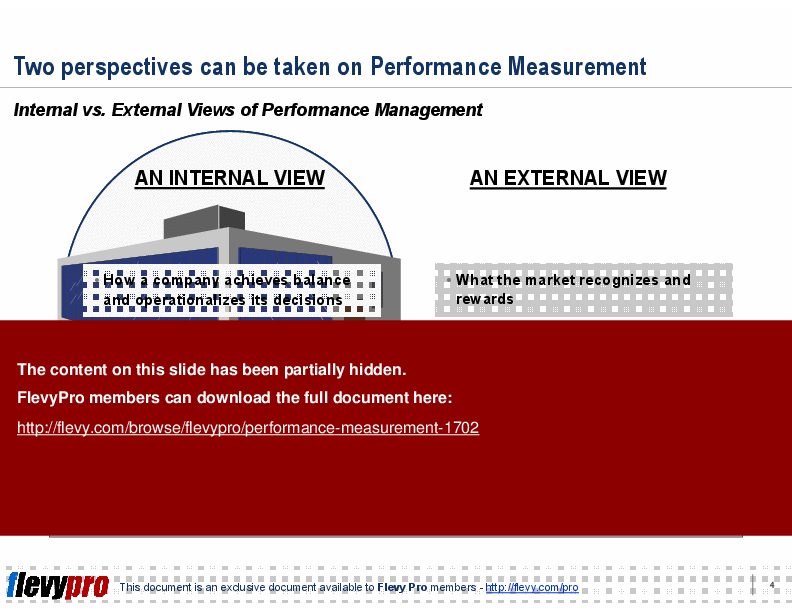
This PPT delves into the dual perspectives of performance measurement: internal and external. It explores how companies achieve balance and operationalize decisions internally while addressing what the market recognizes and rewards externally. The Balanced Scorecard is highlighted as a critical tool for aligning measurement with strategy, ensuring that all performance metrics are tied to strategic objectives.
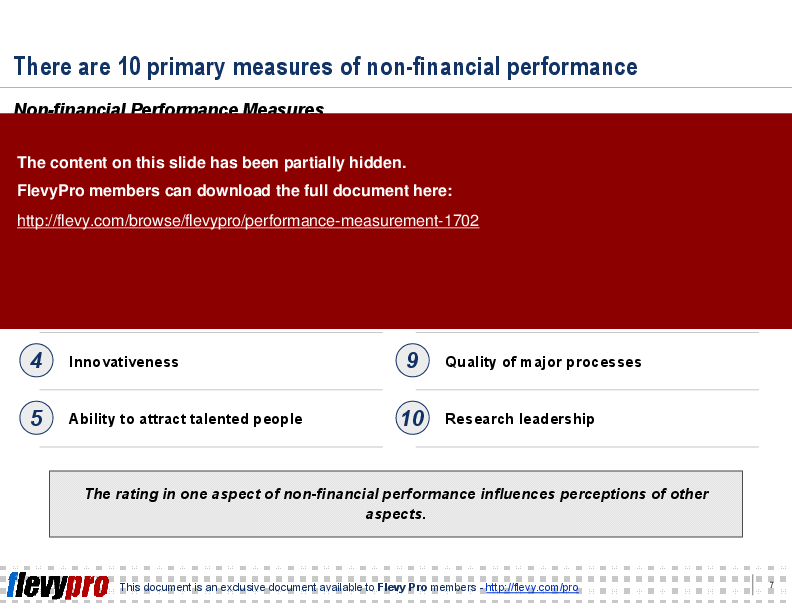
Market value is influenced by both financial and non-financial performance, including the recognition of intangible value drivers. The presentation outlines ten primary measures of non-financial performance, such as innovativeness, quality of major processes, and research leadership. These measures are essential for understanding how non-financial performance impacts market evaluations and strategic decisions.
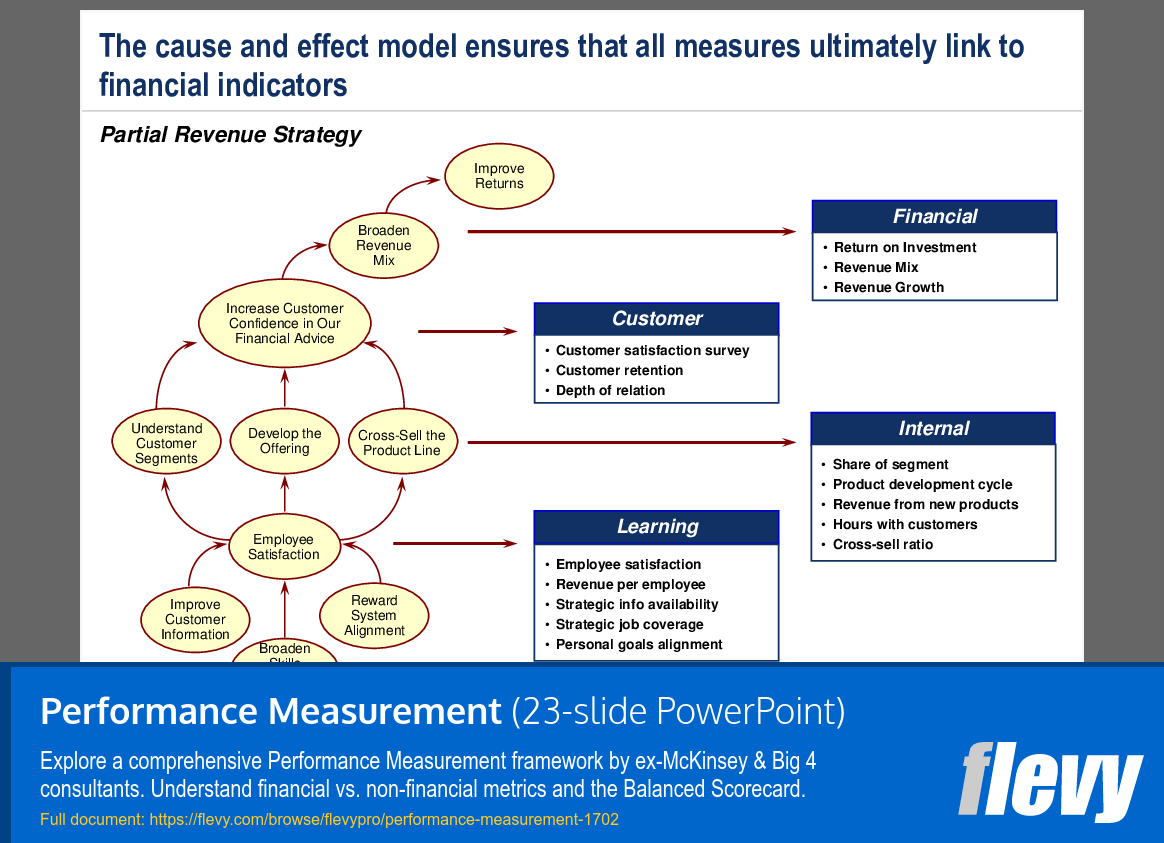
The document also addresses common pitfalls in Balanced Scorecard design and emphasizes the importance of cascading the corporate scorecard down into the organization. It provides practical insights into avoiding dysfunctional processes and ensuring that the scorecard tells the story of your strategy through cause and effect relationships. This comprehensive approach to performance measurement is essential for any organization aiming to enhance its strategic management capabilities.
Got a question about this document? Email us at flevypro@flevy.com.
Executive Summary
The Performance Measurement presentation provides a comprehensive overview of the Balanced Scorecard (BSC) framework, emphasizing the integration of financial and non-financial performance metrics. This document equips corporate executives and consultants with the tools to assess strategic options, enhance performance management, and improve investor communication. By utilizing the BSC, organizations can align their strategic objectives with measurable outcomes, fostering a culture of accountability and continuous improvement.
Who This Is For and When to Use
• Corporate executives responsible for strategic planning and performance management
• Consultants advising organizations on performance measurement frameworks
• Finance leaders focused on integrating financial and non-financial metrics
• Strategy teams aiming to enhance decision-making processes
• Performance management professionals seeking to implement the Balanced Scorecard
Best-fit moments to use this deck:
• During strategic planning sessions to align objectives with performance metrics
• In workshops focused on developing or refining performance management frameworks
• When preparing for investor presentations to articulate performance and strategy
• For training sessions on the implementation of the Balanced Scorecard
Learning Objectives
• Define the Balanced Scorecard framework and its relevance to performance measurement
• Identify key financial and non-financial performance indicators that drive organizational success
• Develop a comprehensive performance management framework using the BSC
• Establish clear strategic objectives linked to measurable outcomes
• Assess the impact of non-financial performance on financial results and investor perceptions
• Create effective communication strategies for engaging with investors and stakeholders
Table of Contents
• Performance Management Overview (page 3)
• Performance Management External Perspective (page 4)
• Performance Management Internal Perspective – Balanced Scorecard (page 5)
• Non-Financial Performance Measures (page 7)
• Investors’ Scorecard Overview (page 9)
• Implications of Non-Financial Performance (page 8)
• Benefits of the Balanced Scorecard Methodology (page 14)
• The 4 Perspectives of the Balanced Scorecard (page 15)
• BSC Design Pitfalls (page 21)
• Criteria for a Good Balanced Scorecard (page 22)
Primary Topics Covered
• Performance Management Overview - Introduction to performance management concepts, focusing on the integration of financial and non-financial metrics.
• Balanced Scorecard Framework - Detailed exploration of the BSC as a tool for aligning strategy with performance measurement across 4 perspectives: financial, customer, internal processes, and learning.
• Non-Financial Performance Indicators - Identification of ten primary measures of non-financial performance that influence organizational success.
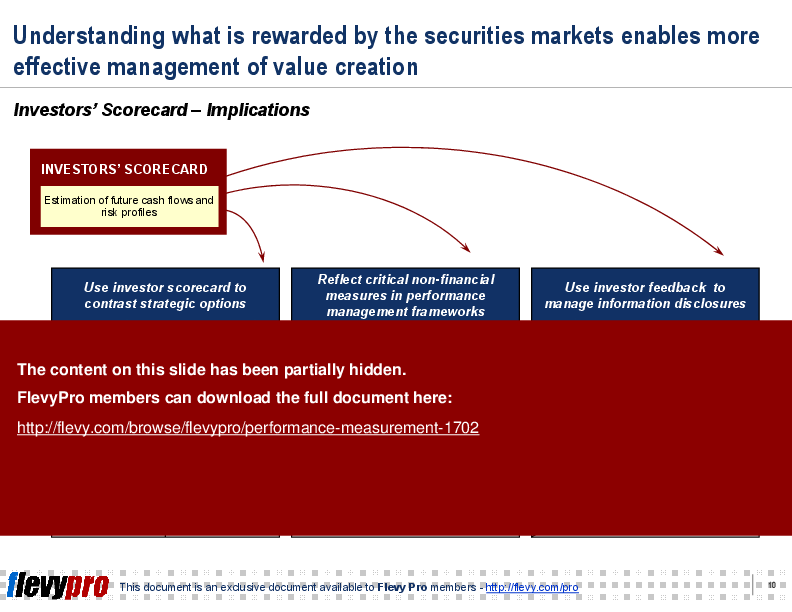
• Investor Communication Strategies - Techniques for utilizing investor feedback to enhance performance disclosures and strategic alignment.
• Strategic Benefits of the BSC - Insights into how the BSC can drive strategic options and performance management frameworks.
• Common Pitfalls in BSC Design - Identification of potential pitfalls in implementing the BSC and strategies to avoid them.
Deliverables, Templates, and Tools
• Balanced Scorecard template for aligning strategic objectives with performance measures
• Investor scorecard example for assessing financial and non-financial performance
• Workshop agenda for implementing the Balanced Scorecard
• Communication plan template for engaging with investors
• Performance measurement framework outline for integrating financial and non-financial metrics
• Checklist for evaluating non-financial performance measures
Slide Highlights
• Overview of the Balanced Scorecard and its 4 perspectives
• Key non-financial performance measures influencing market perception
• The relationship between financial and non-financial performance
• Strategic benefits of utilizing the investor scorecard
• Common pitfalls in Balanced Scorecard design and implementation
Potential Workshop Agenda
Introduction to Performance Measurement (30 minutes)
• Overview of performance management concepts
• Discussion on the importance of aligning financial and non-financial metrics
Balanced Scorecard Development (60 minutes)
• Interactive session on defining strategic objectives
• Group activity to create a Balanced Scorecard template
Investor Communication Strategies (45 minutes)
• Techniques for effective communication with investors
• Case studies on successful investor engagement
BSC Implementation Best Practices (30 minutes)
• Review of common pitfalls and how to avoid them
• Q&A session on BSC implementation challenges
Customization Guidance
• Tailor the Balanced Scorecard template to reflect specific organizational goals and metrics
• Adjust non-financial performance measures based on industry standards and organizational priorities
• Incorporate company-specific terminology and frameworks into the presentation
• Modify the workshop agenda to align with organizational timelines and participant availability
Secondary Topics Covered
• The role of management credibility in performance measurement
• The impact of strategy execution on financial performance
• Insights into market perception and investor feedback
• Techniques for enhancing organizational learning and growth
Topic FAQ
Document FAQ
These are questions addressed within this presentation.
What is the Balanced Scorecard?
The Balanced Scorecard is a strategic planning and performance management framework that links financial and non-financial performance measures to organizational objectives.
How can non-financial performance impact financial results?
Non-financial performance often serves as leading indicators that can predict future financial outcomes, influencing overall market perception and investor confidence.
What are the key components of a good Balanced Scorecard?
A good Balanced Scorecard includes clear objectives, measurable outcomes, and targets that align with the organization’s strategic goals.
How do I implement the Balanced Scorecard in my organization?
Begin by defining strategic objectives, selecting relevant performance measures, and engaging stakeholders in the development process to ensure alignment and buy-in.
What are common pitfalls in Balanced Scorecard design?
Common pitfalls include failing to articulate strategic intent, creating unbalanced measurement systems, and institutionalizing a dysfunctional process.
How can I effectively communicate performance metrics to investors?
Utilize clear, concise messaging that highlights both financial and non-financial performance indicators, ensuring alignment with investor interests and market expectations.
What is the role of non-financial performance measures?
Non-financial performance measures provide insights into operational effectiveness and customer satisfaction, which can influence long-term financial success.
How often should the Balanced Scorecard be reviewed and updated?
Regular reviews should be conducted at least annually, or more frequently if significant changes in strategy or market conditions occur.
Glossary
• Balanced Scorecard - A framework for translating an organization’s strategic objectives into a set of performance measures.
• Financial Performance - Metrics that assess a company’s financial health, including revenue, profit margins, and return on investment.
• Non-Financial Performance - Indicators that measure aspects such as customer satisfaction, employee engagement, and operational efficiency.
• Investor Scorecard - A tool for evaluating financial and non-financial performance from an investor's perspective.
• Strategic Objectives - Specific goals that an organization aims to achieve to fulfill its mission and vision.
• Performance Measures - Quantitative indicators used to assess the success of an organization in achieving its objectives.
• Leading Indicators - Metrics that predict future performance, often related to non-financial factors.
• Lagging Indicators - Metrics that reflect past performance, typically financial results.
• Stakeholders - Individuals or groups with an interest in the organization’s performance, including investors, employees, and customers.
• Market Perception - The collective opinion of investors and the public regarding a company's value and performance.
• Strategic Alignment - The process of ensuring that all aspects of an organization are aligned with its strategic objectives.
• Communication Strategy - A plan for effectively conveying information to stakeholders and the market.
Source: Best Practices in Performance Management, Balanced Scorecard, Performance Measurement PowerPoint Slides: Performance Measurement PowerPoint (PPT) Presentation Slide Deck, LearnPPT Consulting
Did you need more documents?
Consider a FlevyPro subscription from $39/month. View plans here.
For $10.00 more, you can download this document plus 2 more FlevyPro documents. That's just $13 each.
This document is available as part of the following discounted bundle(s):
Save %!
Consulting Training - Company Analysis
This bundle contains 6 total documents. See all the documents to the right.

|
Download our FREE Strategy & Transformation Framework Templates
Download our free compilation of 50+ Strategy & Transformation slides and templates. Frameworks include McKinsey 7-S, Balanced Scorecard, Disruptive Innovation, BCG Curve, and many more. |