Organization Culture Assessment Questionnaire   8-page Word document
$29.99

Organization Culture Assessment Questionnaire (8-page Word document) Preview Image
Flevy is the marketplace for business best practices.
Organization Culture Assessment Questionnaire (8-page Word document) Preview Image
Arrow   Click main image to view in full screen.

Organization Culture Assessment Questionnaire (Word DOC)

Word (DOC) 8 Pages

#3 in Corporate Culture $29.99

Add to Cart


Immediate download
Fully editable Word
Free lifetime updates

CORPORATE CULTURE WORD DESCRIPTION

Editor Summary Organization Culture Assessment Questionnaire is an 8-page Word (DOC) document containing a 92-question organizational culture survey and supporting templates. Read more

Each organization has its own culture – the beliefs and norms of behavior that guide individual actions and decisions. These define what is expected from the members of the organization in order to "fit in."

To under your organization's corporate culture, we can leverage an organizational culture questionnaire. This is a survey used to measure and assess the culture within an organization. It typically consists of a series of questions that are designed to gather information on the values, beliefs, attitudes, behaviors, and perceptions that define an organization's culture. There are numerous to taking such an assessment:

Foremost, to assess the current culture: An organizational culture questionnaire helps to identify the key cultural values and beliefs that are driving behaviors within the organization.

To identify strengths and weaknesses: The organizational culture assessment questions help to identify areas where the culture is aligned with the organization's goals and objectives, as well as areas where the culture may be hindering the organization's performance.

To inform decision making: The data gathered from the culture assessment can inform decision making at all levels of the organization. The results can be used to identify areas for improvement, set priorities, and develop action plans.

To improve employee engagement: Understanding and improving the organizational culture can have a positive impact on employee engagement. By measuring and assessing the culture, employees feel more connected to the organization, which can lead to increased motivation, productivity, and job satisfaction.

To support change management: Organizational culture can be a significant barrier to change, and understanding the current culture is essential for effective change management. An organizational culture survey tool can help to identify cultural factors that may impact the success of change initiatives.

This Organizational Culture Questionnaire & Assessment is a fully editable Word document containing 92 questions that was developed by a leading management consulting firm.

Here is an introduction for participants who will be receiving this Organizational Culture Assessment Survey:

By completing this questionnaire you are helping us to understand the culture of your organization. Your input will be used to identify opportunities for building a better organization.

Be honest in your responses. Your answers will be totally confidential. XYZ Consulting will analyze responses and report group results only.

To ensure that the conclusions drawn from the survey give as accurate a picture of the culture as possible, it is important that every questionnaire is completed and returned to us rapidly.

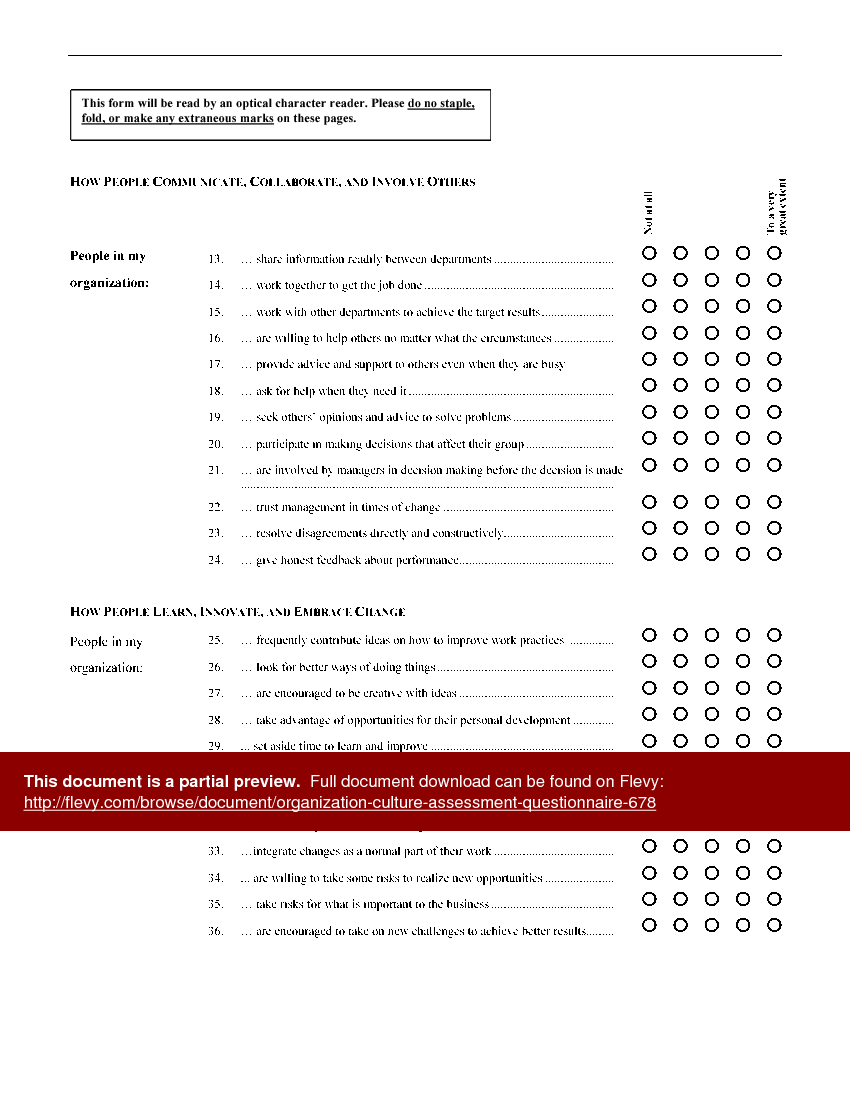
This document is designed to be read by an optical character reader, ensuring accuracy and efficiency in data collection. It includes clear instructions to avoid stapling, folding, or marking the pages, which helps maintain the integrity of the responses.

Got a question about the product? Email us at support@flevy.com or ask the author directly by using the "Ask the Author a Question" form. If you cannot view the preview above this document description, go here to view the large preview instead.

MARCUS OVERVIEW

This synopsis was written by Marcus [?] based on the analysis of the full 8-slide presentation.


Executive Summary
The Organization Culture Assessment Questionnaire is a structured tool designed to evaluate and understand the cultural dynamics within an organization. By utilizing this ready-to-use questionnaire, organizations can gather valuable insights into their cultural strengths and areas for improvement. This assessment aids in identifying behaviors, norms, and practices that shape the organizational environment, ultimately guiding efforts to foster a more effective and cohesive workplace culture.

Who This Is For and When to Use

•  HR leaders focused on cultural transformation and employee engagement
•  Organizational development consultants seeking to assess client cultures
•  Executive teams aiming to align organizational culture with strategic objectives
•  Change management professionals involved in culture-related initiatives

Best-fit moments to use this deck:
•  During organizational assessments to establish a baseline of current culture
•  When planning cultural change initiatives or interventions
•  In conjunction with leadership development programs to enhance cultural alignment

Learning Objectives
•  Define organizational culture and its impact on employee behavior and performance
•  Identify key cultural norms that influence decision-making and collaboration
•  Assess the current state of organizational culture through qualitative and quantitative measures
•  Develop actionable strategies to enhance cultural strengths and address weaknesses
•  Foster an environment that encourages open communication and innovation
•  Engage employees in the cultural assessment process to promote ownership and buy-in

Table of Contents
•  Introduction to Organizational Culture (page 2)
•  Norms of Behavior (page 3)
•  Communication and Collaboration (page 4)
•  Learning and Innovation (page 5)
•  Leadership Influence on Culture (page 6)
•  Organizational Infrastructure (page 7)
•  Background Information for Analysis (page 8)

Primary Topics Covered
•  Organizational Culture Definition - The beliefs and norms that guide individual actions and decisions within an organization, shaping what is expected from members.
•  Norms of Behavior - Observable behaviors that reflect how individuals take action and achieve results, including striving for excellence and taking initiative.
•  Communication and Collaboration - The extent to which employees share information, work together, and involve others in decision-making processes.
•  Learning and Innovation - The organization's encouragement of creativity, personal development, and the integration of changes into daily work.
•  Leadership Influence - How leaders communicate, motivate, and prioritize actions that shape the organizational culture.
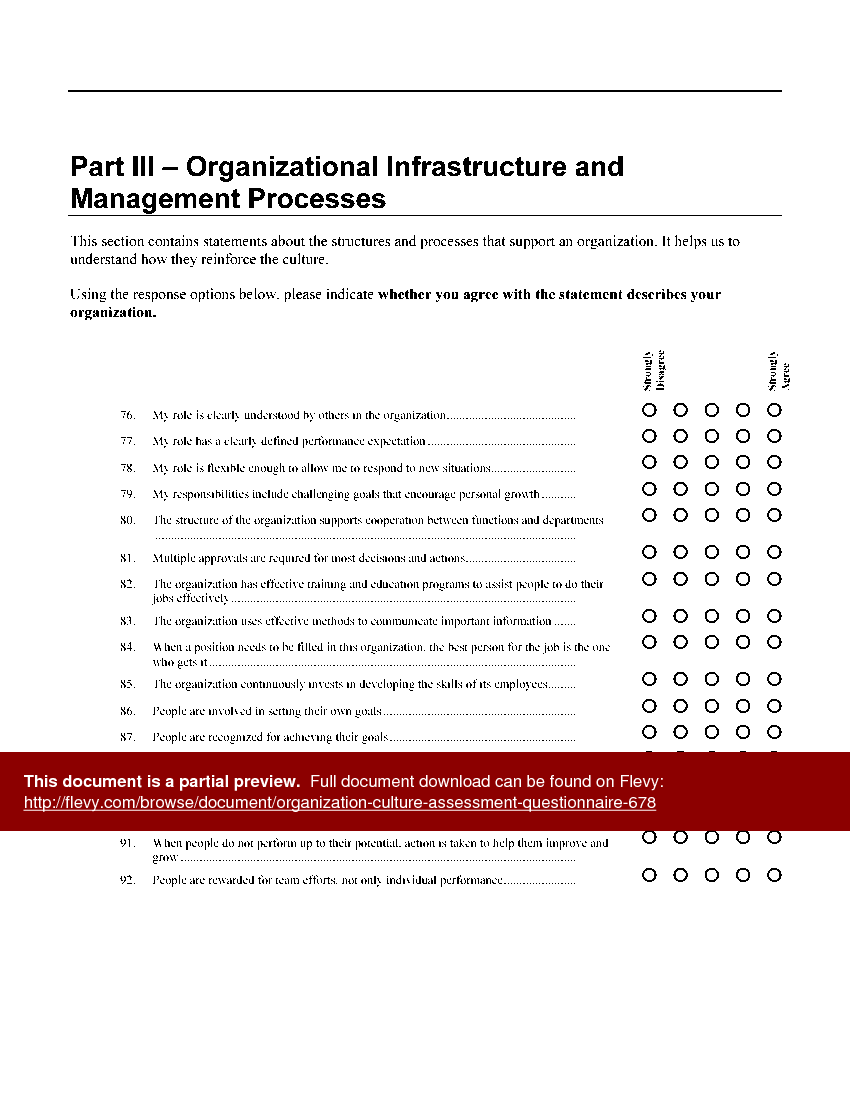
•  Organizational Infrastructure - The structures and processes that support the culture, including role clarity, performance expectations, and training programs.

Deliverables, Templates, and Tools
•  Organizational Culture Assessment Questionnaire template for gathering employee feedback
•  Scoring guide to analyze responses and identify cultural trends
•  Reporting framework for summarizing group results and insights
•  Action planning template for addressing identified cultural issues
•  Communication plan template to share assessment findings with stakeholders

Slide Highlights
•  Introduction slide outlining the importance of organizational culture
•  Norms of Behavior section highlighting key observable actions
•  Leadership Influence slide illustrating the impact of leadership on culture
•  Organizational Infrastructure slide detailing the support structures in place
•  Background Information section emphasizing confidentiality and data usage

Potential Workshop Agenda
Culture Assessment Overview (60 minutes)
•  Introduce the purpose and importance of the culture assessment
•  Discuss the questionnaire structure and response process
•  Review confidentiality and data analysis methods

Analysis and Action Planning Session (90 minutes)
•  Present findings from the culture assessment
•  Facilitate discussion on cultural strengths and areas for improvement
•  Develop action plans to address identified cultural challenges

Customization Guidance
•  Tailor the questionnaire to reflect specific organizational values and goals
•  Adjust the scoring criteria based on organizational priorities
•  Incorporate additional questions relevant to unique cultural aspects

Secondary Topics Covered
•  Employee engagement strategies and their relationship to culture
•  The role of feedback in shaping organizational norms
•  Best practices for fostering a culture of continuous improvement
•  The impact of organizational culture on performance and retention

Topic FAQ

What are the main components of an organizational culture assessment?

An organizational culture assessment typically combines a survey instrument with analysis and follow-up tools. Core components include questions on norms of behavior, communication and collaboration, learning and innovation, leadership influence, and organizational infrastructure, plus tools for analysis such as a scoring guide.

How are culture survey responses typically analyzed and reported?

Responses are aggregated and analyzed to identify trends and insights while preserving anonymity; findings are compiled into group-level reports that highlight strengths and weaknesses. A structured scoring guide and reporting framework support this analysis, as exemplified by the Organization Culture Assessment Questionnaire's scoring guide and reporting framework.

What topics should a culture questionnaire cover to be useful?

A useful culture questionnaire addresses beliefs and norms, observable behaviors, information sharing and collaboration, encouragement of learning and innovation, leadership communication and priorities, and the organizational structures that support behavior, ending with analysis-ready background information.

How long does it typically take employees to complete a culture questionnaire?

Completion time depends on length and depth; the example instrument provided in the document overview is designed to be completed in approximately 15–30 minutes, depending on the number of questions and response depth.

What should I look for when choosing a ready-made culture assessment template?

Key attributes to evaluate are an editable questionnaire, a clear scoring guide, a reporting framework for group results, an action planning template, and guidance on confidentiality and administration. The Organization Culture Assessment Questionnaire includes these deliverables, including a scoring guide and action planning template.

How can I judge the value of buying a culture survey template versus building one in-house?

Value considerations include time to deploy, included analytical tools, and customization capability. A purchased template that is editable and comes with a scoring guide, reporting framework, and action planning templates—such as the 92-question Word template described—can accelerate baseline assessment and reporting.

I’m leading a change program; how can a culture assessment support change management planning?

A culture assessment identifies cultural factors that may enable or impede change, informs decision-making, and surfaces areas for targeted interventions. Findings can be translated into prioritized action plans and stakeholder communications using an action planning template and communication plan template.

How should results be shared to protect confidentiality while enabling action planning?

Best practice is to anonymize individual responses and report aggregated group results so stakeholders can see trends without exposing individuals. The described questionnaire process specifies group-format reporting and anonymized individual responses to preserve confidentiality.

Document FAQ
These are questions addressed within this presentation.

What is the purpose of the Organization Culture Assessment Questionnaire?
The questionnaire aims to evaluate the existing culture within an organization, identifying strengths and areas for improvement to enhance overall effectiveness.

How is the data from the questionnaire analyzed?
Responses are aggregated and analyzed to identify trends and insights that inform cultural assessments and strategic initiatives.

Who will see the results of the questionnaire?
Results will be compiled and reported in a group format to ensure confidentiality, with individual responses remaining anonymous.

How can the findings be used?
Findings can guide cultural change initiatives, inform leadership development, and enhance employee engagement strategies.

What types of organizations can benefit from this assessment?
Any organization seeking to understand and improve its culture can benefit, including corporations, non-profits, and educational institutions.

How long does it take to complete the questionnaire?
The questionnaire is designed to be completed in approximately 15-30 minutes, depending on the number of questions and the depth of responses.

Can the questionnaire be customized?
Yes, organizations can tailor the questionnaire to include specific values or cultural aspects relevant to their unique environment.

What happens after the assessment is completed?
After completion, the results will be analyzed, and a report will be generated to facilitate discussions and action planning.

Glossary
•  Organizational Culture - The shared beliefs and norms that shape behavior within an organization.
•  Norms of Behavior - Observable actions that reflect the culture and expectations within an organization.
•  Leadership Influence - The impact that leaders have on shaping and reinforcing organizational culture.
•  Communication and Collaboration - The processes through which employees share information and work together.
•  Learning and Innovation - The encouragement of creativity and personal development within the organization.
•  Organizational Infrastructure - The structures and processes that support the culture and operational effectiveness.
•  Employee Engagement - The level of commitment and involvement an employee has towards their organization.
•  Action Planning - The process of developing strategies to address identified cultural issues.
•  Confidentiality - The assurance that individual responses will remain anonymous and secure.
•  Feedback - Information provided to individuals regarding their performance or behavior, crucial for cultural development.
•  Continuous Improvement - Ongoing efforts to enhance products, services, or processes within an organization.
•  Performance Expectations - Clearly defined goals and standards that employees are expected to meet.

Source: Best Practices in Corporate Culture Word: Organization Culture Assessment Questionnaire Word (DOC) Document, Documents & Files


$29.99

Add to Cart
  

ABOUT THE AUTHOR

Additional documents from author: 130

Ask the Author a Question

You must be logged in to contact the author.

Click here to log in Click here register

Did you know?
The average daily rate of a McKinsey consultant is $6,625 (not including expenses). The average price of a Flevy document is $65.


Trusted by over 10,000+ Client Organizations
Since 2012, we have provided business templates to over 10,000 businesses and organizations of all sizes, from startups and small businesses to the Fortune 100, in over 130 countries.

AT&T GE Cisco Intel IBM Coke Dell Toyota HP Nike Samsung Microsoft Astrazeneca JP Morgan KPMG Walgreens Walmart 3M Kaiser Oracle SAP Google E&Y Volvo Bosch Merck Fedex Shell Amgen Eli Lilly Roche AIG Abbott Amazon PwC T-Mobile Broadcom Bayer Pearson Titleist ConEd Pfizer NTT Data Schwab


Read Customer Testimonials

 
"I have used FlevyPro for several business applications. It is a great complement to working with expensive consultants. The quality and effectiveness of the tools are of the highest standards."

– Moritz Bernhoerster, Global Sourcing Director at Fortune 500
 
"[Flevy] produces some great work that has been/continues to be of immense help not only to myself, but as I seek to provide professional services to my clients, it gives me a large "tool box" of resources that are critical to provide them with the quality of service and outcomes they are expecting."

– Royston Knowles, Executive with 50+ Years of Board Level Experience
 
"As a niche strategic consulting firm, Flevy and FlevyPro frameworks and documents are an on-going reference to help us structure our findings and recommendations to our clients as well as improve their clarity, strength, and visual power. For us, it is an invaluable resource to increase our impact and value."

– David Coloma, Consulting Area Manager at Cynertia Consulting
 
"Flevy is our 'go to' resource for management material, at an affordable cost. The Flevy library is comprehensive and the content deep, and typically provides a great foundation for us to further develop and tailor our own service offer."

– Chris McCann, Founder at Resilient.World
 
"I have used Flevy services for a number of years and have never, ever been disappointed. As a matter of fact, David and his team continue, time after time, to impress me with their willingness to assist and in the real sense of the word. I have concluded in fact "

– Roberto Pelliccia, Senior Executive in International Hospitality
 
"My FlevyPro subscription provides me with the most popular frameworks and decks in demand in today’s market. They not only augment my existing consulting and coaching offerings and delivery, but also keep me abreast of the latest trends, inspire new products and service offerings for my practice, and educate me "

– Bill Branson, Founder at Strategic Business Architects
 
"I am extremely grateful for the proactiveness and eagerness to help and I would gladly recommend the Flevy team if you are looking for data and toolkits to help you work through business solutions."

– Trevor Booth, Partner, Fast Forward Consulting
 
"Flevy.com has proven to be an invaluable resource library to our Independent Management Consultancy, supporting and enabling us to better serve our enterprise clients.

The value derived from our [FlevyPro] subscription in terms of the business it has helped to gain far exceeds the investment made, making a subscription a no-brainer for any growing consultancy – or in-house strategy team."

– Dean Carlton, Chief Transformation Officer, Global Village Transformations Pty Ltd.


Customers Also Bought These Documents


Customers Also Like These Documents

Explore Templates on Related Management Topics


Your Recently Viewed Documents
Download our FREE Organization, Change, & Culture, Templates

Download our free compilation of 50+ slides and templates on Organizational Design, Change Management, and Corporate Culture. Methodologies include ADKAR, Burke-Litwin Change Model, McKinsey 7-S, Competing Values Framework, etc.









