This presentation provides a detailed understanding of the types of Data Classification and Data Representation. It also provides details of Statistics, including the following:
1. Data, Information & Statistics
2. Descriptive Statistics
3. Advanced Statistics
4. Inferential Statistics
5. Performance Measures
This document is very useful for those training for either Yellow Belt and Green Belt in Lean Six Sigma. It can also be customized and adapted for your organization's own internal training materials.
Got a question about the product? Email us at support@flevy.com or ask the author directly by using the "Ask the Author a Question" form. If you cannot view the preview above this document description, go here to view the large preview instead.
Executive Summary
The "Data, Information, & Statistics" presentation provides a comprehensive overview of statistical concepts essential for Lean Six Sigma practitioners. It covers fundamental principles of data classification, descriptive statistics, inferential statistics, and performance measures. This deck equips corporate executives and consultants with the knowledge to interpret data effectively, make informed decisions, and apply statistical methods to enhance operational excellence. By leveraging this presentation, users can better understand data-driven decision-making and improve process outcomes.
Who This Is For and When to Use
• Quality Improvement Teams focused on data analysis and process optimization
• Lean Six Sigma Practitioners seeking to enhance their statistical knowledge
• Corporate Executives responsible for data-driven decision-making
• Consultants aiming to implement data analysis in client projects
Best-fit moments to use this deck:
• Training sessions for Lean Six Sigma Yellow and Green Belt certification
• Workshops on data analysis and interpretation for operational teams
• Strategic planning meetings where data-driven insights are required
Learning Objectives
• Define key statistical concepts such as data, information, and statistics
• Build a foundational understanding of descriptive and inferential statistics
• Establish methods for data classification and representation
• Measure performance using statistical tools and techniques
• Analyze variation in data to improve process outcomes
• Apply confidence intervals and hypothesis testing in decision-making
Table of Contents
• Data, Information & Statistics (page 3)
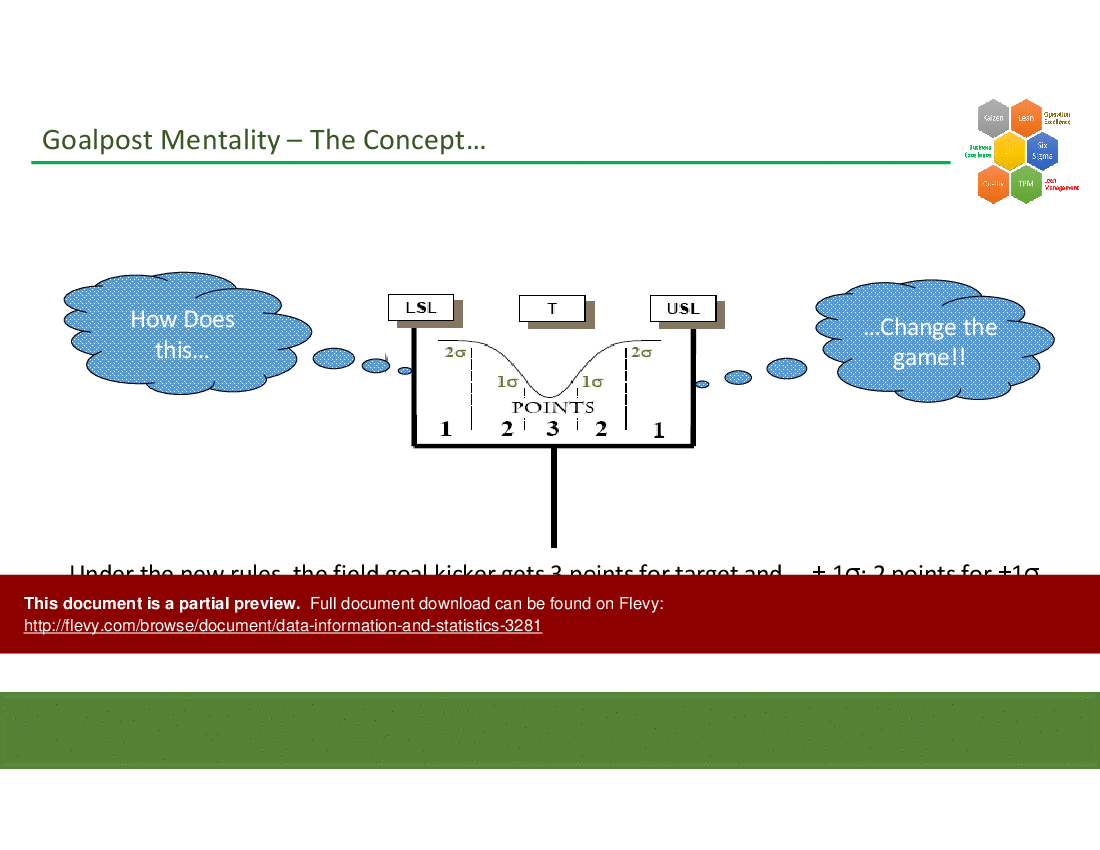
• Variation Vs Goal Post Mentality (page 8)
• Data Classification (page 10)
• Data Representation (page 12)
• Descriptive Statistics (page 15)
• Advanced Statistics (page 20)
• Inferential Statistics (page 30)
• Performance Measures (page 40)
Primary Topics Covered
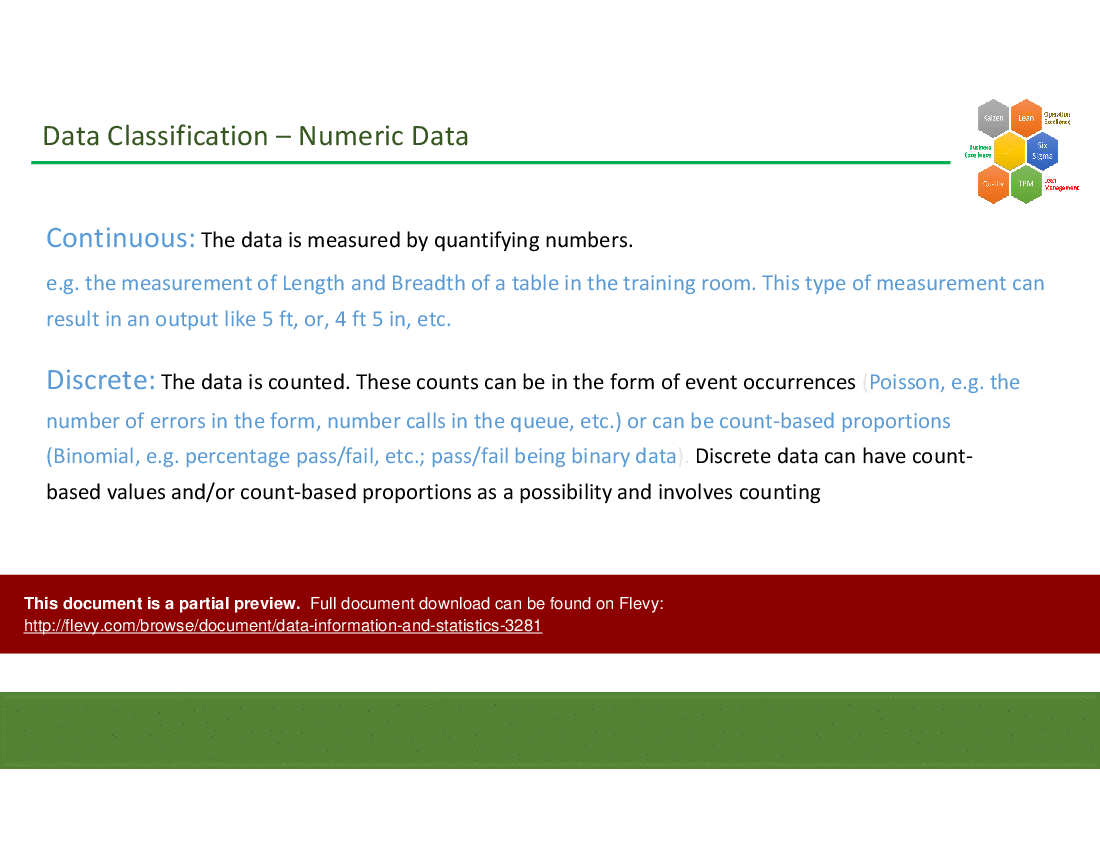
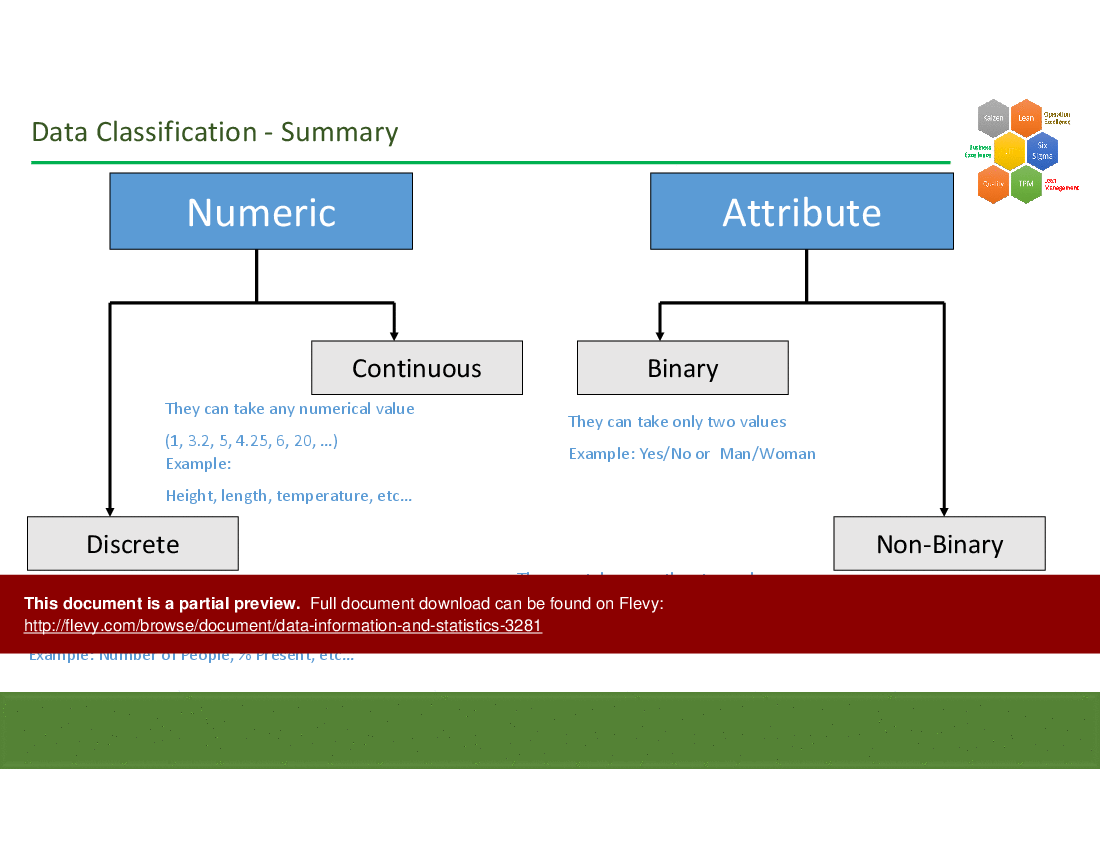
• Data Classification - Understanding how to categorize data into numeric and attribute types, including discrete and continuous data.
• Descriptive Statistics - Utilizing measures of central tendency and dispersion to summarize data effectively.
• Inferential Statistics - Applying estimation techniques, confidence intervals, and hypothesis testing to draw conclusions from sample data.
• Performance Measures - Defining critical process requirements and translating customer needs into measurable outcomes.
• Variation Analysis - Differentiating between common cause and special cause variations to enhance process control.
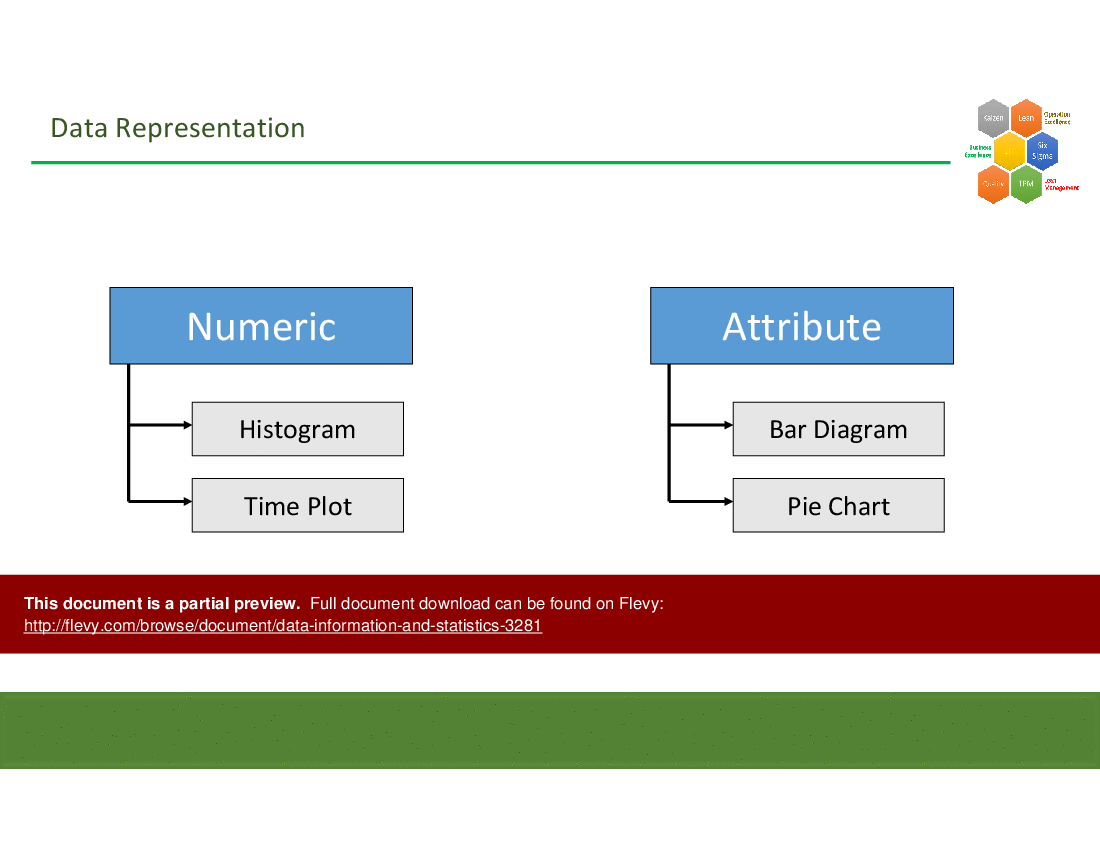
• Data Representation - Utilizing various graphical methods such as histograms and pie charts to visualize data effectively.
Deliverables, Templates, and Tools
• Data classification templates for organizing numeric and attribute data
• Descriptive statistics worksheets for calculating mean, median, and mode
• Inferential statistics models for estimating confidence intervals and limits
• Performance measure definitions and templates for operational definitions
• Graphical representation tools for visualizing data trends and distributions
• Statistical analysis checklists for ensuring comprehensive data evaluation
Slide Highlights
• Overview of data classification types, including numeric and attribute data
• Graphical representations of data through histograms and pie charts
• Explanation of measures of central tendency and dispersion with practical examples
• Insights into the importance of confidence intervals in inferential statistics
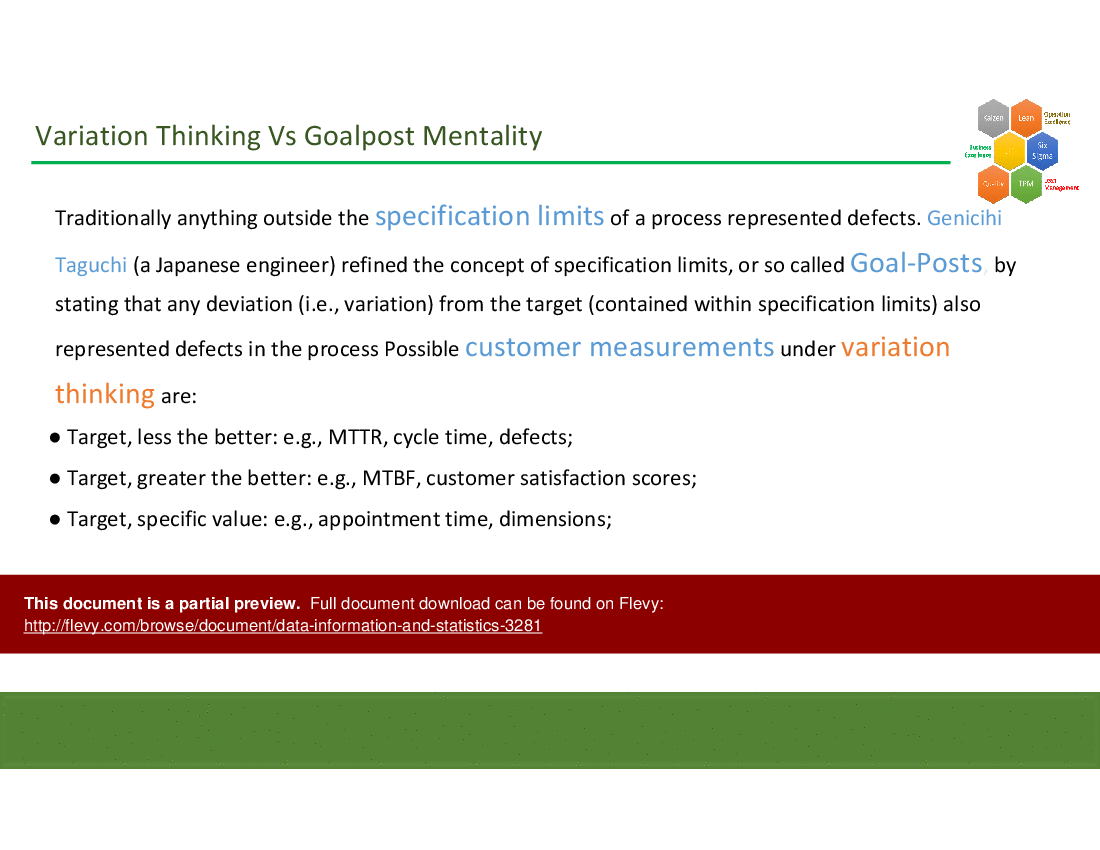
• Visual aids illustrating the concept of variation thinking vs. goalpost mentality
Potential Workshop Agenda
Introduction to Data and Statistics (60 minutes)
• Discuss the definitions of data, information, and statistics
• Explore the importance of data classification and representation
Descriptive and Inferential Statistics (90 minutes)
• Review measures of central tendency and dispersion
• Conduct hands-on exercises calculating confidence intervals
Performance Measures and Application (60 minutes)
• Define critical process requirements and performance targets
• Group activity to develop operational definitions for project metrics
Customization Guidance
• Tailor the data classification examples to reflect industry-specific metrics and terminology
• Adjust the performance measures section to align with organizational goals and customer requirements
• Incorporate real-world case studies to enhance the relevance of statistical concepts
Secondary Topics Covered
• Common cause vs. special cause variation
• The significance of hypothesis testing in decision-making
• The role of statistical analysis in Lean Six Sigma methodologies
• Techniques for effective data representation and visualization
• Understanding the implications of data variability on process performance
FAQ
What is the difference between data and information?
Data refers to raw numbers without context, while information is data that has been processed and organized to convey meaning.
What are the main branches of statistics?
Statistics is divided into descriptive statistics, which summarizes data, and inferential statistics, which makes predictions or generalizations about a population based on a sample.
How do you calculate a confidence interval?
A confidence interval is calculated using the sample mean, sample standard deviation, and a confidence coefficient that corresponds to the desired confidence level.
What is the significance of variation in data?
Variation is crucial as it indicates the degree of inconsistency in data, which can affect process performance and quality.
How can performance measures be defined?
Performance measures translate customer needs into specific, measurable characteristics, including operational definitions, target values, and specification limits.
What are common causes of variation?
Common causes are inherent variations in a process that are predictable and expected, often referred to as "white noise."
What is a histogram?
A histogram is a graphical representation of numerical data that displays the frequency distribution of data points across specified intervals.
How does one determine the type of data?
Data can be classified as numeric (continuous or discrete) or attribute (binary or non-binary) based on its characteristics and measurement methods.
Glossary
• Data - Raw numbers or facts that lack context.
• Information - Processed data that conveys meaning.
• Descriptive Statistics - Statistical methods for summarizing data.
• Inferential Statistics - Techniques for making predictions about a population based on sample data.
• Confidence Interval - A range of values likely to contain a population parameter.
• Variation - The degree of difference in data measurements.
• Common Cause Variation - Predictable variations inherent in a process.
• Special Cause Variation - Unpredictable variations due to external factors.
• Histogram - A bar graph representing frequency distribution of numerical data.
• Performance Measure - A quantifiable metric that reflects the effectiveness of a process.
• Operational Definition - A precise description of how a characteristic is measured.
• Target Value - The optimal level of a performance measure.
• Specification Limit - The defined range of acceptable values for a performance measure.
• Defect - A failure to meet a performance standard.
• Sample - A subset of a population used for statistical analysis.
• Population - The entire group being studied.
• Mean - The average value of a dataset.
• Median - The middle value in an ordered dataset.
• Mode - The most frequently occurring value in a dataset.
• Standard Deviation - A measure of the dispersion of data points around the mean.
• Variance - The square of the standard deviation, representing data spread.
Source: Data, Information, & Statistics PowerPoint (PPT) Presentation Slide Deck, Nishil Josh
This document is available as part of the following discounted bundle(s):
Save %!
Quality Management Tools
This bundle contains 6 total documents. See all the documents to the right.
Save %!
Lean Six Sigma Problem Solving Tools
This bundle contains 8 total documents. See all the documents to the right.
|
Receive our FREE Primer on Lean Management
This 32-page presentation from Operational Excellence Consulting explains the Lean Management philosophy, based on the Toyota Production System (TPS). Learn to eliminate waste. |