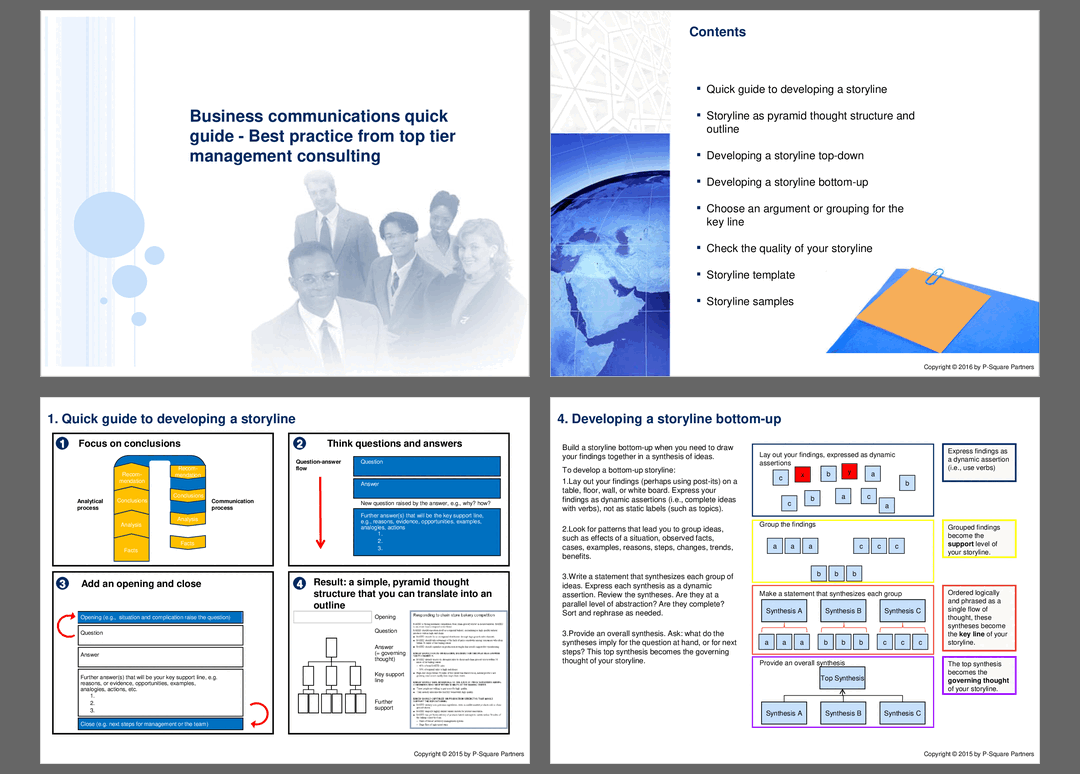
This document will help you to:
• create a compelling story with a logical structure that is easy to understand and easy to remember
• discover and clarify the points you want to make to better convince busy executive clients
• grasp the attention of your audience within the first few minutes
Content:
• Quick guide to developing a storyline
• Storyline as pyramid thought structure and outline
• Developing a storyline top-down
• Developing a storyline bottom-up
• Choose an argument or grouping for the key line
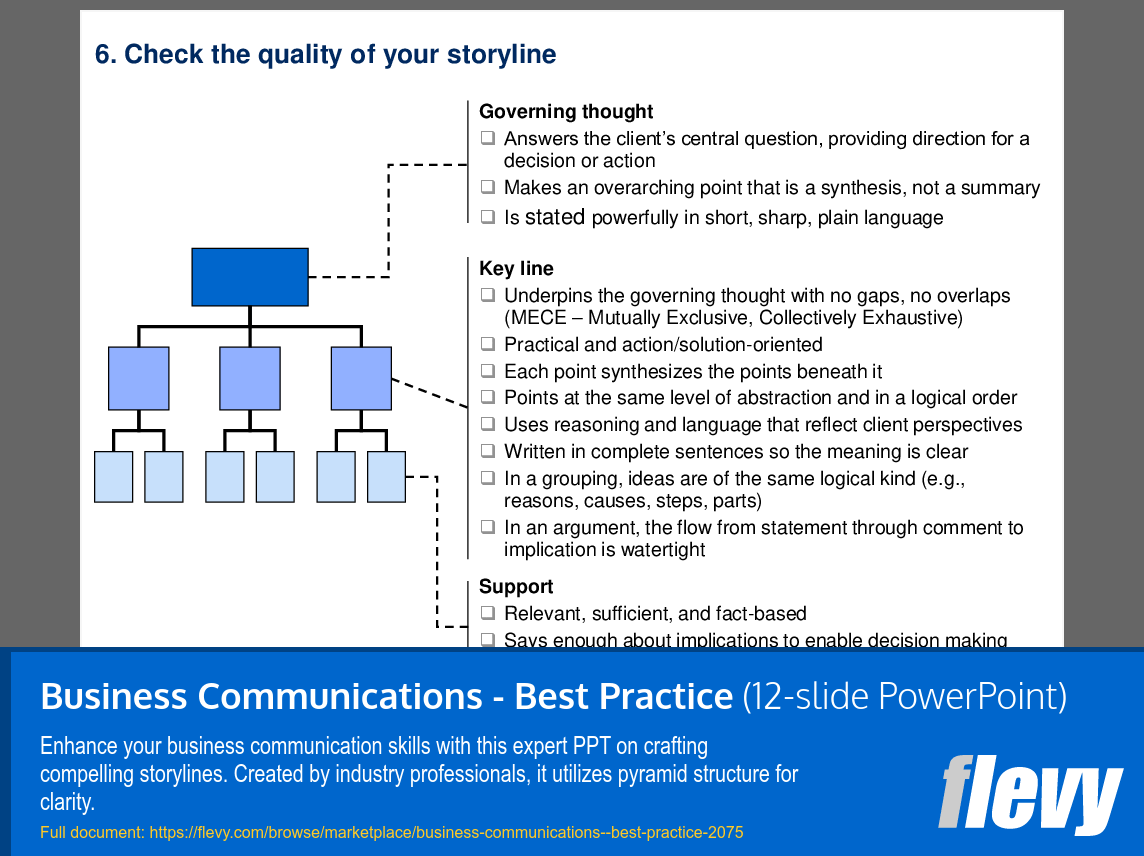
• Check the quality of your storyline
• Storyline template
• Storyline samples
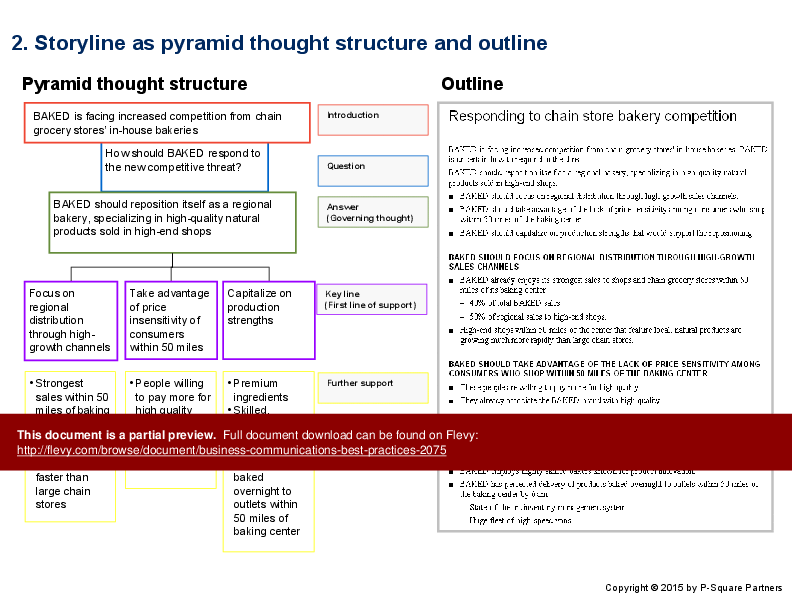
This PPT provides a comprehensive framework for constructing a storyline using the pyramid thought structure. It guides you through the process of responding to competitive threats with clear, logical arguments and supporting evidence. The pyramid structure ensures that your message is both compelling and easy to follow, making it ideal for high-stakes business communications.
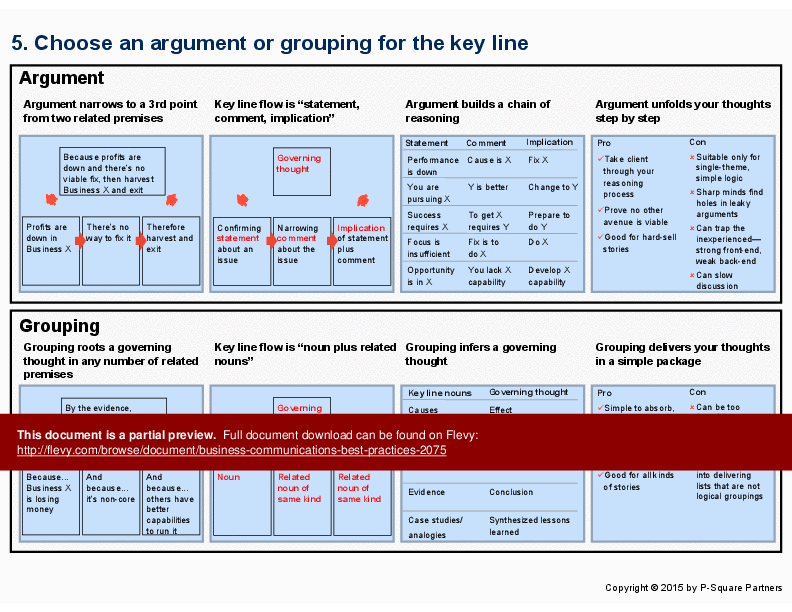
The guide also delves into the nuances of choosing the right argument or grouping for your key line. It offers practical advice on narrowing down your argument to a third point from two related premises, ensuring that your reasoning is both robust and persuasive. This section is particularly useful for executives who need to present complex ideas in a clear, concise manner.
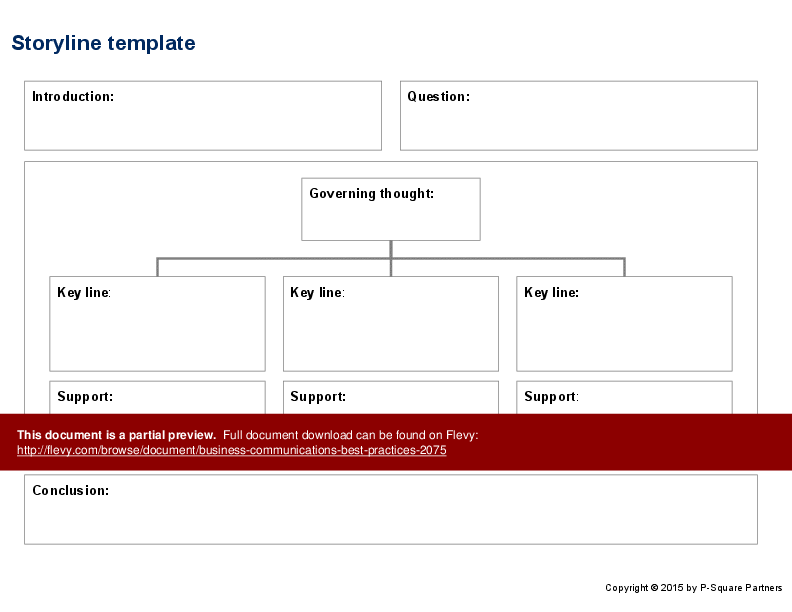
Included is a storyline template that helps you organize your thoughts from introduction to conclusion. This template is designed to streamline the development of your storyline, ensuring that each element supports your governing thought. By following this structured approach, you can create a narrative that not only captures attention, but also drives action.
Got a question about the product? Email us at support@flevy.com or ask the author directly by using the "Ask the Author a Question" form. If you cannot view the preview above this document description, go here to view the large preview instead.
Executive Summary
The Business Communications Best Practice PPT is a consulting-grade presentation designed to enhance your ability to craft compelling storylines using the Pyramid Principle framework. This deck, reflecting the quality of McKinsey, Bain, or BCG, equips corporate executives and consultants with the tools to structure their communications effectively. By leveraging this presentation, users will learn to develop clear, persuasive narratives that resonate with stakeholders, ensuring that key messages are delivered with impact.
Who This Is For and When to Use
• Corporate executives seeking to improve presentation effectiveness
• Consultants aiming to enhance client communications
• Project managers needing to convey complex information succinctly
• Marketing teams focused on thought leadership and messaging clarity
Best-fit moments to use this deck:
• Preparing for executive presentations or board meetings
• Developing strategic communications for client engagements
• Crafting internal reports that require clear storytelling
• Enhancing team training on effective communication techniques
Learning Objectives
• Define the Pyramid Principle and its application in business communications
• Build a coherent storyline using a top-down approach
• Develop supporting arguments and evidence effectively
• Synthesize findings into a compelling narrative
• Evaluate the quality of a storyline for clarity and impact
• Utilize templates for streamlined communication development
Table of Contents
• Quick Guide to Developing a Storyline (page 1)
• Storyline as Pyramid Thought Structure and Outline (page 2)
• Developing a Storyline Top-Down (page 3)
• Developing a Storyline Bottom-Up (page 4)
• Choose an Argument or Grouping for the Key Line (page 5)
• Check the Quality of Your Storyline (page 6)
• Storyline Template (page 7)
• Storyline Samples (page 8)
Primary Topics Covered
• Quick Guide to Developing a Storyline - A concise overview of the key elements necessary for creating effective storylines in business communications.
• Pyramid Thought Structure - Explanation of how to organize thoughts in a pyramid format to enhance clarity and logical flow.
• Top-Down Storyline Development - Methodology for constructing a storyline starting from the main conclusion and supporting it with evidence.
• Bottom-Up Storyline Development - Approach for synthesizing findings into a coherent narrative from detailed insights to overarching conclusions.
• Choosing Arguments for Key Lines - Techniques for selecting and structuring arguments that support the main message effectively.
• Quality Check for Storylines - Criteria for assessing the clarity, relevance, and impact of a storyline.
Deliverables, Templates, and Tools
• Storyline template for structuring presentations
• Examples of effective storylines for reference
• Guidelines for developing top-down and bottom-up narratives
• Checklist for evaluating storyline quality
• Framework for organizing findings into a cohesive argument
Slide Highlights
• Overview of the question-answer flow for effective communication
• Visual representation of the pyramid thought structure
• Step-by-step guide for developing storylines top-down and bottom-up
• Examples illustrating the application of the Pyramid Principle
• Quality assessment criteria for storylines
Potential Workshop Agenda
Introduction to Effective Storytelling (30 minutes)
• Discuss the importance of clear communication in business
• Introduce the Pyramid Principle and its benefits
Storyline Development Techniques (60 minutes)
• Explore top-down and bottom-up approaches
• Practice creating storylines using provided templates
Quality Assessment and Feedback Session (30 minutes)
• Review participant-created storylines
• Provide constructive feedback based on quality criteria
Customization Guidance
• Tailor the storyline template to fit specific project contexts or audiences
• Adjust the examples provided to reflect industry-specific scenarios
• Incorporate organizational terminology and branding into the presentation
Secondary Topics Covered
• Techniques for engaging different audience types
• Strategies for visualizing data within presentations
• Importance of narrative flow in business communications
• Methods for integrating feedback into storyline revisions
FAQ
What is the Pyramid Principle?
The Pyramid Principle is a framework for structuring communication in a clear and logical manner, emphasizing the importance of starting with the main conclusion followed by supporting arguments.
How can I apply this presentation to my work?
Use the techniques outlined in the presentation to develop clear and persuasive storylines for your reports, presentations, and client communications.
What are the benefits of using a top-down approach?
A top-down approach allows you to present your main conclusion first, making it easier for your audience to understand the key message before diving into supporting details.
Can I customize the storyline template?
Yes, the template is designed to be flexible and can be tailored to fit your specific project or audience needs.
How do I ensure my storyline is of high quality?
Utilize the quality check criteria provided in the presentation to assess clarity, relevance, and logical flow in your storyline.
What types of examples are included in the presentation?
The presentation includes various storyline samples that illustrate the application of the Pyramid Principle across different business contexts.
Is this presentation suitable for team training?
Absolutely, the presentation can serve as a valuable training tool for teams looking to enhance their communication skills.
How long does it take to develop a storyline using this framework?
The time required can vary based on complexity,, but the structured approach aims to streamline the process, making it more efficient.
Glossary
• Pyramid Principle - A communication framework that organizes information logically, starting with the main conclusion.
• Top-Down Approach - A method of developing a storyline that begins with the main idea and supports it with detailed arguments.
• Bottom-Up Approach - A technique for synthesizing findings into a coherent narrative, starting from detailed insights.
• Governing Thought - The central idea or conclusion that guides the storyline.
• Key Line - Supporting ideas that reinforce the governing thought.
• MECE - An acronym for "Mutually Exclusive, Collectively Exhaustive," a principle for organizing information without overlap.
• Dynamic Assertion - A complete idea expressed with a verb, used to convey findings effectively.
• Synthesis - The process of combining ideas to form a coherent narrative.
• Quality Check - A set of criteria used to evaluate the effectiveness of a storyline.
• Storyline Template - A structured format for developing presentations and reports.
• Audience Engagement - Techniques for capturing and maintaining the audience's attention during presentations.
• Visual Aids - Tools such as charts and graphs used to enhance understanding in presentations.
• Feedback Integration - The process of incorporating audience or peer feedback into storyline revisions.
• Argument Structuring - The method of organizing points to support the main conclusion logically.
• Communication Process - The steps involved in conveying information effectively.
• Supporting Evidence - Facts and data that back up the key line and governing thought.
• Conclusion - The final part of the storyline that reiterates the main message and suggests next steps.
• Opening Statement - The initial part of the storyline that sets the context and raises the central question.
• Implication - The significance or consequence of a statement within the storyline.
• Analytical Process - The method of examining information to draw conclusions.
• Recommendation - Suggested actions based on the analysis and conclusions drawn in the storyline.
Source: Best Practices in Communications Strategy PowerPoint Slides: Business Communications - Best Practice PowerPoint (PPT) Presentation Slide Deck, P-Square Partners
This document is available as part of the following discounted bundle(s):
Save %!
P-Square Partners Best Selling Consulting Frameworks & Tools


This bundle contains 7 total documents. See all the documents to the right.
|
Download our FREE Organization, Change, & Culture, Templates
Download our free compilation of 50+ slides and templates on Organizational Design, Change Management, and Corporate Culture. Methodologies include ADKAR, Burke-Litwin Change Model, McKinsey 7-S, Competing Values Framework, etc. |








