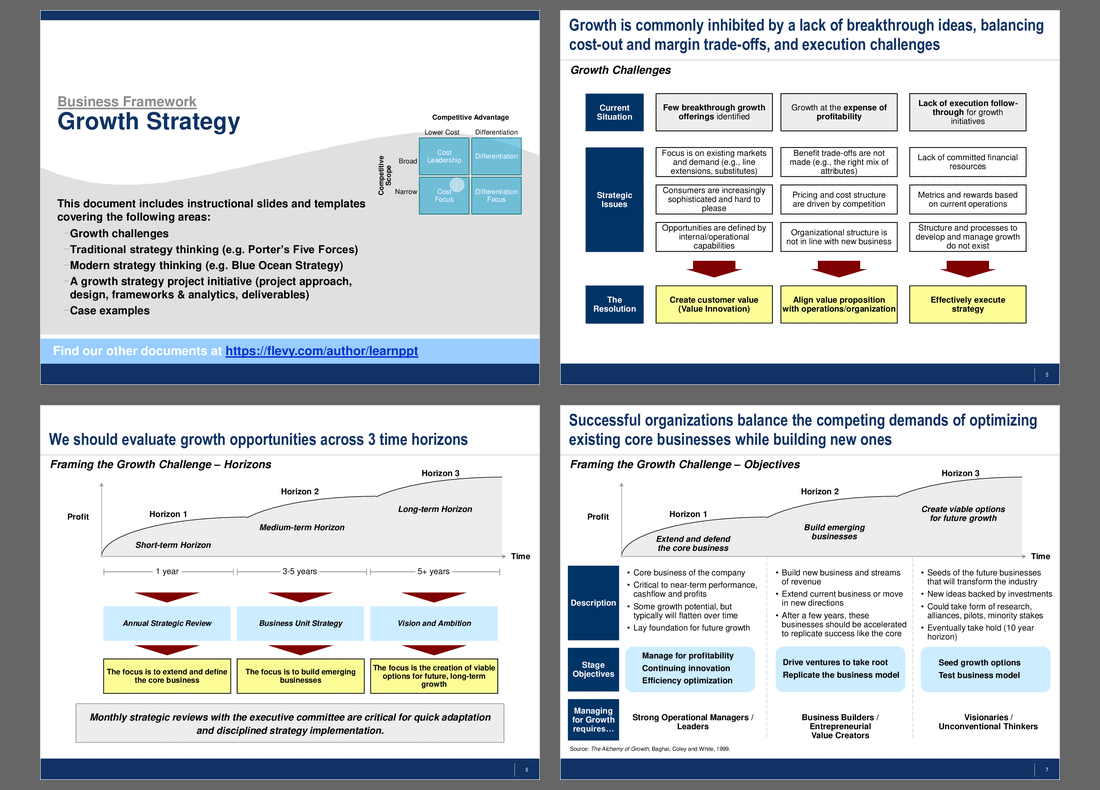

This Growth Strategy framework is created by former McKinsey, BCG, Deloitte, EY, and Capgemini consultants. It teaches the Strategy Consulting approach to Growth and includes a full Growth Strategy Project breakdown.

Editor Summary
The Growth Strategy is a 41-slide PowerPoint framework developed by former McKinsey, BCG, and Bain consultants that teaches the strategy consulting approach to growth and includes a Growth Strategy Project breakdown.
Read moreIt covers traditional and modern tools such as Porter’s Five Forces, BCG Growth‑Share Matrix, and Blue Ocean Strategy, and includes templates: growth mission articulation, breakthrough offerings framework, go‑to‑market outline, market assessment tools, financial and human investment decision templates, and a barrier removal plan. Sold as a digital download on Flevy for corporate executives, strategy consultants, business unit leaders, and marketing teams.
Use this PowerPoint when an organization needs to define and execute corporate growth initiatives—during annual strategic reviews, new product launches, market entry, or workshops to align teams on breakthrough offerings and resource allocation.
Corporate executives assessing investment trade-offs across defending the core versus building emerging businesses using the Horizon 1–3 growth framing to allocate resources.
Strategy consultants conducting competitive analyses and prioritizing strategic options using Porter’s Five Forces and the BCG Growth‑Share Matrix.
Business unit leaders prioritizing units and creating go‑to‑market plans using market assessment tools and financial/human investment decision templates.
Marketing teams identifying untapped market space and designing breakthrough offerings using Blue Ocean Strategy and a breakthrough offerings framework.
The deck combines traditional and modern strategy tools consistent with consulting practice at McKinsey, BCG, and Bain.
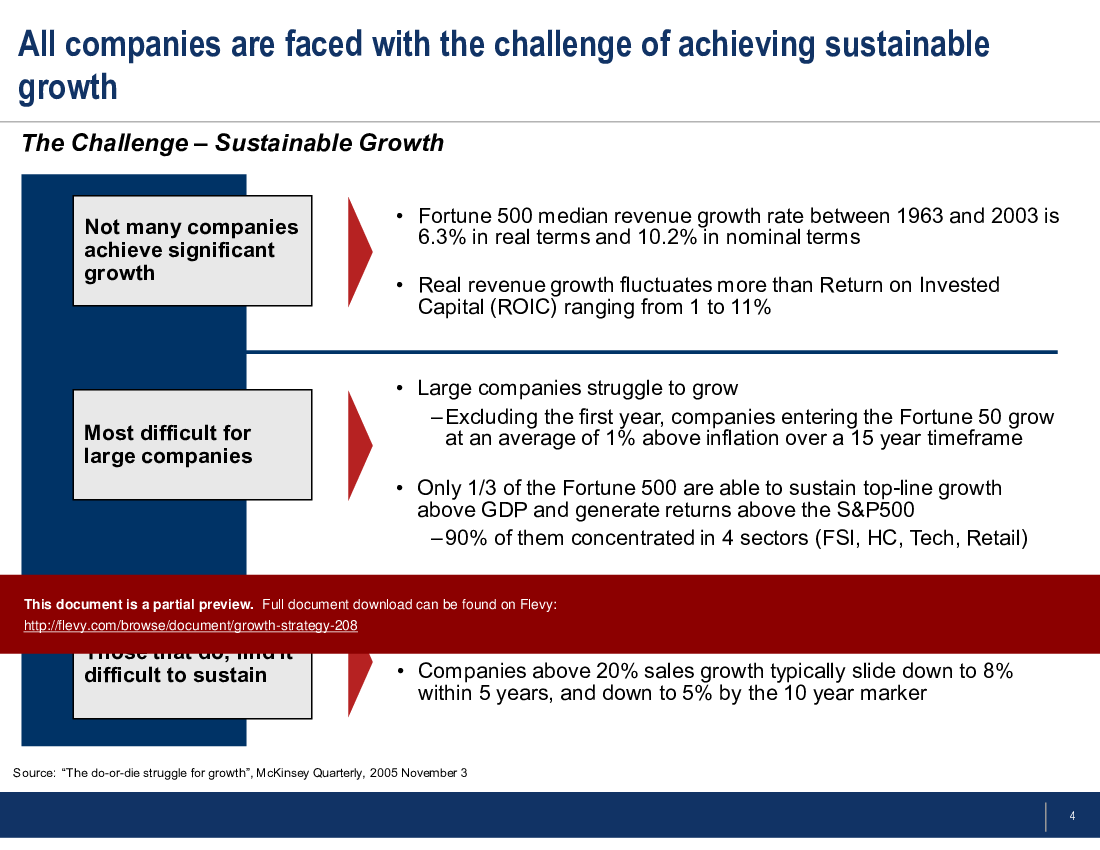
The reality is: all businesses face the challenge of achieving sustainable Growth. They need viable Growth Strategies.
So, what is Growth Strategy?
It is the organization's high-level Corporate Strategy Plan that outlines everything the organization needs to do to achieve its goals for expansion (e.g. market entry, revenue growth, M&A activity, product launches, etc.). It allows organizations to strategically allocate their limited resources towards these growth objectives, taken into account company, customer, competitive, and market considerations.
Growth is commonly inhibited by a lack of breakthrough ideas, balancing cost-out and margin trade-offs, and execution challenges. Each of these challenges has its own set of strategic challenges. For instance, a lack of breakthrough ideas is often driven by customers becoming increasingly sophisticated and more difficult to satisfy.
Thus, it is imperative for organizations to formulate a robust Growth Strategy that is realistic, sustainable, and resilient. This Growth Strategy presentation presents various Growth Strategy frameworks, concepts, and analysis models used by global consulting firms when conducting Growth Strategy, Corporate Strategy, and Strategy Development projects for their own clients.
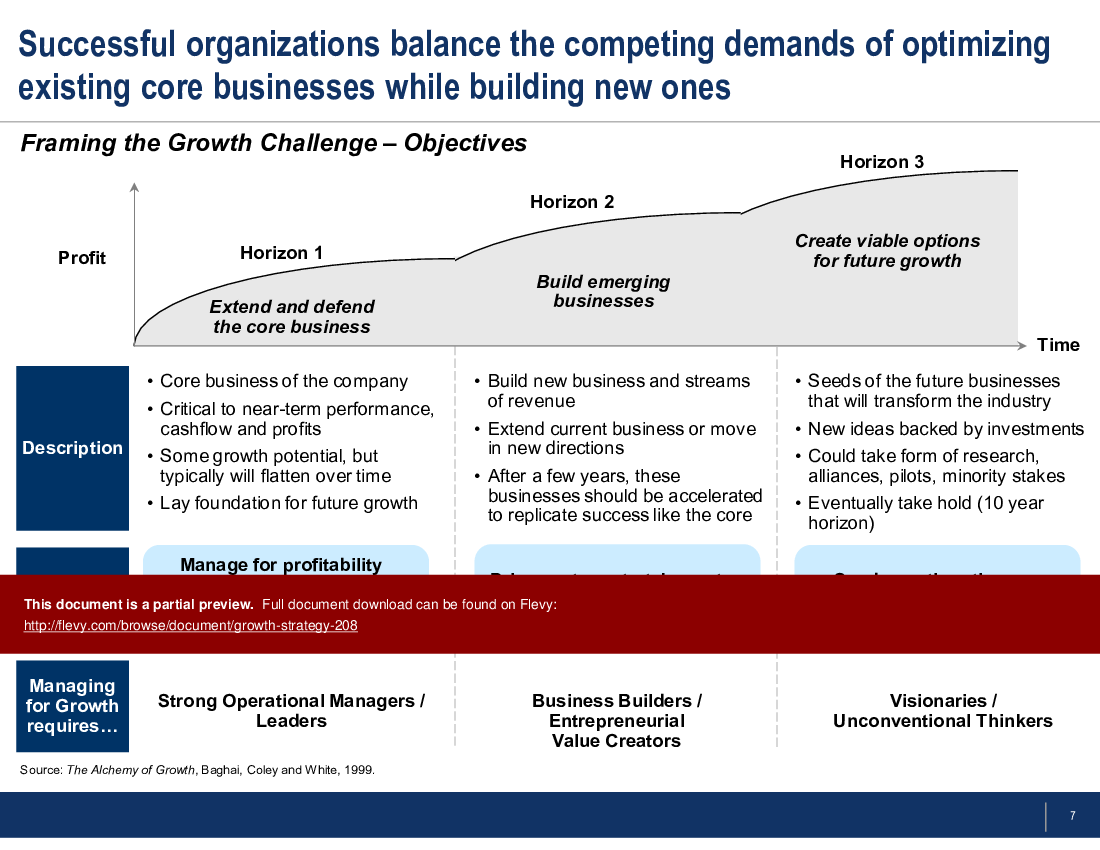
This Growth Strategy PPT first frames the various horizons of the "growth challenge:"
• Horizon 1 Extend and defend the core business
• Horizon 2 Build emerging businesses
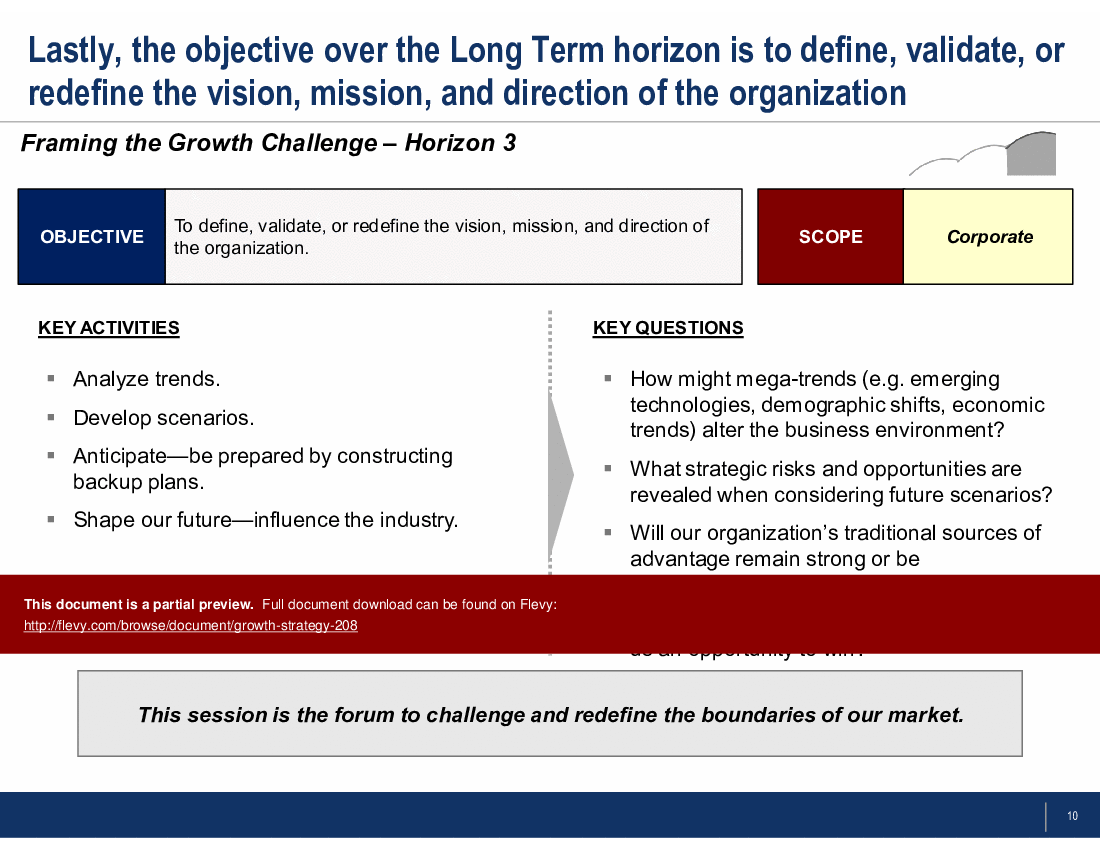
• Horizon 3 Create viable options for future growth
It then dives into various strategy frameworks for Growth—from Porter's Five Forces to Blue Ocean Strategy.
This detailed Growth Strategy deck also includes case examples, a full Growth Strategy Project breakdown, and tabulation of key Growth Strategy work products / project deliverables.
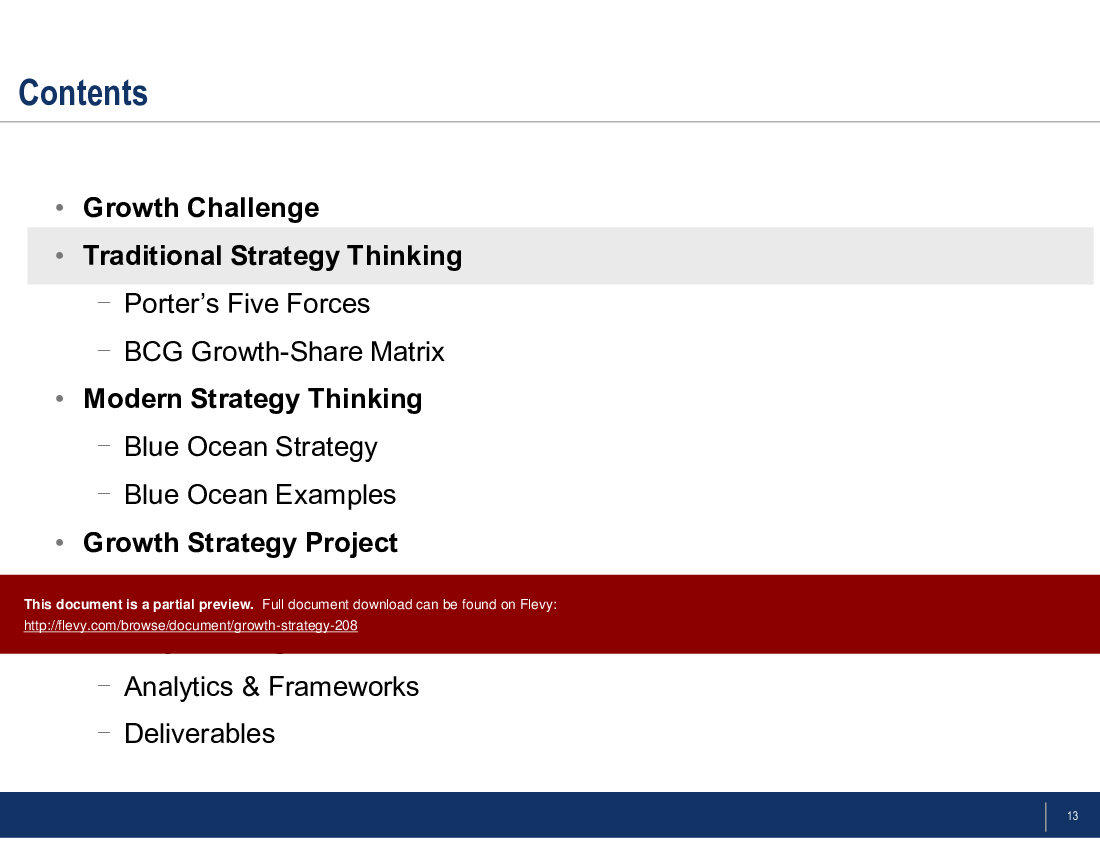
The following topics are covered in this presentation:
• Growth Challenges
• Traditional Strategy Thinking (e.g. Porter's Five Forces)
• Modern Strategy Thinking (e.g. Blue Ocean Strategy)
• A Growth Strategy Project (project approach, design, Strategy frameworks & analytics, deliverables)
• Case Examples
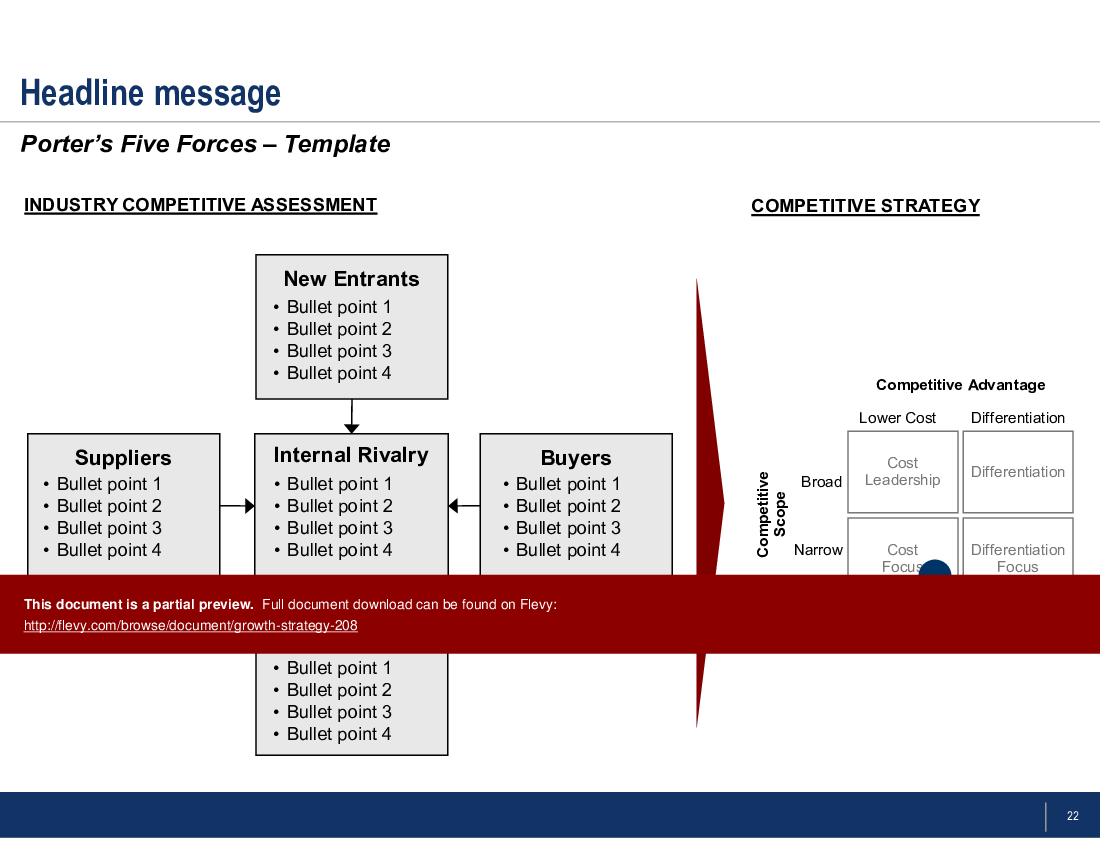
As this is a fully editable PowerPoint presentation, you can also adapt the slides as templates for your own presentations on Growth Strategies. The various PowerPoint diagrams can be leveraged for your own Strategy presentations.
The presentation highlights the critical importance of balancing short-term profitability with long-term growth initiatives. It provides actionable insights on leveraging industry trends and competitive dynamics to drive sustainable growth.
Got a question about the product? Email us at support@flevy.com or ask the author directly by using the "Ask the Author a Question" form. If you cannot view the preview above this document description, go here to view the large preview instead.
MARCUS OVERVIEW
This synopsis was written by Marcus [?] based on the analysis of the full 41-slide presentation.
Executive Summary
This Growth Strategy framework is designed to equip organizations with the tools and methodologies necessary for achieving sustainable growth. Developed by former McKinsey, Bain, and BCG consultants, this consulting-grade presentation offers a structured approach to identifying growth challenges, leveraging both traditional and modern strategy thinking, and executing a comprehensive growth strategy project. Buyers will gain insights into frameworks like Porter’s Five Forces and Blue Ocean Strategy, enabling them to formulate actionable strategies that drive long-term growth and innovation.
Who This Is For and When to Use
• Corporate executives seeking to enhance growth initiatives
• Strategy consultants advising clients on growth challenges
• Business unit leaders responsible for strategic planning and execution
• Marketing teams focused on market expansion and customer insights
Best-fit moments to use this deck:
• During annual strategic reviews to assess growth opportunities
• When launching new products or entering new markets
• In workshops aimed at aligning teams on growth objectives and strategies
Learning Objectives
• Define key growth challenges facing organizations today
• Analyze competitive environments using Porter’s Five Forces
• Apply Blue Ocean Strategy principles to identify untapped market opportunities
• Develop a comprehensive growth strategy project plan
• Create actionable deliverables and frameworks for implementation
• Evaluate case examples to derive best practices for growth
Table of Contents
• Growth Challenge (page 3)
• Traditional Strategy Thinking (page 13)
• Modern Strategy Thinking (page 26)
• Growth Strategy Project (page 37)
Primary Topics Covered
• Growth Challenges - Organizations face significant hurdles in achieving sustainable growth, particularly in adapting to market changes and consumer demands.
• Traditional Strategy Thinking - Frameworks like Porter’s Five Forces and the BCG Growth-Share Matrix provide foundational tools for assessing competitive dynamics and market positioning.
• Modern Strategy Thinking - Blue Ocean Strategy emphasizes creating uncontested market space and value innovation, moving beyond traditional competition.
• Growth Strategy Project - A structured approach that includes project initiation, external and internal assessments, insights generation, and strategy formulation.
• Analytics & Frameworks - Various tools and methodologies are utilized to analyze market trends, customer insights, and competitive dynamics.
• Deliverables - Key outputs include growth mission statements, breakthrough offerings, and go-to-market strategies.
Deliverables, Templates, and Tools
• Growth mission articulation template
• Breakthrough offerings identification framework
• Go-to-market strategy outline
• Market assessment tools for competitive analysis
• Financial and human investment decision templates
• Barrier removal plan for organizational alignment
Slide Highlights
• Overview of growth challenges and the need for sustainable strategies
• Visual representation of Porter’s Five Forces and their impact on competitive strategy
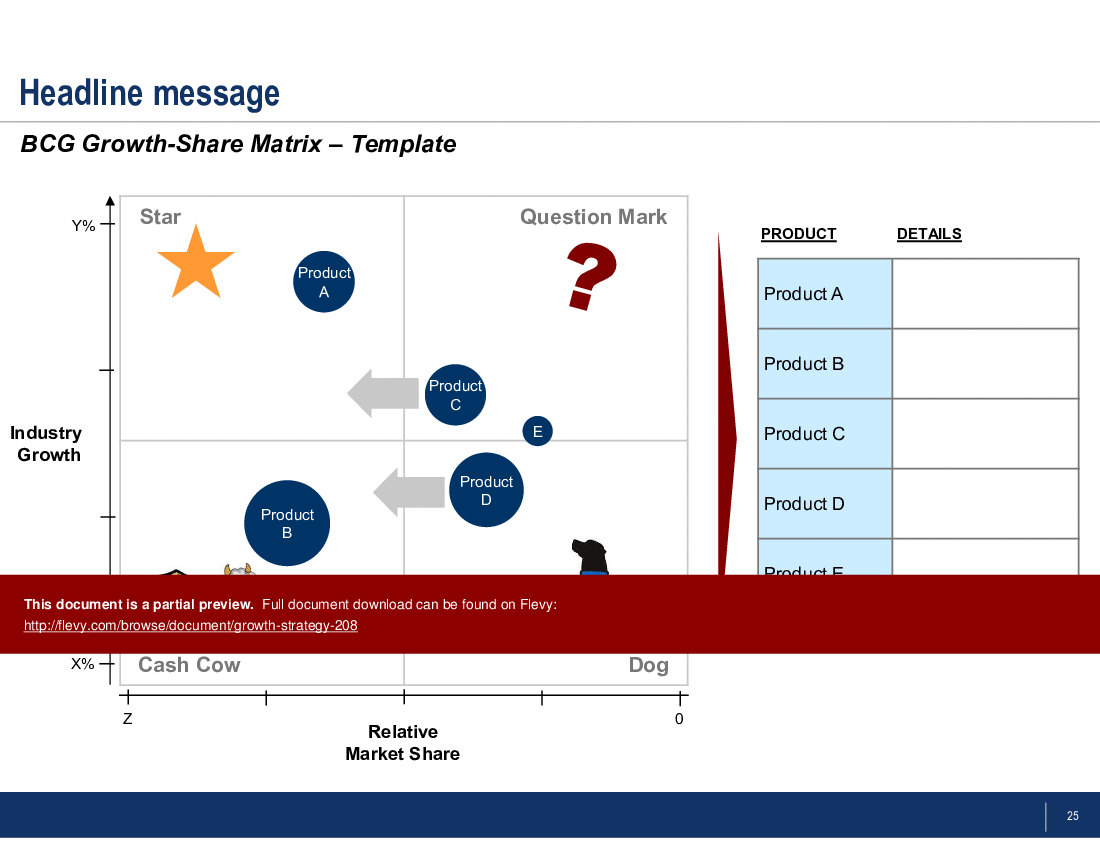
• BCG Growth-Share Matrix illustrating business unit positioning
• Blue Ocean Strategy framework emphasizing value innovation
• Case studies showcasing successful growth initiatives like Cirque Du Soleil and [yellow tail] wines
Potential Workshop Agenda
Growth Challenges Overview (60 minutes)
• Discuss current growth challenges and strategic issues
• Identify barriers to growth and potential resolutions
Strategy Formulation Session (90 minutes)
• Analyze competitive environments using Porter’s Five Forces
• Develop actionable strategies based on insights gathered
Case Study Review (60 minutes)
• Evaluate successful growth examples
• Extract best practices and lessons learned
Customization Guidance
• Tailor growth mission statements to align with organizational objectives
• Adjust frameworks and templates to fit specific industry contexts
• Incorporate unique market insights and customer data into assessments
Secondary Topics Covered
• Competitive advantage frameworks and their application
• Cost leadership vs. differentiation strategies
• The importance of aligning organizational structure with growth initiatives
• Metrics for measuring growth success
Topic FAQ
What are the core phases of a growth strategy project?
A growth strategy project typically follows a structured approach that begins with project initiation, proceeds through external and internal assessments, moves to insights generation, and concludes with strategy formulation. The Growth Strategy presentation organizes work from discovery to strategy formulation into these core steps across 4 main phases.
How does Porter’s Five Forces support growth strategy analysis?
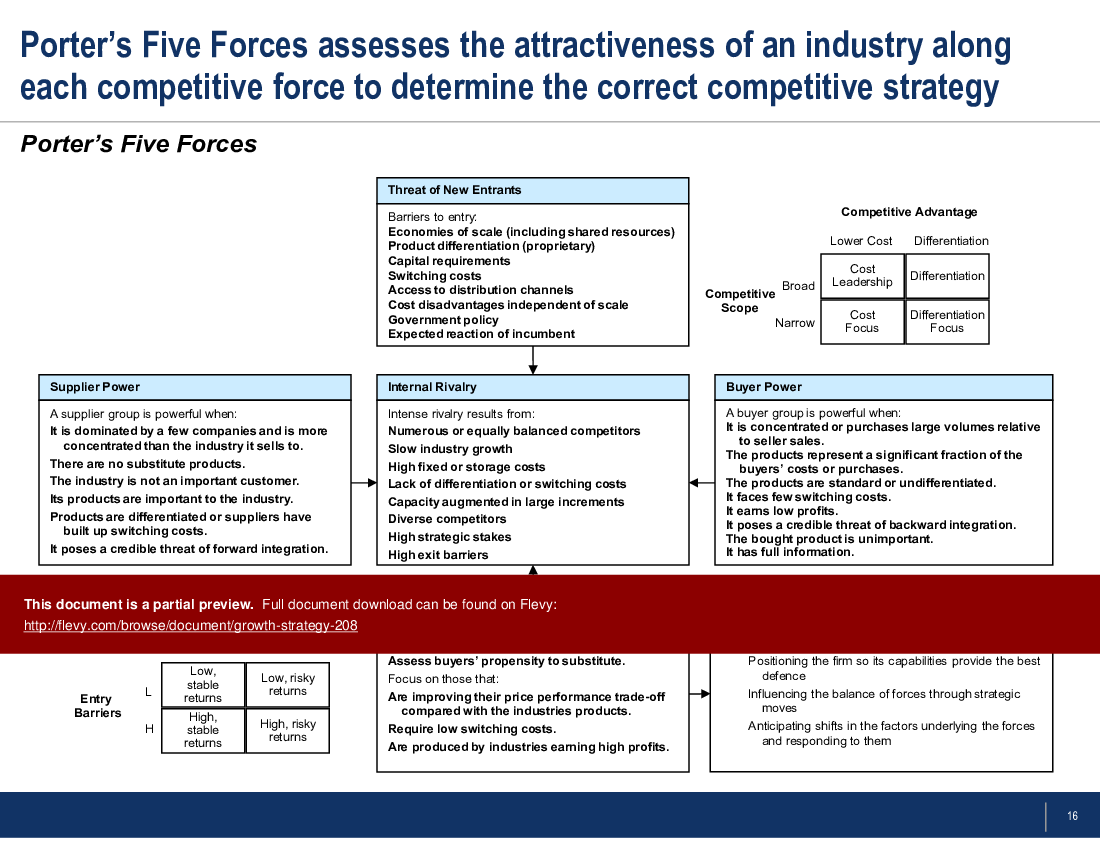
Porter’s Five Forces helps assess the competitive landscape by examining supplier power, buyer power, threat of new entrants, threat of substitutes, and industry rivalry. Using this lens informs positioning, pricing, and entry decisions and is taught in the Traditional Strategy Thinking section using Porter’s Five Forces.
What is Blue Ocean Strategy and when should a team consider it?
Blue Ocean Strategy focuses on creating uncontested market space and pursuing value innovation rather than competing in existing markets. Teams consider this approach when seeking breakthrough offerings or new customer segments that shift competition dynamics, as discussed in the Modern Strategy Thinking section on Blue Ocean Strategy.
What analytics and deliverables should a growth strategy produce?
Effective growth strategy work uses analytics on market trends, customer insights, and competitive dynamics to produce deliverables such as a growth mission statement, breakthrough offerings, go‑to‑market strategies, and a barrier removal plan. The Growth Strategy deck lists these outputs as standard project deliverables, including a growth mission statement.
How do I choose a growth strategy template for a small team with limited budget?
Prioritize editable PowerPoint templates that can be tailored to industry context and that include market assessment tools plus financial and human investment decision templates to support resource trade-offs. Flevy’s Growth Strategy product provides editable slides, market assessment tools, and financial/human investment decision templates to adapt for small teams.
How much time should I schedule for a workshop to develop growth strategy outputs?
The presentation offers a sample workshop agenda that allocates time for key activities: a 60‑minute Growth Challenges Overview, a 90‑minute Strategy Formulation Session, and a 60‑minute Case Study Review. Planning these blocks yields structured discussion and concrete outputs, including a 90‑minute strategy formulation session.
Document FAQ
These are questions addressed within this presentation.
What are the main growth challenges organizations face?
Organizations struggle with achieving sustainable growth due to market fluctuations, increased competition, and the need for innovation.
How does Porter’s Five Forces framework assist in strategy formulation?
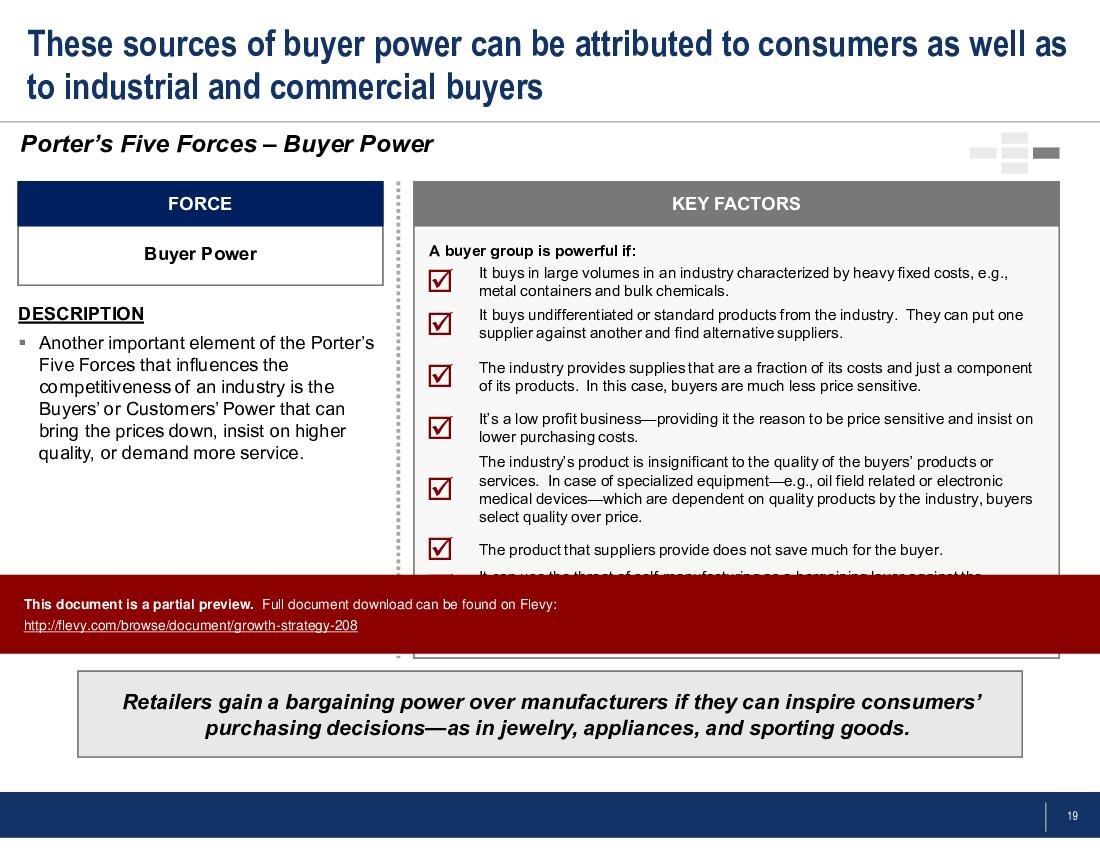
This framework helps assess the competitive landscape by analyzing factors such as supplier power, buyer power, and the threat of new entrants.
What is Blue Ocean Strategy?
Blue Ocean Strategy focuses on creating uncontested market space, allowing companies to innovate and differentiate without direct competition.
What deliverables can be expected from a Growth Strategy project?
Key deliverables include a growth mission statement, breakthrough offerings, go-to-market strategies, and a barrier removal plan.
How can this framework be customized for specific industries?
Customization can be achieved by adapting templates and frameworks to reflect industry-specific challenges and opportunities.
What role do analytics play in the Growth Strategy project?
Analytics provide insights into market trends, customer behavior, and competitive dynamics, informing strategic decisions.
How can organizations ensure effective execution of growth strategies?
By aligning organizational resources, establishing clear accountability, and monitoring progress against defined metrics.
What case studies are included in the framework?
Examples include Cirque Du Soleil and [yellow tail] wines, illustrating successful application of growth strategies.
Glossary
• Growth Challenge - The obstacles organizations face in achieving sustainable growth.
• Porter’s Five Forces - A framework for analyzing competitive dynamics within an industry.
• Blue Ocean Strategy - A strategic approach focused on creating uncontested market space.
• BCG Growth-Share Matrix - A tool for assessing business unit performance based on market share and growth.
• Value Innovation - The simultaneous pursuit of differentiation and low cost to create new market space.
• Competitive Advantage - The attributes that allow an organization to outperform its competitors.
• Market Assessment - The process of analyzing market conditions and trends to inform strategy.
• Breakthrough Offering - A new product or service that significantly changes market dynamics.
• Go-to-Market Strategy - A plan for delivering a product or service to customers effectively.
• Barrier Removal Plan - A strategy for addressing obstacles that hinder growth initiatives.
• Customer Insights - Understanding customer needs and preferences to inform product development.
• Strategic Alignment - Ensuring that organizational resources and efforts are directed towards common goals.
• Financial Investment Decisions - Evaluations regarding the allocation of financial resources to support growth.
• Organizational Structure - The arrangement of roles and responsibilities within an organization to facilitate strategy execution.
• Performance Metrics - Measurements used to assess the effectiveness of growth strategies.
• Market Trends - Patterns and shifts in consumer behavior and market conditions that impact strategy.
• Competitive Dynamics - The interactions and strategies of competitors within a market.
• Innovation Roadmap - A plan outlining the steps for developing and implementing innovative solutions.
• Value Proposition - The unique value a product or service offers to customers.
• Strategic Options - Various paths or choices available to an organization for achieving its goals.
• Insights Generation - The process of deriving actionable insights from data and analysis.
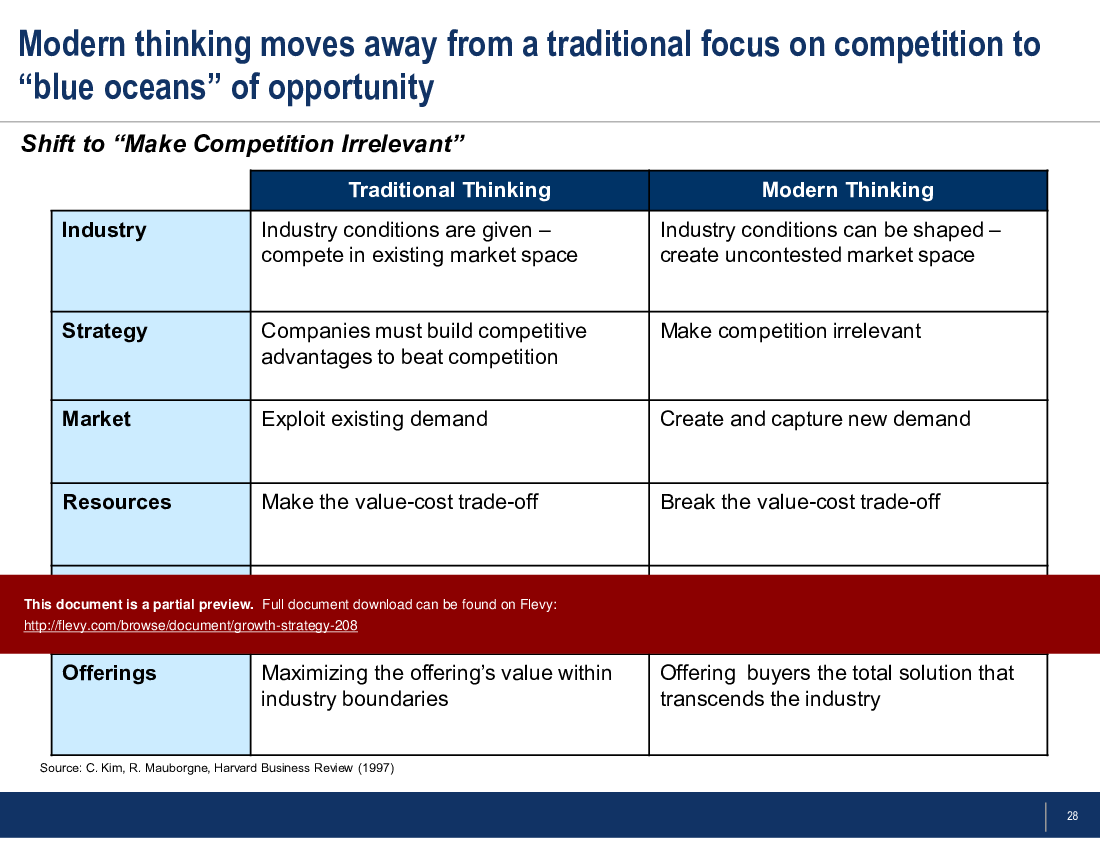
This PPT slide analyzes the shift from traditional to modern strategic business thinking. Traditional thinking views industry conditions as fixed, focusing on competition within existing market spaces. In contrast, modern thinking emphasizes creating uncontested market spaces by actively shaping industry conditions. Traditional strategies prioritize building competitive advantages, while modern approaches advocate for making competition irrelevant through innovation. Traditional views exploit existing demand, whereas modern thinking encourages creating and capturing new demand with customer-centric strategies. The resources mindset shifts from a value-cost trade-off to delivering value without compromising cost. Organizationally, traditional views align activities with differentiation or low cost, while modern perspectives seek to achieve both simultaneously. Lastly, traditional offerings maximize value within industry boundaries, while modern approaches transcend these boundaries for broader value creation.
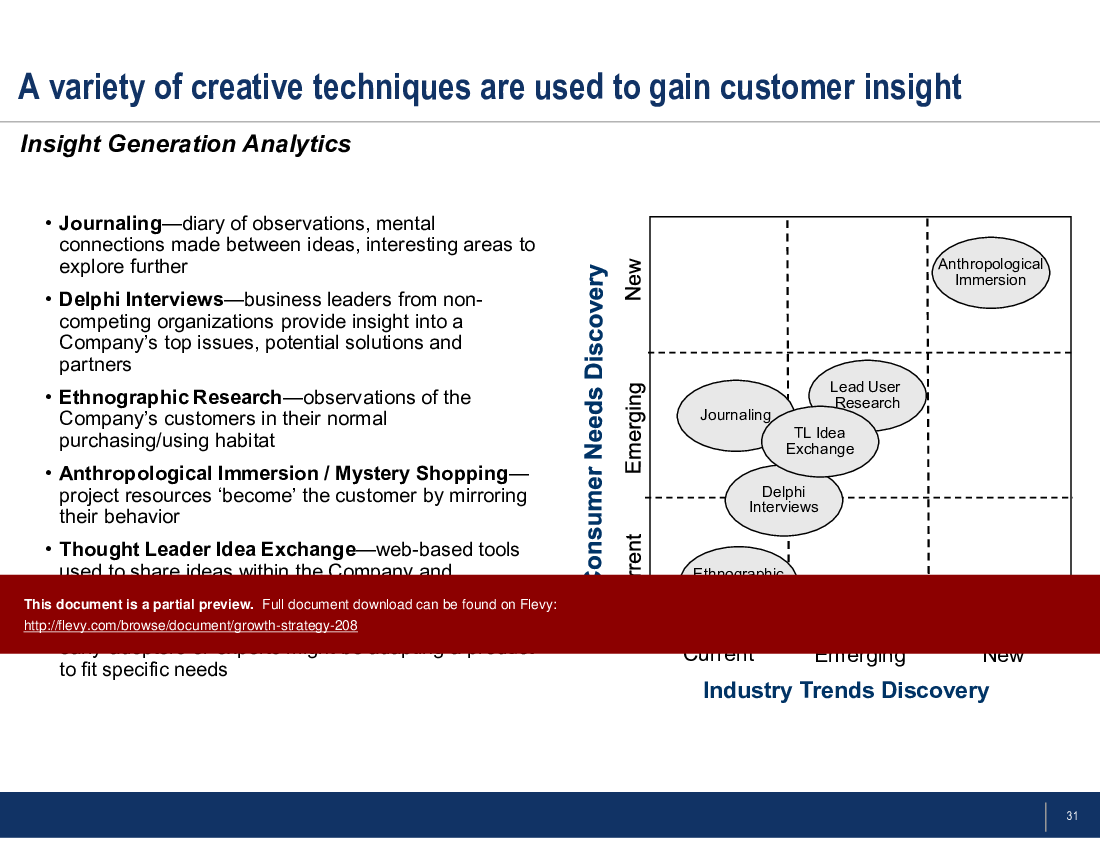
This PPT slide categorizes creative techniques for gaining customer insights under "Insight Generation Analytics." Techniques include Journaling, Delphi Interviews, Ethnographic Research, Anthropological Immersion/Mystery Shopping, Thought Leader Idea Exchange, and Lead Consumer Research. Journaling documents observations for deeper insights, while Delphi Interviews leverage expertise from non-competing business leaders to identify key issues. Ethnographic Research observes customers in natural environments to understand purchasing behaviors. A visual framework maps these techniques against "Consumer Needs Discovery" and "Industry Trends Discovery," with axes indicating novelty and consumer needs stages. This multifaceted approach enhances understanding of market trends and consumer behavior, driving informed decision-making and fostering innovation.
This PPT slide outlines a strategic framework for balancing core business operations with new growth opportunities across 3 horizons. Horizon 1 focuses on the core business, emphasizing immediate performance, cash flow, and profitability while managing innovation and efficiency. Horizon 2 shifts to building emerging businesses, aiming to create new revenue streams and replicate the core business model, requiring entrepreneurial leaders. Horizon 3 involves seeding future growth options through investments in research, alliances, or pilot projects, driven by visionaries. This framework guides organizations in navigating growth while maintaining core business integrity.
This PPT slide outlines strategic pathways for achieving profitable growth, focusing on 2 primary avenues: expanding business scope and increasing value from current operations.
"Expanding Business Scope" includes initiatives such as exploring new segments, developing new products, and geographic expansion to access new customer bases. The "Build, Buy, Ally" approach allows organizations to develop capabilities, acquire businesses, or form strategic partnerships.
"Increasing Value from Current Business" emphasizes enhancing the value proposition, solidifying customer relationships, and optimizing pricing strategies to align with market expectations. Strategies like penetrating existing markets and optimizing the product mix aim to maximize efficiency and effectiveness of current offerings, ensuring businesses extract maximum value from existing resources.
Organizations face key challenges in achieving growth, categorized into Current Situation, Strategic Issues, and Resolution. Companies often struggle to identify breakthrough growth offerings due to an overemphasis on existing markets, limiting innovation. Rising consumer sophistication complicates meeting evolving needs, while internal capabilities often constrain growth opportunities, misaligning strategy with profitability. Execution challenges arise from insufficient financial resources and metrics focused on current operations, leading to inefficiencies in growth strategy implementation. The Resolution emphasizes creating customer value through value innovation, aligning the value proposition with organizational capabilities, and effectively executing strategies to navigate growth hurdles and capitalize on new opportunities.
This PPT slide presents a framework for growth platform development, categorizing opportunities into 3 horizons based on offering newness and required capabilities. The vertical axis ranges from "Capabilities Exist" to "Capabilities Must Be Developed" and "Capabilities Unknown," indicating a progression in complexity. The horizontal axis spans from "Today" to "Unrecognized" opportunities, emphasizing the need for organizations to assess current capabilities while exploring new markets. Horizon 1 focuses on building fundamental capabilities, while Horizon 2 transitions to developing new businesses. Horizon 3, "Change the Industry," targets breakthrough market offerings, requiring a clear innovation path toward disruptive market changes. This structured approach helps organizations align capabilities with market opportunities and prioritize initiatives for future shifts.
This PPT slide presents a framework for evaluating growth opportunities across 3 time horizons: short-term, medium-term, and long-term. The vertical axis represents profit, while the horizontal axis denotes time: one year for Horizon 1, 3 to 5 years for Horizon 2, and 5 or more years for Horizon 3. The short-term focus is on extending and defining the core business for immediate profitability. The medium-term emphasizes building emerging businesses, transitioning towards innovation and new market opportunities. The long-term horizon aims at creating viable options for sustained growth. The framework includes 3 strategic review processes: Annual Strategic Review, Business Unit Strategy, and Vision and Ambition, with monthly reviews highlighting the need for agility in decision-making. This structured approach helps organizations balance immediate operational needs with longer-term strategic ambitions, prioritizing initiatives and resource allocation effectively.
This PPT slide outlines a modern approach to strategy using the Blue Ocean Strategy framework, focusing on 4 key areas: Growth Focus, Value Identification, Value Creation, and Effective Execution. Growth Focus emphasizes understanding customer needs and creating a multi-horizon portfolio for market mining. Value Identification stresses prioritizing initiatives based on customer insights, with a strategic approach to value assessment. Value Creation involves selecting growth options and aligning the operating model with value delivery and fair pricing, highlighting value innovation. Effective Execution addresses implementing strategies through venture launches, organizational alignment, resource allocation, and establishing accountability, ensuring a sustainable growth structure with infrastructure, culture, and alliance management.
This PPT slide outlines a structured approach to strategy development, divided into 3 phases: Analysis and Insights Generation, Growth Options & Strategy Development, and Growth Strategy Execution Design.
In the Analysis and Insights Generation phase, external and internal assessments are conducted to identify gaps and opportunities. The Growth Options & Strategy Development phase focuses on visioning and generating alternative solutions, fostering creativity and innovation. Finally, the Growth Strategy Execution Design phase transitions to implementation, refining the strategy, developing a transformation roadmap, and creating a business case.
This comprehensive framework guides clients from initial analysis through execution, ensuring strategies are actionable and aligned with organizational goals, crucial for navigating complex market dynamics and driving sustainable growth.
This PPT slide outlines barriers to growth categorized into 3 horizons. Horizon 1 includes "Under siege," "Losing the right to grow," and "Running out of steam," indicating immediate threats to core business stability. Horizon 2 features barriers like "Inventing a new future" and "Generating ideas,, but not new businesses," highlighting a disconnect between ideation and execution. Horizon 3 focuses on "Failing to seed for the future," emphasizing the risk of inadequate investment in long-term growth opportunities. Common barriers include overemphasis on new business at the expense of core development, inadequate performance improvements, and external pressures requiring a shift in focus. These insights serve as a diagnostic tool for executives to identify and address growth barriers, guiding strategic decisions for a growth-oriented organization.
Source: Best Practices in Growth Strategy, Porter's Five Forces PowerPoint Slides: Growth Strategy PowerPoint (PPTX) Presentation Slide Deck, LearnPPT Consulting
This Growth Strategy framework is created by former McKinsey, BCG, Deloitte, EY, and Capgemini consultants. It teaches the Strategy Consulting approach to Growth and includes a full Growth Strategy Project breakdown.
We are a team of management consultants trained by top tier global consulting firms (including McKinsey, BCG, Deloitte, EY, Capgemini) with a collective experience of several decades. We specialize in business frameworks based on real-life consulting engagements.
We have served 100s of clients that range from Fortune 500 companies to tech startups to
... [read more] $1B+ private companies.
Utilize our consulting frameworks to apply structured thinking & analysis to address your business challenges, uncover strategic insights, and implement workable solutions. Our PowerPoint presentations follow traditional consulting slide design formats, starting with a clear slide headline. Easily customize and repurpose our slides for your own business presentations.
Beyond business frameworks & methodologies, we also offer PowerPoint templates and other business templates. Our templates are professionally designed and have been used in thousands of deliverables & work products across hundreds of clients.
Since 2012, we have provided business templates to over 10,000 businesses and organizations of all sizes, from startups and small businesses to the Fortune 100, in over 130 countries.
Read Customer Testimonials
"I have found Flevy to be an amazing resource and library of useful presentations for lean sigma, change management and so many other topics. This has reduced the time I need to spend on preparing for my performance consultation. The library is easily accessible and updates are regularly provided. A wealth of great information."
– Cynthia Howard RN, PhD, Executive Coach at Ei Leadership
"Flevy is our 'go to' resource for management material, at an affordable cost. The Flevy library is comprehensive and the content deep, and typically provides a great foundation for us to further develop and tailor our own service offer."
– Chris McCann, Founder at Resilient.World
"As a consultant requiring up to date and professional material that will be of value and use to my clients, I find Flevy a very reliable resource.
The variety and quality of material available through Flevy offers a very useful and commanding source for information. Using Flevy saves me time, enhances my expertise and ends up being a good decision."
– Dennis Gershowitz, Principal at DG Associates
"Last Sunday morning, I was diligently working on an important presentation for a client and found myself in need of additional content and suitable templates for various types of graphics. Flevy.com proved to be a treasure trove for both content and design at a reasonable price, considering the time I
saved. I encountered a download issue during the ordering process. However, a quick email to Flevy's support team, even on a Sunday (!!!), resulted in assistance within less than an hour, allowing me to download the content I needed. Fantastic job, Flevy! I give 5 stars for both content/price and customer service. Thank you!
"
– M. E., Chief Commercial Officer, International Logistics Service Provider
"[Flevy] produces some great work that has been/continues to be of immense help not only to myself, but as I seek to provide professional services to my clients, it gives me a large "tool box" of resources that are critical to provide them with the quality of service and outcomes they are expecting."
– Royston Knowles, Executive with 50+ Years of Board Level Experience
"I am extremely grateful for the proactiveness and eagerness to help and I would gladly recommend the Flevy team if you are looking for data and toolkits to help you work through business solutions."
– Trevor Booth, Partner, Fast Forward Consulting
"Flevy.com has proven to be an invaluable resource library to our Independent Management Consultancy, supporting and enabling us to better serve our enterprise clients.
The value derived from our [FlevyPro] subscription in terms of the business it has helped to gain far exceeds the investment made, making a subscription a no-brainer for any growing consultancy – or in-house strategy team."
– Dean Carlton, Chief Transformation Officer, Global Village Transformations Pty Ltd.
"As an Independent Management Consultant, I find Flevy to add great value as a source of best practices, templates and information on new trends. Flevy has matured and the quality and quantity of the library is excellent. Lastly the price charged is reasonable, creating a win-win value for
the customer, Flevy and the various authors. This is truly a service that benefits the consulting industry and associated clients. Thanks for providing this service.
"
– Jim Schoen, Principal at FRC Group
Save with Bundles
This document is available as part of the following discounted bundle(s):
Download our free compilation of 50+ Strategy & Transformation slides and templates. Frameworks include McKinsey 7-S, Balanced Scorecard, Disruptive Innovation, BCG Curve, and many more.