
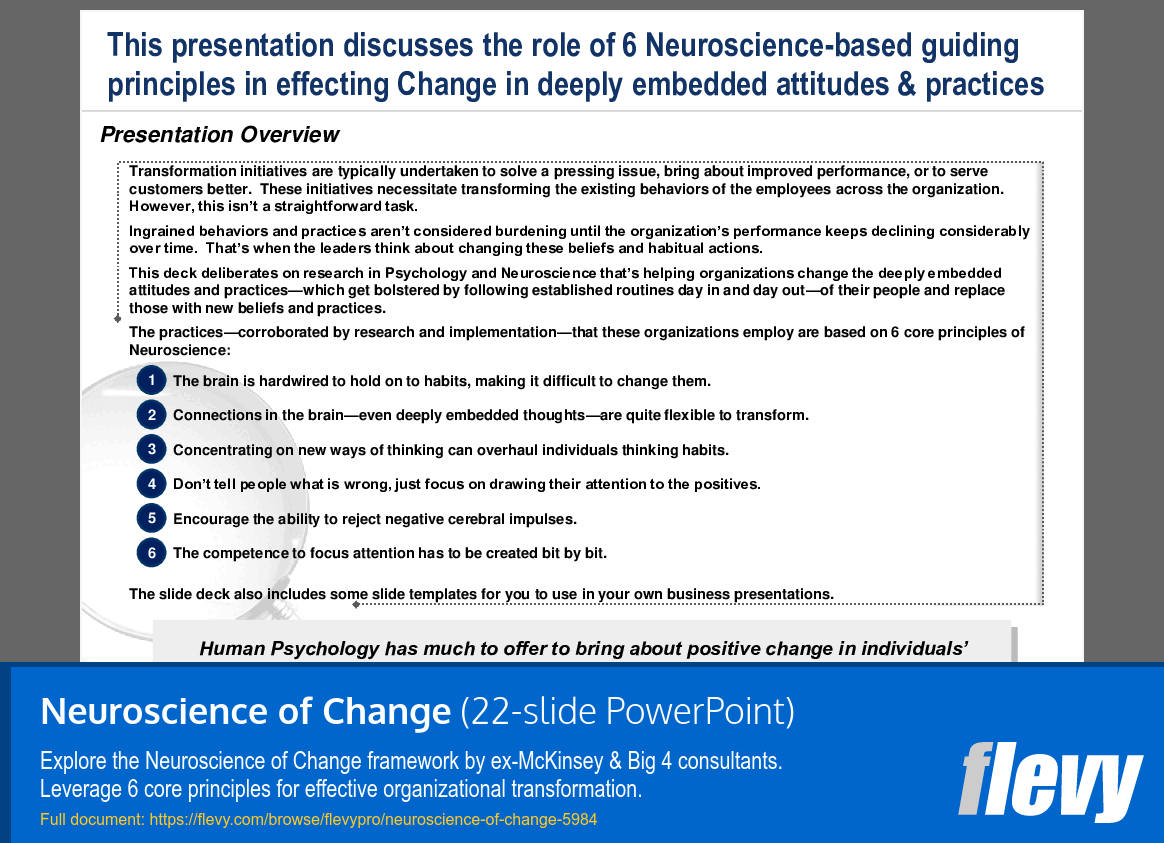


Transformation initiatives are typically undertaken to solve a pressing issue, bring about improved performance, or to serve customers better. These initiatives necessitate transforming the existing behaviors of the employees across the organization. However, this isn't a straightforward task.
Ingrained behaviors and practices aren't considered burdening until the organization's performance keeps declining considerably over time. That's when the leaders think about changing these beliefs and habitual actions.
This deck deliberates on research in Psychology and Neuroscience that's helping organizations change the deeply embedded attitudes and practices—which get bolstered by following established routines day in and day out—of their people and replace those with new beliefs and practices.
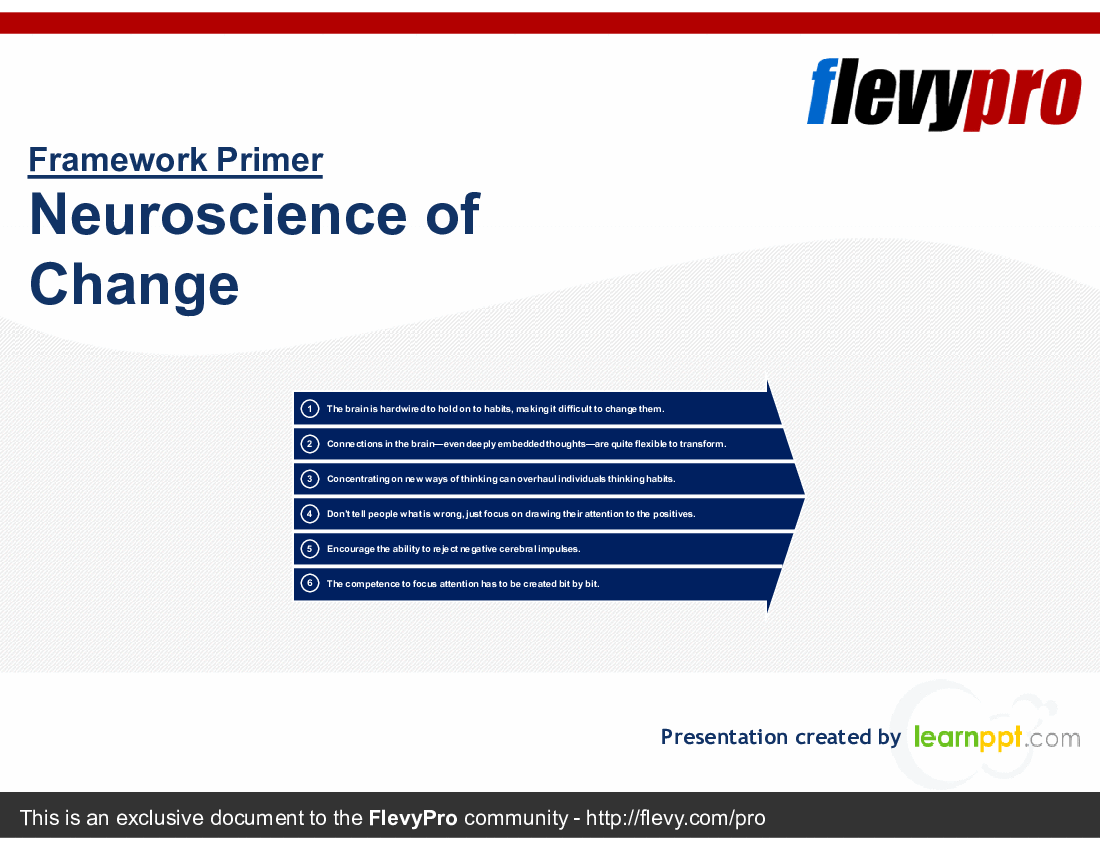
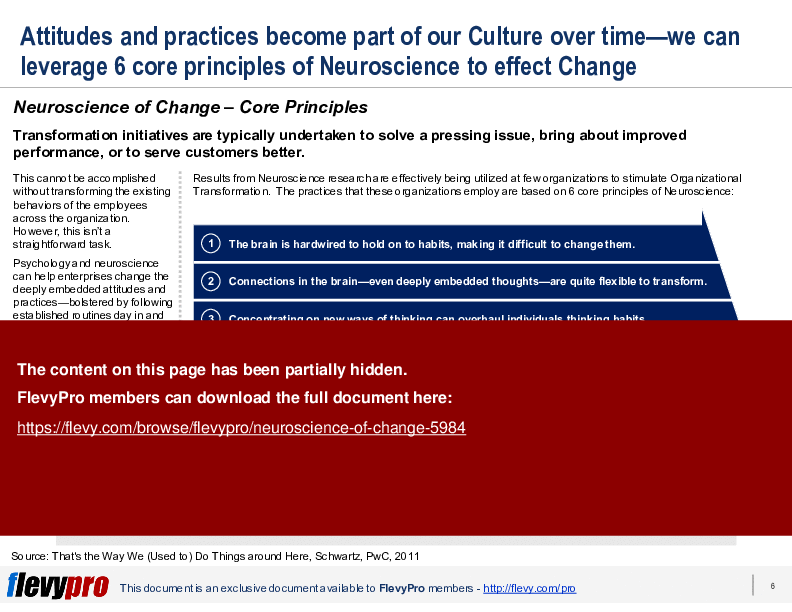
The practices—corroborated by research and implementation—that these organizations employ are based on 6 core principles of Neuroscience.
The slide deck also includes some slide templates for you to use in your own business presentations.
The Neuroscience of Change presentation delves into the intricate mechanisms of how the brain's wiring impacts organizational transformation. It emphasizes that the brain's hardwiring to hold onto habits poses a significant challenge in change management. The deck outlines six core principles derived from neuroscience research, providing actionable insights for leaders to implement in their change initiatives. These principles are designed to help organizations rewire their employees' thought patterns and behaviors, fostering a culture of adaptability and continuous improvement.
One of the key takeaways is the importance of focusing on positive reinforcement rather than highlighting negative behaviors. This approach aligns with the principle that drawing attention to desired actions can help embed new habits more effectively. The presentation also stresses the need for gradual development of the ability to focus attention, which is crucial for sustaining long-term behavioral change. By leveraging these neuroscience-based strategies, organizations can enhance their change management processes and achieve more sustainable results.
The PPT includes practical templates that can be customized for your specific business needs. These templates are designed to help you apply the six core principles in your own presentations and workshops, making it easier to communicate the importance of neuroscience in change management. The comprehensive approach provided in this deck ensures that you have the tools and knowledge needed to drive meaningful change within your organization.
Got a question about this document? Email us at flevypro@flevy.com.
Executive Summary
The "Neuroscience of Change" presentation provides a framework designed to facilitate organizational transformation by leveraging insights from neuroscience and psychology. Developed by former McKinsey and Big 4 consultants, this presentation outlines 6 core principles that guide effective change management. By focusing on these principles, corporate executives and change leaders can reshape deeply embedded behaviors and attitudes, ultimately enhancing performance and fostering a culture of adaptability within their organizations.
Who This Is For and When to Use
• Corporate executives leading transformation initiatives
• Change management consultants advising organizations on behavioral shifts
• HR leaders focusing on employee engagement and cultural change
• Organizational development teams implementing performance improvement strategies
Best-fit moments to use this deck:
• During the planning phase of a major organizational change initiative
• In workshops aimed at fostering a culture of continuous improvement
• When addressing resistance to change among employees
Learning Objectives
• Define the neuroscience principles that underpin effective change management
• Build strategies to shift organizational culture and employee behavior
• Identify methods to reinforce positive behaviors and reduce resistance to change
• Develop frameworks for ongoing assessment of change initiatives
• Create actionable plans that align with the core principles of neuroscience
• Foster a mindset of adaptability and resilience among employees
Table of Contents
• Overview (page 3)
• Neuroscience of Change (page 5)
• Core Principles (page 6)
• Templates (page 19)
Primary Topics Covered
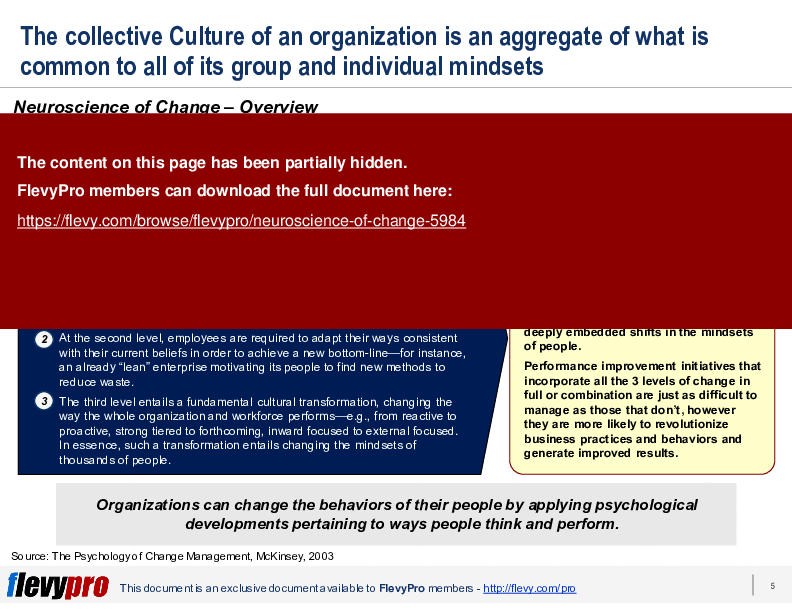
• Neuroscience of Change - This section discusses how neuroscience informs organizational change, emphasizing the need to alter ingrained behaviors and attitudes.
• Core Principles - Six guiding principles are outlined, focusing on the brain's adaptability and the importance of positive reinforcement in behavior change.
• Templates - Practical templates are provided to assist in the application of the core principles in business settings.
Deliverables, Templates, and Tools
• Framework for understanding the neuroscience behind change
• Templates for implementing the 6 core principles in organizational settings
• Guidelines for conducting workshops focused on change management
• Tools for measuring the effectiveness of change initiatives
• Resources for reinforcing positive behaviors among employees
Slide Highlights
• Overview of the 6 core principles of neuroscience in change management
• Visual representation of the Virtuous Cycle of Focus framework
• Case studies demonstrating successful application of neuroscience in organizational change
• Practical templates for immediate implementation in business contexts
Potential Workshop Agenda
Introduction to Neuroscience of Change (30 minutes)
• Overview of the presentation and its objectives
• Discussion on the importance of neuroscience in organizational change
Core Principles Deep Dive (60 minutes)
• Exploration of each core principle and its application
• Group activities to identify current challenges in behavior change
Action Planning Session (45 minutes)
• Development of actionable strategies based on the principles
• Group presentations of proposed plans and feedback
Customization Guidance
• Tailor the presentation to reflect specific organizational values and culture
• Adjust templates to align with existing change management frameworks
• Incorporate relevant case studies from the organization’s history to enhance relatability
Secondary Topics Covered
• The role of leadership in driving change
• Techniques for overcoming resistance to change
• The impact of organizational culture on change initiatives
• Strategies for sustaining change over time
Topic FAQ
Document FAQ
These are questions addressed within this presentation.
What are the core principles of the neuroscience of change?
The presentation outlines 6 core principles that focus on the brain's adaptability, the importance of positive reinforcement, and strategies for fostering new behaviors.
How can this framework be applied in my organization?
The framework can be applied through workshops, training sessions, and by integrating the principles into existing change management processes.
What types of templates are included in the presentation?
Templates include frameworks for assessing current behaviors, strategies for implementing change, and tools for measuring effectiveness.
How does neuroscience inform change management?
Neuroscience provides insights into how habits are formed and changed, emphasizing the need for positive reinforcement and awareness in behavior modification.
Can this framework help with employee resistance to change?
Yes, by focusing on positive reinforcement and understanding the psychological aspects of change, organizations can effectively address and reduce resistance.
What is the Virtuous Cycle of Focus?
The Virtuous Cycle of Focus is a framework that outlines steps for developing organizational capabilities to focus on desired behaviors and practices.
How long does it take to see results from implementing these principles?
Results can vary based on the organization's context,, but consistent application of the principles typically leads to observable changes within a few months.
What role do leaders play in this process?
Leaders are crucial in modeling desired behaviors, reinforcing positive changes, and fostering an environment conducive to transformation.
Glossary
• Neuroscience - The scientific study of the nervous system, particularly the brain's role in behavior and cognitive functions.
• Change Management - A structured approach to transitioning individuals, teams, and organizations from a current state to a desired future state.
• Core Principles - Fundamental guidelines that inform strategies and actions in change management.
• Virtuous Cycle of Focus - A framework that illustrates the continuous process of focusing on desired behaviors and practices.
• Positive Reinforcement - The practice of encouraging desired behaviors by rewarding them.
• Behavior Modification - Techniques used to change undesirable behaviors and reinforce desirable ones.
• Organizational Culture - The shared values, beliefs, and practices that shape how members of an organization interact and work.
• Employee Engagement - The level of commitment and involvement an employee has towards their organization and its values.
• Resistance to Change - The reluctance of individuals or groups to adapt to new methods, processes, or changes within an organization.
• Psychology of Change - The study of how psychological principles can be applied to facilitate change in individuals and organizations.
• Transformation Initiatives - Programs or projects aimed at fundamentally changing the way an organization operates.
• Cultural Transformation - A significant change in the values, beliefs, and behaviors of an organization.
• Mindset - The established set of attitudes held by an individual or group.
• Attention Density - The concept that consistent focus on specific thoughts or behaviors can solidify them into habits.
• Impartial Spectator - A mental state where individuals observe their thoughts and behaviors without judgment, facilitating self-awareness.
• Change Leadership - The ability to influence and guide individuals and teams through change processes.
• Organizational Development - A systematic approach to improving an organization's effectiveness through planned change.
• Performance Improvement - Efforts aimed at enhancing the efficiency and effectiveness of an organization.
• Employee Mindset - The collective attitudes and beliefs held by employees regarding their work and the organization.
• Psychological Insights - Understandings derived from psychology that inform strategies for managing change.
Source: Best Practices in Change Management, Behavioral Economics, Organizational Behavior PowerPoint Slides: Neuroscience of Change PowerPoint (PPTX) Presentation Slide Deck, LearnPPT Consulting
Did you need more documents?
Consider a FlevyPro subscription from $39/month. View plans here.
For $10.00 more, you can download this document plus 2 more FlevyPro documents. That's just $13 each.
|
Download our FREE Organization, Change, & Culture, Templates
Download our free compilation of 50+ slides and templates on Organizational Design, Change Management, and Corporate Culture. Methodologies include ADKAR, Burke-Litwin Change Model, McKinsey 7-S, Competing Values Framework, etc. |










