
 Click main image to view in full screen. Unlock all 7 preview images:
Absorption Costing Method – PowerPoint PPT Template
PowerPoint (PPT) 14 Slides FlevyPro Document
Sorry, this document is currently only available to FlevyPro subscribers.
You can join FlevyPro for only $39/month.
COST OPTIMIZATION PPT TEMPLATE DESCRIPTION
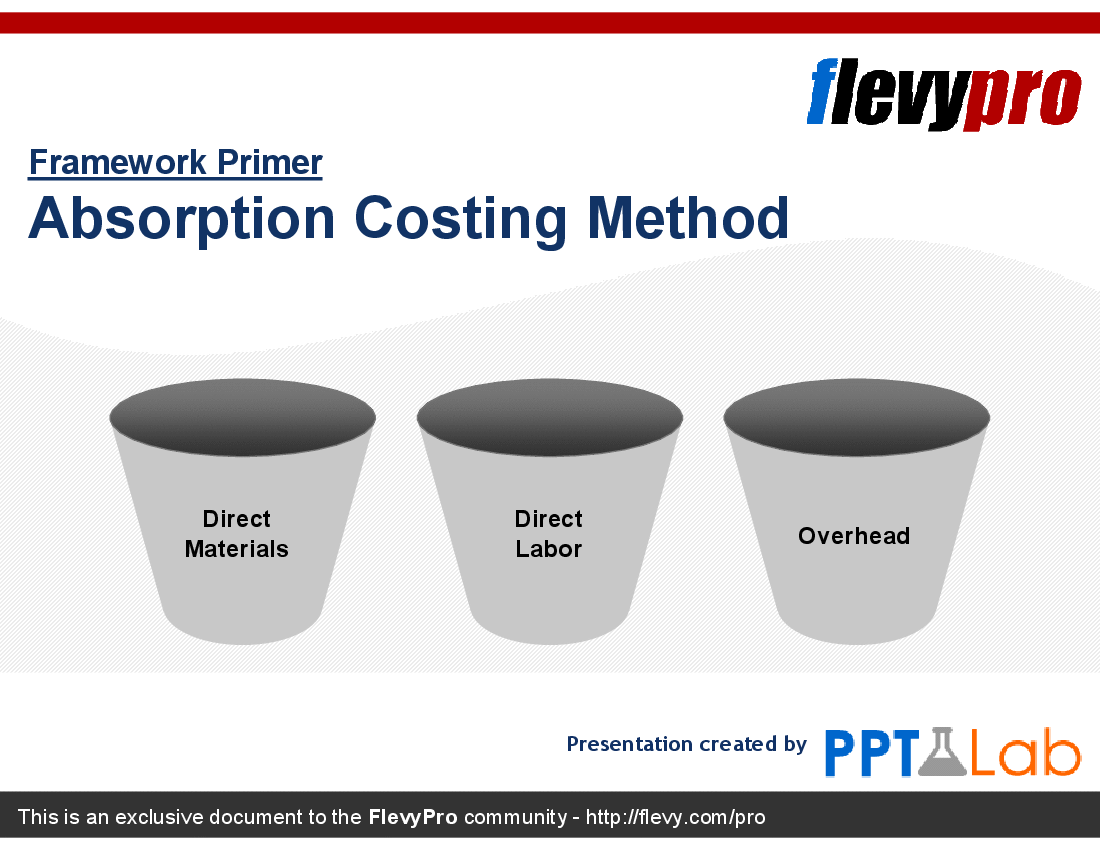
The Absorption Costing method, also known as Full Costing and Full Absorption Costing, is a method for accumulating the costs associated with a production process and apportioning them to individual products. It is an inventory valuation and costing model that includes all manufacturing costs:
1. Direct Materials
2. Direct Labor
3. Overhead (Direct & Indirect)
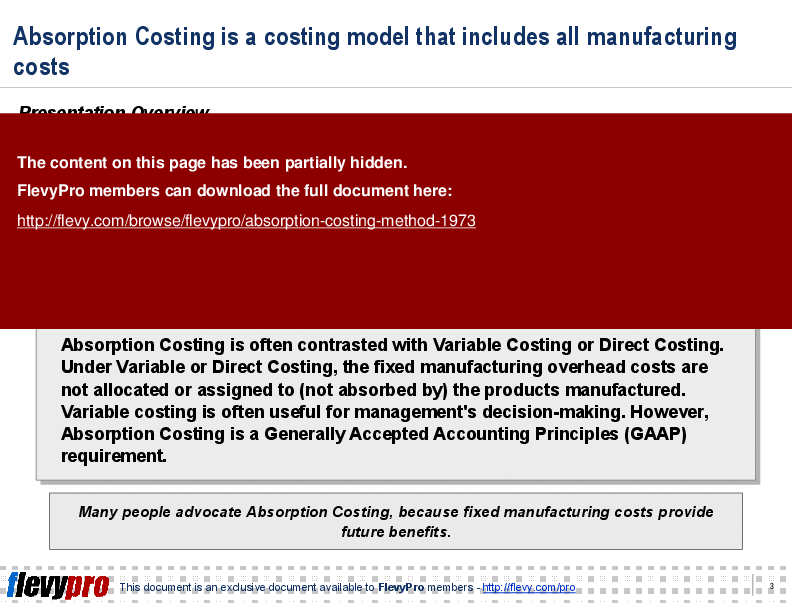
Absorption Costing is often contrasted with Variable Costing or Direct Costing. Under Variable or Direct Costing, the fixed manufacturing overhead costs are not allocated or assigned to (not absorbed by) the products manufactured. Variable costing is often useful for management's decision-making. However, Absorption Costing is a Generally Accepted Accounting Principles (GAAP) requirement. Many people advocate Absorption Costing, because fixed manufacturing costs provide future benefits.
There are types of Absorption Costing Systems:
1. Job Order Costing
2. Process Costing
3. Activity Based Costing (also known as ABC Costing)
This PPT provides a comprehensive breakdown of the Absorption Costing method, detailing its application across various industries. It covers the three primary types of Absorption Costing Systems: Job Order Costing, Process Costing, and Activity Based Costing (ABC). Each system is explained with examples of industries where they are most effective, such as electronics for Job Order Costing and pharmaceuticals for Process Costing.
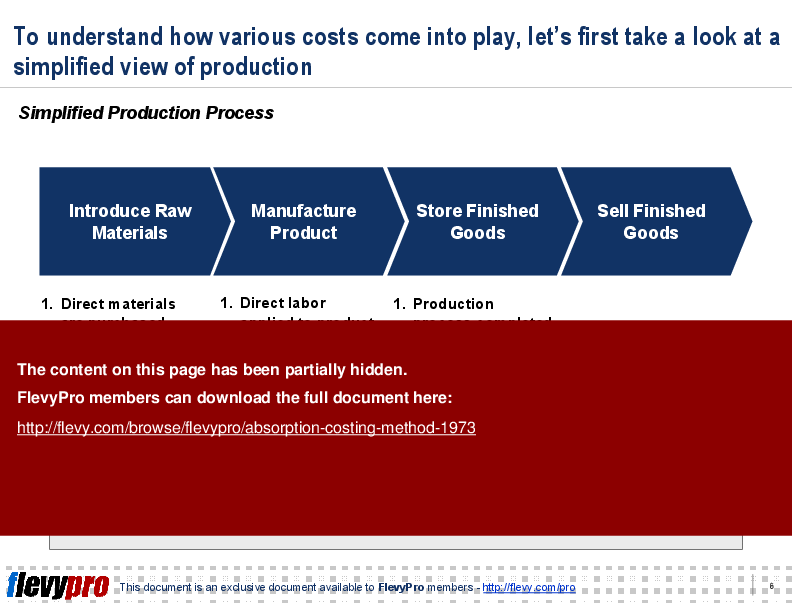
The presentation also includes a step-by-step overview of the production process, from introducing raw materials to selling finished goods. This detailed walkthrough ensures a thorough understanding of how costs are assigned and transferred at each stage. The document is designed to equip executives with the knowledge to implement Absorption Costing effectively within their organizations, ensuring compliance with GAAP and optimizing cost management.
Got a question about this document? Email us at flevypro@flevy.com.
PRESENTATION DEEP DIVE ANALYSIS
This deep-dive analysis was generated from the full 14-slide PowerPoint presentation.
Executive Summary
The Absorption Costing Method presentation provides a comprehensive overview of a critical costing model used in manufacturing. This method, also known as Full Costing, encompasses all manufacturing costs—direct materials, direct labor, and overhead—allocated to individual products. This presentation is designed to help corporate executives and finance professionals understand how absorption costing contrasts with variable costing, its implications for inventory valuation, and its necessity under Generally Accepted Accounting Principles (GAAP). By utilizing this framework, users can effectively manage production costs and enhance decision-making processes.
Who This Is For and When to Use
• Financial analysts and accountants responsible for cost accounting and financial reporting
• Operations managers overseeing production processes and cost management
• Business executives involved in strategic decision-making regarding pricing and profitability
• Consultants advising organizations on cost management and financial strategies
Best-fit moments to use this deck:
• During financial planning sessions to evaluate product costing strategies
• When implementing or reviewing cost accounting practices in manufacturing
• In training sessions for finance teams on absorption costing principles
Learning Objectives
• Define absorption costing and its components, including direct materials, direct labor, and overhead.
• Differentiate between absorption costing and variable costing methods.
• Illustrate the production process and how costs are allocated throughout.
• Identify the 3 types of absorption costing systems: Job Order Costing, Process Costing, and Activity Based Costing (ABC).
• Analyze the advantages and applications of each absorption costing system in various industries.
• Establish best practices for implementing absorption costing in financial reporting.
Table of Contents
• Overview (page 3)
• Production Process (page 6)
• Absorption Costing Systems (page 9)
Primary Topics Covered
• Absorption Costing Overview - Absorption costing is a method that includes all manufacturing costs in product pricing, essential for accurate financial reporting.
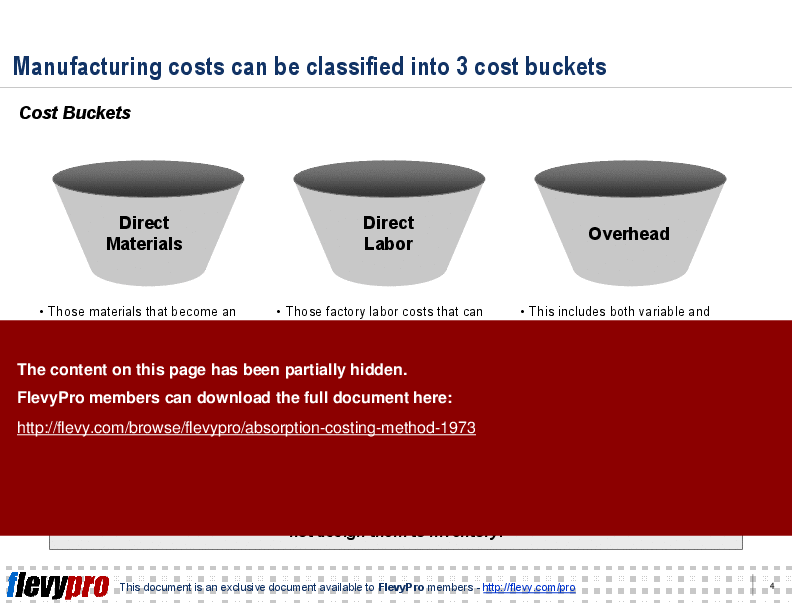
• Cost Classification - Manufacturing costs are categorized into direct materials, direct labor, and overhead, with specific definitions for each.
• Production Process - The presentation outlines the steps in the production process, detailing how costs are transferred from raw materials to finished goods.
• Job Order Costing - This system allocates costs to products by batch, suitable for industries producing small, varied batches.
• Process Costing - Used for large volumes of identical products, this system assigns costs based on processes rather than individual jobs.
• Activity Based Costing (ABC) - ABC assigns costs to activities that drive overhead, providing a more precise allocation for diverse product lines.
Deliverables, Templates, and Tools
• Cost allocation templates for direct materials, labor, and overhead.
• Production process flowcharts illustrating cost transfer stages.
• Job Order Costing and Process Costing models for practical application.
• Activity Based Costing frameworks for detailed overhead analysis.
Slide Highlights
• Overview slide defining absorption costing and its significance in financial reporting.
• Cost classification slide detailing the 3 main cost buckets: direct materials, direct labor, and overhead.
• Simplified production process slide illustrating the flow of costs from raw materials to finished goods.
• Comparison of Job Order Costing, Process Costing, and ABC, highlighting their unique applications and benefits.
Potential Workshop Agenda
Introduction to Absorption Costing (30 minutes)
• Define absorption costing and its importance in manufacturing.
• Discuss the differences between absorption costing and variable costing.
Cost Allocation Techniques (60 minutes)
• Explore the classification of manufacturing costs.
• Review the production process and cost transfer methods.
Absorption Costing Systems Deep Dive (90 minutes)
• Analyze Job Order Costing, Process Costing, and ABC.
• Discuss industry applications and best practices for implementation.
Customization Guidance
• Adapt cost allocation templates to reflect specific organizational cost structures.
• Modify production process flowcharts to align with unique manufacturing operations.
• Tailor examples of costing systems to fit the specific industry context of the organization.
Secondary Topics Covered
• The role of absorption costing in financial reporting and compliance with GAAP.
• Implications of absorption costing for pricing strategies and profitability analysis.
• Challenges and considerations in implementing absorption costing systems.
Topic FAQ
What costs are included in absorption costing and why are they grouped that way?
Absorption costing includes all manufacturing costs: direct materials, direct labor, and overhead. Grouping ensures that both variable and fixed manufacturing costs are capitalized into inventory and matched to revenue for financial reporting, aligning inventory valuation and cost of goods sold with GAAP and the 3 cost buckets of the method.How does absorption costing differ from variable (direct) costing for product reporting?
Absorption costing allocates fixed manufacturing overhead to products, whereas variable costing excludes fixed overhead and only assigns variable costs. Variable costing can aid internal decision-making,, but absorption costing is required for external inventory valuation under GAAP and involves fixed overhead allocation to inventory.What are the main absorption costing systems and which production contexts suit each?
The 3 systems are Job Order Costing for batch, varied production (electronics, machinery), Process Costing for large-volume identical products (pharmaceuticals, food), and Activity Based Costing (ABC) for diverse product lines needing precise overhead drivers; these 3 systems match different production volumes and product variability.How does absorption costing impact inventory valuation and financial statements?
By capitalizing all manufacturing costs into inventory, absorption costing increases inventory balances and defers fixed overhead to future periods until goods are sold, affecting cost of goods sold and net income; this treatment aligns inventory valuation with Generally Accepted Accounting Principles (GAAP).What should I look for when choosing an absorption costing toolkit or template?
Seek tools that enable clear cost classification and allocation (direct materials, direct labor, overhead), production process flow mapping, and models for Job Order, Process, and ABC systems; Flevy's Absorption Costing Method PPT includes cost allocation templates, flowcharts, and Job/Process/ABC models as practical deliverables.How much content or time is reasonable for a training session on absorption costing?
A concise instructor deck can be short—Flevy's offering is 14 slides—and the suggested workshop agenda totals about 180 minutes across 3 modules: a 30-minute introduction, a 60-minute cost allocation session, and a 90-minute systems deep dive.When should a company consider Activity Based Costing instead of traditional absorption methods?
Consider ABC when product lines are diverse and overhead drivers vary significantly across products; ABC assigns costs to activities that drive overhead, providing more precise allocations for heterogeneous product mixes and complex overhead structures via Activity Based Costing (ABC).What practical steps help implement absorption costing while staying GAAP-compliant?
Establish documented cost allocation methods for direct materials, direct labor, and overhead; train staff on costing principles; and use templates and models to map cost flows from raw materials to finished goods—tools like cost allocation templates support implementation and GAAP compliance.Document FAQ
These are questions addressed within this presentation.
What is absorption costing?
Absorption costing is a method that includes all manufacturing costs, such as direct materials, direct labor, and overhead, in the cost of a product.
How does absorption costing differ from variable costing?
Absorption costing allocates fixed manufacturing overhead to products, while variable costing does not, focusing only on variable costs.
What are the main types of absorption costing systems?
The 3 main types are Job Order Costing, Process Costing, and Activity Based Costing (ABC), each suited for different manufacturing environments.
When is absorption costing required?
Absorption costing is required under Generally Accepted Accounting Principles (GAAP) for inventory valuation and financial reporting.
What industries commonly use Job Order Costing?
Industries such as electronics, machinery, and furniture manufacturing typically utilize Job Order Costing for its batch-oriented approach.
What is the primary use of Process Costing?
Process Costing is primarily used in industries that produce large volumes of identical products, such as pharmaceuticals and food processing.
What are the benefits of Activity Based Costing?
ABC provides a more accurate allocation of overhead costs to products based on actual activities, beneficial for diverse product lines with varying demands.
How can organizations implement absorption costing effectively?
Organizations can implement absorption costing by establishing clear cost allocation methods, training staff on costing principles, and utilizing appropriate templates and models.
Glossary
• Absorption Costing - A costing method that includes all manufacturing costs in product pricing.
• Direct Materials - Raw materials that become an integral part of a finished product.
• Direct Labor - Labor costs that can be directly traced to individual units of product.
• Overhead - Indirect costs associated with manufacturing, including both variable and fixed costs.
• Job Order Costing - A costing system that allocates costs to products by batch.
• Process Costing - A costing system used for large volumes of identical products.
• Activity Based Costing (ABC) - A costing method that assigns costs to activities and then to products based on demand for those activities.
• Cost of Goods Sold (COGS) - The direct costs attributable to the production of the goods sold by a company.
• Work-in-Process (WIP) - An inventory account that includes costs for products that are in the production process, but not yet completed.
• Fixed Overhead - Costs that do not vary with production volume, such as rent and insurance.
• Variable Overhead - Costs that vary with production volume, such as utilities and supplies.
• GAAP - Generally Accepted Accounting Principles, the standard framework of guidelines for financial accounting.
• Cost Allocation - The process of identifying, aggregating, and assigning costs to cost objects.
• Production Process - The sequence of steps involved in manufacturing a product from raw materials to finished goods.
• Cost Buckets - Categories of costs used in accounting, such as direct materials, direct labor, and overhead.
• Financial Reporting - The process of producing statements that disclose an organization's financial status to management, investors, and the government.
• Manufacturing Costs - The total costs incurred in the production of goods, including direct materials, direct labor, and overhead.
• Inventory Valuation - The method used to value inventory on hand, impacting financial statements and tax obligations.
• Costing Model - A systematic approach to determining the costs associated with a product or service.
• Costing Systems - Frameworks used to allocate costs to products or services, including Job Order Costing, Process Costing, and ABC.
• Expense - The costs incurred in the process of generating revenue, recorded in the period they are incurred.
• Financial Analysis - The assessment of a company's financial performance through the evaluation of financial statements and ratios.
Source: Best Practices in Activity Based Costing, Absorption Costing, Cost Analysis PowerPoint Slides: Absorption Costing Method PowerPoint (PPT) Presentation Slide Deck, PPT Lab
Sorry, this document is currently only available to FlevyPro subscribers.
You can join FlevyPro for only $39/month.
Did you need more documents?
Consider a FlevyPro subscription from $39/month. View plans here.