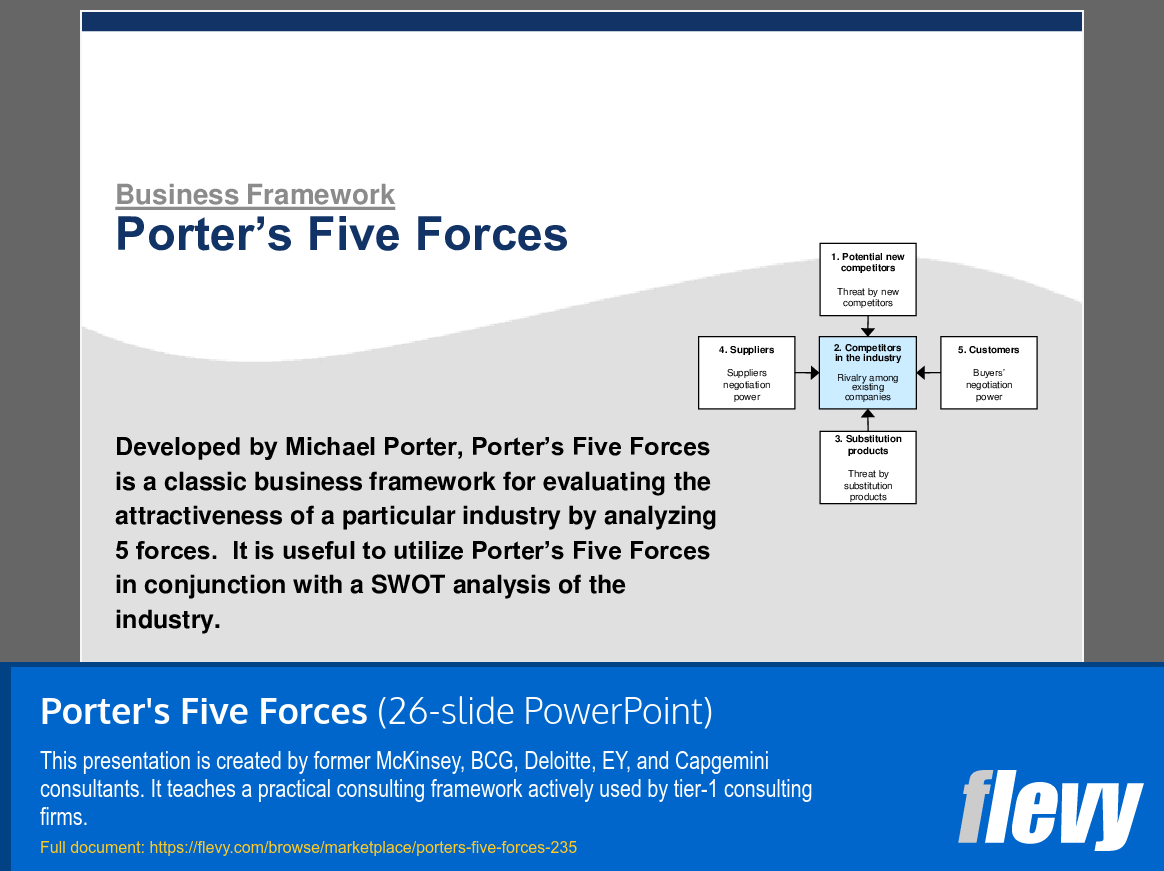

Developed by Michael Porter, Porter's Five Forces is a classic business framework for evaluating the attractiveness of a particular industry by analyzing 5 forces. It is useful to utilize Porter's Five Forces in conjunction with a SWOT analysis of the industry.
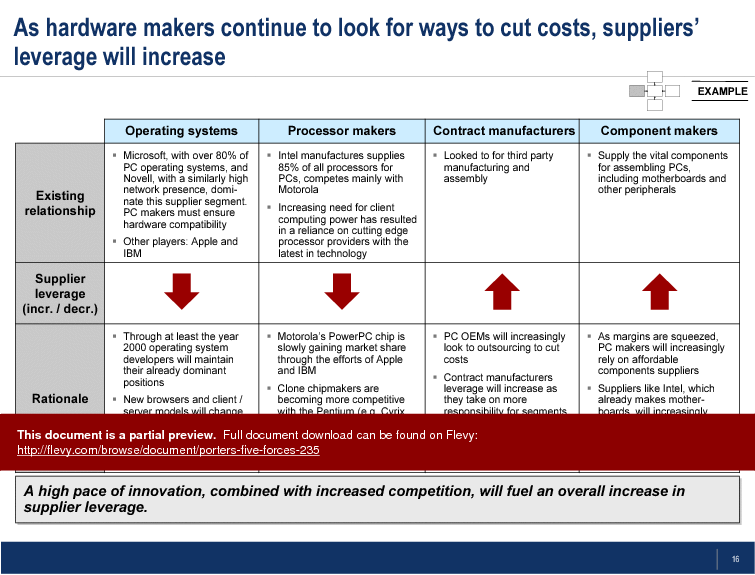
This presentation provides a comprehensive analysis of the competitive dynamics within various industries, utilizing Porter's Five Forces framework. The insights are backed by detailed metrics and scoring templates, enabling executives to gauge industry attractiveness both currently and in the future. The document also includes specific examples from the PC and publishing industries, illustrating how market share shifts and supply chain pressures impact competitive forces.
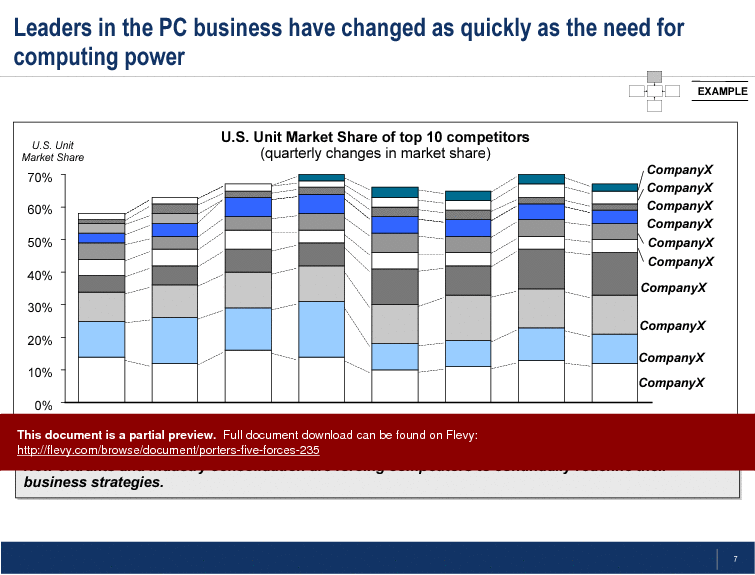
The section on the PC industry highlights the rapid changes in market leadership and the critical need for companies to adapt their strategies to maintain competitiveness. Detailed charts show the market share of top competitors and the factors driving these shifts. This data is essential for understanding the intensity of rivalry and the bargaining power of buyers and suppliers in the tech sector.

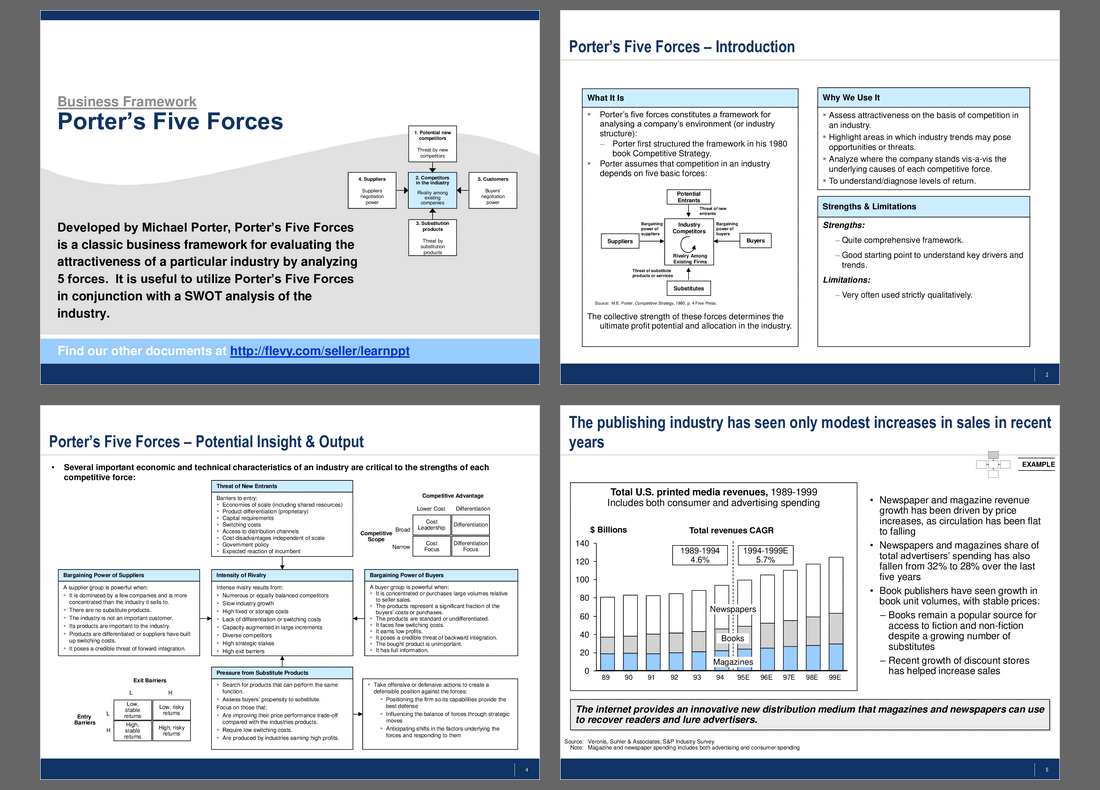
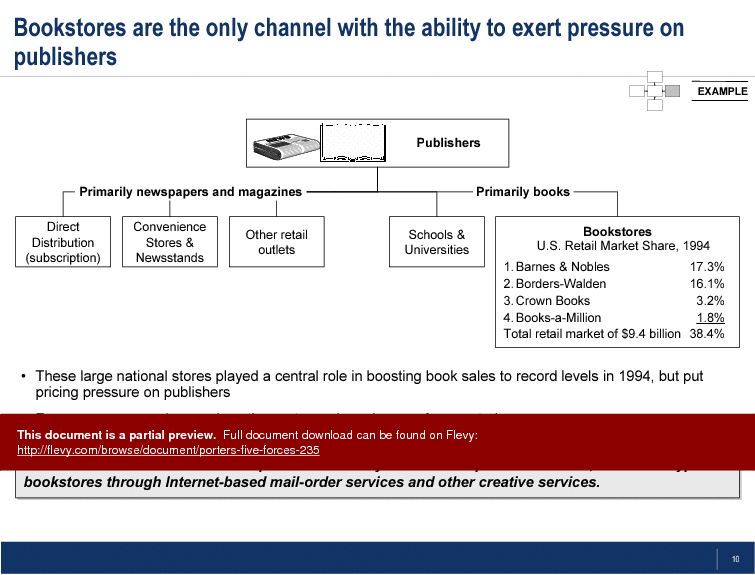
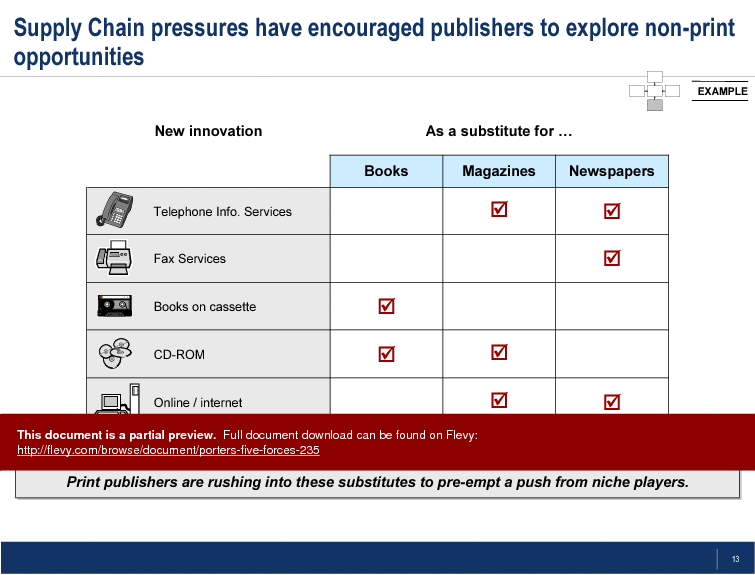
In the publishing industry, the document examines how large bookstores exert pressure on publishers and how supply chain innovations are pushing publishers to explore non-print opportunities. The analysis includes market share data and explores the impact of new distribution channels on traditional business models. This section is particularly valuable for stakeholders looking to understand the evolving landscape of media and publishing.

Got a question about the product? Email us at support@flevy.com or ask the author directly by using the "Ask the Author a Question" form. If you cannot view the preview above this document description, go here to view the large preview instead.
Executive Summary
Porter's Five Forces presentation provides a robust framework for evaluating industry attractiveness through the analysis of 5 competitive forces. Developed by Michael Porter, this consulting-grade presentation is crafted by former consultants from McKinsey, BCG, Deloitte, EY, and Capgemini. It enables corporate executives and consultants to assess competition, identify opportunities, and understand market dynamics effectively. By utilizing this framework, users can enhance strategic planning and decision-making processes, ultimately leading to improved profitability and market positioning.
Who This Is For and When to Use
• Corporate strategists and business analysts focused on industry assessments
• Consultants advising clients on market entry or competitive strategy
• Executive teams evaluating potential mergers, acquisitions, or partnerships
• Marketing professionals analyzing customer and supplier dynamics
• Business development teams identifying growth opportunities
Best-fit moments to use this deck:
• During strategic planning sessions to evaluate industry landscapes
• When conducting SWOT analyses in conjunction with competitive assessments
• In workshops aimed at identifying market entry strategies
• For presentations to stakeholders on competitive positioning
Learning Objectives
• Define the 5 competitive forces that shape industry structure
• Analyze the bargaining power of suppliers and buyers
• Assess the threat of new entrants and substitute products
• Evaluate the intensity of rivalry among existing competitors
• Develop actionable insights to enhance competitive strategy
• Identify opportunities and threats within the industry landscape
Table of Contents
• Introduction to Porter’s Five Forces (page 2)
• Framework Diagram (page 3)
• Potential Insights and Outputs (page 4)
• Strengths and Limitations (page 4)
• Metrics and Scoring (page 19)
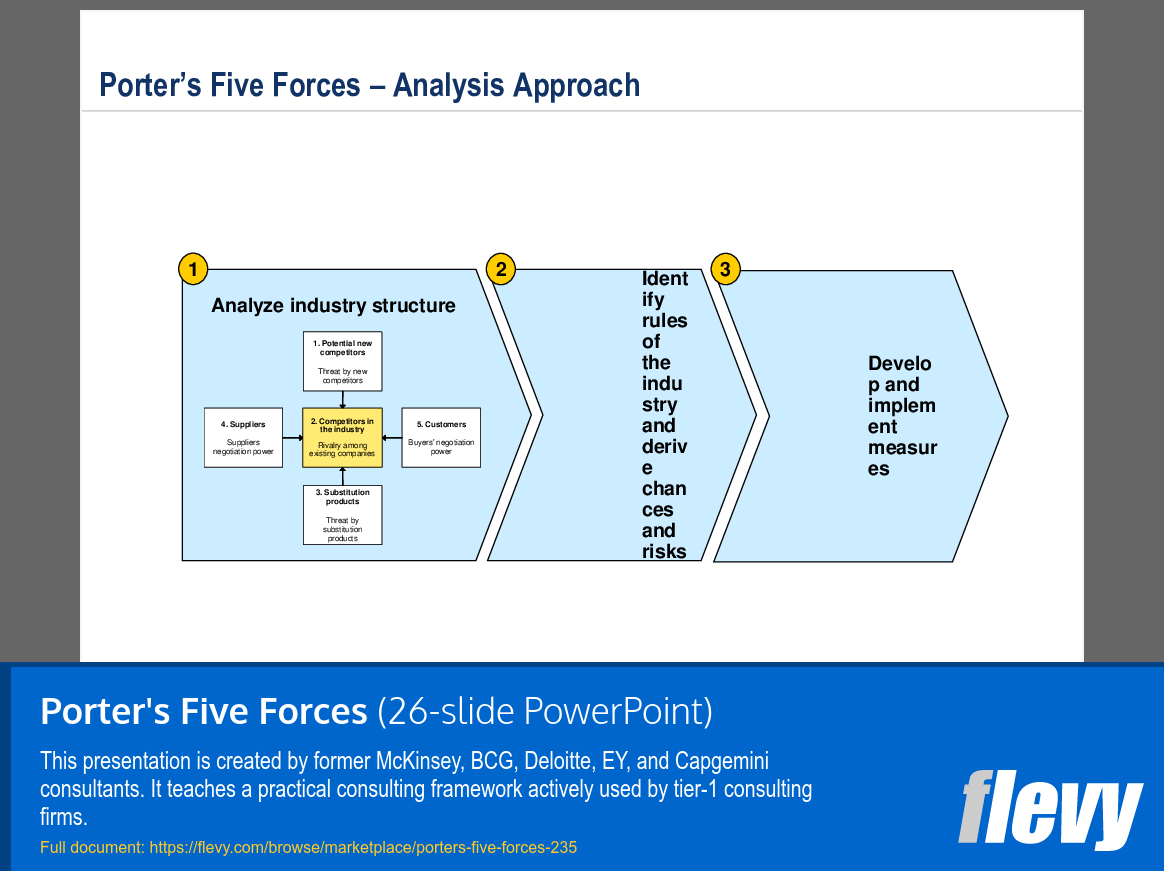
• Analysis Approach (page 18)
• Top Tips for Effective Use (page 17)
Primary Topics Covered
• Competitive Forces Overview - An introduction to the 5 forces that determine industry competition and profitability.
• Bargaining Power of Suppliers - Analysis of factors that increase supplier power and their impact on industry dynamics.
• Bargaining Power of Buyers - Examination of buyer power and conditions that enhance their negotiation leverage.
• Threat of New Entrants - Identification of barriers to entry that protect existing firms from new competition.
• Threat of Substitutes - Insights into how substitute products can limit pricing power and market share.
• Rivalry Among Existing Competitors - Assessment of competitive intensity and its implications for market strategies.
Deliverables, Templates, and Tools
• Framework diagram template for visualizing the 5 forces
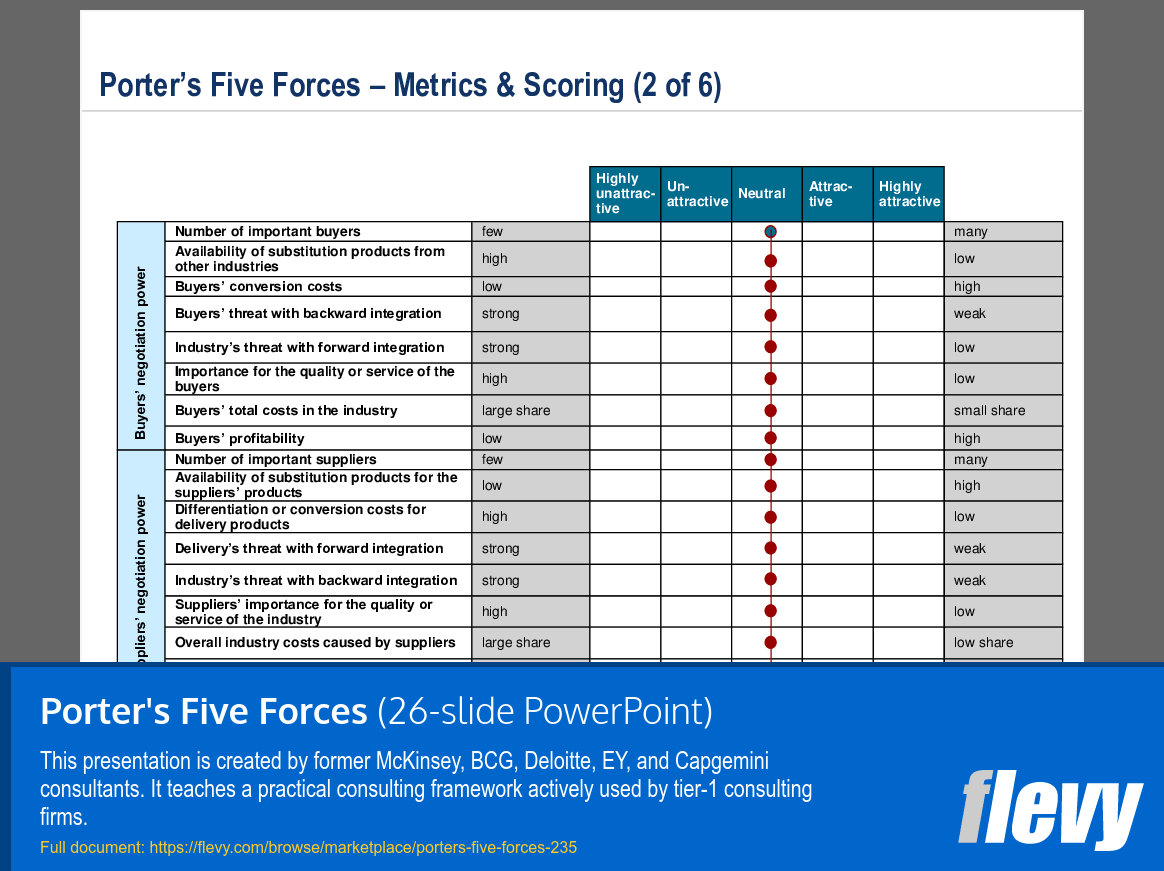
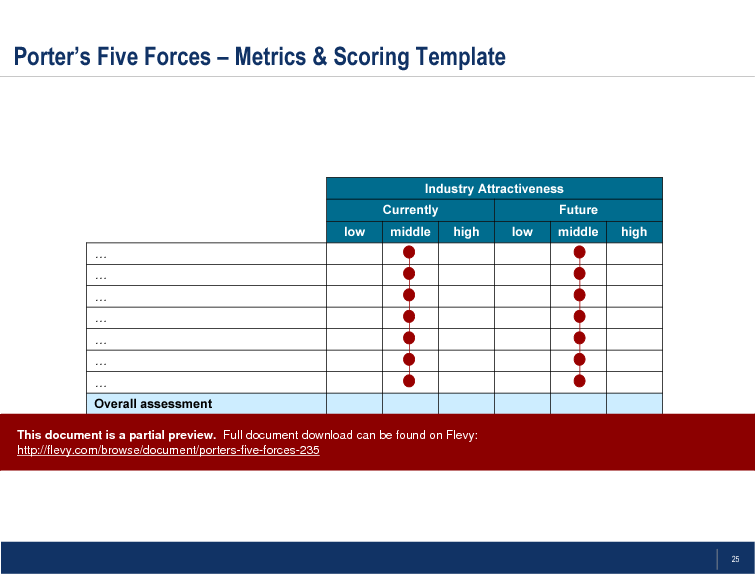
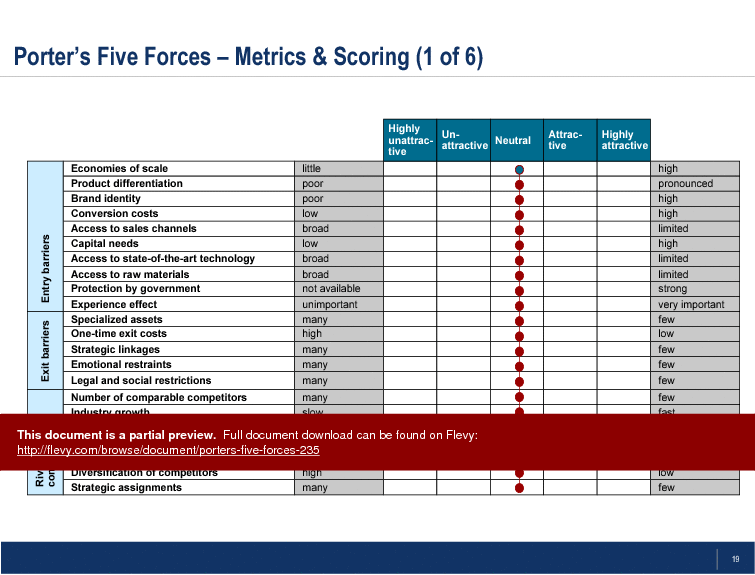
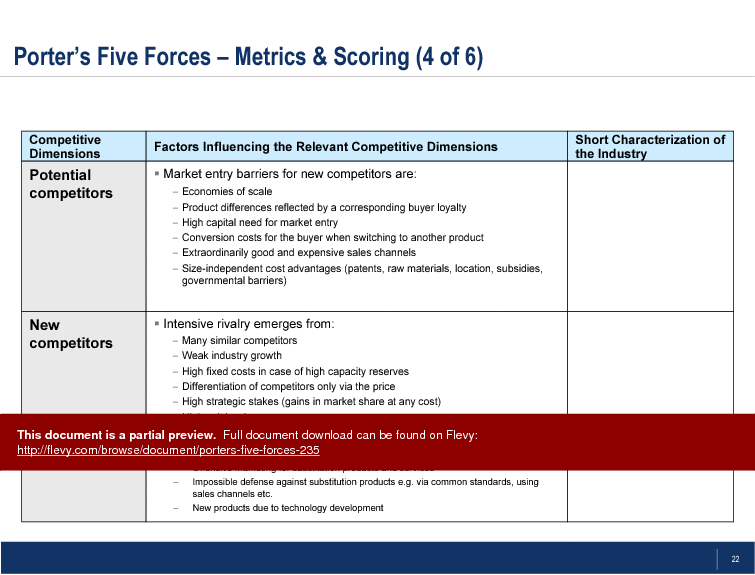
• Metrics and scoring template to evaluate industry attractiveness
• Insight generation tools for analyzing competitive dynamics
• Scoring system for assessing supplier and buyer power
• Actionable insights report based on competitive analysis
• Presentation slides for stakeholder engagement on industry assessments
Slide Highlights
• Comprehensive overview of the 5 forces and their interrelationships
• Visual representation of the competitive landscape using the framework diagram
• Key insights on the bargaining power of suppliers and buyers
• Metrics and scoring system to quantify industry attractiveness
• Practical tips for applying the framework in real-world scenarios
Potential Workshop Agenda
Introduction to Porter’s Five Forces (30 minutes)
• Overview of the framework and its importance
• Discussion on the 5 competitive forces
Interactive Analysis Session (60 minutes)
• Breakout groups to analyze specific industries
• Presentation of findings and insights
Strategic Implications Discussion (30 minutes)
• Identifying opportunities and threats
• Developing actionable strategies based on analysis
Customization Guidance
• Tailor the framework diagram to reflect specific industry characteristics
• Adjust metrics and scoring criteria to align with organizational goals
• Incorporate case studies relevant to the industry being analyzed
• Update examples and insights based on current market trends
Secondary Topics Covered
• Industry trends and their impact on competitive forces
• Case studies illustrating successful application of the framework
• Comparative analysis of different industries using the 5 forces
• Integration of SWOT analysis with Porter’s Five Forces
FAQ
What is Porter’s Five Forces framework?
Porter’s Five Forces framework is a tool for analyzing the competitive forces that shape an industry’s structure and profitability.
How can this framework help in strategic planning?
It provides insights into market dynamics, enabling organizations to identify opportunities and threats while formulating effective strategies.
Can this framework be used in conjunction with other analyses?
Yes, it is often used alongside SWOT analysis to provide a comprehensive view of the industry landscape.
What are the limitations of the Five Forces framework?
While comprehensive, it is often used qualitatively and may not capture all nuances of competitive dynamics.
How do I quantify the findings from this analysis?
Utilize the metrics and scoring template provided to assess the strength of each competitive force quantitatively.
Is this presentation suitable for all industries?
Yes, the framework is applicable across various industries, though specific insights may vary.
Can I customize the templates provided in the presentation?
Absolutely, the templates are designed for easy customization to fit your specific needs.
What data sources are recommended for analysis?
Industry reports, analysts’ reports, and database searches are excellent sources for gathering relevant data.
Glossary
• Competitive Forces - The 5 dynamics that shape competition in an industry.
• Bargaining Power of Suppliers - The ability of suppliers to influence the price and terms of supply.
• Bargaining Power of Buyers - The influence customers have on the price and quality of products.
• Threat of New Entrants - The potential for new competitors to enter the market and disrupt existing firms.
• Threat of Substitutes - The risk posed by alternative products that can fulfill the same need.
• Rivalry Among Existing Competitors - The intensity of competition among current players in the market.
• Market Dynamics - The forces that impact the behavior of buyers and sellers in a market.
• SWOT Analysis - A strategic planning tool used to identify strengths, weaknesses, opportunities, and threats.
• Industry Attractiveness - A measure of the potential profitability and competitive landscape of an industry.
• Entry Barriers - Obstacles that make it difficult for new firms to enter an industry.
• Exit Barriers - Challenges that prevent companies from leaving an industry easily.
• Market Share - The portion of a market controlled by a particular company or product.
• Competitive Advantage - A condition that allows a company to produce goods or services better or more cheaply than its rivals.
• Cost Leadership - A strategy aimed at becoming the low-cost producer in an industry.
• Differentiation - A strategy that focuses on making a product or service unique.
• Market Segmentation - The process of dividing a market into distinct groups of buyers.
• Value Proposition - The promise of value to be delivered to customers.
• Consumer Behavior - The study of how individuals make decisions to spend their resources.
• Strategic Planning - The process of defining a business's direction and making decisions on allocating resources.
• Industry Trends - Patterns and shifts in the market that can impact business strategies.
• Competitive Strategy - The long-term plan of action to gain a competitive advantage.
Source: Best Practices in Growth Strategy, Industry Analysis, Environmental Analysis, Porter's Five Forces PowerPoint Slides: Porter's Five Forces PowerPoint (PPT) Presentation Slide Deck, LearnPPT Consulting
This document is available as part of the following discounted bundle(s):
Save %!
Growth Strategy Frameworks
This bundle contains 6 total documents. See all the documents to the right.
|
Download our FREE Strategy & Transformation Framework Templates
Download our free compilation of 50+ Strategy & Transformation slides and templates. Frameworks include McKinsey 7-S, Balanced Scorecard, Disruptive Innovation, BCG Curve, and many more. |