
Enhance your organization's CX with our Delivering Service Excellence PPT. Equip your staff with the skills to create quality customer experiences, differentiate from the competition, and build trust and long-term relationships. Learn to manage emotions, deliver personalized service, and apply the five A's of service recovery.

This customer service presentation includes the techniques and skills to:
a) Find out and respond to each customer's needs and expectations;
b) Reduce customer's negative feelings;
c) Heighten customer's positive feelings towards your organization;
d) Satisfy customers in difficult conditions; and
e) Apply the five A's of service recovery.
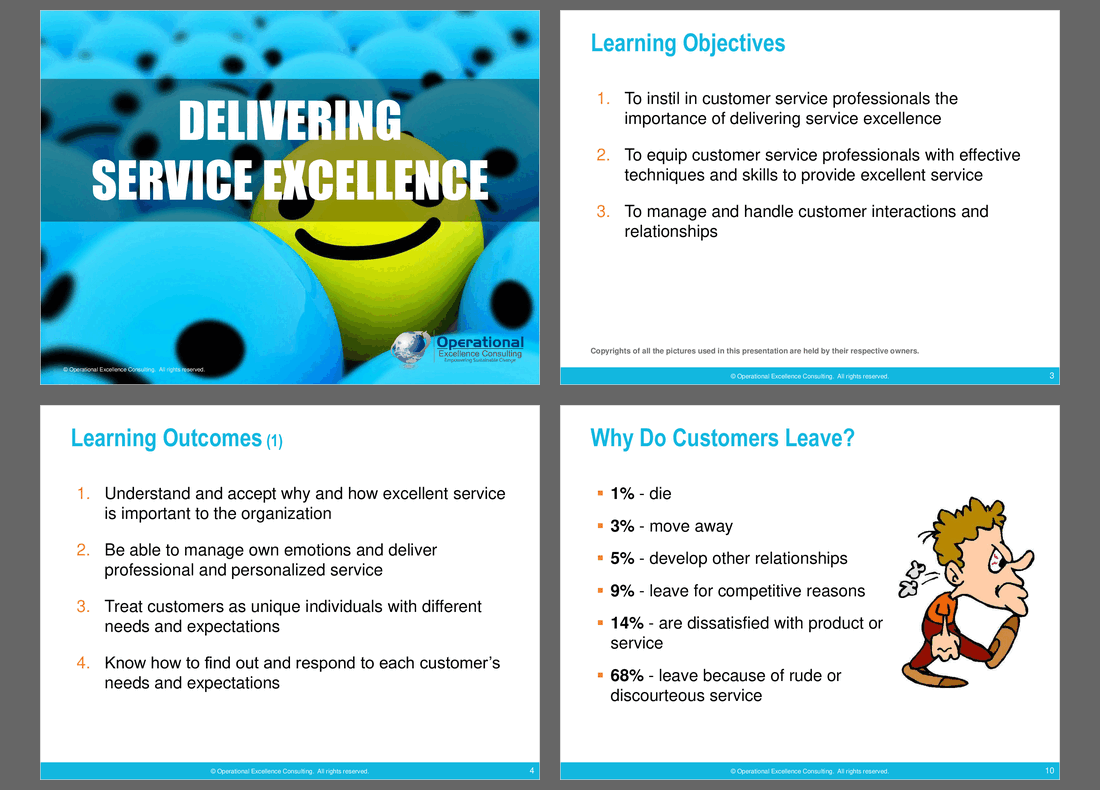
LEARNING OBJECTIVES
1. To instil in customer service staff the importance of providing excellent customer service.
2. To equip frontline personnel with effective customer service techniques and skills to provide service excellence.
3. To manage and handle customer interactions and relationships.
CONTENTS
1. Introduction to delivering service excellence
2. Managing myself
3. Identifying customer condition and establishing rapport
4. Determining customer needs and expectations
5. Effective communication techniques
6. Meeting and exceeding customer needs and expectations
7. Satisfying customers in comfortable and difficult conditions
Note: In addition to this training presentation, you may also be interested in the following presentations on Customer Experience (CX) (sold separately):
• Customer-Centricity
• Digital Customer Service (DCS)
• Design Thinking
• Customer Journey Mapping
• Business Model Canvas
• Value Proposition Canvas
• Customer Experience Management Models
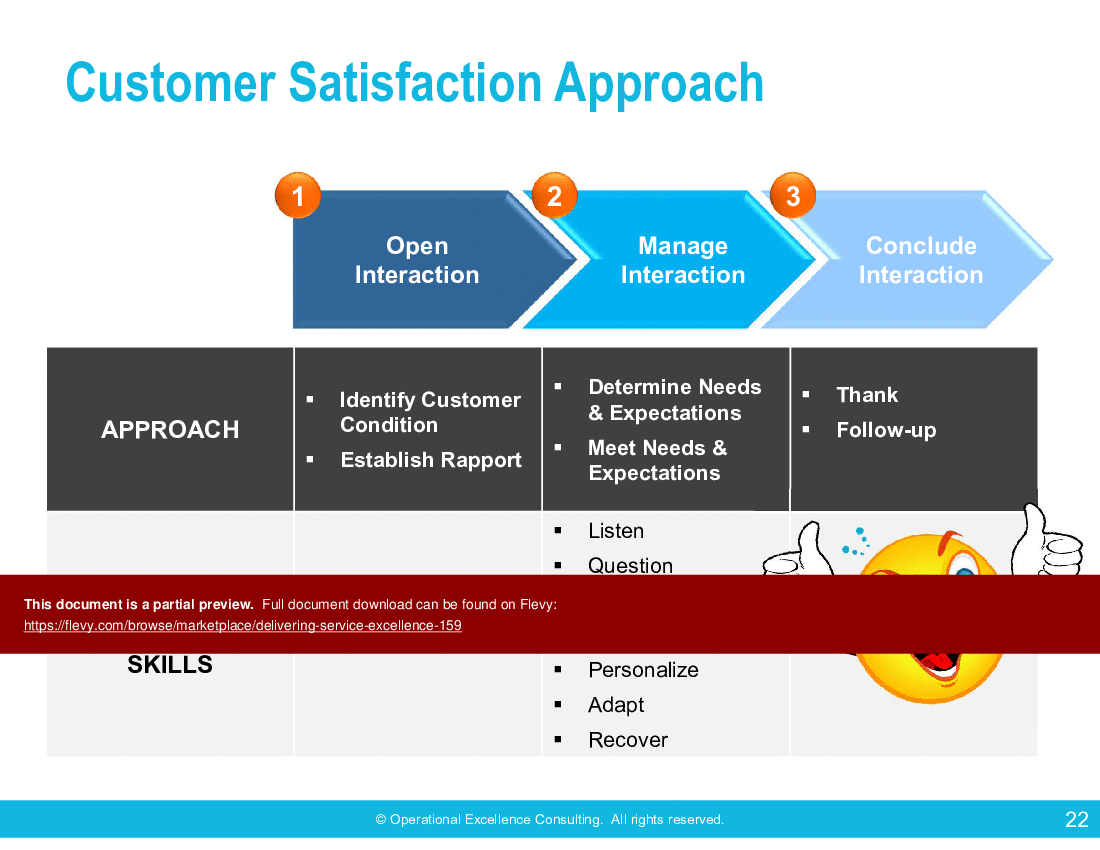
This presentation dives deep into the nuances of customer satisfaction, emphasizing the critical role of understanding customer conditions and establishing rapport. It outlines a structured approach to managing interactions, from opening to concluding, ensuring needs are met and expectations exceeded. The content also highlights the importance of effective communication, both verbal and non-verbal, and provides practical techniques for handling difficult customer situations. This resource is designed to equip your team with the tools needed to foster positive customer relationships and drive business success.
Got a question about the product? Email us at support@flevy.com or ask the author directly by using the "Ask the Author a Question" form. If you cannot view the preview above this document description, go here to view the large preview instead.
Executive Summary
The "Delivering Service Excellence" presentation is designed to empower customer service professionals with the skills and techniques necessary to enhance customer interactions and satisfaction. Developed by Operational Excellence Consulting, this training program focuses on the importance of service excellence, equipping participants with actionable strategies to manage customer relationships effectively. By fostering a culture of appreciation and responsiveness, organizations can significantly improve customer loyalty and overall satisfaction.
Who This Is For and When to Use
• Customer service teams seeking to enhance their service delivery skills
• Training managers responsible for developing customer service training programs
• Executives aiming to improve customer satisfaction metrics
• HR professionals focused on employee engagement in customer-facing roles
Best-fit moments to use this deck:
• During onboarding sessions for new customer service representatives
• As part of a continuous improvement program for existing staff
• In workshops aimed at enhancing team dynamics and service delivery
Learning Objectives
• Understand the significance of delivering service excellence within an organization
• Manage personal emotions to provide professional and personalized service
• Recognize and respond to individual customer needs and expectations
• Reduce negative customer feelings while enhancing positive interactions
• Apply effective recovery processes in challenging situations
• Communicate effectively with customers to ensure satisfaction
Table of Contents
• Introduction to Delivering Service Excellence (page 9)
• Managing Myself (page 25)
• Identifying Customer Condition and Establishing Rapport (page 37)
• Determining Customer Needs and Expectations (page 55)
• Meeting and Exceeding Customer Needs and Expectations (page 85)
• Satisfying Customers in Comfortable and Difficult Conditions (page 106)
Primary Topics Covered
• Service Excellence Importance - Emphasizes the need for high-quality service as a competitive advantage and its impact on customer retention.
• Customer Conditions - Identifies various emotional states of customers and appropriate responses to each condition.
• Effective Communication - Covers verbal and non-verbal communication techniques essential for successful customer interactions.
• Service Recovery Process - Outlines a five-step approach to effectively address and resolve customer complaints.
• Personalization and Adaptation - Discusses methods for personalizing service to meet individual customer needs and expectations.
• Self-Management Techniques - Provides strategies for managing personal emotions and maintaining a positive attitude during customer interactions.
Deliverables, Templates, and Tools
• Customer interaction scripts tailored for various customer conditions
• Self-management and emotional regulation worksheets
• Templates for assessing customer needs and expectations
• Guidelines for effective service recovery processes
• Checklists for establishing rapport with customers
Slide Highlights
• Overview of customer service importance and rising expectations
• Visual representation of customer satisfaction and dissatisfaction models
• Framework for identifying customer conditions and appropriate responses
• Steps for effective service recovery illustrated in a clear, actionable format
• Techniques for personalizing customer interactions to enhance satisfaction
Potential Workshop Agenda
Introduction to Service Excellence (30 minutes)
• Discuss the importance of service excellence
• Review customer expectations and behaviors
Customer Interaction Skills (60 minutes)
• Role-play scenarios based on different customer conditions
• Practice effective communication techniques
Service Recovery Techniques (45 minutes)
• Review the five-step service recovery process
• Group exercises to apply recovery techniques in real-life scenarios
Customization Guidance
• Tailor scripts and scenarios to reflect specific organizational contexts and customer profiles
• Adjust training duration and focus areas based on team experience levels
• Incorporate company-specific policies and procedures into training materials
Secondary Topics Covered
• The difference between customer service and customer satisfaction
• Techniques for managing frustration in customer interactions
• Strategies for building long-term customer relationships
• Importance of feedback in service improvement
FAQ
What is the primary goal of this training?
The primary goal is to equip customer service professionals with the skills to deliver exceptional service that meets and exceeds customer expectations.
How can this training be customized?
The training can be tailored to reflect specific organizational needs, customer demographics, and service protocols.
What are the key skills taught in this program?
Key skills include effective communication, emotional management, empathy, and service recovery techniques.
How is participant engagement ensured during the training?
Engagement is fostered through interactive exercises, role-plays, and group discussions that encourage active participation.
What outcomes can be expected after completing this training?
Participants can expect improved customer interactions, enhanced satisfaction metrics, and a stronger commitment to service excellence.
How often should this training be conducted?
Regular training sessions are recommended, ideally annually or bi-annually, to reinforce skills and adapt to changing customer expectations.
What resources are provided with the training?
Participants receive handouts, templates, and access to online resources for ongoing learning and reference.
Is there a follow-up process after the training?
Yes, follow-up sessions can be scheduled to assess the application of skills learned and to provide additional support as needed.
Glossary
• Service Excellence - The consistent delivery of high-quality service that meets customer expectations.
• Customer Condition - The emotional state of a customer during an interaction.
• Service Recovery - The process of addressing and resolving customer complaints effectively.
• Personalization - Tailoring service to meet individual customer needs.
• Self-Management - The ability to control one's emotions and reactions during customer interactions.
• Empathy - Understanding and acknowledging a customer's feelings and perspective.
• Feedback - Information provided by customers about their experiences and satisfaction levels.
• Active Listening - Fully concentrating on what is being said to understand the customer's message.
• Rapport - A positive relationship established with customers to enhance trust and communication.
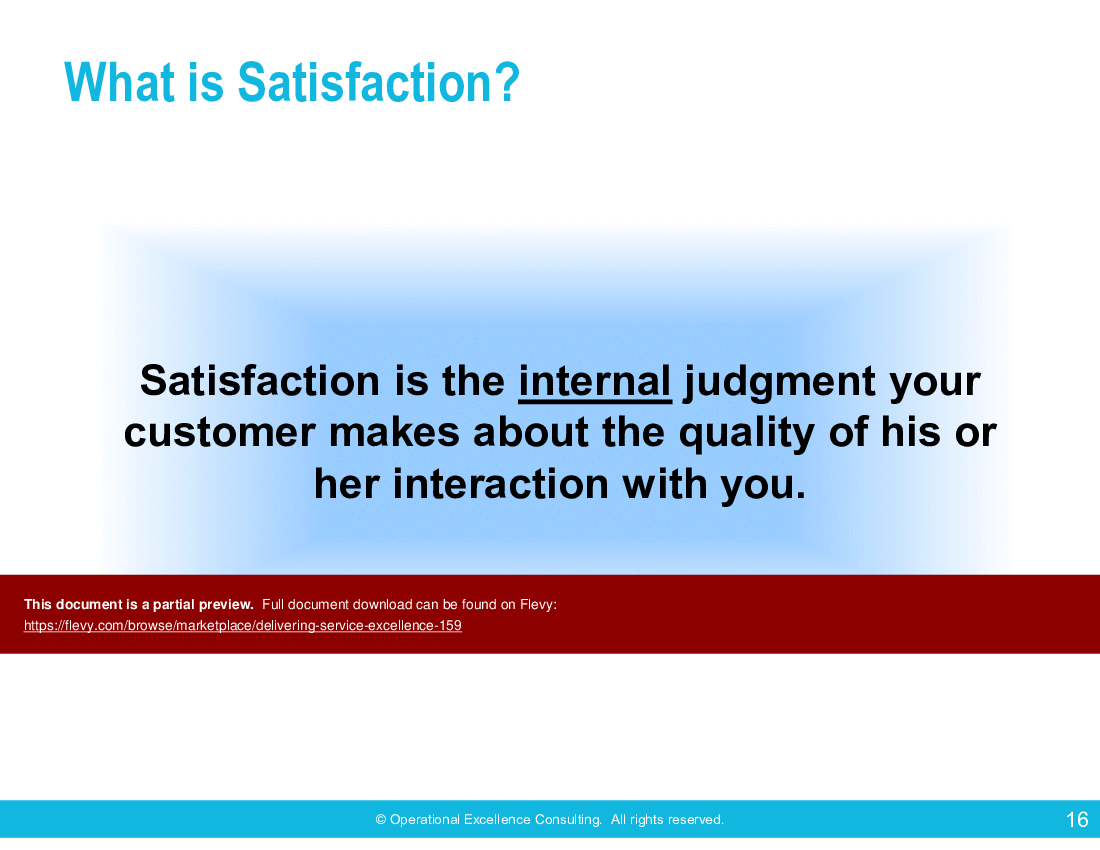
• Customer Satisfaction - The measure of how well a service meets or exceeds customer expectations.
• Emotional Intelligence - The ability to recognize and manage one's own emotions and the emotions of others.
• Communication Barriers - Obstacles that hinder effective communication between service providers and customers.
• Customer Loyalty - The likelihood of customers to continue doing business with a company based on their satisfaction.
• Service Quality - The assessment of how well a delivered service meets customer expectations.
• Customer Engagement - The emotional connection between a customer and a brand or service.
• Expectation Management - The process of aligning customer expectations with the service delivered.
• Customer Journey - The complete experience a customer has with a company, from initial contact to post-purchase interactions.
• Service Standards - The established criteria for delivering service quality consistently.
• Customer Feedback Loop - The process of collecting, analyzing, and acting on customer feedback to improve service.
• Cultural Sensitivity - Awareness and respect for cultural differences in customer interactions.
• Proactive Service - Anticipating customer needs and addressing them before they become issues.
Source: Best Practices in Operational Excellence, Customer Service PowerPoint Slides: CX Improvement Program: Delivering Service Excellence PowerPoint (PPTX) Presentation Slide Deck, Operational Excellence Consulting
This document is available as part of the following discounted bundle(s):
Save %!
Service Excellence Training Package
This bundle contains 4 total documents. See all the documents to the right.
|
Receive our FREE presentation on Operational Excellence
This 50-slide presentation provides a high-level introduction to the 4 Building Blocks of Operational Excellence. Achieving OpEx requires the implementation of a Business Execution System that integrates these 4 building blocks. |