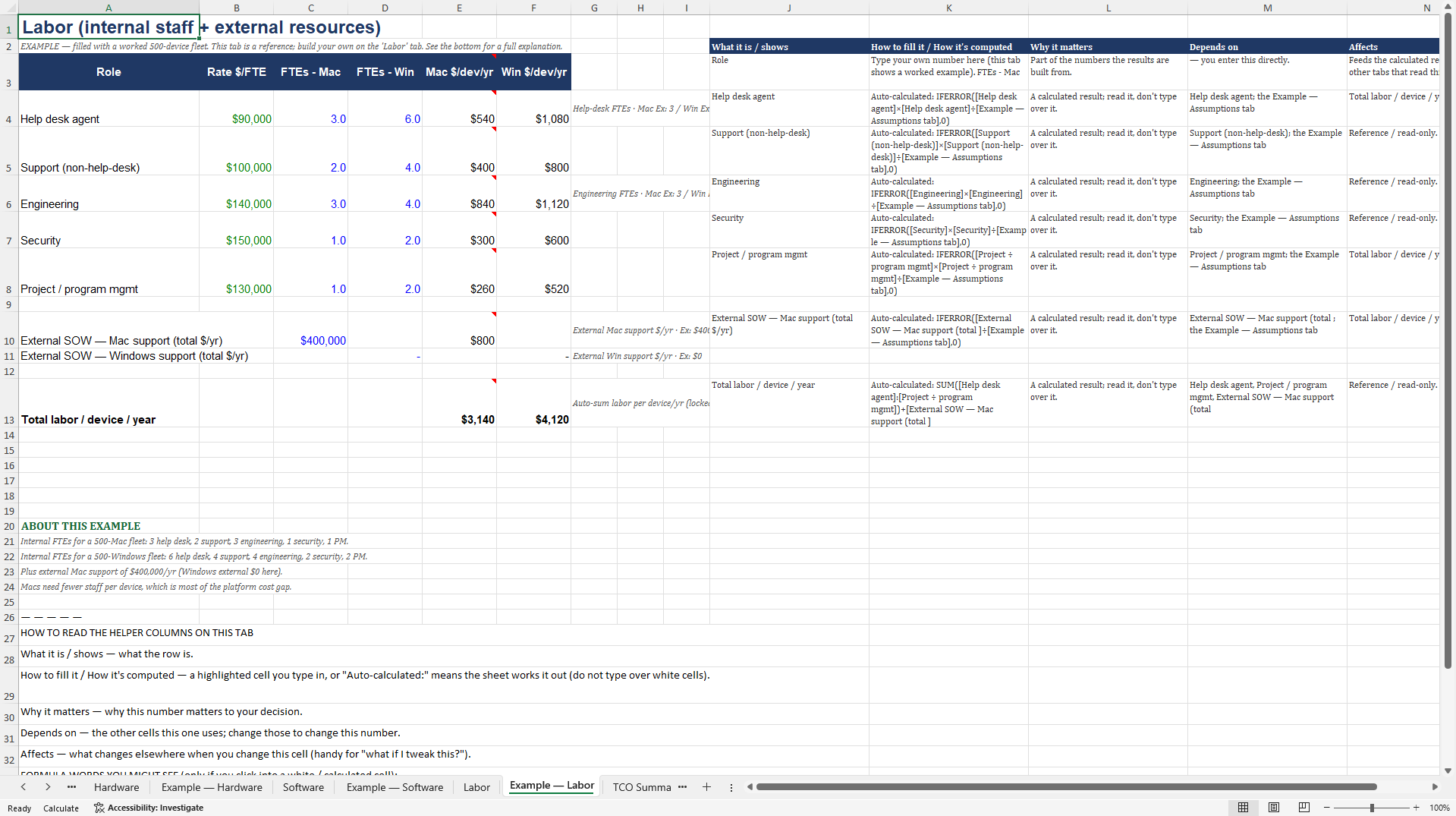

 Click main image to view in full screen. Unlock all 20 preview images:
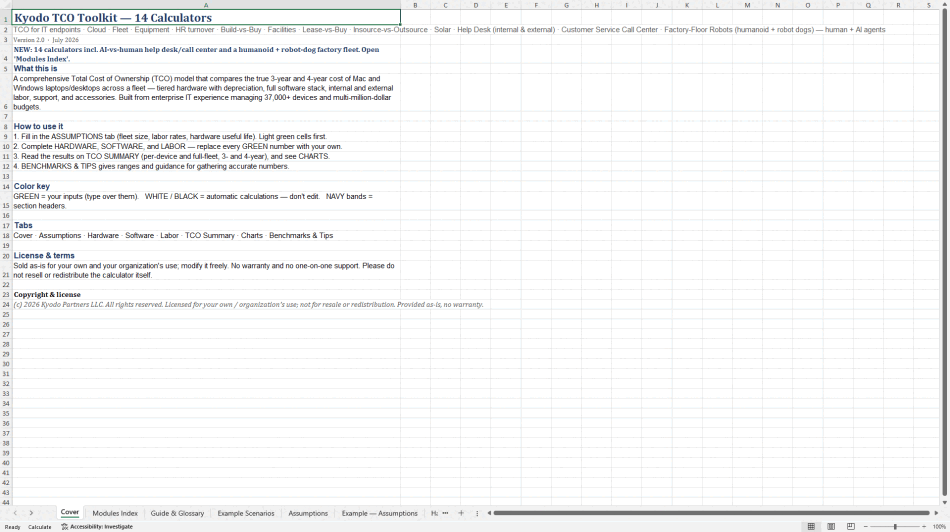
Total Cost of Ownership Toolkit: 14 TCO Models – Excel XLSX
Excel (XLSX) + Zip archive file (ZIP)


BENEFITS OF THIS DOWNLOADABLE EXCEL DOCUMENT
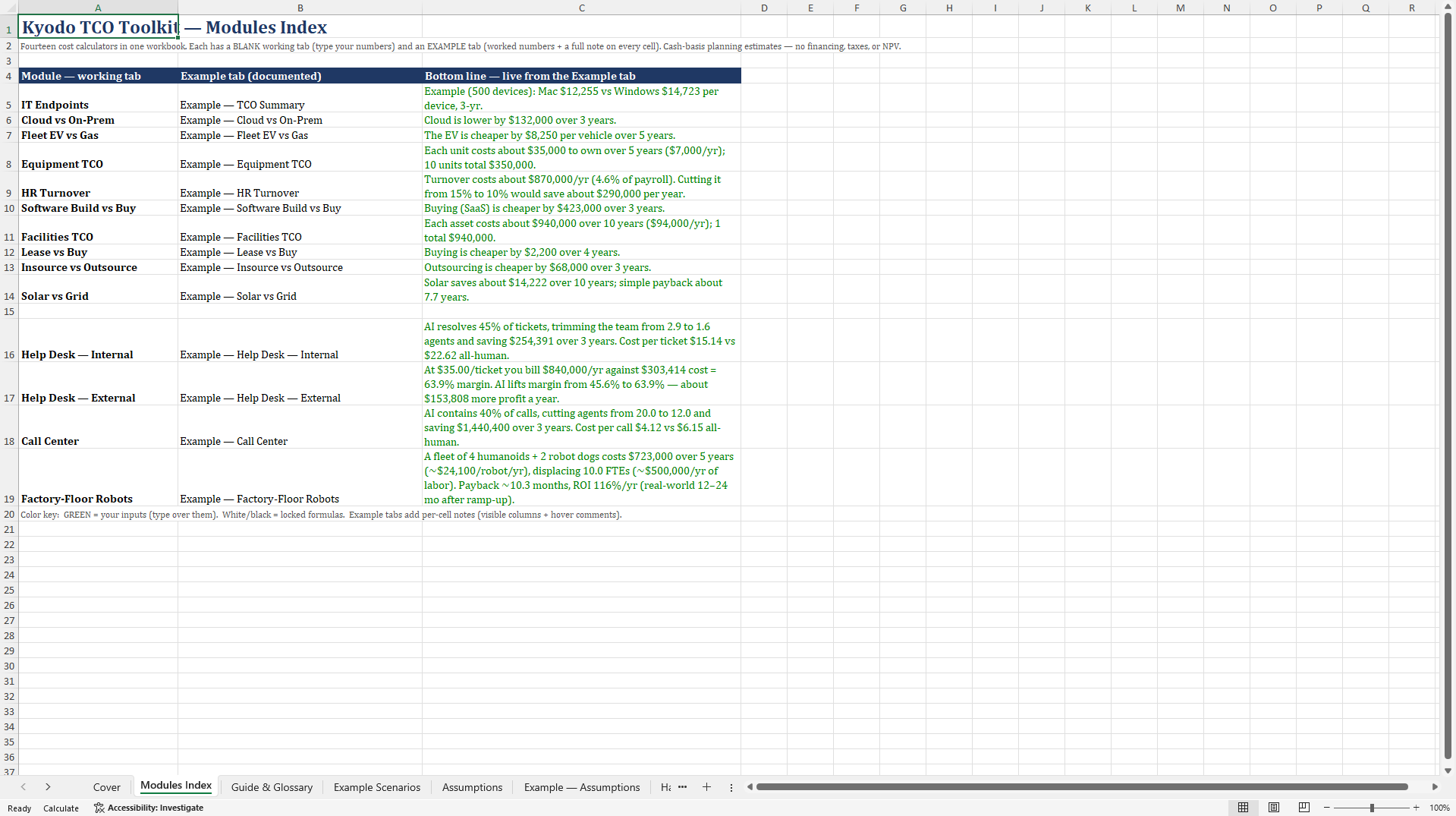
- Compares 14 different total cost of ownership decisions in one workbook, from cloud versus on-premise to lease versus buy.
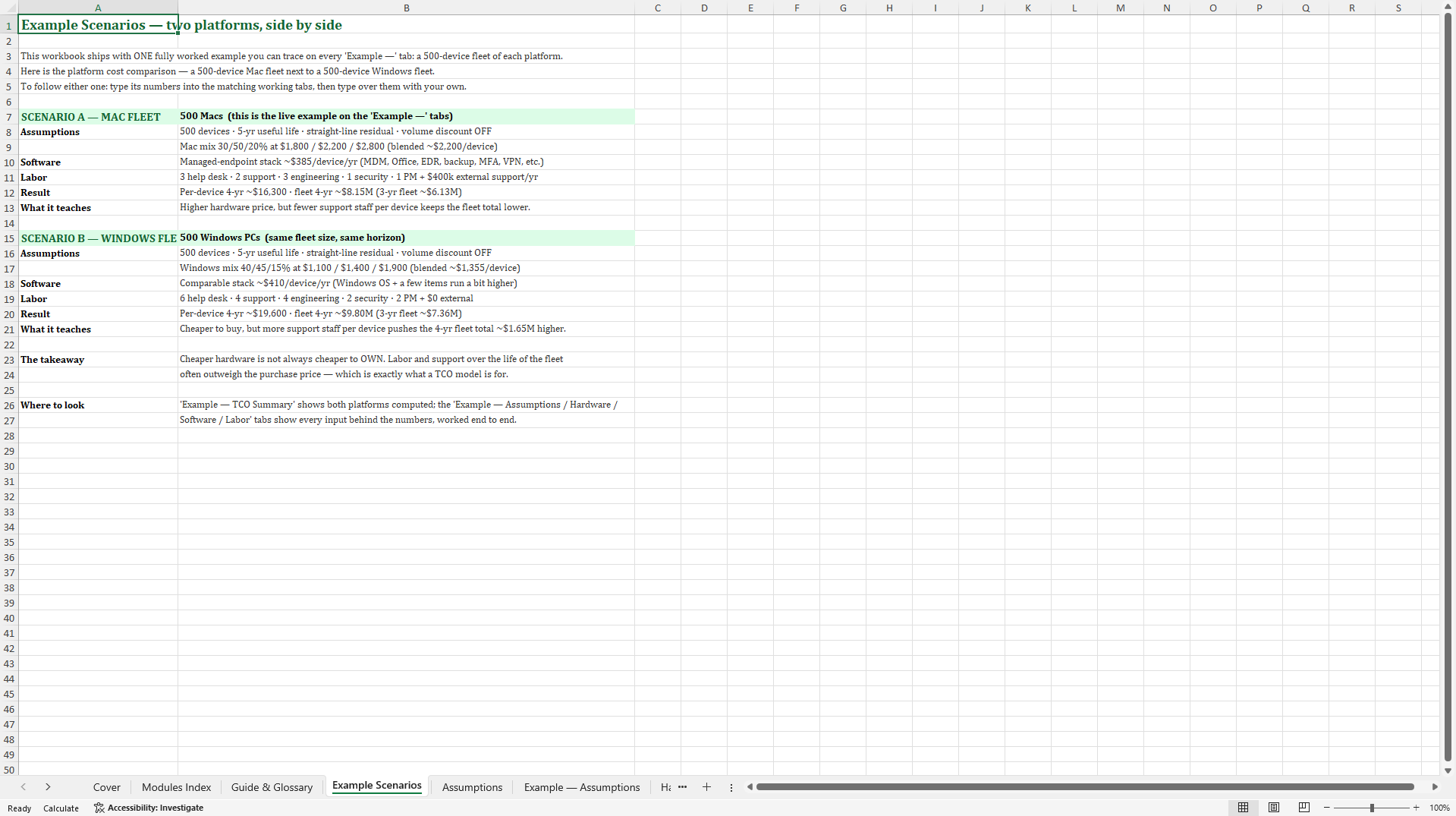
- Includes a worked example for every model, so you can see the calculation behave before trusting it with your own numbers.
- Explains over 400 inputs with embedded notes, so the model can be handed to a client or a finance committee without a walkthrough.
COST OPTIMIZATION EXCEL DESCRIPTION
Most total cost of ownership comparisons fall apart the first time a finance reviewer looks at them. The purchase price is right, the obvious running costs are right, and then the whole conclusion turns on a refresh cycle that was never modeled, a residual value nobody estimated, or a support cost that was counted once instead of every year. This toolkit exists because those are the assumptions that decide the answer.
It is a single Excel workbook containing 14 separate total cost of ownership models, each one a self-contained comparison you can use immediately.
The core model builds a full TCO from hardware, software, and labor into a consolidated summary with charts. The remaining thirteen are standalone comparisons for the decisions that come up most often: cloud versus on-premise, lease versus buy, software build versus buy, insource versus outsource, fleet electric versus gas, solar versus grid, equipment, facilities, HR turnover, internal help desk, external help desk, call center, and factory-floor robotics.
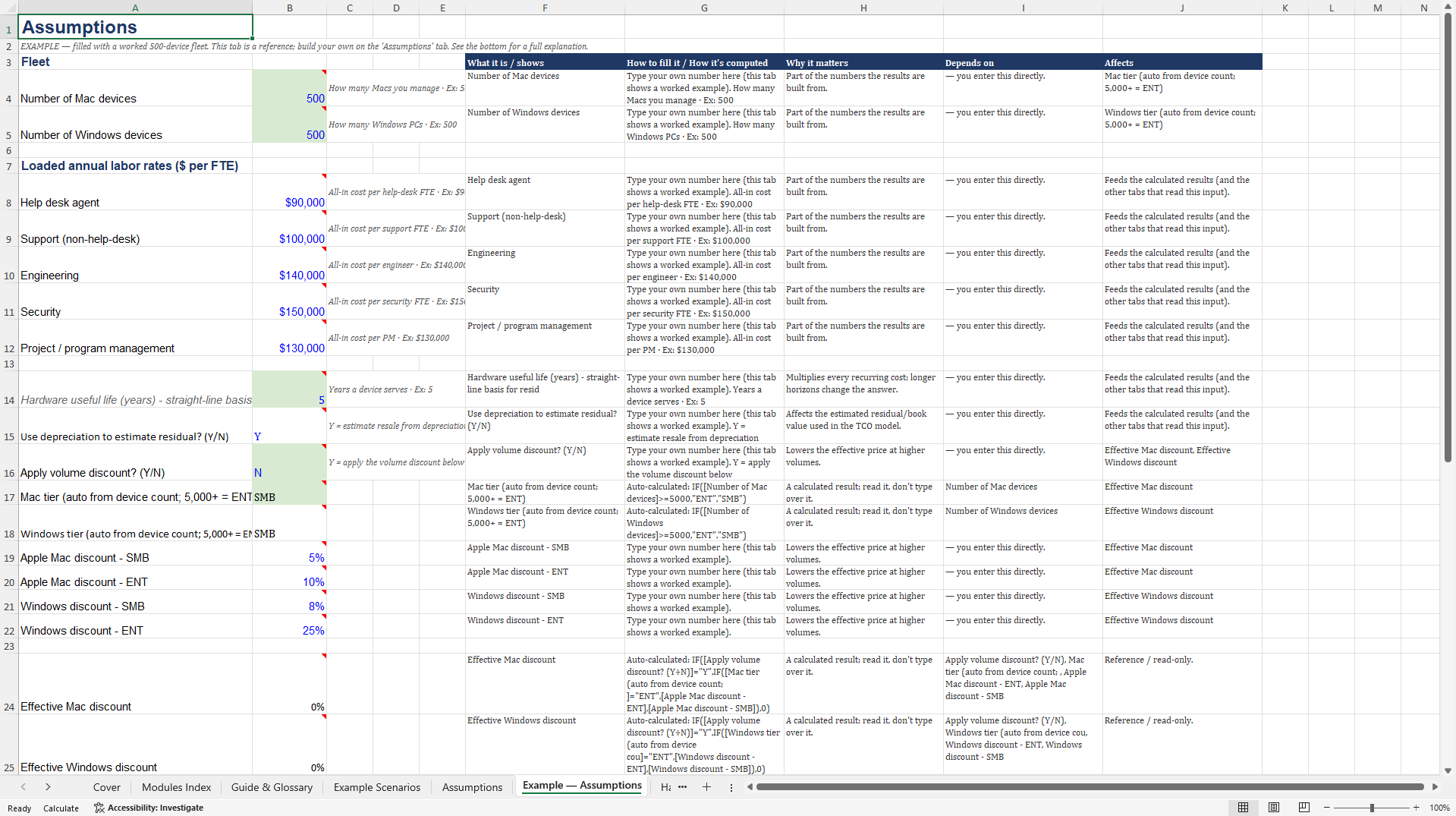
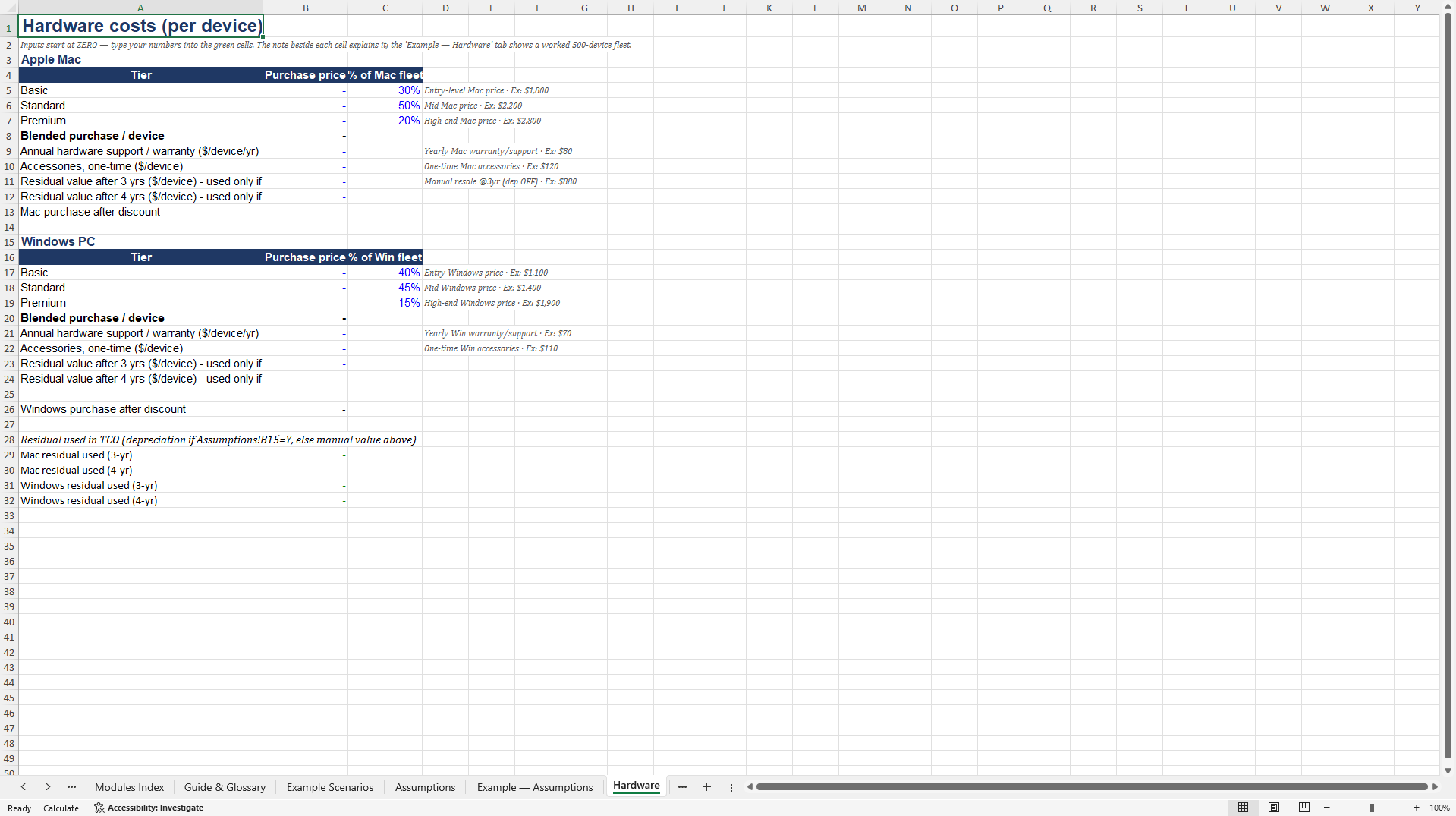
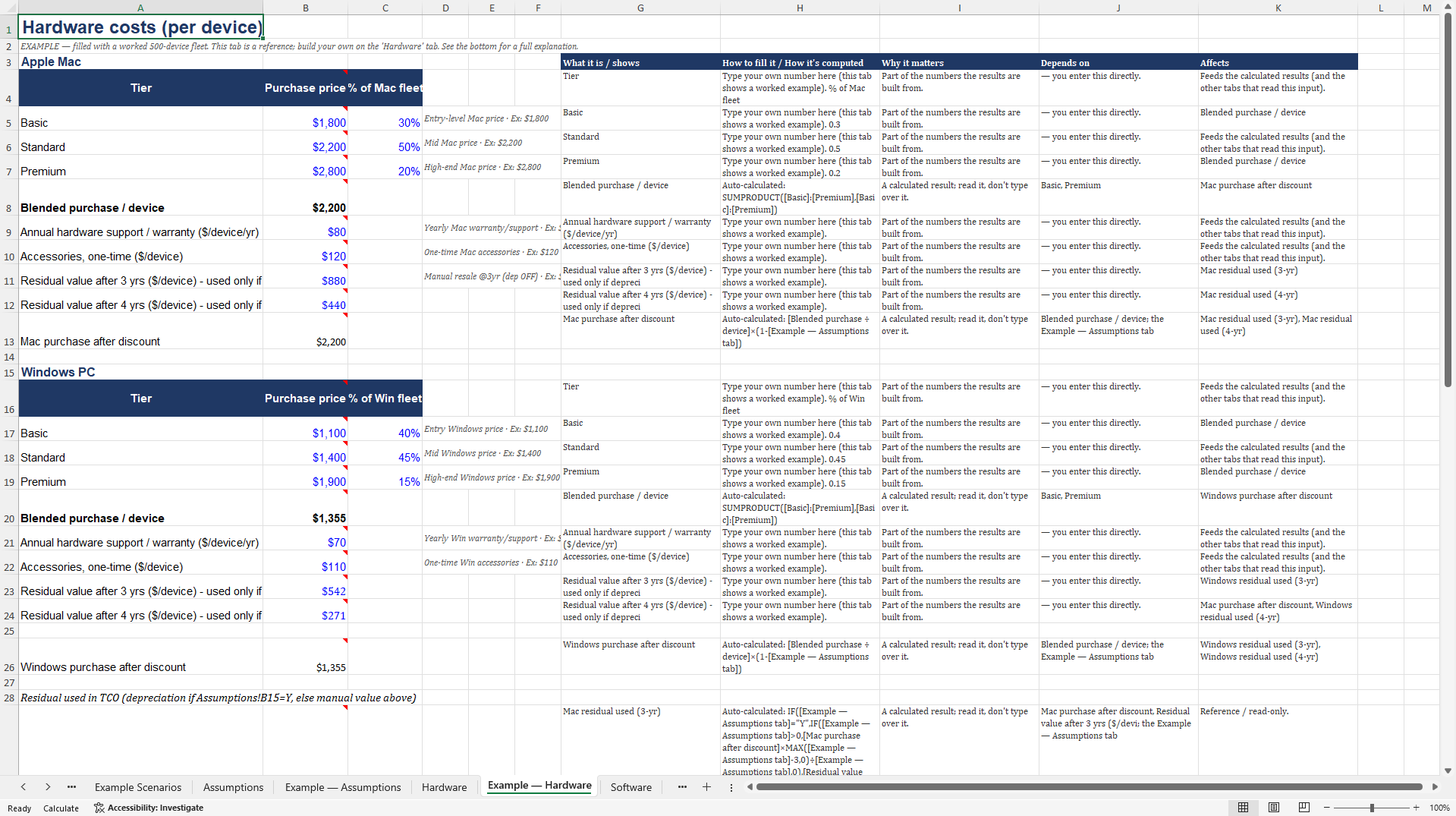
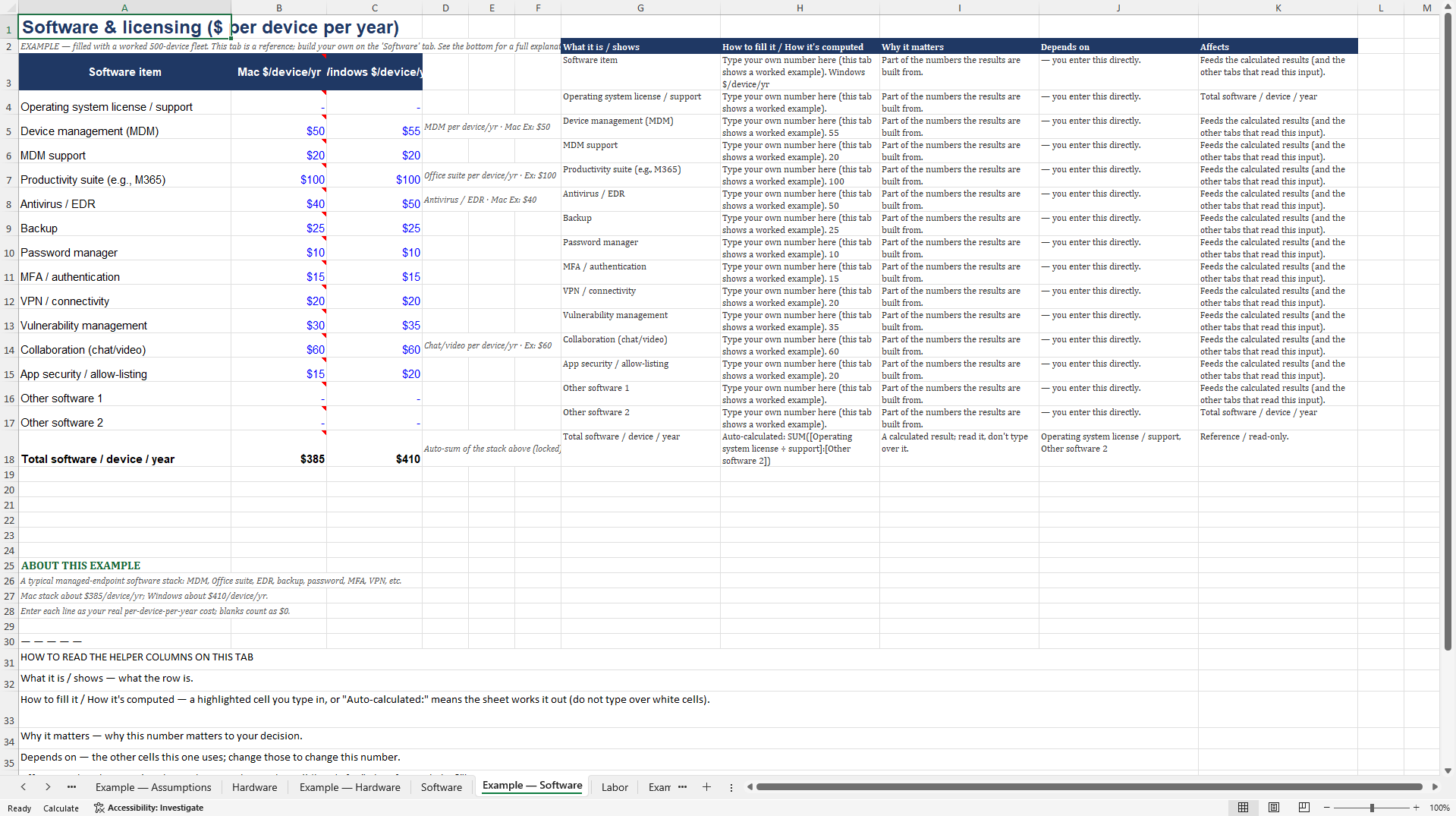
Every model ships with its own worked example on a paired tab, so you can watch the calculation behave with real numbers before you trust it with yours. Formulas are live and visible rather than hard-coded results, which means you can audit any figure back to its source or change the logic to match how your organization actually accounts for cost.
The workbook carries over 400 embedded cell notes. Each one explains what the input is, how to fill it in, and why it matters to the result. That is what lets the model be handed to a colleague, a client, or a finance committee without a walkthrough, and it is the difference between a spreadsheet you built and a spreadsheet someone else can defend.
Practical details. There are no macros, so it opens in Microsoft Excel on Windows or Mac, in Excel for the web, in the Excel mobile apps, and in Google Sheets. The optional companion download adds a browser-based version of the calculator with its source included, a quick-start guide, and a prompt that lets an AI assistant populate the workbook from a plain-English conversation.
Who it is for: consultants building a cost case for a client, IT and operations leaders comparing vendors or platforms, and finance teams that need a defensible number rather than a persuasive one. Anyone who has to show their work.
This is the model, not a template of a model. It was built to make real decisions and it will tell you when a deal does not work.
Got a question about the product? Email us at support@flevy.com or ask the author directly by using the "Ask the Author a Question" form. If you cannot view the preview above this document description, go here to view the large preview instead.
Source: Best Practices in Cost Optimization Excel: Total Cost of Ownership Toolkit: 14 TCO Models Excel (XLSX) Spreadsheet, Kyodo Partners
ABOUT THE AUTHOR

Kyodo Partners builds the financial and cost models that operators actually use to make decisions, then packages them so someone else can pick them up and run.
Our work comes out of running enterprise IT at scale rather than a template studio: tens of thousands of Mac endpoints, hundreds of thousands of Windows devices, a multi-million-dollar technology budget, and the procurement, vendor
... [read more]
Ask the Author a Question
You must be logged in to contact the author.