 Click main image to view in full screen.
Supplier Price Increase Response Kit – PowerPoint PPTX Template
PowerPoint (PPTX) + Zip archive file (ZIP) 11 Slides


BENEFITS OF THIS DOWNLOADABLE POWERPOINT DOCUMENT
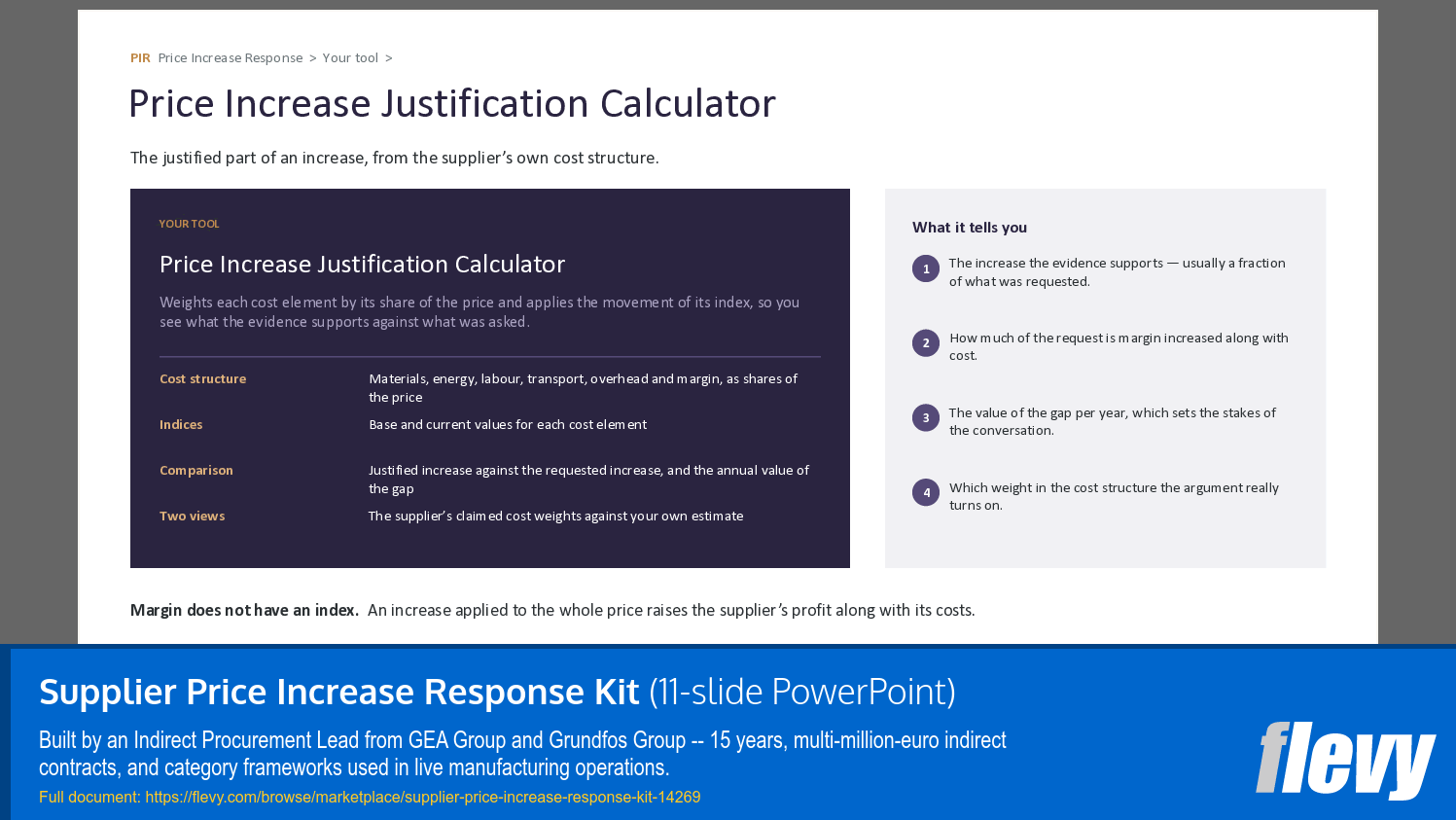
- Calculate the justified part of any supplier price increase by weighting each cost element - labour, materials, energy, transport, overheads - by its share of the price and applying its index movement
- Answer every request with the right letter: request for evidence, partial acceptance with a counter-proposal, rejection, or a proposal to move to an index mechanism
- Track every request, its reply deadline and the cost avoided by testing it, in a format finance can validate
PROCUREMENT STRATEGY PPT TEMPLATE DESCRIPTION
A supplier price increase letter is an opening offer, not a notification. Yet most increases are accepted because nobody had time to test them – and the letter tends to arrive only a few weeks before the new price applies.
The typical increase is justified on part of the cost base – energy, wages, a raw material – and then applied to the whole price, margin included. The difference between what the cost movement supports and what was requested is where most of the negotiation lies. It is arithmetic, not confrontation, and this kit makes the arithmetic fast.
THE METHOD
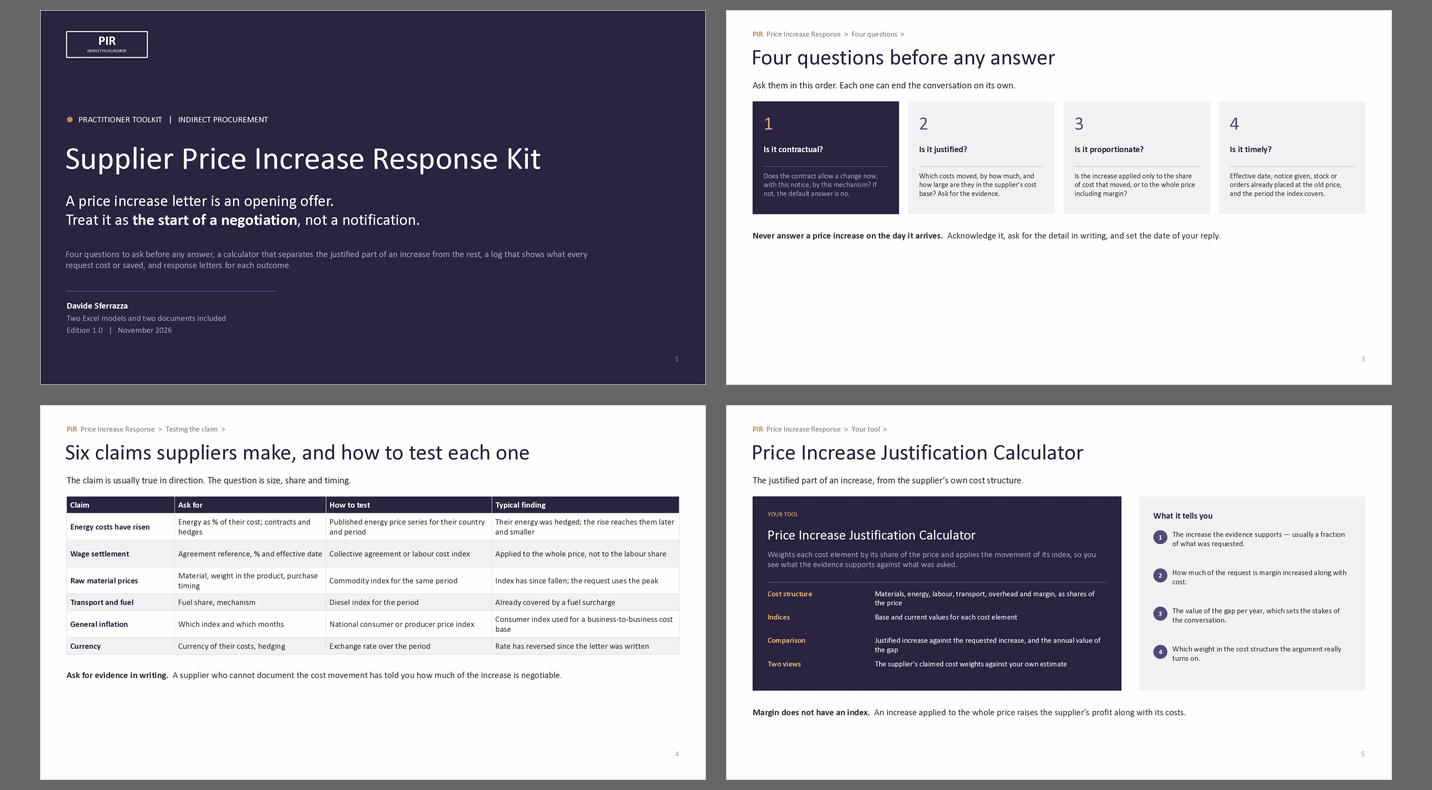
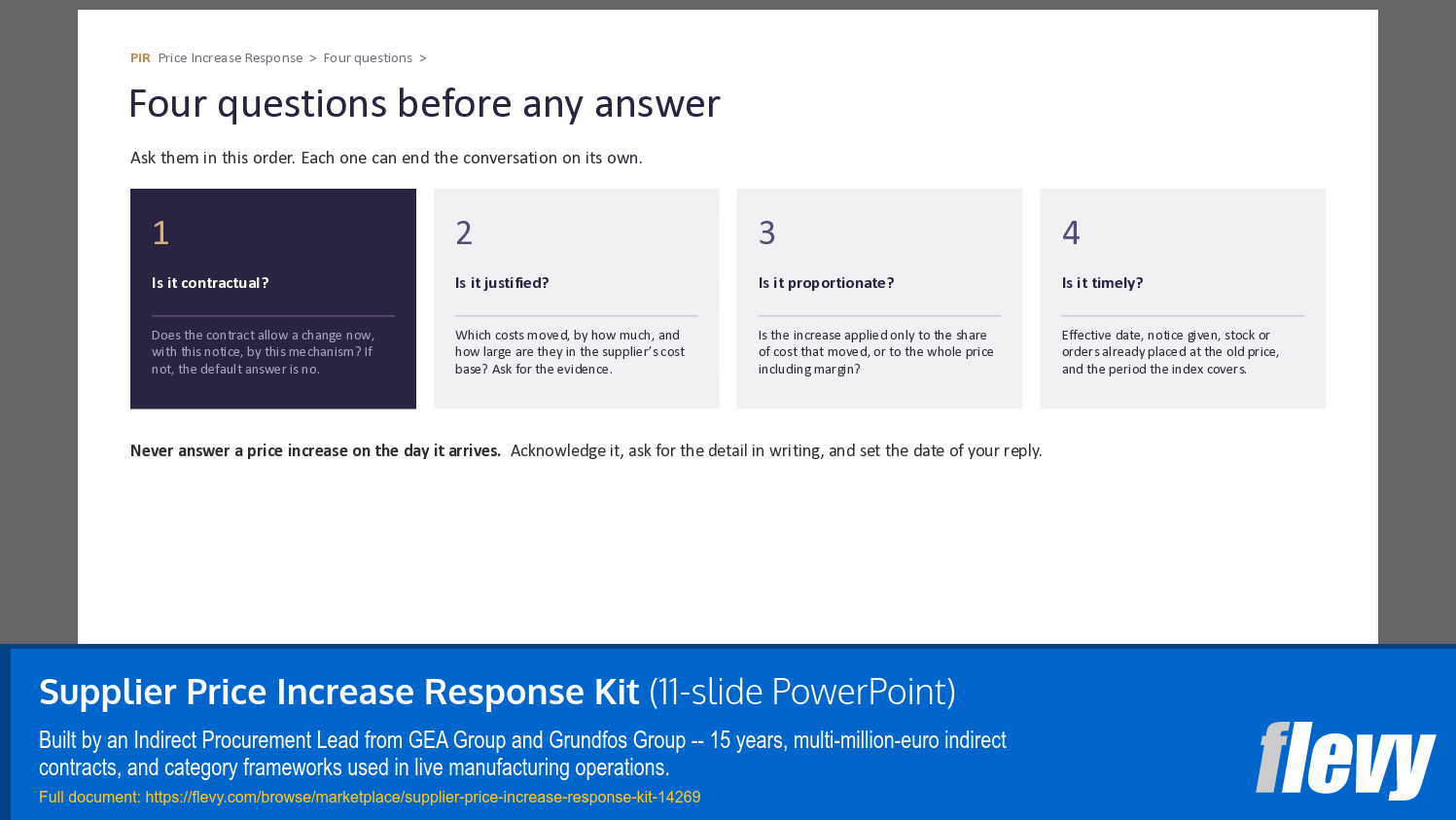
Four questions, in order. Is it contractual: does the agreement allow a change now, with this notice, by this mechanism? Is it justified: which costs moved, by how much, and how large are they in the supplier's cost base? Is it proportionate: is the increase applied only to the share of cost that moved? Is it timely: does the effective date respect the notice period, and does the index period match when the supplier's costs actually changed?
WHAT IS INCLUDED
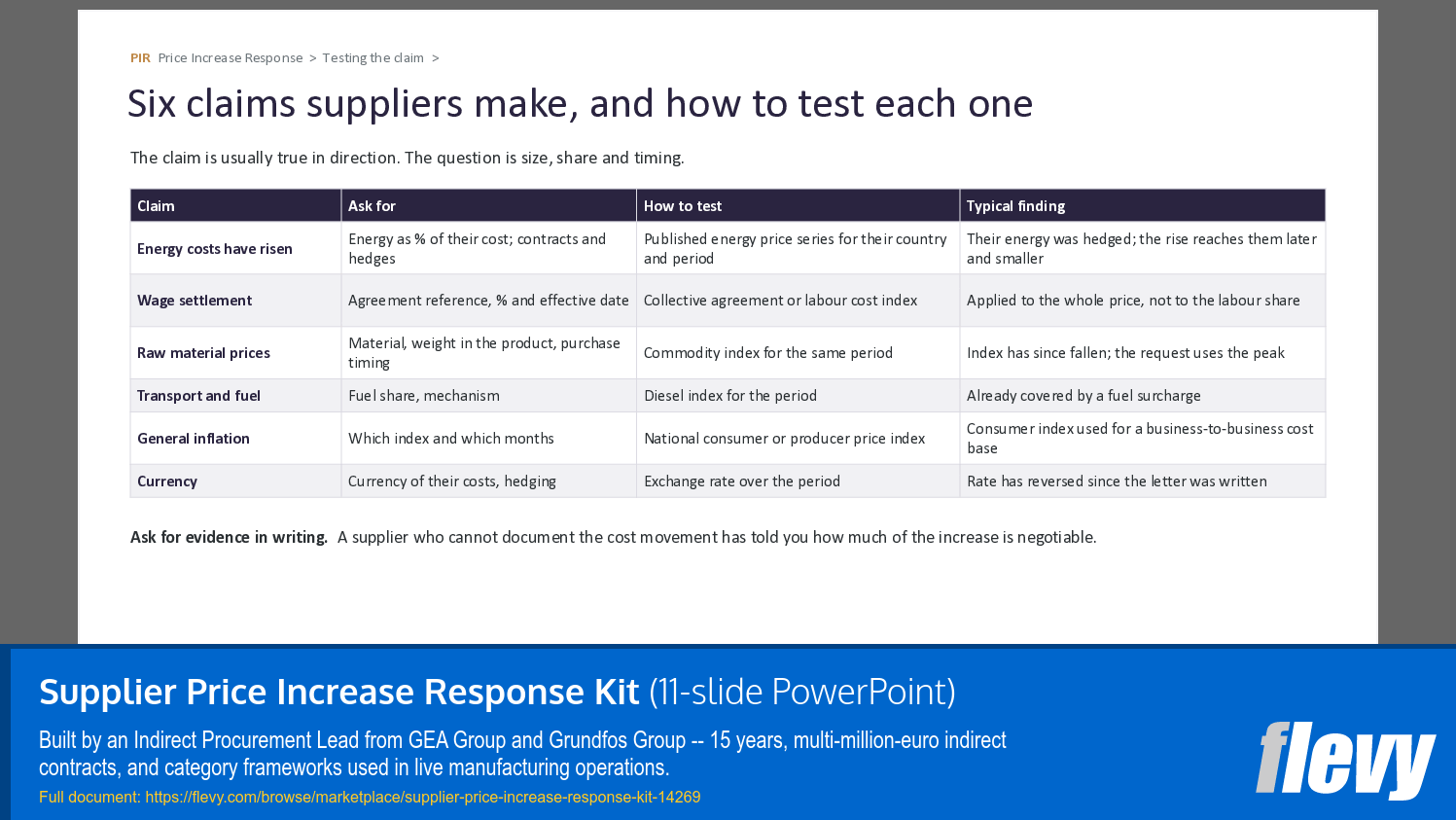
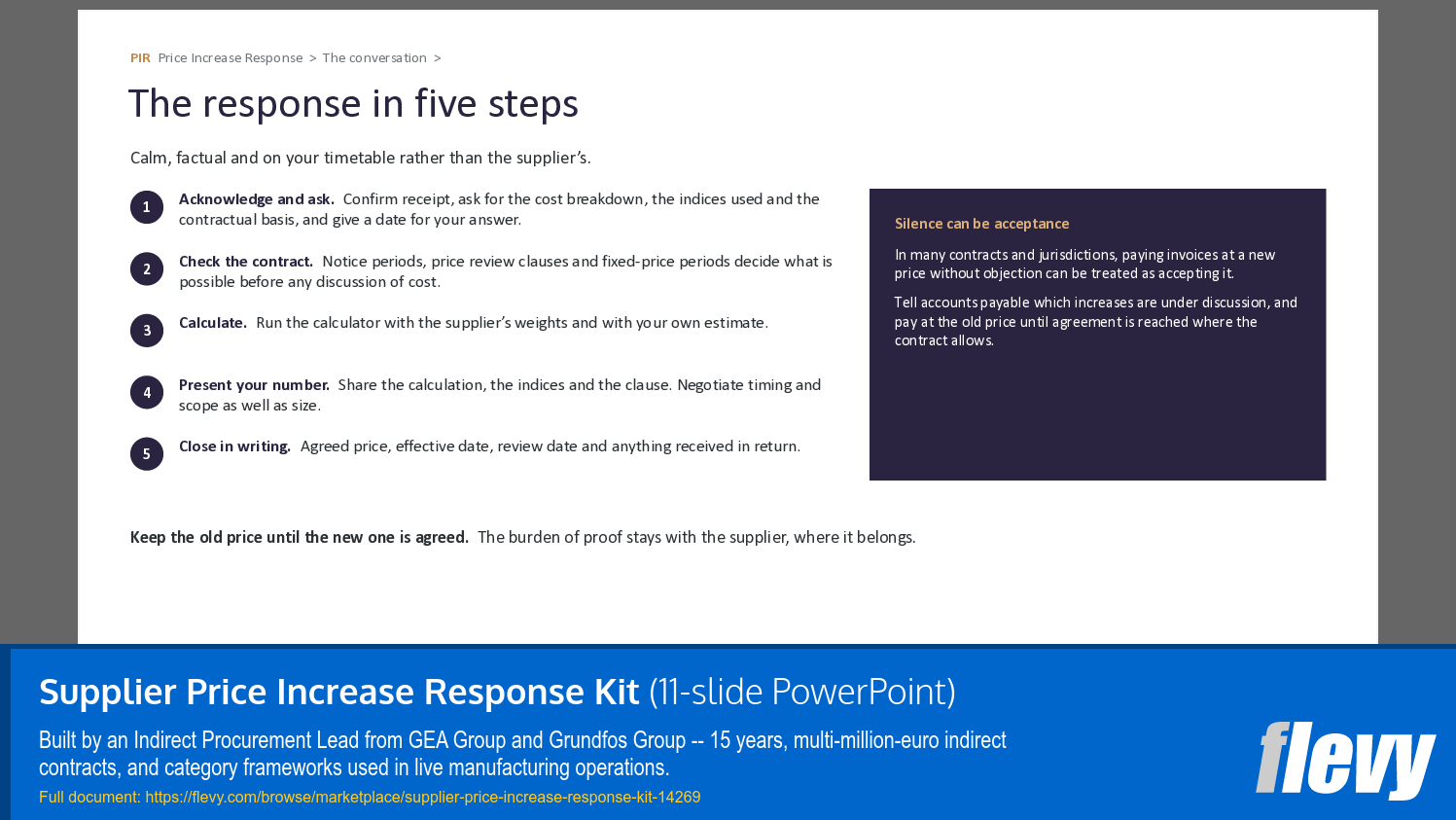
Primary document – a 10-slide guide covering the four questions, six common supplier claims and how to test each, when to accept, accept in part, defer or reject, what to ask for in return, the response conversation in five steps, and a thirty-day plan for a wave of requests.
Price Increase Justification Calculator (Excel) – enter the supplier's cost structure and index movements for each cost element, and see the justified increase against the requested one, after any contractual cap, with the annual value of the gap. Two sets of weights – the supplier's claim and your own estimate – show which assumption the argument really turns on.
Price Increase Request Tracker (Excel) – every request with spend, requested, justified and agreed increases, reply deadlines, status flags and what was received in return, with a summary of value requested, agreed and avoided.
Price Increase Response Letter Templates (Word) – four letters: acknowledgement and request for evidence, partial acceptance with counter-proposal, rejection, and a proposal to move to an index mechanism.
Price Increase Negotiation Guide (Word) – triage by value, the questions to ask, where to find index data, the common weaknesses in requests, how to negotiate the answer and five things never to do.
WHO IT IS FOR
Buyers and category managers facing supplier price increase requests. Procurement leads managing inflation pressure across the supply base. Finance business partners who want increases tested before budgets absorb them.
WHAT THIS IS NOT
It contains no index data, because the right index depends on the country, the category and the period. It is not legal advice on the contract terms that govern price changes. It is a fast, repeatable way to turn a price increase letter into a negotiation you can win on the numbers.
Got a question about the product? Email us at support@flevy.com or ask the author directly by using the "Ask the Author a Question" form. If you cannot view the preview above this document description, go here to view the large preview instead.
Source: Best Practices in Procurement Strategy, Procurement Negotiations PowerPoint Slides: Supplier Price Increase Response Kit PowerPoint (PPTX) Presentation Slide Deck, Davide Sferrazza
ABOUT THE AUTHOR

Indirect Procurement Lead, with 15 years spent in the categories most organisations manage least well: MRO, facilities, utilities and energy, marketing services, IT and software, professional services, logistics and CapEx.
That career has been inside manufacturing groups -- Pavan (GEA Group) and DAB Pumps (Grundfos Group) -- leading procurement transformation projects, negotiating
... [read more]
Ask the Author a Question
You must be logged in to contact the author.