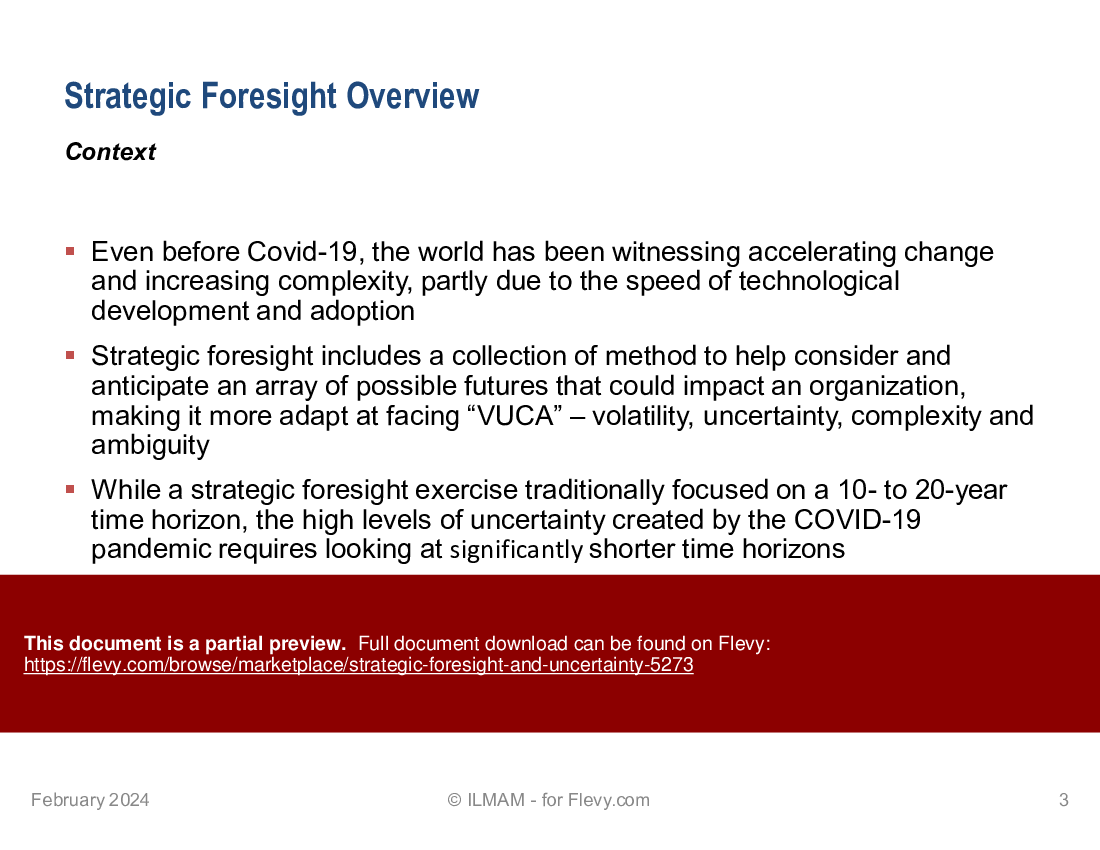

Even before COVID-19, the world has been witnessing accelerating change and increasing complexity, partly due to the speed of technological development and adoption.
Strategic foresight includes a collection of method to help consider and anticipate an array of possible futures that could impact an organization, making it more adapt at facing "VUCA" – volatility, uncertainty, complexity and ambiguity.
While a strategic foresight exercise traditionally focused on a 10- to 20-year time horizon, the high levels of uncertainty created by the COVID-19 pandemic requires looking at significantly shorter time horizons.
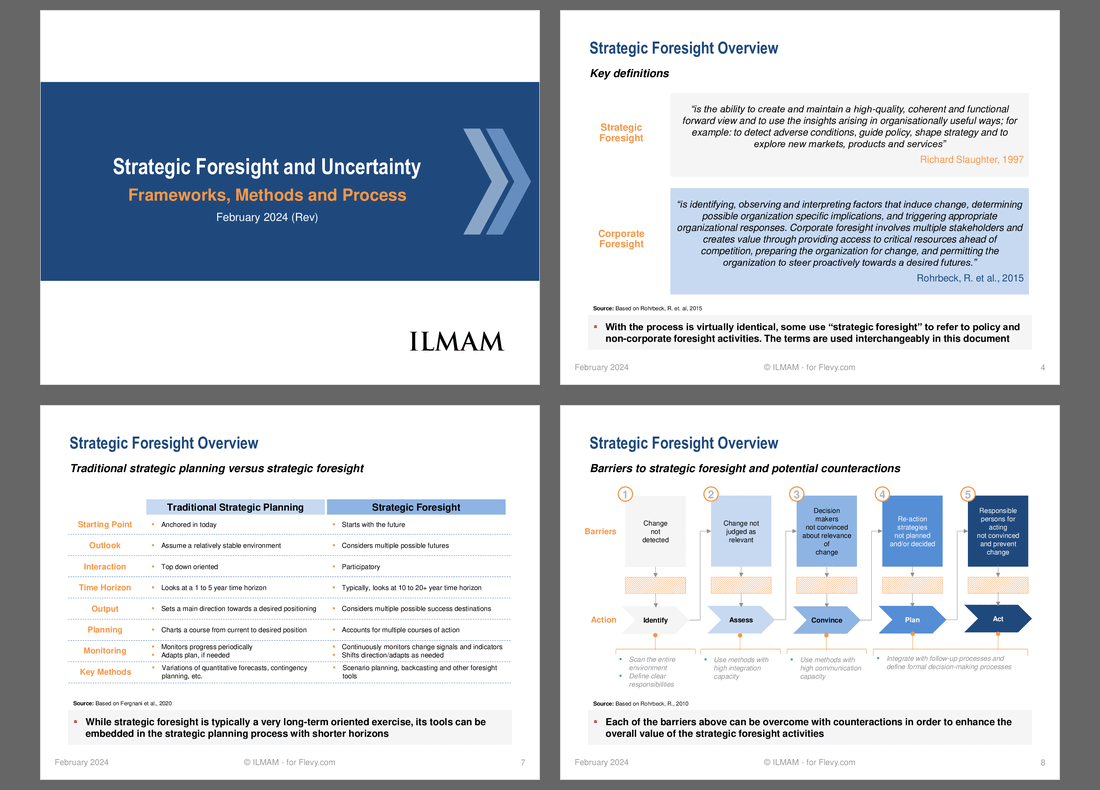
With the traditional strategic planning assuming a reasonably stable environment, the strategic planning process can be enhanced by embedding foresight methods and tools.
Contents
1. Strategic Foresight Overview
• Context
• Key definitions
• Why use strategic foresight
• What strategic foresight is not
• Traditional strategic planning versus strategic foresight
• Barriers to strategic foresight and potential counteractions
• Benefits of strategic foresight
• Critical considerations for strategic foresight during a crisis
• A futurist approach to strategic planning for a given uncertainty
2. Strategic Foresight Methods
• The Foresight Diamond
• Examples of foresight methods
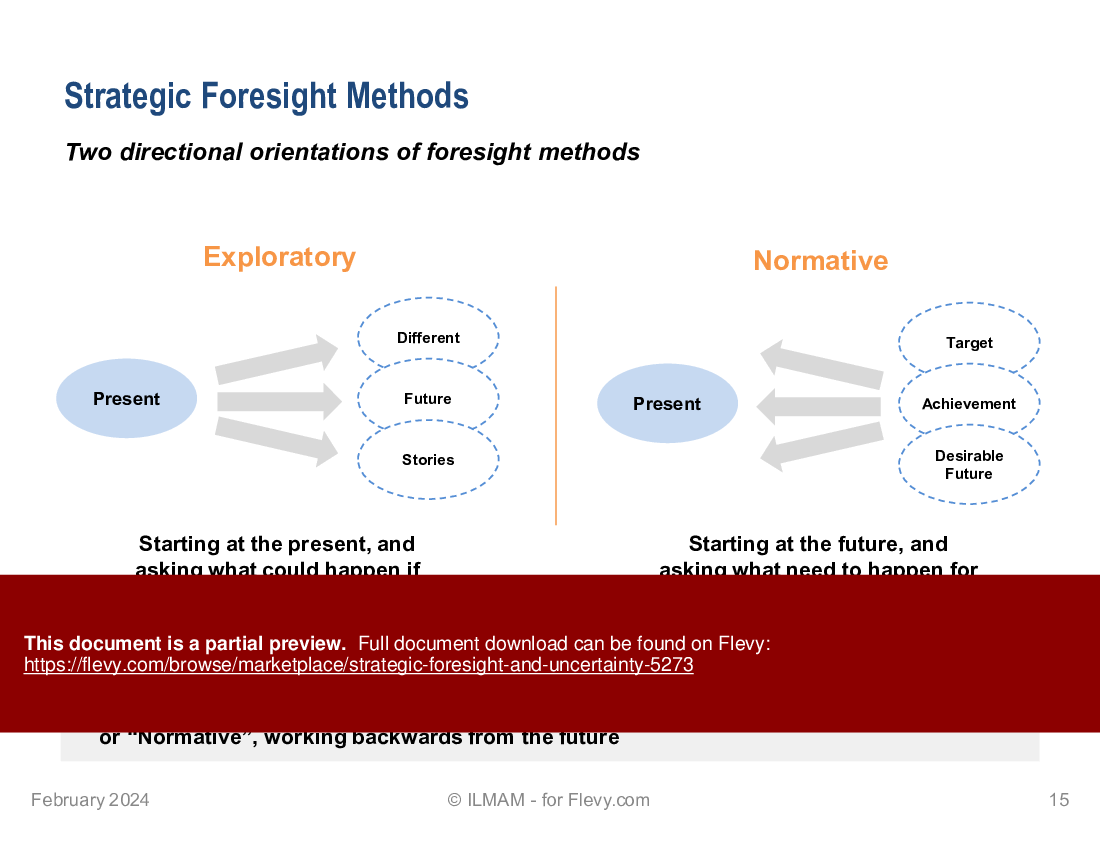
• Two directional orientations of foresight methods
• Common tools for corporate foresight practices
3. Strategic Foresight Frameworks
3A. Generic Foresight Process Framework
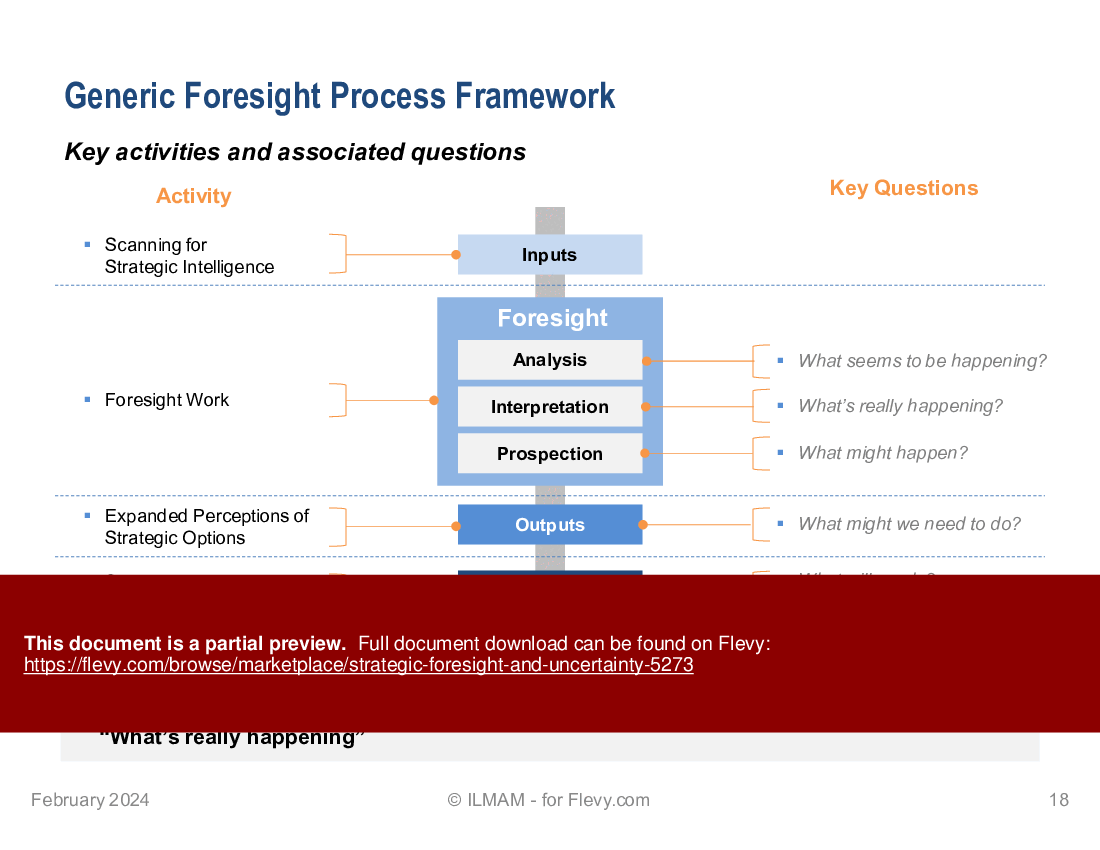
• Key activities and associated questions
• Key elements and their impact on the process
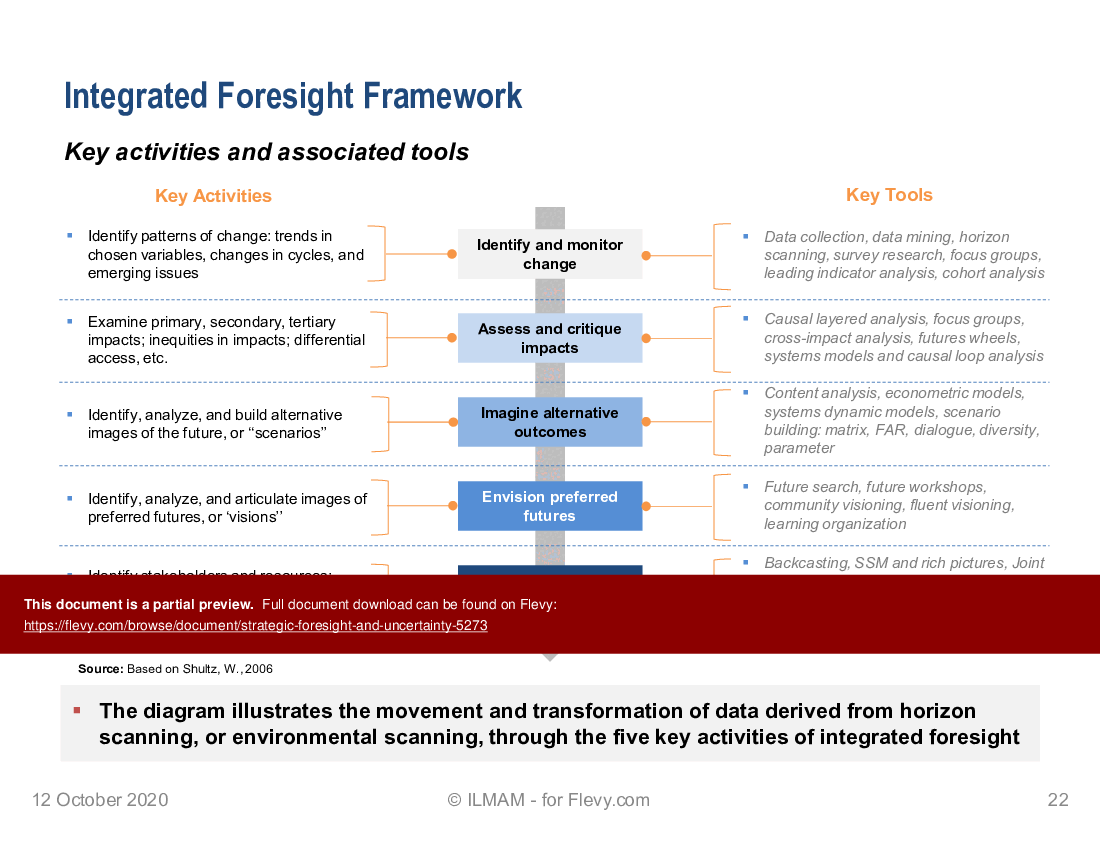
• Key activities and associated tools
3B. Integrated Foresight Framework
• Key activities and associated tools
• Integrated foresight process
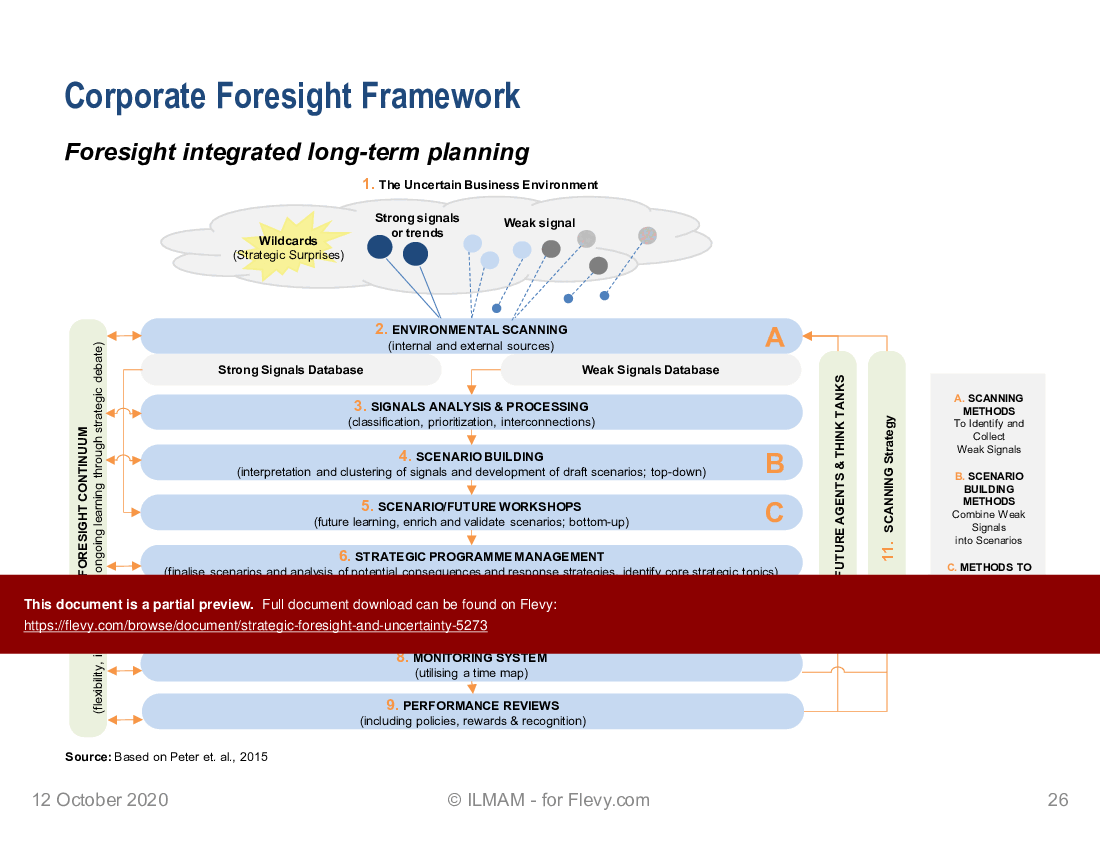
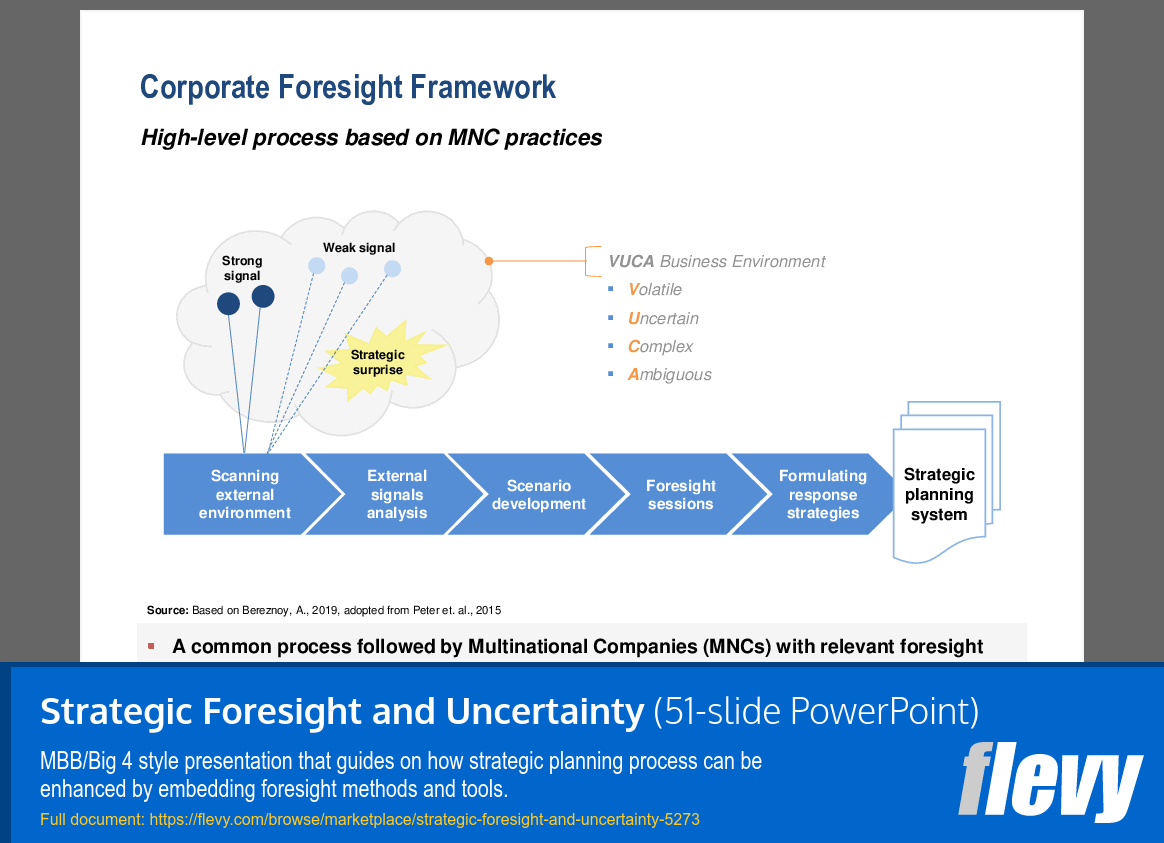
3C. Corporate Foresight Framework
• High-level process based on MNC practices
• Foresight integrated long-term planning
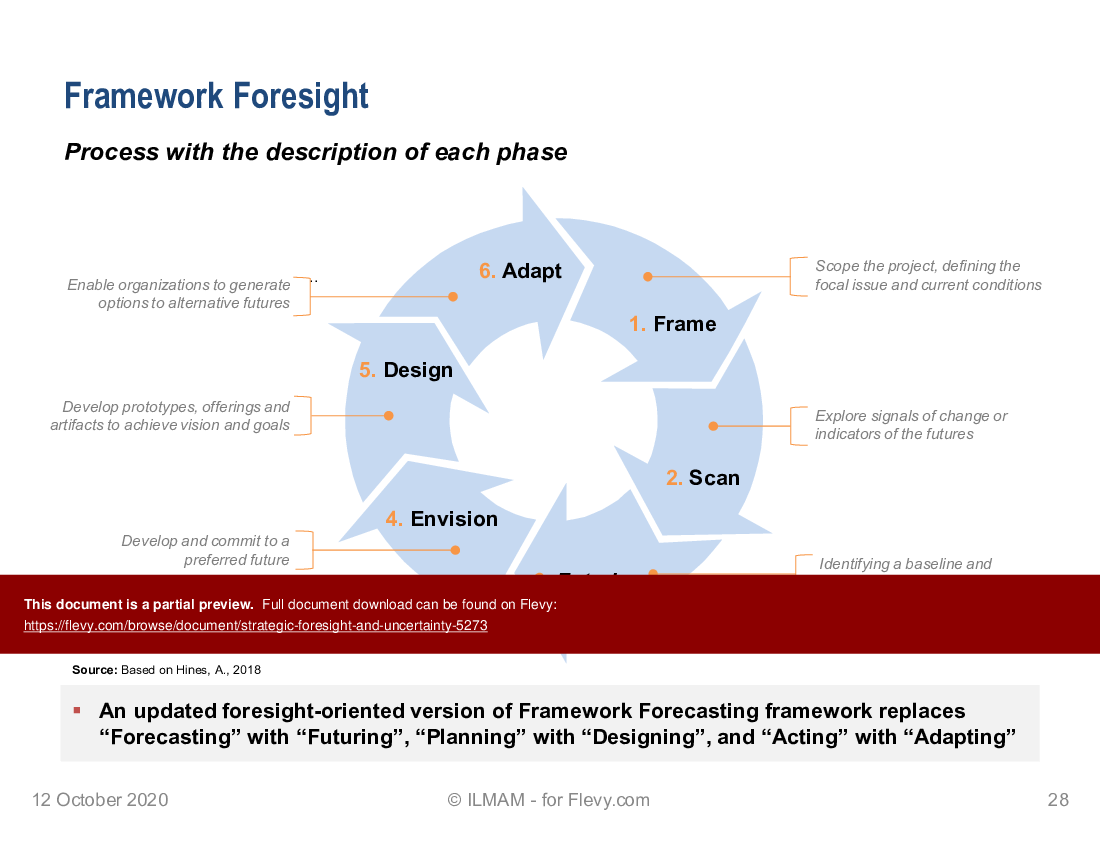
3D. Framework Foresight
• Process with the description of each phase
• Process with the outcome of each phase
4. Undertaking a Strategic Foresight Project
• Phase 1: Frame
• Phase 2: Scan
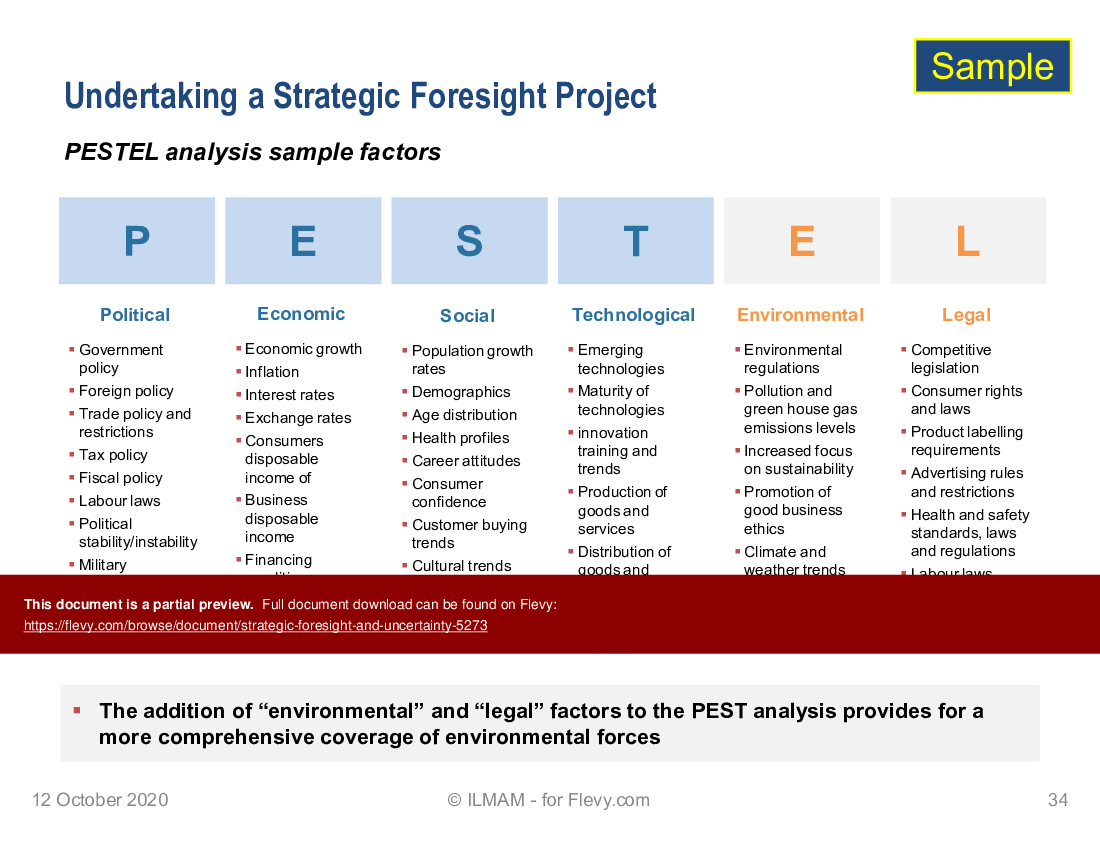
• PESTEL analysis sample factors
• PESTEL analysis factors – summary slide
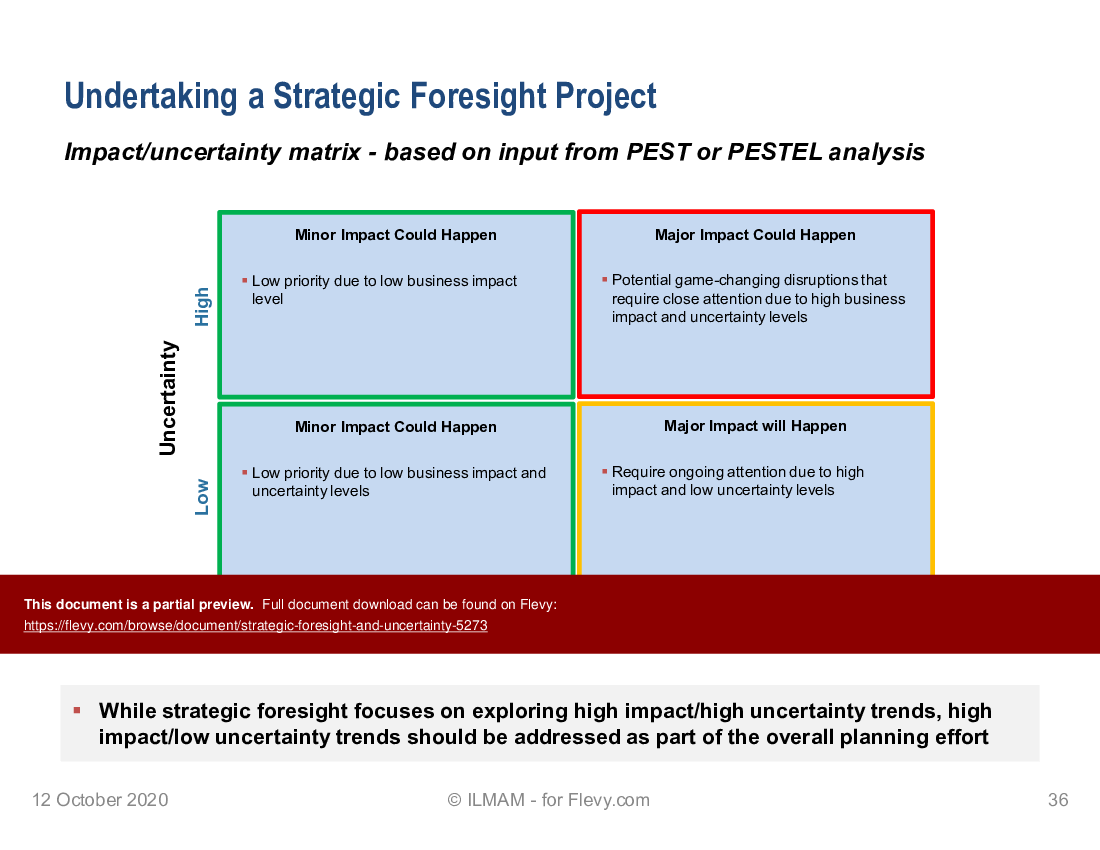
• Impact/uncertainty matrix – based on input from PEST or PESTEL analysis
• Impact/uncertainty matrix – summary slide
• Phase 3: Futurize
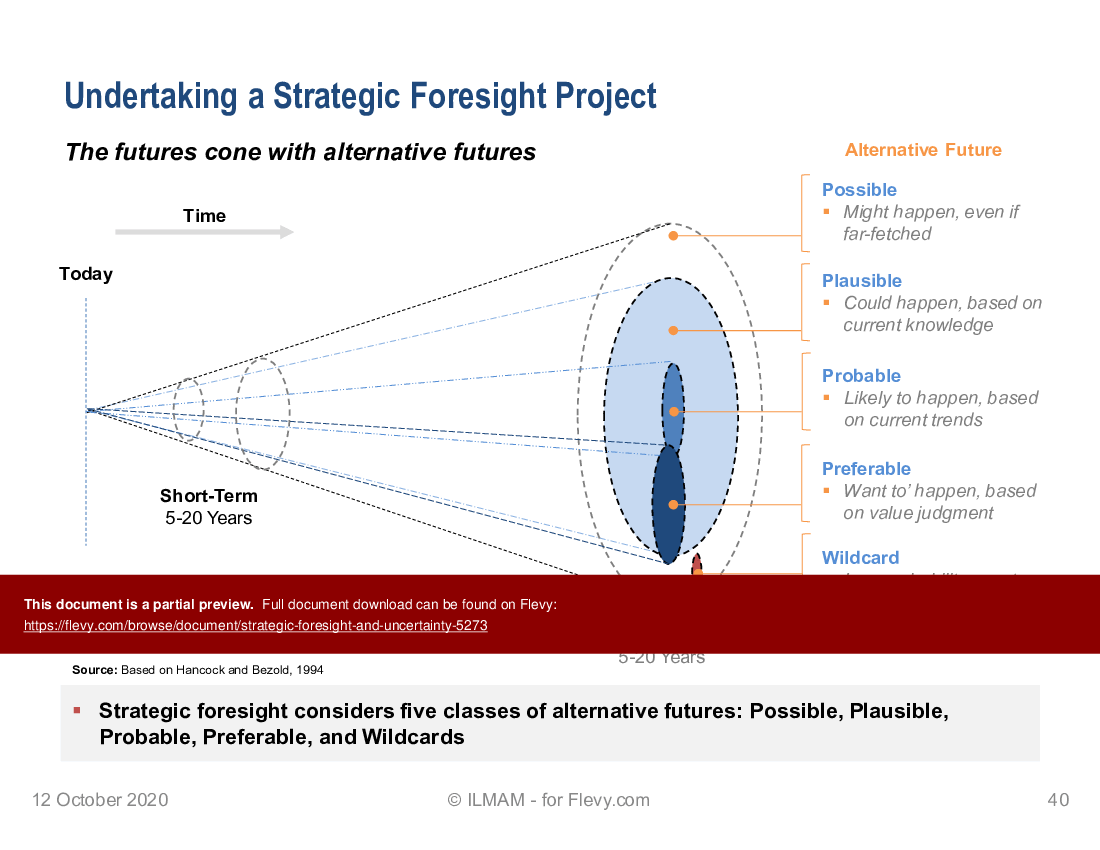
• The futures cone with alternative futures
• 2 x 2 scenario matrix – summary slide
• Identified key scenarios descriptions – summary slide
• Three horizon approach with scenarios embedded
• Phase 4: Envision
• Phase 5: Design
• Backcasting milestones
• Phase 6: Adapt
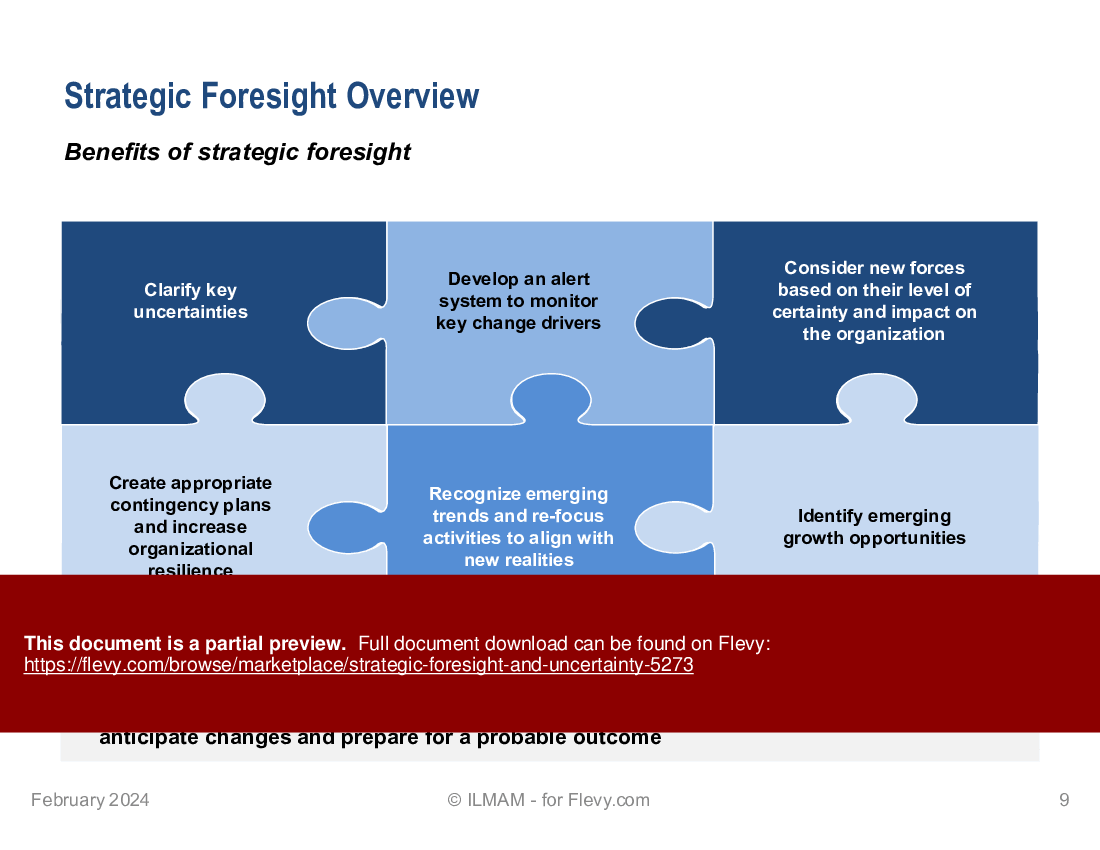
This PPT provides a comprehensive overview of the benefits of strategic foresight, including the ability to clarify key uncertainties and develop an alert system to monitor critical change drivers. It also delves into various foresight methods and frameworks, offering practical tools for corporate foresight practices.
Got a question about the product? Email us at support@flevy.com or ask the author directly by using the "Ask the Author a Question" form. If you cannot view the preview above this document description, go here to view the large preview instead.
Executive Summary
This presentation titled "Strategic Foresight and Uncertainty" is crafted in a McKinsey, Bain, or BCG-quality style (consulting-grade; not affiliated) and serves as a comprehensive guide for enhancing strategic planning through foresight methods. It equips corporate executives and integration leaders with the tools to navigate VUCA (volatility, uncertainty, complexity, and ambiguity) environments. The deck emphasizes the importance of adapting strategic planning processes to shorter time horizons, especially in light of recent global disruptions. By utilizing this presentation, organizations can better anticipate potential changes, develop robust contingency plans, and proactively shape their strategic direction.
Who This Is For and When to Use
• Corporate executives looking to integrate foresight into strategic planning
• Integration leaders managing change in uncertain environments
• Strategy teams responsible for long-term planning and risk management
• Consultants advising organizations on strategic foresight and adaptability
Best-fit moments to use this deck:
• During strategic planning sessions to incorporate foresight methods
• When assessing potential impacts of emerging trends on business strategy
• In crisis management scenarios to develop adaptive strategies
• For workshops focused on scenario planning and future-proofing initiatives
Learning Objectives
• Define strategic foresight and its relevance in today’s business environment
• Identify key drivers of change and their implications for organizations
• Develop contingency plans based on plausible future scenarios
• Utilize foresight methods to enhance strategic planning processes
• Recognize emerging trends and adapt organizational strategies accordingly
• Create a framework for ongoing monitoring of change signals
Table of Contents
• Strategic Foresight Overview (page 1)
• Strategic Foresight Methods (page 12)
• Strategic Foresight Frameworks (page 18)
• Undertaking a Strategic Foresight Project (page 31)
Primary Topics Covered
• Strategic Foresight Overview - An introduction to strategic foresight, emphasizing its role in anticipating change and enhancing adaptability in organizations.
• Strategic Foresight Methods - A classification of various foresight methods, including qualitative, quantitative, and semi-quantitative approaches.
• Generic Foresight Process Framework - A structured approach to foresight that includes inputs, analysis, interpretation, and strategy development.
• Integrated Foresight Framework - A model illustrating the transformation of data through key foresight activities, enhancing strategic decision-making.
• Corporate Foresight Framework - A high-level overview of the foresight processes used by multinational companies to navigate VUCA environments.
• Framework Foresight - An updated approach to foresight that emphasizes adaptability and strategic planning.
Deliverables, Templates, and Tools
• Foresight project framing template to define scope, audience, and key questions
• PESTEL analysis framework for identifying external factors impacting strategic planning
• Impact/uncertainty matrix for prioritizing trends based on business impact
• Scenario matrix template for mapping plausible futures based on identified trends
• Backcasting milestones template to track progress toward achieving strategic visions
• Monitoring system framework for ongoing assessment of change signals
Slide Highlights
• Overview of strategic foresight and its significance in a rapidly changing environment
• Comparison between traditional strategic planning and strategic foresight
• The Foresight Diamond illustrating key methods and their classifications
• Integrated Foresight Framework detailing the movement of data through foresight activities
• The futures cone depicting different classes of alternative futures
Potential Workshop Agenda
Foresight Introduction Session (60 minutes)
• Overview of strategic foresight concepts and relevance
• Discussion on the importance of adaptability in strategic planning
• Introduction to key foresight methods and frameworks
Scenario Planning Workshop (90 minutes)
• Identify and analyze key trends impacting the organization
• Develop plausible future scenarios based on identified trends
• Discuss implications of scenarios on strategic direction
Foresight Implementation Session (120 minutes)
• Frame a strategic foresight project tailored to organizational needs
• Develop backcasting milestones for achieving strategic visions
• Establish a monitoring system for ongoing assessment of change signals
Customization Guidance
• Tailor the PESTEL analysis factors to reflect specific organizational contexts
• Adjust the impact/uncertainty matrix based on industry-specific trends
• Incorporate organizational values and goals into scenario planning exercises
• Define specific milestones and timelines for backcasting activities
Secondary Topics Covered
• Key drivers of change impacting strategic foresight
• Barriers to effective foresight and potential counteractions
• The role of stakeholder engagement in foresight activities
• Techniques for effective environmental scanning and trend analysis
Topic FAQ
What are the typical phases of a strategic foresight project and what happens in each?
A common project structure comprises 6 phases: Frame (define scope, audience, key questions), Scan (identify trends and PESTEL factors), Futurize (develop scenarios and futures cone), Envision (articulate preferred futures), Design (backcasting and milestones), and Adapt (monitoring and updates). The process maps to Phase 1 through Phase 6.
How does a PESTEL analysis feed into scenario planning for strategic foresight?
PESTEL identifies external Political, Economic, Social, Technological, Environmental, and Legal factors that drive change. Outputs from PESTEL are evaluated in an impact/uncertainty matrix to prioritize trends, then used to construct scenario matrices that map plausible futures. PESTEL feeds directly into the impact/uncertainty matrix.
What is backcasting and how is it used to translate scenarios into action?
Backcasting starts with a defined future vision and works backward to identify milestones and actions needed to reach it. In foresight practice, backcasting milestones are created after scenario development to track progress toward strategic visions, often using a backcasting milestones template provided in foresight toolkits.
How often should organizations review and update their foresight work and monitoring systems?
The guidance recommends regular reviews to reassess signals and progress; typical cadences are quarterly or semi-annually. Regular review intervals are paired with an ongoing monitoring system framework to assess new change signals and update scenarios on a quarterly or semi-annually basis.
What should I look for in a foresight toolkit when buying for an in-house strategy team?
Look for tools that support end-to-end work: a project framing template, PESTEL analysis factors, impact/uncertainty matrix, scenario matrix, backcasting milestones, and a monitoring system framework. Also prefer materials aligned to a clear process flow such as a 6-phase foresight project process.
How should I assess cost versus benefit of buying foresight slide templates instead of building them internally?
Assess whether you need ready-made, structured artifacts (PESTEL, impact/uncertainty matrix, scenario matrix, backcasting) and the time your team would spend developing them. Purchased decks can provide a pre-built 6-phase process and templates; for example, Strategic Foresight and Uncertainty is a 51-slide PPTX containing these templates.
I need to run a half-day scenario planning workshop — what core activities should I include?
Core activities include identifying and analyzing key trends (using PESTEL), prioritizing trends with an impact/uncertainty matrix, developing plausible scenarios in a scenario matrix, and discussing strategic implications and potential contingency actions. A typical Scenario Planning Workshop in the deck is scoped at about 90 minutes for those core activities.
How can I set up a monitoring system to detect early change signals after a foresight exercise?
Build a monitoring system framework that tracks prioritized PESTEL factors and indicators identified during scanning, links indicators to scenario triggers, and sets review cadences for updates. The approach pairs a monitoring system framework with backcasting milestones and regular reviews, often on a quarterly or semi-annually cycle.
Document FAQ
What is strategic foresight?
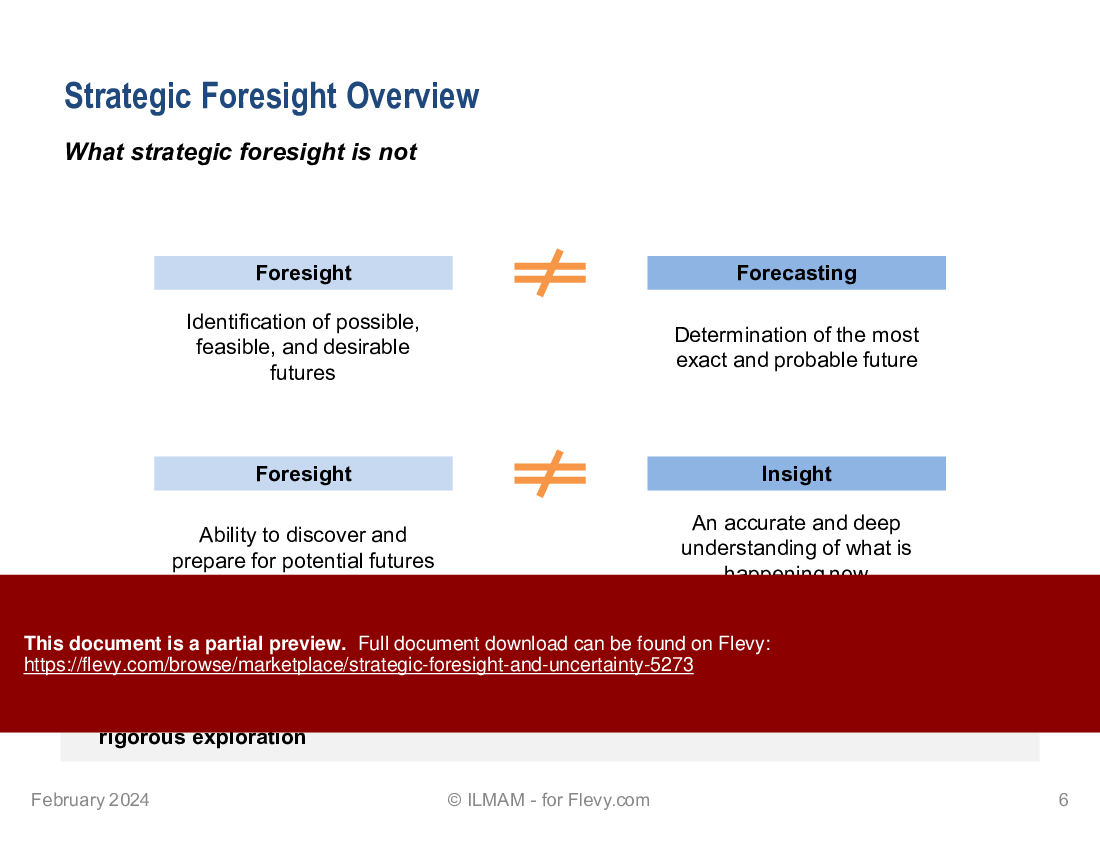
Strategic foresight is the ability to anticipate and prepare for multiple possible futures, enabling organizations to adapt to change and uncertainty.
How does strategic foresight differ from traditional planning?
While traditional planning focuses on a stable environment and a fixed time horizon, strategic foresight considers multiple potential futures and is adaptable to changing circumstances.
What methods are commonly used in strategic foresight?
Common methods include scenario planning, backcasting, PESTEL analysis, and stakeholder engagement techniques.
How can organizations benefit from strategic foresight?
Organizations can clarify uncertainties, develop contingency plans, identify emerging opportunities, and enhance resilience against disruptions.
What is the importance of scenario planning in foresight?
Scenario planning allows organizations to explore various plausible futures, helping them to prepare for different outcomes and adapt strategies accordingly.
How can I implement a strategic foresight project?
Start by framing the project scope, identifying key trends, developing scenarios, and establishing milestones for tracking progress toward strategic goals.
What tools can assist in the foresight process?
Tools include PESTEL analysis frameworks, impact/uncertainty matrices, scenario matrices, and backcasting templates.
How often should organizations review their foresight strategies?
Regular reviews should be conducted, ideally quarterly or semi-annually, to assess progress and adapt to new signals of change.
Glossary
• Strategic Foresight - The ability to anticipate and prepare for multiple possible futures.
• VUCA - An acronym for volatility, uncertainty, complexity, and ambiguity.
• PESTEL Analysis - A framework for analyzing external factors: Political, Economic, Social, Technological, Environmental, and Legal.
• Scenario Planning - A method for exploring and preparing for multiple plausible futures.
• Backcasting - A planning method that starts with defining a desired future and works backward to identify necessary steps.
• Impact/Uncertainty Matrix - A tool for prioritizing trends based on their potential impact and level of uncertainty.
• Foresight Framework - A structured approach to integrating foresight into strategic planning processes.
• Stakeholder Engagement - The process of involving individuals or groups who may be affected by or can affect a decision.
• Environmental Scanning - The process of monitoring external factors that may impact an organization.
• Transformational Factors - Key elements that can significantly influence an organization's future direction.
• Wildcards - Low-probability events that can have a high impact on an organization.
• Futures Cone - A visual representation of different classes of alternative futures.
Source: Best Practices in Strategic Planning, COVID-19, Strategic Thinking, STEEPLE PowerPoint Slides: Strategic Foresight and Uncertainty PowerPoint (PPTX) Presentation Slide Deck, ILMAM - Strategy & Management Consulting
|
Download our FREE Strategy & Transformation Framework Templates
Download our free compilation of 50+ Strategy & Transformation slides and templates. Frameworks include McKinsey 7-S, Balanced Scorecard, Disruptive Innovation, BCG Curve, and many more. |