
This framework is created by former McKinsey, BCG, Deloitte, EY, and Capgemini consultants and provides actionable insights for SaaS Value Chain Analysis.
Provides a framework for examining the SaaS Industry.
Identifies 15 important insights and considerations for SaaS Value Chain Analysis.
Provides a detailed breakdown of the impact of Digital Transformation across the SaaS Value Chain.
SAAS PPT DESCRIPTION
Editor Summary
The Software-as-a-Service (SaaS) Value Chain is a 31-slide PowerPoint (PPTX) framework by LearnPPT Consulting created by former McKinsey, BCG, Deloitte, EY, and Capgemini consultants that maps primary and support activities for SaaS businesses.
Read moreIncludes 6 deliverables/tools: SaaS Value Chain framework, customer onboarding checklist, marketing campaign templates, sales process documentation, customer support ticketing guidelines, and an account management playbook. Target users include SaaS executives, product managers, marketing, sales, and customer success teams. Sold as a digital download on Flevy with immediate digital download.
Use this framework when a SaaS company needs to analyze operational bottlenecks, improve onboarding and retention, align product and market priorities, or prepare strategy and training workshops.
SaaS Executives mapping operational capabilities to market demand by auditing primary and support activities.
Product Managers iterating feature roadmaps based on customer feedback and agile product development analysis.
Marketing teams optimizing digital lead generation using campaign templates and data-driven segmentation.
Customer Success managers improving onboarding and renewal rates through the onboarding checklist and account management playbook.
The emphasis on mapping activities and quantifying metrics reflects standard consulting practice used at McKinsey and BCG.
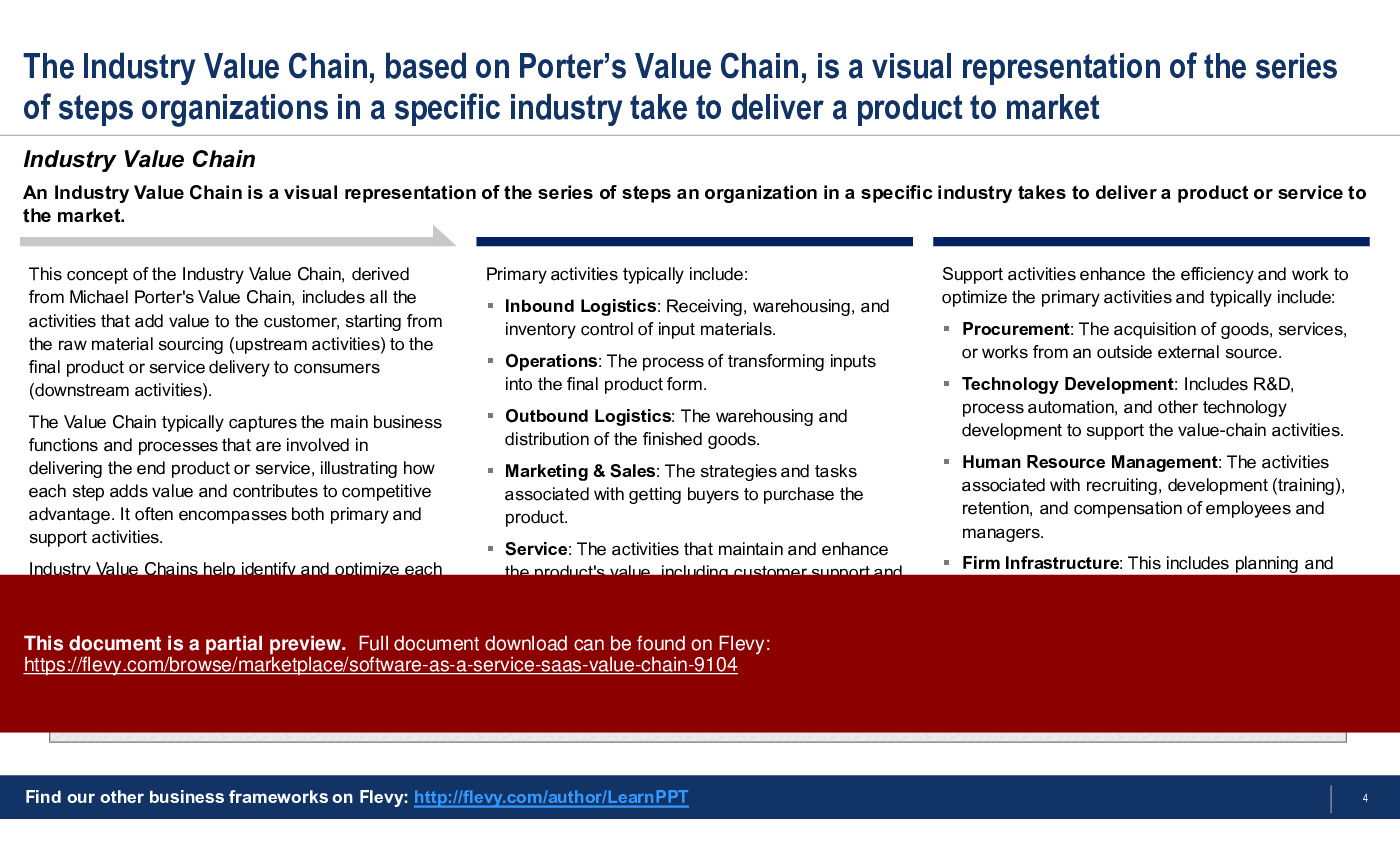
An Industry Value Chain is a visual representation of the series of steps an organization in a specific industry takes to deliver a product or service to the market. It captures the main business functions and processes that are involved in delivering the end product or service, illustrating how each step adds value and contributes to a Competitive Advantage. It often encompasses both primary and support activities.
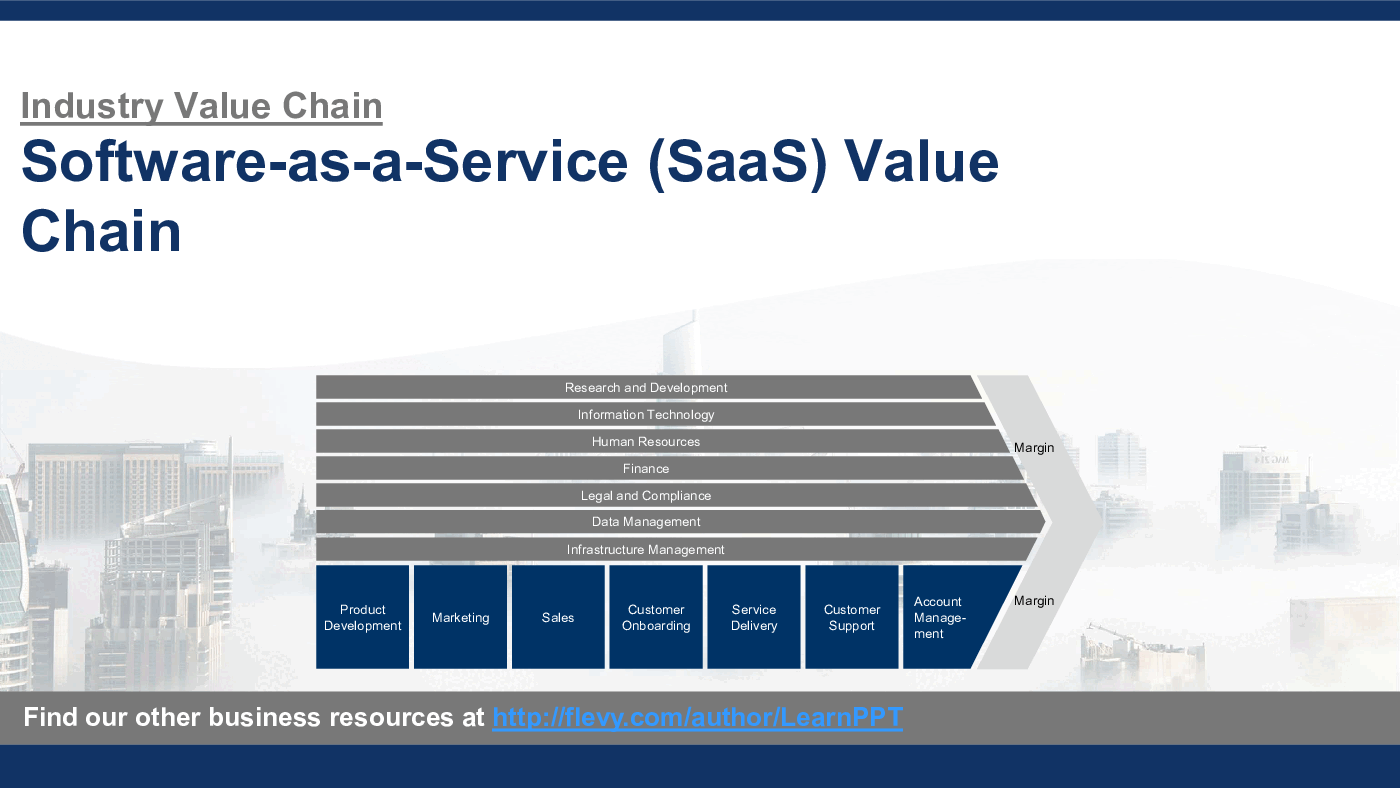
This presentation captures the Software-as-a-Service (SaaS) Value Chain, which includes the following primary and support activities for SaaS providers:
Primary Activities
1. Product Development
2. Marketing
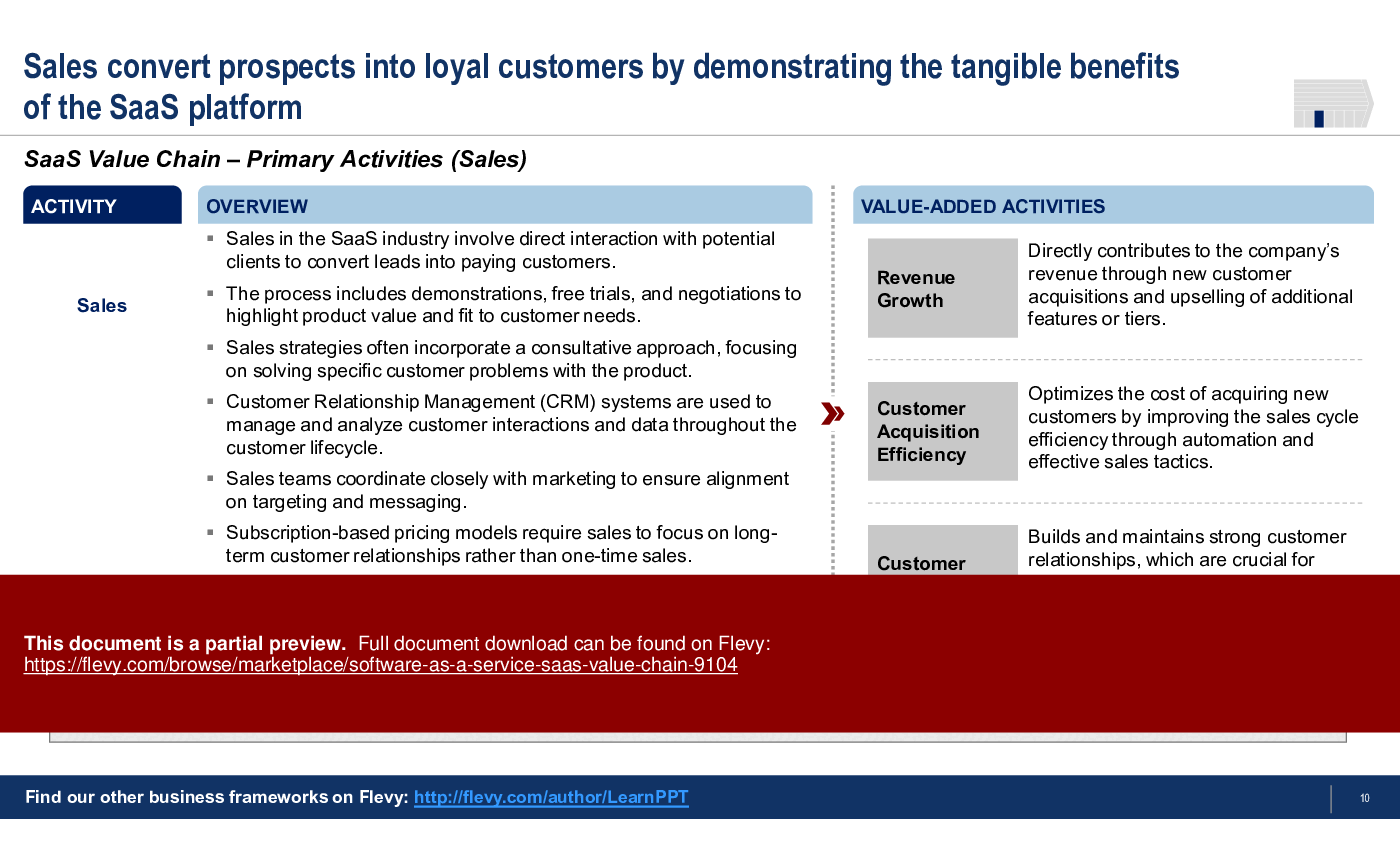
3. Sales
4. Customer Onboarding
5. Service Delivery
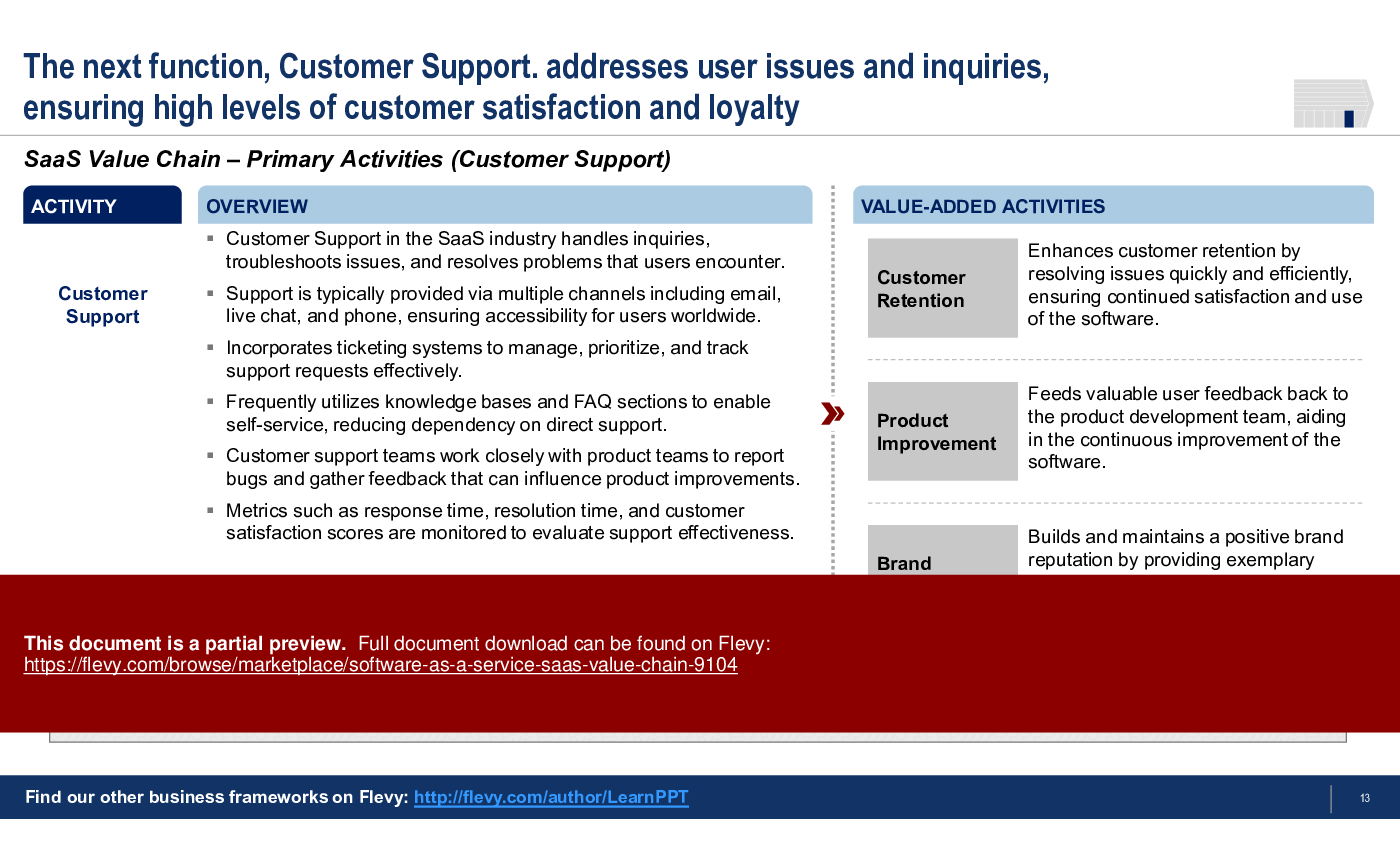
6. Customer Support
7. Account Management
Support Activities
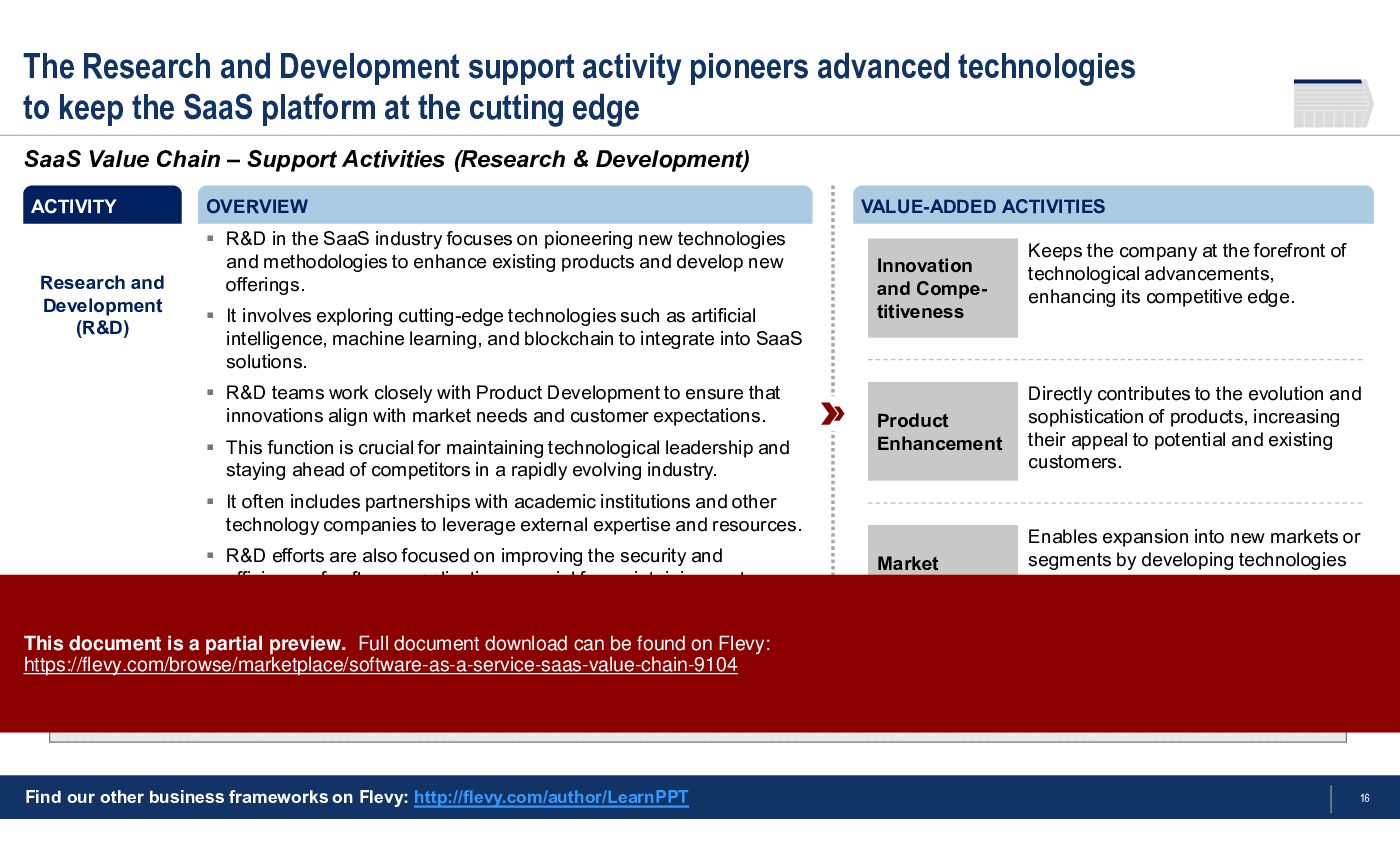
1. Research and Development
2. Information Technology
3. Human Resources
4. Finance
5. Legal and Compliance
6. Data Management
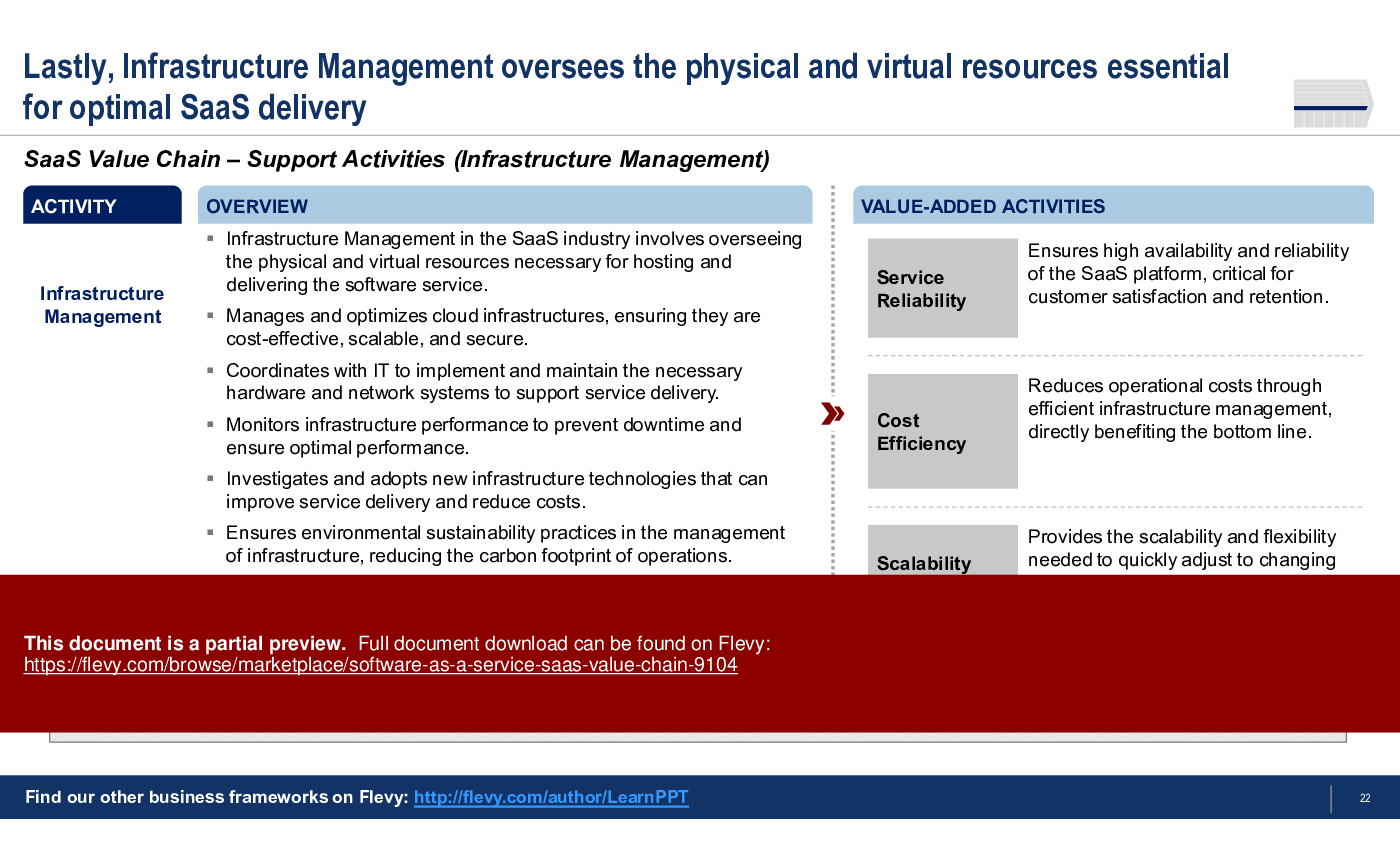
7. Infrastructure Management
This PowerPoint presentation dives deeper into each of these activities, highlighting key elements.
The SaaS Value Chain integrates continuous product innovation with agile service delivery to respond swiftly to evolving market demands and customer feedback. Additionally, effective customer onboarding and support within the SaaS Value Chain are critical for driving user adoption and long-term subscription renewal rates.
Scalability and security are the cornerstones of the SaaS Value Chain, ensuring that services can grow with customer demand without compromising data integrity. Additionally, the integration of advanced analytics and machine learning across the SaaS Value Chain enables predictive capabilities that refine customer targeting and product personalization.
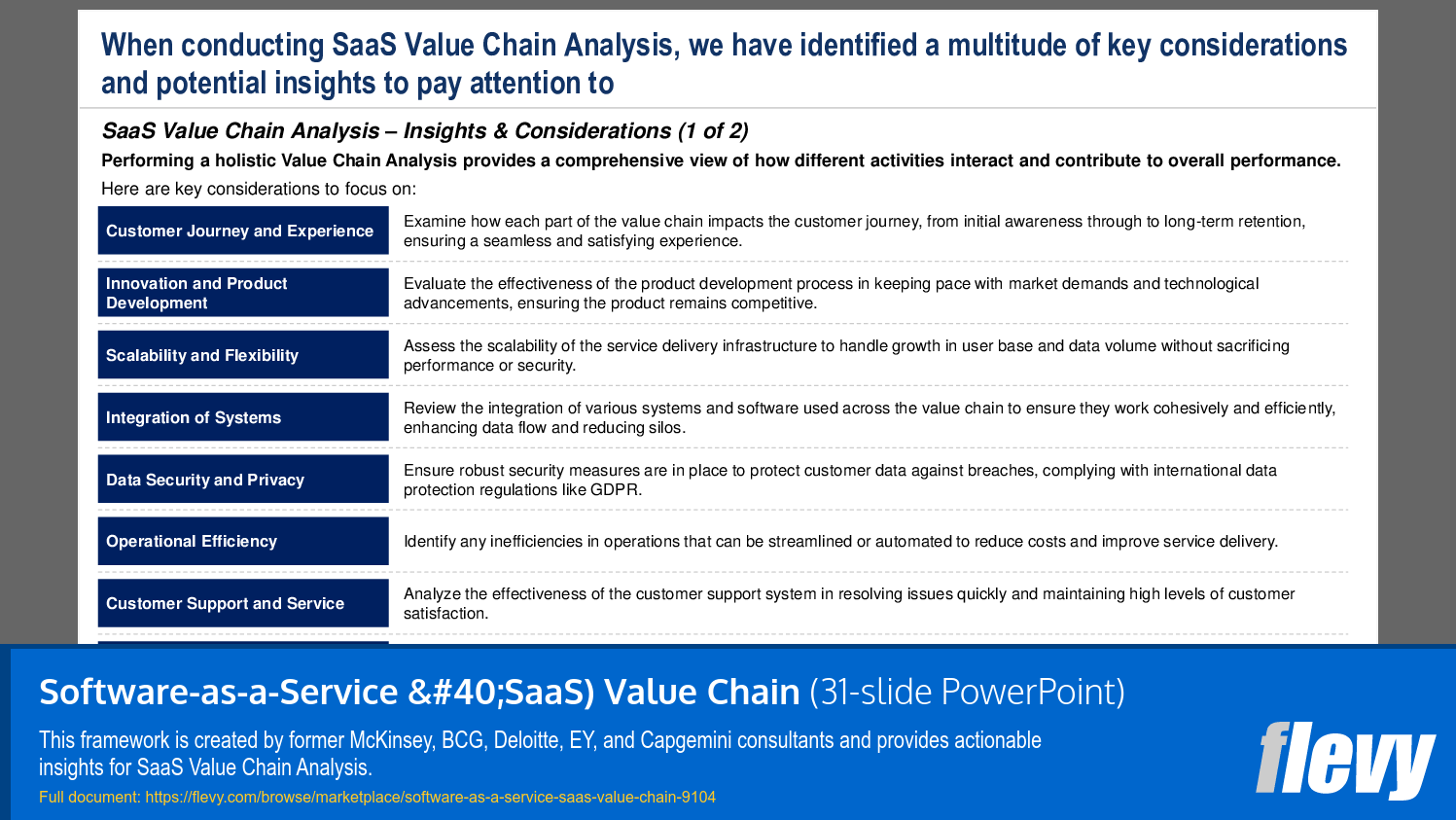
This PPT presentation also discusses SaaS Value Chain Analysis, highlighting a multitude of key considerations and potential insights to pay attention to. We further discuss the significant impact of Digital Transformation and various specific emergent technologies on the SaaS industry.
This presentation provides a comprehensive overview of the SaaS Value Chain, emphasizing the importance of strategic account management in enhancing customer lifetime value. Understanding customer needs and building strong relationships are essential for driving retention and maximizing revenue potential.
Got a question about the product? Email us at support@flevy.com or ask the author directly by using the "Ask the Author a Question" form. If you cannot view the preview above this document description, go here to view the large preview instead.
MARCUS OVERVIEW
This synopsis was written by Marcus [?] based on the analysis of the full 31-slide presentation.
Executive Summary
The Software-as-a-Service (SaaS) Value Chain presentation provides a detailed framework for understanding the essential activities that drive SaaS business models. Created by former consultants from McKinsey, Bain, and BCG, this consulting-grade resource outlines both primary and support activities that contribute to delivering SaaS products effectively. It enables executives to analyze their SaaS operations, optimize processes, and enhance customer satisfaction. By leveraging insights from this framework, organizations can improve user adoption, streamline service delivery, and ultimately drive subscription renewals.
Who This Is For and When to Use
• SaaS Executives and Leaders responsible for strategic planning and operational efficiency
• Product Managers focused on continuous improvement and innovation
• Marketing Teams aiming to enhance customer engagement and lead generation
• Sales Professionals looking to optimize conversion rates and customer relationships
• Customer Success Managers dedicated to user onboarding and retention strategies
Best-fit moments to use this deck:
• During strategic planning sessions to align SaaS operations with market demands
• For training sessions on SaaS best practices and operational efficiencies
• In workshops focused on enhancing customer experience and retention strategies
• When evaluating the effectiveness of current SaaS offerings and identifying areas for improvement
Learning Objectives
• Define the components of the SaaS Value Chain and their impact on overall performance
• Analyze primary and support activities to identify optimization opportunities
• Develop strategies for enhancing customer onboarding and support processes
• Assess the role of technology in improving service delivery and operational efficiency
• Establish metrics for measuring success across the SaaS Value Chain
• Implement best practices for continuous product innovation and market responsiveness
Table of Contents
• Executive Summary (page 1)
• Software-as-a-Service (SaaS) Value Chain (page 2)
• Primary Activities (page 3)
• Support Activities (page 4)
• Software-as-a-Service (SaaS) Value Chain Analysis (page 5)
Primary Topics Covered
• Product Development - Focuses on designing and updating software applications to meet market demands and enhance user experience.
• Marketing - Involves promoting SaaS products through digital channels to generate leads and build brand awareness.
• Sales - Converts prospects into paying customers through demonstrations and tailored solutions.
• Customer Onboarding - Ensures new users quickly realize the value of the software through effective training and resources.
• Service Delivery - Maintains the infrastructure necessary for reliable and secure SaaS solutions.
• Customer Support - Addresses user inquiries and issues to maintain high levels of customer satisfaction.
• Account Management - Nurtures long-term relationships with customers, focusing on renewals and expansions.
Deliverables, Templates, and Tools
• SaaS Value Chain framework for analyzing operational efficiency
• Customer onboarding checklist to streamline user training
• Marketing campaign templates for targeted lead generation
• Sales process documentation to enhance conversion strategies
• Customer support ticketing system guidelines for effective issue resolution
• Account management playbook for nurturing customer relationships
Slide Highlights
• Overview of the SaaS Value Chain illustrating primary and support activities
• Detailed breakdown of Product Development emphasizing agile methodologies
• Marketing strategies that leverage data analytics for customer insights
• Customer Onboarding process flowchart to enhance user experience
• Metrics dashboard for tracking customer support effectiveness
Potential Workshop Agenda
SaaS Value Chain Overview Session (60 minutes)
• Introduce the SaaS Value Chain and its significance
• Discuss primary and support activities in detail
• Identify key areas for operational improvement
Customer Onboarding Best Practices Workshop (90 minutes)
• Review current onboarding processes and identify gaps
• Develop strategies for enhancing user training and support
• Create an action plan for implementation
Marketing Effectiveness Strategy Session (60 minutes)
• Analyze current marketing efforts and ROI
• Brainstorm new strategies for lead generation and brand awareness
• Set measurable goals for upcoming campaigns
Customization Guidance
• Tailor the SaaS Value Chain framework to fit specific organizational needs and goals
• Adjust marketing and sales strategies based on customer feedback and market trends
• Modify onboarding materials to reflect unique product features and user requirements
• Implement metrics that align with company objectives for measuring success
Secondary Topics Covered
• Digital Transformation impacts on SaaS operations
• Data security and compliance considerations in the SaaS industry
• The role of advanced analytics and machine learning in enhancing user experience
• Best practices for integrating customer feedback into product development
Topic FAQ
What are the main activities I should include when mapping a SaaS value chain?
A SaaS value chain typically includes 7 primary activities: Product Development, Marketing, Sales, Customer Onboarding, Service Delivery, Customer Support, and Account Management, plus a set of support activities such as IT, R&D, HR, Finance, Legal, Data Management, and Infrastructure Management. The framework lists 7 primary activities.
What metrics are useful to track success across a SaaS value chain?
Useful metrics referenced include customer satisfaction scores, onboarding success rates, sales conversion rates, and customer retention rates. These metrics help quantify performance across development, go-to-market, support, and account management functions and are emphasized for measurement in the framework. Example metrics include onboarding success rates and retention rates.
How can data analytics and machine learning improve SaaS operations?
Data analytics and machine learning can provide predictive insights into customer behavior, improve targeting for marketing campaigns, and inform product development decisions. The presentation notes that integrating advanced analytics and ML enables predictive capabilities that refine customer targeting and product personalization using analytics and machine learning.
What should I look for in a SaaS value chain toolkit when buying templates?
Look for coverage of both primary and support activities, ready-to-use artifacts for onboarding, marketing, sales, support, and account management, a metrics dashboard, and guidance for customization. The Software-as-a-Service (SaaS) Value Chain product includes items such as a customer onboarding checklist and an account management playbook as concrete deliverables.
How do I decide between buying quick templates or a consulting-grade framework given limited time and budget?
For short timelines and constrained budgets, prioritize immediate digital downloads with actionable templates like onboarding checklists and marketing campaign templates; for longer timelines, select frameworks that include customization guidance and metrics dashboards to adapt the value chain. The deck explicitly provides customization guidance and downloadable templates.
I need to reduce churn after onboarding—what parts of the value chain should I prioritize?
Prioritize Customer Onboarding to ensure rapid time-to-value, Customer Support to address issues promptly, Service Delivery to maintain reliability and security, and Account Management to nurture renewals and expansions. The presentation supplies a customer onboarding checklist and an account management playbook for these areas.
How can marketing teams use a value chain approach to improve lead generation?
Marketing teams can map their activities within the value chain, use data analytics to refine targeting, and apply marketing campaign templates to structure digital campaigns and measure ROI. The Software-as-a-Service (SaaS) Value Chain includes marketing campaign templates and guidance on leveraging analytics for customer insights.
What role does product development and continuous innovation play in a SaaS value chain?
Product Development drives feature updates and UX improvements to meet market demands and is closely linked to customer feedback loops; continuous innovation and agile methodologies help respond to evolving needs and support long-term retention. The framework emphasizes agile product development and continuous product innovation.
Document FAQ
These are questions addressed within this presentation.
What is the SaaS Value Chain?
The SaaS Value Chain is a framework that outlines the primary and support activities necessary for delivering SaaS products effectively, highlighting how each step adds value.
How can this framework improve customer retention?
By optimizing customer onboarding and support processes, organizations can enhance user satisfaction and increase the likelihood of subscription renewals.
What are the primary activities in the SaaS Value Chain?
The primary activities include Product Development, Marketing, Sales, Customer Onboarding, Service Delivery, Customer Support, and Account Management.
How does digital transformation impact the SaaS Value Chain?
Digital transformation enhances scalability, improves customer experience through AI and machine learning, and streamlines operational processes.
What metrics should be tracked for success?
Key metrics include customer satisfaction scores, onboarding success rates, sales conversion rates, and customer retention rates.
How can organizations leverage data analytics?
Data analytics can provide insights into customer behavior, optimize marketing strategies, and inform product development efforts.
What role does customer feedback play in the SaaS Value Chain?
Customer feedback is essential for aligning product features with user needs, driving continuous improvement, and enhancing overall satisfaction.
What are the benefits of effective account management?
Effective account management fosters long-term relationships, maximizes customer lifetime value, and enhances customer loyalty.
Glossary
• SaaS - Software-as-a-Service; a software distribution model in which applications are hosted in the cloud.
• Value Chain - A series of steps an organization takes to deliver a product or service, illustrating how each step adds value.
• Customer Onboarding - The process of familiarizing new users with a software product to ensure effective usage.
• Product Development - The process of designing and improving software applications based on user feedback and market trends.
• Customer Support - Services provided to assist users with inquiries and issues related to a product.
• Account Management - The practice of nurturing relationships with existing customers to ensure satisfaction and retention.
• Digital Transformation - The integration of digital technology into all areas of a business, fundamentally changing how it operates and delivers value.
• Data Analytics - The process of examining data sets to draw conclusions and inform business decisions.
• Customer Retention - The ability of a company to retain its customers over time.
• Service Delivery - The management of services to ensure they are delivered effectively and efficiently.
• Marketing Automation - Technology that manages marketing processes and campaigns across multiple channels automatically.
• Compliance - Adherence to laws, regulations, and guidelines relevant to business operations.
This PPT slide focuses on Customer Onboarding within the SaaS framework, detailing the process of familiarizing new users with software through effective training and resources. Key components include training sessions, documentation, and support materials. Automated onboarding methods, such as emails and tutorial videos, enhance user experience and reduce the time for new users to recognize software value, which is critical for user retention. Onboarding teams collect feedback during initial user engagement to identify improvement areas, ensuring a user-centric process. Analytics assess onboarding success and its impact on user engagement and retention rates. Effective onboarding activities are categorized into Rapid Time-to-Value, User Competency, and Feedback Loop, all contributing to customer satisfaction and reduced churn, ultimately leading to successful SaaS implementation. Streamlining onboarding is essential for improving customer satisfaction and retention.
This PPT slide outlines the SaaS (Software as a Service) industry value chain, detailing 7 primary activities: Product Development, Marketing, Sales, Customer Onboarding, Service Delivery, Customer Support, and Account Management. Support activities include Research and Development, Information Technology, Human Resources, Finance, Legal and Compliance, Data Management, and Infrastructure Management, which enhance primary activities' effectiveness. Key takeaways emphasize continuous product innovation and agile service delivery for market adaptability. Effective customer onboarding and support are critical for user adoption and subscription renewals. Scalability and security are foundational for expanding services while maintaining data integrity. Advanced analytics and machine learning refine customer targeting and personalize products, enhancing customer lifetime value through strategic account management.
This PPT slide outlines key considerations for conducting a SaaS Value Chain Analysis. The "Customer Journey and Experience" emphasizes how value chain elements impact customer interactions, highlighting the importance of a seamless experience for satisfaction and loyalty. "Innovation and Product Development" stresses evaluating product development's adaptability to market demands and technological advancements, essential for competitiveness. "Scalability and Flexibility" addresses the need for service delivery infrastructure to support growth in user base and data volume, crucial for performance and security. The "Integration of Systems" section highlights the necessity for efficient collaboration among systems to enhance data flow and reduce operational silos. "Data Security and Privacy" underscores the importance of robust security measures to protect customer data and comply with regulations like GDPR. "Operational Efficiency" focuses on identifying inefficiencies for potential streamlining or automation, leading to cost reductions. Lastly, "Customer Support and Service" examines the effectiveness of support systems in resolving issues promptly, vital for high customer satisfaction.
This PPT slide analyzes the impact of digital transformation technologies on the Software-as-a-Service (SaaS) value chain. Key technologies include "Cloud Computing and Infrastructure Scalability," enabling real-time resource adjustment based on user demand for cost optimization. "Hybrid Cloud Solutions" combine public and private services, balancing flexibility, security, and cost. "Enhanced Customer Experience through AI and Machine Learning" focuses on personalized user experiences, boosting satisfaction. "Robotic Process Automation (RPA)" streamlines routine tasks like billing, reducing overhead and human error. Predictive analytics anticipate user needs, enhancing engagement and retention. "Intelligent Process Automation (IPA)" integrates AI with RPA for complex tasks, such as dynamic pricing and customer service interactions. Leveraging these technologies can significantly improve the SaaS value chain.

This PPT slide focuses on the critical role of Service Delivery in the Software-as-a-Service (SaaS) value chain. Key activities include maintaining infrastructure—data centers, servers, and networks—to ensure reliable and secure SaaS solutions. Dynamic scaling of resources based on user demand is essential for managing fluctuating workloads. Continuous monitoring and application performance management enable proactive issue detection and resolution, maintaining operational integrity and user experience. Integration of DevOps practices streamlines deployment, minimizing disruptions and ensuring service continuity in a fast-paced SaaS environment. Compliance with Service Level Agreements (SLAs) is vital for meeting service standards, fostering customer trust and satisfaction. Investing in robust cloud infrastructure and performance monitoring tools is essential for delivering high-quality SaaS solutions that meet customer expectations.
Source: Best Practices in SaaS, Value Chain Analysis PowerPoint Slides: Software-as-a-Service (SaaS) Value Chain PowerPoint (PPTX) Presentation Slide Deck, LearnPPT Consulting
This framework is created by former McKinsey, BCG, Deloitte, EY, and Capgemini consultants and provides actionable insights for SaaS Value Chain Analysis.
We are a team of management consultants trained by top tier global consulting firms (including McKinsey, BCG, Deloitte, EY, Capgemini) with a collective experience of several decades. We specialize in business frameworks based on real-life consulting engagements.
We have served 100s of clients that range from Fortune 500 companies to tech startups to
... [read more] $1B+ private companies.
Utilize our consulting frameworks to apply structured thinking & analysis to address your business challenges, uncover strategic insights, and implement workable solutions. Our PowerPoint presentations follow traditional consulting slide design formats, starting with a clear slide headline. Easily customize and repurpose our slides for your own business presentations.
Beyond business frameworks & methodologies, we also offer PowerPoint templates and other business templates. Our templates are professionally designed and have been used in thousands of deliverables & work products across hundreds of clients.
The average daily rate of a McKinsey consultant is $6,625 (not including expenses). The average price of a Flevy document is $65.
Trusted by over 10,000+ Client Organizations
Since 2012, we have provided business templates to over 10,000 businesses and organizations of all sizes, from startups and small businesses to the Fortune 100, in over 130 countries.
Read Customer Testimonials
"As a niche strategic consulting firm, Flevy and FlevyPro frameworks and documents are an on-going reference to help us structure our findings and recommendations to our clients as well as improve their clarity, strength, and visual power. For us, it is an invaluable resource to increase our impact and value."
– David Coloma, Consulting Area Manager at Cynertia Consulting
"Last Sunday morning, I was diligently working on an important presentation for a client and found myself in need of additional content and suitable templates for various types of graphics. Flevy.com proved to be a treasure trove for both content and design at a reasonable price, considering the time I

saved. I encountered a download issue during the ordering process. However, a quick email to Flevy's support team, even on a Sunday (!!!), resulted in assistance within less than an hour, allowing me to download the content I needed. Fantastic job, Flevy! I give 5 stars for both content/price and customer service. Thank you!
"
– M. E., Chief Commercial Officer, International Logistics Service Provider
"One of the great discoveries that I have made for my business is the Flevy library of training materials.
As a Lean Transformation Expert, I am always making presentations to clients on a variety of topics: Training, Transformation, Total Productive Maintenance, Culture, Coaching, Tools, Leadership Behavior, etc. Flevy
It is well worth the money to purchase these presentations. Sure, I have the knowledge and information to make my point. It is another thing to create a presentation that captures what I want to say. Flevy has saved me countless hours of preparation time that is much better spent with implementation that will actually save money for my clients.
"
– Ed Kemmerling, Senior Lean Transformation Expert at PMG
"[Flevy] produces some great work that has been/continues to be of immense help not only to myself, but as I seek to provide professional services to my clients, it gives me a large "tool box" of resources that are critical to provide them with the quality of service and outcomes they are expecting."
– Royston Knowles, Executive with 50+ Years of Board Level Experience
"As a consultant requiring up to date and professional material that will be of value and use to my clients, I find Flevy a very reliable resource.
The variety and quality of material available through Flevy offers a very useful and commanding source for information. Using Flevy saves me time, enhances my expertise and ends up being a good decision."
– Dennis Gershowitz, Principal at DG Associates
"Flevy is now a part of my business routine. I visit Flevy at least 3 times each month.
Flevy has become my preferred learning source, because what it provides is practical, current, and useful in this era where the business world is being rewritten.
many challenges and there is the need to make the right decisions in a short time, with so much scattered information, we are fortunate to have Flevy. Flevy investigates, selects, and puts at our disposal the best of the best to help us be successful in our work.
"
– Omar Hernán Montes Parra, CEO at Quantum SFE
"As a small business owner, the resource material available from FlevyPro has proven to be invaluable. The ability to search for material on demand based our project events and client requirements was great for me and proved very beneficial to my clients. Importantly, being able to easily edit and tailor
the material for specific purposes helped us to make presentations, knowledge sharing, and toolkit development, which formed part of the overall program collateral. While FlevyPro contains resource material that any consultancy, project or delivery firm must have, it is an essential part of a small firm or independent consultant's toolbox.
"
– Michael Duff, Managing Director at Change Strategy (UK)
"As a young consulting firm, requests for input from clients vary and it's sometimes impossible to provide expert solutions across a broad spectrum of requirements. That was before I discovered Flevy.com.
Through subscription to this invaluable site of a plethora of topics that are key and crucial to consulting, I
have been able to exceed expectations and deliver quality advice and solutions to my clients. The quality and expertise of the authors are exemplary and gives me great confidence to use as part of my service offerings.
I highly recommend this company for any consultant wanting to apply international best practice standards in their service offerings.
"
– Nishi Singh, Strategist and MD at NSP Consultants
Download our FREE Digital Transformation Templates
Download our free compilation of 50+ Digital Transformation slides and templates. DX concepts covered include Digital Leadership, Digital Maturity, Digital Value Chain, Customer Experience, Customer Journey, RPA, etc.