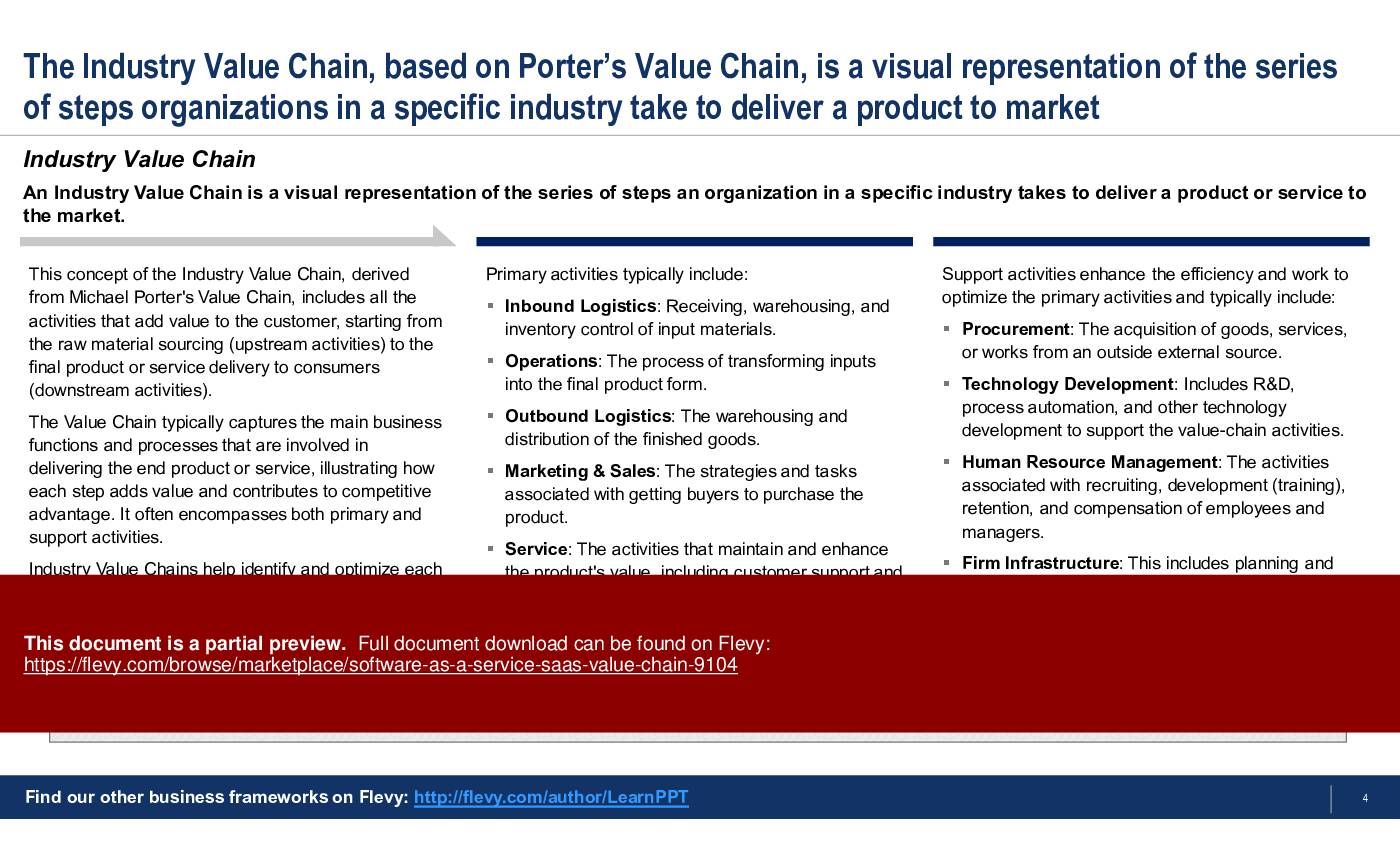

An Industry Value Chain is a visual representation of the series of steps an organization in a specific industry takes to deliver a product or service to the market. It captures the main business functions and processes that are involved in delivering the end product or service, illustrating how each step adds value and contributes to a Competitive Advantage. It often encompasses both primary and support activities.

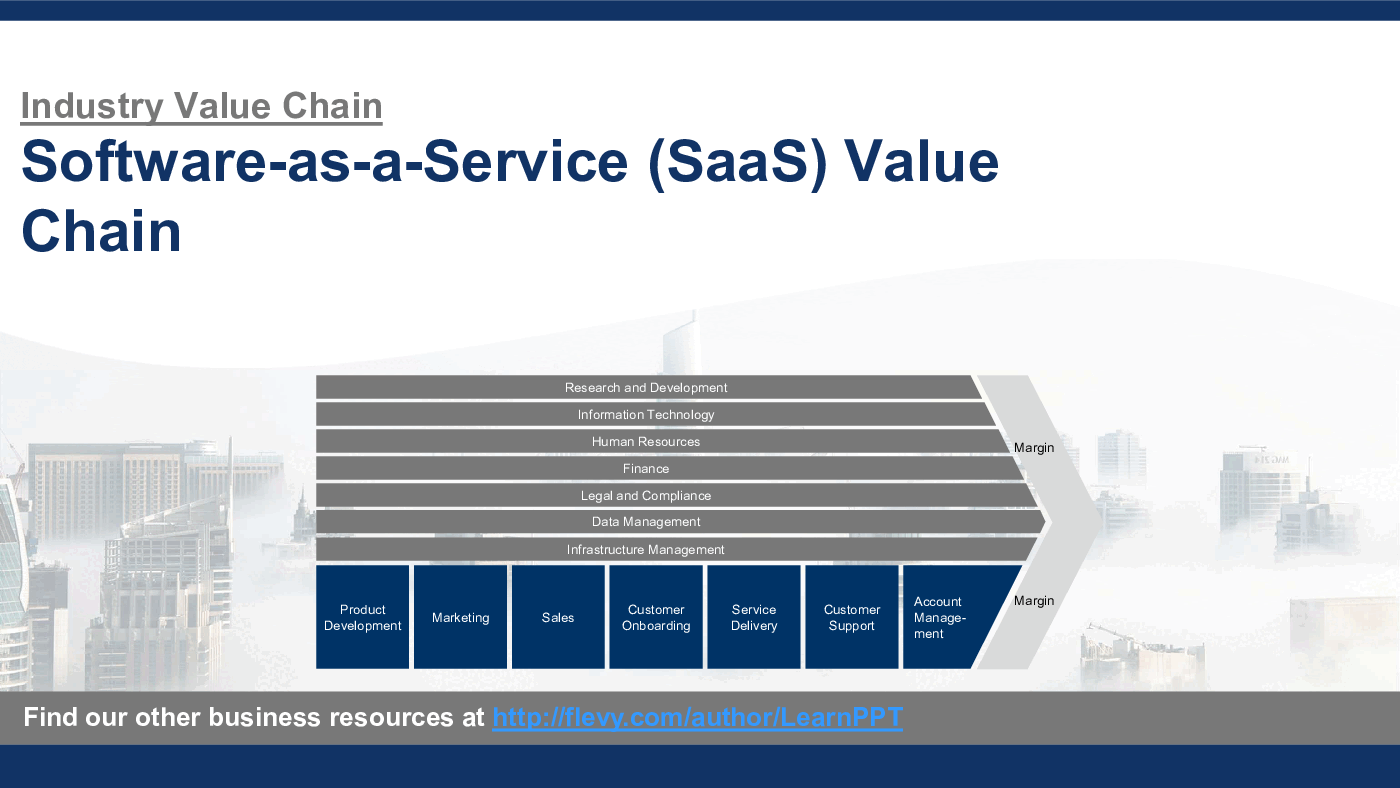
This presentation captures the Software-as-a-Service (SaaS) Value Chain, which includes the following primary and support activities for SaaS providers:
Primary Activities
1. Product Development
2. Marketing
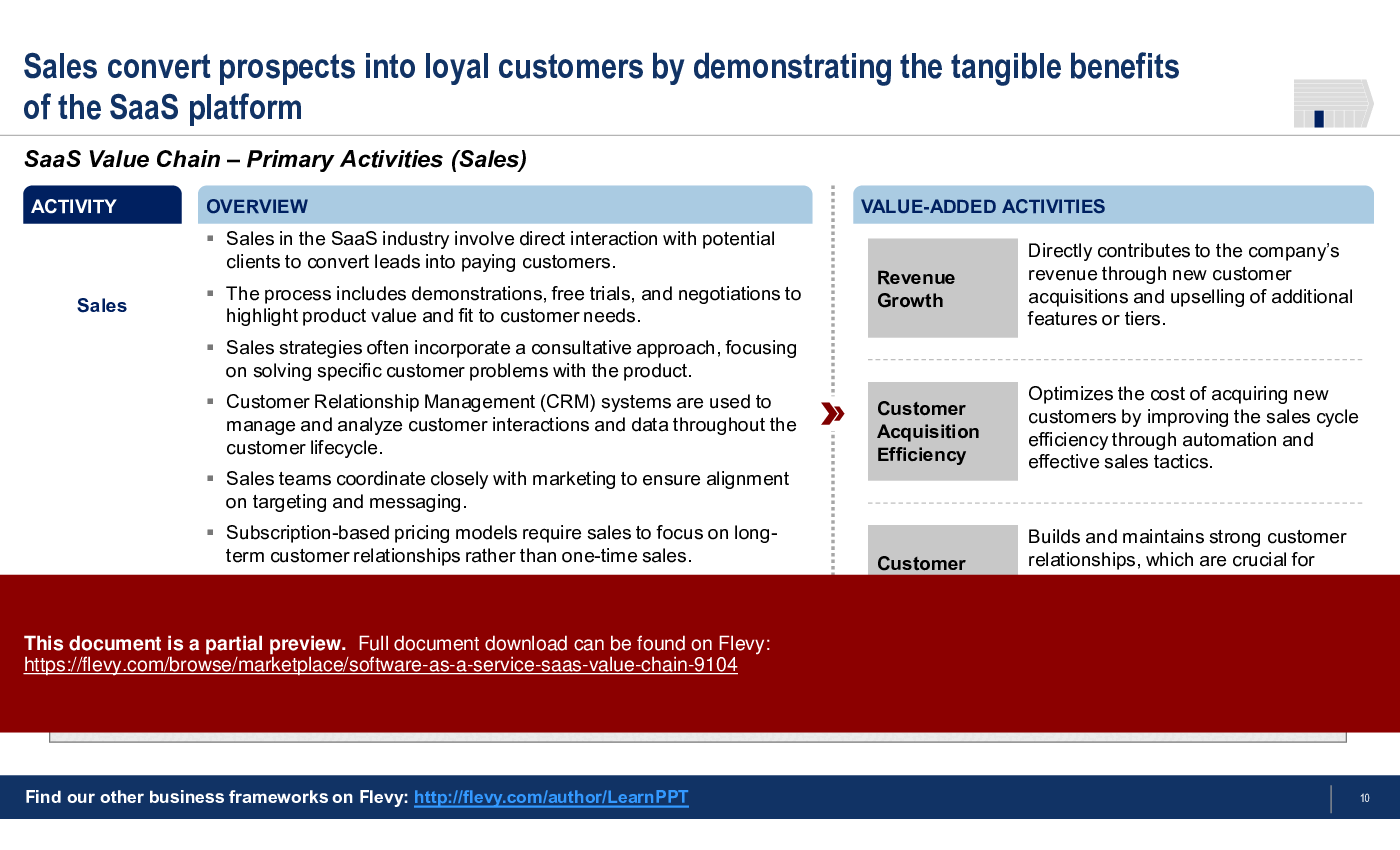
3. Sales
4. Customer Onboarding
5. Service Delivery
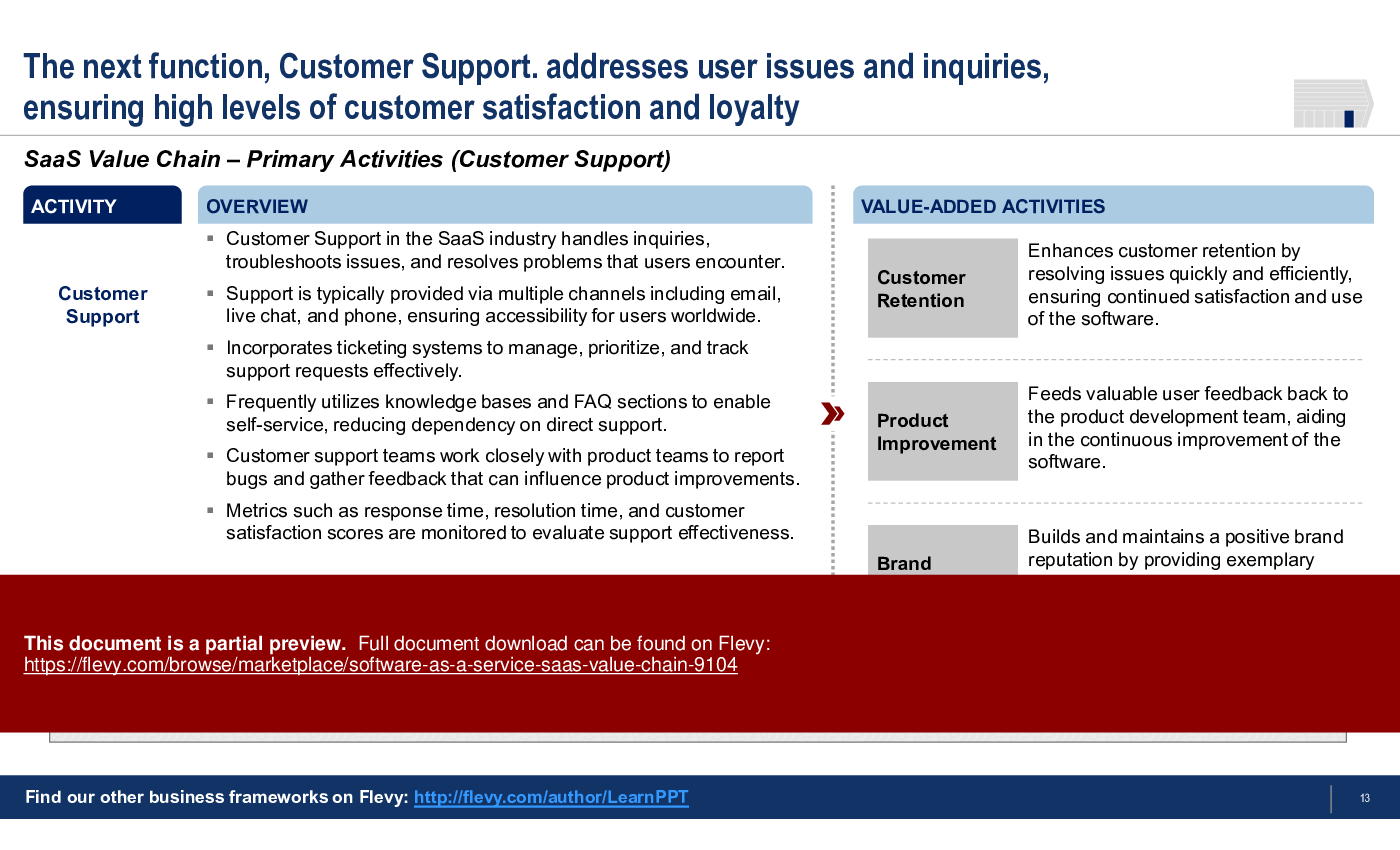
6. Customer Support
7. Account Management
Support Activities
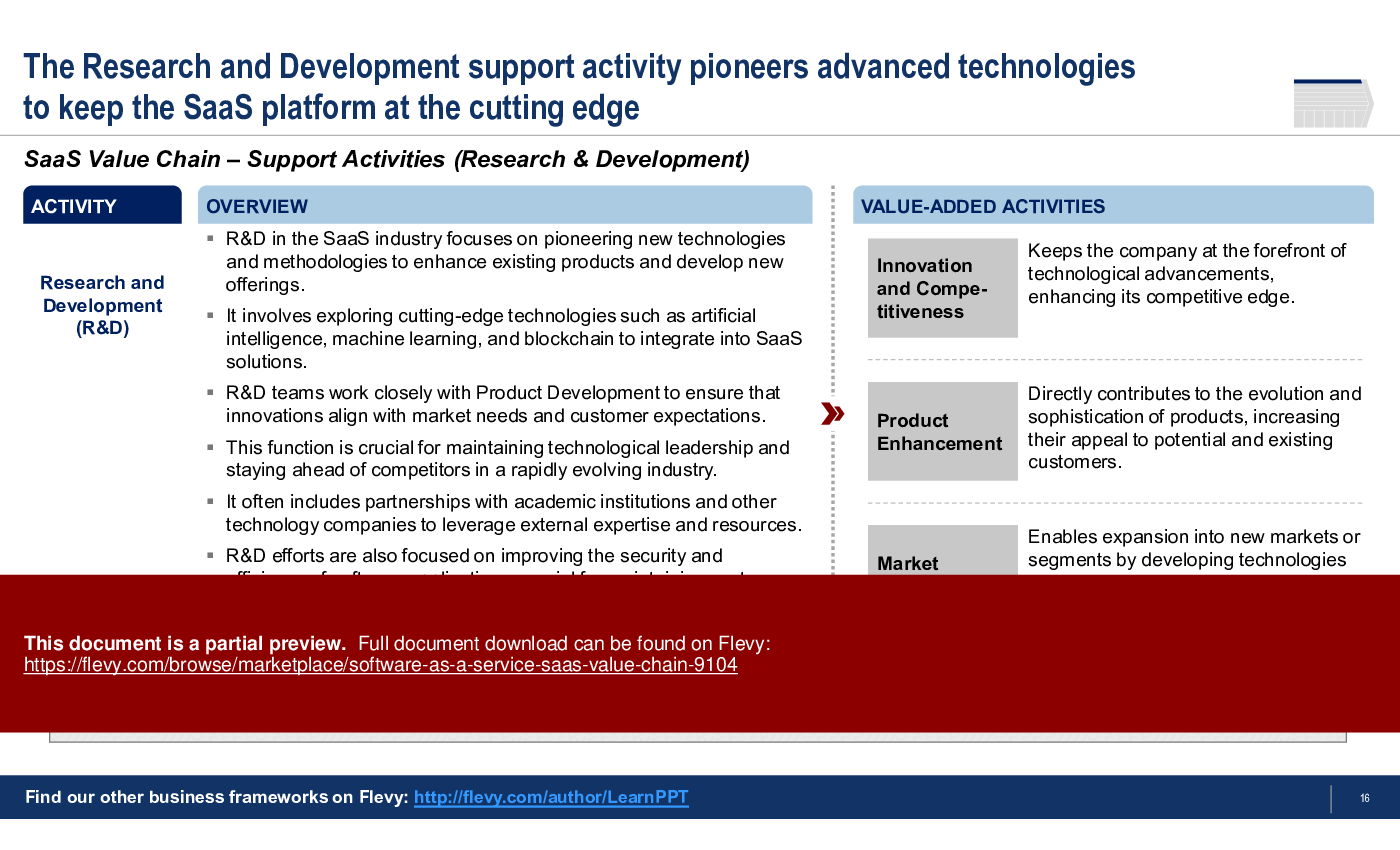
1. Research and Development
2. Information Technology
3. Human Resources
4. Finance
5. Legal and Compliance
6. Data Management
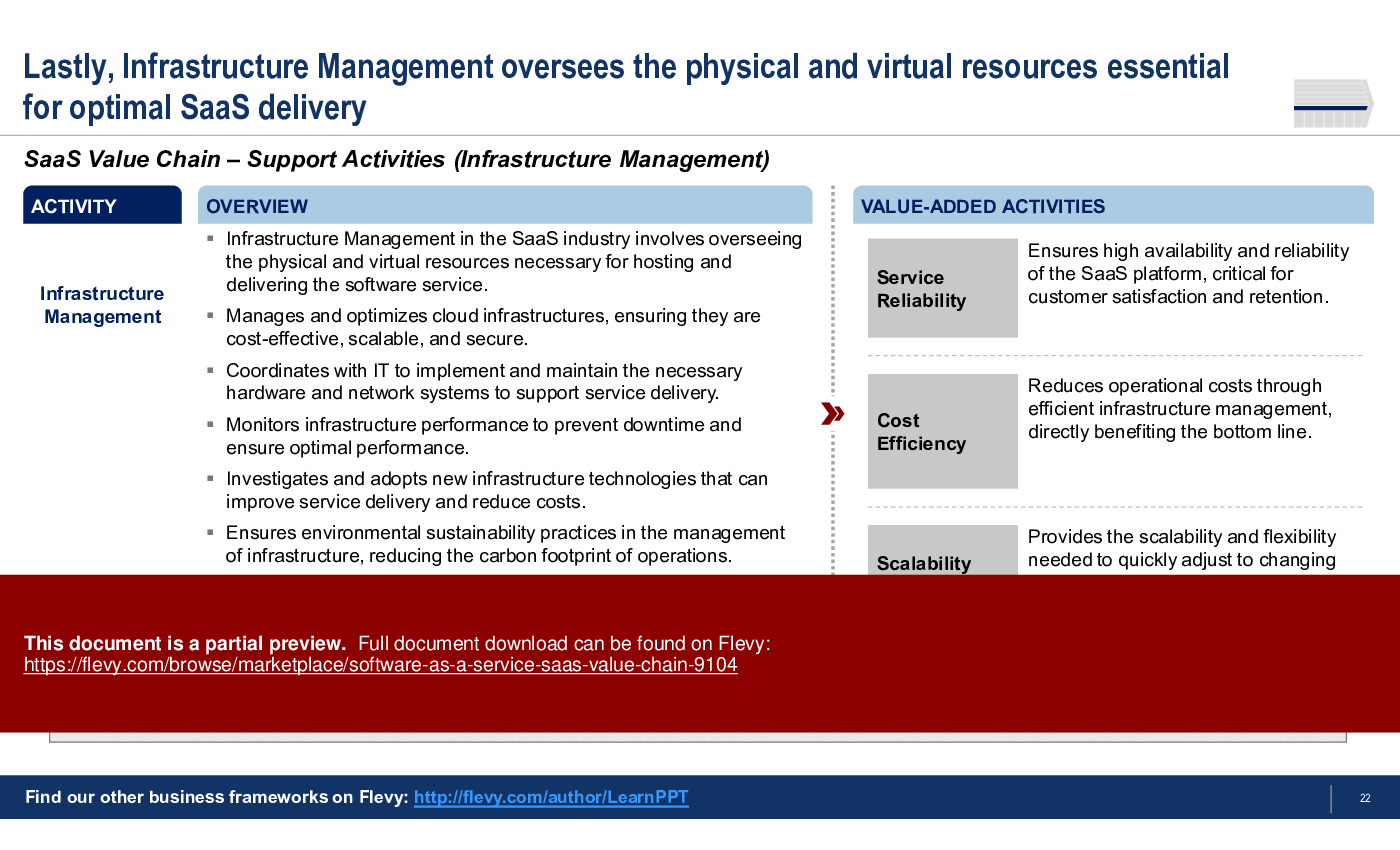
7. Infrastructure Management
This PowerPoint presentation dives deeper into each of these activities, highlighting key elements.
The SaaS Value Chain integrates continuous product innovation with agile service delivery to respond swiftly to evolving market demands and customer feedback. Additionally, effective customer onboarding and support within the SaaS Value Chain are critical for driving user adoption and long-term subscription renewal rates.
Scalability and security are the cornerstones of the SaaS Value Chain, ensuring that services can grow with customer demand without compromising data integrity. Additionally, the integration of advanced analytics and machine learning across the SaaS Value Chain enables predictive capabilities that refine customer targeting and product personalization.
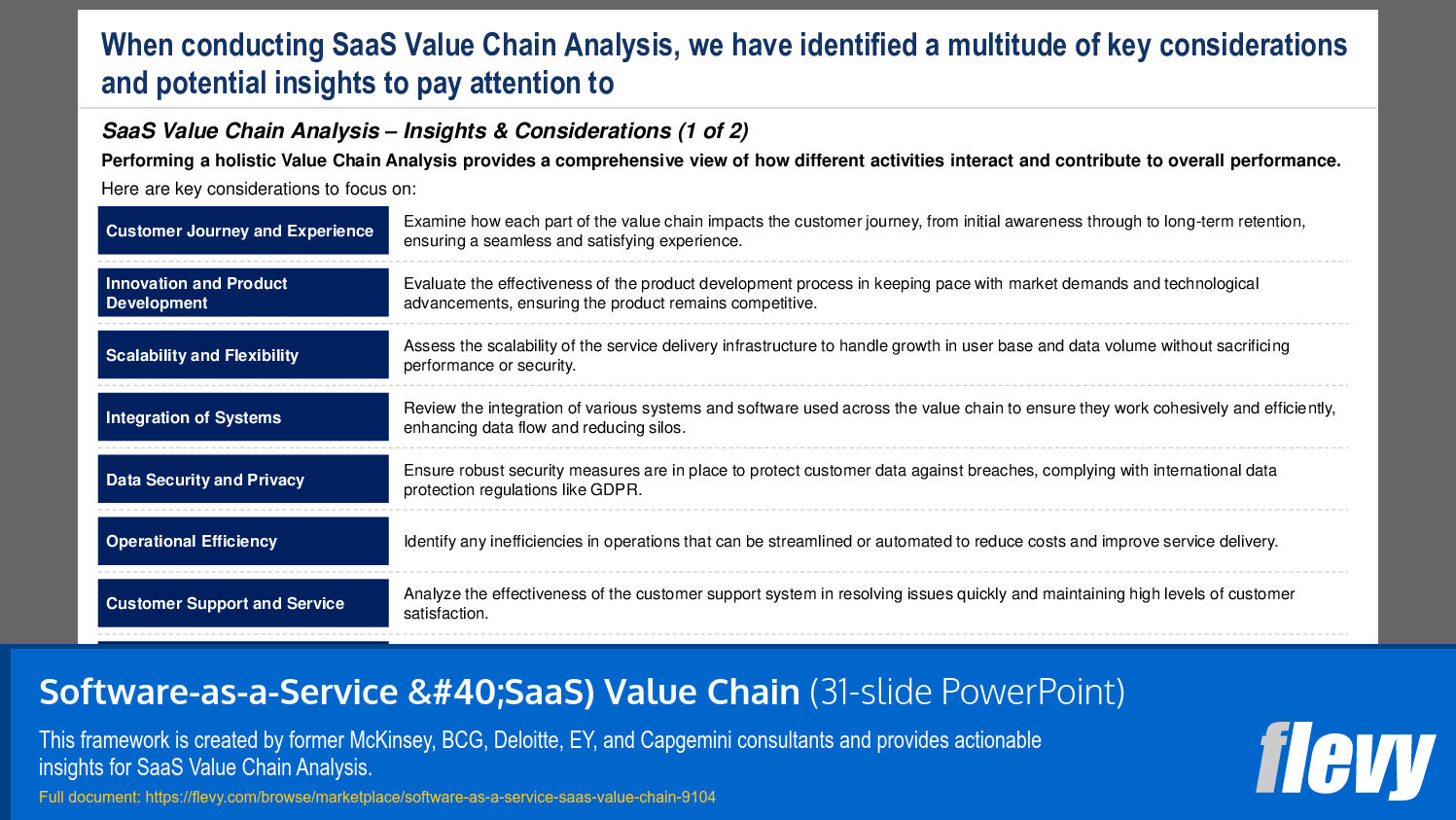
This PPT presentation also discusses SaaS Value Chain Analysis, highlighting a multitude of key considerations and potential insights to pay attention to. We further discuss the significant impact of Digital Transformation and various specific emergent technologies on the SaaS industry.
This presentation provides a comprehensive overview of the SaaS Value Chain, emphasizing the importance of strategic account management in enhancing customer lifetime value. Understanding customer needs and building strong relationships are essential for driving retention and maximizing revenue potential.
Got a question about the product? Email us at support@flevy.com or ask the author directly by using the "Ask the Author a Question" form. If you cannot view the preview above this document description, go here to view the large preview instead.
Executive Summary
The Software-as-a-Service (SaaS) Value Chain presentation provides a detailed framework for understanding the essential activities that drive SaaS business models. Created by former consultants from McKinsey, Bain, and BCG, this consulting-grade resource outlines both primary and support activities that contribute to delivering SaaS products effectively. It enables executives to analyze their SaaS operations, optimize processes, and enhance customer satisfaction. By leveraging insights from this framework, organizations can improve user adoption, streamline service delivery, and ultimately drive subscription renewals.
Who This Is For and When to Use
• SaaS Executives and Leaders responsible for strategic planning and operational efficiency
• Product Managers focused on continuous improvement and innovation
• Marketing Teams aiming to enhance customer engagement and lead generation
• Sales Professionals looking to optimize conversion rates and customer relationships
• Customer Success Managers dedicated to user onboarding and retention strategies
Best-fit moments to use this deck:
• During strategic planning sessions to align SaaS operations with market demands
• For training sessions on SaaS best practices and operational efficiencies
• In workshops focused on enhancing customer experience and retention strategies
• When evaluating the effectiveness of current SaaS offerings and identifying areas for improvement
Learning Objectives
• Define the components of the SaaS Value Chain and their impact on overall performance
• Analyze primary and support activities to identify optimization opportunities
• Develop strategies for enhancing customer onboarding and support processes
• Assess the role of technology in improving service delivery and operational efficiency
• Establish metrics for measuring success across the SaaS Value Chain
• Implement best practices for continuous product innovation and market responsiveness
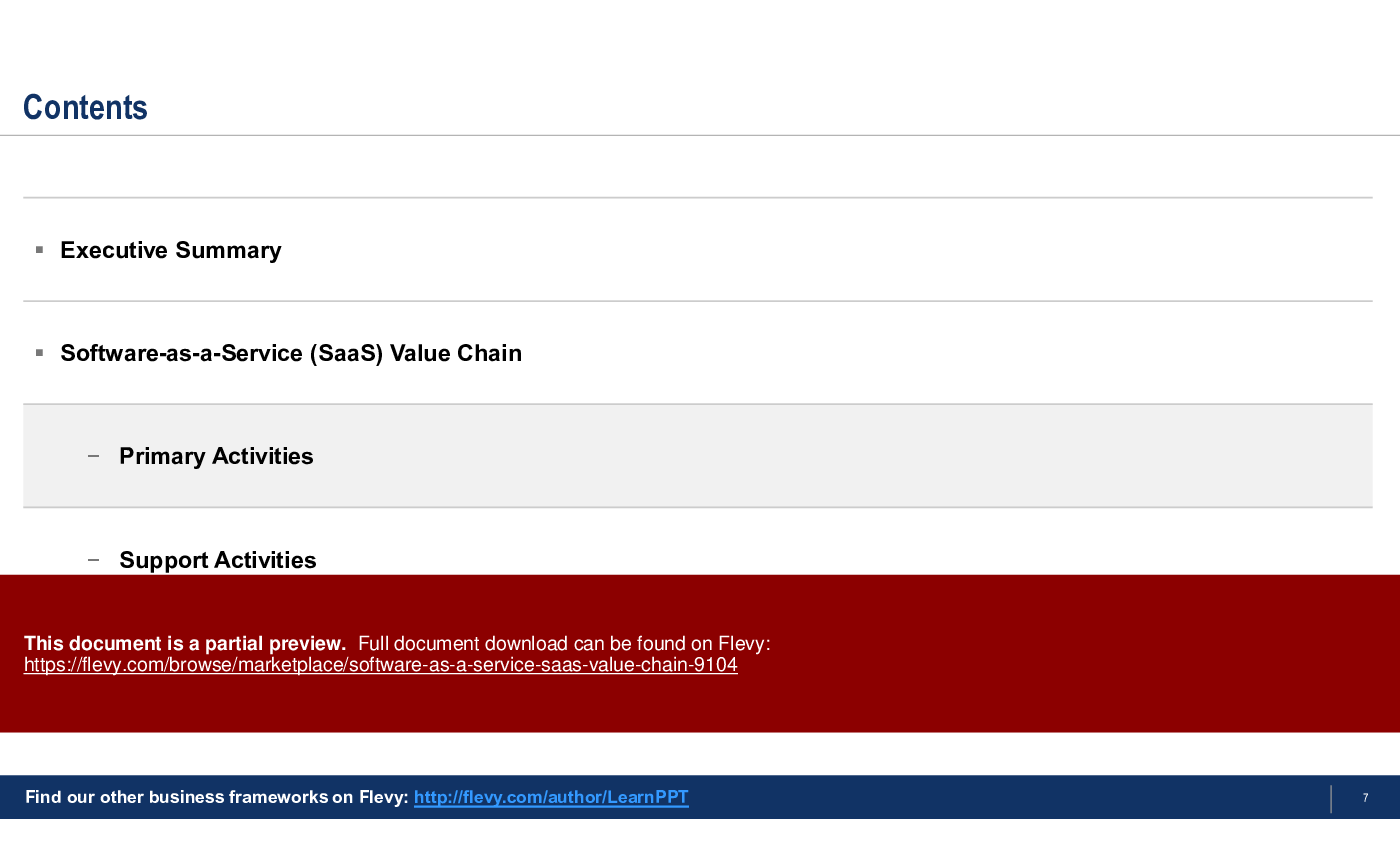
Table of Contents
• Executive Summary (page 1)
• Software-as-a-Service (SaaS) Value Chain (page 2)
• Primary Activities (page 3)
• Support Activities (page 4)
• Software-as-a-Service (SaaS) Value Chain Analysis (page 5)
Primary Topics Covered
• Product Development - Focuses on designing and updating software applications to meet market demands and enhance user experience.
• Marketing - Involves promoting SaaS products through digital channels to generate leads and build brand awareness.
• Sales - Converts prospects into paying customers through demonstrations and tailored solutions.
• Customer Onboarding - Ensures new users quickly realize the value of the software through effective training and resources.
• Service Delivery - Maintains the infrastructure necessary for reliable and secure SaaS solutions.
• Customer Support - Addresses user inquiries and issues to maintain high levels of customer satisfaction.
• Account Management - Nurtures long-term relationships with customers, focusing on renewals and expansions.
Deliverables, Templates, and Tools
• SaaS Value Chain framework for analyzing operational efficiency
• Customer onboarding checklist to streamline user training
• Marketing campaign templates for targeted lead generation
• Sales process documentation to enhance conversion strategies
• Customer support ticketing system guidelines for effective issue resolution
• Account management playbook for nurturing customer relationships
Slide Highlights
• Overview of the SaaS Value Chain illustrating primary and support activities
• Detailed breakdown of Product Development emphasizing agile methodologies
• Marketing strategies that leverage data analytics for customer insights
• Customer Onboarding process flowchart to enhance user experience
• Metrics dashboard for tracking customer support effectiveness
Potential Workshop Agenda
SaaS Value Chain Overview Session (60 minutes)
• Introduce the SaaS Value Chain and its significance
• Discuss primary and support activities in detail
• Identify key areas for operational improvement
Customer Onboarding Best Practices Workshop (90 minutes)
• Review current onboarding processes and identify gaps
• Develop strategies for enhancing user training and support
• Create an action plan for implementation
Marketing Effectiveness Strategy Session (60 minutes)
• Analyze current marketing efforts and ROI
• Brainstorm new strategies for lead generation and brand awareness
• Set measurable goals for upcoming campaigns
Customization Guidance
• Tailor the SaaS Value Chain framework to fit specific organizational needs and goals
• Adjust marketing and sales strategies based on customer feedback and market trends
• Modify onboarding materials to reflect unique product features and user requirements
• Implement metrics that align with company objectives for measuring success
Secondary Topics Covered
• Digital Transformation impacts on SaaS operations
• Data security and compliance considerations in the SaaS industry
• The role of advanced analytics and machine learning in enhancing user experience
• Best practices for integrating customer feedback into product development
FAQ
What is the SaaS Value Chain?
The SaaS Value Chain is a framework that outlines the primary and support activities necessary for delivering SaaS products effectively, highlighting how each step adds value.
How can this framework improve customer retention?
By optimizing customer onboarding and support processes, organizations can enhance user satisfaction and increase the likelihood of subscription renewals.
What are the primary activities in the SaaS Value Chain?
The primary activities include Product Development, Marketing, Sales, Customer Onboarding, Service Delivery, Customer Support, and Account Management.
How does digital transformation impact the SaaS Value Chain?
Digital transformation enhances scalability, improves customer experience through AI and machine learning, and streamlines operational processes.
What metrics should be tracked for success?
Key metrics include customer satisfaction scores, onboarding success rates, sales conversion rates, and customer retention rates.
How can organizations leverage data analytics?
Data analytics can provide insights into customer behavior, optimize marketing strategies, and inform product development efforts.
What role does customer feedback play in the SaaS Value Chain?
Customer feedback is essential for aligning product features with user needs, driving continuous improvement, and enhancing overall satisfaction.
What are the benefits of effective account management?
Effective account management fosters long-term relationships, maximizes customer lifetime value, and enhances customer loyalty.
Glossary
• SaaS - Software-as-a-Service; a software distribution model in which applications are hosted in the cloud.
• Value Chain - A series of steps an organization takes to deliver a product or service, illustrating how each step adds value.
• Customer Onboarding - The process of familiarizing new users with a software product to ensure effective usage.
• Product Development - The process of designing and improving software applications based on user feedback and market trends.
• Customer Support - Services provided to assist users with inquiries and issues related to a product.
• Account Management - The practice of nurturing relationships with existing customers to ensure satisfaction and retention.
• Digital Transformation - The integration of digital technology into all areas of a business, fundamentally changing how it operates and delivers value.
• Data Analytics - The process of examining data sets to draw conclusions and inform business decisions.
• Customer Retention - The ability of a company to retain its customers over time.
• Service Delivery - The management of services to ensure they are delivered effectively and efficiently.
• Marketing Automation - Technology that manages marketing processes and campaigns across multiple channels automatically.
• Compliance - Adherence to laws, regulations, and guidelines relevant to business operations.
Source: Best Practices in SaaS, Value Chain Analysis PowerPoint Slides: Software-as-a-Service (SaaS) Value Chain PowerPoint (PPTX) Presentation Slide Deck, LearnPPT Consulting
|
Download our FREE Digital Transformation Templates
Download our free compilation of 50+ Digital Transformation slides and templates. DX concepts covered include Digital Leadership, Digital Maturity, Digital Value Chain, Customer Experience, Customer Journey, RPA, etc. |