
PSL-PI: PFEP - Plan for Every Part Presentation   33-slide PPT PowerPoint presentation template (PPT)
$25.00

PSL-PI: PFEP - Plan for Every Part Presentation (33-slide PPT PowerPoint presentation slide deck (PPT)) Preview Image
Log in to unlock full preview.
PSL-PI: PFEP - Plan for Every Part Presentation (33-slide PPT PowerPoint presentation slide deck (PPT)) Preview Image
Arrow   Click main image to view in full screen.

PSL-PI: PFEP - Plan for Every Part Presentation – PowerPoint PPT Template

PowerPoint (PPT) + Word (DOCX) 33 Slides

$25.00
This presentation is developed by a pioneer in Lean and certified LSS Master Black Belt who has trained over 5,000+ students globally, from Directors, CEOs, GMs, to shop floor staff. He's endorsed by CMI Consortium, NZTE, HERA, NZPICS, CBAFF.
Add to Cart


Immediate download
Fully editable PowerPoint
Free lifetime updates

BENEFITS OF THIS DOWNLOADABLE POWERPOINT DOCUMENT

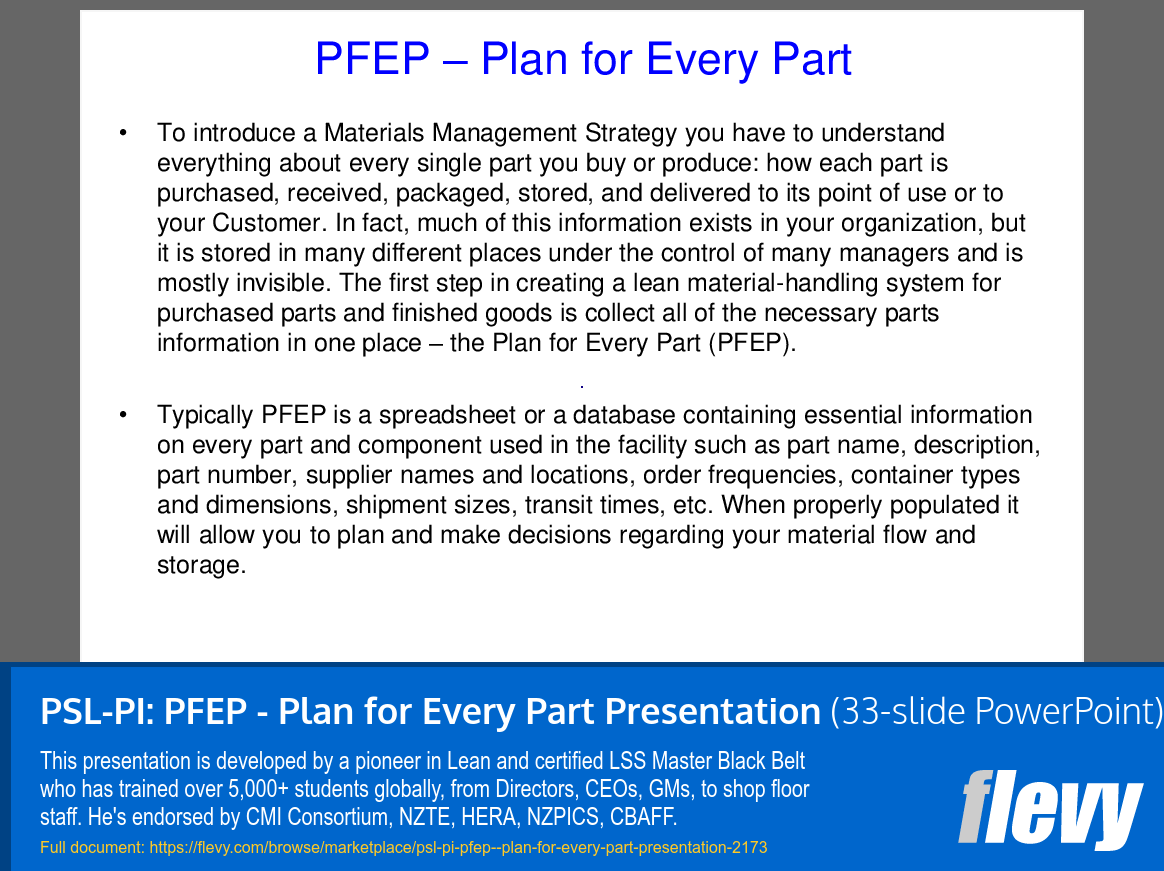
  1. Plan for Every Part - How to Implement
  2. Materials Control in Supply Chain
  3. Lean Supply Chain - Planning for each part

SUPPLY CHAIN RESILIENCE PPT TEMPLATE DESCRIPTION

Editor Summary A 33-slide PowerPoint presentation (PPT) with a supplemental DOCX, PSL-PI: PFEP - Plan for Every Part Presentation by OpEx Academy NZ, provides a structured approach to creating and sustaining a PFEP system. Read more

This presentation has 32 slides in all and covers the following topics:

Why PFEP – Benefits
Develop an Implementation Plan
Create a future state VSM
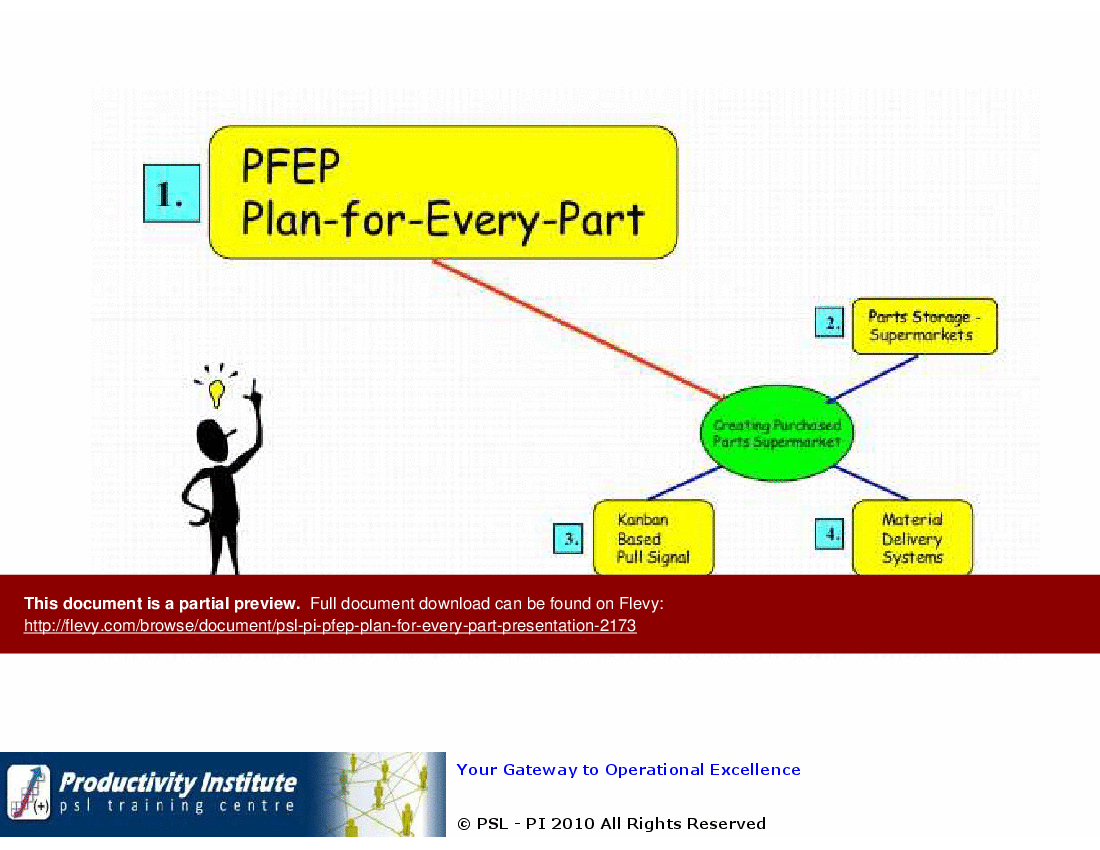
Plan For Every Part – Implementation
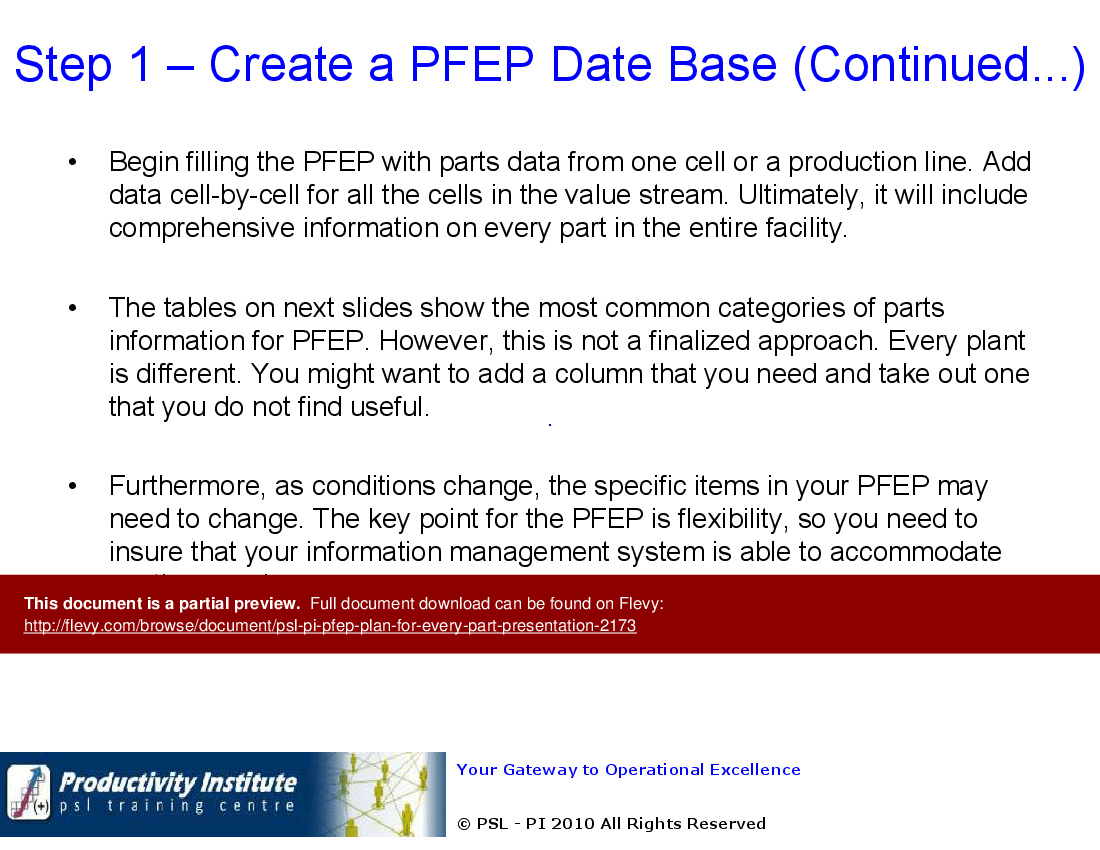
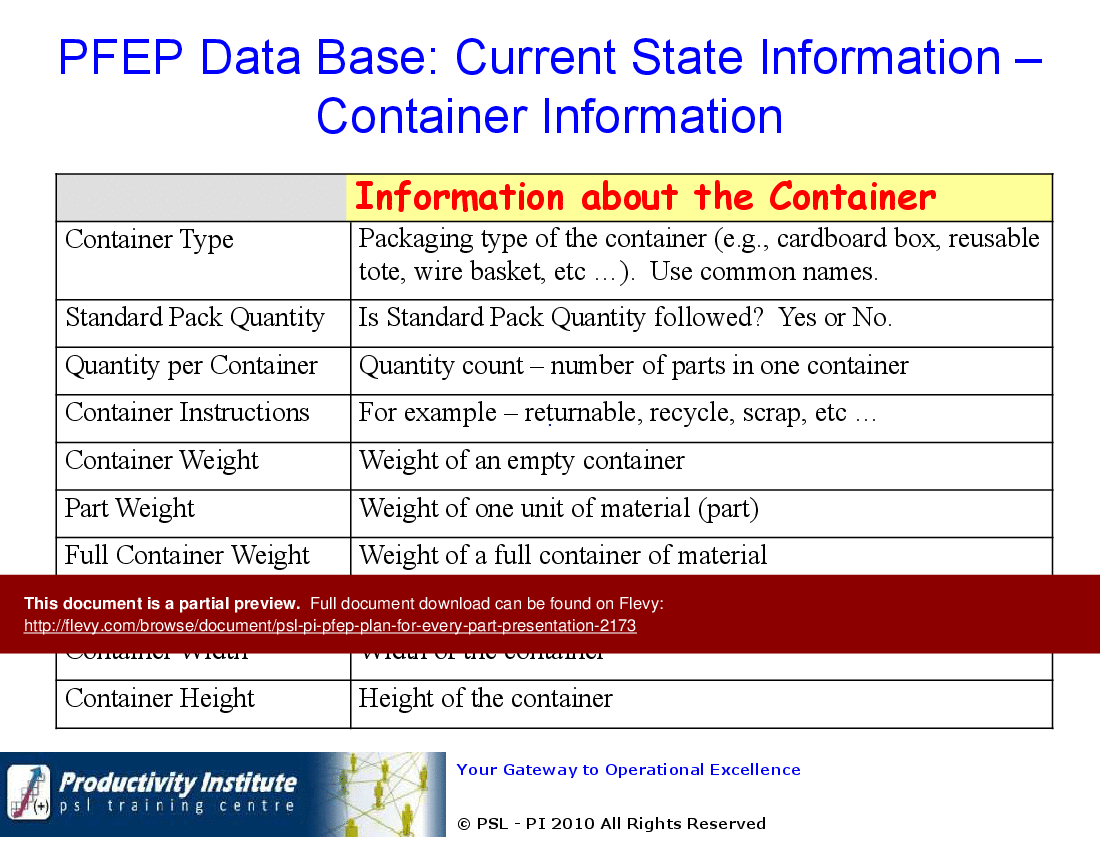
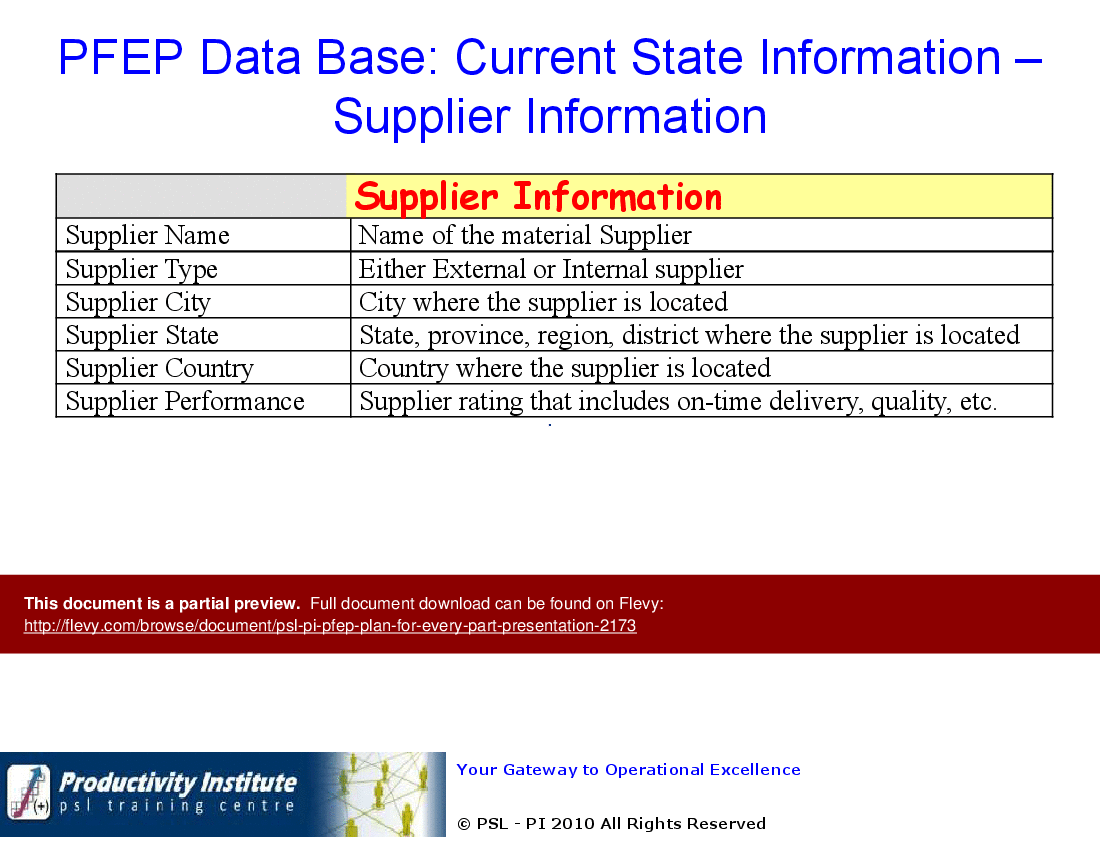
Step 1: Create PFEP Database – Current State (Part, Container, Shipping, Supplier, Consumption, Part Readiness and Cost & Inventory)
Step 2: Create a "PLAN" for Every Part
Step 3: Sustaining and Maintaining Integrity of the Database
PFEP Change Request Form (Sample Form Attached)
Why a Change Request Form?
Keys to Success

A Word Document showing the Change Request form is attached to this document.

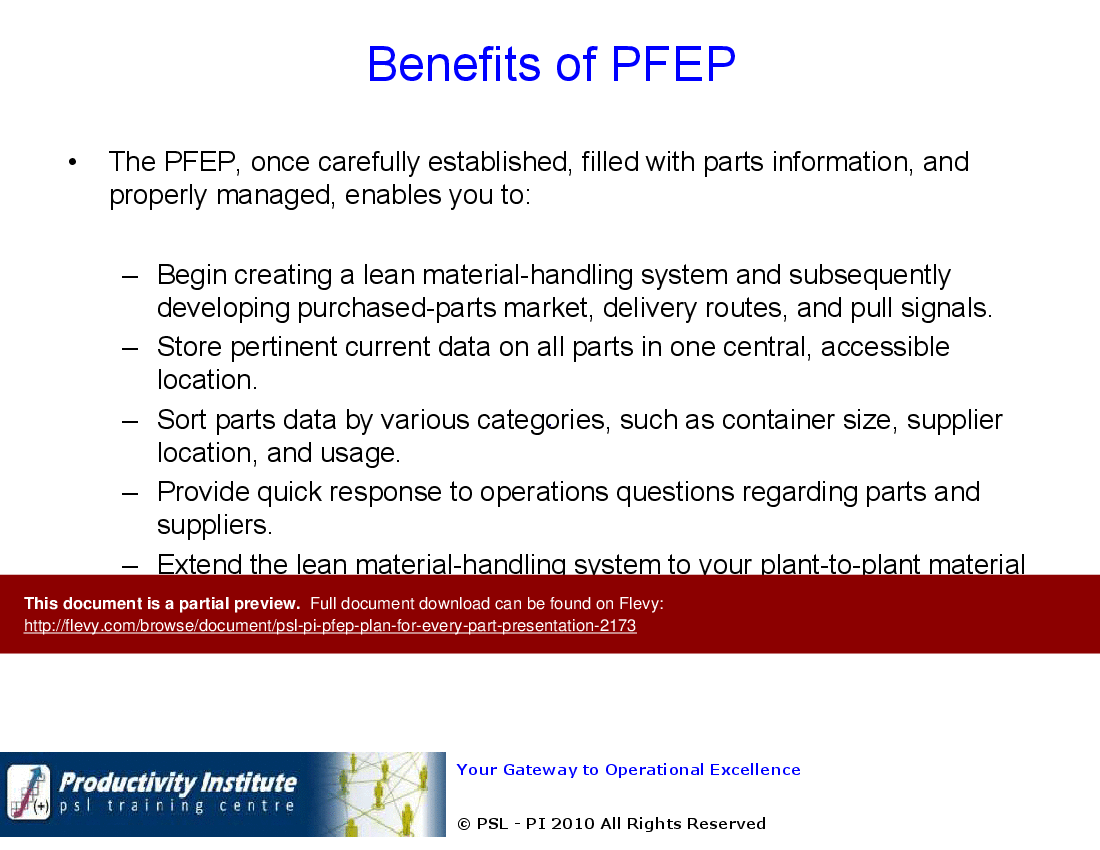
This presentation provides a comprehensive guide to establishing a Plan for Every Part (PFEP) system, which is crucial for optimizing material handling and inventory management. It emphasizes the importance of creating a lean material-handling system, storing all pertinent data in a central location, and sorting parts data by various categories. The PPT outlines the steps necessary to develop and maintain a PFEP database, ensuring quick responses to operational questions and extending the lean material-handling system across multiple facilities.

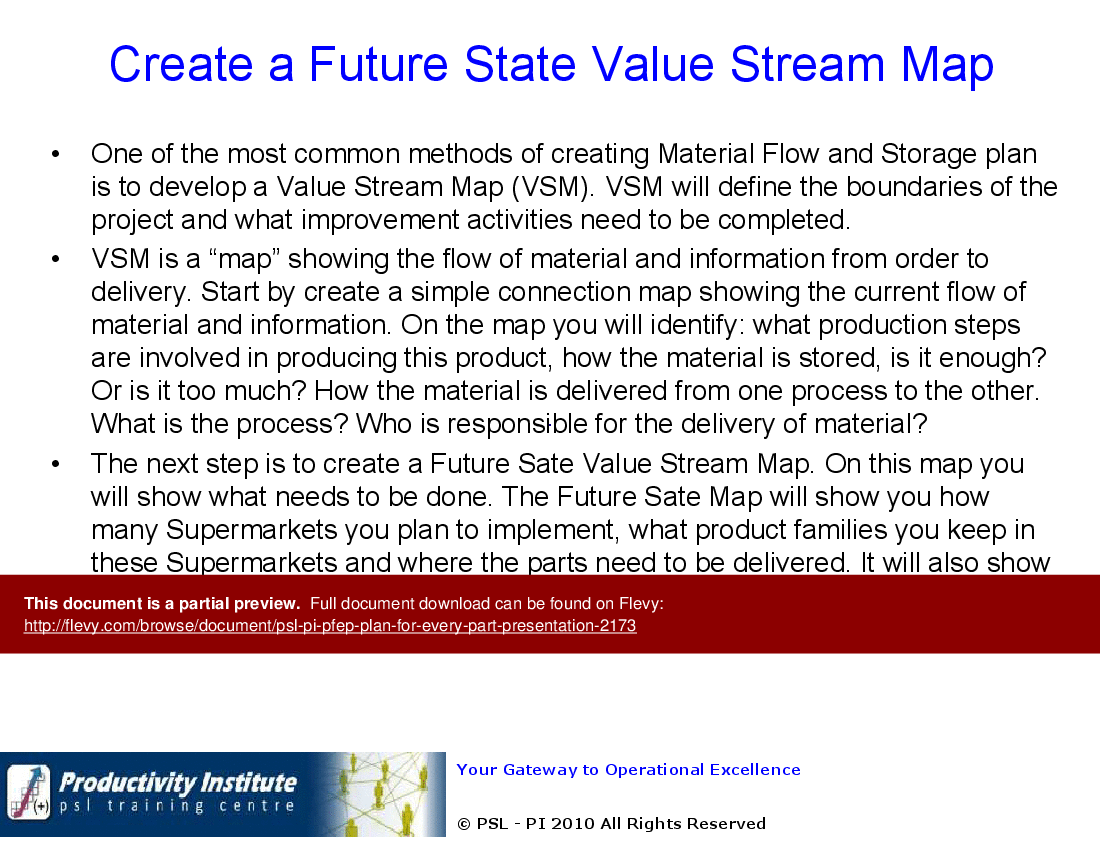
The document delves into the creation of a Future State Value Stream Map (VSM), a tool that visualizes the flow of materials and information. This map helps identify production steps, storage methods, and delivery processes, providing a clear roadmap for future improvements. The presentation also highlights the need for a user-friendly database with sorting capabilities, which can be integrated into the company's MRP or ERP system for better data management and accuracy.

Sustaining and maintaining the integrity of the PFEP database is a continuous process. The presentation stresses the importance of regular updates, modifications, and the involvement of a dedicated team to ensure the system's effectiveness. By instituting guidelines for documenting changes and establishing a PFEP manager, companies can ensure that their material handling system remains efficient and up-to-date, ultimately leading to significant improvements in operational excellence.

Got a question about the product? Email us at support@flevy.com or ask the author directly by using the "Ask the Author a Question" form. If you cannot view the preview above this document description, go here to view the large preview instead.

MARCUS OVERVIEW

This synopsis was written by Marcus [?] based on the analysis of the full 33-slide presentation.


Executive Summary
The PFEP (Plan for Every Part) presentation is a comprehensive guide designed to enhance materials management strategies within organizations. Developed by a Lean expert and certified LSS Master Black Belt, this presentation provides a structured approach to creating a lean material-handling system. It outlines the steps necessary to establish a PFEP database, implement a future state Value Stream Map (VSM), and maintain the integrity of the database. By utilizing this framework, organizations can streamline their material flow, optimize inventory management, and improve supplier interactions.

Who This Is For and When to Use
•  Supply Chain Managers seeking to enhance materials management.
•  Operations Managers focused on optimizing inventory flow.
•  Lean Practitioners aiming to implement Lean methodologies in their processes.
•  Production Managers responsible for material handling and storage strategies.

Best-fit moments to use this deck:
•  During the initial planning phase of a materials management strategy.
•  When establishing a lean material-handling system.
•  For training sessions aimed at improving team understanding of PFEP processes.

Learning Objectives
•  Define the components and importance of a PFEP database.
•  Develop a future state Value Stream Map to visualize material flow.
•  Create a comprehensive PFEP database that includes part, container, and supplier information.
•  Establish guidelines for maintaining the integrity of the PFEP database.
•  Implement effective inventory management strategies using PFEP principles.
•  Foster collaboration among departments to ensure successful PFEP implementation.

Table of Contents
•  Introduction to PFEP (page 1)
•  Benefits of PFEP (page 3)
•  Developing an Implementation Plan (page 4)
•  Creating a Future State Value Stream Map (page 5)
•  Step 1: Create a PFEP Database (page 10)
•  Step 2: Create a “Plan” for Every Part (page 20)
•  Step 3: Sustaining and Maintaining Integrity of PFEP Database (page 25)
•  PFEP Change Request Form (page 29)
•  Keys to Success (page 32)

Primary Topics Covered
•  PFEP Overview - An introduction to the Plan for Every Part, emphasizing its role in materials management and Lean practices.
•  Implementation Plan - Guidance on developing a structured approach to materials flow and storage.
•  Future State VSM - Steps to create a Value Stream Map that outlines current and future material flow.
•  PFEP Database Creation - Detailed instructions for compiling essential part information into a centralized database.
•  Maintenance of PFEP - Strategies for ensuring the PFEP database remains accurate and up-to-date.
•  Change Request Process - A formalized method for managing updates to the PFEP database.

Deliverables, Templates, and Tools
•  PFEP database template for capturing part, container, and supplier details.
•  Future State Value Stream Map template for visualizing material flow.
•  Change Request Form for managing updates to the PFEP database.
•  Guidelines for establishing inventory management protocols.
•  Best practices for cross-departmental collaboration in PFEP implementation.

Slide Highlights
•  Overview of PFEP and its significance in Lean supply chain management.
•  Visual representation of the Future State Value Stream Map.
•  Step-by-step process for creating a PFEP database.
•  Key metrics for inventory management and supplier performance.
•  Examples of successful PFEP implementations in various organizations.

Potential Workshop Agenda
Introduction to PFEP (30 minutes)
•  Overview of PFEP principles and benefits.
•  Discussion on the importance of materials management.

Creating a PFEP Database (60 minutes)
•  Step-by-step guidance on data collection.
•  Hands-on activity to populate the PFEP database template.

Maintaining PFEP Integrity (45 minutes)
•  Establishing guidelines for database updates.
•  Role-playing scenarios for managing change requests.

Customization Guidance
•  Tailor the PFEP database template to fit specific organizational needs.
•  Adjust the implementation plan based on unique material flow requirements.
•  Incorporate company-specific terminology and metrics into the PFEP documentation.

Secondary Topics Covered
•  Lean principles in materials management.
•  Strategies for effective supplier collaboration.
•  Techniques for optimizing inventory levels.
•  Importance of cross-functional teams in PFEP success.
•  Continuous improvement practices in materials handling.

Topic FAQ

What is a Plan for Every Part (PFEP) and what components does it typically include?

PFEP is a structured lean approach to capture part-level logistics and inventory decisions in a central database. Typical components include part identifiers, container and shipping details, supplier data, consumption/usage, part readiness, lead times, cost and inventory parameters, and supermarket or Kanban instructions as captured in a PFEP database template.

How should I create a PFEP database for my production facility?

Create a centralized database by collecting standardized data for each part: specifications, container, shipping, supplier, consumption, readiness, lead time, cost, and inventory levels. Use a template to ensure consistent fields and enable sorting or ERP/MRP integration; PSL-PI: PFEP - Plan for Every Part Presentation includes a PFEP database template.

What is a Future State Value Stream Map and how does it support PFEP?

A Future State Value Stream Map visualizes desired material and information flow, identifies production steps, storage points, and delivery routes, and highlights opportunities to reduce waste. It guides placement of supermarkets, Kanban, and handling changes and is supported in the deck by a Future State Value Stream Map template.

What should I look for when choosing a PFEP presentation or template for my team?

Prioritize offerings that provide a PFEP database template, a Future State VSM template, a Change Request Form, clear implementation steps, and guidance on sustaining data integrity. Also consider whether materials include workshop agendas and customization guidance to fit company terminology and metrics, such as a sample Change Request Form.

Are PFEP templates valuable for a small operations team with limited budget and staff?

PFEP templates can reduce time spent defining part-level rules and enable consistent data capture, which supports inventory optimization and supplier coordination. For small teams, having a ready PFEP database template and a Change Request Form can speed implementation and training without developing tools from scratch, such as the included PFEP database template.

How can PFEP help reduce inventory levels across multiple facilities?

PFEP centralizes part data and standardizes container, lead time, and safety stock rules, enabling consistent replenishment policies and identification of excess cycle or buffer stock. Combined with a Future State VSM to redesign flow and storage, PFEP supports cross-facility alignment using a central PFEP database and VSM template.

Who should maintain the PFEP database and how often should it be updated?

The PFEP database should be treated as a living document with regular updates and a designated owner or PFEP manager supported by a cross-functional team from supply chain, operations, and quality. Regular updates, documented change requests, and governance processes are recommended to maintain accuracy and integrity.

How are part changes managed within a PFEP system?

Part changes are managed via a formal Change Request process that records proposed updates, approvals, and implementation steps to ensure consistent communication and database integrity. The presentation includes a sample Change Request Form (attached Word document) to standardize this workflow.

Document FAQ
These are questions addressed within this presentation.

What is PFEP?
PFEP stands for Plan for Every Part, a structured approach to managing materials and inventory in a Lean environment.

How do I create a PFEP database?
Gather detailed information about each part, including specifications, supplier data, and inventory levels, and compile it into a centralized database.

What are the benefits of implementing PFEP?
Implementing PFEP enhances material flow, reduces waste, improves inventory accuracy, and fosters better supplier relationships.

How often should the PFEP database be updated?
The PFEP database should be treated as a living document and updated regularly to reflect changes in inventory, suppliers, and processes.

What is a Value Stream Map (VSM)?
A VSM is a visual tool that outlines the flow of materials and information through a process, helping identify areas for improvement.

Who should be involved in the PFEP process?
Cross-functional teams, including supply chain, operations, and quality departments, should collaborate to ensure comprehensive data collection and implementation.

What is a Change Request Form?
A Change Request Form is a formal document used to propose updates to the PFEP database, ensuring all changes are communicated and documented.

How can I ensure the success of PFEP implementation?
Success can be achieved through clear communication, regular training, and active involvement from all stakeholders in the organization.

Glossary
•  PFEP - Plan for Every Part, a framework for managing materials and inventory.
•  VSM - Value Stream Map, a visual representation of material and information flow.
•  Lean - A methodology focused on minimizing waste and maximizing value in processes.
•  Database - A structured collection of data organized for easy access and management.
•  Inventory Management - The process of overseeing and controlling inventory levels.
•  Change Request - A formal proposal to modify existing data or processes.
•  Supermarket - A designated storage area for parts and materials in a manufacturing environment.
•  Kanban - A scheduling system that helps manage workflow and inventory levels.
•  Supplier Performance - Metrics used to evaluate supplier reliability and quality.
•  Continuous Improvement - Ongoing efforts to enhance products, services, or processes.
•  Cross-Functional Team - A group composed of members from different departments working towards a common goal.
•  Material Flow - The movement of materials through a production process.
•  Part Readiness - The status indicating whether parts are prepared for use in production.
•  Standard Pack Quantity - The predefined number of items packaged together.
•  Lead Time - The time taken from placing an order to receiving it.
•  Safety Stock - Extra inventory held to prevent stockouts.
•  Buffer Stock - Inventory kept to manage fluctuations in demand.
•  Cycle Stock - Inventory that is regularly used and replenished.
•  Supermarket Instructions - Guidelines for organizing and managing materials in a supermarket.
•  Delivery Route - The planned path for transporting materials to their destination.
•  Inspection - The process of checking parts for quality before use.

Source: Best Practices in Supply Chain Resilience, Lean Supply Chain PowerPoint Slides: PSL-PI: PFEP - Plan for Every Part Presentation PowerPoint (PPT) Presentation Slide Deck, OpEx Academy NZ


$25.00
This presentation is developed by a pioneer in Lean and certified LSS Master Black Belt who has trained over 5,000+ students globally, from Directors, CEOs, GMs, to shop floor staff. He's endorsed by CMI Consortium, NZTE, HERA, NZPICS, CBAFF.
Add to Cart
  

ABOUT THE AUTHOR

Author image
Additional documents from author: 88

Vishnu Rayapeddi is an experienced management consultant and trainer specializing in implementing continuous process improvements. Vishnu is a pioneer in Lean Management which combines the power of Lean Thinking, TOC, Six Sigma, TQM, TWI, Balanced Scorecard, cGMP and other best-class methodologies such as, DMAIC, Value Stream Mapping, Root Cause Analysis, 5S, Quick Changeovers, Quality and ... [read more]

Ask the Author a Question

You must be logged in to contact the author.

Click here to log in Click here register

Did you know?
The average daily rate of a McKinsey consultant is $6,625 (not including expenses). The average price of a Flevy document is $65.


Trusted by over 10,000+ Client Organizations
Since 2012, we have provided business templates to over 10,000 businesses and organizations of all sizes, from startups and small businesses to the Fortune 100, in over 130 countries.
AT&T GE Cisco Intel IBM Coke Dell Toyota HP Nike Samsung Microsoft Astrazeneca JP Morgan KPMG Walgreens Walmart 3M Kaiser Oracle SAP Google E&Y Volvo Bosch Merck Fedex Shell Amgen Eli Lilly Roche AIG Abbott Amazon PwC T-Mobile Broadcom Bayer Pearson Titleist ConEd Pfizer NTT Data Schwab


Read Customer Testimonials

 
"Last Sunday morning, I was diligently working on an important presentation for a client and found myself in need of additional content and suitable templates for various types of graphics. Flevy.com proved to be a treasure trove for both content and design at a reasonable price, considering the time I "

– M. E., Chief Commercial Officer, International Logistics Service Provider
 
"As a consulting firm, we had been creating subject matter training materials for our people and found the excellent materials on Flevy, which saved us 100's of hours of re-creating what already exists on the Flevy materials we purchased."

– Michael Evans, Managing Director at Newport LLC
 
"I am extremely grateful for the proactiveness and eagerness to help and I would gladly recommend the Flevy team if you are looking for data and toolkits to help you work through business solutions."

– Trevor Booth, Partner, Fast Forward Consulting
 
"As a niche strategic consulting firm, Flevy and FlevyPro frameworks and documents are an on-going reference to help us structure our findings and recommendations to our clients as well as improve their clarity, strength, and visual power. For us, it is an invaluable resource to increase our impact and value."

– David Coloma, Consulting Area Manager at Cynertia Consulting
 
"Flevy is now a part of my business routine. I visit Flevy at least 3 times each month.

Flevy has become my preferred learning source, because what it provides is practical, current, and useful in this era where the business world is being rewritten.

In today's environment where there are so "

– Omar Hernán Montes Parra, CEO at Quantum SFE
 
"Flevy is our 'go to' resource for management material, at an affordable cost. The Flevy library is comprehensive and the content deep, and typically provides a great foundation for us to further develop and tailor our own service offer."

– Chris McCann, Founder at Resilient.World
 
"My FlevyPro subscription provides me with the most popular frameworks and decks in demand in today’s market. They not only augment my existing consulting and coaching offerings and delivery, but also keep me abreast of the latest trends, inspire new products and service offerings for my practice, and educate me "

– Bill Branson, Founder at Strategic Business Architects
 
"Flevy.com has proven to be an invaluable resource library to our Independent Management Consultancy, supporting and enabling us to better serve our enterprise clients.

The value derived from our [FlevyPro] subscription in terms of the business it has helped to gain far exceeds the investment made, making a subscription a no-brainer for any growing consultancy – or in-house strategy team."

– Dean Carlton, Chief Transformation Officer, Global Village Transformations Pty Ltd.


Customers Also Bought These Documents


Customers Also Like These Documents

Explore Templates on Related Management Topics


Your Recently Viewed Documents
Receive our FREE presentation on Operational Excellence

This 50-slide presentation provides a high-level introduction to the 4 Building Blocks of Operational Excellence. Achieving OpEx requires the implementation of a Business Execution System that integrates these 4 building blocks.