
PDCA Problem Solving: 1-Day Workshop Slide Deck   117-slide PPT PowerPoint presentation slide deck (PPTX)
$79.00

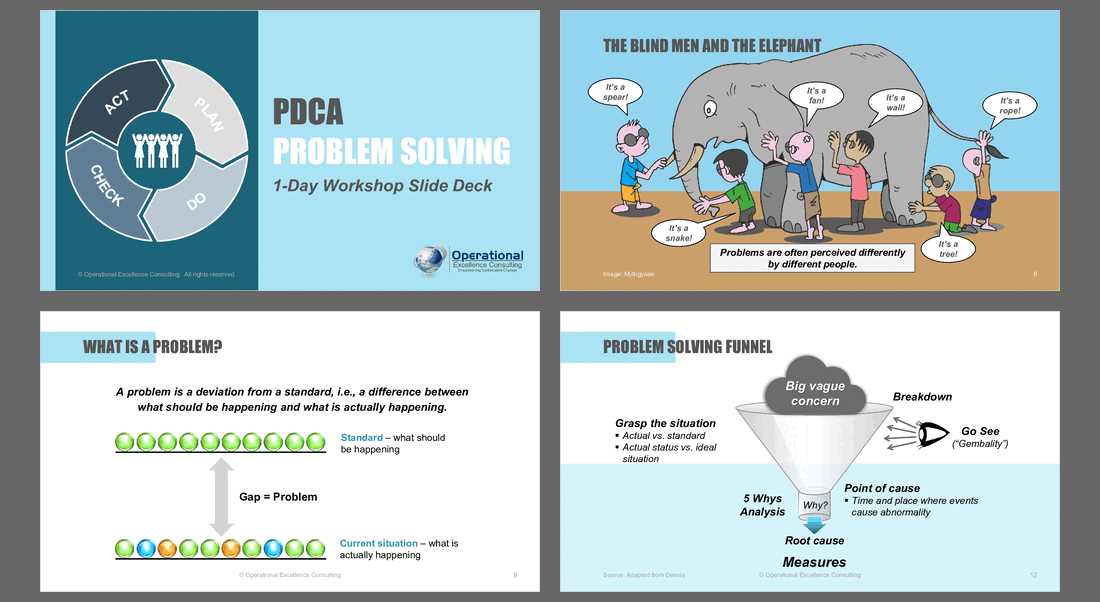
PDCA Problem Solving: 1-Day Workshop Slide Deck (117-slide PPT PowerPoint presentation slide deck (PPTX)) Preview Image
Log in to unlock full preview.
PDCA Problem Solving: 1-Day Workshop Slide Deck (117-slide PPT PowerPoint presentation slide deck (PPTX)) Preview Image
Arrow   Click main image to view in full screen.

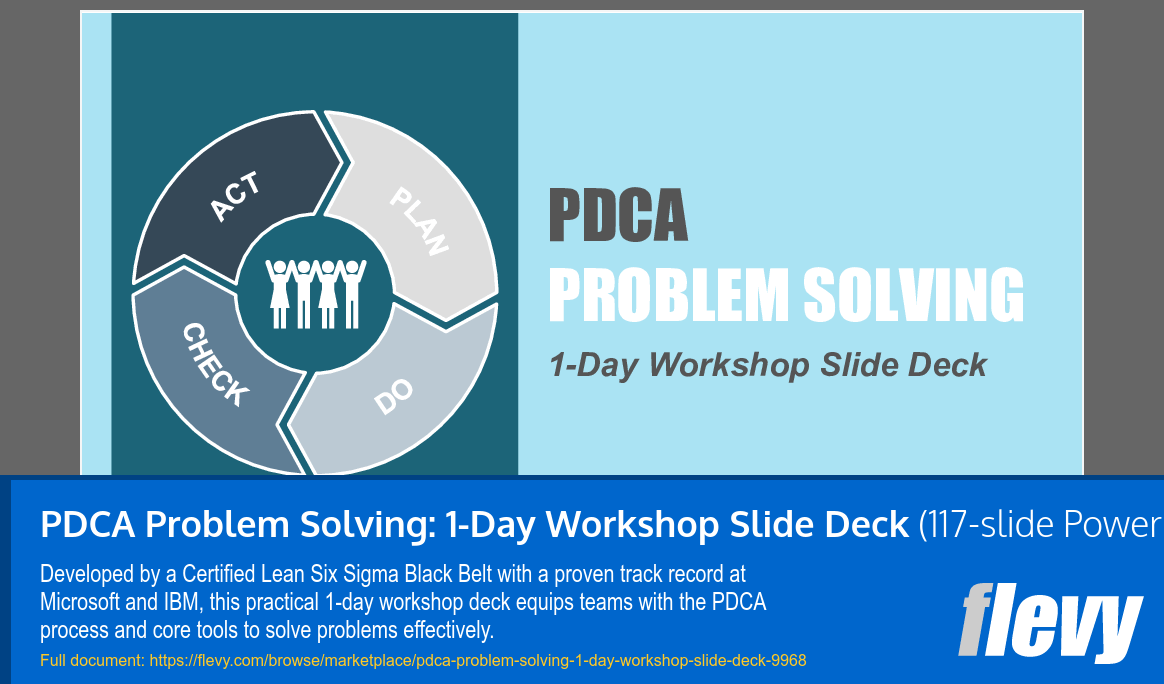
PDCA Problem Solving: 1-Day Workshop Slide Deck (PowerPoint PPTX Slide Deck)

PowerPoint (PPTX) 117 Slides

$79.00
Developed by a Certified Lean Six Sigma Black Belt ((ex-Microsoft and IBM), this practical workshop deck equips teams with the PDCA process and core tools to solve problems effectively.
Add to Cart


Immediate download
Fully editable PowerPoint
Free lifetime updates

BENEFITS OF THIS POWERPOINT DOCUMENT

  1. Focused & Practical – Covers the most essential PDCA steps and tools, leaving out less critical QC tools to keep the workshop tight and actionable.
  2. Engaging Activities – Includes group exercises (problem statements, root cause analysis, Pareto chart) for hands-on learning.
  3. Workshop Ready – Save time with a fully prepared, professional slide deck designed for a 1-day training.

PDCA PPT DESCRIPTION

Editor Summary A 117-slide PowerPoint (PPTX) training deck, PDCA Problem Solving: 1-Day Workshop Slide Deck, presents an 8-step PDCA process and core analytical tools for one-day or 2 half-day workshops. Read more

From problem definition to lasting solutions – in one day.

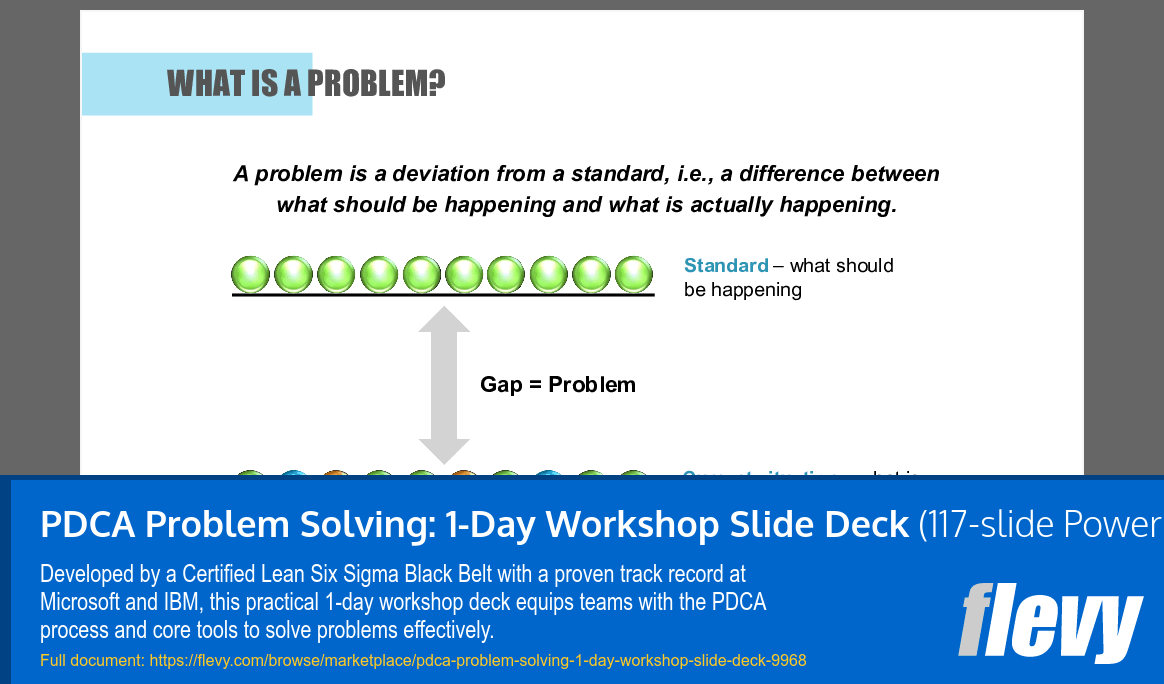
This professionally designed 1-day PDCA Problem Solving slide deck is ideal for trainers, consultants, and managers who want to deliver a concise yet impactful workshop on structured problem solving. Instead of covering all 7 basic QC tools – which is more suited for a comprehensive 2-day workshop – this streamlined version zeroes in on the essentials: the PDCA 8-step process and three core analytical tools (Pareto Chart, Fishbone Diagram, and 5 Whys).

It is perfectly suited for organizations that need a focused, hands-on training program that equips participants to clearly define problems, identify root causes, implement corrective actions, and sustain continuous improvement – all within a single day or two half-day sessions.

LEARNING OBJECTIVES

By the end of the workshop, participants will be able to:

1. Gain insights into essential PDCA problem-solving concepts and principles.
2. Understand the roles and dynamics of problem-solving teams.
3. Master the step-by-step 8-step PDCA process.
4. Apply core analytical tools such as Pareto Charts, Fishbone Diagram, and 5 Whys.
5. Learn practical strategies for ensuring successful PDCA problem solving.

CONTENTS

1. Introduction to PDCA Problem Solving

2. Problem-Solving Teams & Roles

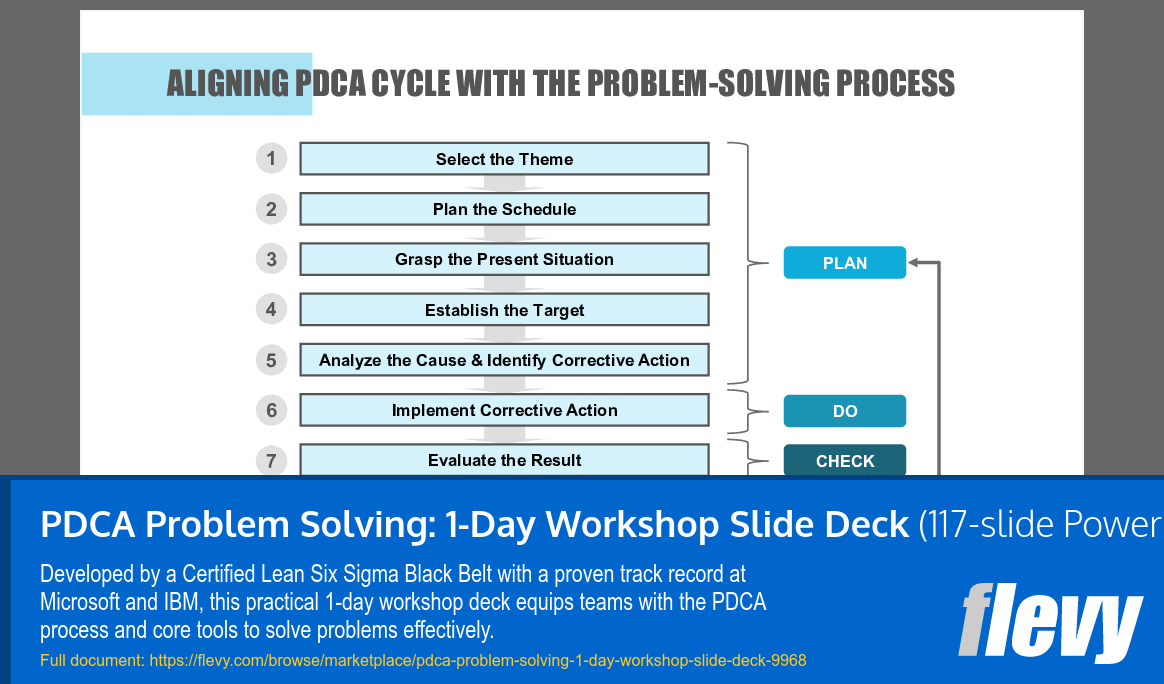
3. The PDCA 8-Step Problem-Solving Process
•  Step 1: Select the Theme
•  Step 2: Plan the Schedule
•  Step 3: Grasp the Present Situation
•  Step 4: Set the Target
•  Step 5: Analyze Causes & Identify Corrective Actions
•  Step 6: Implement Corrective Actions
•  Step 7: Evaluate Results
•  Step 8: Standardize & Follow-Up

4. Core Analytical Tools
•  Brainstorming (supportive method)
•  5 Whys
•  Fishbone Diagram
•  Pareto Chart

5. Group Activities & Exercises
•  Activity 1: Problem Solving Teams
•  Activity 2: Defining Clear Problem Statements
•  Activity 3: 5 Whys & Fishbone Diagram for Root Cause Analysis
•  Activity 4: Pareto Chart

6. Practical Tips for PDCA Success

7. Case Examples for Each Step of the PDCA Problem Solving Process and the Core Analytical tools

Got a question about the product? Email us at support@flevy.com or ask the author directly by using the "Ask the Author a Question" form. If you cannot view the preview above this document description, go here to view the large preview instead.

MARCUS OVERVIEW

This synopsis was written by Marcus [?] based on the analysis of the full 117-slide presentation.


Executive Summary
The PDCA Problem Solving: 1-Day Workshop Slide Deck is a meticulously crafted training resource designed to empower teams with the essential skills needed for effective problem-solving using the PDCA (Plan-Do-Check-Act) methodology. Developed by a Certified Lean Six Sigma Black Belt with extensive experience at Microsoft and IBM, this workshop equips participants with analytical tools such as the 5 Whys, Fishbone Diagram, and Pareto Chart. By engaging in hands-on activities, teams will learn to identify root causes, implement corrective actions, and sustain improvements, ultimately enhancing operational efficiency and fostering a culture of continuous improvement.

Who This Is For and When to Use
•  Team leaders and managers responsible for process improvement initiatives
•  Quality assurance professionals focused on enhancing product and service quality
•  Operational excellence consultants seeking structured problem-solving frameworks
•  Cross-functional teams aiming to collaborate on complex issues

Best-fit moments to use this deck:
•  During team training sessions focused on problem-solving methodologies
•  When initiating process improvement projects across various departments
•  As part of a continuous improvement program to sustain operational excellence

Learning Objectives
•  Understand the core principles of PDCA problem solving
•  Apply the step-by-step PDCA process to real workplace issues
•  Use essential analytical tools to identify and address root causes
•  Gain practical tips and strategies for sustaining improvements
•  Foster teamwork and collaboration in problem-solving efforts
•  Measure and evaluate results against established targets

Table of Contents
•  Introduction to PDCA Problem Solving (page 1)
•  Problem-Solving Teams & Roles (page 2)
•  The PDCA Process (page 3)
•  Core Analytical Tools (page 4)
•  Practical Tips for Success (page 5)

Primary Topics Covered
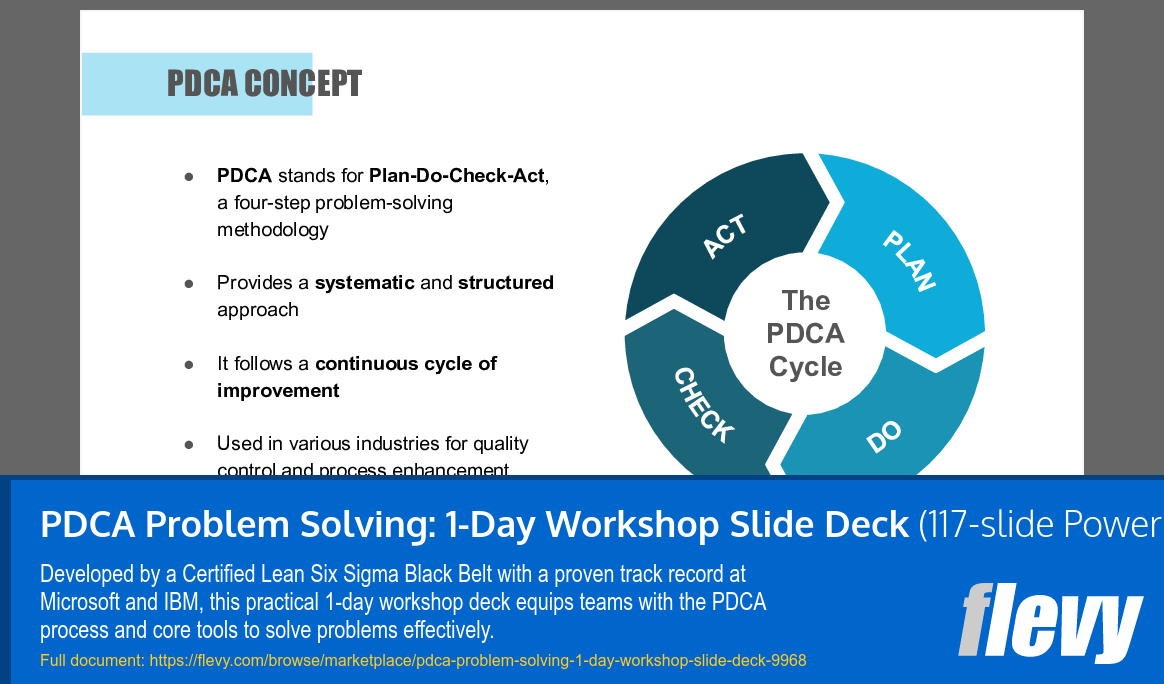
•  PDCA Concept - The PDCA methodology provides a structured approach for continuous improvement and quality control across various industries.
•  Problem Definition - Clearly defining problems is essential for focused resolution and effective action planning.
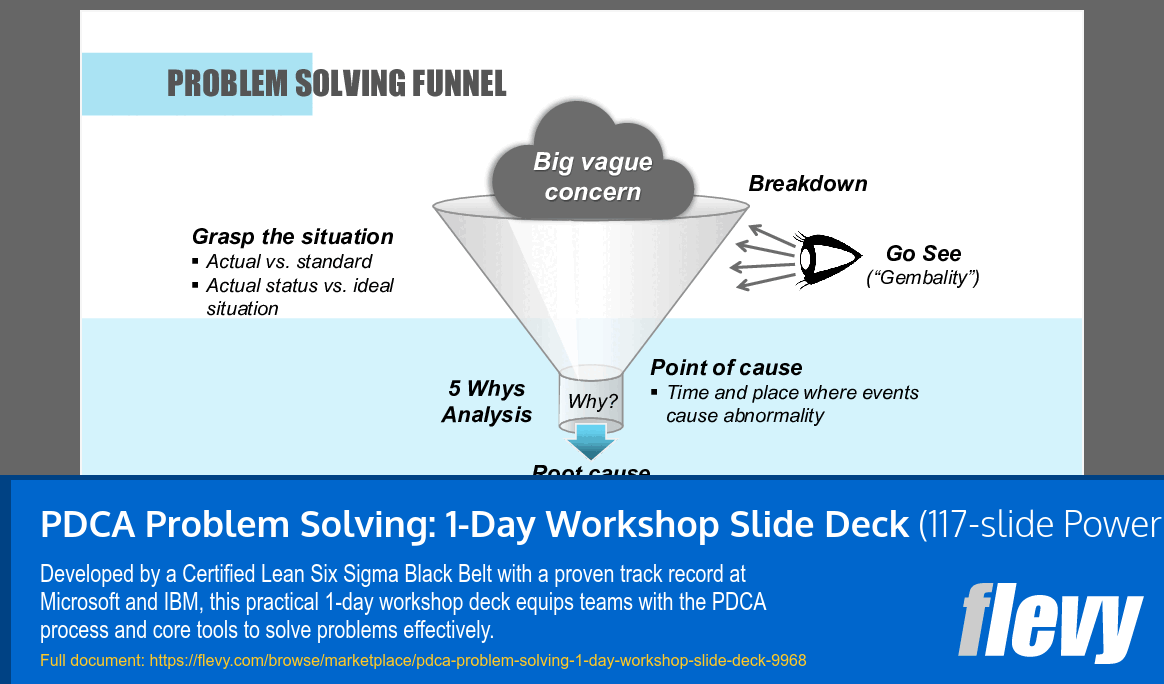
•  Root Cause Analysis - Utilizing tools like the 5 Whys and Fishbone Diagram to identify underlying causes of issues.
•  Corrective Actions - Implementing systematic action plans to address identified root causes and prevent recurrence.
•  Evaluation and Standardization - Measuring results against targets and standardizing successful practices to ensure sustainability.
•  Team Collaboration - Engaging cross-functional teams to foster diverse perspectives and enhance problem-solving capabilities.

Deliverables, Templates, and Tools
•  PDCA process flowchart template for visualizing the problem-solving cycle
•  5 Whys analysis worksheet for identifying root causes
•  Fishbone Diagram template for categorizing potential causes
•  Pareto Chart template for prioritizing issues based on impact
•  Action plan template for implementing corrective actions
•  Evaluation metrics template for assessing outcomes against targets

Slide Highlights
•  Overview of the PDCA cycle and its phases: Plan, Do, Check, Act
•  Visual representation of the Fishbone Diagram for root cause analysis
•  Example of a Pareto Chart illustrating the 80/20 rule in problem-solving
•  Practical tips for successful implementation of the PDCA process
•  Case studies demonstrating the application of PDCA in real-world scenarios

Potential Workshop Agenda
Morning: PDCA Foundations & Problem Definition (3 hours)
•  Welcome & Introduction
•  Introduction to PDCA Problem Solving
•  Problem-Solving Teams & Roles
•  Group Activity 1: Problem-Solving Team

Afternoon: Analysis, Solutions & Application (3 hours)
•  Step 5: Analyze Causes & Identify Corrective Actions
•  Core Tools: 5 Whys, Fishbone Diagram, Pareto Chart
•  Group Activity 3: Fishbone Diagram
•  Step 6: Implement Corrective Actions
•  Group Activity 4: Pareto Chart
•  Step 7: Evaluate Results
•  Step 8: Standardize & Follow-Up

Customization Guidance
•  Tailor the workshop content to address specific organizational challenges and goals
•  Adjust case studies and examples to reflect industry-specific scenarios
•  Incorporate company-specific terminology and metrics into templates and worksheets
•  Schedule follow-up sessions to reinforce learning and track progress

Secondary Topics Covered
•  The mindset of traditional problem solvers
•  Benefits of effective problem-solving in organizational contexts
•  Strategies for fostering a positive workplace culture through teamwork
•  Common pitfalls in problem-solving and how to avoid them

Topic FAQ

What are the main steps in the PDCA problem‑solving approach?

PDCA stands for Plan, Do, Check, Act; the workshop uses an 8-step PDCA process that begins with selecting the theme and planning the schedule, moves through grasping the present situation and setting targets, and ends with standardization and follow‑up, described as an 8-step PDCA process.

Which root‑cause analysis tools should teams use with PDCA?

Commonly used tools include the 5 Whys for iterative questioning, the Fishbone Diagram for categorizing potential causes, and the Pareto Chart for prioritizing issues by impact; these 3 core analytical tools are central to the methodology and templates.

How long should I schedule a practical PDCA workshop to cover core tools and activities?

For a focused program, the material is designed to run as a single‑day workshop—typically about 6 hours with breaks—or split into 2 half‑day sessions, which matches the slide deck’s recommended delivery format of one day or 2 half‑day sessions.

How can I adapt a PDCA workshop to fit my organization's industry and metrics?

Customization options include tailoring case studies, inserting company‑specific terminology, and mapping internal metrics to the provided templates; the deck explicitly advises adjusting examples and incorporating organization metrics into tools like the Pareto Chart.

What should I look for when selecting a PDCA training deck for a short internal session?

Prioritize decks that teach a defined PDCA sequence, include hands‑on group activities, provide templates for 5 Whys, Fishbone, and Pareto analysis, and support action‑plan and evaluation steps suitable for a one‑day workshop.

Can PDCA be applied to different problem types across industries?

Yes; the PDCA methodology is positioned for continuous improvement across various industries and is applicable to quality control issues, process inefficiencies, and customer satisfaction challenges.

After implementing corrective actions, how do teams measure and sustain improvements?

Teams should evaluate results against established targets, standardize successful practices, and schedule follow‑ups; the workshop supplies an evaluation metrics template and guidance on standardization and follow‑up to support sustainment.

How should I weigh the cost versus usefulness of purchasing a PDCA slide deck?

Consider whether you need a ready‑to‑run one‑day PDCA curriculum with group activities, templates for 5 Whys, Fishbone, Pareto Chart, action planning, and evaluation worksheets; those included deliverables indicate the deck’s intended scope and format.

Document FAQ
These are questions addressed within this presentation.

What is the PDCA methodology?
The PDCA methodology is a four-step problem-solving process that stands for Plan, Do, Check, and Act, designed to facilitate continuous improvement.

How can this workshop benefit my team?
This workshop equips teams with practical tools and techniques to effectively identify and solve problems, leading to improved operational efficiency and enhanced collaboration.

What tools will participants learn to use?
Participants will learn to use the 5 Whys, Fishbone Diagram, and Pareto Chart, among other analytical tools, to analyze problems and implement solutions.

Can the materials be customized for my organization?
Yes, the materials can be tailored to fit your organization's specific needs and challenges, ensuring relevance and applicability.

Is there a follow-up after the workshop?
Follow-up sessions can be scheduled to reinforce learning, track progress, and address any ongoing challenges.

What types of problems can be addressed using PDCA?
PDCA can be applied to a wide range of problems across various industries, including quality control issues, process inefficiencies, and customer satisfaction challenges.

How long is the workshop?
The workshop is designed to be completed in one day, typically spanning 6 hours with breaks included.

What is the expected outcome of the workshop?
Participants will leave with a clear understanding of the PDCA process, practical tools for problem-solving, and strategies for sustaining improvements in their work environments.

Glossary
•  PDCA - Plan-Do-Check-Act; a problem-solving methodology for continuous improvement.
•  5 Whys - A root cause analysis tool that involves asking "why" multiple times to identify underlying causes.
•  Fishbone Diagram - A visual tool for categorizing potential causes of a problem.
•  Pareto Chart - A bar graph that identifies the most significant factors contributing to a problem based on the 80/20 rule.
•  Root Cause - The fundamental reason for a problem, as opposed to its symptoms.
•  Corrective Action - Steps taken to eliminate the causes of a problem and prevent recurrence.
•  Continuous Improvement - Ongoing efforts to enhance products, services, or processes.
•  Team Collaboration - Working together across functions to solve problems and achieve common goals.
•  Standardization - Establishing consistent practices and procedures to ensure quality and efficiency.
•  Evaluation Metrics - Criteria used to assess the effectiveness of implemented solutions.
•  Action Plan - A detailed outline of steps to be taken to address a specific issue or implement a solution.
•  Problem Statement - A clear description of the issue that needs to be addressed.
•  Stakeholders - Individuals or groups with an interest in the outcome of a project or process.
•  Gemba - A Japanese term meaning "the real place," often used in Lean practices to refer to the location where work is done.
•  Cross-Functional Team - A group composed of members from different departments or areas of expertise.
•  S.M.A.R.T. Goals - Specific, Measurable, Achievable, Relevant, and Time-bound objectives.
•  Continuous Feedback Loop - A process for regularly reviewing and improving practices based on feedback and results.
•  Operational Excellence - A philosophy of leadership, teamwork, and problem-solving resulting in continuous improvement throughout the organization.
•  Quality Control - The process of ensuring that products and services meet specified requirements.
•  Process Improvement - The proactive task of identifying, analyzing, and improving existing business processes for optimization and enhancement.

Source: Best Practices in PDCA PowerPoint Slides: PDCA Problem Solving: 1-Day Workshop Slide Deck PowerPoint (PPTX) Presentation Slide Deck, Operational Excellence Consulting


$79.00
Developed by a Certified Lean Six Sigma Black Belt ((ex-Microsoft and IBM), this practical workshop deck equips teams with the PDCA process and core tools to solve problems effectively.
Add to Cart
  

ABOUT THE AUTHOR

Author image
Additional documents from author: 257
Terms of usage (for all documents from this author)

Operational Excellence Consulting, founded in 2009 by Allan Ung, draws from extensive experience at Microsoft, IBM, and Underwriters Laboratories (UL). We specialize in strategy deployment, customer experience design, and operational excellence, applying Design Thinking, Lean, and Systems Thinking to maximize customer value and minimize waste.

Our ... [read more]

Ask the Author a Question

You must be logged in to contact the author.

Click here to log in Click here register

Did you know?
The average daily rate of a McKinsey consultant is $6,625 (not including expenses). The average price of a Flevy document is $65.


Trusted by over 10,000+ Client Organizations
Since 2012, we have provided business templates to over 10,000 businesses and organizations of all sizes, from startups and small businesses to the Fortune 100, in over 130 countries.
AT&T GE Cisco Intel IBM Coke Dell Toyota HP Nike Samsung Microsoft Astrazeneca JP Morgan KPMG Walgreens Walmart 3M Kaiser Oracle SAP Google E&Y Volvo Bosch Merck Fedex Shell Amgen Eli Lilly Roche AIG Abbott Amazon PwC T-Mobile Broadcom Bayer Pearson Titleist ConEd Pfizer NTT Data Schwab


Read Customer Testimonials

 
"I am extremely grateful for the proactiveness and eagerness to help and I would gladly recommend the Flevy team if you are looking for data and toolkits to help you work through business solutions."

– Trevor Booth, Partner, Fast Forward Consulting
 
"If you are looking for great resources to save time with your business presentations, Flevy is truly a value-added resource. Flevy has done all the work for you and we will continue to utilize Flevy as a source to extract up-to-date information and data for our virtual and onsite presentations!"

– Debbi Saffo, President at The NiKhar Group
 
"Flevy is now a part of my business routine. I visit Flevy at least 3 times each month.

Flevy has become my preferred learning source, because what it provides is practical, current, and useful in this era where the business world is being rewritten.

In today's environment where there are so "

– Omar Hernán Montes Parra, CEO at Quantum SFE
 
"As a niche strategic consulting firm, Flevy and FlevyPro frameworks and documents are an on-going reference to help us structure our findings and recommendations to our clients as well as improve their clarity, strength, and visual power. For us, it is an invaluable resource to increase our impact and value."

– David Coloma, Consulting Area Manager at Cynertia Consulting
 
"FlevyPro has been a brilliant resource for me, as an independent growth consultant, to access a vast knowledge bank of presentations to support my work with clients. In terms of RoI, the value I received from the very first presentation I downloaded paid for my subscription many times over! The "

– Roderick Cameron, Founding Partner at SGFE Ltd
 
"One of the great discoveries that I have made for my business is the Flevy library of training materials.

As a Lean Transformation Expert, I am always making presentations to clients on a variety of topics: Training, Transformation, Total Productive Maintenance, Culture, Coaching, Tools, Leadership Behavior, etc. Flevy "

– Ed Kemmerling, Senior Lean Transformation Expert at PMG
 
"Flevy.com has proven to be an invaluable resource library to our Independent Management Consultancy, supporting and enabling us to better serve our enterprise clients.

The value derived from our [FlevyPro] subscription in terms of the business it has helped to gain far exceeds the investment made, making a subscription a no-brainer for any growing consultancy – or in-house strategy team."

– Dean Carlton, Chief Transformation Officer, Global Village Transformations Pty Ltd.
 
"As a consulting firm, we had been creating subject matter training materials for our people and found the excellent materials on Flevy, which saved us 100's of hours of re-creating what already exists on the Flevy materials we purchased."

– Michael Evans, Managing Director at Newport LLC


Customers Also Like These Documents

Explore Related Management Topics

A3
5S


Your Recently Viewed Documents
Receive our FREE presentation on Operational Excellence

This 50-slide presentation provides a high-level introduction to the 4 Building Blocks of Operational Excellence. Achieving OpEx requires the implementation of a Business Execution System that integrates these 4 building blocks.