
Organization Theory & Design - The External Environment   54-slide PPT PowerPoint presentation slide deck (PPTX)
$49.00

Organization Theory & Design - The External Environment (54-slide PPT PowerPoint presentation slide deck (PPTX)) Preview Image
Log in to unlock full preview.
Organization Theory & Design - The External Environment (54-slide PPT PowerPoint presentation slide deck (PPTX)) Preview Image
Arrow   Click main image to view in full screen.

Organization Theory & Design - The External Environment (PowerPoint PPTX Slide Deck)

PowerPoint (PPTX) 54 Slides

$49.00
Developed by a team of experts with global consulting experience at McKinsey, Deloitte, and Capgemini.
Add to Cart


Immediate download
Fully editable PowerPoint
Free lifetime updates

ORGANIZATIONAL DESIGN PPT DESCRIPTION

Editor Summary 54-slide PowerPoint presentation "Organization Theory & Design - The External Environment" provides a framework for analyzing how external environments shape organizational structure, adaptability, and resource dependence. Read more

"An organizational structure carries inherent capabilities as to what can be achieved within its frame."
― Pearl Zhu

The Essence of Organization Design:

At its core, Organization Design is a dynamic process that orchestrates how organizations are structured and operated. This intricate dance encompasses a plethora of workplace facets, from the formation of teams to the rhythms of shift patterns, the threads of reporting hierarchies, the orchestrations of decision-making, the avenues of communication, and much more.

Unveiling Objectives:

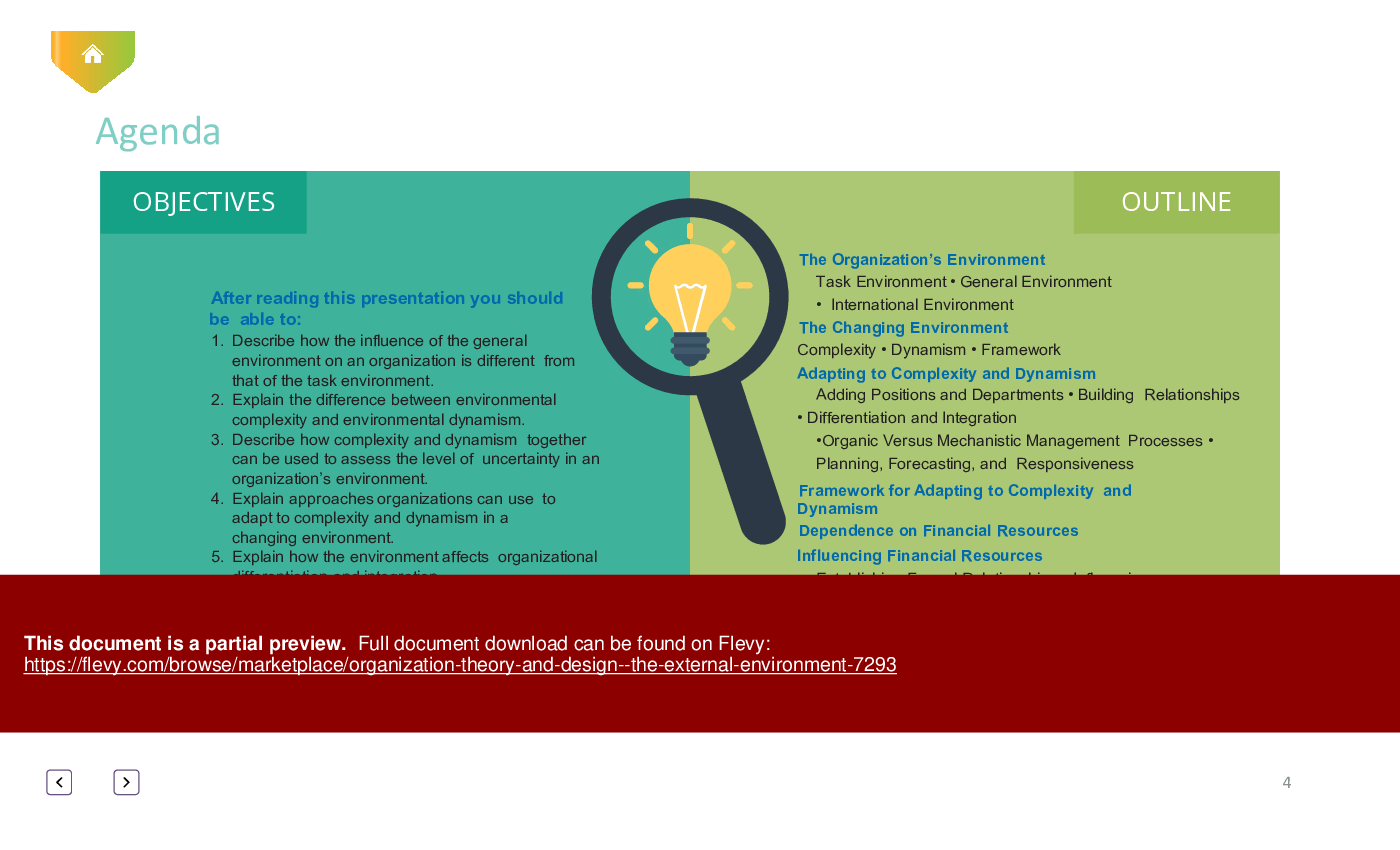
This presentation serves as a guiding light on the journey to develop a comprehensive framework for understanding environments and how organizations can skillfully navigate them. It embarks on a voyage that commences with the identification of the organizational domain and the influential sectors that cast their shadows upon the organization's canvas. Along this journey, we encounter two formidable environmental titans: the insatiable need for information and the voracious demand for financial resources. In response to these omnipresent forces, organizations wield tools of structural design, forge strategic planning systems, and embark on audacious quests to adapt and influence the myriad entities, events, and organizations that populate the external environment.

Navigating the Contents:

Upon traversing this presentation, you will gain the prowess to:

1. Distinguish the impact of the general environment from that of the task environment on an organization.
2. Decode the nuances between environmental complexity and environmental dynamism.
3. Paint a vivid portrait of how complexity and dynamism, when intertwined, breed uncertainty within an organization's environment.
4. Chart the course toward organizational adaptation amidst the ever-shifting tides of complexity and dynamism.
5. Illuminate the intricate dance between the environment and organizational differentiation and integration.
6. Navigate the terrain where the environment shapes the contours of organic versus mechanistic management processes.
7. Master the techniques at an organization's disposal for orchestrating the control of financial resources amid the tumultuous seas of the external environment.

Empowering Organizational Insight:

This 54-slide PowerPoint expedition unearths the treasures of the External Environment within the realm of Organization Theory & Design. As you embark on this journey, prepare to be immersed in a world of insights, strategies, and perspectives that will enable you to master the art of sculpting organizational brilliance. The document stands ready for your customization, enriched with compelling figures, enlightening diagrams, engaging ice-breakers, vivid visuals, and more. It's your gateway to a holistic understanding of the intricate tapestry that is Organization Theory & Design.

Got a question about the product? Email us at support@flevy.com or ask the author directly by using the "Ask the Author a Question" form. If you cannot view the preview above this document description, go here to view the large preview instead.

MARCUS OVERVIEW

This synopsis was written by Marcus [?] based on the analysis of the full 54-slide presentation.


Executive Summary
This presentation, titled "Organization Theory & Design - The External Environment," offers a comprehensive framework for understanding how external environments influence organizational structure and adaptability. Developed by experts with extensive consulting experience, the presentation delves into the significance of environmental factors, including the need for information and financial resources. By utilizing this framework, corporate executives and consultants can effectively assess their organization's external environment and implement strategies for structural design and resource management.

Who This Is For and When to Use

•  Corporate executives responsible for strategic planning and organizational design
•  Integration leaders navigating complex external environments
•  Consultants advising organizations on structural adaptation and resource management
•  Business analysts assessing market dynamics and organizational responsiveness

Best-fit moments to use this deck:

•  During strategic planning sessions to assess external environmental factors
•  When evaluating organizational structure in response to market changes
•  In workshops focused on adapting to financial resource constraints
•  For training sessions on organizational design and environmental analysis

Learning Objectives

•  Describe the differences between general and task environments and their impacts on organizations.
•  Explain the concepts of environmental complexity and dynamism.
•  Assess the level of uncertainty in an organization’s environment using complexity and dynamism.
•  Identify strategies organizations can employ to adapt to changing environments.
•  Analyze how environmental factors influence organizational differentiation and integration.
•  Discuss the impact of the environment on organic versus mechanistic management processes.
•  Outline techniques for controlling financial resources in the external environment.

Table of Contents

•  The Organization’s Environment (page 6)
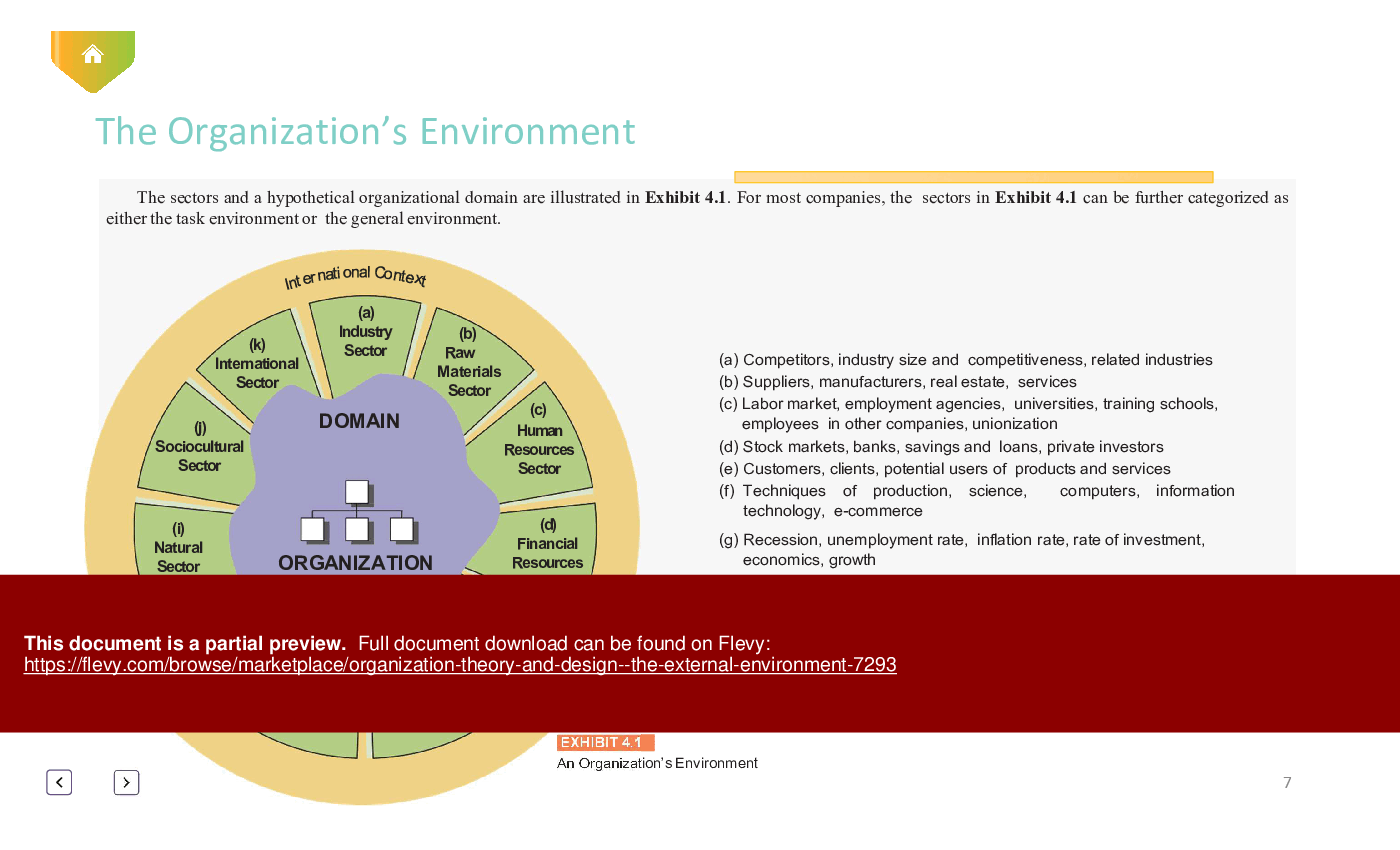
•  Task Environment and General Environment (page 7)
•  Complexity and Dynamism (page 15)
•  Framework for Assessing Environmental Uncertainty (page 20)
•  Adapting to Complexity and Dynamism (page 23)
•  Differentiation and Integration (page 30)
•  Organic Versus Mechanistic Management Processes (page 32)
•  Dependence on Financial Resources (page 39)
•  Establishing Formal Relationships (page 40)
•  Influencing Key Sectors (page 45)
•  Organization-Environment Integrative Framework (page 51)

Primary Topics Covered

•  Organizational Environment - The organizational environment encompasses all external factors that can influence an organization, including market dynamics, regulatory changes, and sociocultural trends.
•  Task Environment - This includes specific sectors such as industry, raw materials, and human resources that directly impact daily operations.
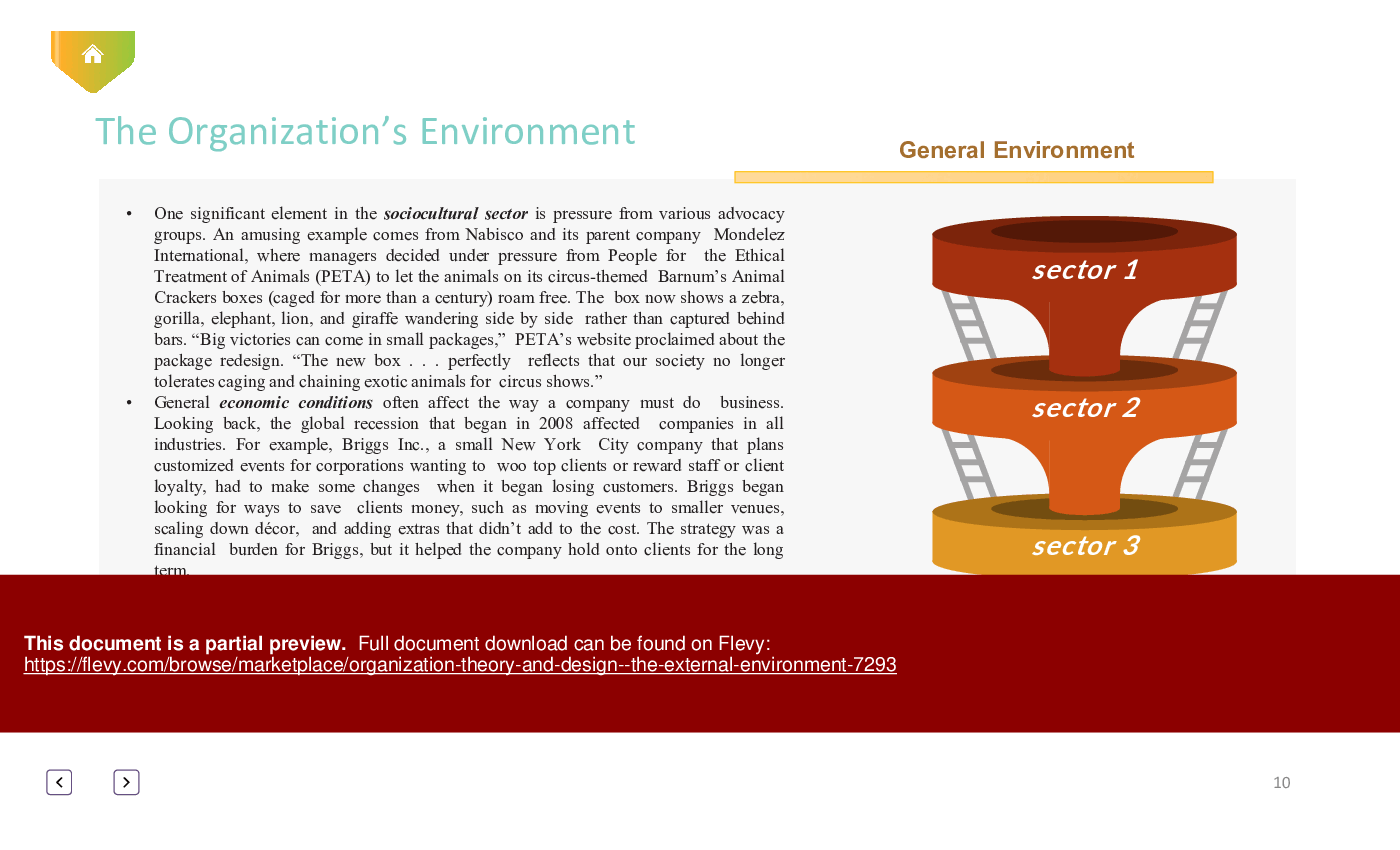
•  General Environment - Comprising broader sectors like government, technology, and economic conditions, these factors indirectly influence organizational performance.
•  Complexity and Dynamism - These dimensions assess the uncertainty organizations face, with complexity referring to the number of external elements and dynamism indicating the stability of those elements.
•  Adapting to Environmental Changes - Organizations must implement strategies to adapt their structures and processes in response to external uncertainties.
•  Differentiation and Integration - As environments become more complex, organizations often differentiate their departments while also integrating them to ensure effective communication and collaboration.

Deliverables, Templates, and Tools

•  Framework for assessing environmental complexity and dynamism
•  Templates for analyzing task and general environments
•  Guidelines for establishing boundary-spanning roles
•  Models for organizational differentiation and integration strategies
•  Checklists for evaluating financial resource dependencies
•  Tools for scenario planning and forecasting environmental changes

Slide Highlights

•  Overview of the organizational environment and its sectors
•  Visual representation of the complexity and dynamism framework
•  Case studies illustrating the impact of environmental factors on organizations
•  Diagrams showing the relationship between differentiation and integration
•  Examples of boundary-spanning roles and their importance in uncertain environments

Potential Workshop Agenda

Understanding the Organizational Environment (90 minutes)
•  Discuss the importance of external factors in organizational design
•  Analyze case studies of organizations adapting to environmental changes
•  Identify key sectors in the task and general environments

Adapting to Complexity and Dynamism (60 minutes)
•  Explore strategies for managing environmental uncertainty
•  Review tools for assessing complexity and dynamism in real-time

Differentiation and Integration Strategies (90 minutes)
•  Examine the relationship between departmental differentiation and integration
•  Develop action plans for enhancing internal collaboration in response to external pressures

Customization Guidance

•  Tailor the framework to specific industry sectors relevant to your organization.
•  Adjust terminology to align with internal language and culture.
•  Incorporate organizational-specific case studies to enhance relatability.
•  Modify the assessment tools to reflect unique operational contexts and challenges.

Secondary Topics Covered

•  The impact of international markets on organizational strategy
•  Techniques for managing financial resource dependencies
•  The role of technology in shaping organizational responses
•  Strategies for effective communication in complex environments
•  The significance of sociocultural trends in organizational adaptation

Topic FAQ

What is the difference between the task environment and the general environment for an organization?

The task environment comprises external sectors that directly affect daily operations, such as suppliers, customers, and industry actors; the general environment includes broader factors like government, technology, and economic conditions that indirectly influence performance. The deck addresses this distinction in the task and general environment section on page 7.

How do complexity and dynamism combine to create environmental uncertainty?

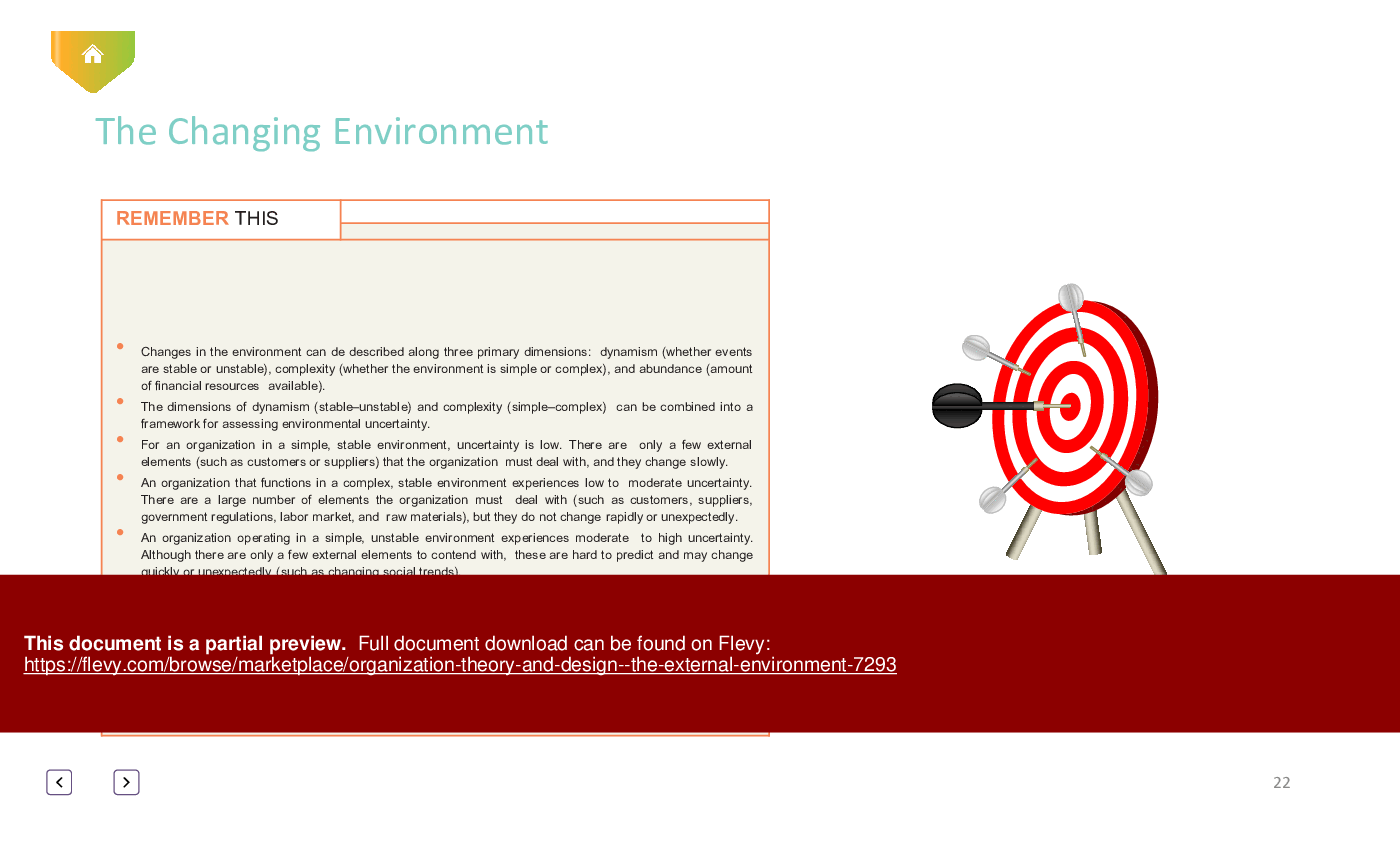
Complexity refers to the number and dissimilarity of external elements, while dynamism indicates the stability or instability of those elements; high complexity plus high dynamism increases uncertainty. The presentation provides a visual framework and an assessment approach for environmental uncertainty using these 2 dimensions on page 20.

What organizational strategies help firms adapt to increased environmental complexity and dynamism?

Strategies include structural adjustments (adding roles or departments), enhancing boundary-spanning positions, shifting toward more flexible management processes, and deliberately balancing differentiation with integration. The materials include models and templates to design these structural responses, including differentiation and integration models.

How does the external environment influence whether an organization uses organic versus mechanistic management processes?

Dynamic, uncertain environments tend to favor organic processes with decentralized decision-making and flexible roles, whereas stable environments often allow mechanistic, formalized structures; the presentation discusses these contrasts and design implications in the organic versus mechanistic management processes section on page 32.

What should I look for when buying a PowerPoint toolkit for environmental analysis and organizational design?

Prioritize inclusion of a diagnostic framework for complexity and dynamism, templates for task/general environment mapping, scenario-planning tools, guidance on differentiation/integration, workshop agendas, and author pedigree; the product lists a 54-slide PowerPoint with scenario-planning tools and templates.

How much practical value do slide templates and scenario-planning tools provide for a small consulting team on a short engagement?

Ready templates and scenario-planning tools structure workshops, speed stakeholder alignment, and provide repeatable diagnostic steps for uncertainty assessment, reducing bespoke slide development; the referenced deck includes workshop agendas, templates, and scenario-planning tools to support short engagements.

I need to redesign department structures after disruptive market shifts—what frameworks help evaluate necessary differentiation and integration?

Use a differentiation and integration model alongside an assessment of environmental complexity and dynamism to determine where specialization or coordination is required; the presentation supplies models for differentiation and integration strategies plus the complexity/dynamism assessment framework.

My organization is increasingly dependent on external finance—how can organizational design address resource dependence?

Techniques include establishing formal relationships with financiers or partners, influencing key external sectors through political activity or joint ventures, and instituting controls and checklists to monitor dependencies; the deck covers dependence on financial resources and includes checklists for evaluating financial resource dependencies.

Document FAQ
These are questions addressed within this presentation.


What is the difference between the task environment and the general environment?
The task environment includes sectors that directly impact daily operations, such as suppliers and customers. The general environment encompasses broader factors like government regulations and economic conditions that indirectly influence the organization.

How can organizations assess their level of environmental uncertainty?
Organizations can evaluate uncertainty by analyzing the complexity (number of external elements) and dynamism (stability of those elements) in their environment.

What strategies can organizations use to adapt to changes in their environment?
Organizations can implement structural changes, enhance boundary-spanning roles, and develop flexible management processes to respond effectively to environmental changes.

How does environmental complexity affect organizational structure?
As environmental complexity increases, organizations often need to add positions and departments to manage diverse external elements effectively.

What is the significance of boundary-spanning roles?
Boundary-spanning roles facilitate communication and information exchange between the organization and its external environment, helping to identify opportunities and threats.

How can organizations influence their external environment?
Organizations can establish favorable relationships, engage in political activities, and modify their operational domain to exert influence over external factors.

What is the role of financial resources in organizational strategy?
Financial resources are critical for organizational survival and growth; organizations must manage their dependencies on external resources effectively.

How can scenario planning help organizations manage uncertainty?
Scenario planning allows organizations to anticipate potential changes in the environment and prepare strategic responses, enhancing their adaptability.

Glossary

•  Task Environment - The specific sectors that directly impact an organization's operations.
•  General Environment - Broader external factors that indirectly influence organizational performance.
•  Complexity - The number and dissimilarity of external elements affecting an organization.
•  Dynamism - The stability or instability of the external environment.
•  Boundary-Spanning Roles - Positions that facilitate communication between the organization and its external environment.
•  Differentiation - The specialization of departments to handle specific external elements.
•  Integration - The coordination and collaboration among differentiated departments.
•  Environmental Uncertainty - The unpredictability stemming from external changes.
•  Scenario Planning - A strategic planning method used to anticipate future changes and prepare responses.
•  Resource Dependence - The reliance on external resources for organizational survival.
•  Political Activity - Efforts to influence government regulations and policies.
•  Joint Ventures - Collaborative agreements between organizations to share resources and risks.

Source: Best Practices in Organizational Design PowerPoint Slides: Organization Theory & Design - The External Environment PowerPoint (PPTX) Presentation Slide Deck, RadVector Consulting


$49.00
Developed by a team of experts with global consulting experience at McKinsey, Deloitte, and Capgemini.
Add to Cart
  

ABOUT THE AUTHOR

Additional documents from author: 182

We are a group of aviation experts & specialists (PhDs, Engineers, Pilots, Navigators, ...), leaders in helping organizations to transform their business performance using Methodologies and Principles of Lean, Agile, Six Sigma, and Innovation.

Ask the Author a Question

You must be logged in to contact the author.

Click here to log in Click here register

Did you know?
The average daily rate of a McKinsey consultant is $6,625 (not including expenses). The average price of a Flevy document is $65.


Trusted by over 10,000+ Client Organizations
Since 2012, we have provided business templates to over 10,000 businesses and organizations of all sizes, from startups and small businesses to the Fortune 100, in over 130 countries.
AT&T GE Cisco Intel IBM Coke Dell Toyota HP Nike Samsung Microsoft Astrazeneca JP Morgan KPMG Walgreens Walmart 3M Kaiser Oracle SAP Google E&Y Volvo Bosch Merck Fedex Shell Amgen Eli Lilly Roche AIG Abbott Amazon PwC T-Mobile Broadcom Bayer Pearson Titleist ConEd Pfizer NTT Data Schwab


Read Customer Testimonials

 
"[Flevy] produces some great work that has been/continues to be of immense help not only to myself, but as I seek to provide professional services to my clients, it gives me a large "tool box" of resources that are critical to provide them with the quality of service and outcomes they are expecting."

– Royston Knowles, Executive with 50+ Years of Board Level Experience
 
"I like your product. I'm frequently designing PowerPoint presentations for my company and your product has given me so many great ideas on the use of charts, layouts, tools, and frameworks. I really think the templates are a valuable asset to the job."

– Roberto Fuentes Martinez, Senior Executive Director at Technology Transformation Advisory
 
"My FlevyPro subscription provides me with the most popular frameworks and decks in demand in today’s market. They not only augment my existing consulting and coaching offerings and delivery, but also keep me abreast of the latest trends, inspire new products and service offerings for my practice, and educate me "

– Bill Branson, Founder at Strategic Business Architects
 
"Flevy is now a part of my business routine. I visit Flevy at least 3 times each month.

Flevy has become my preferred learning source, because what it provides is practical, current, and useful in this era where the business world is being rewritten.

In today's environment where there are so "

– Omar Hernán Montes Parra, CEO at Quantum SFE
 
"As a consultant requiring up to date and professional material that will be of value and use to my clients, I find Flevy a very reliable resource.

The variety and quality of material available through Flevy offers a very useful and commanding source for information. Using Flevy saves me time, enhances my expertise and ends up being a good decision."

– Dennis Gershowitz, Principal at DG Associates
 
"Last Sunday morning, I was diligently working on an important presentation for a client and found myself in need of additional content and suitable templates for various types of graphics. Flevy.com proved to be a treasure trove for both content and design at a reasonable price, considering the time I "

– M. E., Chief Commercial Officer, International Logistics Service Provider
 
"I am extremely grateful for the proactiveness and eagerness to help and I would gladly recommend the Flevy team if you are looking for data and toolkits to help you work through business solutions."

– Trevor Booth, Partner, Fast Forward Consulting
 
"As an Independent Management Consultant, I find Flevy to add great value as a source of best practices, templates and information on new trends. Flevy has matured and the quality and quantity of the library is excellent. Lastly the price charged is reasonable, creating a win-win value for "

– Jim Schoen, Principal at FRC Group


Customers Also Like These Documents

Explore Related Management Topics


Your Recently Viewed Documents
Download our FREE Organization, Change, & Culture, Templates

Download our free compilation of 50+ slides and templates on Organizational Design, Change Management, and Corporate Culture. Methodologies include ADKAR, Burke-Litwin Change Model, McKinsey 7-S, Competing Values Framework, etc.










