
This presentation covers the Net-Promoter-Score (NPS) and 10 Deployment Best Practices to ensure a successful implementation.

The Net Promoter Score is a customer loyalty metric developed by (and a registered trademark of) Fred Reichheld, Bain & Company, and Satmetrix Systems.
It was introduced by Reichheld in his 2003 Harvard Business Review article "One Number You Need to Grow".
Today, the Net Promoter Score has been widely adopted with more than two-thirds of Fortune 1000 companies using the metric.
"After you have downloaded the material, you can change any part of the training material and remove all logos and references to Operational Excellence Consulting. You can share the material with your colleagues and clients, and re-use it as you need. The only restriction is that you cannot publicly re-distribute, sell, rent, or license the material as though it is your own. Thank you."
If you are interested in introducing your organization to the Net Promoter Score approach, you can use and customize this presentation.
Let us know if you need any support in deploying the Net Promoter Score (NPS) in your organization.
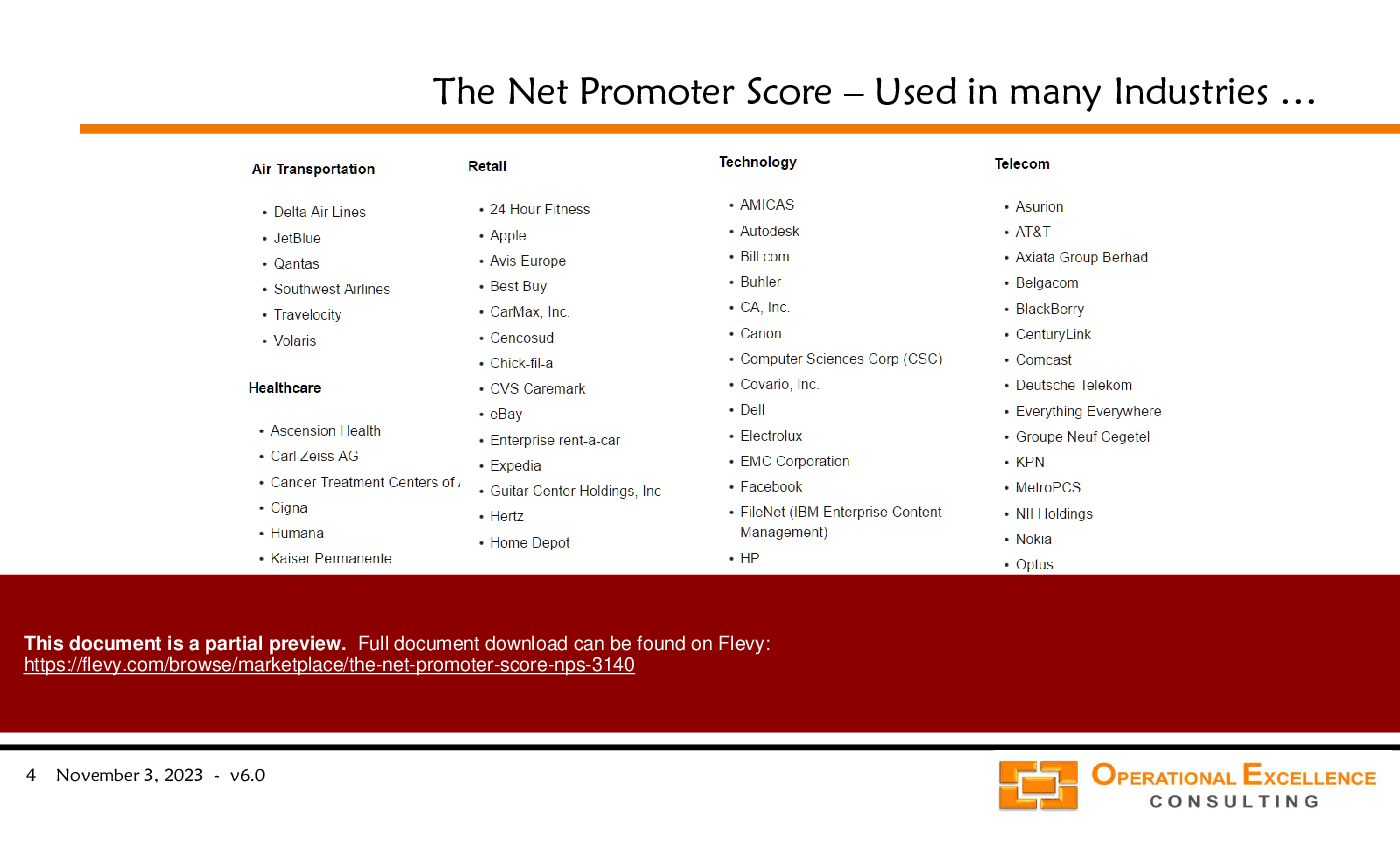
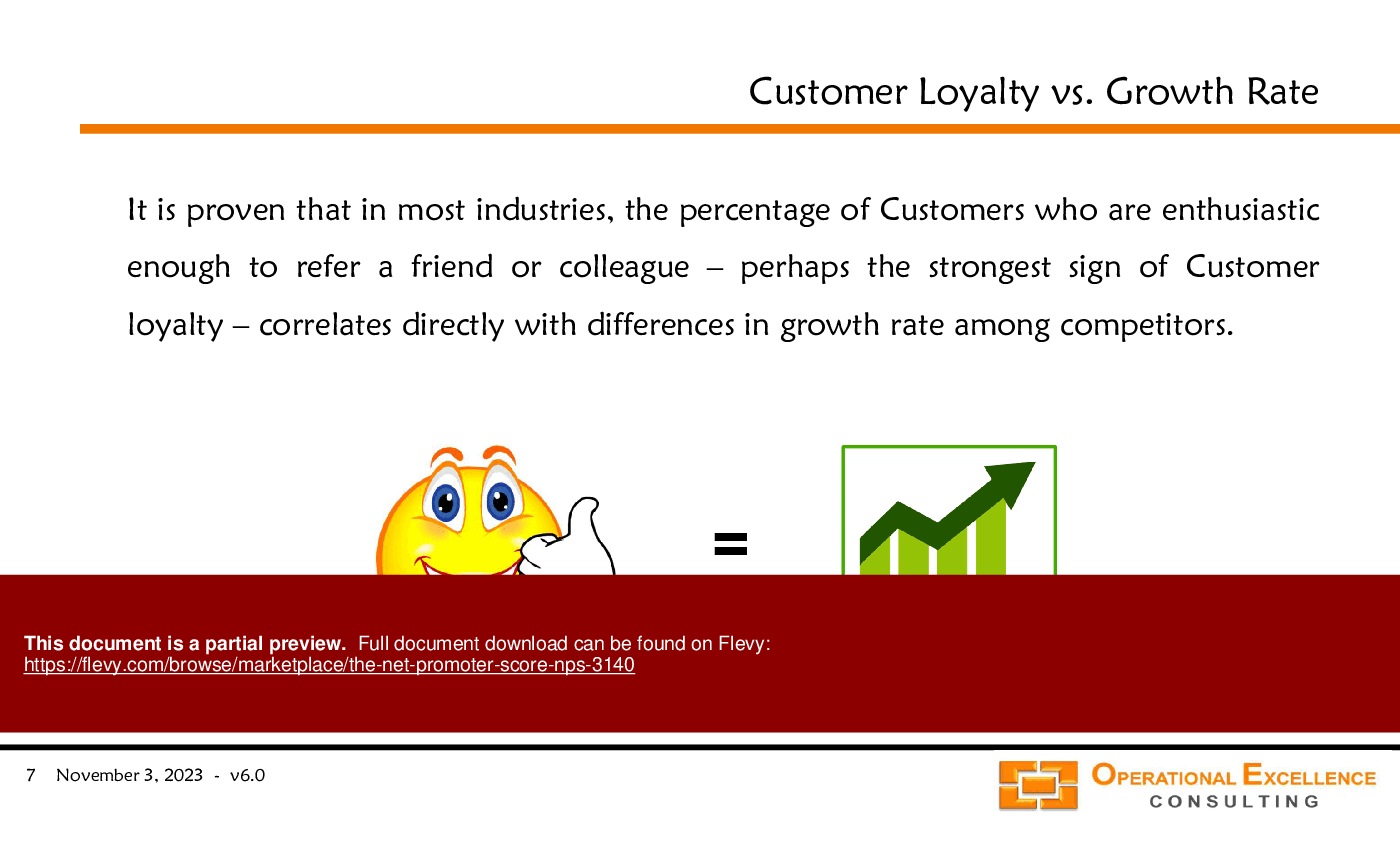
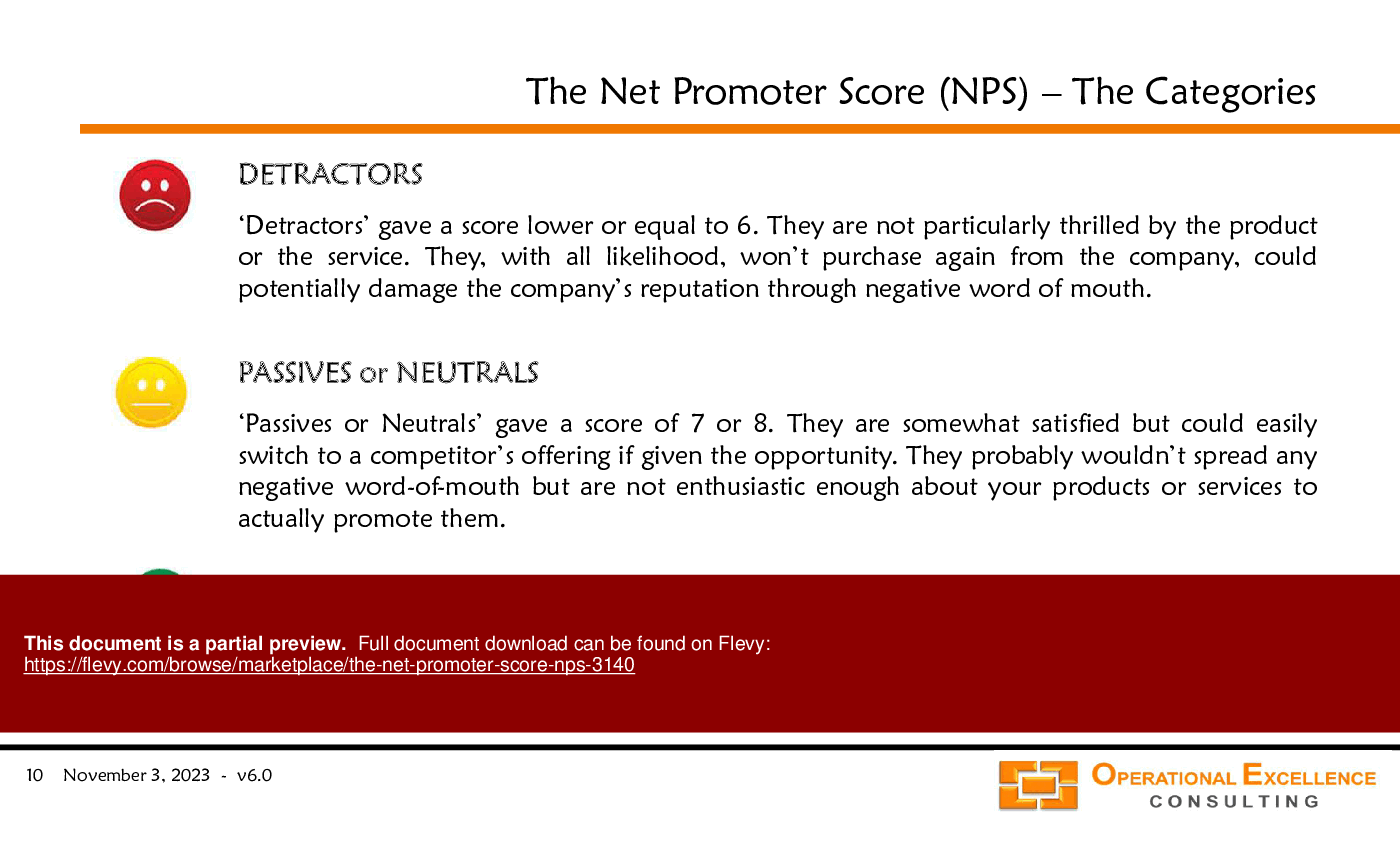
The PPT provides practical insights into how the Net Promoter Score is utilized across various industries, including Air Transportation, Retail, Technology, and Telecom. It highlights the direct correlation between customer loyalty and growth rate, emphasizing that enthusiastic customers who refer others are a key driver of competitive advantage. The presentation categorizes customers into Detractors, Passives, and Promoters, detailing their potential impact on your business.
The material also covers the importance of viewing the Net Promoter Score as an operational management tool rather than mere market research. It stresses the need for real-time data collection and the implementation of a service recovery process to win back customers and demonstrate program effectiveness. The document outlines best practices for survey design, customer journey mapping, and the creation of a cross-functional NPS improvement team. This comprehensive approach ensures you can drive meaningful change and enhance customer experience.
Got a question about the product? Email us at support@flevy.com or ask the author directly by using the "Ask the Author a Question" form. If you cannot view the preview above this document description, go here to view the large preview instead.
Executive Summary
This presentation on the Net Promoter Score (NPS) serves as a comprehensive guide for measuring and improving customer loyalty. Developed by an experienced Operational Excellence Coach, the deck provides actionable insights into leveraging NPS as an operational management tool rather than merely a market research metric. By implementing the strategies outlined, organizations can enhance customer experience, drive loyalty, and ultimately foster sustainable growth.
Who This Is For and When to Use
• Customer Experience Leaders focused on enhancing customer loyalty metrics
• Operational Excellence teams aiming to integrate NPS into daily operations
• Marketing and Sales teams looking to leverage customer feedback for growth
• Executives interested in understanding the correlation between NPS and business performance
Best-fit moments to use this deck:
• During strategic planning sessions to integrate NPS into the operational framework
• When launching or revitalizing a customer feedback program
• In workshops aimed at improving customer experience and loyalty initiatives
Learning Objectives
• Define the Net Promoter Score and its significance in measuring customer loyalty
• Identify the categories of respondents: Promoters, Passives, and Detractors
• Analyze the relationship between NPS and business growth rates
• Implement best practices for launching and maintaining an effective NPS program
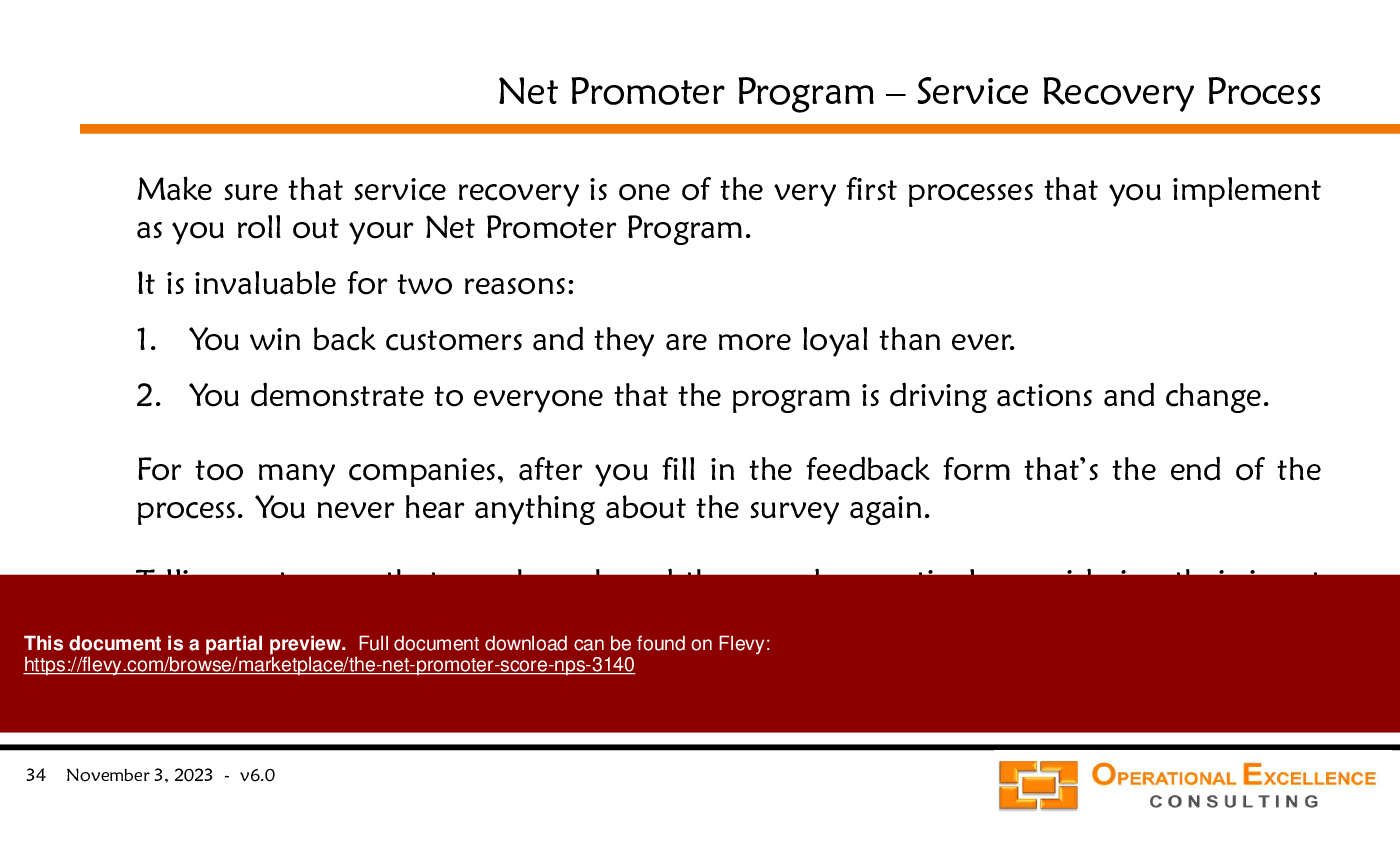
• Establish a service recovery process to address customer feedback
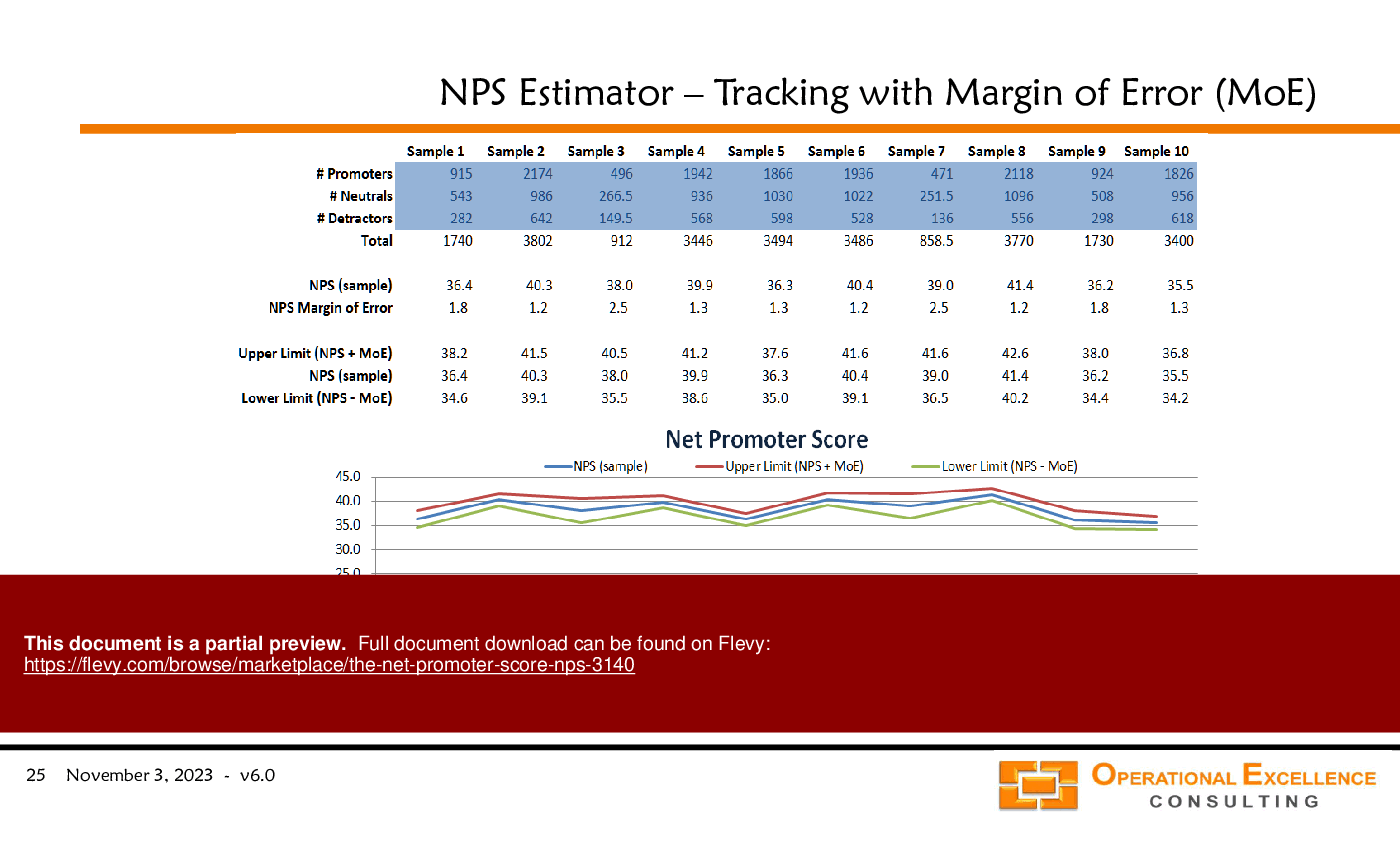
• Utilize statistical methods to track NPS changes and measure improvement
Table of Contents
• Introduction to NPS (page 3)
• History of NPS (page 3)
• Definition of Customer Loyalty (page 5)
• Benefits of Loyal Customers (page 6)
• NPS Metrics and Calculation (page 11)
• NPS Benchmarking Study (page 14)
• Best Practices for NPS Implementation (page 28)
• Service Recovery Process (page 34)
• Customer Experience Management (page 38)
• Recognition and Rewards (page 44)
Primary Topics Covered
• NPS Definition and History - The Net Promoter Score is a customer loyalty metric introduced by Fred Reichheld, widely adopted by Fortune 1000 companies to gauge customer loyalty and drive operational improvements.
• Customer Loyalty - Loyalty is defined as the willingness of customers to invest in a relationship, often leading to increased profitability and reduced acquisition costs.
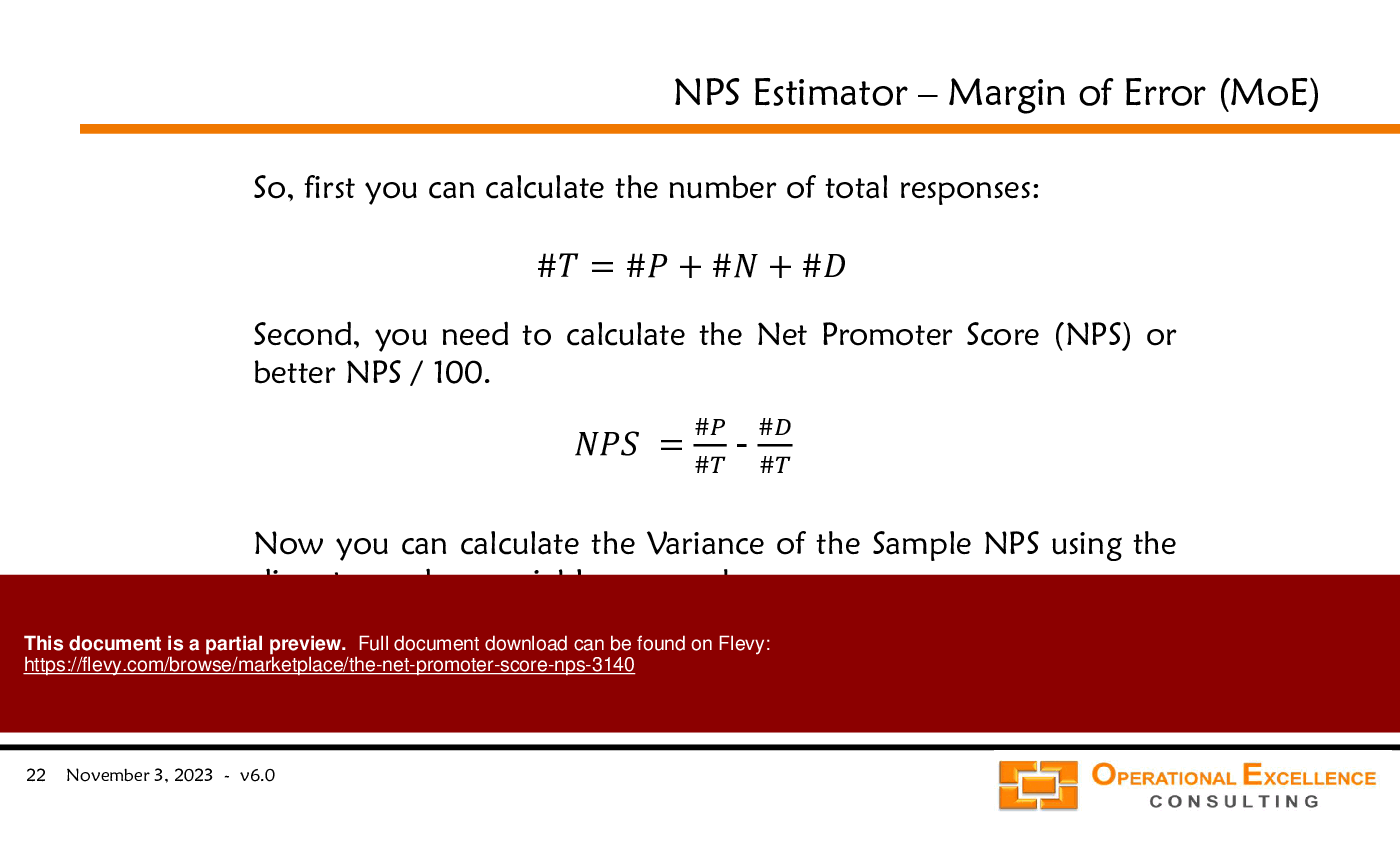
• NPS Calculation - The NPS is calculated by subtracting the percentage of Detractors from the percentage of Promoters, providing a clear metric for customer loyalty.
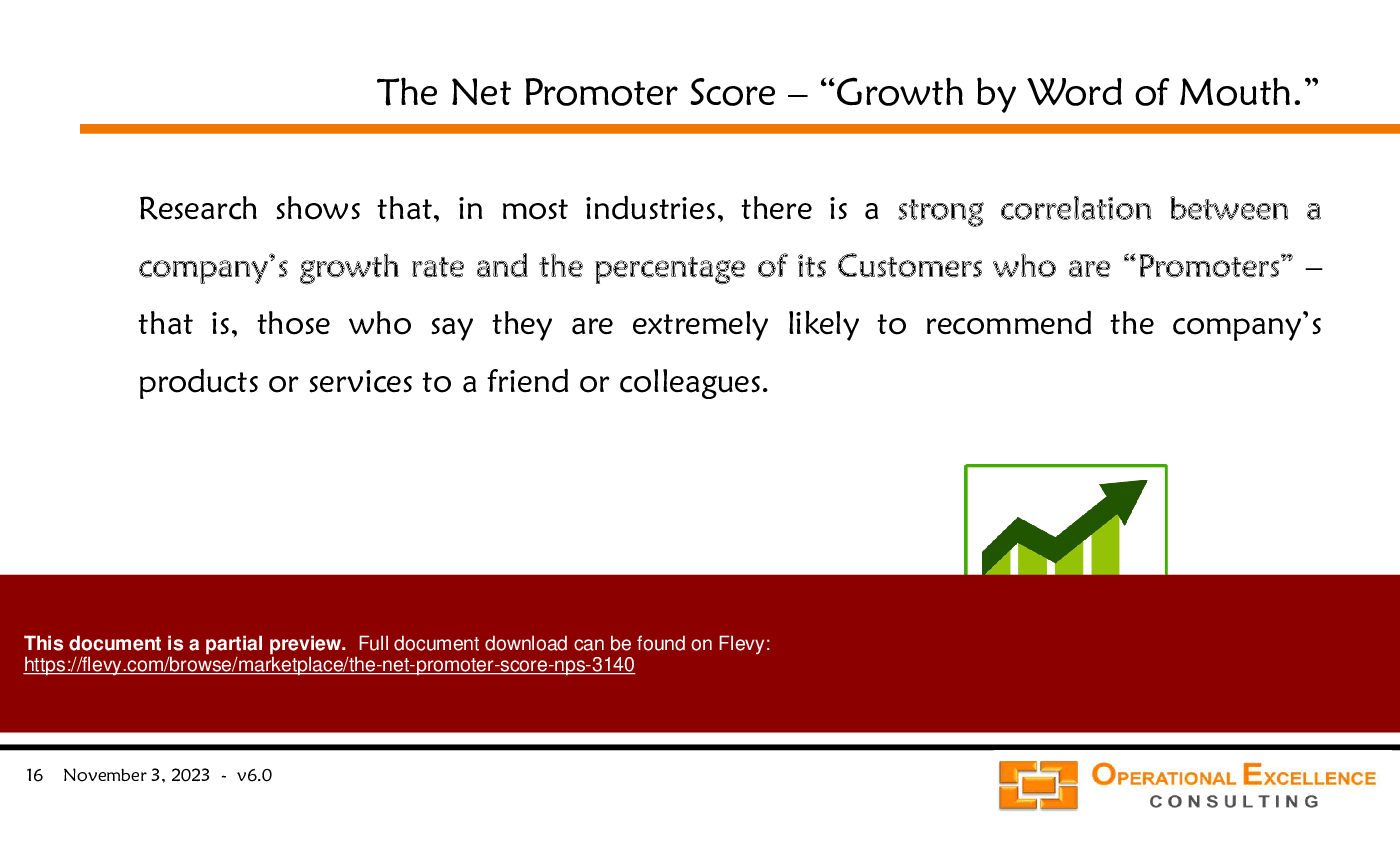
• Correlation Between NPS and Growth - Research indicates a strong correlation between a company's growth rate and the percentage of customers who are Promoters, emphasizing the importance of customer advocacy.
• Best Practices for NPS Programs - Effective implementation of NPS requires a structured approach, including consistent survey design, cross-functional teams, and a focus on actionable insights.
• Service Recovery - Establishing a service recovery process is essential for winning back dissatisfied customers and demonstrating the effectiveness of the NPS program.
Deliverables, Templates, and Tools
• NPS survey template designed for consistency and clarity
• Best practices checklist for launching an NPS program
• Service recovery process framework for addressing customer feedback
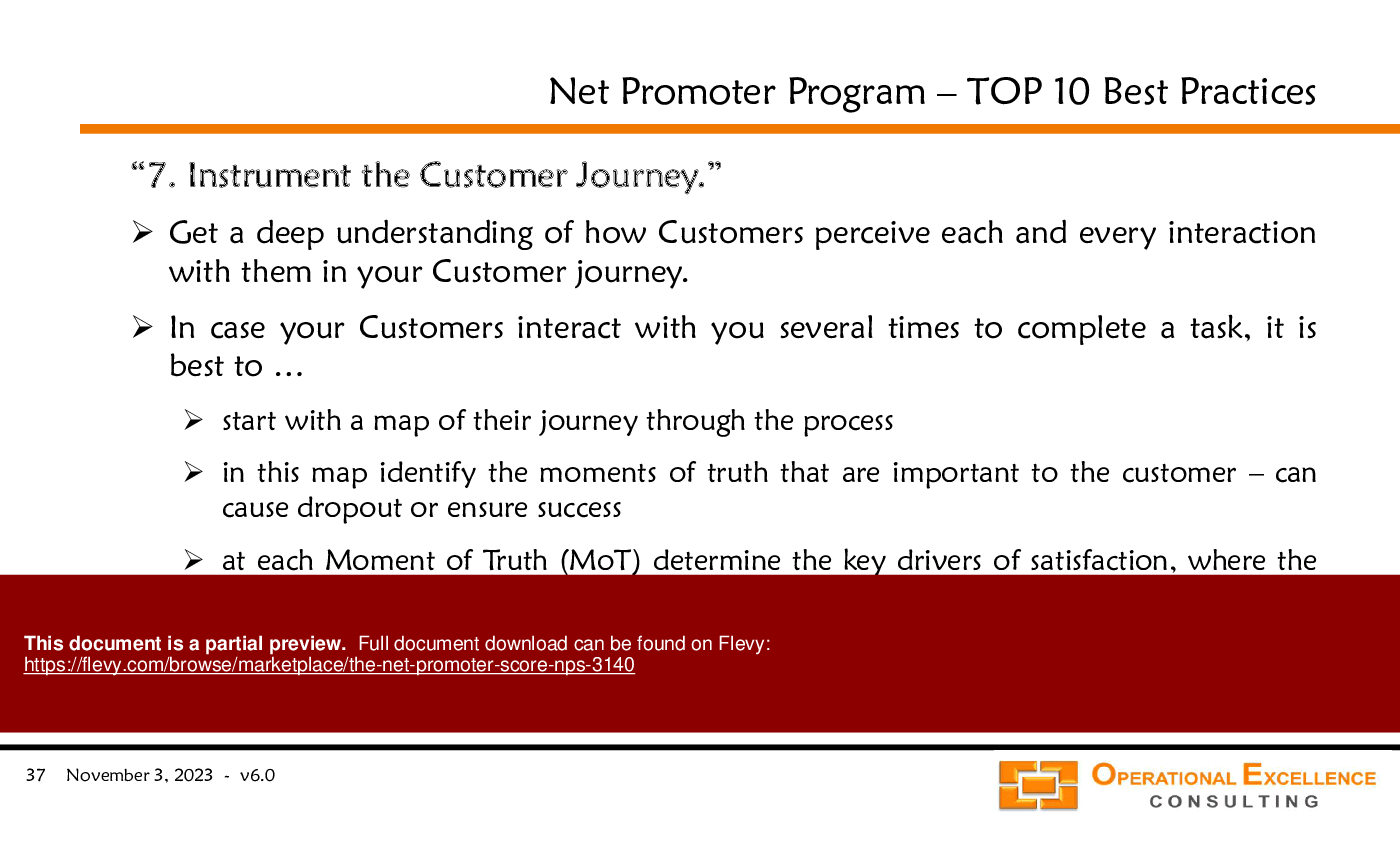
• Customer journey mapping template to identify key moments of truth
• Recognition and rewards program guidelines to reinforce desired behaviors
Slide Highlights
• Overview of the NPS calculation and its significance in measuring loyalty
• Visual representation of the correlation between NPS and growth rates across industries
• Best practices for implementing an NPS program effectively
• Examples of service recovery processes that can be integrated into customer feedback loops
Potential Workshop Agenda
NPS Fundamentals Workshop (90 minutes)
• Introduction to NPS and its importance
• Overview of the NPS calculation and categories
• Discussion on customer loyalty and its impact on growth
NPS Implementation Best Practices (60 minutes)
• Review of best practices for launching an NPS program
• Group activity to design a service recovery process
• Q&A session to address specific challenges
Customization Guidance
• Tailor the NPS survey questions to align with your organization's specific customer interactions
• Adjust the service recovery process to fit your operational structure and customer touchpoints
• Incorporate industry-specific benchmarks into the NPS benchmarking study for more relevant insights
Secondary Topics Covered
• The role of employee engagement in driving customer loyalty
• Techniques for analyzing qualitative feedback from NPS surveys
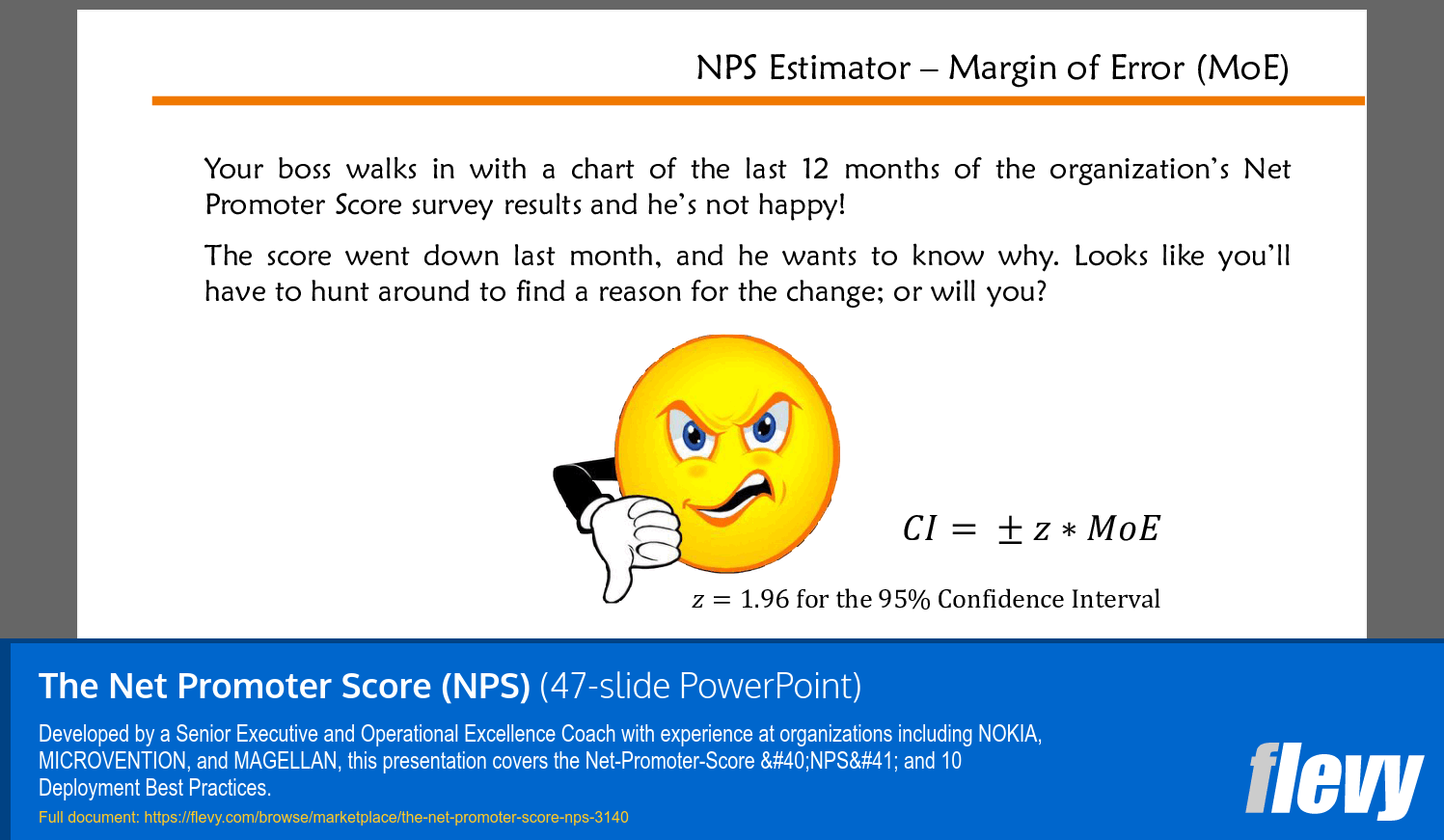
• Understanding sample size and margin of error in NPS calculations
• The importance of internal communication regarding NPS findings
FAQ
What is the Net Promoter Score?
The Net Promoter Score (NPS) is a metric used to measure customer loyalty by asking customers how likely they are to recommend a company’s products or services to others.
How is NPS calculated?
NPS is calculated by subtracting the percentage of Detractors from the percentage of Promoters, providing a score that reflects overall customer loyalty.
Why is NPS important for businesses?
NPS is crucial because it correlates with business growth; companies with higher NPS scores tend to grow faster than their competitors.
What are the categories of NPS respondents?
Respondents are categorized into 3 groups: Promoters (scores 9-10), Passives (scores 7-8), and Detractors (scores 0-6).
How can we improve our NPS?
Improving NPS involves addressing feedback from customers, enhancing the customer experience, and implementing best practices for customer engagement.
What is a service recovery process?
A service recovery process involves steps taken to address and rectify customer complaints, aiming to win back their loyalty.
How often should we conduct NPS surveys?
It is recommended to conduct NPS surveys regularly, such as quarterly or biannually, to track changes and gather timely feedback.
What should we do with qualitative feedback from NPS surveys?
Qualitative feedback should be analyzed and shared across the organization to inform improvements and recognize areas of success.
Glossary
• Net Promoter Score (NPS) - A metric for measuring customer loyalty based on their likelihood to recommend a company.
• Promoters - Customers who score 9 or 10 and are likely to recommend the company.
• Detractors - Customers who score 6 or lower and may discourage others from engaging with the company.
• Passives - Customers who score 7 or 8 and are satisfied, but not enthusiastic.
• Service Recovery - The process of addressing customer complaints to regain their loyalty.
• Customer Journey - The complete experience a customer has with a company, from initial contact to post-purchase interactions.
• Feedback Loop - A process where customer feedback is continuously collected and used to improve services.
• Margin of Error (MoE) - A statistical measure that indicates the potential error in survey results.
• Benchmarking - Comparing performance metrics against industry standards or competitors.
• Customer Experience Management - Strategies and practices for managing customer interactions to enhance satisfaction and loyalty.
Source: Best Practices in Customer Satisfaction, Customer Loyalty, NPS PowerPoint Slides: Net Promoter Score (NPS) PowerPoint (PPTX) Presentation Slide Deck, Operational Excellence Consulting LLC
|
Download our FREE Digital Transformation Templates
Download our free compilation of 50+ Digital Transformation slides and templates. DX concepts covered include Digital Leadership, Digital Maturity, Digital Value Chain, Customer Experience, Customer Journey, RPA, etc. |