
 Click main image to view in full screen. Unlock all 32 preview images:
Navigating Complexity: Systems Thinking for Higher Education – PowerPoint PPTX Template
PowerPoint (PPTX) 119 Slides


BENEFITS OF THIS DOWNLOADABLE POWERPOINT DOCUMENT
- Sector-Specific Relevance: Replaces generic corporate examples with relatable academic "messes" like faculty workload, module registration, and work-study placement bottlenecks.
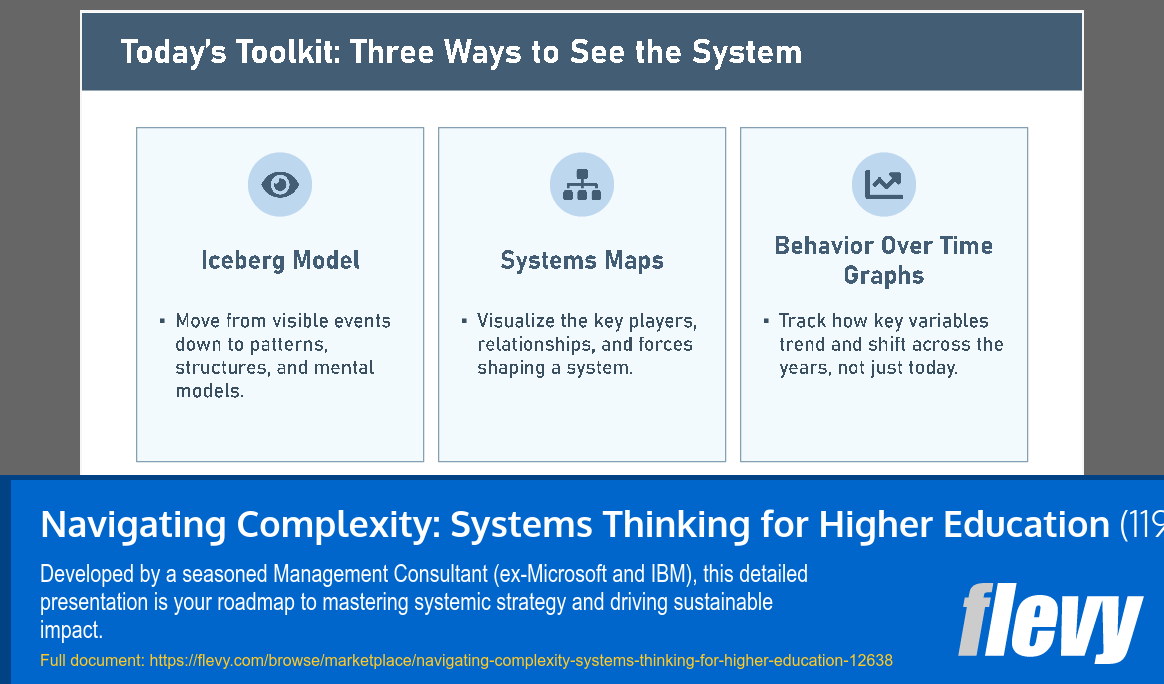
- Hands-On Methodology: Includes a complete suite of visual tools, from Behavior Over Time Graphs to Causal Loop Diagrams, for immediate team application.
- Sustainable Impact: Teaches participants to identify "leverage points" where small changes can lead to significant, lasting systemic shifts.
EDUCATION PPT TEMPLATE DESCRIPTION
MASTERING SYSTEMIC STRATEGY IN HIGHER EDUCATION: THE SYSTEMS THINKING TOOLKIT
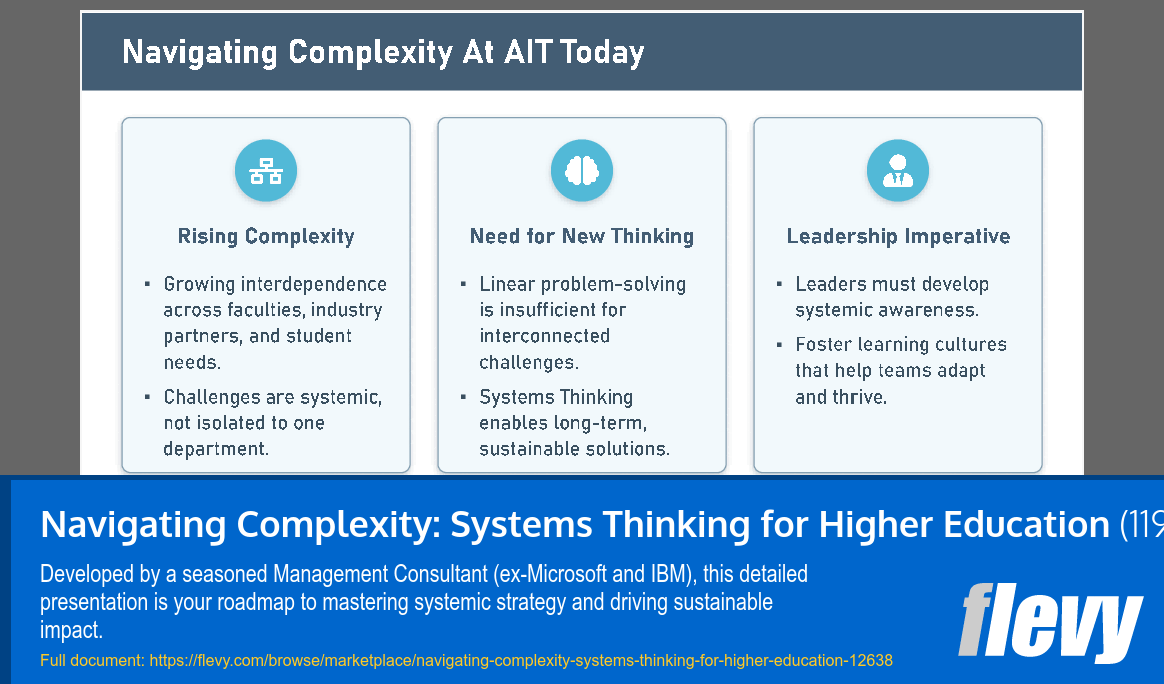
Move beyond temporary patches and start architecting durable solutions. In the high-stakes environment of modern higher education, traditional linear problem-solving is increasingly ineffective against the interconnected challenges of sprawling departments, evolving student expectations, and administrative gridlock. This complete workshop package provides academic leaders and professional staff with a practical systems-based mindset. Through grounded, realistic case studies featuring the hypothetical Apex Institute of Technology (AIT), your teams will learn to observe the broader institutional picture, identifying the core structures and mindsets that truly dictate your campus results.
DOCUMENT DESCRIPTION
This professional PowerPoint deck is a ready-to-use, high-impact training resource designed for the higher education sector. It moves beyond abstract theory to provide a practical, hands-on methodology for institutional transformation. The content is anchored by the Apex Institute of Technology (AIT) case study, ensuring that tools like the Iceberg Model and Causal Loop Diagrams are immediately relatable to academic and administrative professionals.
EXECUTIVE SUMMARY
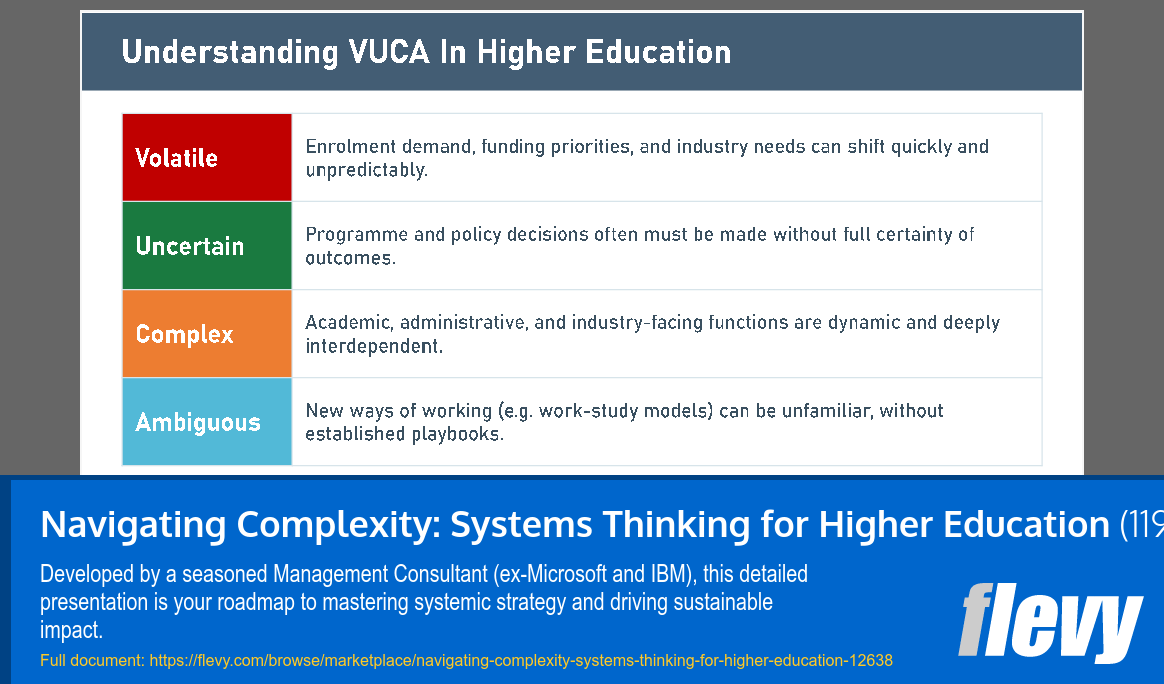
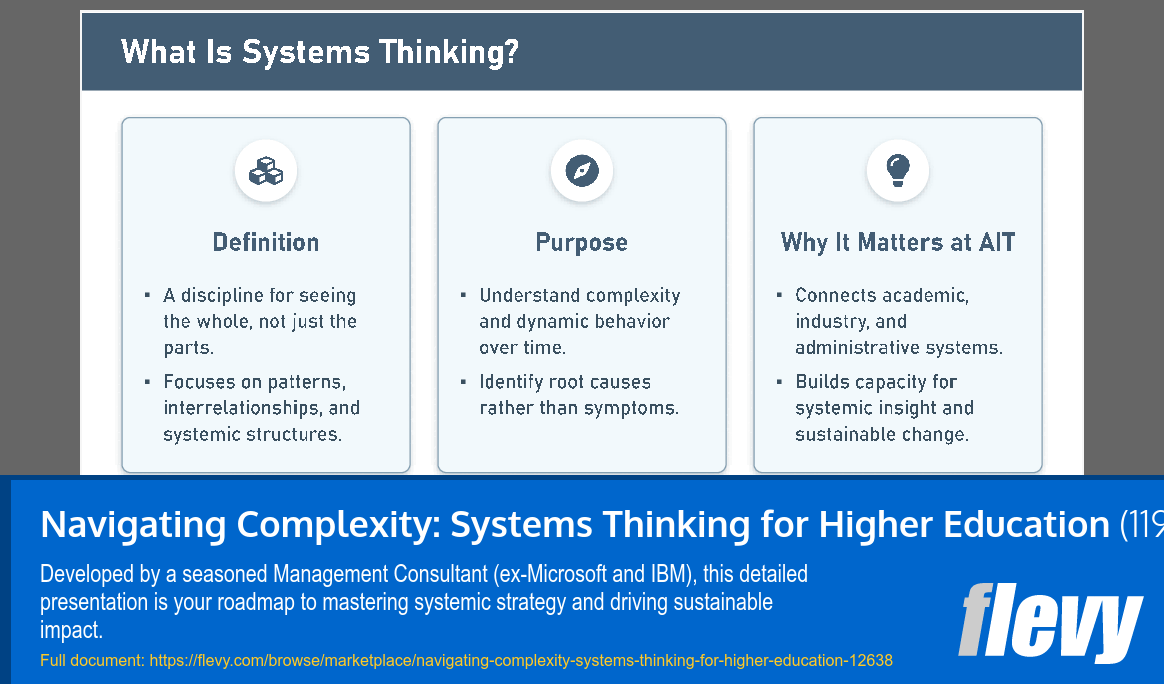
Higher education now operates in a VUCA (Volatile, Uncertain, Complex, and Ambiguous) landscape, where faculties, external partners, and student bodies are deeply interdependent. Conventional, reactive problem-solving often leads to 'symptom-chasing' or inadvertently shifting issues from one department to another. This toolkit positions Systems Thinking as the vital "connective tissue" required to transition into a true Learning Organization. Participants engage in a six-part developmental journey designed to map institutional dynamics, isolate leverage points for maximum impact, and craft human-centric strategies that endure.
TARGET AUDIENCE
• University Leaders and Senior Administrators.
• Academic Department Heads and Faculty Members.
• Registrars and Student Services Personnel.
• Staff in Strategy, Operations, HR, and Transformation roles.
LEARNING OBJECTIVES
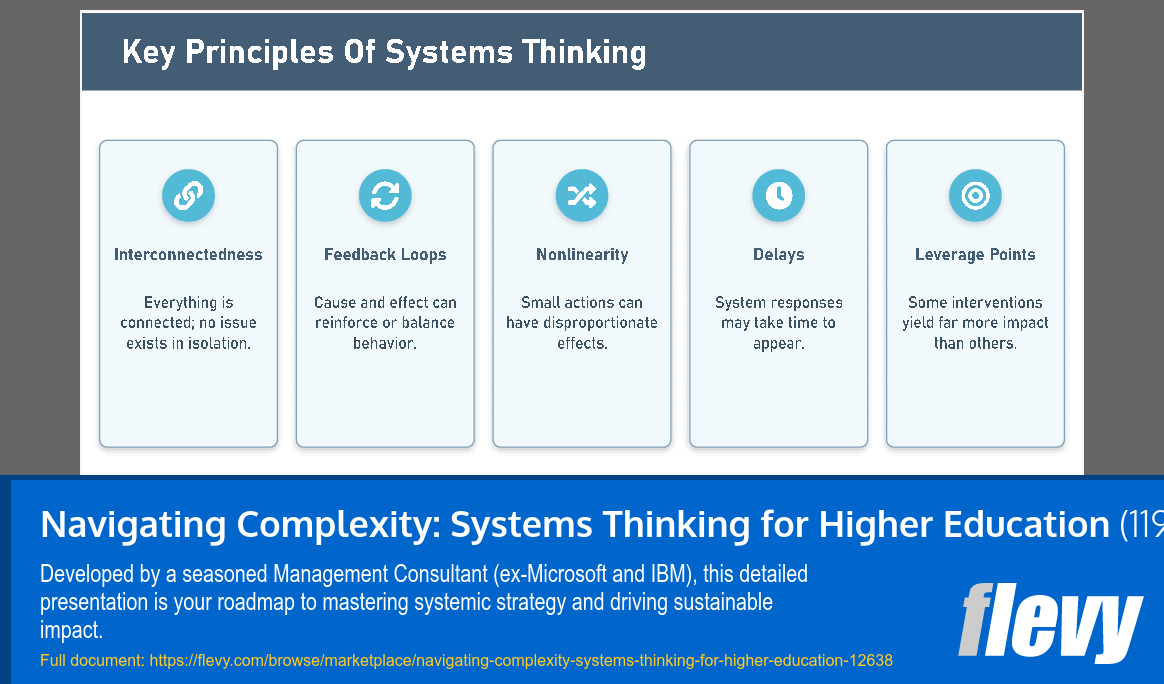
1. Master fundamental systems principles: feedback mechanisms, time delays, and cognitive models.
2. Apply visual mapping techniques like Iceberg Model and Causal Loop Diagrams to expose systemic root causes.
3. Pinpoint leverage points to optimize intervention and avoid negative unintended consequences.
4. Embed human-centered design into systemic operational strategies.
5. Execute a repeatable systems-thinking workflow for institutional challenges.
TRAINING MODULES & WORKSHOP FLOW
• Session 1: Introduction to Systems & VUCA in Higher Education
• Session 2: Visualizing the System (Iceberg Model)
• Session 3: Feedback Dynamics (Causal Loops & Delays)
• Session 4: Identifying Leverage Points & Archetypes
• Session 5: Human-Centered Design Integration
• Session 6: Strategic Application & Capstone Project
WHAT DOES THIS TOOLKIT INCLUDE?
• 100+ Professional Slides: A modular, six-session workshop structure.
• Fictitious Case Study (AIT): A continuous, illustrative narrative built into the session flow.
• Facilitator Appendix: 6 printable/reusable templates, including the Iceberg Model, Stakeholder Mapping, Causal Loop Canvas, Design Brief, Empathy Map, and 5 Whys Worksheet.
PROPOSED 1-DAY WORKSHOP AGENDA
• 09:00 – 10:30: Session 1: Foundations & The Academic VUCA Environment
• 10:45 – 12:30: Session 2: The Iceberg Model & Systems Mapping
• 12:30 – 13:30: Lunch Break
• 13:30 – 15:00: Session 3 & 4: Causal Loops, Archetypes, and High-Leverage Change
• 15:15 – 16:30: Session 5: Human-Centered Design for Systems
• 16:30 – 17:30: Session 6: Capstone Case Challenge & Action Planning
GLOSSARY OF TERMS
• Systems Thinking: Analyzing interrelationships and patterns rather than focusing on isolated parts.
• VUCA: The Volatile, Uncertain, Complex, and Ambiguous nature of modern leadership.
• Iceberg Model: A diagnostic tool used to peel back visible events to uncover structures and mental models.
• Causal Loop Diagram (CLD): A graphic representation of the feedback loops (reinforcing or balancing) that dictate system outcomes.
• Feedback Loops: Mechanisms of cause-and-effect that either amplify or stabilize system behavior.
• Systems Archetypes: Common, predictable behavior patterns (e.g., "Limits to Growth").
• Leverage Points: Strategic intervention areas that yield high-impact system changes with minimal effort.
• The Mess: A term by Russell Ackoff for complex, interconnected problems where traditional linear solutions fail.
FREQUENTLY ASKED QUESTIONS (FAQ)
1. What is the AIT Case Study? It is a fictitious university environment used to make abstract concepts practical and relevant.
2. Is math proficiency required? Not at all. We focus on visual mapping and mindset rather than complex quantitative modeling.
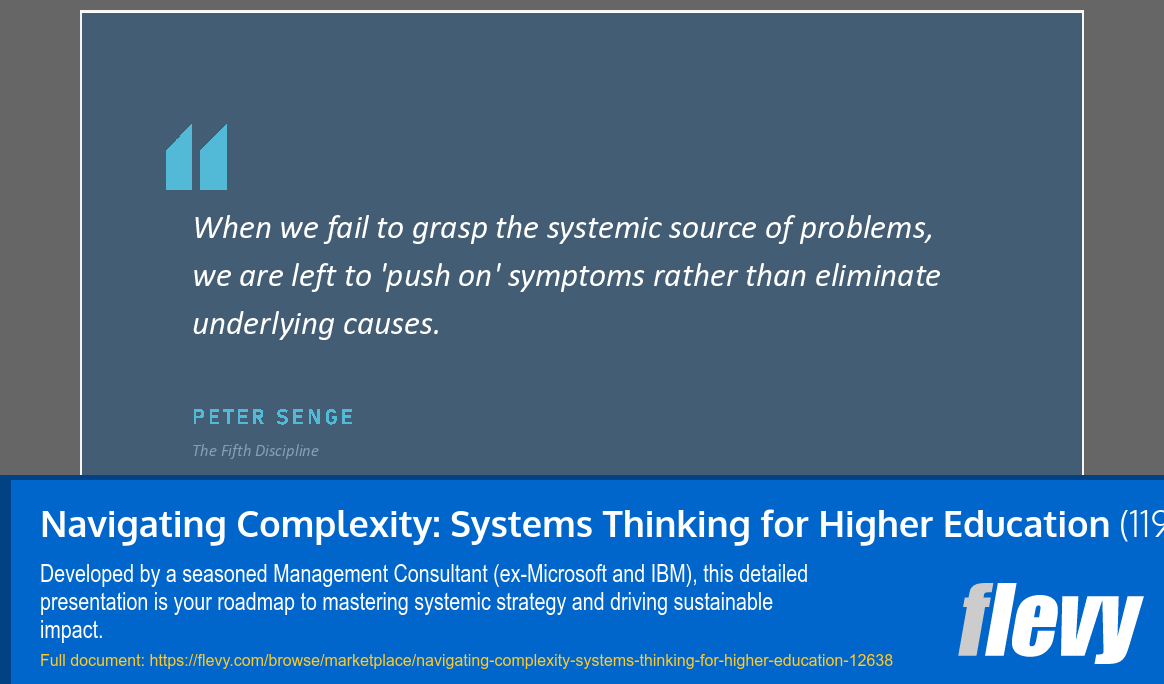
3. How does this differ from standard problem-solving? Traditional methods treat symptoms; Systems Thinking addresses the underlying structure to prevent recurrence.
4. Are these tools reusable? Yes; all included templates are designed for repeated use in department meetings and strategy sessions.
5. Is this only for senior leadership? No. It is designed for all levels of staff who manage complex challenges or cross-functional initiatives.
6. How do "Delays" affect the system? Delays are gaps between a cause and its effect; recognizing them prevents leaders from over-correcting or abandoning interventions too early.
7. What is a "Leverage Point"? It is an intervention point identified through system analysis that yields far more impact than a standard "quick fix".
8. Does this address human factors? Yes, human-centered design is a core pillar to ensure solutions work for students and staff.
Got a question about the product? Email us at support@flevy.com or ask the author directly by using the "Ask the Author a Question" form. If you cannot view the preview above this document description, go here to view the large preview instead.
Source: Best Practices in Education, Systems Thinking PowerPoint Slides: Navigating Complexity: Systems Thinking for Higher Education PowerPoint (PPTX) Presentation Slide Deck, Operational Excellence Consulting
ABOUT THE AUTHOR

Operational Excellence Consulting, founded in 2009 by Allan Ung, draws from extensive experience at Microsoft, IBM, and Underwriters Laboratories (UL). We specialize in strategy deployment, customer experience design, and operational excellence, applying Design Thinking, Lean, and Systems Thinking to maximize customer value and minimize waste.
Our
... [read more]
Ask the Author a Question
You must be logged in to contact the author.




























