
 Click main image to view in full screen. Unlock all 25 preview images:
Medical Equipment Management - Implementation Toolkit – Excel XLSX
Excel (XLSX) + Zip archive file (ZIP)


BENEFITS OF THIS DOWNLOADABLE EXCEL DOCUMENT
- Operate and maintain equipment in area in a safe and efficient manner.
- Assure your enterprise coordinates production activities along with procurement, maintenance, Production Planning, safety and Quality Control activities to obtain optimal use of employee and equipment resources.
- Be certain that your planning analyzes equipment to establish operation data, conducts experimental tests, and evaluates results.
HEALTHCARE EXCEL DESCRIPTION
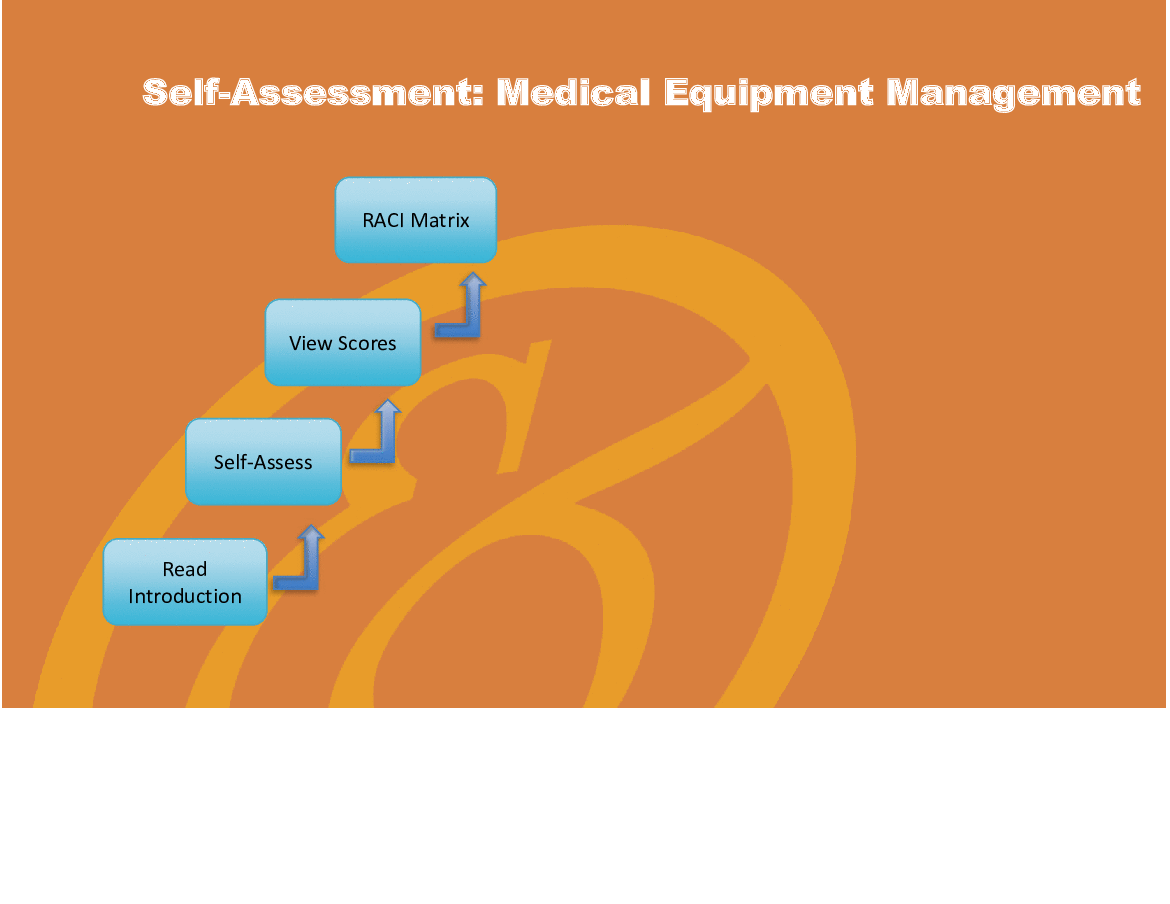
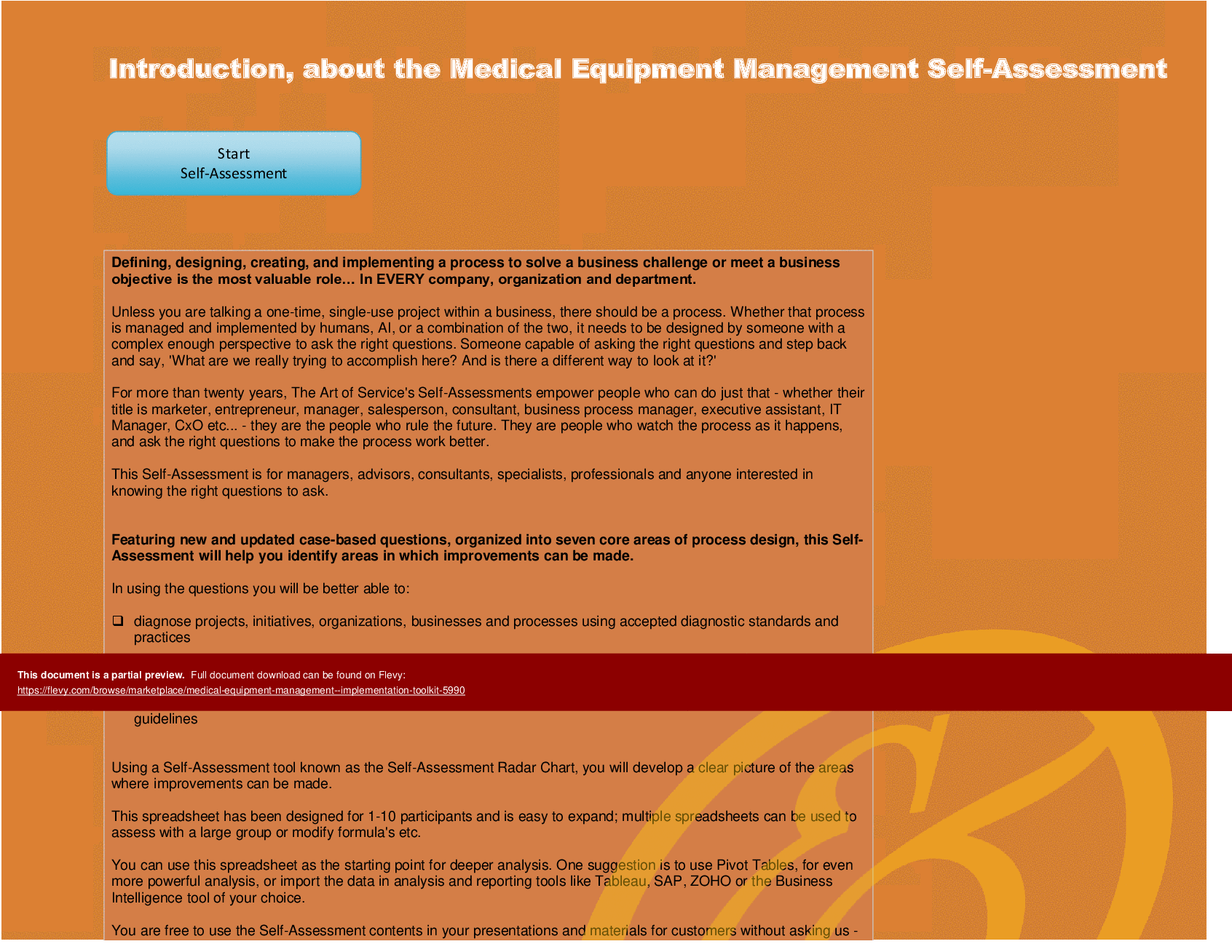
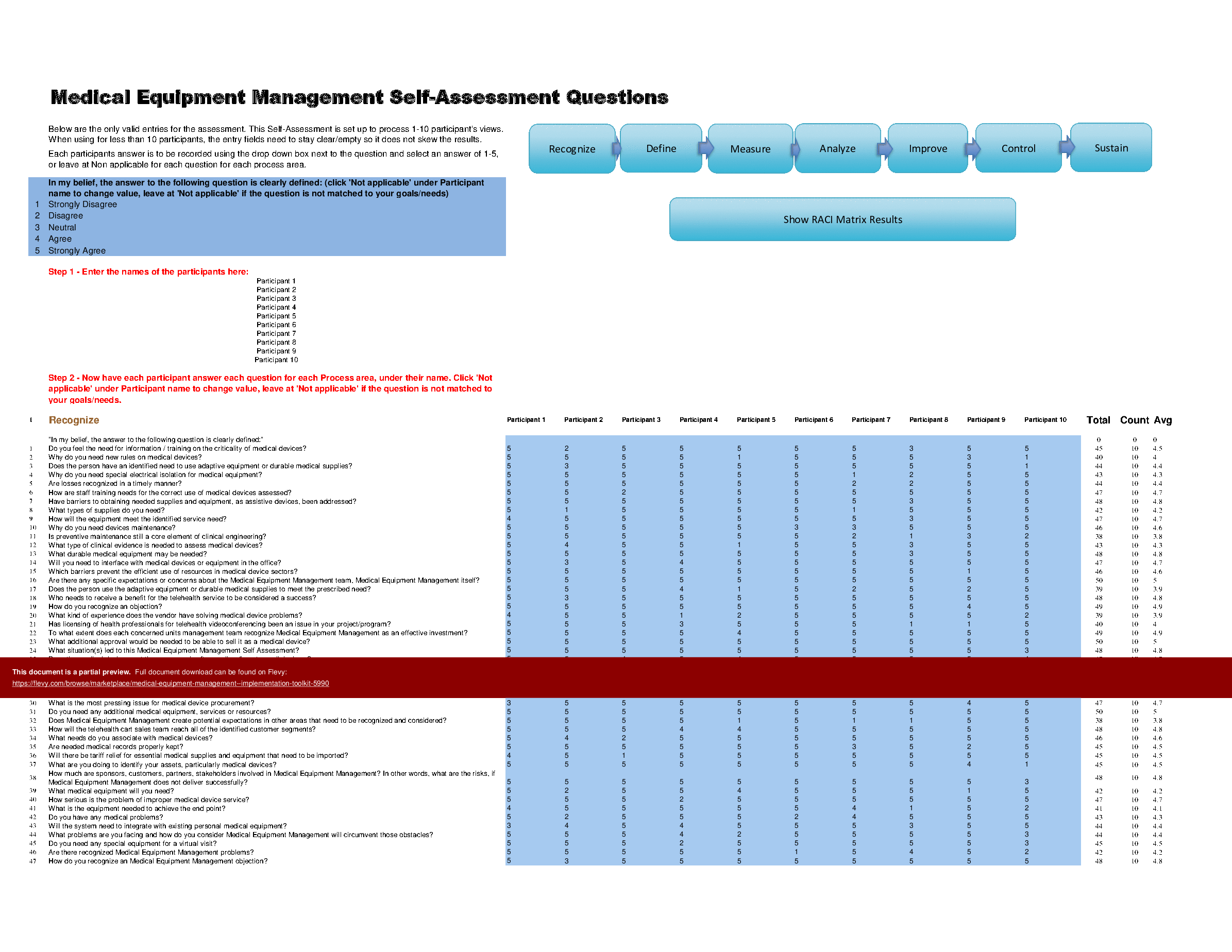
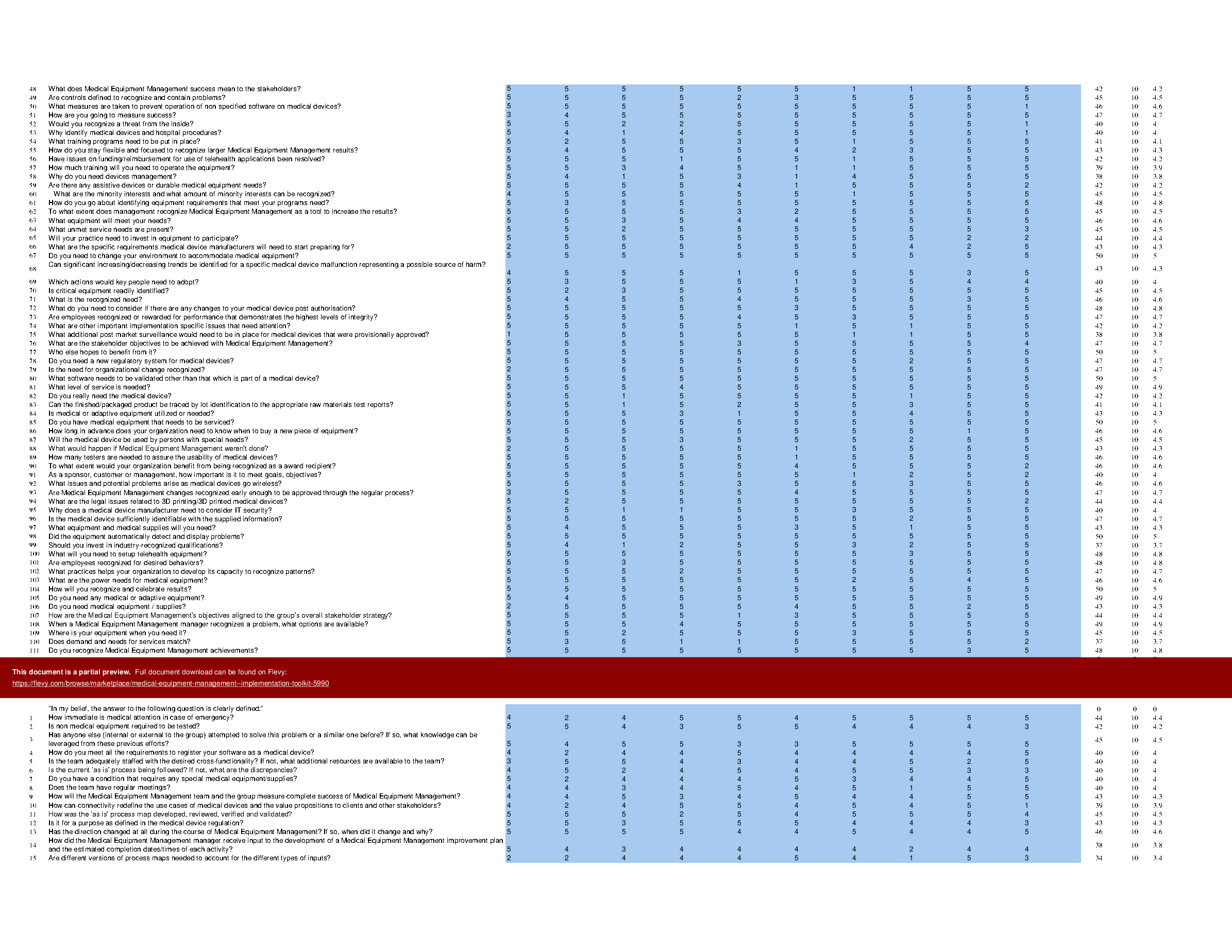
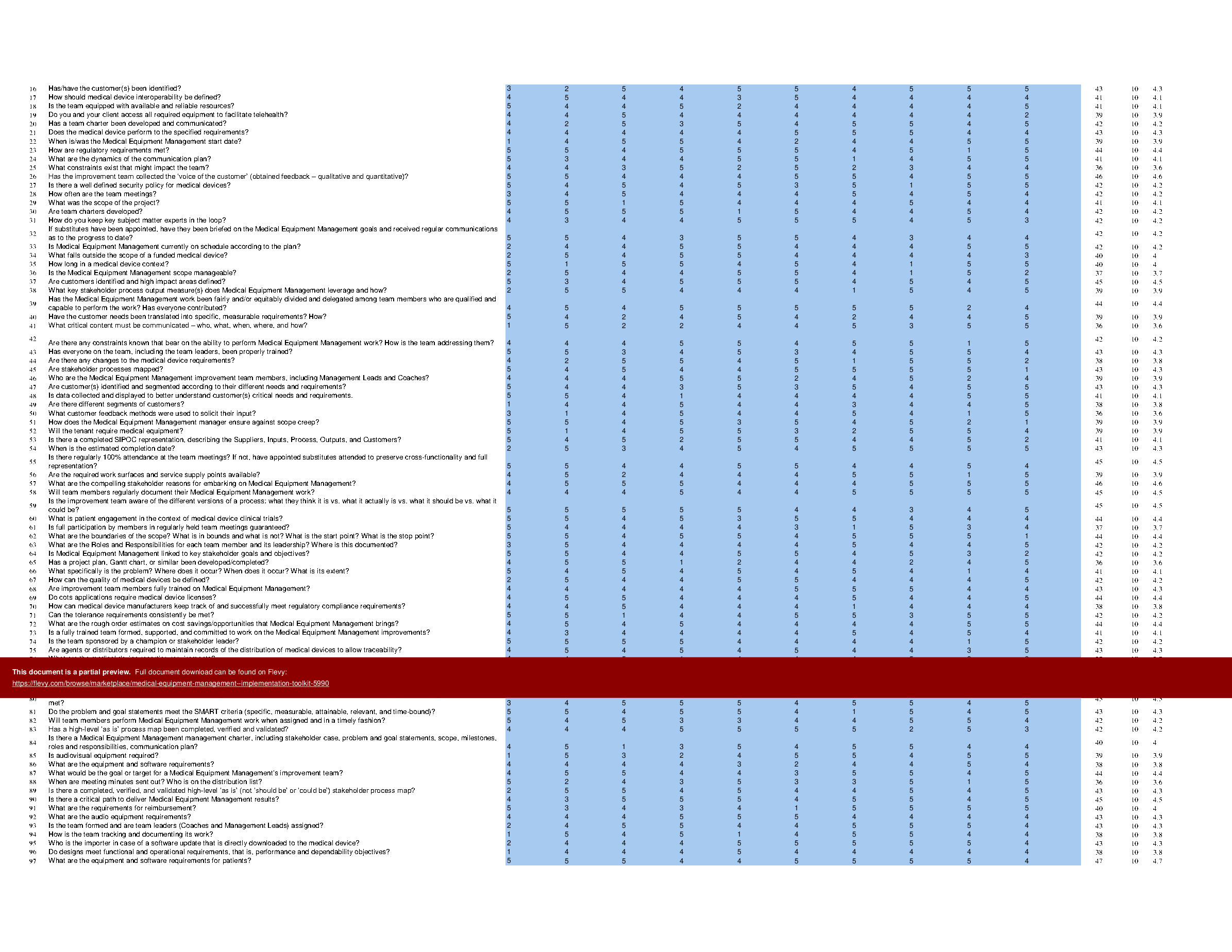
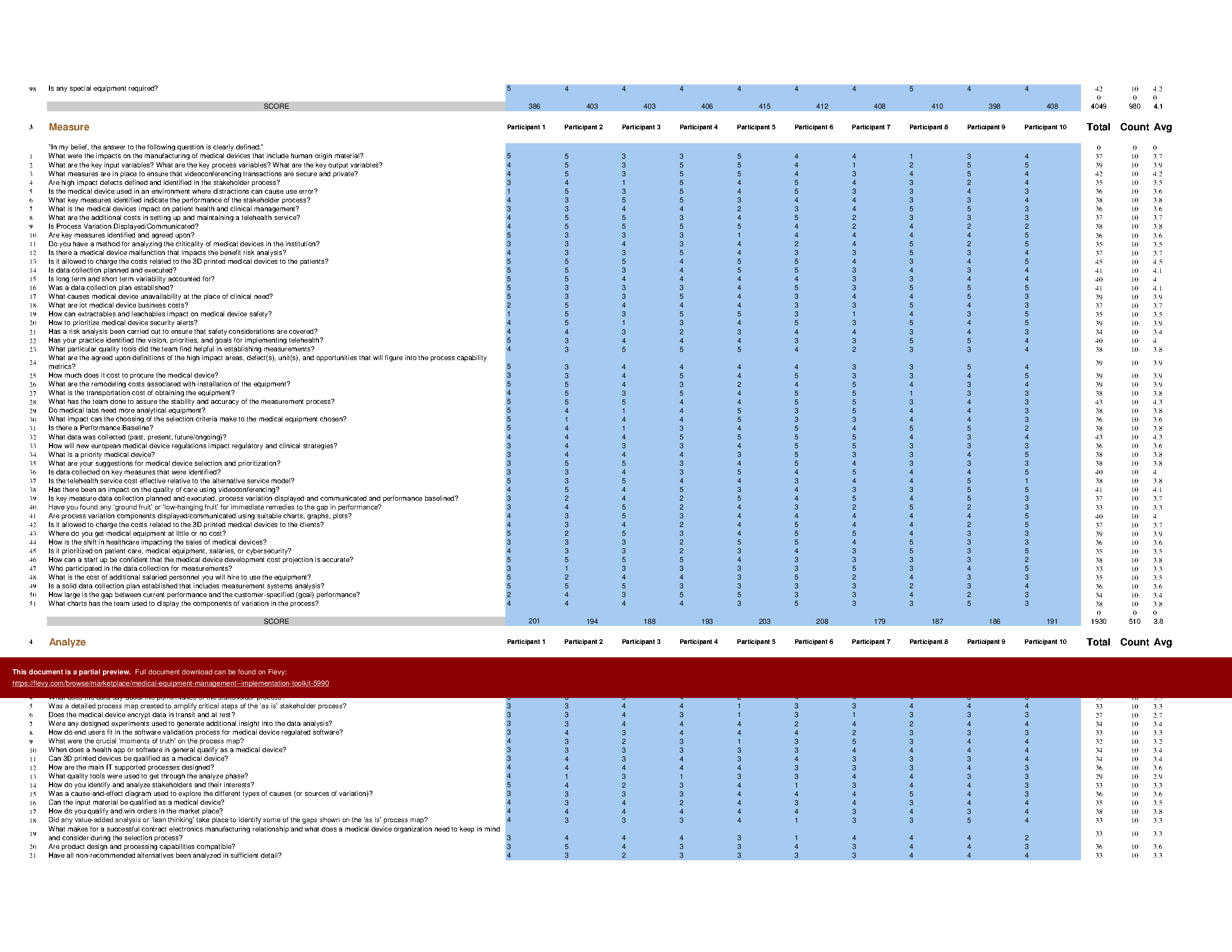
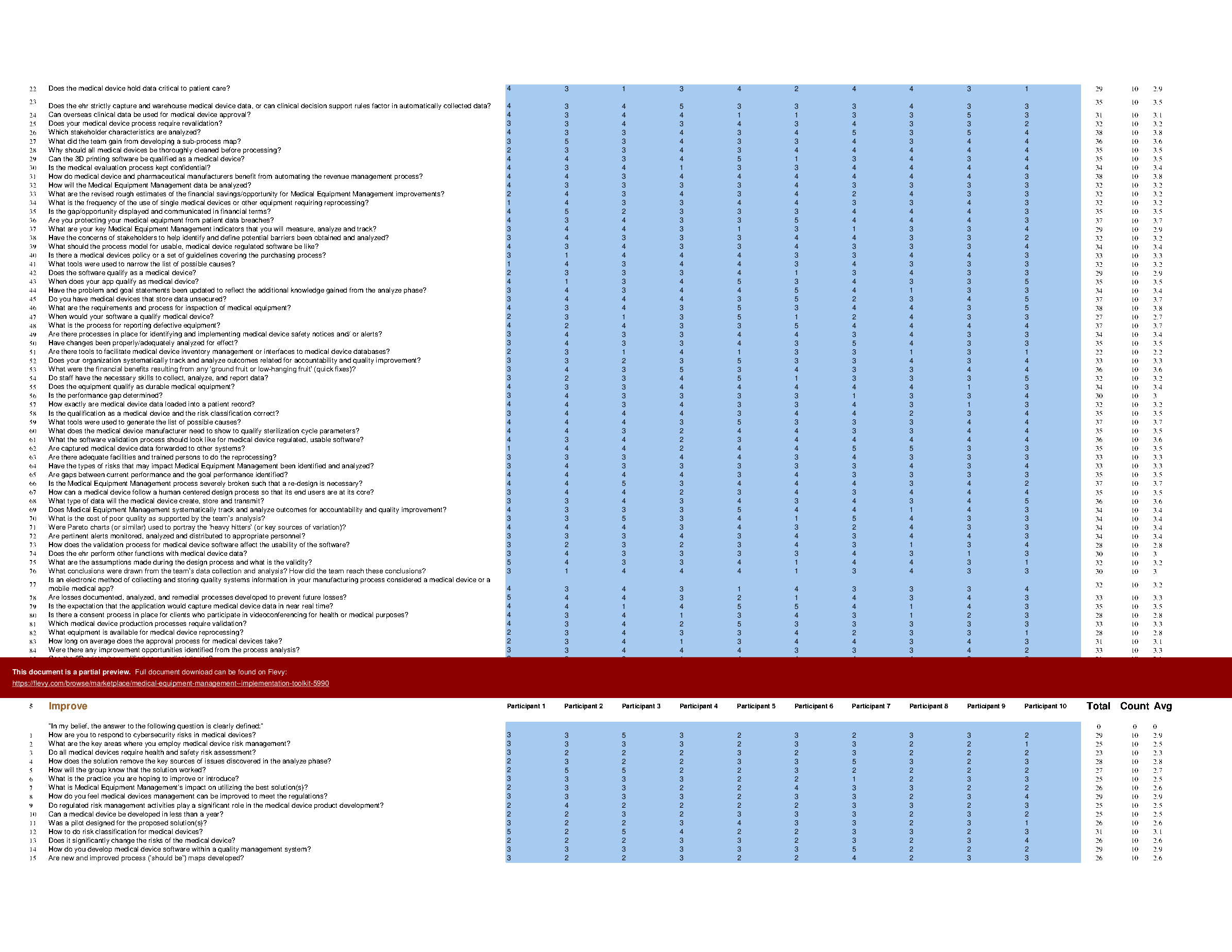
The Medical Equipment Management Implementation Toolkit includes a set of best-practice templates, step-by-step workplans, and maturity diagnostics for any Medical Equipment Management related project. Please note the above partial preview is ONLY of the Self Assessment Excel Dashboard, referenced in steps 1 and 2 (see below for more details).
Through a 3-step process, this toolkit will guide you from idea to implementation. Please find a below a summary of the 3 steps.
STEP 1: Get your bearings
Start with the latest quick edition of the Medical Equipment Management Self Assessment book in PDF containing 49 requirements to perform a quickscan, get an overview and share with stakeholders.
Organized in a Data Driven improvement cycle RDMAICS (Recognize, Define, Measure, Analyze, Improve, Control and Sustain), check the example pre-filled Self-Assessment Excel Dashboard to get familiar with results generation.
STEP 2: Set concrete goals, tasks, dates and numbers you can track
Featuring 999 new and updated case-based questions, organized into seven core areas of Process Design, this Self-Assessment will help you identify areas in which Medical Equipment Management improvements can be made.
The Self-Assessment Excel Dashboard; with the Medical Equipment Management Self-Assessment and Scorecard you will develop a clear picture of which Medical Equipment Management areas need attention, which requirements you should focus on and who will be responsible for them:
• Shows your organization instant insight in areas for improvement: Auto generates reports, radar chart for maturity assessment, insights per process and participant and bespoke, ready to use, RACI Matrix
• Gives you a professional Dashboard to guide and perform a thorough Medical Equipment Management Self-Assessment
• Is secure: Ensures offline Data Protection of your Self-Assessment results
• Dynamically prioritized projects-ready RACI Matrix shows your organization exactly what to do next
STEP 3: Implement, Track, follow up and revise strategy
The outcomes of STEP 2, the self assessment, are the inputs for STEP 3; Start and manage Medical Equipment Management projects with the 62 implementation resources. There are 62 step-by-step Medical Equipment Management Project Management Form Templates covering over 1500 Medical Equipment Management project requirements and success criteria.
Got a question about the product? Email us at support@flevy.com or ask the author directly by using the "Ask the Author a Question" form. If you cannot view the preview above this document description, go here to view the large preview instead.
TOPIC FAQ
What phased approach is commonly used to improve medical equipment management?
A phased approach begins with a quickscan and detailed self-assessment, moves to goal-setting and prioritization, and ends with implementation and tracking. The toolkit organizes this into a 3-step process framed by the RDMAICS cycle (Recognize, Define, Measure, Analyze, Improve, Control and Sustain), a data-driven sequence across 3 steps.What assessment tools are effective for measuring medical equipment management maturity?
Effective tools include structured self-assessments, a scorecard, visual maturity charts, and role clarity matrices. The described product uses a Self-Assessment Excel Dashboard that auto-generates reports, produces a radar chart for maturity, provides a scorecard, and creates a bespoke RACI matrix based on a 49-requirement quick edition and 999 questions.How many diagnostic questions are typically needed to evaluate equipment management processes?
Comprehensive evaluations can use a large, case-based question set to cover process areas; the referenced toolkit provides 999 new and updated case-based questions organized into 7 core Process Design areas to identify specific improvement needs across Medical Equipment Management.What should hospital buyers look for when selecting a medical equipment management toolkit?
Buyers should prioritize a package that combines a validated self-assessment, maturity diagnostics, automated reporting and visualization, role accountability (RACI), offline data protection, and implementation templates to move from diagnosis to action; the referenced toolkit explicitly includes those features and 62 implementation resources.How much implementation support should a management toolkit include for project execution?
A practical toolkit should include step-by-step project forms, task lists, timelines, and measurable success criteria. The described product supplies 62 step-by-step Project Management Form Templates covering over 1500 Medical Equipment Management project requirements and success criteria to support execution.After an external audit, how can I prioritize equipment management initiatives?
Use a quickscan followed by the full self-assessment to map gaps, then rely on auto-generated reports and the radar chart to rank maturity areas. The Self-Assessment Excel Dashboard also produces a dynamically prioritized, projects-ready RACI matrix to assign responsibility and next actions using the assessment outputs and RACI matrix.How can I protect assessment data when performing offline self-assessments?
Choose assessment tools that store results locally and do not require cloud submission; the toolkit’s Self-Assessment Excel Dashboard specifically notes offline Data Protection for self-assessment results, enabling local storage and protection of assessment data.What resources help translate assessment findings into actionable projects?
Assessment outputs need project templates, task-level forms, timelines, and success criteria to convert findings into deliverables. The toolkit moves STEP 2 outputs into STEP 3 with 62 implementation resources—62 project management form templates covering over 1500 requirements and success criteria.Source: Best Practices in Healthcare, Asset Management Excel: Medical Equipment Management - Implementation Toolkit Excel (XLSX) Spreadsheet, Gerard Blokdijk




























