
 Click main image to view in full screen. Unlock all 20 preview images:
Medical Equipment Development Financial Model – Excel XLSX
Excel (XLSX)


BENEFITS OF THIS DOWNLOADABLE EXCEL DOCUMENT
- Provides a dynamic up to 15-years financial forecast for a Medical Equipment Company including development, operation, and valuation phases.
HEALTHCARE EXCEL DESCRIPTION
Medical equipment development involves designing, creating, and refining tools and devices used in healthcare settings to diagnose, monitor, treat, or assist patients. This field combines elements of engineering, healthcare, regulatory compliance, and often user-centered design to create devices that meet strict medical standards and are safe and effective for patient use.
The process generally entails: Research and Conceptualization, Design and Prototyping, Engineering and Testing, Compliance and Regulatory Approval, Manufacturing and Quality Assurance and finally Marketing and Distribution.
This Financial Models presents a Medical Equipment Development Project and enables users to get into details of every step of the entire process, from the development stage, to operating analysis, projection of cash flows and a potential future sale of the company.
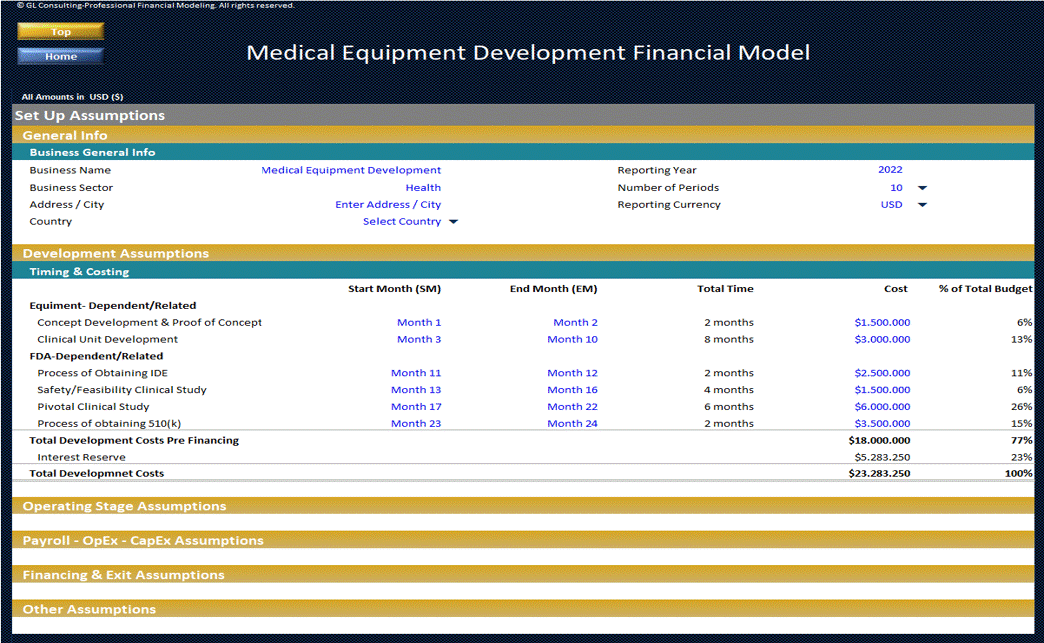
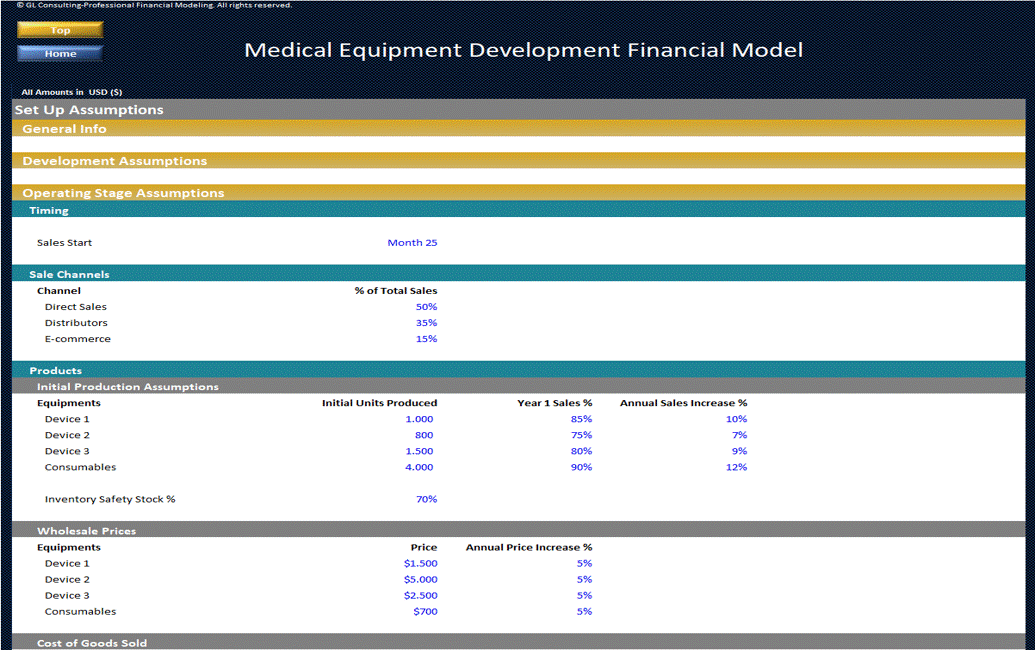
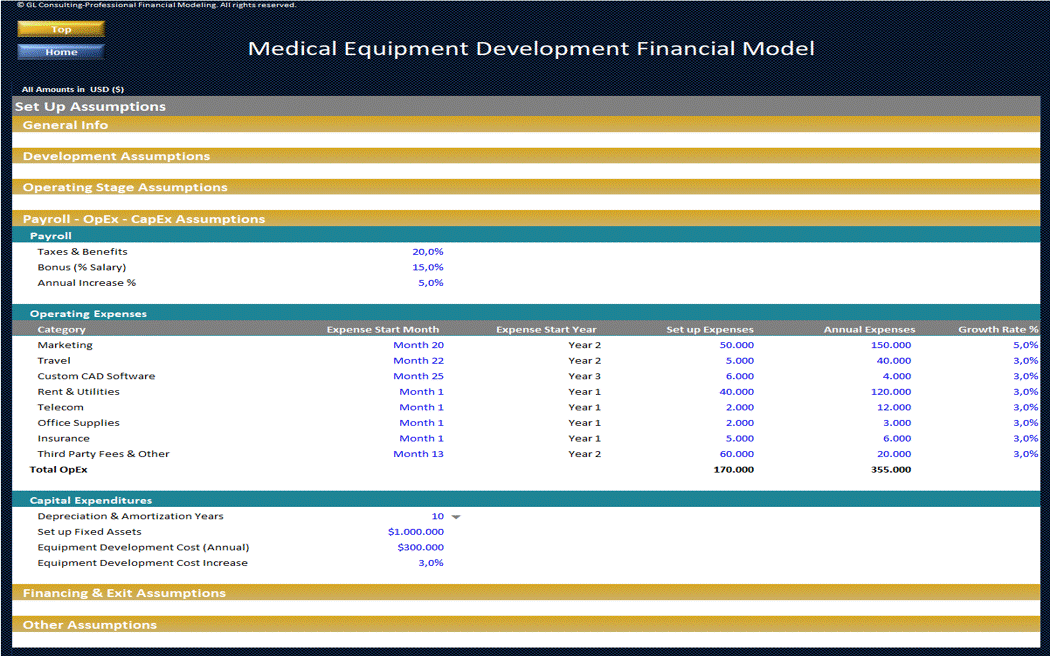
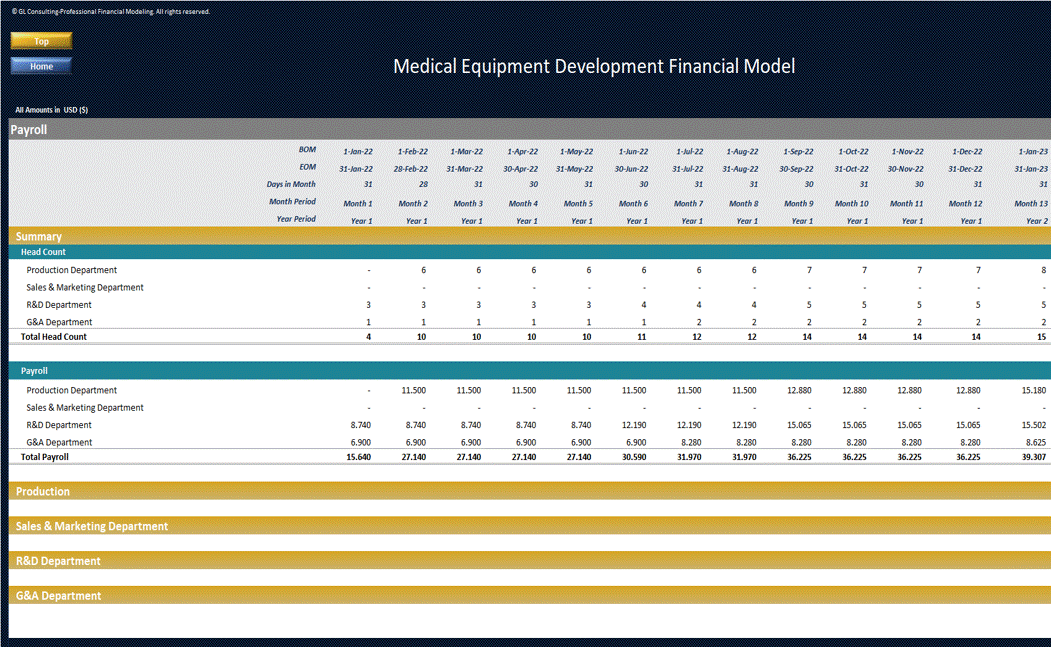
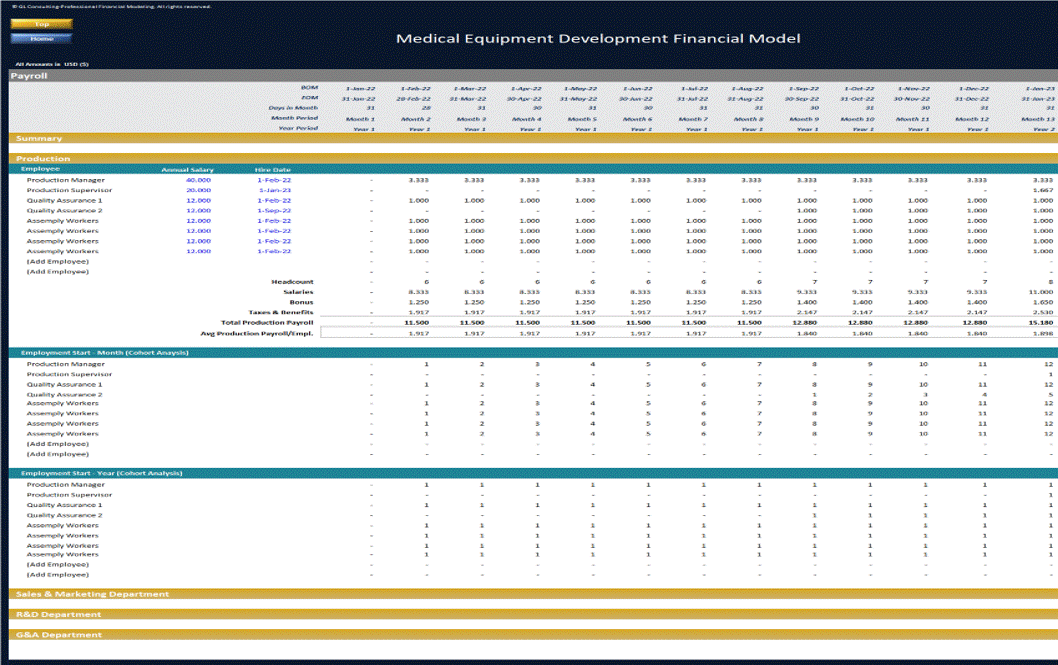
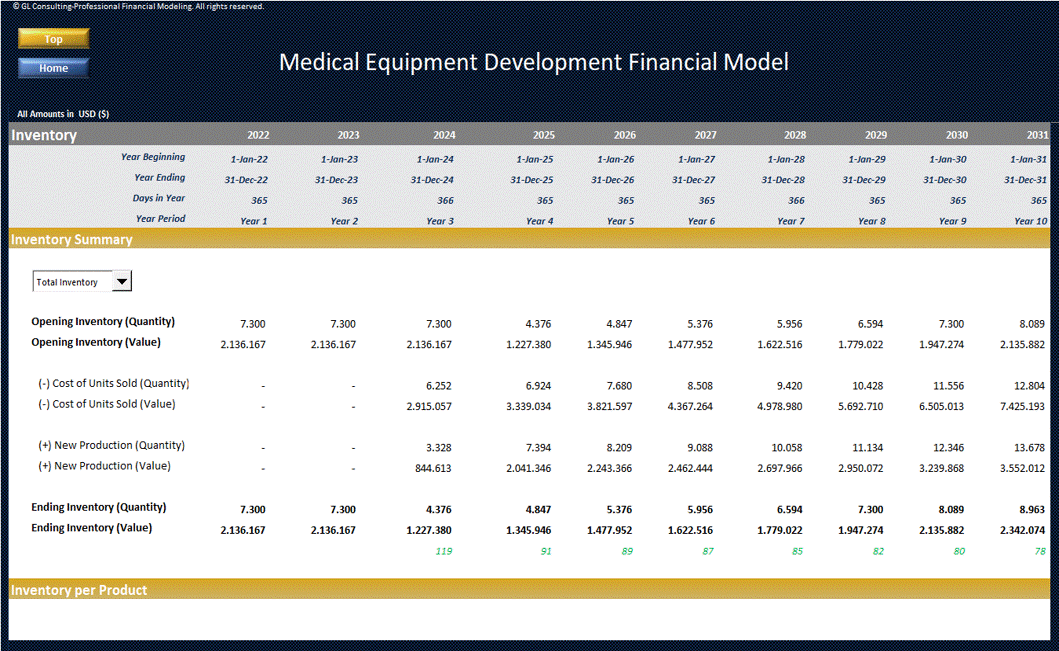
The model includes assumptions for the Development and Equipment Approval Phases (Development Timing and R&D Costs), Distribution Pahse (Market Demand, Market Share), Manufacturing Phase (Units Produced, Manufacturing Costs, Inventory Safety Assumptions), Revenue from Equipment Sales or Leasing and Additional Revenue Sources (Consumables, Training), Payroll, Operating Expenses, Fixed Assets & Depreciation, Financing through Debt, Grants & Equity, VC Cap Tables and Exit Valuation assumptions in case of a potential sale of the business.
The structure of the template follows Financial Modeling Best Practices principles and is fully customizable.
Detailed instructions for the functionality of the model are included in the Excel file.
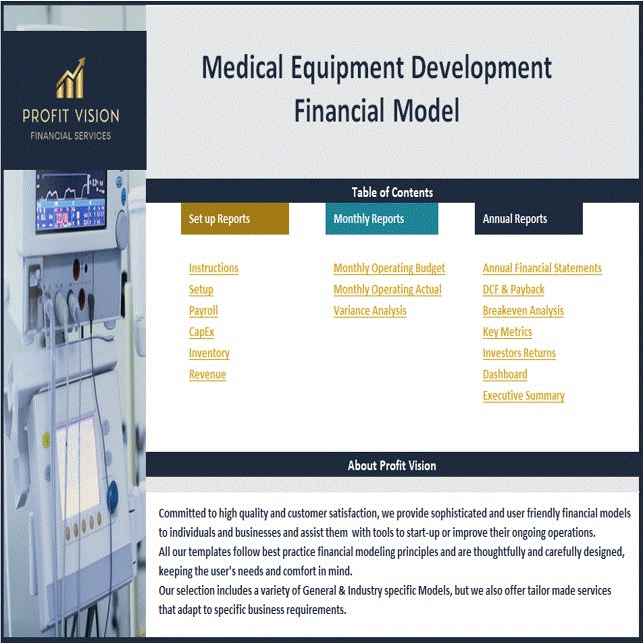
Model Inputs and Setup Reports:
• General Setup Assumptions, incl. Development Timing, R&D Costs, Market Share, Revenue, COGS and Valuation & Exit Assumptions
• Payroll, OpEx, Annual Capex incl. Depreciation Schedule, Equity Financing
• Debt Schedule
• Suppoting Calculations
Financials Output Reports:
• Monthly Project Cash Flow per Year
• Annual Project Cash Flow
• Annual Financial Statements (3 Statement model)
• Breakeven Analysis
• KPIs and Financial Ratios
• Performance Dashboard
• Business Valuation, including DCF Model, Return Metrics (NPV, EV, IRR, MOIC, ROI, etc.), and Sensitivity Analysis
• Dynamic Executive Summary allowing user to select the Analysis Period (up to 15 years)
VC Cap Tables:
• Cap Tables Summary Report
• Pre-Investment Cap Table
• Seed Cap Table
• Series A Cap Table
• Series B Cap Table
• Series C Cap Table
Help & Support
Committed to high quality and customer satisfaction, all our templates follow best-practice financial modeling principles and are thoughtfully and carefully designed, keeping the user's needs and comfort in mind.
Whether you have no experience or are well-versed in finance, accounting, and the use of Microsoft Excel, our professional financial models are the right tools to boost your business operations!
If you experience any difficulty while using this template and cannot find the appropriate guidance in the provided instructions, please feel free to contact us for assistance.
If you need a template customized for your business requirements, please e-mail us and provide a brief explanation of your specific needs.
Got a question about the product? Email us at support@flevy.com or ask the author directly by using the "Ask the Author a Question" form. If you cannot view the preview above this document description, go here to view the large preview instead.
TOPIC FAQ
What are the main development phases I should include in financial projections for a medical device?
Financial projections for medical equipment typically map to Research and Conceptualization, Design and Prototyping, Engineering and Testing, Compliance and Regulatory Approval, Manufacturing and Quality Assurance, and Marketing and Distribution. These phases drive timing and R&D spending assumptions and are reflected as distinct stages in the model’s setup and timing assumptions.How should I model manufacturing costs and inventory for a new medical device?
Model manufacturing using units produced, unit manufacturing costs, and inventory safety assumptions to capture production scale-up and working capital needs. The Medical Equipment Development Financial Model includes inputs for Units Produced, Manufacturing Costs, and Inventory Safety Assumptions to build cost of goods sold and cash-flow impacts.Which valuation methods are commonly used to estimate a medtech exit value?
Common approaches include discounted cash flow analysis and return metrics such as NPV, EV, IRR, MOIC, and ROI, supported by sensitivity analysis. The product’s Business Valuation section explicitly contains a DCF model and these return metrics for exit valuation scenarios.What should I look for when choosing a financial model template for medical device development?
Prioritize templates that include development timing and R&D cost inputs, manufacturing and distribution assumptions, payroll and OpEx schedules, a debt schedule, three-statement outputs, DCF valuation, sensitivity analysis, and Cap Table support through multiple rounds; the Medical Equipment Development Financial Model includes these elements and detailed Excel instructions.How much Excel experience is needed to use a medtech financial model effectively?
The model is designed for a range of users, from those with limited experience to advanced Excel users, and it includes detailed instructions within the Excel file to guide setup and customization. Advanced customizations may still require intermediate Excel skills and familiarity with financial statements and schedules.What financial outputs should I prepare when pitching to venture investors for a device startup?
Investors typically expect monthly and annual cash flow forecasts, annual financial statements (3-statement model), KPIs and ratios, a DCF-based business valuation with return metrics, sensitivity analysis, and cap tables for financing rounds; the Medical Equipment Development Financial Model produces these outputs including monthly project cash flow and cap tables.How can I assess breakeven timing and profitability for a new medical device?
Use breakeven analysis alongside monthly project cash flow and annual financial statements to model the ramp in units sold, pricing, and cost of goods sold. Tracking KPIs and cash-flow breakeven supports assessment of when the product reaches operational profitability, and the model includes breakeven and monthly cash-flow reports.Do financial models for medtech typically include cap table and multiple financing round scenarios?
Yes—startup medtech projections often model equity financing across rounds and cap table impacts. This model includes a Cap Tables Summary and individual Pre-Investment, Seed, Series A, Series B, and Series C cap tables plus exit valuation assumptions for multi-round fundraising planning.Source: Best Practices in Healthcare, Asset Management, Integrated Financial Model Excel: Medical Equipment Development Financial Model Excel (XLSX) Spreadsheet, Profit Vision
ABOUT THE AUTHOR

Profit Vision provides Consulting & Outsourced Financial Services as well as Financial Planning & Performance analysis to small and mid-size businesses by implementing efficient and effective tools to assist them with start-up business plans or improve their ongoing operations.
Our range of services include Financial & Operational Analysis, Business Planning, Budgeting & Forecasting, Cash Flow
... [read more]
Ask the Author a Question
You must be logged in to contact the author.




























