
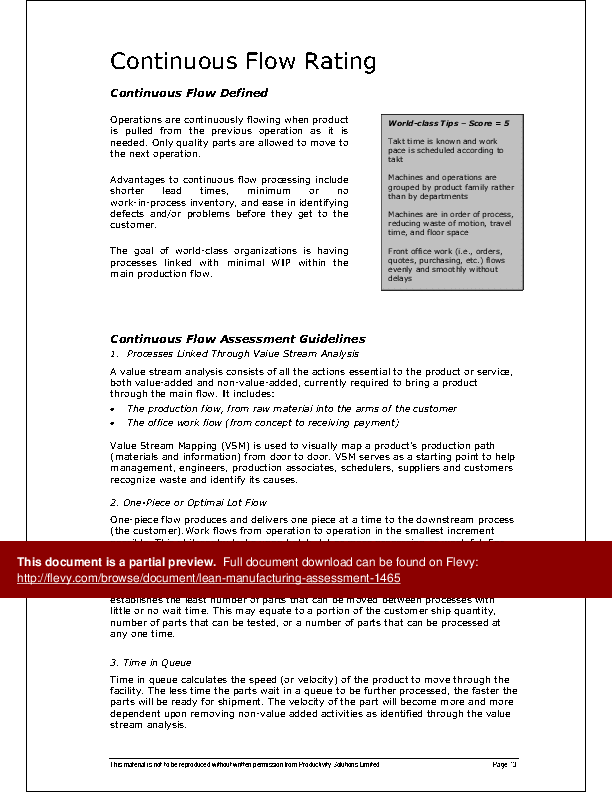
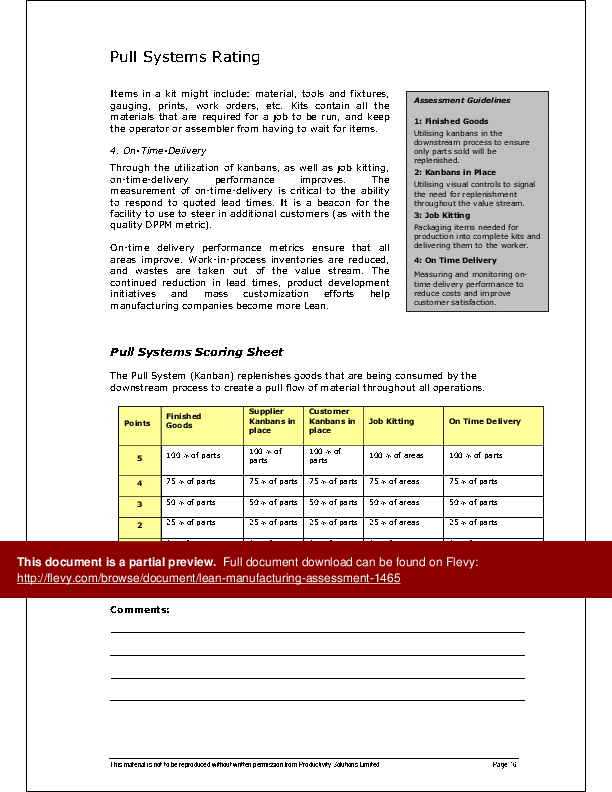
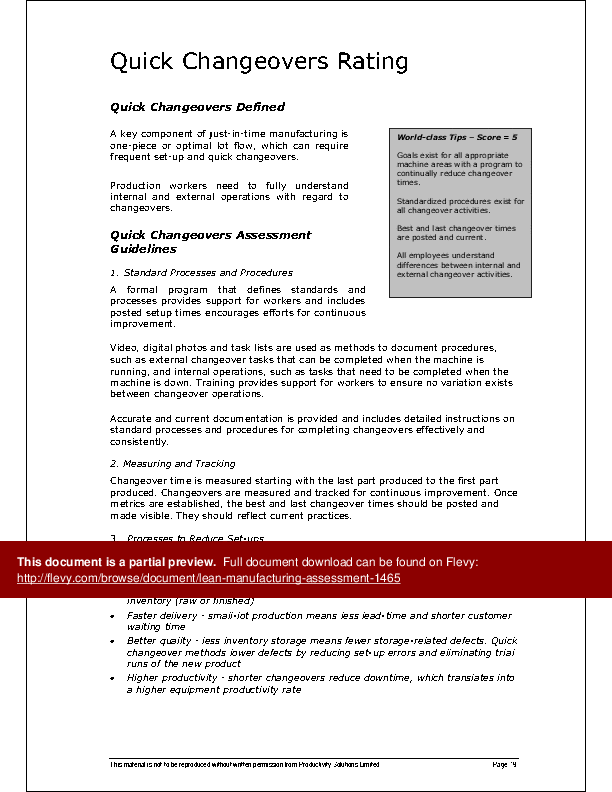
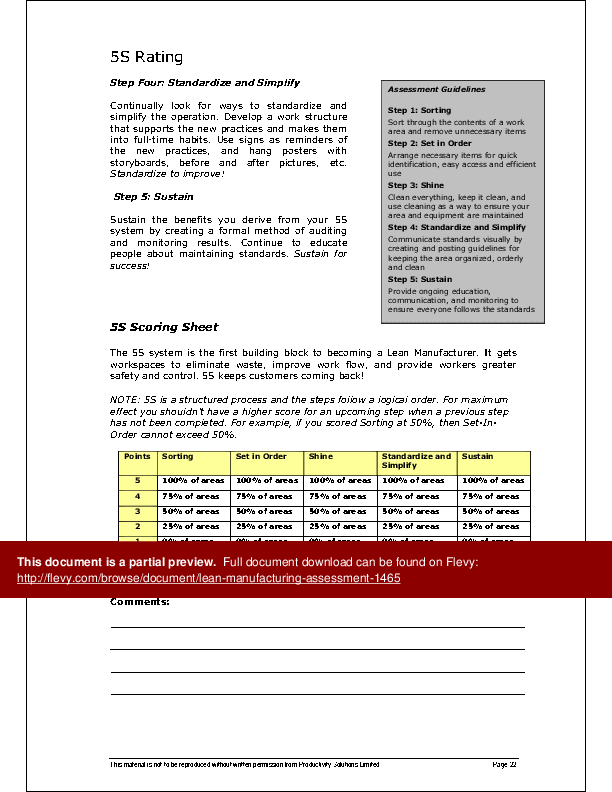

The Lean Manufacturing Assessment utilizes a set of manufacturing principles related to the world-class Toyota Production System, commonly referred to as Lean Manufacturing practices. The assessment is used as a self-evaluation tool for job shops and manufacturing companies. It sets the baseline to perform a Lean Manufacturing gap analysis by targeting and monitoring areas for improvement.

Assessment includes:
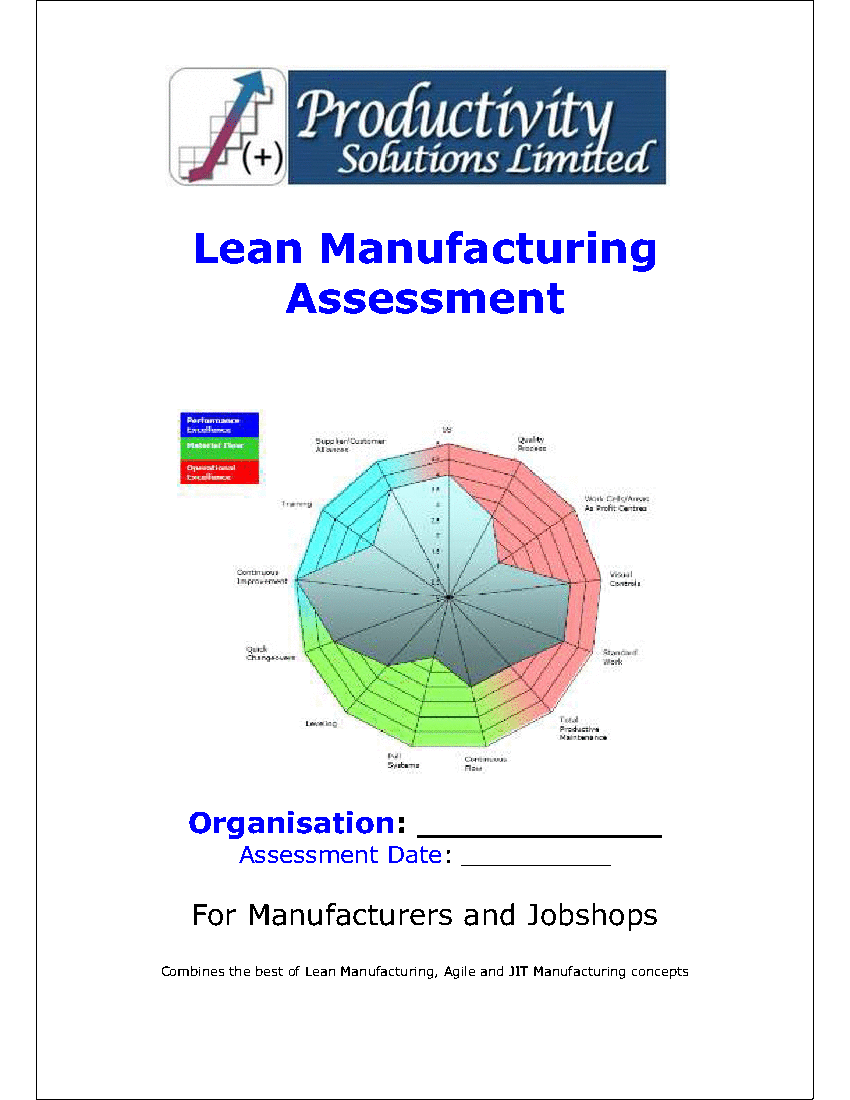
Category 1: People – Continuous lmprovement, Training, Supplier/Customer Alliances
Category 2: Just-In-Time – Continuous Flow, Pull Systems, Leveling, Quick Changeovers
Category 3: Operational Excellence – 5S, Quality Process, Work Cells / Areas as Profit Centers, Visual Controls, Standard Work, Total Productive Maintenance
This assessment comes with an Excel sheet where you can enter the score and develop a graph for both current and future states.
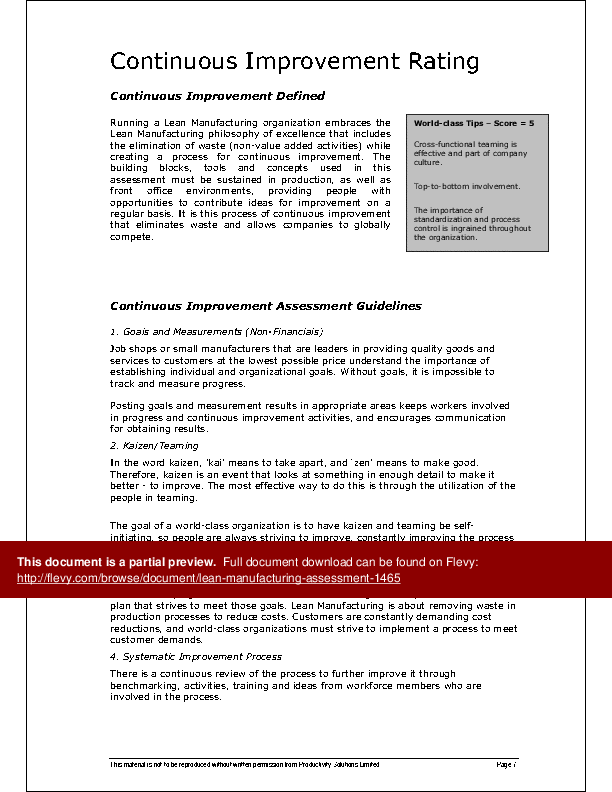
The Lean Manufacturing Assessment Word document provides a comprehensive evaluation framework, incorporating key elements such as cross-functional teaming, top-to-bottom involvement, and the importance of standardization and process controls. This tool is designed to ensure that continuous improvement is not just a goal, but a part of the company culture. By utilizing this assessment, organizations can systematically identify and address gaps in their lean practices.
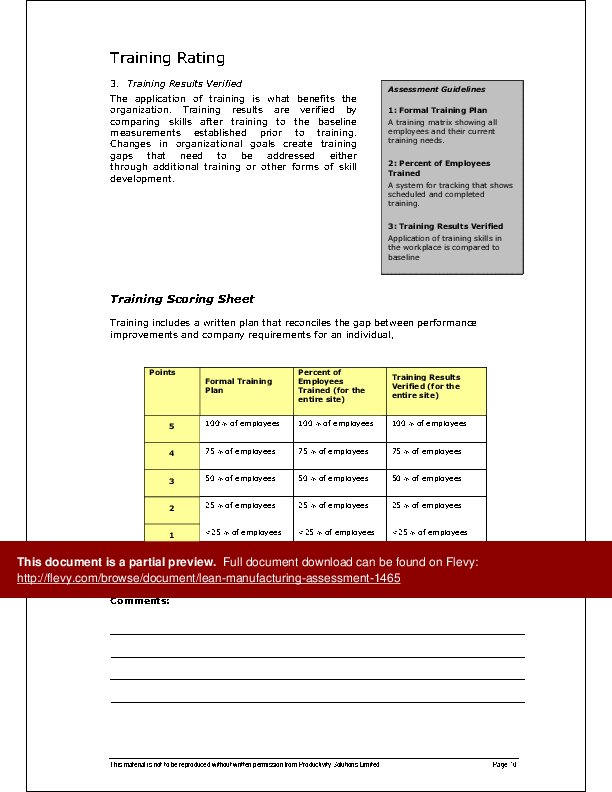
The assessment guidelines emphasize critical areas like formal training plans, tracking employee training, and verifying training results. It ensures that training is not only conducted, but also effectively applied in the workplace. The document includes detailed scoring criteria for various lean components, allowing companies to benchmark their current state and set measurable goals for improvement.
World-class tips provided in the assessment offer actionable insights on optimizing takt time, arranging machines for efficiency, and ensuring smooth workflow in both production and front office operations. These tips are based on proven lean principles and are aimed at helping organizations achieve operational excellence. The Lean Manufacturing Assessment is an indispensable tool for any manufacturing company committed to lean transformation and continuous improvement.
Got a question about the product? Email us at support@flevy.com or ask the author directly by using the "Ask the Author a Question" form. If you cannot view the preview above this document description, go here to view the large preview instead.
Executive Summary
The Lean Manufacturing Assessment is a comprehensive tool designed to evaluate and enhance manufacturing efficiency by integrating Lean principles, Agile methodologies, and Just-In-Time (JIT) practices. Developed by a certified LSS Master Black Belt with extensive global training experience, this assessment helps organizations identify waste, improve processes, and ultimately boost productivity. By utilizing this assessment, companies can establish a baseline for Lean practices, monitor progress, and drive continuous improvement across their operations.
Who This Is For and When to Use
• Manufacturing executives and plant managers seeking to enhance operational efficiency
• Continuous improvement teams focused on waste reduction and process optimization
• Quality assurance professionals aiming to improve product quality and customer satisfaction
• Lean practitioners and consultants looking for a structured assessment tool
Best-fit moments to use this deck:
• During initial Lean implementation to establish a baseline
• When evaluating current Lean practices and identifying gaps
• As part of a continuous improvement initiative to track progress over time
Learning Objectives
• Define Lean Manufacturing principles and their impact on operational efficiency
• Identify and categorize wasteful activities within manufacturing processes
• Establish a baseline for measuring Lean Manufacturing practices
• Develop a prioritized action plan for implementing Lean improvements
• Monitor and evaluate progress in Lean initiatives using key performance indicators
• Foster a culture of continuous improvement across all levels of the organization
Table of Contents
• Introduction to Lean Manufacturing (page 1)
• Assessment Overview (page 2)
• Scoring Methodology (page 5)
• Evaluation Process (page 4)
• Continuous Improvement Practices (page 8)
• Training and Development (page 9)
• Supplier/Customer Alliances (page 11)
• Pull Systems and JIT (page 14)
• Visual Controls and Metrics (page 28)
• Total Productive Maintenance (page 32)
• Action Plan Template (page 35)
Primary Topics Covered
• Lean Manufacturing Principles - A holistic approach to eliminate waste and enhance value across manufacturing processes.
• Assessment Methodology - A structured scoring system to evaluate current Lean practices against world-class benchmarks.
• Continuous Improvement - Techniques and practices that promote ongoing enhancements in quality and efficiency.
• Training and Development - Strategies to ensure workforce competency in Lean principles and practices.
• Supplier and Customer Alliances - Building strong relationships to enhance collaboration and reduce costs.
• Visual Controls - Implementing visual management tools to track performance and identify issues in real-time.
Deliverables, Templates, and Tools
• Lean Manufacturing Assessment scoring sheets for evaluating key performance areas
• Action plan templates for prioritizing improvement opportunities
• Training matrices for tracking employee development in Lean practices
• Visual control boards for real-time performance monitoring
• Supplier/customer alliance frameworks for enhancing collaboration
Slide Highlights
• Overview of Lean Manufacturing principles and their benefits
• Scoring methodology and how to interpret results
• Continuous improvement practices and their impact on operational efficiency
• Visual controls and metrics for tracking progress
• Action plan template for implementing Lean improvements
Potential Workshop Agenda
Lean Manufacturing Overview (60 minutes)
• Introduction to Lean principles and practices
• Discussion on the benefits of Lean Manufacturing
Assessment Scoring Workshop (90 minutes)
• Hands-on session to complete scoring sheets
• Group discussion on findings and implications
Action Planning Session (60 minutes)
• Prioritize improvement opportunities based on assessment results
• Develop actionable steps and assign responsibilities
Customization Guidance
• Tailor the assessment scoring sheets to reflect specific organizational goals and metrics
• Adjust training materials to align with the existing skill levels of employees
• Incorporate company-specific examples and case studies into the assessment process
Secondary Topics Covered
• Waste identification and categorization
• Best practices for implementing Lean tools and methodologies
• Strategies for fostering a culture of continuous improvement
• Techniques for measuring and monitoring Lean performance
Topic FAQ
Document FAQ
These are questions addressed within this presentation.
What is Lean Manufacturing?
Lean Manufacturing is a systematic approach to identifying and eliminating waste in manufacturing processes, focusing on maximizing value for customers.
How does the assessment work?
The assessment involves scoring various Lean Manufacturing practices using a structured scoring sheet, followed by an evaluation of results to identify areas for improvement.
Who should conduct the assessment?
The assessment can be conducted by an internal team, a Lean champion, or an external consultant with expertise in Lean practices.
What are the key benefits of using this assessment?
The assessment provides a clear understanding of current Lean practices, identifies gaps, and establishes a roadmap for continuous improvement.
How often should the assessment be conducted?
It is recommended to conduct the assessment regularly, such as annually or semi-annually, to track progress and adapt strategies as needed.
What types of metrics are used in the assessment?
Metrics include quality measures, throughput times, inventory levels, and customer satisfaction scores, among others.
Can the assessment be customized for specific industries?
Yes, the assessment can be tailored to fit the unique needs and challenges of different manufacturing sectors.
What is the expected outcome of the assessment?
The expected outcome is a prioritized action plan for implementing Lean improvements, along with a clear baseline for measuring progress.
Glossary
• Lean Manufacturing - A methodology focused on minimizing waste while maximizing productivity.
• Continuous Improvement - Ongoing efforts to enhance products, services, or processes.
• Just-In-Time (JIT) - An inventory strategy that aligns production with demand, reducing waste.
• Value Stream Mapping - A visual tool to analyze the flow of materials and information.
• Kaizen - A Japanese term meaning "change for better," often used in Lean practices.
• 5S - A workplace organization method that uses 5 Japanese words: Sort, Set in order, Shine, Standardize, and Sustain.
• Total Productive Maintenance (TPM) - A maintenance approach that aims to increase productivity by reducing downtime.
• Pull System - A production strategy that relies on customer demand to drive manufacturing processes.
• Supplier/Customer Alliances - Collaborative relationships between suppliers and customers to enhance value.
• Visual Controls - Tools that use visual signals to communicate information about processes and performance.
• DPPM - Defective Parts Per Million, a measure of quality performance.
• Takt Time - The maximum allowable time to produce a product to meet customer demand.
• Work Cell - A production area designed to optimize workflow and efficiency.
• Standard Work - Documented procedures that define the best practices for performing tasks.
• Metrics - Measurements used to assess performance and progress in Lean initiatives.
• Waste - Any activity that does not add value to the product or service.
• Training Matrix - A tool for tracking employee training and development in Lean practices.
• Action Plan - A structured approach to implementing improvements based on assessment findings.
• Radar Chart - A visual representation of performance across various Lean metrics.
• Assessment Summary - A document summarizing the results and findings from the Lean Manufacturing Assessment.
Source: Best Practices in Lean Manufacturing Word: Lean Manufacturing Assessment Word (DOCX) Document, OpEx Academy NZ
This document is available as part of the following discounted bundle(s):
Save %!
Lean BB Champ 1 - Lean Intro + Lean Assessment
This bundle contains 2 total documents. See all the documents to the right.
Save %!
PSL - Lean Execution Bundle
This bundle contains 11 total documents. See all the documents to the right.
|
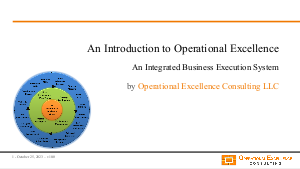
Receive our FREE presentation on Operational Excellence
This 50-slide presentation provides a high-level introduction to the 4 Building Blocks of Operational Excellence. Achieving OpEx requires the implementation of a Business Execution System that integrates these 4 building blocks. |