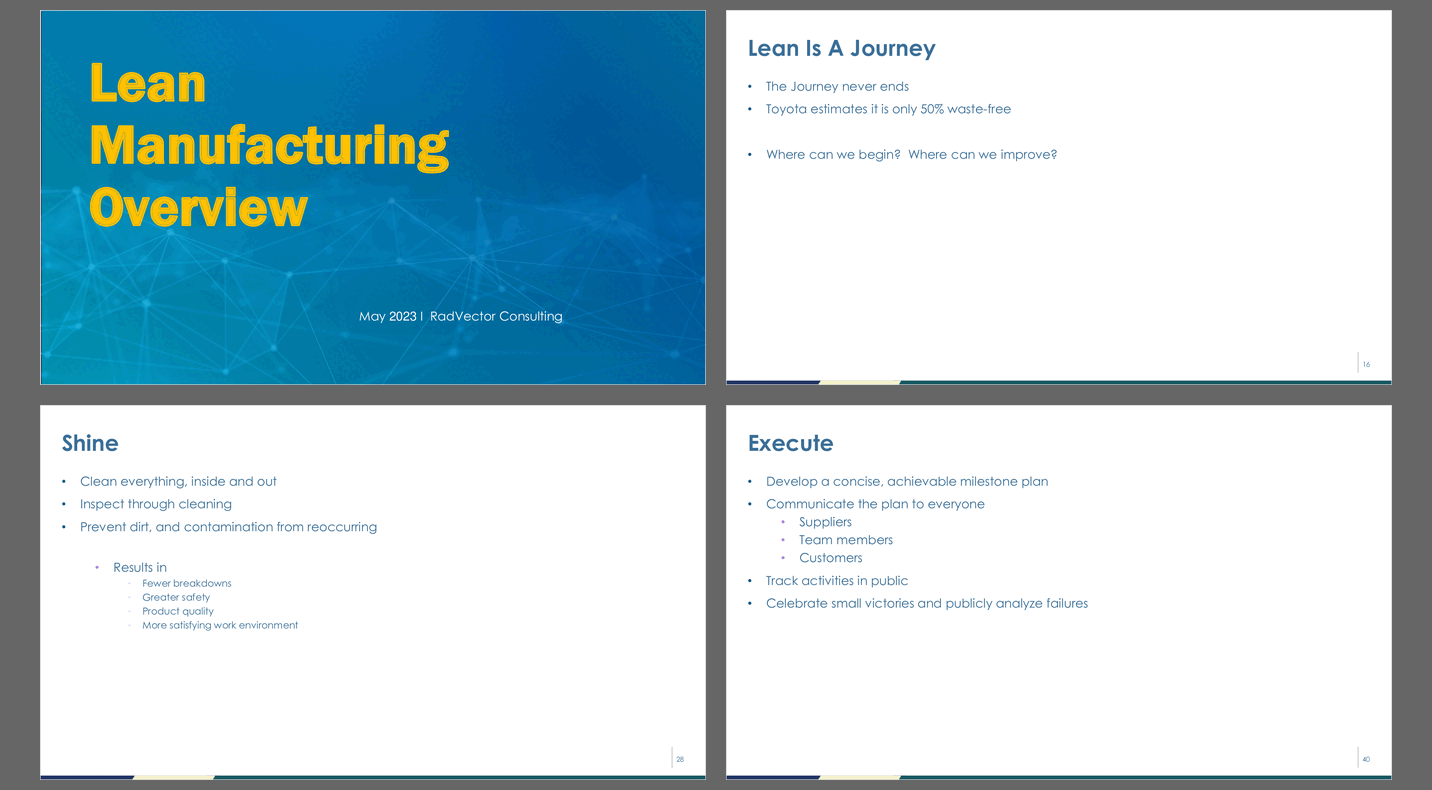

Lean Manufacturing Overview   254-slide PPT PowerPoint presentation slide deck (PPTX)
$45.00

Lean Manufacturing Overview (254-slide PPT PowerPoint presentation slide deck (PPTX)) Preview Image
Log in to unlock full preview.
Lean Manufacturing Overview (254-slide PPT PowerPoint presentation slide deck (PPTX)) Preview Image
Arrow   Click main image to view in full screen.

Lean Manufacturing Overview (PowerPoint PPTX Slide Deck)

PowerPoint (PPTX) 254 Slides

$45.00
Developed by a team of experts with global consulting experience at McKinsey, Deloitte, and Capgemini.
Add to Cart


Immediate download
Fully editable PowerPoint
Free lifetime updates

LEAN MANUFACTURING PPT DESCRIPTION

Editor Summary Lean Manufacturing Overview is a 254-slide PowerPoint presentation that explains lean principles and practical tools for production optimization, drawing on the Toyota Production System, Six Sigma, Kaizen, 5S, value stream mapping, mistake proofing, quick changeover, lean accounting, and Theory of Constraints. Read more

Mastering LEAN: The Path to Efficiency and Excellence

Deciphering LEAN:

LEAN is not just a term; it's a powerful methodology that fuels the acceleration of production by eliminating redundant process steps that offer no value. It's a journey to unearth and remove those roadblocks that hinder product or service delivery. LEAN shines a light on the tedious, resource-draining steps in the process and roots out the waste and rework that create defects along the way.

LEADING the Way:

LEAN is not about slashing jobs; it's about forging a path toward enhanced capacity, reduced costs, and shorter cycle times. It's the art of fine-tuning the journey from order to shipment, minimizing delays, and accentuating what truly matters to the customer.

The LEAN Advantage:

LEAN is not just a philosophy; it's a pragmatic approach that yields tangible benefits:

•  It's the scalpel that trims costs, not just selling prices.
•  It's the accelerator that reduces delivery time, cycle time, and setup time.
•  It's the architect that designs processes to eliminate waste.
•  It's the perpetual gardener, tirelessly seeking opportunities for improvement.
•  It's the maestro of quality, orchestrating harmonious processes.
•  It's the impresario of customer satisfaction, directing standing ovations.
•  It's the motivator, inspiring employees, elevating morale, and shaping company culture.
•  It's the transformative force, reshaping manufacturing landscapes.

Charting the Course:

This document is your compass to navigate the world of Lean Manufacturing. With 254 slides at your disposal, it demystifies the core concepts and tools of LEAN. It stands ready for your customization, enriched with compelling figures, illuminating diagrams, engaging ice-breakers, captivating visuals, and more. Brace yourself for an immersive journey that will equip you with the wisdom to master the art of LEAN and unlock efficiency and excellence within your organization.

Got a question about the product? Email us at support@flevy.com or ask the author directly by using the "Ask the Author a Question" form. If you cannot view the preview above this document description, go here to view the large preview instead.

MARCUS OVERVIEW

This synopsis was written by Marcus [?] based on the analysis of the full 254-slide presentation.


Executive Summary
The Lean Manufacturing Overview presentation offers a comprehensive exploration of lean principles, tools, and methodologies designed to optimize production processes. Developed by a team of experts with extensive consulting backgrounds at McKinsey, Deloitte, and Capgemini, this presentation equips corporate executives and consultants with actionable insights to eliminate waste, enhance productivity, and foster continuous improvement. By leveraging frameworks such as the Toyota Production System, Six Sigma, and Kaizen, users will learn to implement effective strategies that drive operational excellence and customer satisfaction.

Who This Is For and When to Use
•  Operations Managers seeking to improve production efficiency
•  Quality Assurance teams focused on reducing defects and enhancing product quality
•  Supply Chain professionals aiming to streamline processes and reduce lead times
•  Lean Practitioners looking to deepen their understanding of lean tools and methodologies

Best-fit moments to use this deck:
•  During strategic planning sessions aimed at operational improvement
•  In training workshops for teams adopting lean practices
•  When assessing current manufacturing processes for optimization opportunities

Learning Objectives
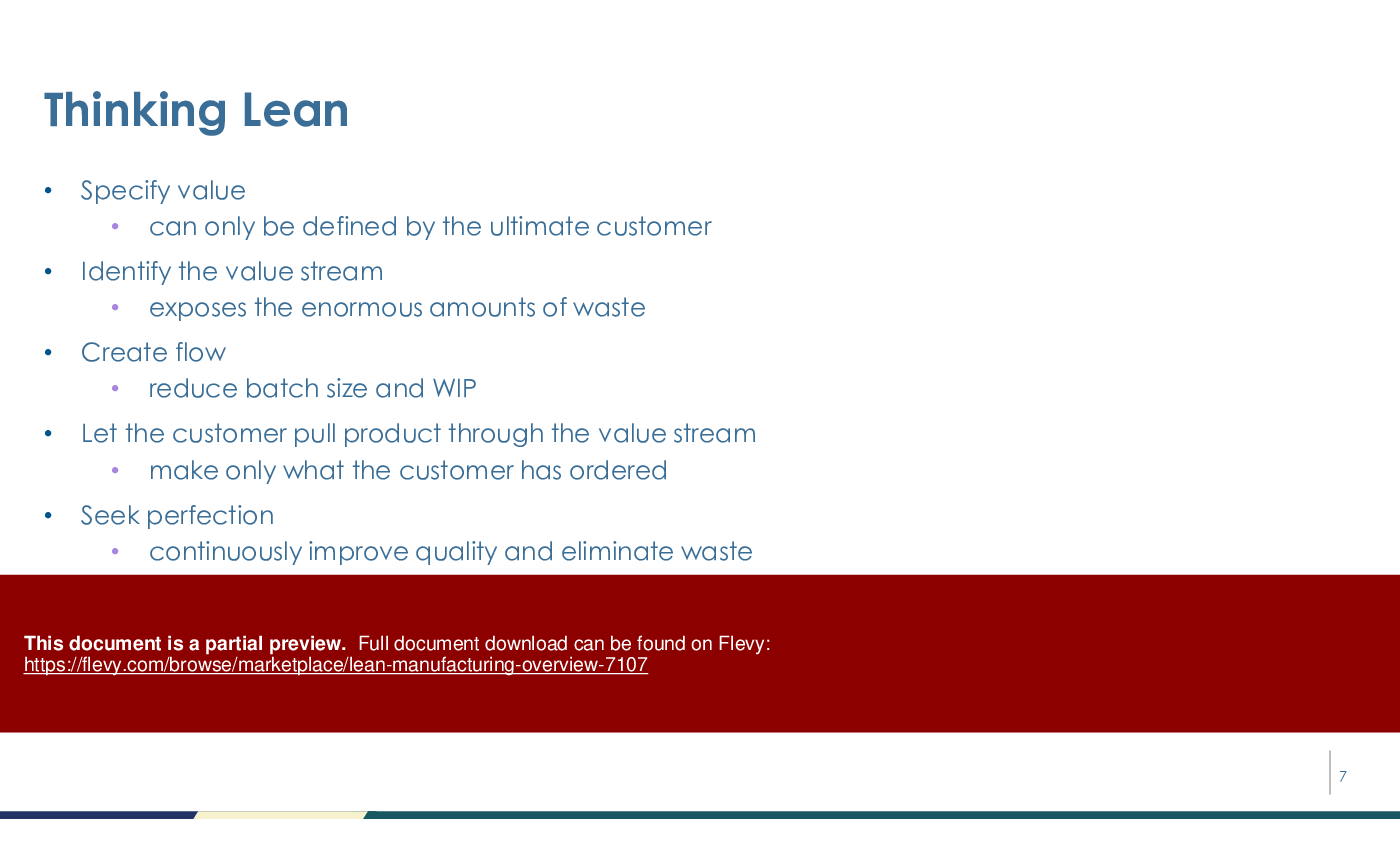
•  Define lean manufacturing principles and their impact on operational efficiency
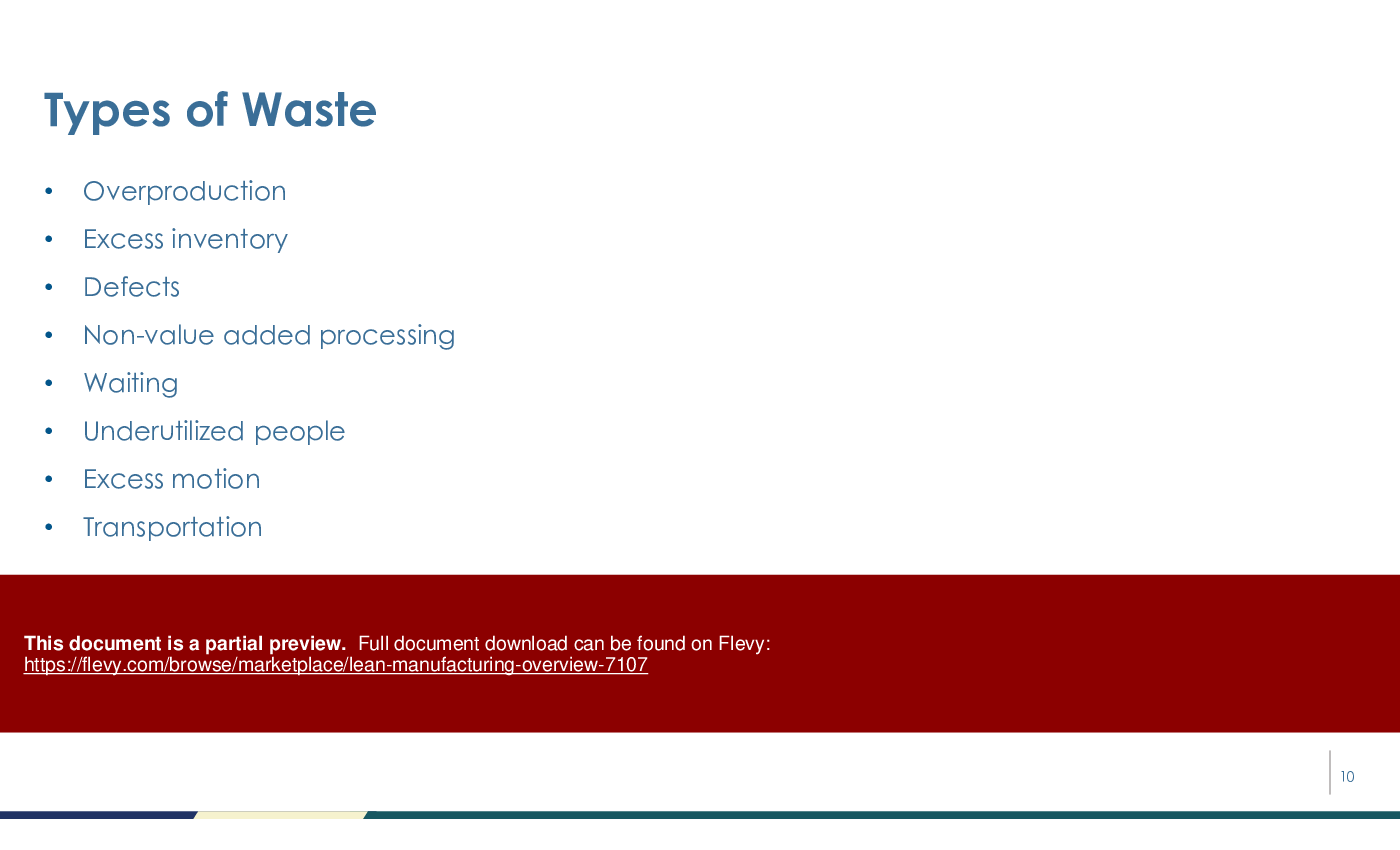
•  Identify and eliminate various types of waste within production processes
•  Implement the 5S methodology to enhance workplace organization
•  Utilize value stream mapping to visualize and improve processes
•  Apply Kaizen principles for continuous improvement initiatives
•  Integrate Six Sigma techniques to enhance product quality and reduce defects

Table of Contents
•  Lean Manufacturing (page 2)
•  5S & Visual Controls (page 18)
•  Kaizen (page 33)
•  Value Streams (page 46)
•  Pull Manufacturing (page 69)
•  Mistake Proofing (page 95)
•  Quick Changeover (page 117)
•  Six Sigma (page 136)
•  Lean Accounting (page 163)
•  Theory of Constraints (page 183)
•  Human Factors (page 214)

Primary Topics Covered
•  Lean Manufacturing - A management philosophy focused on eliminating waste and improving productivity through continuous improvement.
•  5S & Visual Controls - A systematic approach to workplace organization that enhances efficiency and safety.
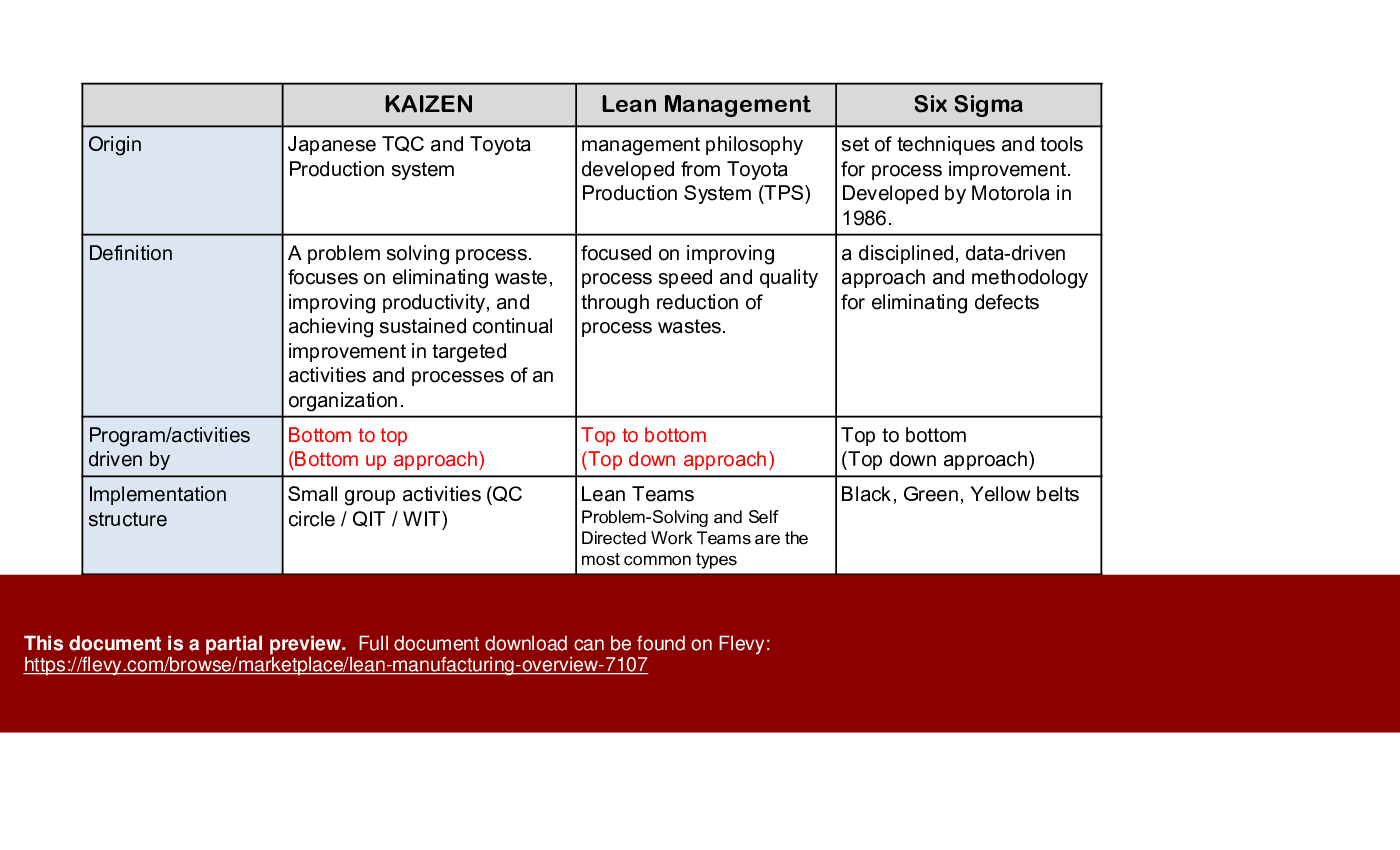
•  Kaizen - A continuous improvement methodology involving all employees in the process of enhancing operations.
•  Value Streams - The series of activities required to deliver a product or service to the customer, emphasizing the elimination of non-value-added steps.
•  Pull Manufacturing - A production strategy that aligns manufacturing with customer demand, minimizing excess inventory.
•  Mistake Proofing (Poka Yoke) - Techniques designed to prevent errors in manufacturing processes, ensuring quality and efficiency.

Deliverables, Templates, and Tools
•  Value Stream Mapping templates for visualizing process flows
•  5S implementation checklists to ensure workplace organization
•  Kaizen event planning templates for structured improvement initiatives
•  Quick Changeover guides to reduce setup times
•  Six Sigma project charters for quality improvement initiatives
•  Mistake proofing device examples to enhance process reliability

Slide Highlights
•  Overview of Lean Manufacturing principles and their benefits
•  Detailed explanation of the 5S methodology and its implementation steps
•  Visual representation of value stream mapping techniques
•  Case studies showcasing successful Kaizen events and their outcomes
•  Comparison of push vs. pull manufacturing strategies
•  Examples of mistake proofing devices and their effectiveness

Potential Workshop Agenda
Lean Manufacturing Fundamentals (90 minutes)
•  Introduction to lean principles and their importance
•  Discussion on types of waste and their impact on efficiency
•  Interactive session on identifying waste in current processes

5S Implementation Workshop (60 minutes)
•  Overview of the 5S methodology
•  Group activity to assess and improve workplace organization
•  Development of a 5S action plan for participants' teams

Kaizen and Continuous Improvement (90 minutes)
•  Introduction to Kaizen principles and practices
•  Team brainstorming session for improvement ideas
•  Creation of a Kaizen action plan for immediate implementation

Customization Guidance
•  Tailor the presentation to reflect specific organizational goals and challenges
•  Incorporate company-specific case studies to enhance relevance
•  Adjust terminology and examples to align with industry-specific practices

Secondary Topics Covered
•  Lean Accounting principles for financial management in lean environments
•  Human factors affecting workplace safety and productivity
•  The role of Theory of Constraints in process improvement
•  Best practices for implementing Just-In-Time (JIT) manufacturing

Topic FAQ

What are the core principles of lean manufacturing and which frameworks are commonly referenced?

Lean manufacturing centers on eliminating waste and continuous improvement to boost productivity and quality. Commonly referenced frameworks in the field include the Toyota Production System, 5S, Kaizen, value stream mapping, pull manufacturing (JIT), mistake proofing (Poka Yoke), and Six Sigma, as described in the deck’s primary topics.

How does value stream mapping help reduce lead times in manufacturing?

Value stream mapping visualizes material and information flow to expose non‑value steps and delays, enabling targeted removal of waste and process redesign. Organizations use value stream mapping to prioritize improvements and redesign flows; the product includes value stream mapping templates for process visualization.

What is the 5S methodology and how is it typically implemented in a shop floor setting?

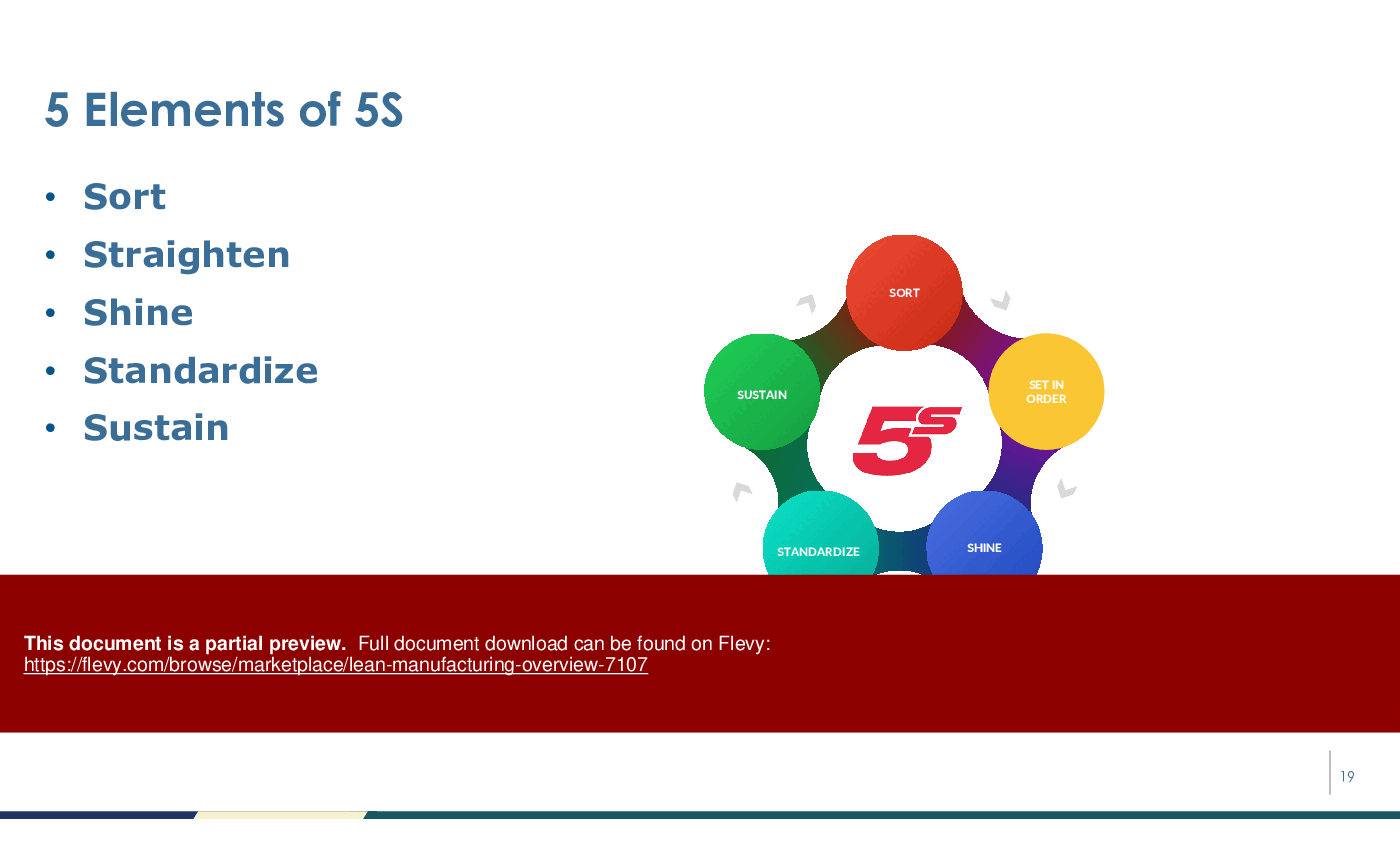
5S organizes the workplace through Sort, Set in order, Shine, Standardize, and Sustain to reduce clutter, improve safety, and support consistent work. Implementation commonly follows training, workplace assessment, and an action plan; the presentation provides 5S implementation checklists to guide rollout.

In what ways do Six Sigma and lean practices complement each other on the factory floor?

Lean targets waste reduction and flow improvement while Six Sigma focuses on reducing defects and variability through data‑driven problem solving. Together they address speed and quality; practical integration often uses Six Sigma project charters within lean initiatives to tackle defect sources.

What should I look for when buying a lean manufacturing toolkit for internal training?

Seek toolkits that include practical templates, workshop agendas, case studies, and customization guidance so teams can run training and improvement events. Useful inclusions are value stream templates, 5S checklists, Kaizen planning tools, and Six Sigma charters; the Lean Manufacturing Overview provides these across 254 slides.

How does purchasing a slide-based toolkit compare to using free online articles for lean deployment?

Slide toolkits package ready-to-use artifacts—templates, workshop agendas, case studies, and customization tips—that speed internal rollout compared with assembling materials from articles. For example, Flevy’s Lean Manufacturing Overview offers Kaizen event planning templates and workshop agendas that can be adapted for live sessions.

I need to train teams on 5S in a 60-minute session — what structure should I follow?

A 60-minute 5S session typically covers a concise overview of 5S principles, a group activity to assess a work area, and development of a short action plan for implementation. The product’s proposed 5S Implementation Workshop includes those elements in a 60-minute agenda.

After a merger, how can I quickly identify process bottlenecks and priority improvements?

Use value stream mapping to visualize end‑to‑end flows, then apply Theory of Constraints to locate the most critical limiting factor. Combine these analyses to prioritize interventions and design targeted Kaizen events, using value stream mapping templates and TOC principles for assessment.

Document FAQ
These are questions addressed within this presentation.

What is Lean Manufacturing?
Lean manufacturing is a systematic approach focused on minimizing waste while maximizing productivity and quality in production processes.

How does 5S improve workplace efficiency?
The 5S methodology enhances workplace organization, reduces clutter, and promotes a culture of continuous improvement, leading to increased efficiency.

What is the purpose of Value Stream Mapping?
Value Stream Mapping visualizes the flow of materials and information, helping organizations identify waste and streamline processes.

How can Kaizen be implemented effectively?
Kaizen can be implemented through structured events that engage employees at all levels in identifying and solving problems to improve processes.

What are the benefits of Pull Manufacturing?
Pull manufacturing aligns production with actual customer demand, reducing excess inventory and improving responsiveness to market needs.

What is Mistake Proofing?
Mistake proofing, or Poka Yoke, involves designing processes and systems to prevent errors before they occur, ensuring higher quality outputs.

How does Six Sigma relate to Lean Manufacturing?
Six Sigma focuses on reducing defects and improving quality through data-driven methodologies, complementing lean principles aimed at waste reduction.

What is the Theory of Constraints?
The Theory of Constraints is a management philosophy that emphasizes identifying and managing the most critical limiting factor (constraint) in a process to improve overall performance.

Glossary
•  Lean Manufacturing - A production practice that considers the expenditure of resources in any aspect other than the direct creation of value for the end customer to be wasteful.
•  5S - A methodology that focuses on organizing and managing the workspace and work flow efficiently and effectively.
•  Kaizen - A Japanese term meaning "change for better," referring to activities that continuously improve all functions and involve all employees.
•  Value Stream - The series of steps that an organization uses to deliver a product or service to customers.
•  Pull Manufacturing - A production strategy that relies on customer demand to drive production, minimizing excess inventory.
•  Poka Yoke - A mistake-proofing technique designed to prevent errors in manufacturing processes.
•  Six Sigma - A set of techniques and tools for process improvement aimed at reducing defects and variability.
•  Theory of Constraints - A management philosophy that focuses on the constraints that limit an organization's performance.
•  Just-In-Time (JIT) - An inventory strategy that aligns production with demand, reducing waste and improving efficiency.
•  Continuous Improvement - Ongoing efforts to improve products, services, or processes over time.
•  Total Productive Maintenance (TPM) - A maintenance approach that aims to increase productivity by reducing downtime and improving equipment reliability.
•  Standardized Work - A key lean concept that defines the most efficient method to produce a product or service.

Source: Best Practices in Lean Manufacturing PowerPoint Slides: Lean Manufacturing Overview PowerPoint (PPTX) Presentation Slide Deck, RadVector Consulting


$45.00
Developed by a team of experts with global consulting experience at McKinsey, Deloitte, and Capgemini.
Add to Cart
  

ABOUT THE AUTHOR

Additional documents from author: 182

We are a group of aviation experts & specialists (PhDs, Engineers, Pilots, Navigators, ...), leaders in helping organizations to transform their business performance using Methodologies and Principles of Lean, Agile, Six Sigma, and Innovation.

Ask the Author a Question

You must be logged in to contact the author.

Click here to log in Click here register

Did you know?
The average daily rate of a McKinsey consultant is $6,625 (not including expenses). The average price of a Flevy document is $65.


Trusted by over 10,000+ Client Organizations
Since 2012, we have provided business templates to over 10,000 businesses and organizations of all sizes, from startups and small businesses to the Fortune 100, in over 130 countries.
AT&T GE Cisco Intel IBM Coke Dell Toyota HP Nike Samsung Microsoft Astrazeneca JP Morgan KPMG Walgreens Walmart 3M Kaiser Oracle SAP Google E&Y Volvo Bosch Merck Fedex Shell Amgen Eli Lilly Roche AIG Abbott Amazon PwC T-Mobile Broadcom Bayer Pearson Titleist ConEd Pfizer NTT Data Schwab


Read Customer Testimonials

 
"FlevyPro has been a brilliant resource for me, as an independent growth consultant, to access a vast knowledge bank of presentations to support my work with clients. In terms of RoI, the value I received from the very first presentation I downloaded paid for my subscription many times over! The "

– Roderick Cameron, Founding Partner at SGFE Ltd
 
"As a niche strategic consulting firm, Flevy and FlevyPro frameworks and documents are an on-going reference to help us structure our findings and recommendations to our clients as well as improve their clarity, strength, and visual power. For us, it is an invaluable resource to increase our impact and value."

– David Coloma, Consulting Area Manager at Cynertia Consulting
 
"Flevy is our 'go to' resource for management material, at an affordable cost. The Flevy library is comprehensive and the content deep, and typically provides a great foundation for us to further develop and tailor our own service offer."

– Chris McCann, Founder at Resilient.World
 
"I like your product. I'm frequently designing PowerPoint presentations for my company and your product has given me so many great ideas on the use of charts, layouts, tools, and frameworks. I really think the templates are a valuable asset to the job."

– Roberto Fuentes Martinez, Senior Executive Director at Technology Transformation Advisory
 
"My FlevyPro subscription provides me with the most popular frameworks and decks in demand in today’s market. They not only augment my existing consulting and coaching offerings and delivery, but also keep me abreast of the latest trends, inspire new products and service offerings for my practice, and educate me "

– Bill Branson, Founder at Strategic Business Architects
 
"If you are looking for great resources to save time with your business presentations, Flevy is truly a value-added resource. Flevy has done all the work for you and we will continue to utilize Flevy as a source to extract up-to-date information and data for our virtual and onsite presentations!"

– Debbi Saffo, President at The NiKhar Group
 
"I have used Flevy services for a number of years and have never, ever been disappointed. As a matter of fact, David and his team continue, time after time, to impress me with their willingness to assist and in the real sense of the word. I have concluded in fact "

– Roberto Pelliccia, Senior Executive in International Hospitality
 
"I have found Flevy to be an amazing resource and library of useful presentations for lean sigma, change management and so many other topics. This has reduced the time I need to spend on preparing for my performance consultation. The library is easily accessible and updates are regularly provided. A wealth of great information."

– Cynthia Howard RN, PhD, Executive Coach at Ei Leadership


Customers Also Bought These Documents


Customers Also Like These Documents

Explore Templates on Related Management Topics


Your Recently Viewed Documents
Receive our FREE presentation on Operational Excellence

This 50-slide presentation provides a high-level introduction to the 4 Building Blocks of Operational Excellence. Achieving OpEx requires the implementation of a Business Execution System that integrates these 4 building blocks.








