
This collection of Innovation KPIs is compiled by former McKinsey, BCG, Deloitte, EY, and Capgemini consultants based on best practices in Product Management.
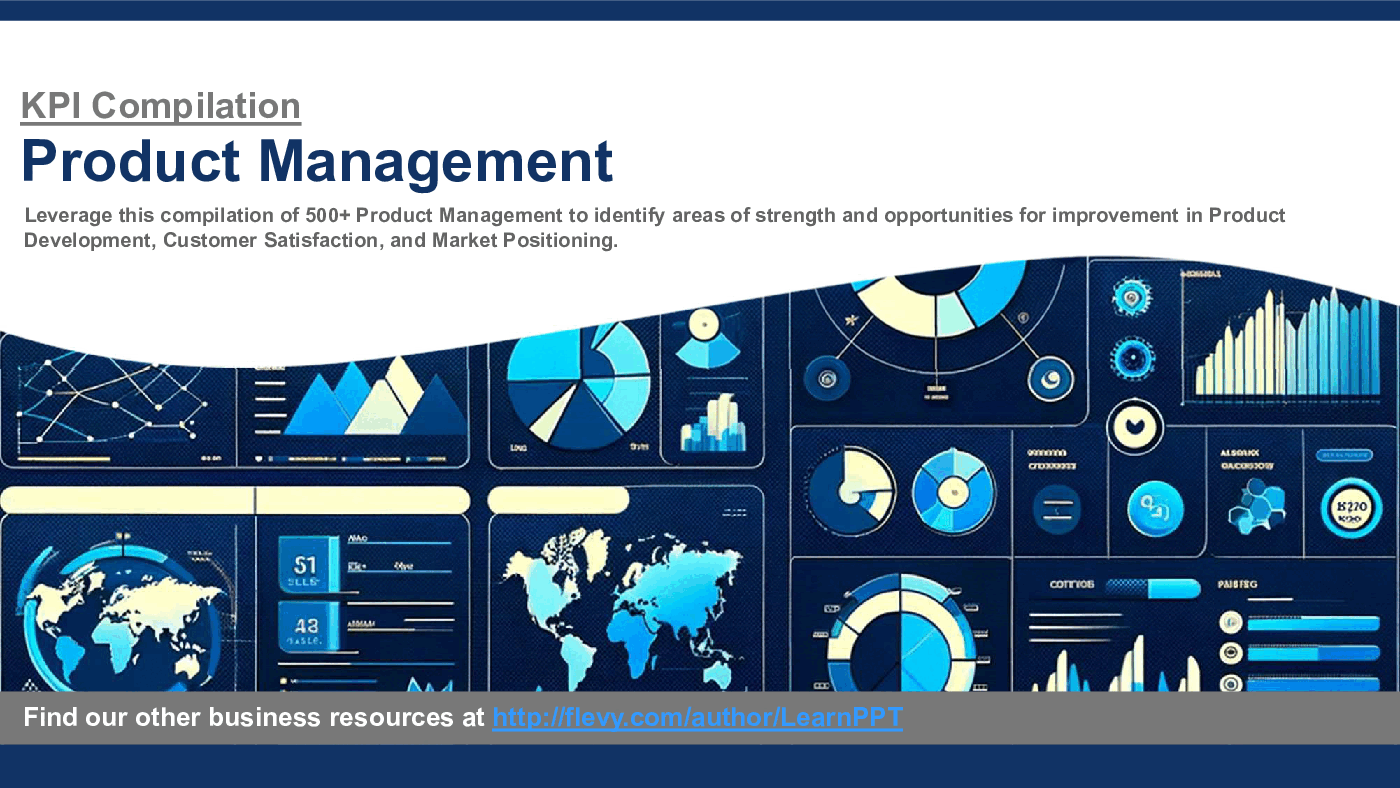
This PPT provides a comprehensive set of 500+ Product Management KPIs to identify areas of strength and opportunities for improvement in Product Development, Customer Satisfaction, and Market Positioning.
It offers a ready-to-use, extensive collection of KPIs, saving significant time and effort in research and compilation.
The wide range of KPIs allows for tailored selection and customization to fit specific industry needs and organizational goals, ensuring that your Product Strategy remains relevant and competitive in an ever-evolving market.
KEY PERFORMANCE INDICATORS PPT DESCRIPTION
Editor Summary
KPI Compilation: 500+ Product Management KPIs is a 112-slide PowerPoint presenting a catalog of over 500 product management KPIs, categorized into 10 groups: Customer Support; Product Development; Product Lifecycle Management; Product Management; Product Portfolio Management; Product Quality Control; Quality Assurance (QA); Technical Writing; User Experience (UX) Design; and User Research.
Read moreCompiled by former McKinsey, BCG, Deloitte, EY, and Capgemini consultants, it includes an introduction on KPI selection guidelines and is sold as a digital download on Flevy.
Use this compilation when teams need a broad set of measurable options to benchmark and operationalize product-related performance across development, quality, UX, support, and portfolio decisions.
Product managers building a KPI dashboard to track time-to-market, feature adoption, and roadmap impact for quarterly reviews.
UX designers defining usability and engagement metrics to compare design iterations and A/B results.
QA leads establishing test coverage, defect rates, and corrective-action tracking for release gates.
Product portfolio managers rebalancing investments using portfolio diversity and market-coverage metrics.
The structured, category-based approach supports benchmarking and aligns with the consulting practice of using defined metric groups for comparative analysis as used by McKinsey and BCG.
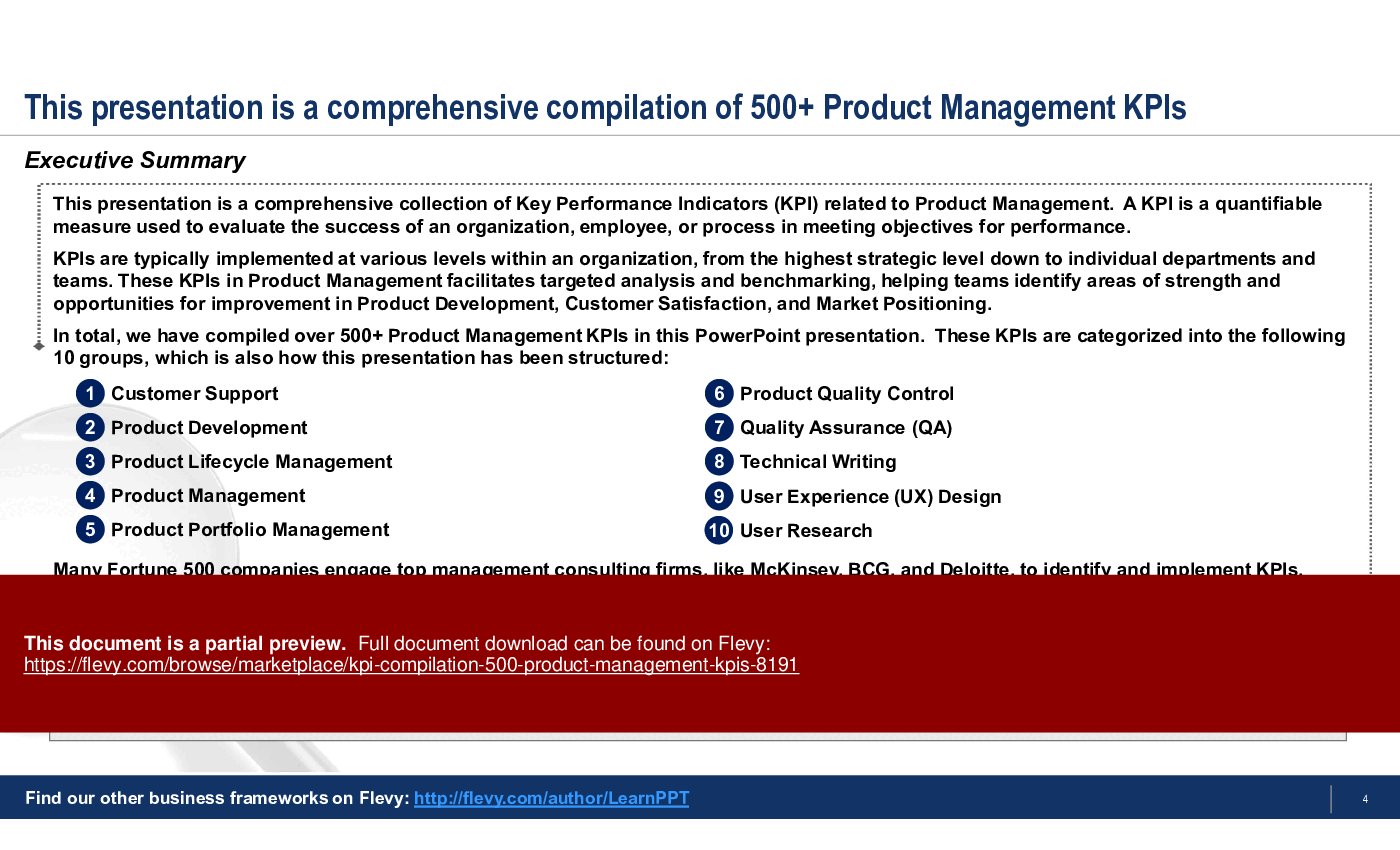
This presentation is a comprehensive collection of Key Performance Indicators (KPI) related to Product Management. A KPI is a quantifiable measure used to evaluate the success of an organization, employee, or process in meeting objectives for performance.
KPIs are typically implemented at various levels within an organization, from the highest strategic level down to individual departments and teams. These KPIs in Product Management facilitates targeted analysis and benchmarking, helping teams identify areas of strength and opportunities for improvement in Product Development, Customer Satisfaction, and Market Positioning.
In total, we have compiled over 500+ Product Management KPIs in this PowerPoint presentation. These KPIs are categorized into the following 10 groups, which is also how this presentation has been structured:
1. Customer Support – These KPIs evaluate the performance and effectiveness of customer service operations, focusing on customer satisfaction, response times, and issue resolution success rates
2. Product Development – These KPIs measure the efficiency, creativity, and productivity of the product development process, including time-to-market, innovation rate, and development costs
3. Product Lifecycle Management – These KPIs monitor the management and optimization of a product's lifecycle from inception to retirement, focusing on lifecycle duration, profitability, and adaptation to market changes
4. Product Management – These KPIs assess the overall effectiveness of product management strategies, including market alignment, product performance, and strategic contribution to business goals
5. Product Portfolio Management – These KPIs track the success and balance of the entire product portfolio, focusing on portfolio diversity, market coverage, and investment returns
6. Product Quality Control – These KPIs evaluate the consistency and reliability of product quality, encompassing defect rates, compliance with standards, and customer feedback on product quality
7. Quality Assurance (QA) – These KPIs measure the effectiveness of quality assurance processes in ensuring product standards and reliability, including test coverage, defect discovery, and corrective actions
8. Technical Writing – These KPIs assess the quality, effectiveness, and efficiency of technical documentation, focusing on clarity, user engagement, and accuracy in conveying technical information
9. User Experience (UX) Design – These KPIs evaluate the success of UX design in enhancing user interaction and satisfaction with the product, including usability, design appeal, and user engagement metrics
10. User Research – These KPIs track the effectiveness of user research in understanding customer needs and preferences, focusing on research depth, insights generation, and impact on product design
Many Fortune 500 companies engage top management consulting firms, like McKinsey, BCG, and Deloitte, to identify and implement KPIs, acknowledging their critical role in driving performance and strategic alignment, despite the significant investment this process entails.
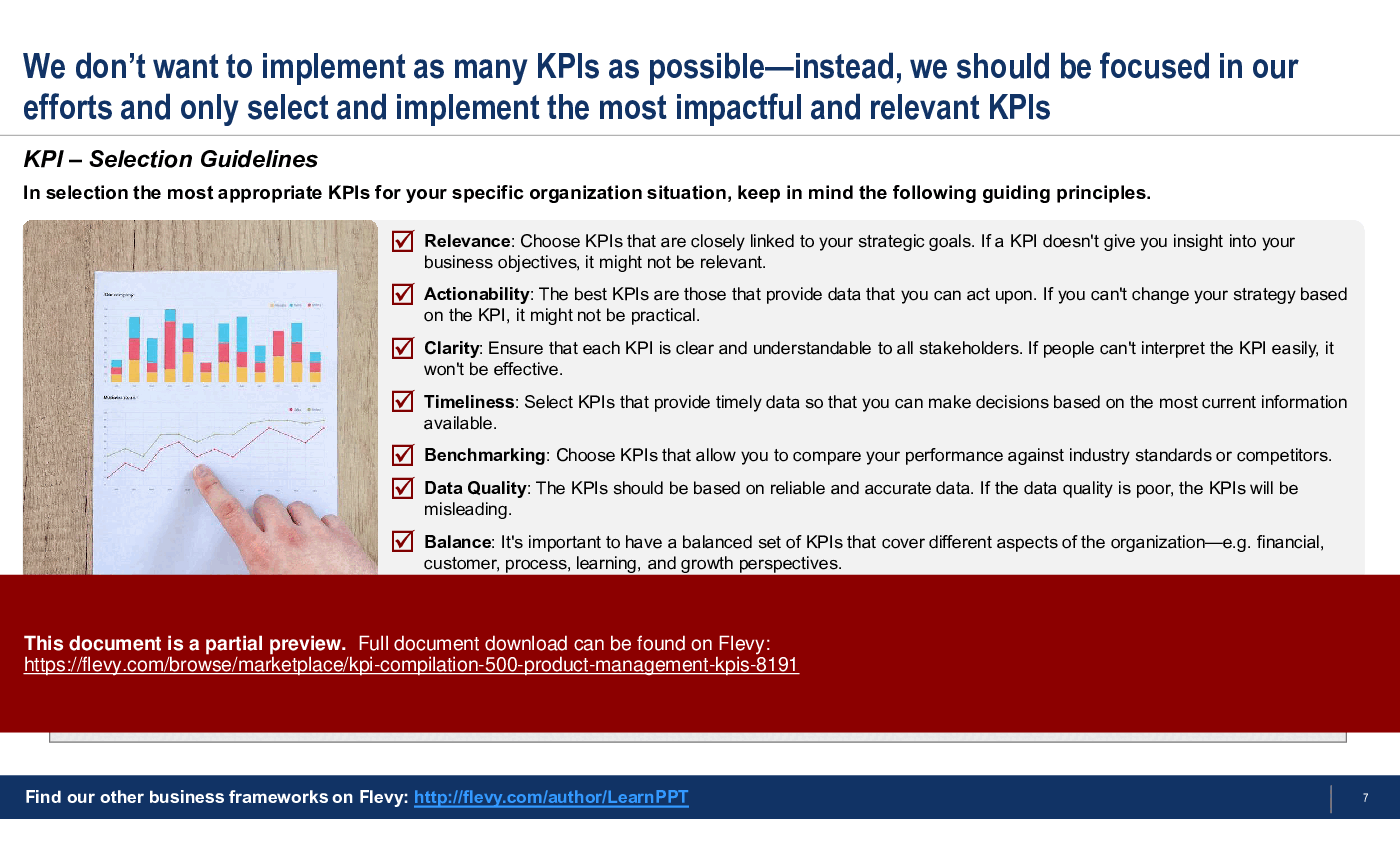
This presentation also includes an introduction on KPIs, covering topics like KPI selection guidelines and common usages.
Got a question about the product? Email us at support@flevy.com or ask the author directly by using the "Ask the Author a Question" form. If you cannot view the preview above this document description, go here to view the large preview instead.
TOPIC FAQ
What are the common KPI categories for product management I should consider?
Product management KPIs are commonly grouped by function to ensure coverage across development, market, and customer outcomes. Typical categories include Customer Support; Product Development; Product Lifecycle Management; Product Management; Product Portfolio Management; Product Quality Control; QA; Technical Writing; UX Design; and User Research, totaling 10 groups.
How many KPIs should a product team track on a regular basis?
The right number depends on strategic priorities, team scope, and reporting capacity; teams usually select a focused set from a larger catalog to avoid noise. The presentation provides KPI selection guidelines and a pool of over 500 KPIs to choose from, enabling tailored selections from the full set.
How should I choose KPIs for product development workstreams?
Choose KPIs that map to your objectives (speed, cost, innovation, quality) and the appropriate organizational level (team vs. product vs. portfolio). The resource includes selection guidance and a dedicated Product Development category to align metrics with time-to-market, innovation rate, and development costs.
What should I look for when buying a KPI compilation or template for product management?
Prioritize breadth across functions (development, QA, UX, support), clear metric definitions, selection guidance, and a deliverable format that fits your workflow. This product lists metrics across 10 categories, provides selection guidance, and is supplied as a 112-slide PowerPoint suitable for integration into reports and dashboards.
How can I benchmark product quality and QA metrics effectively?
Benchmarking quality involves tracking defect rates, test coverage, compliance with standards, and customer feedback over time and against peers. The KPI taxonomy separates Product Quality Control and QA metrics so teams can compare defect-related and process-related indicators within those dedicated groups.
After a merger, how can I align KPIs across different product portfolios?
Start by mapping existing KPIs to common categories (portfolio diversity, market coverage, investment returns), harmonize definitions, and refocus on portfolio-level objectives. The compilation includes a Product Portfolio Management category and selection guidelines to help standardize metrics across merged product lines.
What UX metrics should design teams track to measure success?
UX teams typically track usability scores, task completion rates, design appeal, and user engagement metrics to evaluate changes and releases. These types of metrics are included under the UX Design category for consistent measurement of design effectiveness and user satisfaction.
What does the "KPI Compilation: 500+ Product Management KPIs" presentation include and how is it delivered?
The deliverable is a 112-slide PowerPoint containing over 500 categorized product management KPIs, an introductory section on KPI selection guidelines and common usages, and categorization across 10 functional groups; it is compiled by former McKinsey, BCG, Deloitte, EY, and Capgemini consultants and sold as a digital download on Flevy.
This PPT slide presents key performance indicators (KPIs) for product quality control within innovation management. "Average Product Life Cycle" assesses product relevance duration, guiding lifecycle management strategies. "Batch Quality Consistency" measures production stability across batches, crucial for customer satisfaction and quality uniformity. "Corrective Action Effectiveness" evaluates the quality control system's success in resolving quality issues, vital for continuous improvement. The "Cost of Quality" KPI highlights the financial implications of maintaining product quality, including prevention, appraisal, and failure costs. "Critical to Quality (CTQ) Attributes" identifies essential characteristics for customer satisfaction, aiding improvement prioritization. Lastly, the "Customer Complaints" metric quantifies dissatisfaction by comparing complaints to total sales, providing insight into product performance from the customer perspective.
This PPT slide presents a framework for assessing key performance indicators (KPIs) in technical writing within innovation management. Key KPIs include "Average Document Length," which measures the complexity of documentation; "Average Reading Time," indicating user engagement and content optimization; and the "Collaboration Effectiveness Index," evaluating the efficiency of technical writers working with stakeholders. "Content Accuracy Rate" measures the percentage of verified accurate content, while "Content Coverage" assesses the comprehensiveness of documented product features. Lastly, "Content Lifecycle Management" examines the efficiency of managing technical content throughout its lifecycle. These KPIs enhance clarity, user engagement, and accuracy in technical documentation.
This PPT slide presents a framework for evaluating Product Management strategies through Key Performance Indicators (KPIs) such as user engagement, revenue generation, customer retention, and competitive positioning. The "Active Users" KPI measures unique user interactions, essential for assessing market reach. "Average Revenue Per User (ARPU)" provides insights into revenue per active user, crucial for pricing strategies. The "Churn Rate" indicates customer retention by measuring subscription discontinuation, vital for long-term viability. "Competitive Analysis" assesses performance against competitors, focusing on market share and pricing for strategic positioning. The "Conversion Rate" measures marketing effectiveness by calculating the percentage of users taking desired actions. Lastly, "Cost of Goods Sold" evaluates direct production costs, informing pricing and profitability strategies. This structured KPI approach aligns product performance with broader business objectives.
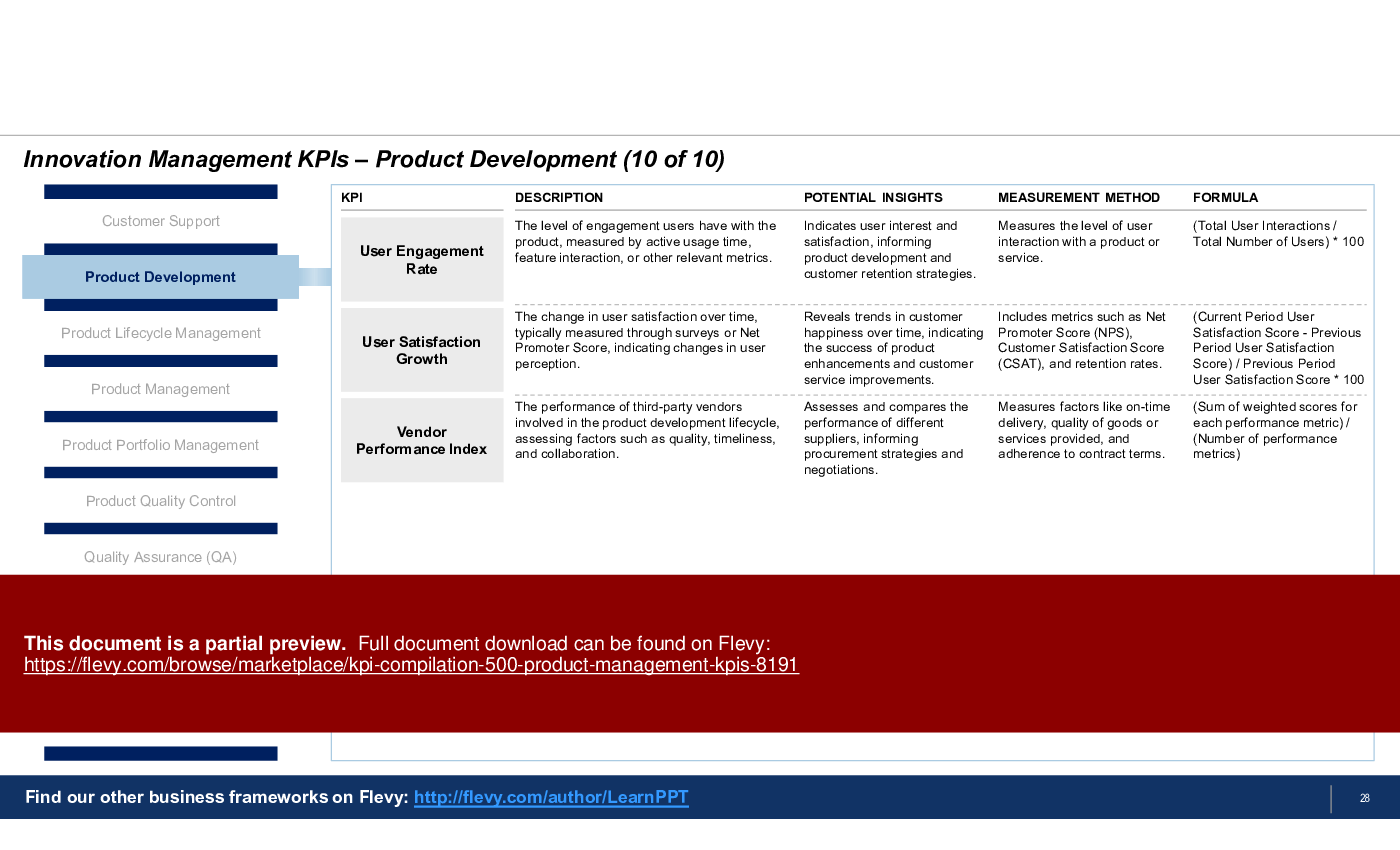
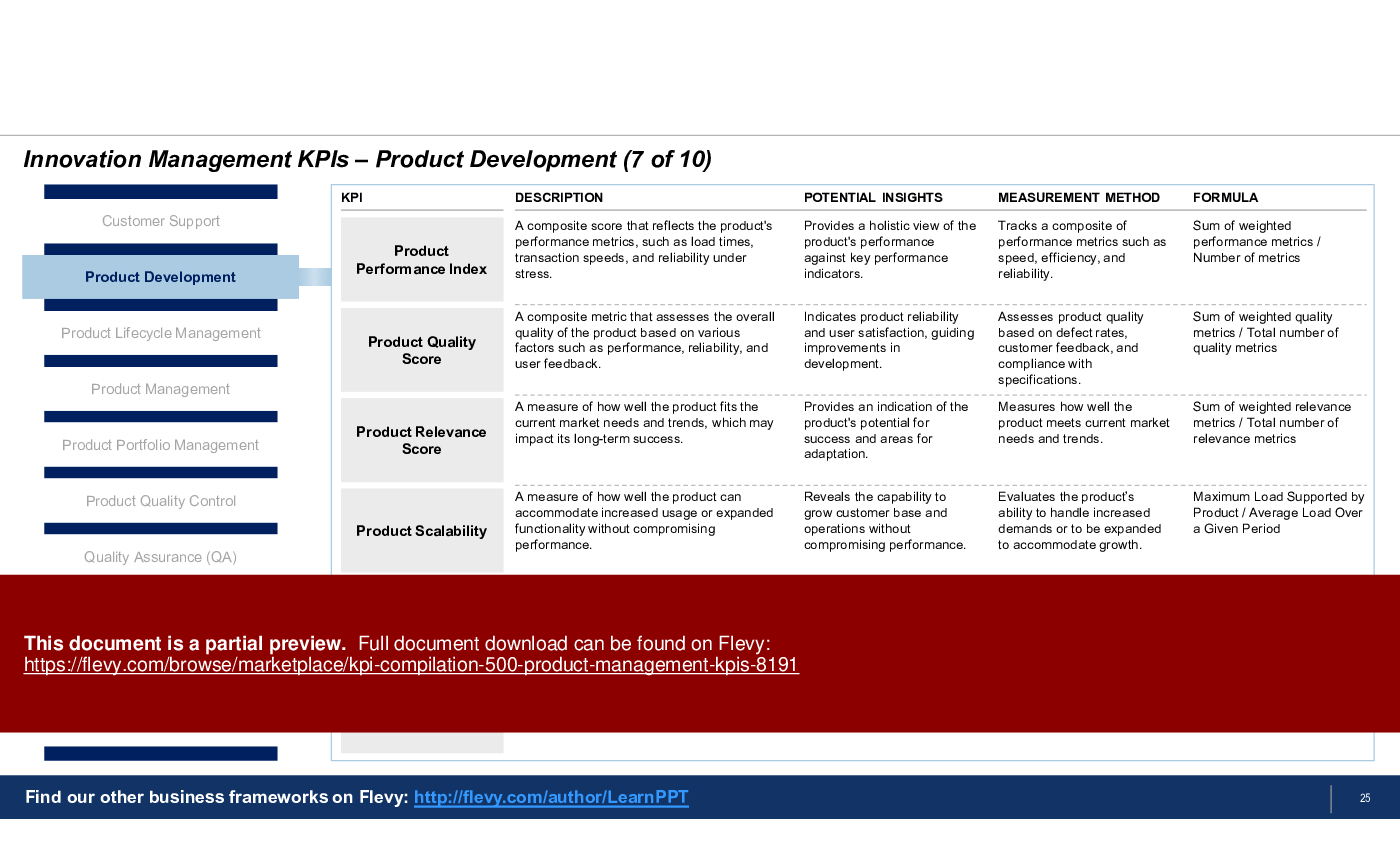
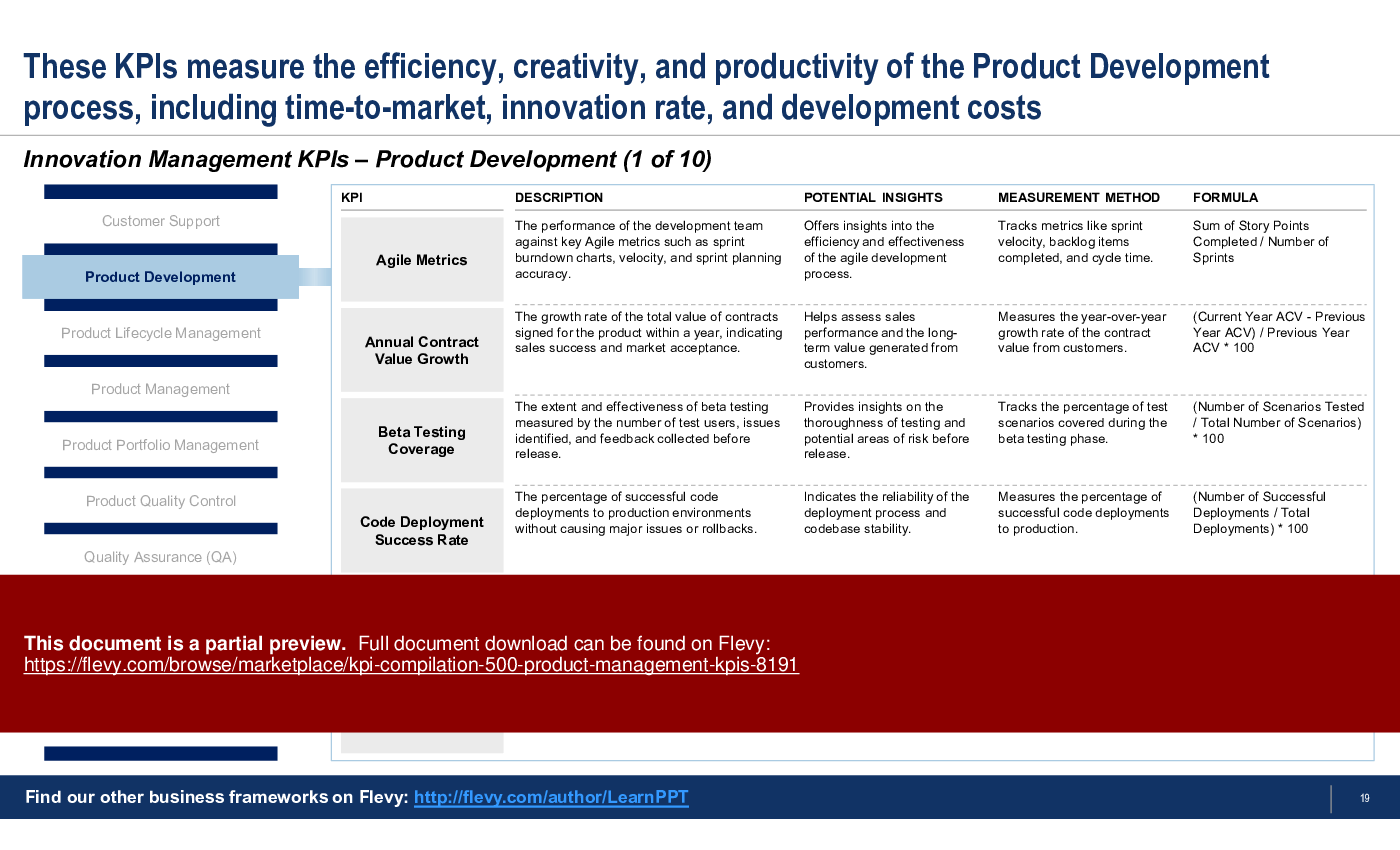
This PPT slide presents Key Performance Indicators (KPIs) for the Product Development process, focusing on metrics that assess efficiency, creativity, and productivity.
"Agile Metrics" evaluates development team performance using agile methodologies, providing insights through sprint burndown charts and velocity.
"Annual Contract Value Growth" measures the growth rate of contracts, indicating sales performance and market acceptance.
"Beta Testing Coverage" assesses user engagement and feedback during beta testing, identifying risks before product release.
The "Code Deployment Success Rate" tracks reliability in code deployments, with a high rate indicating stable processes.
"Code Quality Index" evaluates code maintainability and adherence to standards, ensuring long-term sustainability.
"Cost per Feature" offers insights into financial efficiency and budget allocation for feature development.
These metrics enhance product development processes and drive strategic improvements.
This PPT slide outlines Key Performance Indicators (KPIs) for User Experience (UX) Design, focusing on metrics critical for assessing user engagement. The A/B Testing Conversion Rate compares webpage versions to determine which drives higher user conversion, essential for optimizing design elements. The Abandonment Rate indicates the percentage of users who do not complete tasks, highlighting potential user journey issues. The Accessibility Score measures product accommodation for users with disabilities, crucial for compliance and satisfaction. The Adoption Rate tracks new user engagement, reflecting initial product appeal. Average Handle Time (AHT) gauges the efficiency of user interactions, while Bounce Rate measures visitors leaving after one page, indicating landing page effectiveness. Collectively, these KPIs provide a framework for evaluating user interaction and enhancing UX design strategies.
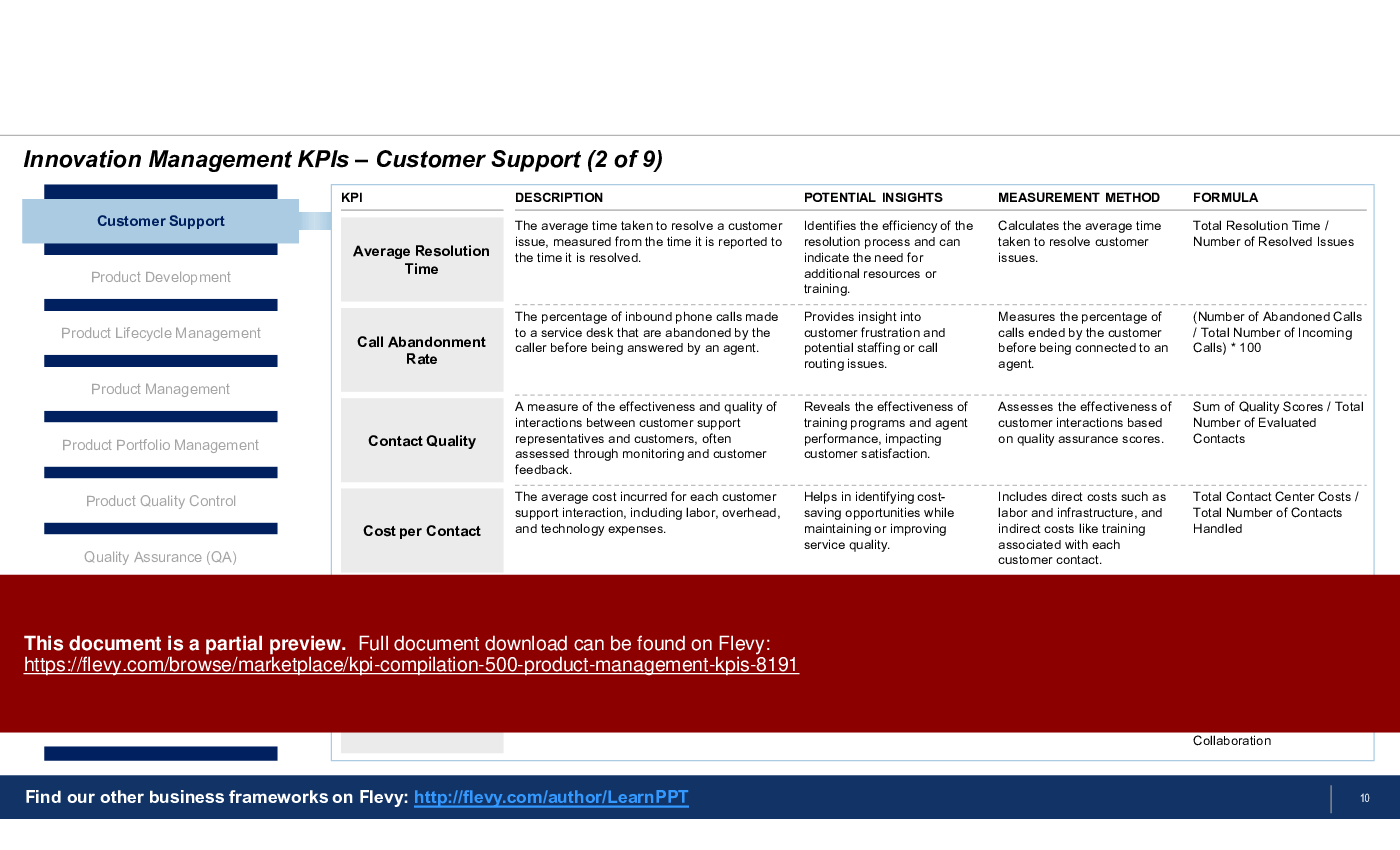
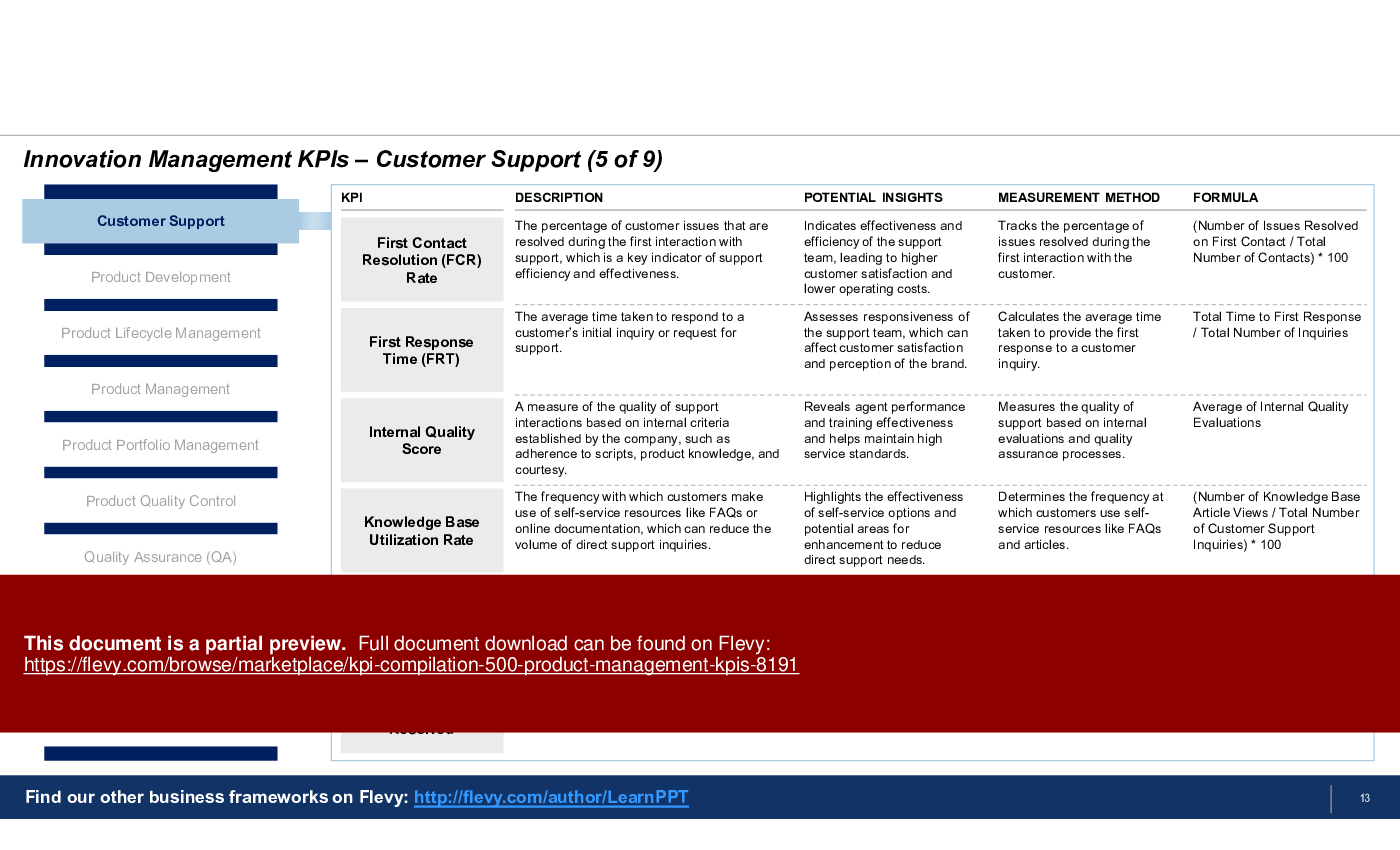
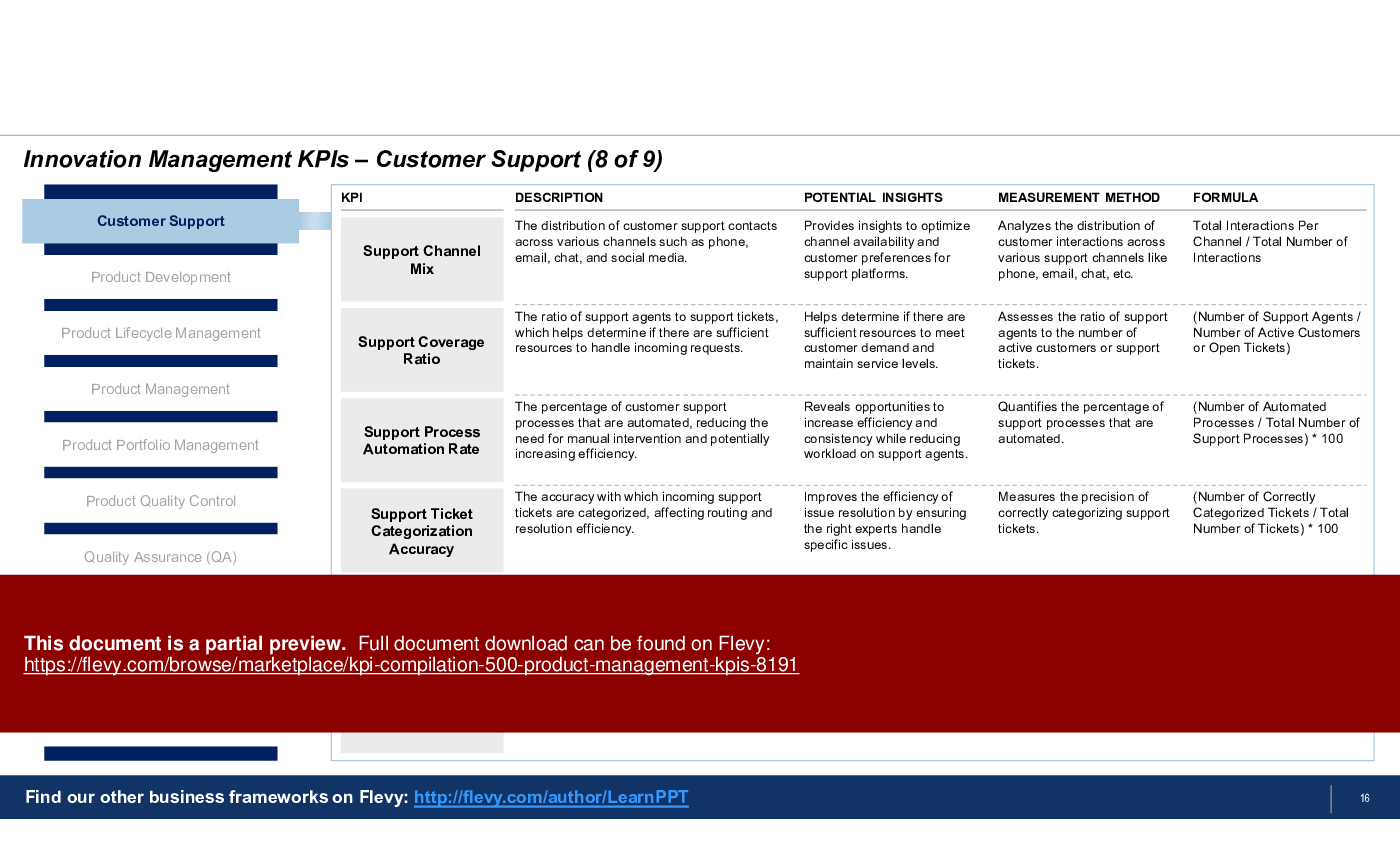
This PPT slide provides an overview of key performance indicators (KPIs) for evaluating customer support operations. Important metrics include "Agent Satisfaction Score," which measures agent contentment and its impact on customer service quality; "Agent Schedule Adherence," assessing adherence to work schedules for staffing efficiency; and "Agent Turnover Rate," indicating the frequency of agent departures and potential job satisfaction issues. "Agent Utilization Rate" evaluates the percentage of time agents engage with customer inquiries, enhancing resource allocation. Additionally, "Average After-Call Work Time" and "Average Handle Time" offer insights into customer interaction complexity, guiding process improvements. These KPIs are essential for organizations seeking to enhance customer support effectiveness through data-driven insights.
This collection of Innovation KPIs is compiled by former McKinsey, BCG, Deloitte, EY, and Capgemini consultants based on best practices in Product Management.
We are a team of management consultants trained by top tier global consulting firms (including McKinsey, BCG, Deloitte, EY, Capgemini) with a collective experience of several decades. We specialize in business frameworks based on real-life consulting engagements.
We have served 100s of clients that range from Fortune 500 companies to tech startups to
... [read more] $1B+ private companies.
Utilize our consulting frameworks to apply structured thinking & analysis to address your business challenges, uncover strategic insights, and implement workable solutions. Our PowerPoint presentations follow traditional consulting slide design formats, starting with a clear slide headline. Easily customize and repurpose our slides for your own business presentations.
Beyond business frameworks & methodologies, we also offer PowerPoint templates and other business templates. Our templates are professionally designed and have been used in thousands of deliverables & work products across hundreds of clients.
Need KPIs or benchmarks?Explore KPI Depot to access the most comprehensive database of KPI data, organized by function and industry.
Trusted by over 10,000+ Client Organizations
Since 2012, we have provided business templates to over 10,000 businesses and organizations of all sizes, from startups and small businesses to the Fortune 100, in over 130 countries.
"As a young consulting firm, requests for input from clients vary and it's sometimes impossible to provide expert solutions across a broad spectrum of requirements. That was before I discovered Flevy.com.
Through subscription to this invaluable site of a plethora of topics that are key and crucial to consulting, I
have been able to exceed expectations and deliver quality advice and solutions to my clients. The quality and expertise of the authors are exemplary and gives me great confidence to use as part of my service offerings.
I highly recommend this company for any consultant wanting to apply international best practice standards in their service offerings.
"
– Nishi Singh, Strategist and MD at NSP Consultants
"If you are looking for great resources to save time with your business presentations, Flevy is truly a value-added resource. Flevy has done all the work for you and we will continue to utilize Flevy as a source to extract up-to-date information and data for our virtual and onsite presentations!"
– Debbi Saffo, President at The NiKhar Group
"[Flevy] produces some great work that has been/continues to be of immense help not only to myself, but as I seek to provide professional services to my clients, it gives me a large "tool box" of resources that are critical to provide them with the quality of service and outcomes they are expecting."
– Royston Knowles, Executive with 50+ Years of Board Level Experience
"As a consultant requiring up to date and professional material that will be of value and use to my clients, I find Flevy a very reliable resource.
The variety and quality of material available through Flevy offers a very useful and commanding source for information. Using Flevy saves me time, enhances my expertise and ends up being a good decision."
– Dennis Gershowitz, Principal at DG Associates
"As a niche strategic consulting firm, Flevy and FlevyPro frameworks and documents are an on-going reference to help us structure our findings and recommendations to our clients as well as improve their clarity, strength, and visual power. For us, it is an invaluable resource to increase our impact and value."
– David Coloma, Consulting Area Manager at Cynertia Consulting
"As an Independent Management Consultant, I find Flevy to add great value as a source of best practices, templates and information on new trends. Flevy has matured and the quality and quantity of the library is excellent. Lastly the price charged is reasonable, creating a win-win value for

the customer, Flevy and the various authors. This is truly a service that benefits the consulting industry and associated clients. Thanks for providing this service.
"
– Jim Schoen, Principal at FRC Group
"Flevy is now a part of my business routine. I visit Flevy at least 3 times each month.
Flevy has become my preferred learning source, because what it provides is practical, current, and useful in this era where the business world is being rewritten.
many challenges and there is the need to make the right decisions in a short time, with so much scattered information, we are fortunate to have Flevy. Flevy investigates, selects, and puts at our disposal the best of the best to help us be successful in our work.
"
– Omar Hernán Montes Parra, CEO at Quantum SFE
"I like your product. I'm frequently designing PowerPoint presentations for my company and your product has given me so many great ideas on the use of charts, layouts, tools, and frameworks. I really think the templates are a valuable asset to the job."
– Roberto Fuentes Martinez, Senior Executive Director at Technology Transformation Advisory
Save with Bundles
This document is available as part of the following discounted bundle(s):
Download our free compilation of 50+ Strategy & Transformation slides and templates. Frameworks include McKinsey 7-S, Balanced Scorecard, Disruptive Innovation, BCG Curve, and many more.