 Click main image to view in full screen.
Infrastructure-to-Economy Architecture™ – PDF
PDF document + PowerPoint (PPTX) 18 Pages


BENEFITS OF THIS DOWNLOADABLE PDF DOCUMENT
- Provides a practical, end-to-end framework for evaluating whether major infrastructure can become a platform for broader economic ecosystem formation.
- Transforms infrastructure strategy from a capacity-and-asset discussion into an integrated assessment of connectivity, clustering, spatial development, institutional enablement, demand, and value capture.
- Helps executives, investors, governments, and infrastructure leaders identify the conditions, sequencing requirements, and failure points that determine whether infrastructure investment creates durable economic value.
CAPITAL BUDGETING PDF DESCRIPTION
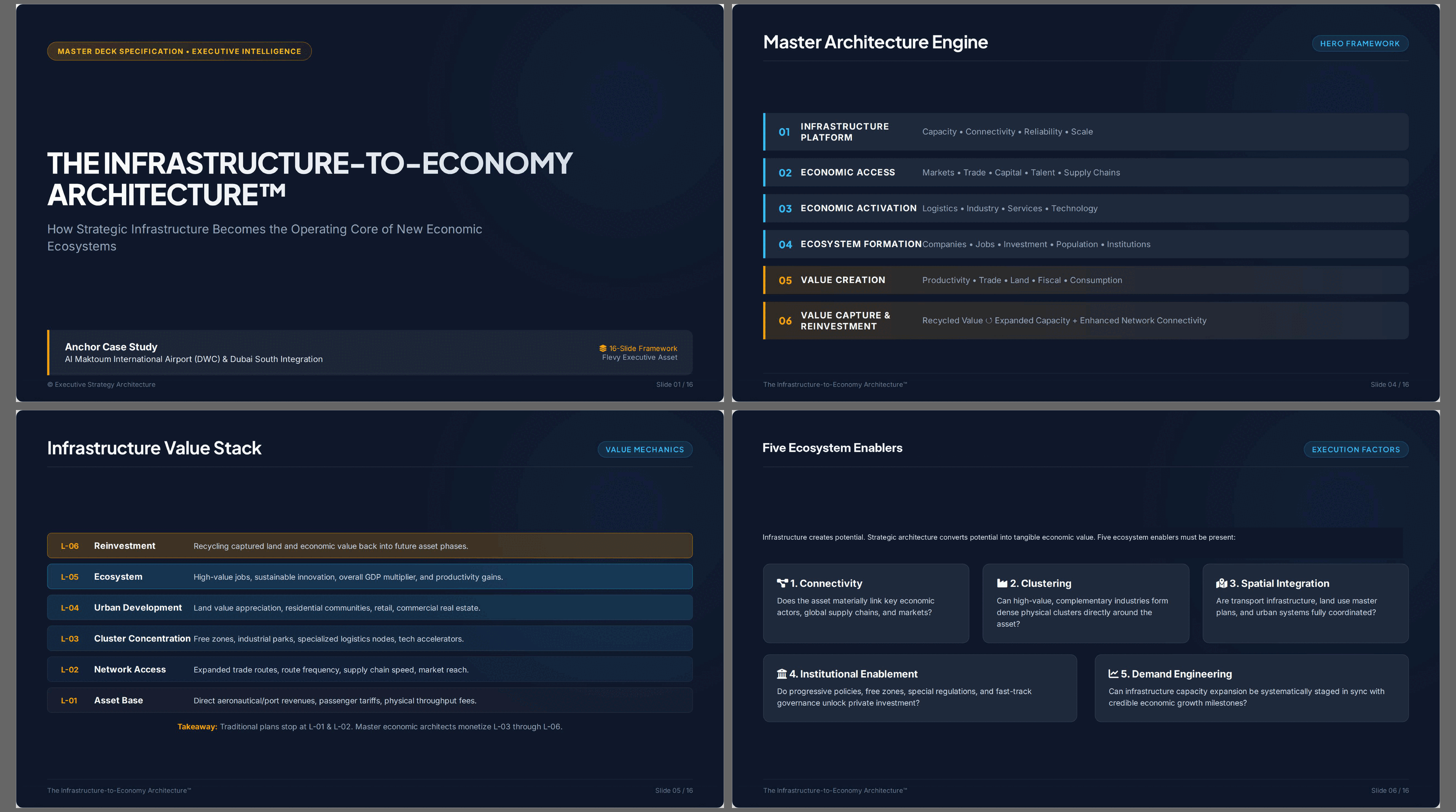
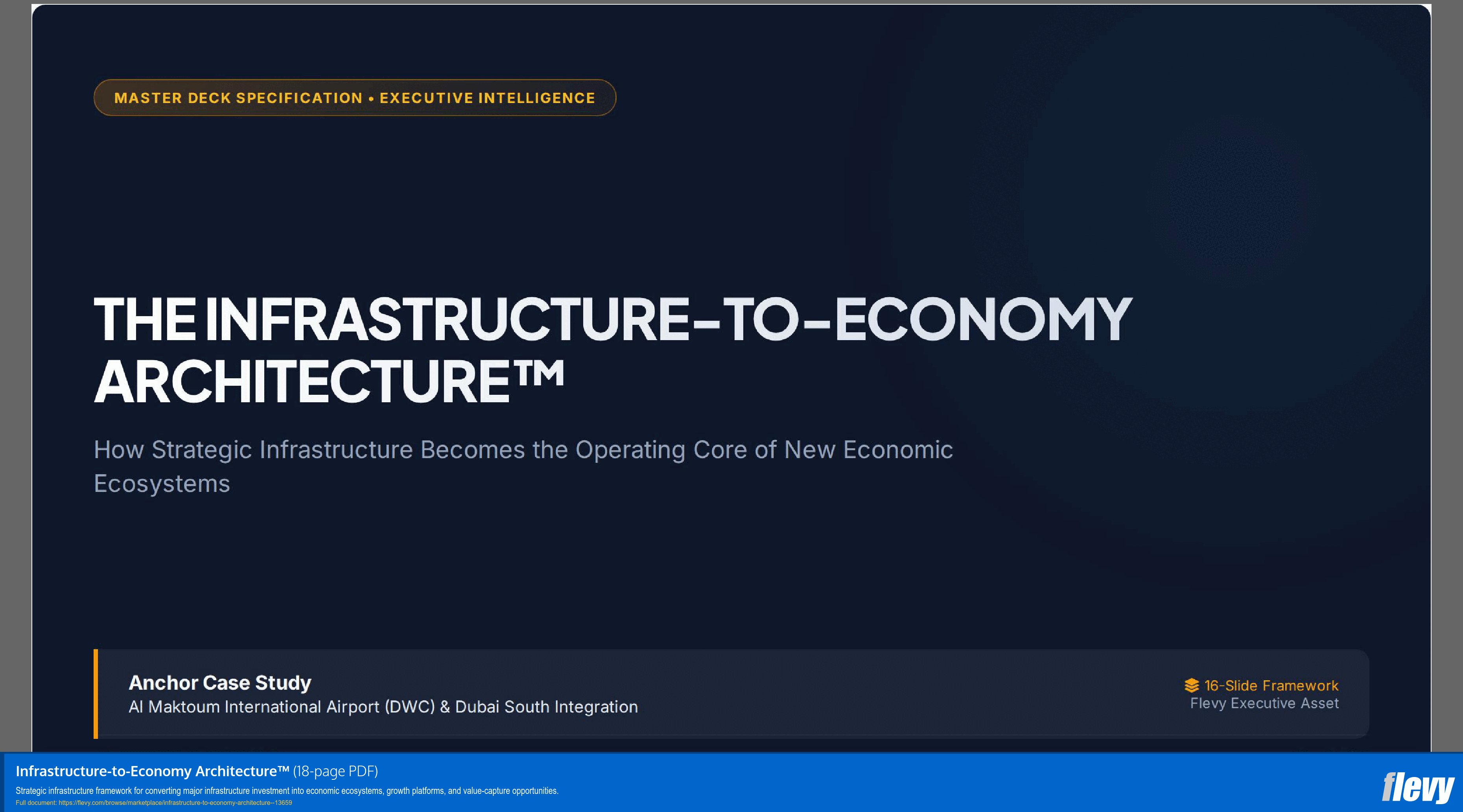
The Infrastructure-to-Economy Architecture™ is a strategic intelligence playbook for understanding how major infrastructure investments can evolve from physical capacity projects into platforms for economic ecosystem formation.
Traditional infrastructure appraisal often focuses on capacity, utilization, cost, connectivity, and return on investment. But the strategic value of major infrastructure can extend well beyond the asset itself. When connectivity, productive clustering, spatial planning, institutional enablement, and demand development are deliberately coordinated, infrastructure can become an organizing platform around which new economic activity forms.
This intelligence introduces the Infrastructure-to-Economy Architecture™, a practical framework for analyzing that transformation. It provides executives, investors, infrastructure developers, governments, and strategy professionals with a structured way to evaluate not only what infrastructure will deliver, but what economy it can enable.
Inside, you will find:
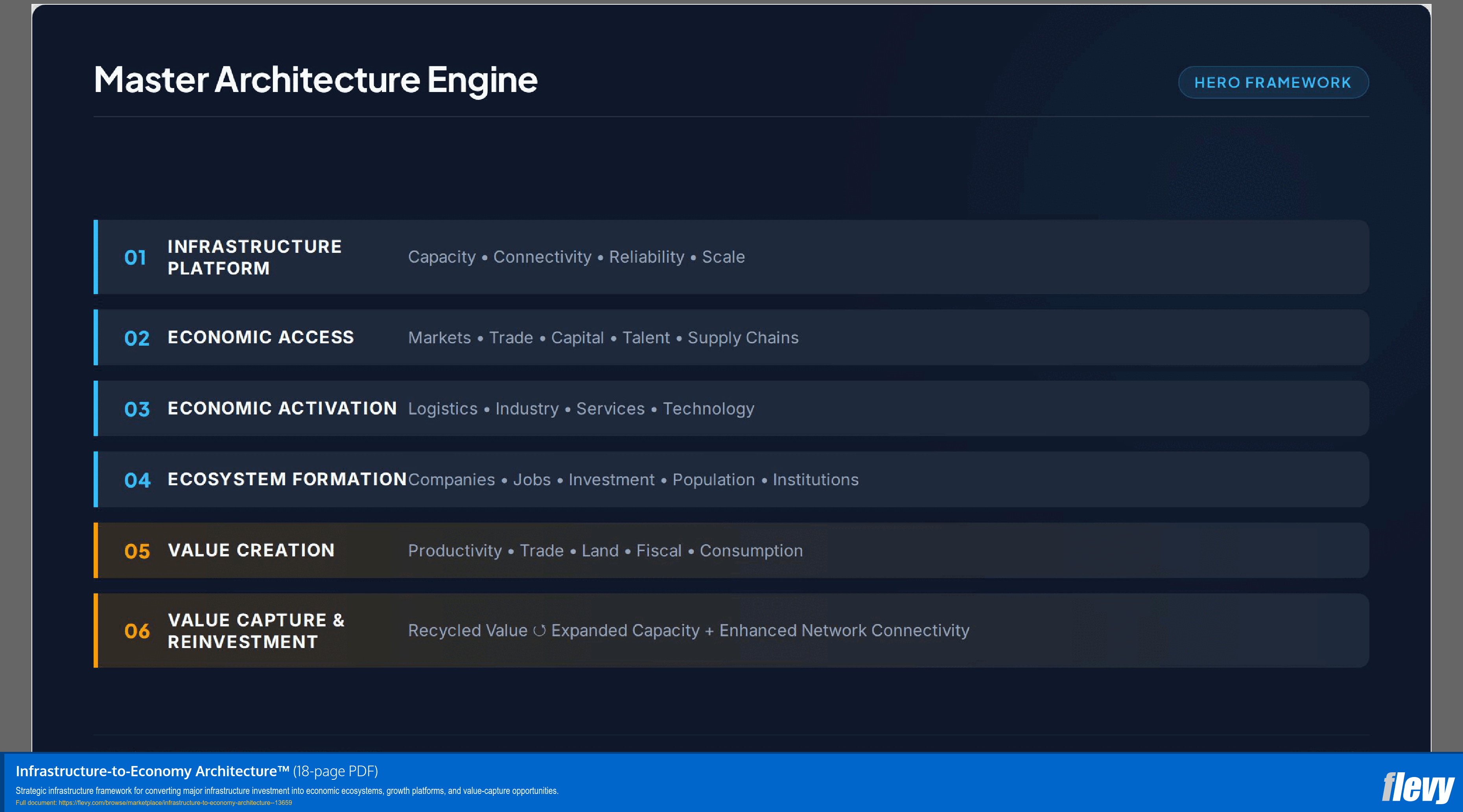
• Infrastructure-to-Economy Architecture™ – the master conversion engine connecting infrastructure investment to economic access, activation, ecosystem formation, value creation, and reinvestment.
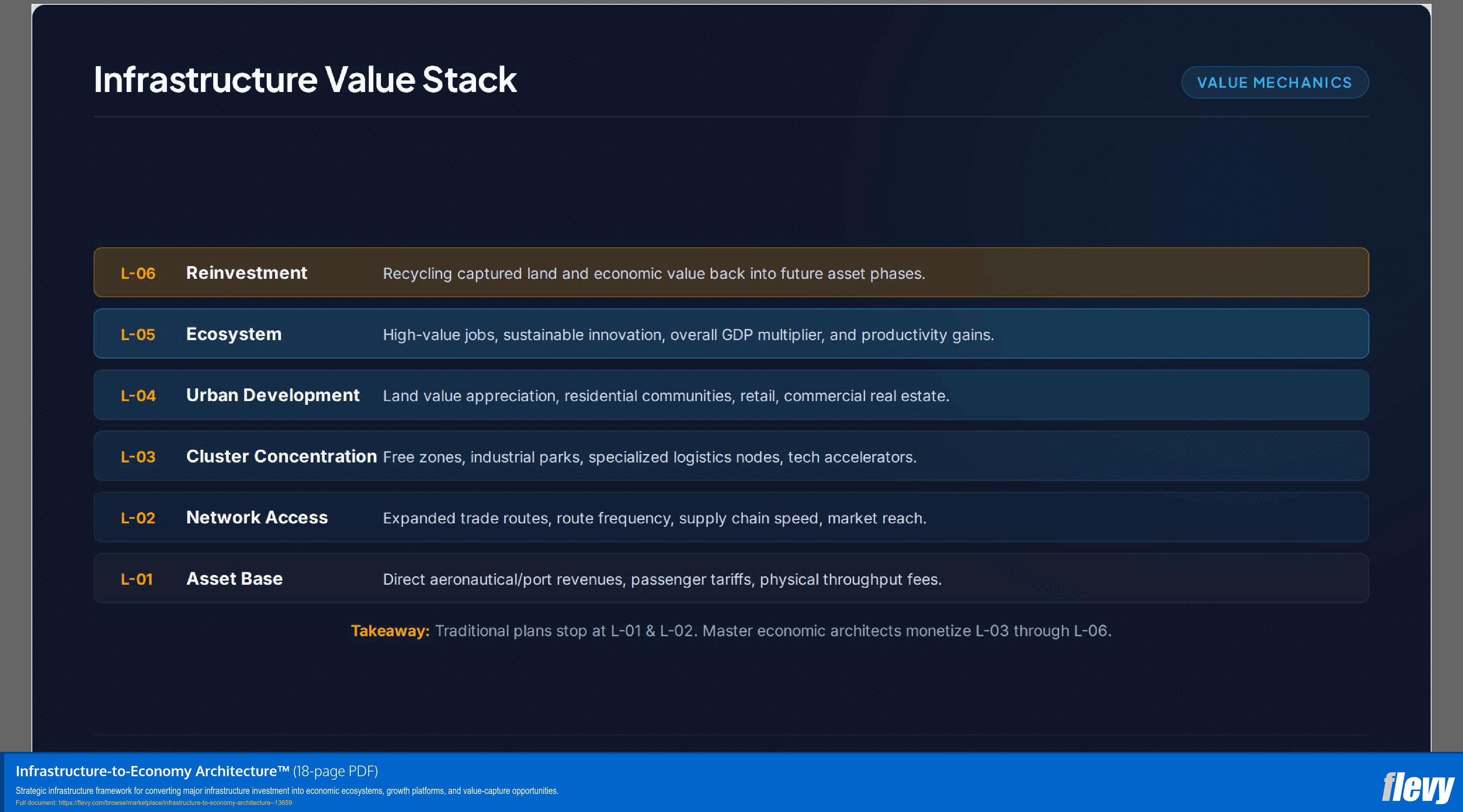
• Infrastructure Value Stack™ – a six-level model showing how value can expand from the physical asset base through network access, productive clustering, urban development, ecosystem formation, and reinvestment.
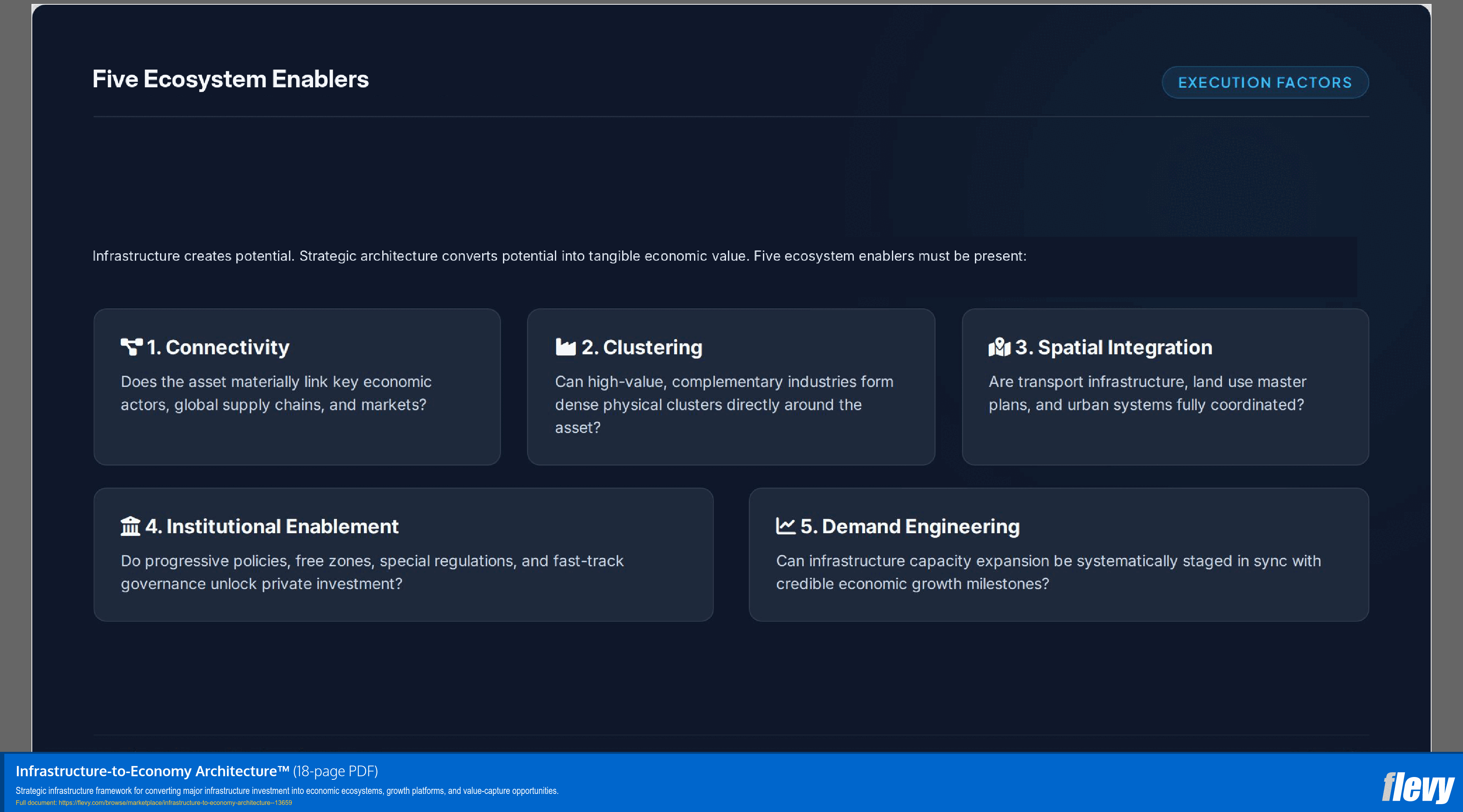
• Five Ecosystem Enablers – Connectivity, Clustering, Spatial Integration, Institutional Enablement, and Demand Engineering.
• Seven Failure Points Log – a diagnostic framework identifying where infrastructure-led economic strategies can break down, including the Empty Platform Gap, Connectivity Gap, Productivity Gap, Institutional Gap, Spatial Gap, Value Leakage, and Scale Trap.
• Seven-Dimension Executive Diagnostic – a practical test covering Network Power, Demand Depth, Productive Clustering, Multimodal Integration, Institutional Enablement, Spatial Integration, and Value Capture.
• Capacity Sequencing Model – a framework for distinguishing initial capacity requirements from scalable long-term expansion and demand-triggered investment.
• Corridor Distinction – an explanation of why transport infrastructure alone does not automatically become an economic corridor, and why trade facilitation, logistics, spatial coordination, private-sector conditions, and complementary capabilities matter.
• Cross-Sector Case Applications – comparative application across Al Maktoum International Airport and Dubai South, the Port of Rotterdam, and King Abdullah Economic City.
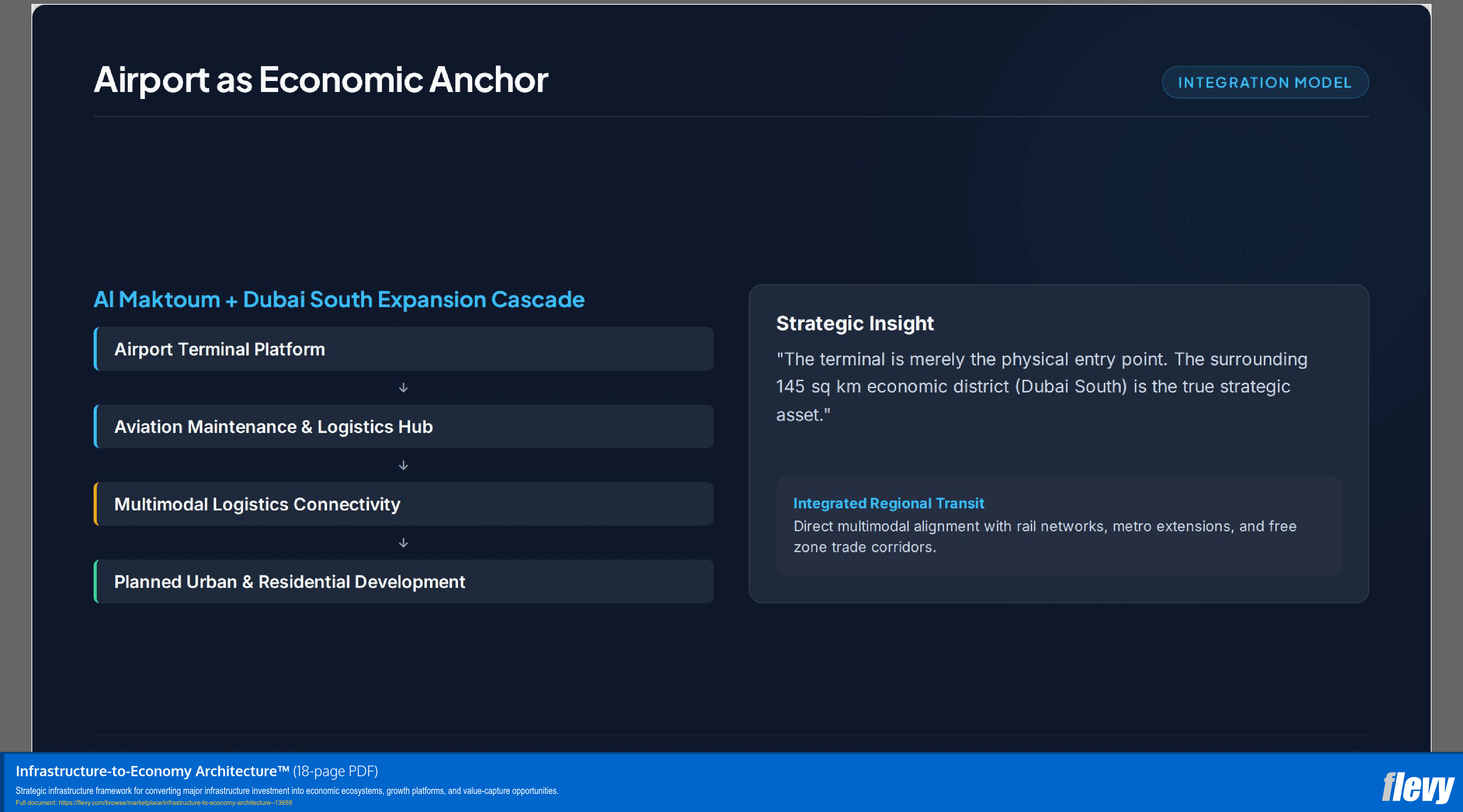
The flagship case examines Al Maktoum International Airport and Dubai South as a live example of infrastructure being designed not simply to accommodate future demand, but to support a broader economic geography. The analysis distinguishes between airport capacity, multimodal connectivity, logistics, industrial activity, urban development, and ecosystem formation.
The framework is deliberately designed to avoid the simplistic assumption that infrastructure automatically creates economic growth. Instead, it asks a more strategic question:
What economy can this infrastructure enable—and what must be deliberately built around it for that potential to materialize?
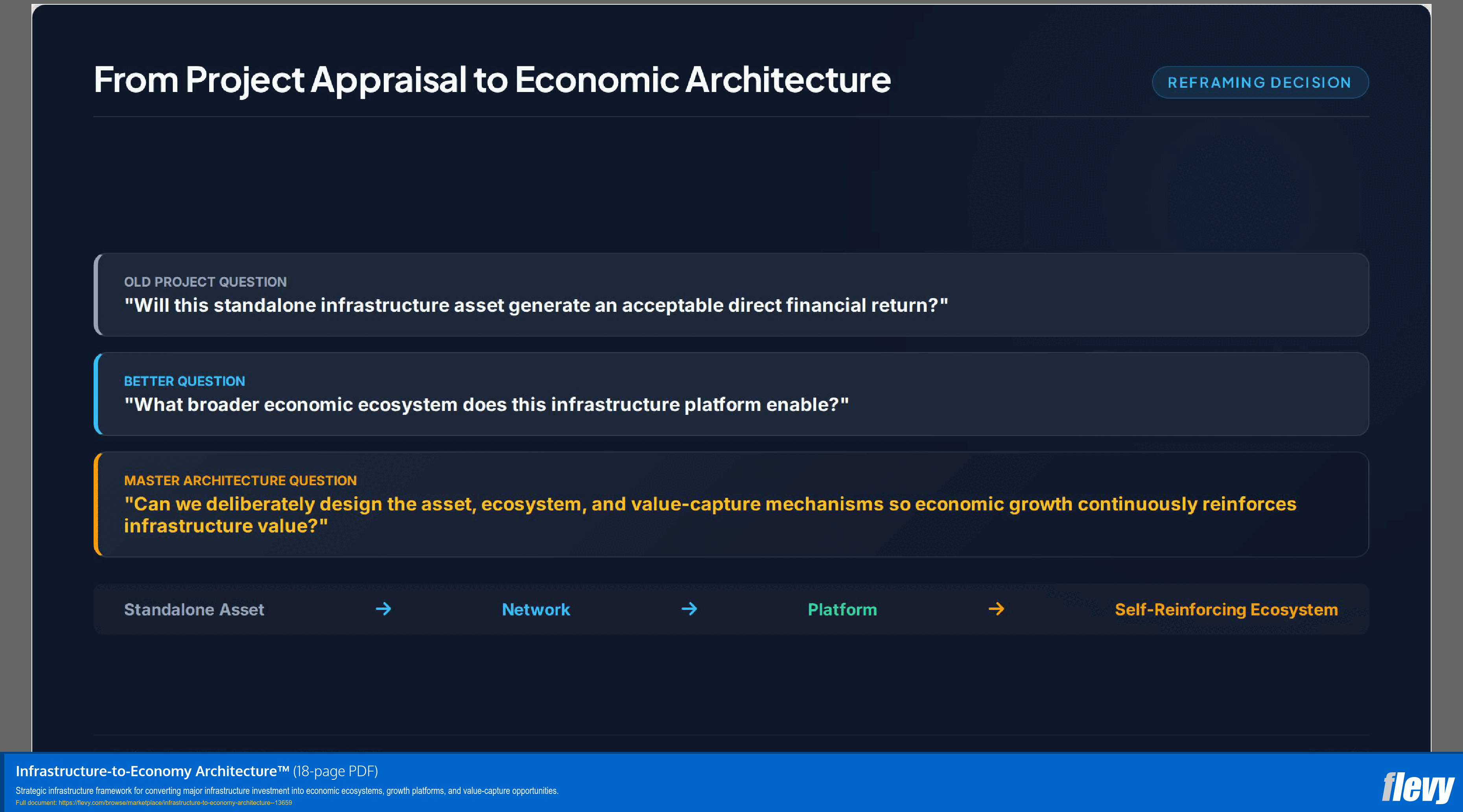
Backed by institutional evidence from Dubai, the World Bank, the Port of Rotterdam, Saudi Arabia's PIF, and selected academic research, this playbook provides a repeatable methodology for moving from project appraisal to economic architecture.
Got a question about the product? Email us at support@flevy.com or ask the author directly by using the "Ask the Author a Question" form. If you cannot view the preview above this document description, go here to view the large preview instead.
Source: Best Practices in Capital Budgeting, Government PDF: Infrastructure-to-Economy Architecture™ PDF (PDF) Document, Wisnu Pandega Wardana
ABOUT THE AUTHOR

I am an independent Industrial Intelligence and Strategic Innovation Publisher focused on developing structured business intelligence, innovation frameworks, and opportunity-oriented research for decision-makers.
My work focuses on translating emerging technologies, industrial transformation, sustainability, resource efficiency, and market shifts into structured intelligence assets that
... [read more]
Ask the Author a Question
You must be logged in to contact the author.




























